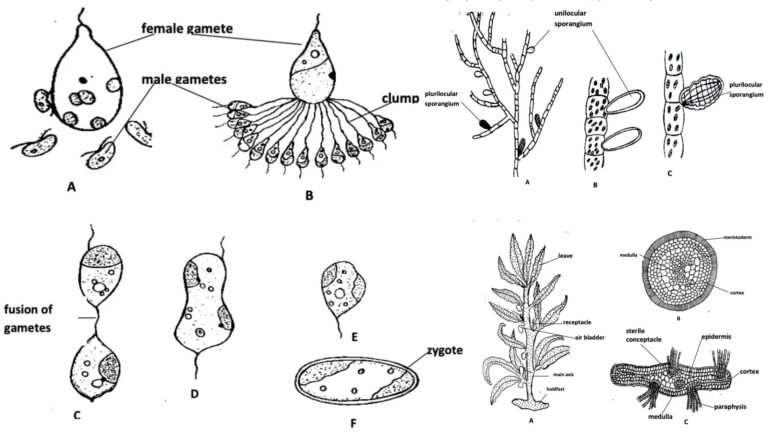
Phaeophyta are commonly known as brown algae. They are mostly marine forms. The members are multicellular and they occur mainly in cold and temperate coastal water. Very few members are freshwater forms. The colour of the plant body is brown or olive green. This is due to excess amount of fucoxanthin pigment. The chief pigments
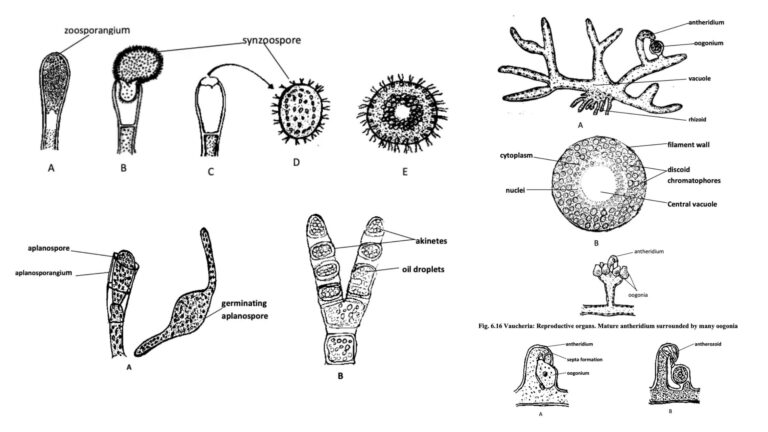
Xanthophyta are commonly called yellow-green algae. They are a group of photosynthetic algae. Most of the members are freshwater forms, but some are also found in marine water, damp soil and on tree trunks. The plant body of Xanthophyta shows much variation. It may be unicellular, colonial, filamentous or coenocytic type. In some forms, the
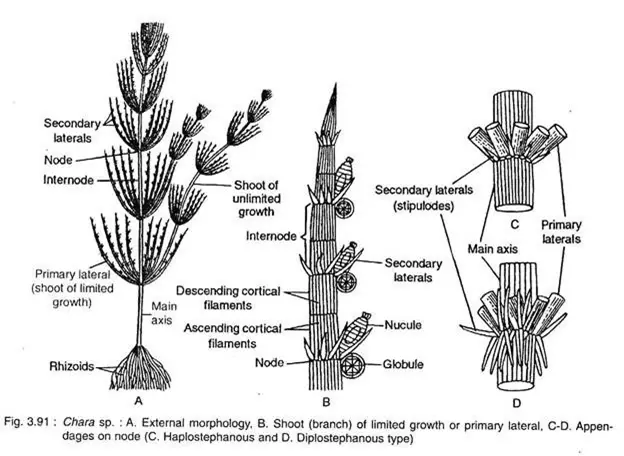
Charophyta is a division of green algae which are commonly known as charophytes. They are mostly found in freshwater habitat. These algae are multicellular and show some plant like characters. The body of charophytes is more complex than many other algae. It has branching system with main axis like stem and small structures like leaves.
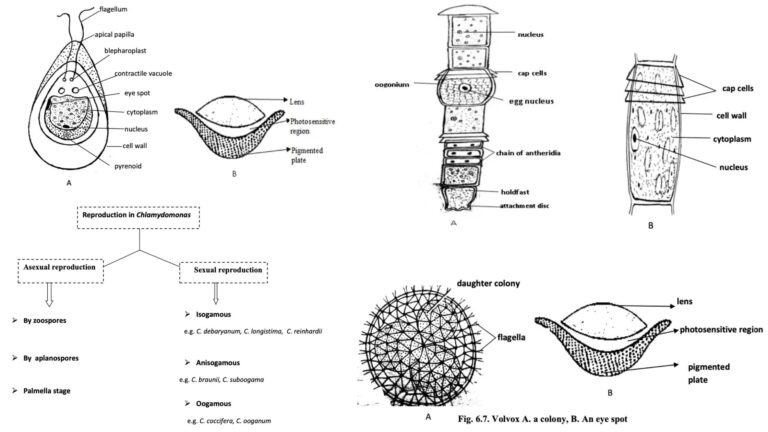
Chlorophyta are commonly known as green algae. It is one of the major group of algae. They are mostly aquatic and found in freshwater as well as marine water. Some members are also found in damp soil. Some forms can grow in extreme places like arctic snow. So the habitat of Chlorophyta is not only
Algae are a group of autotrophic, non-vascular thalloid plants with chlorophyll and without any formation of embryo. They are mostly photosynthetic in nature. The plant body may be unicellular, colonial or multicellular. Algae possess a simple plant body which is called thallus. The thallus is not differentiated into true root, stem and leaves. They also
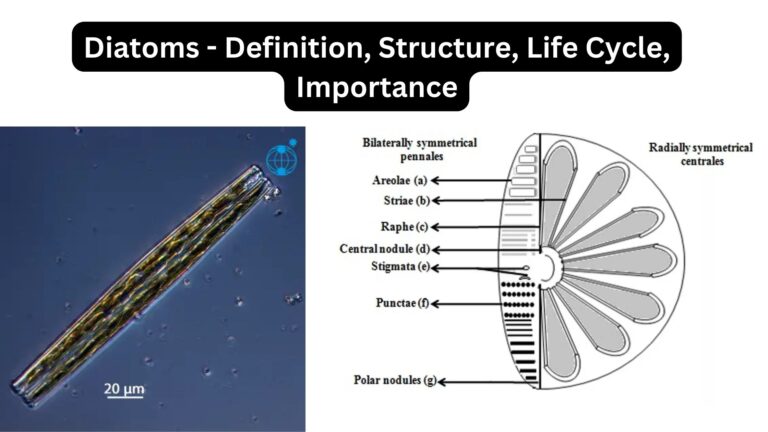
Diatoms are unicellular, eukaryotic microalgae which are found in marine water, freshwater, soil and many moist places. They are microscopic organisms and mostly live as plankton in water bodies. Diatoms are important member of phytoplankton and they perform photosynthesis like green plants. The most characteristic feature of diatoms is the presence of hard outer wall
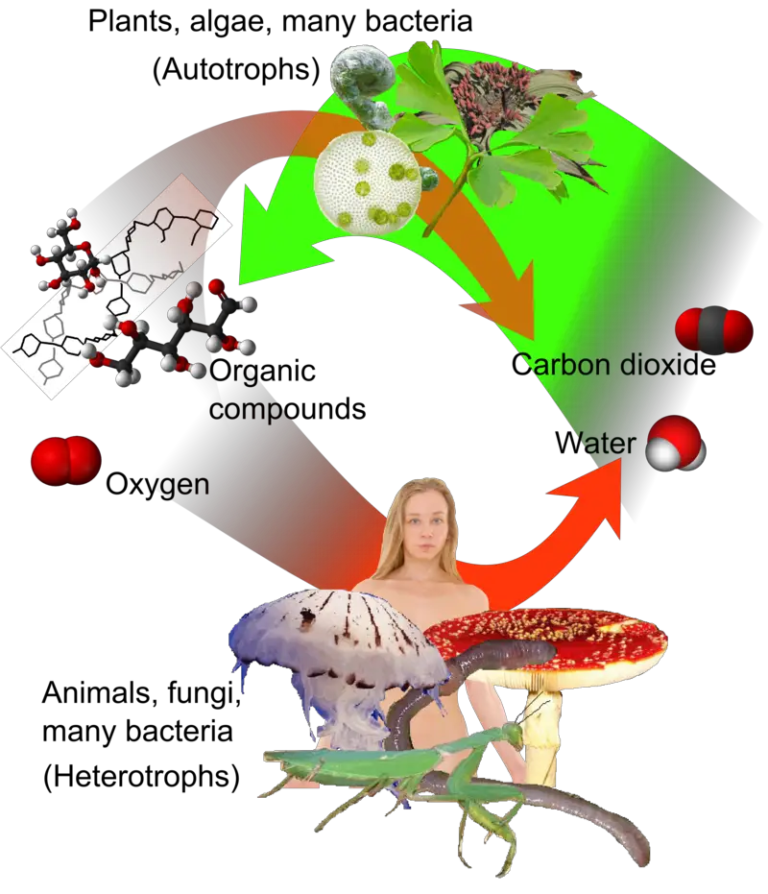
Algae are a group of autotrophic, photosynthetic and non-vascular organisms. They may be unicellular or multicellular in nature. Some algae are microscopic like phytoplankton, while some are large multicellular forms like giant kelp. Algae contain chlorophyll and prepare their food by photosynthesis. During this process they release oxygen and form organic food materials. For this
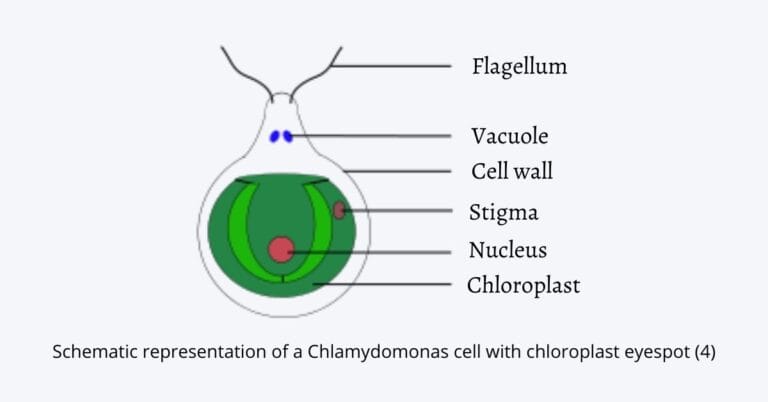
Eyespot help in cell’s phototaxis, it senses the intensity and direction of light source and responds to it. In response, it helps the organism in swim towards the light (positive phototaxis), or away from it (negative phototaxis).
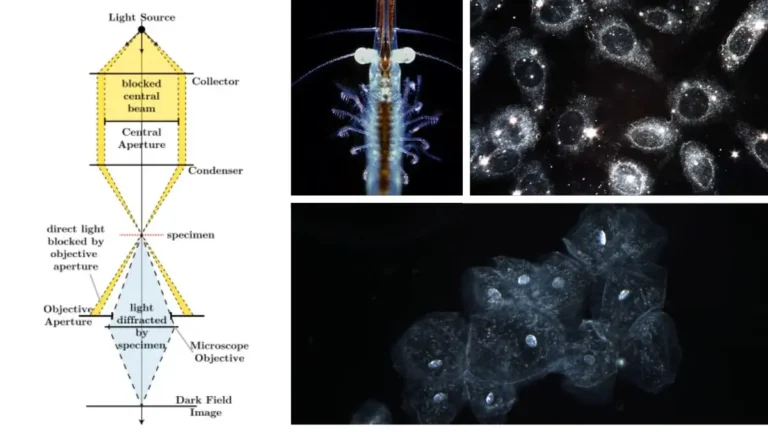
Dark field microscopy is a special illumination technique used in light microscope to increase contrast of transparent, unstained or low contrast specimens. The specimen looks bright, and the background looks dark or almost black. It is useful when normal bright background observation is not giving clear contrast. It is done by using a modified condenser
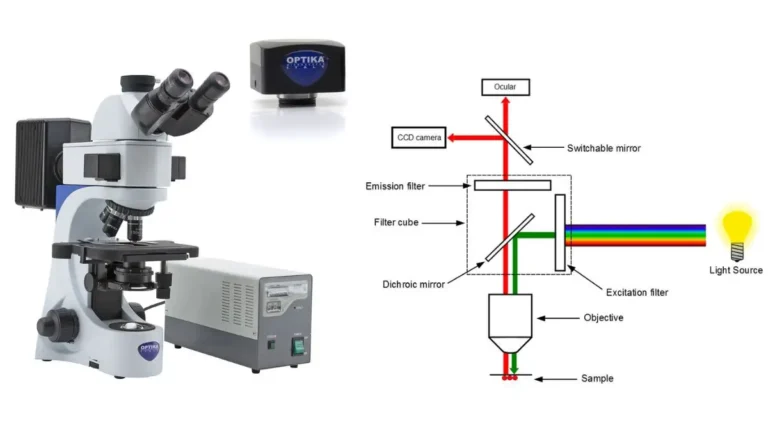
Fluorescence microscope is an advanced optical microscope that uses fluorescence for viewing the specimen. It produces a bright coloured image of the specimen in a dark background. It is mostly used for biological and chemical samples where a specific part of the sample is to be seen clearly. In this microscope, fluorescent dyes, proteins or