

Endosymbiosis is a biological relationship in which one organism lives inside another organism, often within its cells. The relationship is not necessarily mutualistic and can vary in how each partner benefits or is affected. In evolutionary biology, endosymbiosis is especially important because bacterial endosymbionts gave rise to mitochondria and plastids, becoming increasingly integrated with their hosts through genome reduction, gene transfer, protein import, and loss of independent function.
What is Endosymbiosis?
Endosymbiosis is a type of biological association where one organism lives inside the body or cells of another organism. The organism which gives the living space is called the host, while the organism present inside the host is called the endosymbiont.
The term “living inside” only indicates the position of one organism in relation to another. It does not mean that both organisms must get benefit. The association can be harmful or parasitic, or one or both organisms may be benefited depending upon the organisms involved.
Endosymbiosis and mutualism
Endosymbiosis and mutualism are not the same. Mutualism is an association in which both organisms get benefit.
Endosymbiosis, on the other hand, is based on where one symbiotic partner lives. Here, one organism lives inside another organism. Some endosymbiotic associations can be mutualistic, but getting benefit by both organisms is not necessary for an organism to be called an endosymbiont.
Endosymbiosis and Endosymbiotic Theory
Endosymbiosis should also not be confused with the Endosymbiotic Theory. Endosymbiosis is the broader biological process or association.
The Endosymbiotic Theory is a particular evolutionary explanation. According to this theory, mitochondria and chloroplasts originated from formerly free-living bacteria. These bacteria became established inside an ancestral host cell. During evolutionary time, they became integrated with the host cell and developed into cellular organelles.
Endosymbiotic Theory
Endosymbiotic Theory is an evolutionary theory which explains the bacterial origin of mitochondria and plastids. According to this theory, these organelles were once free-living bacterial cells which entered into an association with an ancestral host cell. The association continued for a long evolutionary period and the bacterial cells became integrated with the host. During this process, many genes were lost while many genes of bacterial origin were transferred to the nuclear genome of the host. The endosymbionts gradually lost their independent nature and formed permanent cellular organelles.
The bacterial origin of mitochondria and plastids is strongly supported. However, all the events involved during formation of the first eukaryotic cell are still not completely established.
Origin of Mitochondria
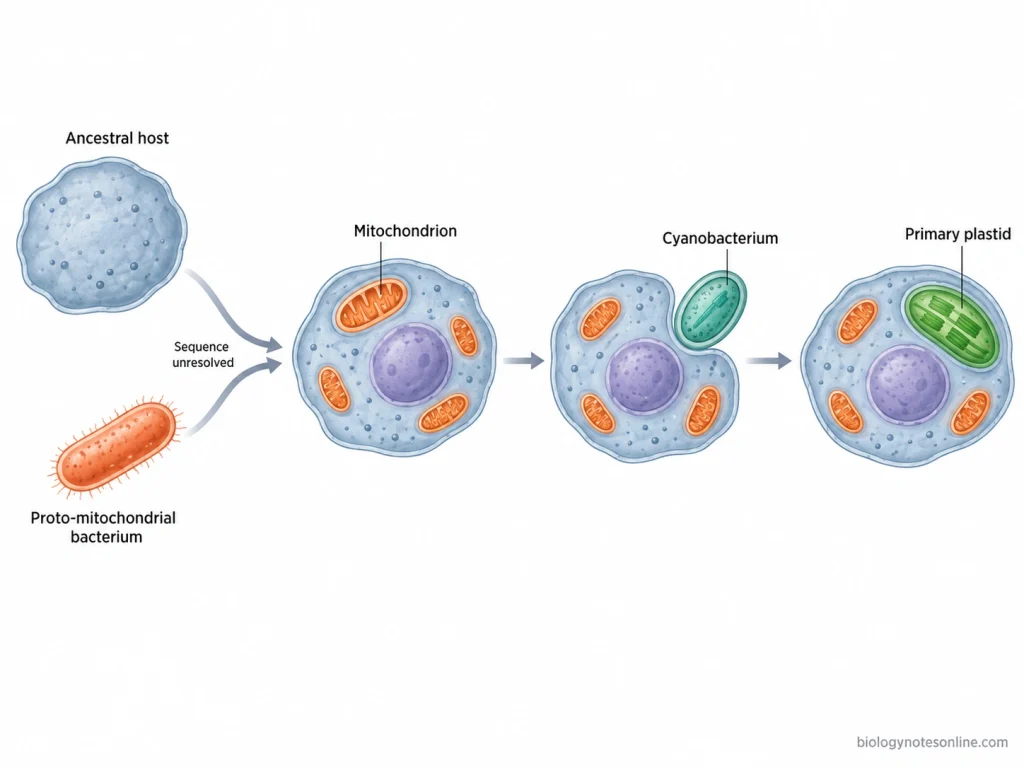
Mitochondria are considered to have developed from a bacterial endosymbiont related to Alphaproteobacteria. This relationship is based on mitochondrial genes, proteins and their bacterial ancestry. Mitochondria present in living eukaryotes are considered to have a common endosymbiotic origin.
After establishment inside the host, the bacterial endosymbiont became increasingly dependent on it. A large part of its original genome was lost. Many genes of bacterial ancestry also became located in the nuclear genome of the host. During this process, the endosymbiont was integrated with different functions of the cell and gradually developed into the mitochondrion.
Acquisition of mitochondria was an important event during eukaryotic evolution. The last eukaryotic common ancestor (LECA) already possessed mitochondria or mitochondria-derived organelles. Thus, mitochondrial acquisition occurred early during eukaryogenesis.
The exact events are still under study. It cannot simply be stated that a fully developed “anaerobic eukaryotic cell” engulfed an aerobic bacterium and formed mitochondria. The exact nature of the ancestral host is not completely established, together with the sequence in which different features of eukaryotic cells developed. Whether mitochondrial acquisition occurred before, during or after several other changes of eukaryogenesis is also being investigated.
Current studies particularly connect the host lineage of eukaryotes with Asgard archaea. Different models have been proposed to explain these early events. The alphaproteobacterial ancestry of mitochondria has strong support, while the complete sequence of early mitochondrial acquisition is still not fixed.
Origin of Plastids
Plastids originated through an endosymbiotic event different from that of mitochondria. In this process, a cyanobacterium became established within a eukaryotic host cell. It was retained and gradually integrated with the host, forming the ancestral plastid.
The term plastid is broader than chloroplast. Plastids include photosynthetic as well as secondarily non-photosynthetic organelles having the same evolutionary origin. Chloroplasts are photosynthetic plastids. Therefore, the term “plastid” is generally used while discussing their evolutionary origin.
Primary Endosymbiosis
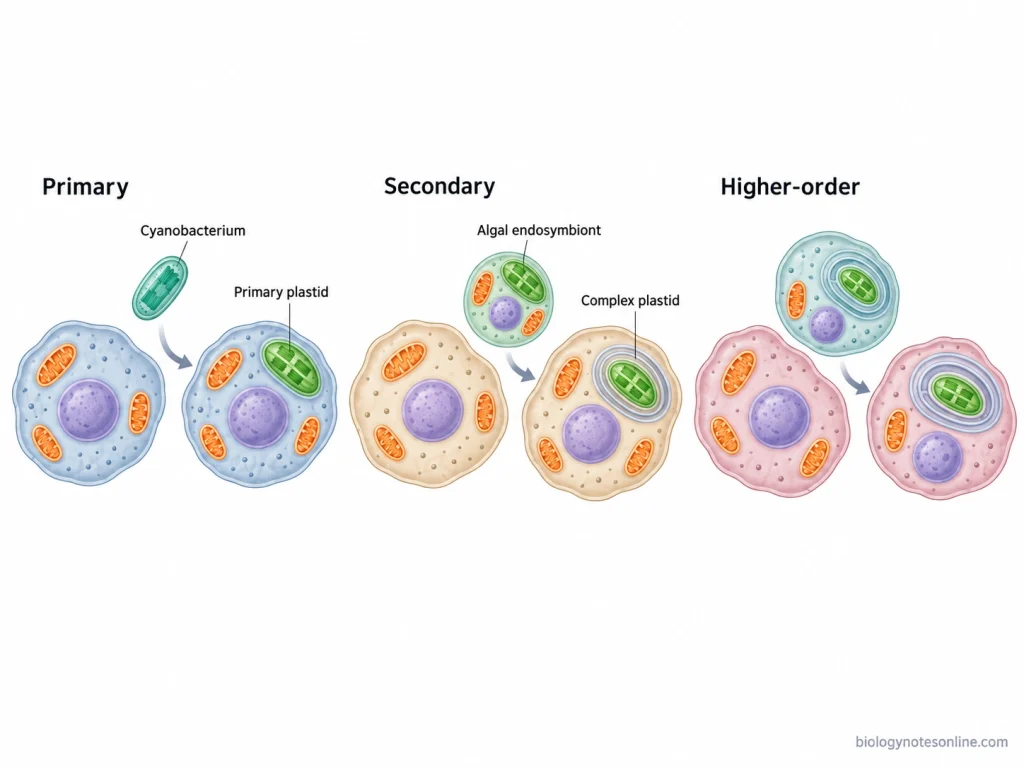
Primary endosymbiosis refers to the establishment of a cyanobacterial cell directly within a eukaryotic host. The major ancient event produced the ancestral plastid associated with Archaeplastida, which includes glaucophytes, red algae, green algae and land plants.
During this process, the cyanobacterial endosymbiont became more closely integrated with the host. Its genome was reduced and many genes were transferred to the host nuclear genome. Systems also developed for transporting proteins produced by the host back into the developing plastid.
Primary plastid endosymbiosis is not represented only by this ancient Archaeplastida event. An independent event is found in the amoeboid genus Paulinella. In Paulinella, the photosynthetic organelle is generally called a chromatophore. It originated from a different cyanobacterial lineage and much later than the ancestral plastid of Archaeplastida.
Secondary and Higher-Order Endosymbiosis
After formation of primary plastids, these plastids were spread into several other eukaryotic lineages through further endosymbiotic associations. In secondary endosymbiosis, a free-living cyanobacterium is not directly taken up. Instead, a eukaryotic alga already containing an established primary plastid becomes the endosymbiont of another eukaryotic cell.
The engulfed algal cell is then reduced and integrated with its new host. Its plastid can be retained while much of the remaining structure of the algal endosymbiont is lost. By this process, plastids derived from red or green algae became distributed among different algal and protist lineages.
The process can occur again. A eukaryotic organism may take up an alga which itself already contains a secondary plastid. These events are referred to as tertiary or higher-order endosymbiosis. In different lineages, plastids have therefore been acquired, replaced or lost during evolution.
Development of the Theory
The concept of endosymbiotic origin of organelles developed through the work of different scientists. Konstantin Mereschkowsky, in the early 20th century, proposed that plastids originated from cyanobacteria-like organisms living symbiotically inside another cell. He also developed a broader idea of “symbiogenesis”. Not all parts of his broader proposals are supported today.
During the 1920s, Ivan Wallin proposed a bacterial origin of mitochondria. According to his idea, mitochondria represented descendants of bacterial symbionts. He also attempted to provide experimental support for this proposal. Some of his experimental claims, including independent cultivation of mitochondria, were not accepted.
The theory was later brought back into major biological discussion by Lynn Margulis (then Lynn Sagan). In 1967, she described the role of endosymbiosis in the origin of eukaryotic cells and later developed the concept of symbiogenesis further. Margulis strongly supported bacterial origins of mitochondria and plastids.
She also proposed endosymbiotic origins for some other cellular structures, including structures associated with flagella. These broader proposals did not receive the same level of support. Later discovery of organelle DNA and molecular phylogenetic evidence strongly connected mitochondria with alphaproteobacteria and plastids with cyanobacteria.
Evidence for Endosymbiotic Origin
The following are some of the important evidence for the endosymbiotic origin of mitochondria and plastids–
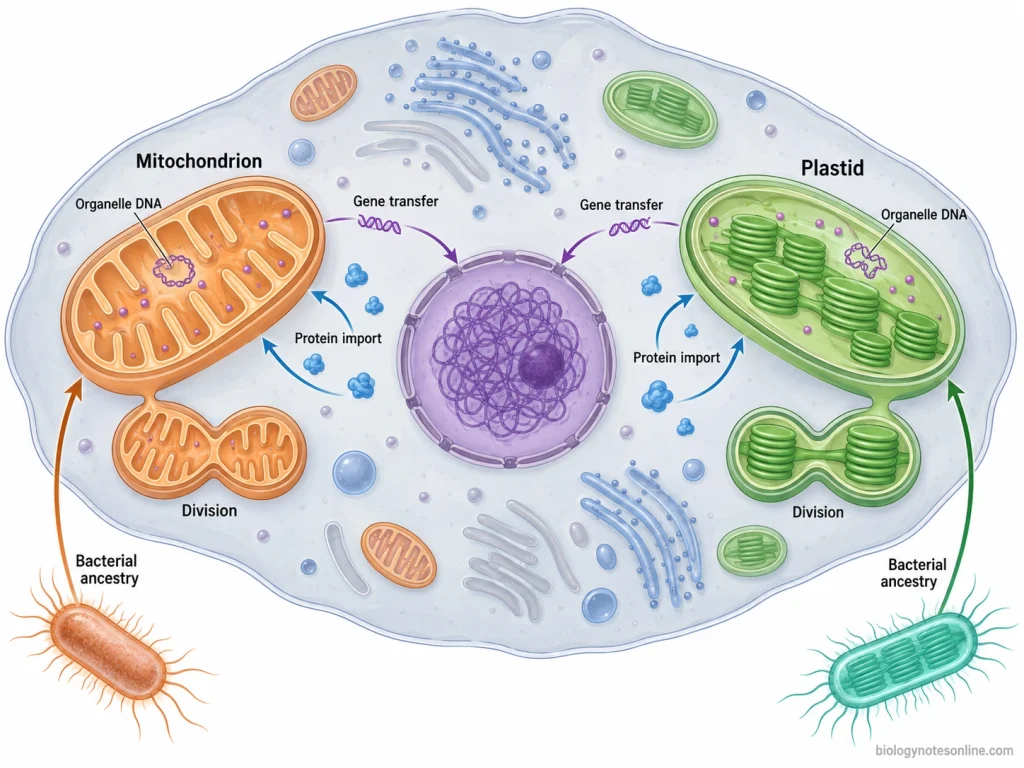
- Own DNA- Mitochondria and plastids have their own DNA, separate from the nuclear DNA of the cell. In many organisms, the DNA is present as circular molecules, which is a bacterial character. However, their present genome is much reduced because many of the genes were lost during evolution.
- Bacterial ancestry- The genes of mitochondria show relationship with Alphaproteobacteria. In plastids, their genes are related with Cyanobacteria. This relationship of the organelle genes with bacterial genes indicates their bacterial origin.
- Own ribosomes- Both the mitochondria and plastids possess their own ribosomes and synthesize some of their proteins within the organelle. Plastid ribosomes show bacterial-like characters. Mitochondrial ribosomes are more modified in different eukaryotes, but originated from the bacterial system.
- Binary fission- Mitochondria and plastids multiply by division of already existing organelles, similar to the binary fission in bacteria. Several proteins used during plastid division are also derived from bacterial division proteins.
- Double membrane- These organelles are surrounded by two membranes, an outer and inner membrane. Primary plastids also possess this double membrane arrangement. Such membrane organization is consistent with a bacterial cell becoming established within another cell.
- Gene transfer- During the long association with the host, large numbers of genes of the endosymbiont were either lost or transferred into the nuclear genome. This is referred to as endosymbiotic gene transfer. Therefore many proteins required by mitochondria and plastids are now coded by nuclear genes, produced outside the organelle and then transported back into it.
- Bacterial-type genes- Some genes are still retained in mitochondrial and plastid genomes. These include genes for rRNAs, tRNAs and some proteins. The sequences of many of these genes show relationship with bacterial genes from their respective ancestral groups.
- Protein similarity- Several proteins present in mitochondria and plastids also have similarities with bacterial proteins. In plastids, proteins related to photosynthesis and the genetic machinery show a clear connection with cyanobacteria. Mitochondria also contain proteins having bacterial ancestry, although the organelle has undergone many changes after its establishment within the eukaryotic cell.
From Endosymbiont to Organelle
The conversion of an endosymbiont into an organelle is a gradual process. During this process, the endosymbiont loses much of its independent cellular nature and becomes more dependent on the host cell. Some of the major changes involved are as follows-
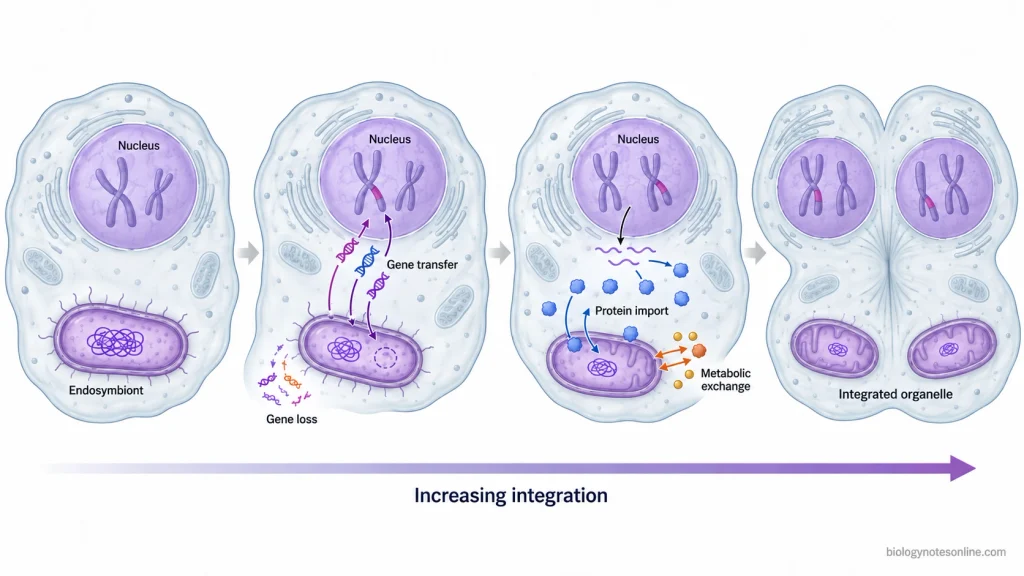
- Permanent residence- The endosymbiont becomes permanently maintained inside the host cell instead of existing as an independently living cell. Its multiplication also becomes associated with growth and division of the host.
- Genome reduction- A large number of genes present in the original endosymbiont are lost. Genes which are no longer required inside the host can disappear, and therefore the endosymbiont genome becomes greatly reduced. This loss of genetic independence is an important change during organelle formation.
- Gene transfer- Some endosymbiont genes are transferred into the nuclear genome of the host. This process is referred to as endosymbiotic gene transfer (EGT). The transferred genes can now be controlled and expressed by the host cell.
- Protein import- Transfer of an essential gene to the nucleus creates another requirement. Its protein product has to get back into the endosymbiont. Protein-targeting and import systems develop by which proteins synthesized in the cytoplasm are transported into the developing organelle. In mitochondria and plastids, most of their proteins are now supplied in this way.
- Metabolic integration- The metabolism of host and endosymbiont becomes connected. Metabolites, ions and other compounds are exchanged across the surrounding membranes, and functions of the endosymbiont are used as part of the metabolism of whole cell. The two cells are no longer acting as completely separate metabolic systems.
- Host control- With increasing integration, several activities of the endosymbiont come under host control. Nuclear-encoded proteins participate in its metabolism, maintenance and division. Its formation and multiplication must also be coordinated with the host cell.
- Loss of independence- Genome reduction and dependence on host-produced proteins eventually make independent existence difficult or impossible. The endosymbiont now depends on the host for essential cellular components, while the host also depends on functions supplied by it.
- Genetic integration- A major step towards an organelle is reached when essential functions lost from the endosymbiont genome are replaced by genes present in the host nucleus, and their products are imported back into it. Such genetic integration, particularly the development of protein import, is commonly used to distinguish a highly integrated organelle from an ordinary intracellular endosymbiont.
Living Examples of Endosymbiosis
Endosymbiosis is also found in many present-day organisms. In these associations, bacteria or photosynthetic microorganisms live within the cells of another organism and take part in nutrition, photosynthesis or other metabolic activities. Some are obligatory, while in others both partners can also live separately under suitable conditions.
Nutritional and Photosynthetic Endosymbioses
Some important living examples are-
| Host | Endosymbiont | Location | Biological role |
|---|---|---|---|
| Aphids | Buchnera aphidicola | Specialized cells called bacteriocytes | Nutritional endosymbiosis- Aphids obtain food from plant phloem sap, which is poor in several essential amino acids. Buchnera lives inside the bacteriocytes and helps in supplying these essential amino acids. The bacterium itself is highly dependent on the aphid host. |
| Paramecium bursaria | Chlorella spp. | Perialgal vacuoles within the cytoplasm | Photosynthetic endosymbiosis- Hundreds of green algal cells can occur inside a single P. bursaria. The algae provide photosynthetically fixed carbon, mainly in the form of maltose, while nitrogen compounds and other requirements are obtained from the host. Both partners can be separated and grown independently under suitable conditions. |
| Reef-building corals | Photosynthetic dinoflagellates of Symbiodiniaceae | Inside gastrodermal cells, enclosed within a host-derived symbiosome | Coral-algal endosymbiosis- The dinoflagellates carry out photosynthesis and transfer a portion of the organic nutrients to the coral host. In return, they obtain inorganic nutrients and a protected cellular environment. This association has a major role in the growth of reef-building corals. |
Organelle Evolution in Action
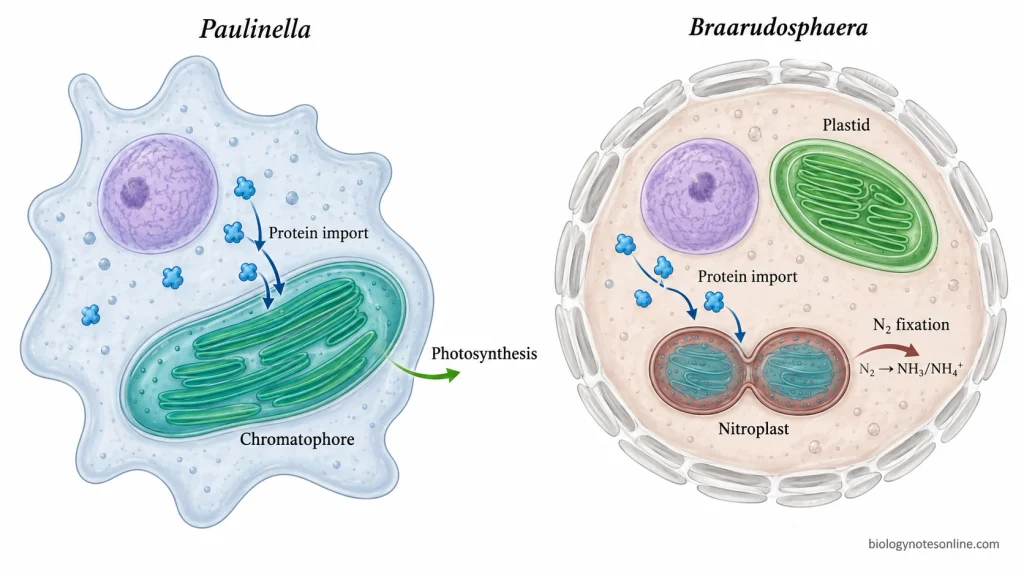
- Paulinella chromatophore- Paulinella chromatophora contains photosynthetic structures known as chromatophores, which originated from a cyanobacterial endosymbiont independently of the plastids of plants and algae. This endosymbiosis occurred much more recently, approximately 90-140 million years ago. Therefore, it provides an important example for studying how an endosymbiont changes into an organelle.The chromatophore genome has undergone considerable reduction. Hundreds of proteins encoded by the host nucleus are also transported into it, and its division is coordinated with the host cell cycle. Metabolic pathways of the host and chromatophore are connected as well. These characters show a high level of cellular integration.
- Nitroplast- Another example is present in the marine alga Braarudosphaera bigelowii. It contains the nitrogen-fixing cyanobacterial partner UCYN-A (Candidatus Atelocyanobacterium thalassa), which was earlier described as an endosymbiont. The structure is now referred to as the nitroplast.UCYN-A is tightly integrated with the algal cell. Its division occurs in coordination with division of the host and it receives hundreds of proteins encoded by the algal nuclear genome. Many of these proteins replace functions that have been lost from the reduced UCYN-A genome. It carries out nitrogen fixation, converting atmospheric nitrogen (N₂) into a biologically usable form for the association.
Evolutionary Significance
Some of the important evolutionary significance of endosymbiosis are as follows-
- Energy metabolism- Acquisition of mitochondria provided the ancestral eukaryotic cell with bacterial systems of energy metabolism, including aerobic respiration. It became an important event during early eukaryotic evolution.
- Origin of photosynthesis- Photosynthesis in eukaryotes developed after a cyanobacterial endosymbiont became the plastid. Thus, algae and plants received the photosynthetic machinery from this bacterial ancestor.
- Chimeric cell- Endosymbiosis brought genetic materials of different evolutionary lineages into the same cell. Genes from mitochondrial and plastid ancestors were also transferred into the nuclear genome.
- New cellular functions- Some transferred genes became involved in other functions of the host cell. They were not restricted only with mitochondria or plastids.
- Spread of plastids- Primary plastids were later passed into other eukaryotic groups through secondary and further endosymbiosis. By this process, plastids of red or green algal origin became distributed among many algal and protist lineages.
- Diversification- Plastid endosymbiosis contributed to the evolution and diversification of algae and plants. Secondary and higher-order endosymbiosis further increased the diversity of plastid-containing eukaryotes.
Key Facts about Endosymbiosis for Exams
| Key point | Summary |
|---|---|
| Endosymbiosis | It is an association where one organism lives inside another organism. In evolution, this process is associated with the origin of mitochondria and plastids. |
| Endosymbiotic Theory | It explains that mitochondria and plastids were derived from free-living bacterial ancestors which became permanently established inside an ancestral host cell. |
| Origin of mitochondria | Mitochondria originated from a bacterial endosymbiont related to Alphaproteobacteria. |
| Origin of plastids | Plastids developed from a cyanobacterial endosymbiont. Chloroplasts are photosynthetic plastids. |
| Primary endosymbiosis | A cyanobacterium was directly taken up by a eukaryotic host. This process produced the ancestral primary plastid. |
| Secondary endosymbiosis | A eukaryotic cell containing a primary plastid became the endosymbiont of another eukaryotic cell. |
| Higher-order endosymbiosis | It occurs when a eukaryote takes up another eukaryotic cell which already contains a secondary plastid. |
| Main evidence | Mitochondria and plastids have their own DNA, their own ribosomes, divide from pre-existing organelles and show bacterial genetic relationships. |
| Double membrane | Mitochondria and primary plastids possess an inner and outer membrane. This membrane arrangement is consistent with their endosymbiotic origin. |
| Gene transfer | Many genes of the original endosymbiont were lost or transferred into the host nuclear genome. This is referred to as endosymbiotic gene transfer (EGT). |
| Protein import | Many proteins required by mitochondria and plastids are now encoded by nuclear genes. They are produced outside the organelle and transported back into it. |
| Genome reduction | During organelle formation, the endosymbiont genome became greatly reduced. This increased its dependence on the host cell. |
| Metabolic integration | Host and endosymbiont became metabolically connected. Exchange of metabolites and cellular functions made the association more permanent. |
| Paulinella | Paulinella chromatophora contains a photosynthetic chromatophore derived from an independent cyanobacterial endosymbiosis. It represents a relatively recent example of organelle evolution. |
| Nitroplast | Braarudosphaera bigelowii contains the highly integrated nitrogen-fixing UCYN-A, now referred to as a nitroplast. |
| Mereschkowsky | He proposed an early endosymbiotic origin of plastids and developed the idea of “symbiogenesis”. |
| Ivan Wallin | He proposed a bacterial origin of mitochondria during the 1920s. |
| Lynn Margulis | She brought the endosymbiotic theory back into major biological discussion and strongly supported bacterial origins of mitochondria and plastids. |
| Evolutionary importance | Endosymbiosis played a major role in eukaryotic evolution. It contributed to mitochondrial energy metabolism, plastid-based photosynthesis and diversification of photosynthetic eukaryotes. |
References
- Alberts, B., Johnson, A., Lewis, J., Raff, M., Roberts, K., & Walter, P. (2002). Molecular biology of the cell (4th ed.). Garland Science. https://www.ncbi.nlm.nih.gov/books/NBK21054/
- Andersson, S. G. E., Karlberg, O., Canbäck, B., & Kurland, C. G. (2003). On the origin of mitochondria: A genomics perspective. Philosophical Transactions of the Royal Society B: Biological Sciences, 358(1429), 165–177. https://doi.org/10.1098/rstb.2002.1193
- Bock, R. (2017). Witnessing genome evolution: Experimental reconstruction of endosymbiotic and horizontal gene transfer. Annual Review of Genetics, 51, 1–22. https://doi.org/10.1146/annurev-genet-120215-035329
- Coale, T. H., Loconte, V., Turk-Kubo, K. A., Vanslembrouck, B., Mak, W. K. E., Cheung, S., Ekman, A., Chen, J.-H., Hagino, K., Takano, Y., Nishimura, T., Adachi, M., Le Gros, M., Larabell, C., & Zehr, J. P. (2024). Nitrogen-fixing organelle in a marine alga. Science, 384(6692), 217–222. https://doi.org/10.1126/science.adk1075
- Cooper, G. M. (2000). The cell: A molecular approach (2nd ed.). Sinauer Associates. https://www.ncbi.nlm.nih.gov/books/NBK9841/
- Davy, S. K., Allemand, D., & Weis, V. M. (2012). Cell biology of cnidarian-dinoflagellate symbiosis. Microbiology and Molecular Biology Reviews, 76(2), 229–261. https://doi.org/10.1128/MMBR.05014-11
- Eme, L., Spang, A., Lombard, J., Stairs, C. W., & Ettema, T. J. G. (2017). Archaea and the origin of eukaryotes. Nature Reviews Microbiology, 15(12), 711–723. https://doi.org/10.1038/nrmicro.2017.133
- Feng, H., Edwards, N., Anderson, C. M. H., Althaus, M., Duncan, R. P., Hsu, Y.-C., Luetje, C. W., Price, D. R. G., Wilson, A. C. C., & Thwaites, D. T. (2019). Trading amino acids at the aphid–Buchnera symbiotic interface. Proceedings of the National Academy of Sciences of the United States of America, 116(32), 16003–16011. https://doi.org/10.1073/pnas.1906223116
- Gabr, A., Grossman, A. R., & Bhattacharya, D. (2020). Paulinella, a model for understanding plastid primary endosymbiosis. Journal of Phycology, 56(4), 837–843. https://doi.org/10.1111/jpy.13003
- Gray, M. W. (2017). Lynn Margulis and the endosymbiont hypothesis: 50 years later. Molecular Biology of the Cell, 28(10), 1285–1287. https://doi.org/10.1091/mbc.E16-07-0509
- Howe, C. J., Barbrook, A. C., Nisbet, R. E. R., Lockhart, P. J., & Larkum, A. W. D. (2008). The origin of plastids. Philosophical Transactions of the Royal Society B: Biological Sciences, 363(1504), 2675–2685. https://doi.org/10.1098/rstb.2008.0050
- Jenkins, B. H. (2024). Mutualism on the edge: Understanding the Paramecium–Chlorella symbiosis. PLOS Biology, 22(4), e3002563. https://doi.org/10.1371/journal.pbio.3002563
- Keeling, P. J. (2013). The number, speed, and impact of plastid endosymbioses in eukaryotic evolution. Annual Review of Plant Biology, 64, 583–607. https://doi.org/10.1146/annurev-arplant-050312-120144
- Keeling, P. J., & Palmer, J. D. (2008). Horizontal gene transfer in eukaryotic evolution. Nature Reviews Genetics, 9(8), 605–618. https://doi.org/10.1038/nrg2386
- Lee, J., Kim, D. H., & Hwang, I. (2014). Specific targeting of proteins to outer envelope membranes of endosymbiotic organelles, chloroplasts, and mitochondria. Frontiers in Plant Science, 5, 173. https://doi.org/10.3389/fpls.2014.00173
- López-García, P., Eme, L., & Moreira, D. (2017). Symbiosis in eukaryotic evolution. Journal of Theoretical Biology, 434, 20–33. https://doi.org/10.1016/j.jtbi.2017.02.031
- Nowack, E. C. M., & Weber, A. P. M. (2018). Genomics-informed insights into endosymbiotic organelle evolution in photosynthetic eukaryotes. Annual Review of Plant Biology, 69, 51–84. https://doi.org/10.1146/annurev-arplant-042817-040209
- Oberleitner, L., Poschmann, G., Macorano, L., Schott-Verdugo, S., Gohlke, H., Stühler, K., & Nowack, E. C. M. (2020). The puzzle of metabolite exchange and identification of putative octotrico peptide repeat expression regulators in the nascent photosynthetic organelles of Paulinella chromatophora. Frontiers in Microbiology, 11, 607182. https://doi.org/10.3389/fmicb.2020.607182
- Ponce-Toledo, R. I., López-García, P., & Moreira, D. (2019). Horizontal and endosymbiotic gene transfer in early plastid evolution. New Phytologist, 224(2), 618–624. https://doi.org/10.1111/nph.15965
- Reyes-Prieto, A., Weber, A. P. M., & Bhattacharya, D. (2007). The origin and establishment of the plastid in algae and plants. Annual Review of Genetics, 41, 147–168. https://doi.org/10.1146/annurev.genet.41.110306.130134
- Sørensen, M. E. S., Stiller, M. L., Kröninger, L., & Nowack, E. C. M. (2025). Protein import into bacterial endosymbionts and evolving organelles. The FEBS Journal, 292(12), 2992–3013. https://doi.org/10.1111/febs.17356