Mouth pipette is a laboratory method of pipetting in which the suction is created by mouth to draw liquid into a glass pipette tube like drinking with a straw. It was used for taking and transferring small amount of liquids from one container to another container. The volume taken is controlled by the user by
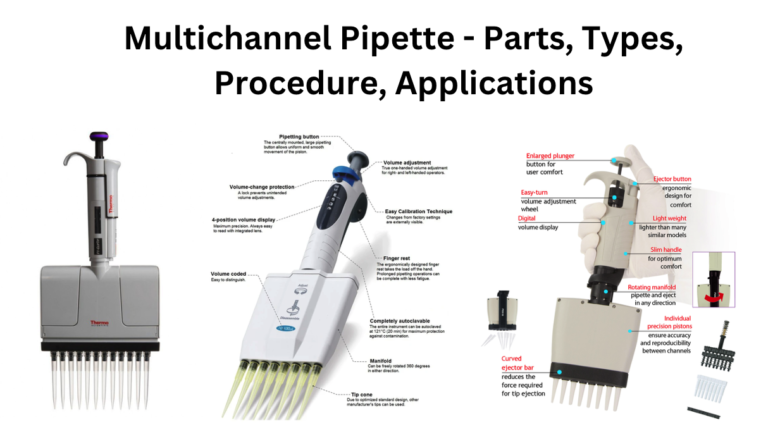
Multichannel pipette is a laboratory pipette used to measure and transfer multiple liquid volumes at the same time. It has more than one channel arranged in a straight row and each channel holds its own disposable tip. It is used when same volume is needed to be delivered into many tubes or wells in one
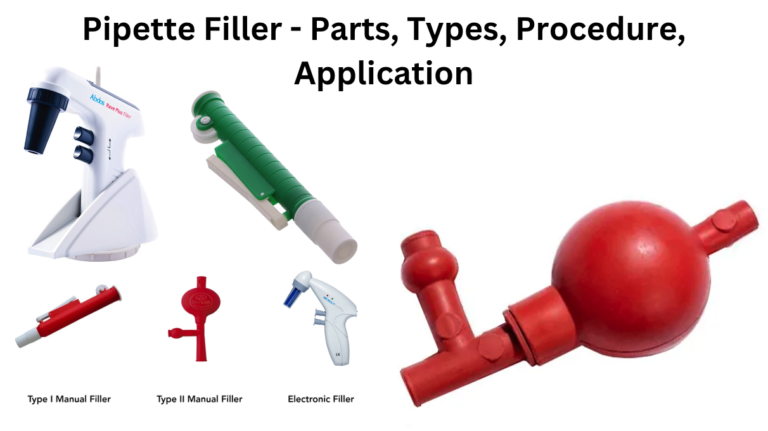
Pipette filler is a handheld laboratory device used to aspirate (draw up) and dispense a required volume of liquid using a glass or plastic pipette. It is also called pipette controller or pipette gun. It is used to handle liquids safely and accurately during routine lab work. It works by creating a controlled suction (vacuum)
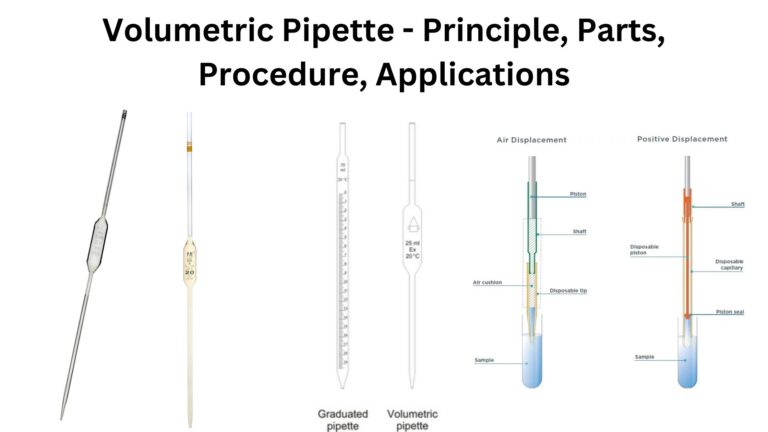
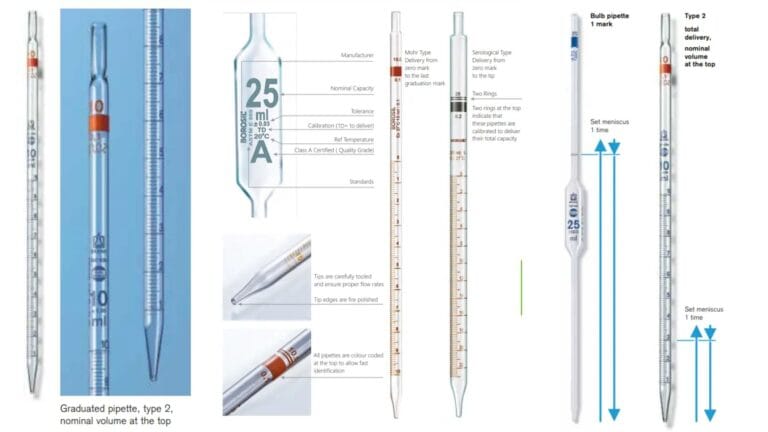
Volumetric pipette is a slender laboratory glass or plastic pipette used to measure and transfer one fixed volume of liquid with high accuracy. It is also called bulb pipette or belly pipette. It is mainly used when an exact volume is required in analytical works. It has a long narrow tube with an expanded bulb
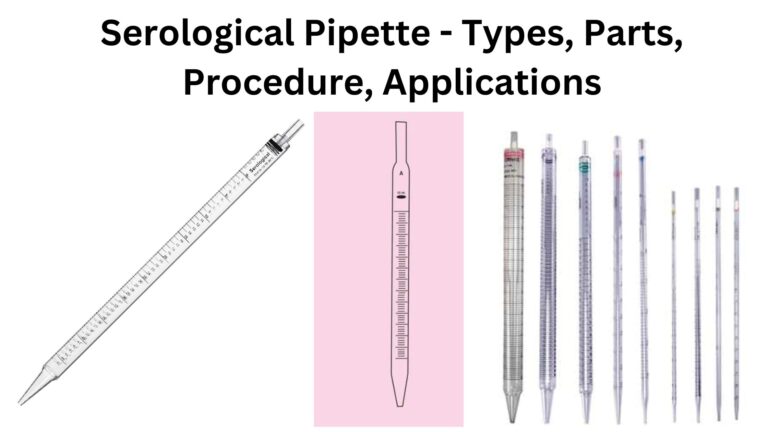
Serological pipette is a long graduated pipette used in laboratory to measure and transfer liquid in ml range. It is commonly used for 1 ml to 50 ml volume transfer. It is mostly disposable plastic (polystyrene) and sometimes glass. It has clear graduation markings on the body to monitor the liquid level during measuring. It
Pipette (Glass Pipettes) is a laboratory instrument made up of a narrow glass tube that is used to measure and transfer a specific volume of liquid from one container to another. It works by creating a suction or partial vacuum above the liquid (using pipette bulb or mouth suction) so the liquid is drawn inside
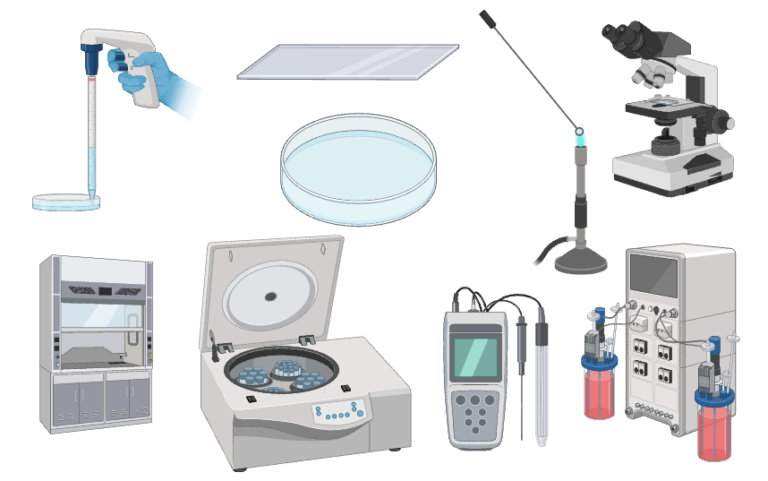
Laboratory equipment is the different tools, instruments and devices used in a laboratory for doing experiments and research work. It is used to measure, observe and handle samples, chemicals and biological specimens in a proper way. It includes measuring instruments, heating and cooling devices, glassware and plasticware, sterilization equipment, microscopes, separation devices, safety equipment and
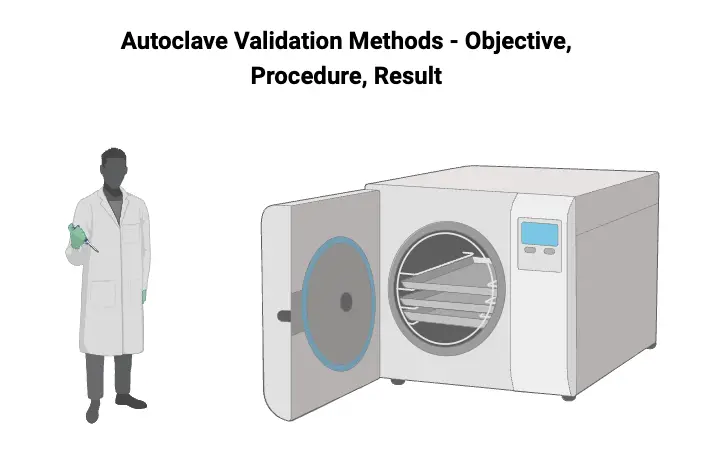
Autoclave validation is needed to prove that the autoclave is consistently giving effective sterilization of materials to a required Sterility Assurance Level (SAL). Sterility cannot be guaranteed only by testing the finished product. So, the process has to be validated and documented. Validation is done to check the correct physical parameters like temperature, pressure, and
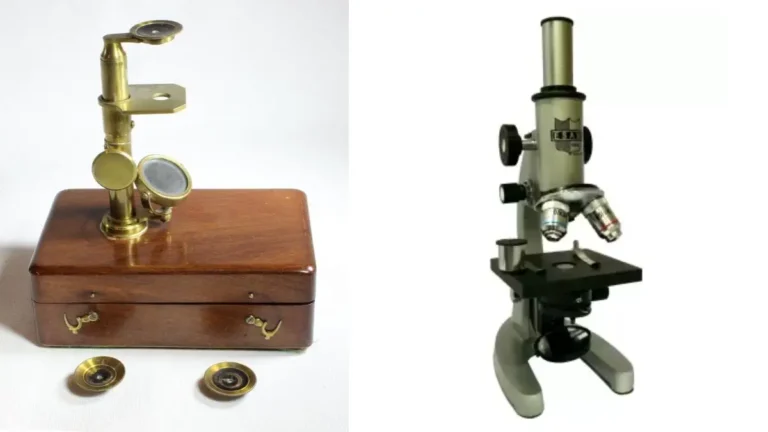
A simple microscope is an optical device consisting of a single convex lens that magnifies objects by enlarging their image through light refraction. Simple Microscope is a simple optical instrument used to magnify very small objects so that they can be seen by the unaided eye. It is mainly a single convex lens (mostly double
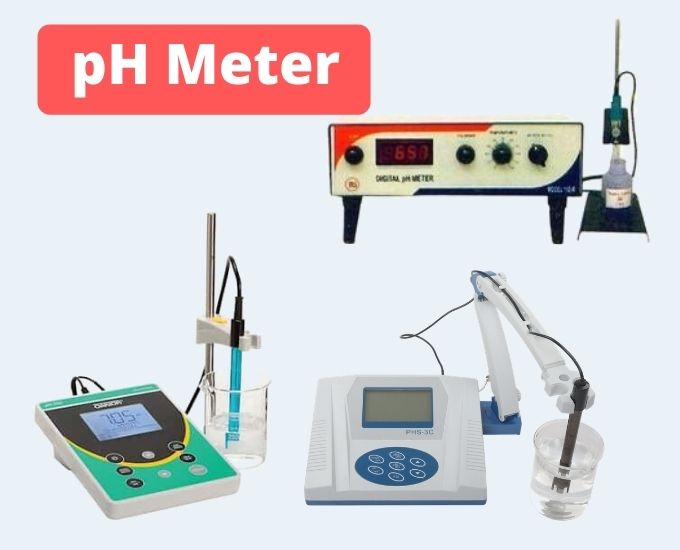
pH meter is an instrument used to measure pH of a solution. It measures the hydrogen ion activity in water based solution. It is used to know whether solution is acidic or alkaline. It works on potentiometry principle. It measures the difference in electrical potential between a measuring electrode and a reference electrode. The measuring