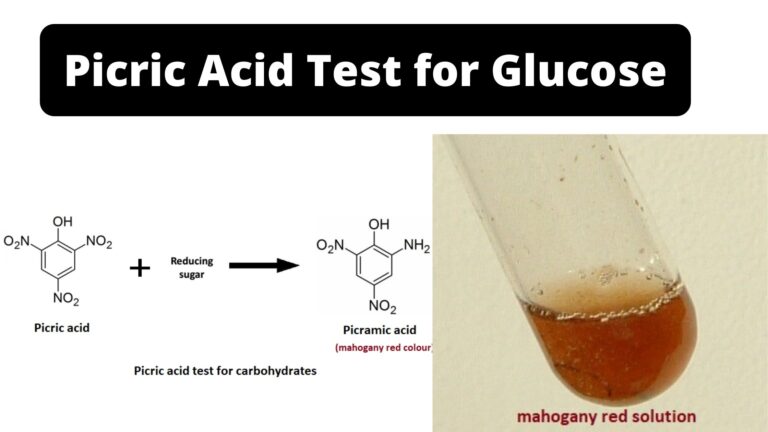
Picric Acid Test is a qualitative chemical test used for the detection of reducing sugars in a given sample. It detects sugars which can act as reducing agents under alkaline conditions. The test is based on the reducing property of these sugars. In alkaline medium, the reducing sugar reacts with yellow picric acid (2,4,6-trinitrophenol). During
The Lane–Eynon method is a volumetric titration technique used for the quantitative estimation of reducing sugars in food and dairy products. It is commonly used for the determination of sugars such as dextrose, maltose, and lactose. This method is based on the reduction of Fehling’s solution by reducing sugars under boiling conditions. It is simple,
Seliwanoff’s Test is a biochemical colour reaction that is used mainly to distinguish between ketose sugar and aldose sugar. It is performed by using Seliwanoff’s reagent (resorcinol + concentrated hydrochloric acid) and the sugar solution is heated with this reagent. In this test the acid act as dehydrating agent and the reaction is based on
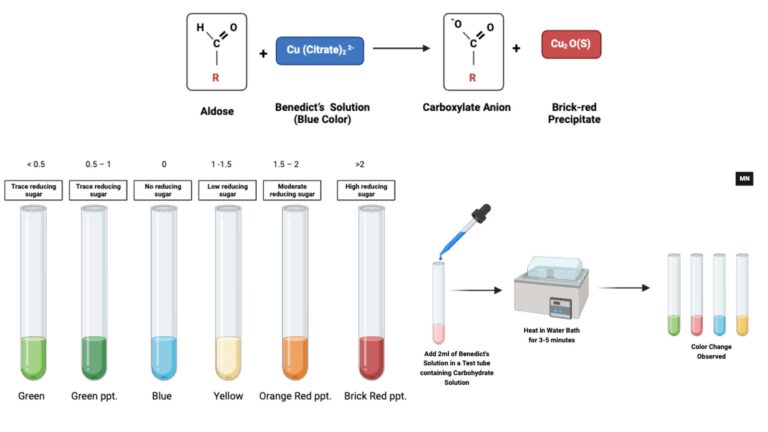
Benedict’s test is a chemical test that is used to test for the presence of reduced sugars within an analytical test. Thus, simple carbohydrates that contain an aldehyde or free ketone functional group are detected using this test. The test is basing itself upon Benedict’s Reagent (also called Benedict’s solution) which is a complex mix of sodium carbonate, sodium citrate, and the pentahydrate of copper(II) Sulfate.
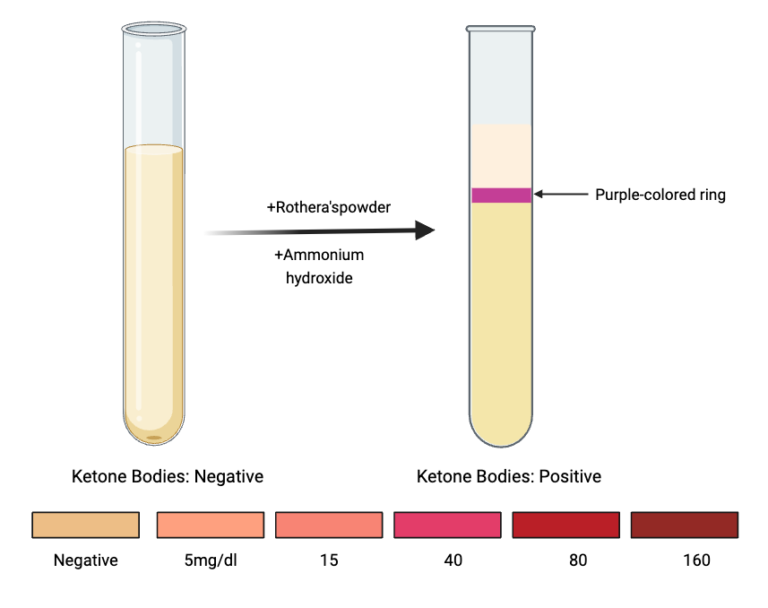
Acetoacetic acid and acetone react with an alkaline solution of sodium nitroprusside to form a purple-colored complex. This method can detect above 1-5 mg/dl of acetoacetic acid and 10-20 mg/dl of acetone. Beta-hydroxybutyrate is not detected.
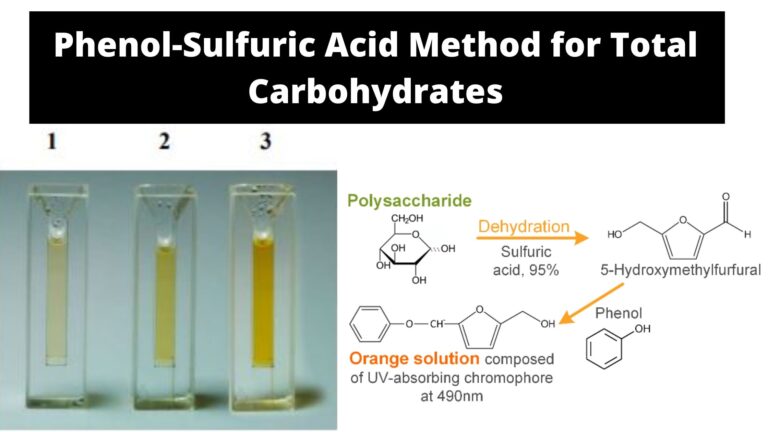
What is Phenol-Sulfuric Acid Method for Total Carbohydrates? Phenol-sulfuric acid method is a colorimetric method which is used for quantitative estimation of total carbohydrates. It was formalized by DuBois in 1956. It is simple rapid and reliable method. It can detect almost all type of carbohydrates like monosaccharides disaccharides oligosaccharides and polysaccharides. In this method
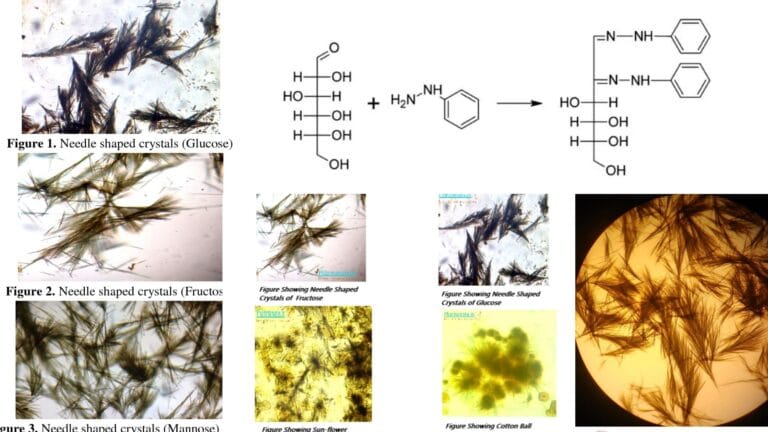
What is Osazone Test? Osazone test is a chemical test which is used for detection and differentiation of reducing sugars. Reducing sugar contains free carbonyl group (or potentially free carbonyl group) and it gives positive reaction. This test was developed by Emil Fischer. It is based on formation of osazone crystals and these crystals are
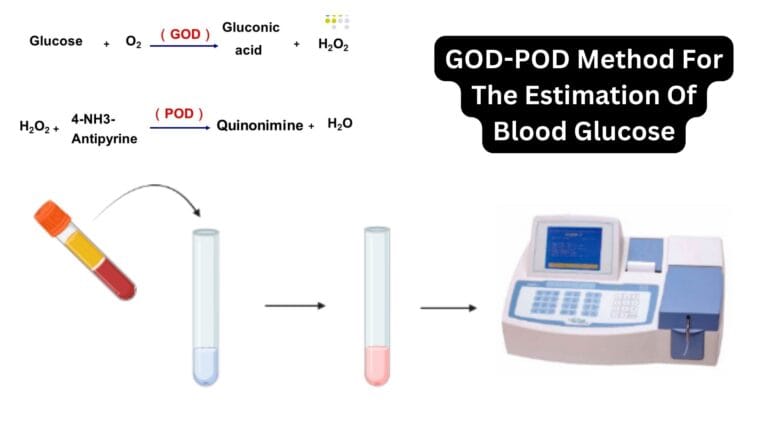
What is GOD-POD Method for Glucose Estimation? GOD-POD method is referred to as Glucose oxidase-peroxidase method (Trinder method). It is a enzymatic method which is used for estimation of blood glucose. It is highly specific and it gives true glucose value. This method is based on two step enzymatic reaction and colour development. In first
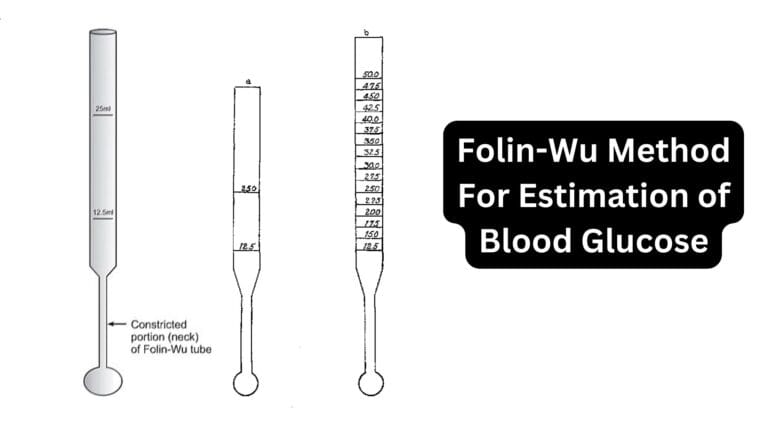
What is Folin-Wu Method? Folin-Wu method is a old colorimetric method which is used for estimation of glucose in blood. It was developed in 1919 by Otto Folin and Hsien Wu. It is based on oxidation-reduction reaction. The blue colour is produced and this colour intensity is measured for glucose level. In this method the