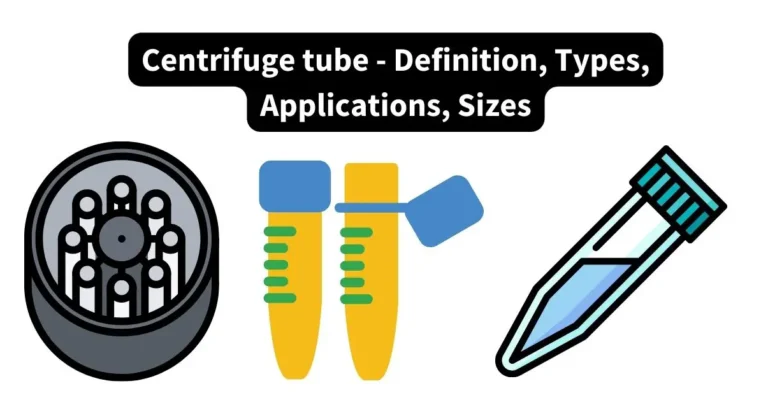
Centrifuge tube is a specialized tube that is used to hold liquid samples during centrifugation. It is made up of strong and durable material so that it can tolerate high rotational force without breaking or leakage. It is commonly used in biological, medical and chemical laboratories. During centrifugation, the tube is placed inside the centrifuge
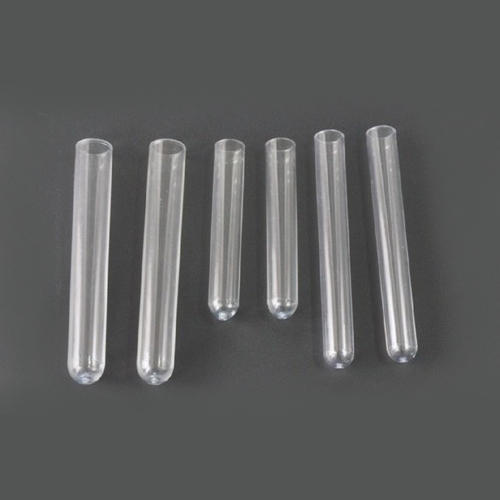
Test tube is a simple laboratory glassware which is used in different laboratory works. It is a cylindrical tube like container, open at one end and closed at the other end. It is also called culture tube or sample tube. It is generally long and narrow in shape. The lower end may be rounded, flat
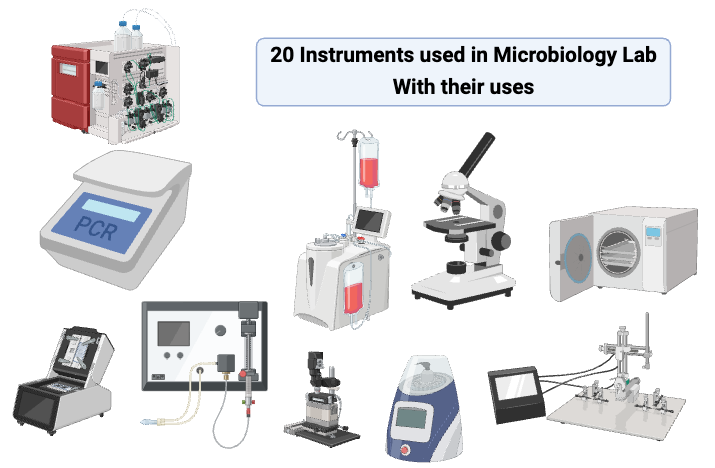
The most commonly used equipment is inoculation needles, transfer loops, inoculation, Bunsen burner, autoclave (or pressure cooker) incubators, hot air oven centrifuge, spectrophotometer magnetic stirrer electric shaker and rotary shaker heating plate, heating mantle distillation plant, UV-lamp carbon dioxide cylinder, water-bath and a single-pan balance that has weights (for general use) chemical balance, fine analytical
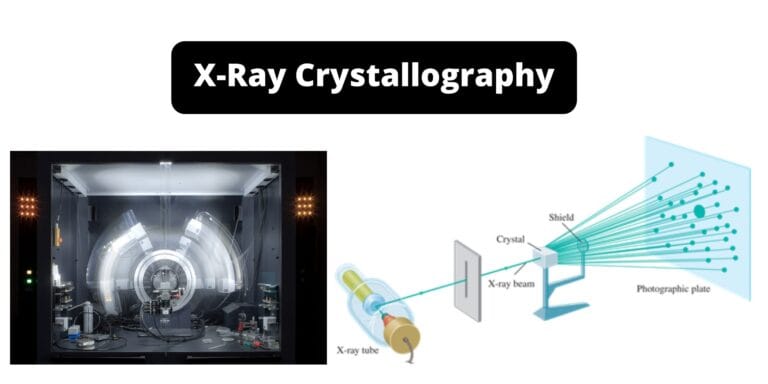
X-Ray Crystallography is an experimental technique used to know the three dimensional arrangement of atoms and molecules inside a crystal. It is used for studying the exact position of atoms. It also shows the chemical bonds and the total molecular structure present in the crystal. In this method, a focused beam of X-rays is passed
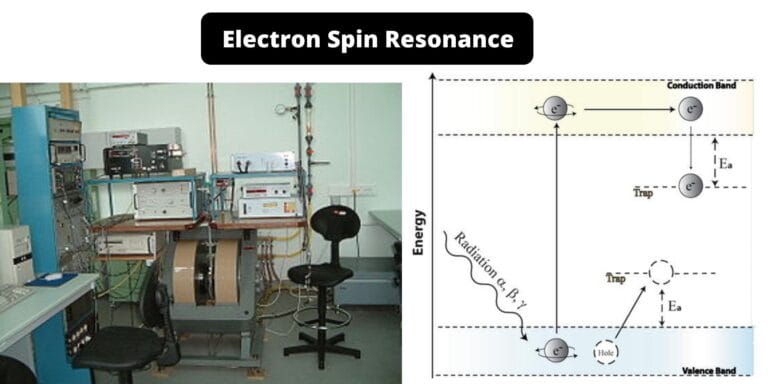
Electron Spin Resonance (ESR) is also known as Electron Paramagnetic Resonance (EPR). It is a non-destructive spectroscopic technique used for studying materials having one or more unpaired electrons. These unpaired electrons are present in paramagnetic substances. Every electron acts like a small magnet because it has intrinsic angular momentum or spin. When the sample is
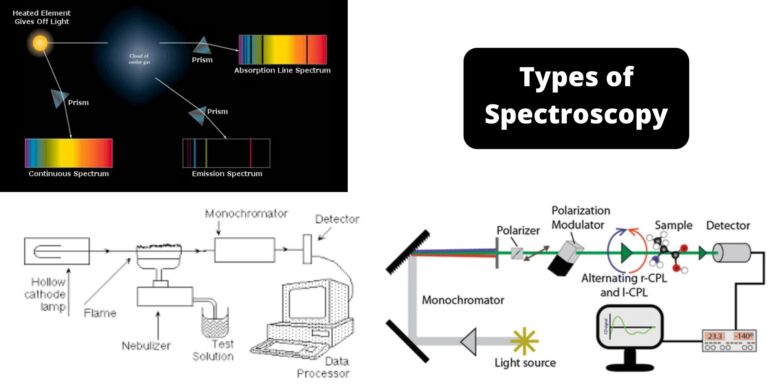
Spectroscopy is a study of interaction of matter with electromagnetic radiation. It is used to study the atoms and molecules when they are exposed to different wavelength of light or energy. In this process, the atoms and molecules absorb, emit, reflect or scatter the radiation. These radiation are absorbed or emitted only at some specific
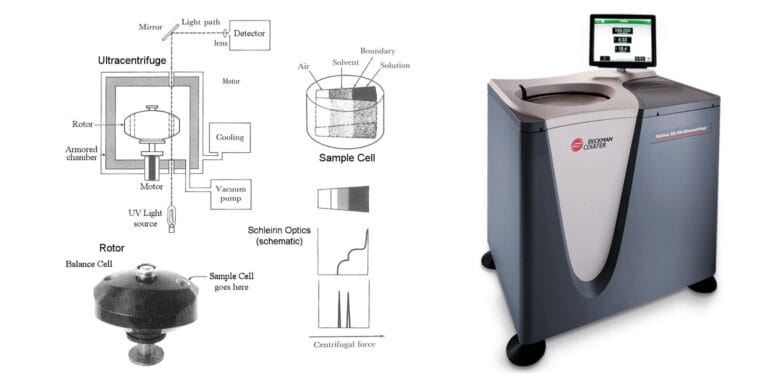
Ultracentrifuge is a high speed centrifuge which is used for separation of very small particles from a liquid medium. It can rotate at very high speed, usually more than 100000 rpm. Due to this high speed, very strong centrifugal force is produced. This force may be more than 1000000 times of gravity. Ultracentrifuge works on
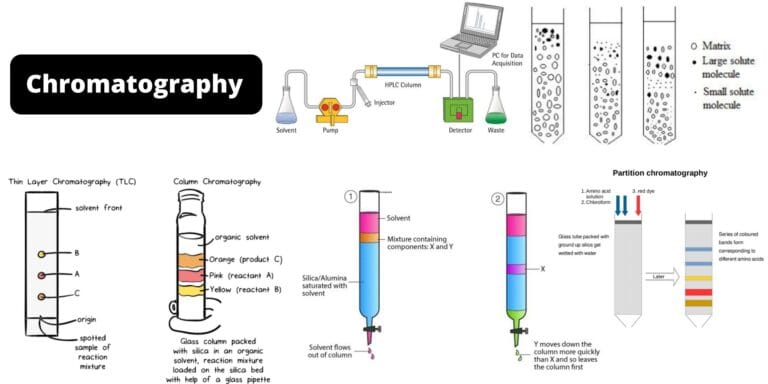
Chromatography is an analytical technique which is used to separate the components of a mixture. It is used in laboratory for separation, identification and also estimation of substances present in a complex mixture. The method was first developed by Russian botanist Mikhail Tsvet for separation of plant pigments. In chromatography, there are two phases. One
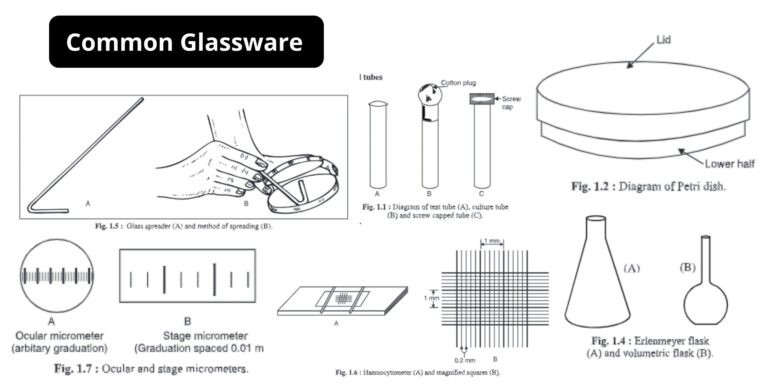
Microbiology laboratories require well-built rooms that are equipped with tools, glassware and equipment. Test tubes, culture tubes, Petri dishes and Erlenmeyer flasks are the most important types of glassware in a microbiological lab. 1. Test tube Test tube is a common laboratory apparatus used for holding, mixing and heating small amount of chemicals. It is
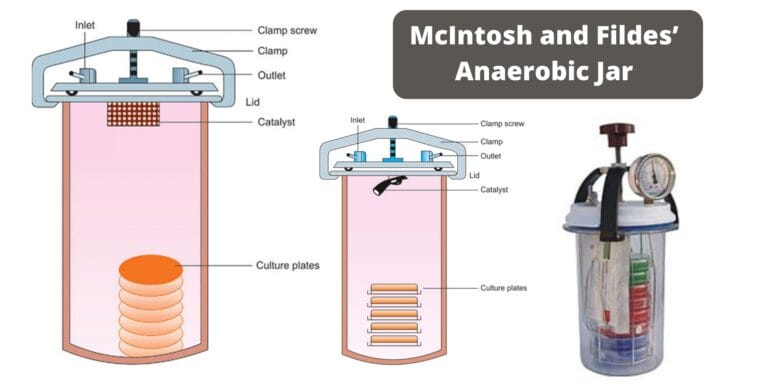
McIntosh and Fildes’ Anaerobic Jar is a laboratory apparatus used for cultivation of strict anaerobic microorganisms. These microorganisms cannot grow in presence of oxygen. So, this jar is used to provide oxygen free condition for their growth. It was introduced in 1916 by James McIntosh, Paul Fildes and William Bulloch. The jar is usually a