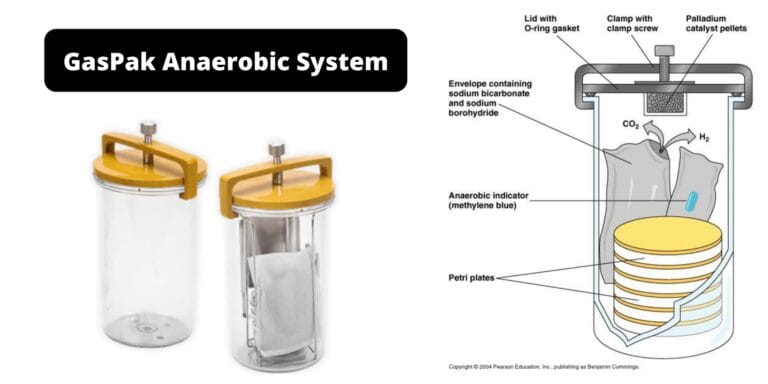
GasPak Anaerobic System is a self-contained airtight apparatus that is used in microbiology laboratory for cultivation of strict anaerobic bacteria. These bacteria cannot grow in presence of oxygen and need oxygen free condition for their survival and growth. The system contains a sealed jar or container in which culture plates are kept with a gas
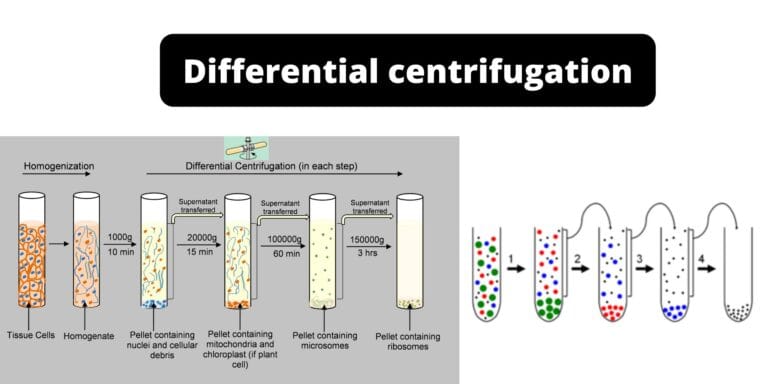
Differential centrifugation is a simple technique used for separation of cell organelles and other sub-cellular particles from a mixture. It is also called differential pelleting or differential velocity centrifugation. It separates the particles mainly according to their size and density. The larger and heavier particles settle first, while smaller particles remain in the liquid part.
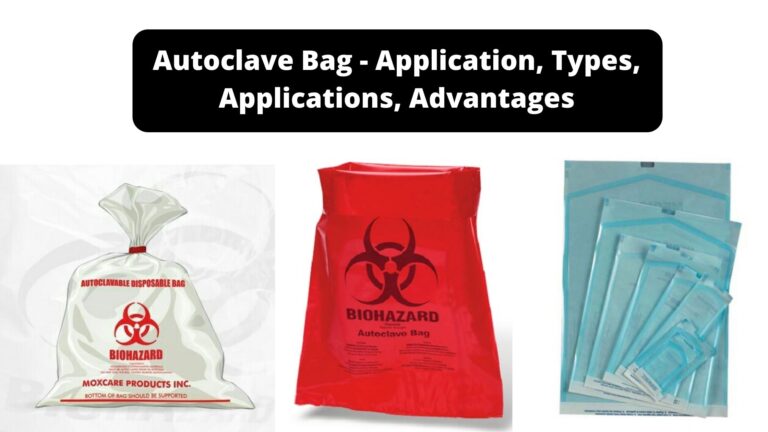
Autoclave bag is a specialized single-use flexible container that is used to hold biohazardous waste, medical equipment and laboratory materials during steam sterilization process. It is made up of temperature-tolerant and puncture-resistant plastic materials like high-density polyethylene (HDPE), polyamide or virgin polypropylene. These materials allow the bag to withstand high temperature of autoclave without melting
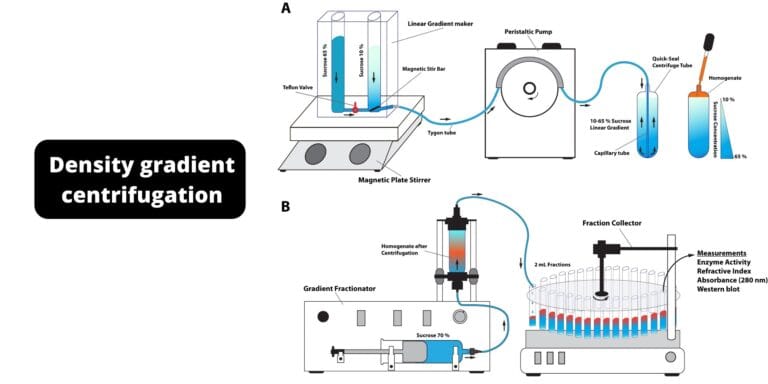
Density gradient centrifugation is a mechanical separation technique used to separate and concentrate particles present in a liquid medium. It is carried out by using centrifugal force and a density gradient medium in a centrifuge tube. In this method, the sample is placed in a tube containing fluid whose density gradually increases from top to
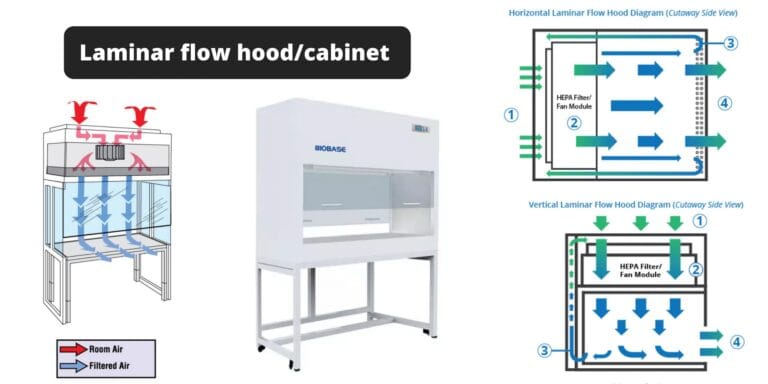
Laminar flow hood or cabinet is a specialized enclosed laboratory workstation which is used to create a sterile and contamination free working area. It is also known as clean bench. It protects the sample and product from dust, bacteria, fungal spores and other airborne particles. It works by drawing the room air inside the cabinet
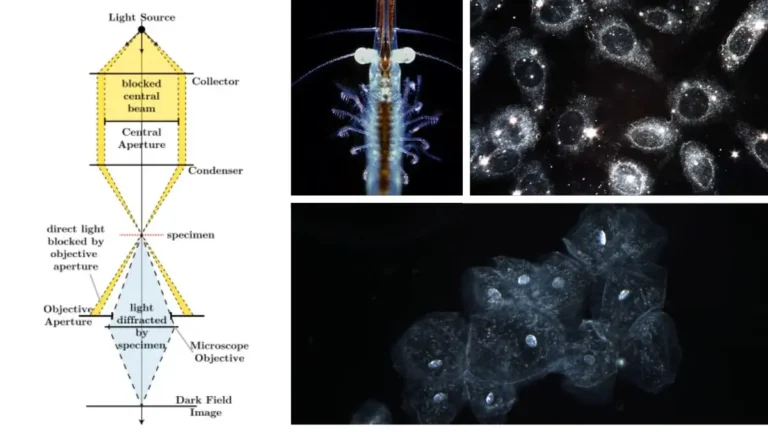
Dark field microscopy is a special illumination technique used in light microscope to increase contrast of transparent, unstained or low contrast specimens. The specimen looks bright, and the background looks dark or almost black. It is useful when normal bright background observation is not giving clear contrast. It is done by using a modified condenser
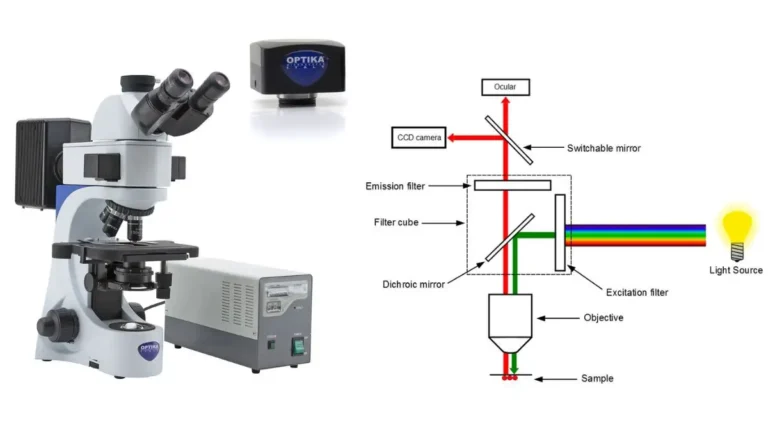
Fluorescence microscope is an advanced optical microscope that uses fluorescence for viewing the specimen. It produces a bright coloured image of the specimen in a dark background. It is mostly used for biological and chemical samples where a specific part of the sample is to be seen clearly. In this microscope, fluorescent dyes, proteins or
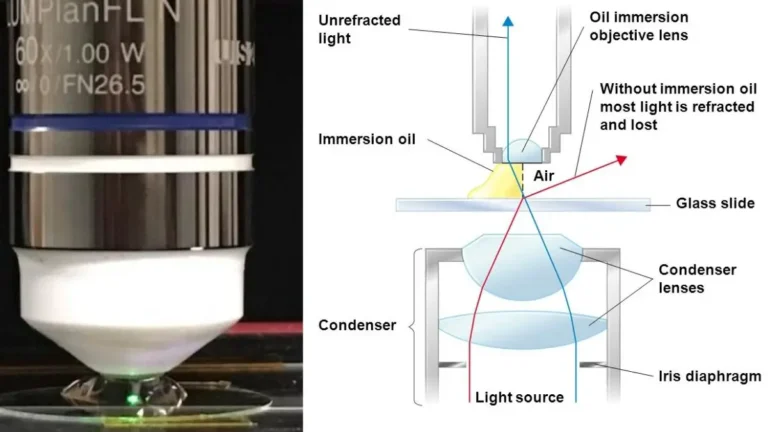
Oil immersion technique is a light microscopic technique used for increasing the resolving power of microscope at high magnification. In this technique, a special transparent oil is used between the cover glass and the objective lens. This oil is called immersion oil. It is mostly used with oil immersion objective lens. Normally, when light passes
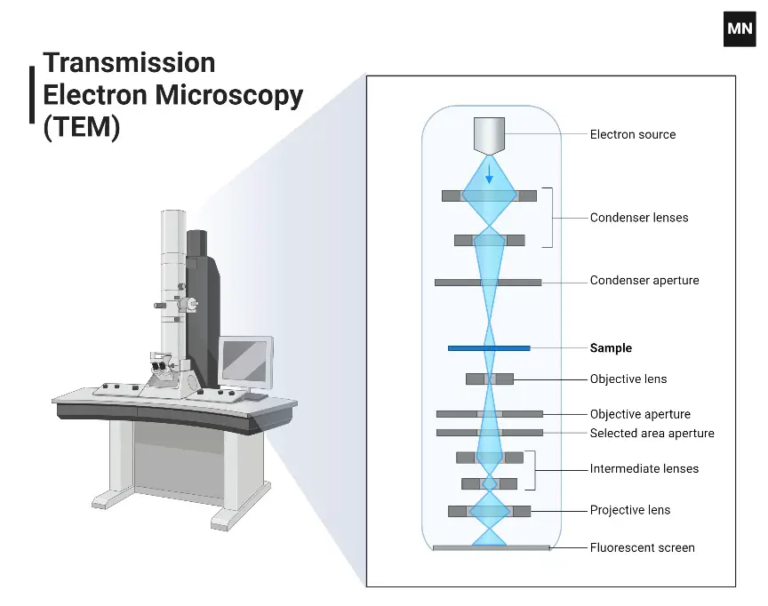
Transmission Electron Microscope (TEM) is an advanced analytical instrument used to visualize the internal structure of specimens. It uses highly energetic beam of electrons instead of light. It works under high vacuum condition. The electron gun produces electron beam. This beam is then focused and guided by a series of electromagnetic lenses. The specimen used
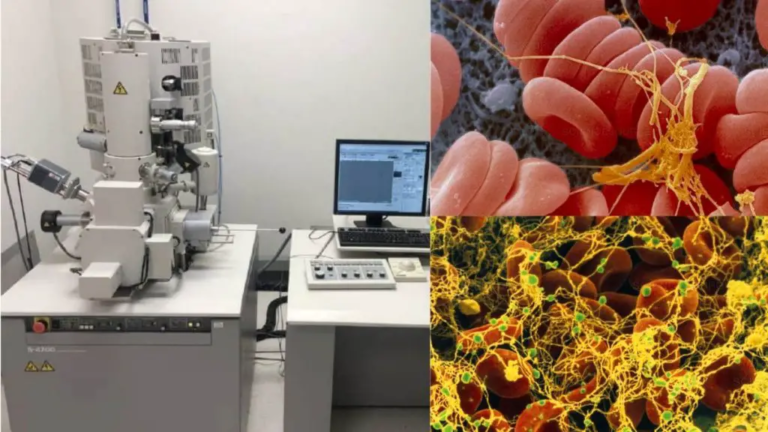
Scanning Electron Microscope (SEM) is an advanced magnifying instrument that is used to observe the surface of a sample by using focused beam of accelerated electrons. It does not use visible light for image formation. It uses electron beam because electrons have much shorter wavelength than light photons. So, SEM can produce image with very