What is Trypanosoma gambiense? Classification Domain Eukaryota Phylum Euglenozoa Class Kinetoplastea Order Trypanosomatida Family Trypanosomatidae Genus Trypanosoma History and Distribution of Trypanosoma gambiense Trypanosoma gambiense, the parasite responsible for causing Human African Trypanosomiasis (HAT) or African sleeping sickness, has been a health concern in tropical Africa for centuries. Its history and distribution provide valuable insight
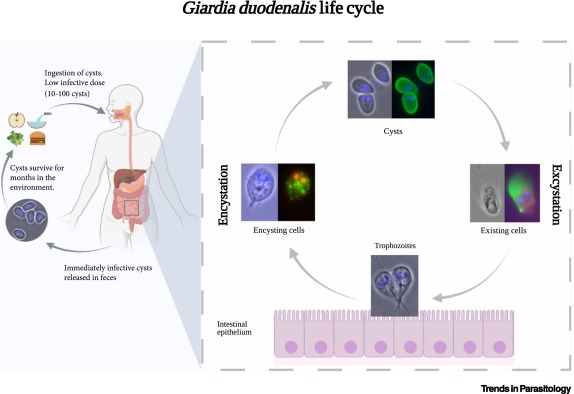
What is Giardia Intestinalis? Classification of Giardia Intestinalis Domain: Eukaryota Phylum: Metamonada Order: Diplomonadida Family: Hexamitidae Genus: Giardia Species: G. duodenalis History and Distribution of Giardia Intestinalis Giardia intestinalis has a long and significant history as one of the earliest recognized protozoan parasites affecting humans. Its study has evolved over the centuries, revealing important aspects of its distribution
Entamoeba histolytica can be described as an anaerobic parasite amoebozoan that is part of the Genus Entamoeba. It is a major cause of infection for humans and other primates , causing amoebiasis. E. histolytica is estimated to affect between 35 and 50 million people across the globe.
What is Host-Parasite Interactions? Types of Hosts In parasitology, hosts play vital roles in the life cycle of parasites. Each type of host has a specific function that contributes to the survival and development of the parasite. Understanding these types helps in comprehending how parasites interact with their hosts and spread diseases. Below are the
What is Parasitology? History of Parasitology The history of parasitology encompasses a rich tapestry of discoveries and advancements that highlight humanity’s ongoing struggle to understand and combat parasitic organisms. This narrative intertwines with the broader history of medicine, particularly in the context of tropical diseases, where many parasites are prevalent. Below is a structured overview
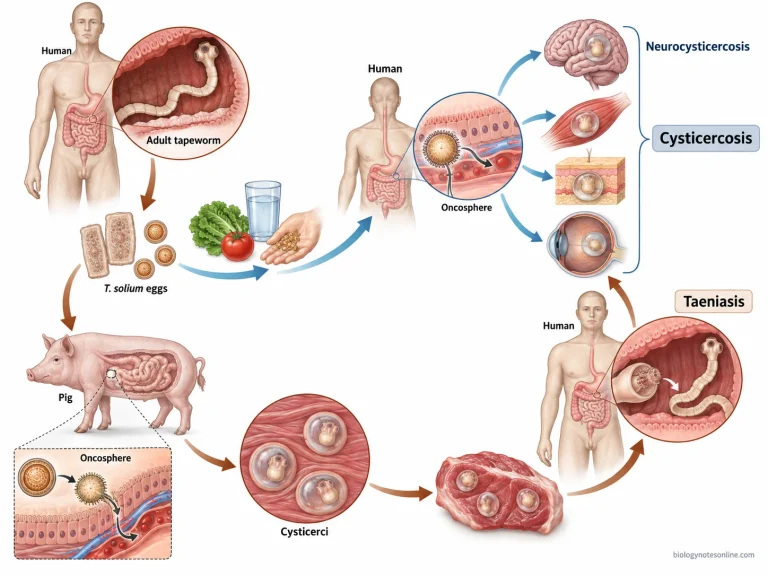
Cysticercosis is a tissue infection caused by Taenia solium larvae. Review transmission, symptoms, diagnosis, treatment, prevention and neurocysticercosis.
Strongyloides stercoralis is a soil-transmitted parasitic nematode and the major causative agent of strongyloidiasis in humans. It has both free-living generation in the soil and parasitic generation inside the host. The most characteristic feature of S. stercoralis is autoinfection, due to which the infection can remain for several years or even decades. During this process,
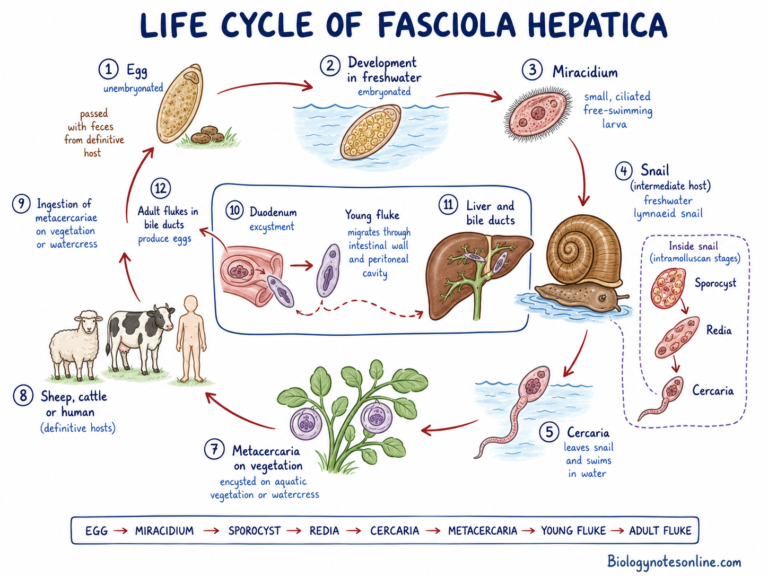
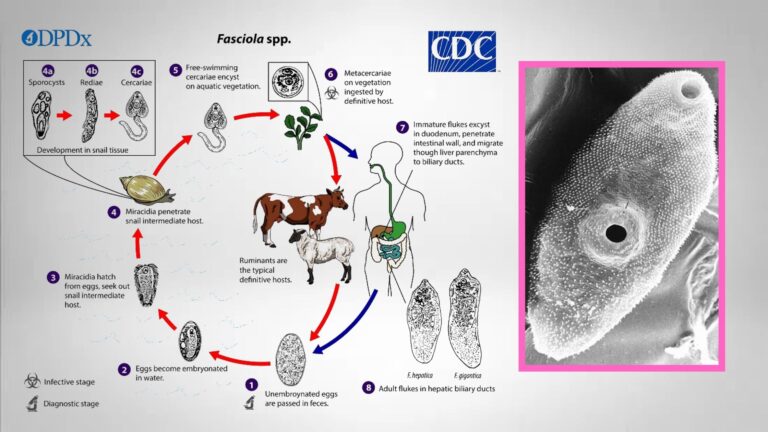
Fascioliasis is an infectious disease caused by Fasciola parasites, which are flatworms referred to as liver flukes. The adult (mature) flukes are found in the bile ducts and liver of infected people and animals, such as sheep and cattle. In general, fascioliasis is more common in livestock and other animals than in people.