Cysticercosis: Causes, Symptoms, Diagnosis and Treatment

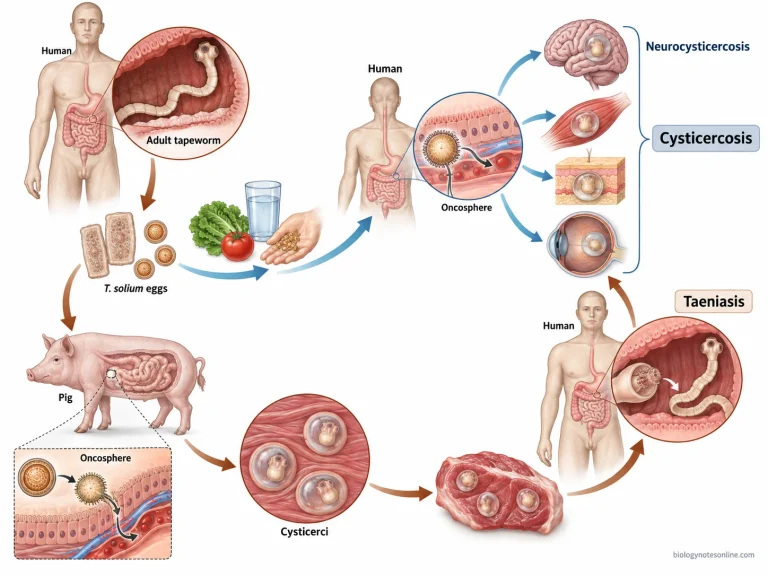
Cysticercosis is a tissue infection caused by Taenia solium larvae. Review transmission, symptoms, diagnosis, treatment, prevention and neurocysticercosis.

Cysticercosis is a tissue infection caused by Taenia solium larvae. Review transmission, symptoms, diagnosis, treatment, prevention and neurocysticercosis.
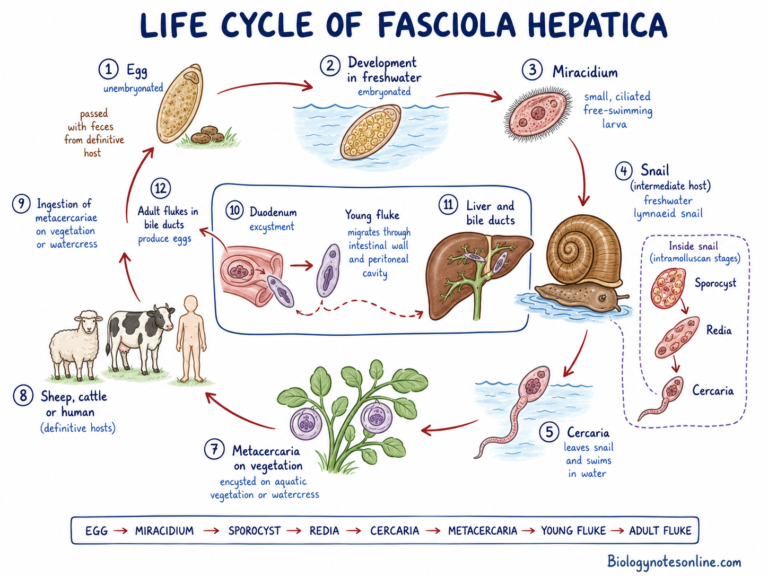
Learn Fasciola hepatica classification, morphology, life cycle, hosts, transmission, fascioliasis, symptoms, diagnosis, treatment and prevention.

Strongyloides stercoralis is a soil-transmitted parasitic nematode and the major causative agent of strongyloidiasis in humans. It has both free-living generation in the soil and parasitic generation inside the host. The most characteristic feature of S. stercoralis is autoinfection, due to which the infection can remain for several years or even decades. During this process,
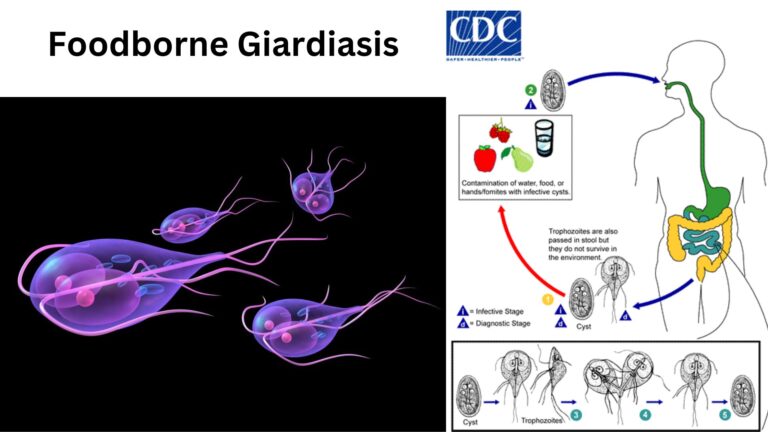
What is Foodborne Giardiasis? Characteristics of Giardia Giardia is a genus of microscopic, single-celled parasites that can cause the infection known as giardiasis. Here are some characteristics of Giardia: Overall, Giardia is a highly adaptable and resilient parasite that can cause a range of symptoms in humans and animals. By practicing good hygiene and food safety
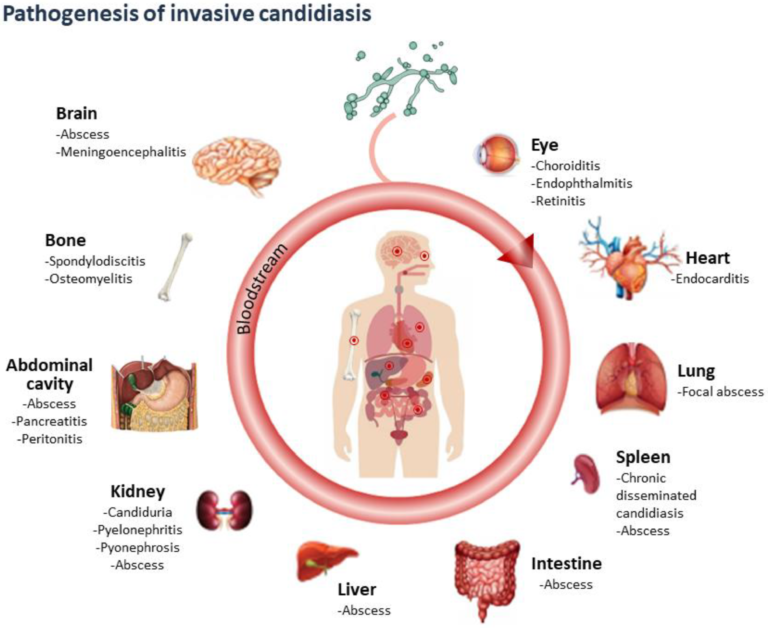
Candidiasis, also known as a yeast infection, is a fungal infection caused by a group of yeasts called Candida. Candida is a normal part of the human microbiota and is commonly found in the mouth, gut, and female genital tract. However, when there is an overgrowth of Candida, it can cause infection. Candidiasis can occur

Kingdom: Fungi Division: Ascomycota Class: Sordariomycetes Order: Hypocreales Family: Nectriaceae Genus: Fusarium Fusarium is a large genus of filamentous fungi belonging to the hyphomycetes group, which is extensively distributed in soil and closely associated with plants. The majority of species are saprobes and are relatively abundant constituents of the soil microbiome. Certain species generate mycotoxins
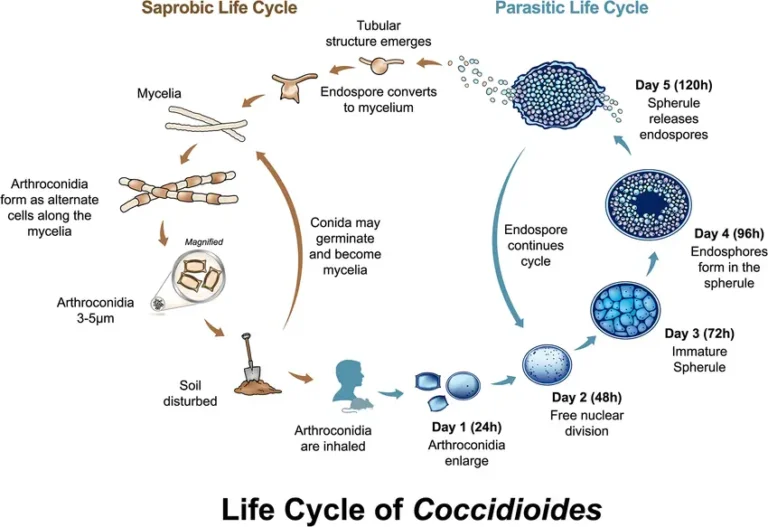
Coccidioides is a genus of dimorphic fungi that exist as both mycelia and spherules. Mycelia and spherules are both asexual structures. Sexual coccidiosis has not been identified. The results of a molecular analysis indicate that Coccidioides is related to ascomycetes such as Histoplasma capsulatum and Blastomyces dermatitidis. There are two recognized taxa within the genus
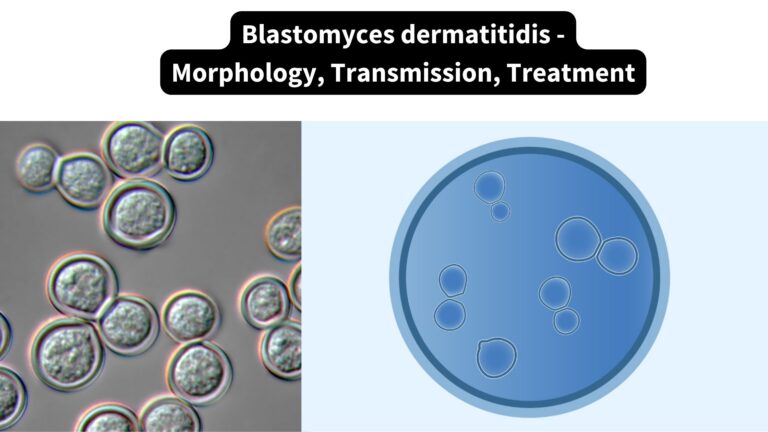
Kingdom: Fungi Division: Ascomycota Class: Eurotiomycetes Order: Onygenales Family: Ajellomycetaceae Genus: Blastomyces Species: B. dermatitidis Morphology of Blastomyces dermatitidis Blastomyces dermatitidis is a dimorphic fungus that causes blastomycosis, a fungal infection in humans and animals. The fungus exists in two different morphological forms, the yeast phase, and the mold phase. Overall, the morphology of Blastomyces dermatitidis

Loa loa is the African eye worm that causes loiasis. Learn its morphology, life cycle, transmission, symptoms, diagnosis, treatment and prevention.
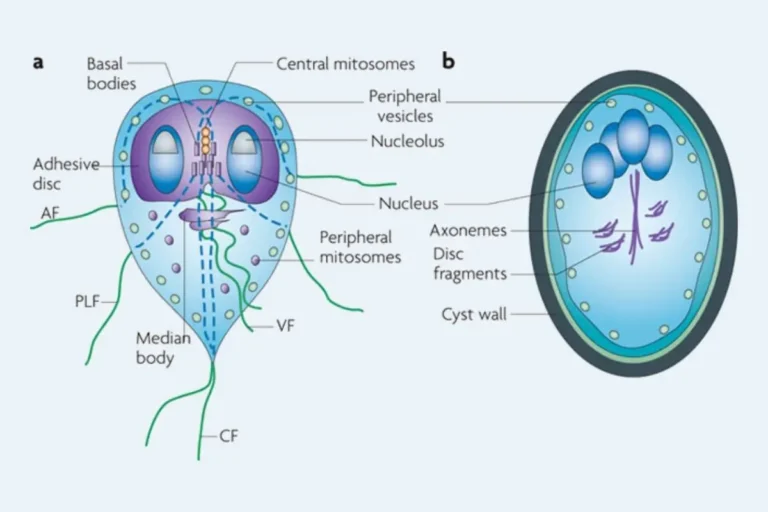
Learn what causes giardiasis, how Giardia spreads and affects the intestine, its symptoms, diagnosis, treatment, recovery, complications, and prevention.