

Cell growth is the process by which an individual cell increases its cell mass. During this process, proteins and other cellular macromolecules are accumulated. As a result, the cell size generally increases. Thus, cell growth mainly represents increase in cellular material rather than increase in the number of cells.
Cell growth is not identical to cell division. Cell division is the process where one mother cell divides to form daughter cells. Division itself distributes the existing cellular material between the daughter cells and does not necessarily produce a net increase in total cell mass. Cells therefore coordinate growth with division so that they do not become progressively smaller after repeated divisions.
Cell proliferation refers mainly to increase in the number of cells through repeated cell divisions. It is closely connected with cell growth because proliferating cells normally increase their cell mass and cell size before another division takes place. However, the two are not the same process. Cell growth increases the size or mass of a cell, whereas cell proliferation increases cell number.
What is Cell Growth?
Cell growth is a biological process in which an individual cell increases its cell mass. This occurs by the accumulation of proteins, lipids, nucleic acids and other cellular components. The increase in cellular mass generally results in an increase in cell size and cell volume. In biological terms, increase in mass is the more direct meaning of cell growth.
During this process, biosynthesis of cellular macromolecules becomes greater than their degradation. Proteins and other cellular materials are synthesized and accumulated within the cell. Reduction in their degradation can also increase the cellular mass. Thus, cell growth depends on the balance between synthesis and degradation of cellular components.
Increase in cell volume usually accompanies the increase in mass, but these are not completely identical. Cell volume can also change by uptake or loss of water without the same change in cellular dry mass. For example, osmotic swelling can increase cell volume without an equivalent increase in biomass.
The term cell growth is also sometimes used in a broader way for an increase in the number of cells or growth of a cell population. This usage actually includes cell proliferation. More specifically, cell growth refers to increase in mass of an individual cell, while cell proliferation represents increase in cell number.
What Happens Inside a Cell During Growth?
During cell growth, new cellular materials are continuously formed and accumulated inside the cell. Proteins, RNA, lipids and other cytoplasmic materials are increased. The membranes and different organelles also grow along with the increasing cell.
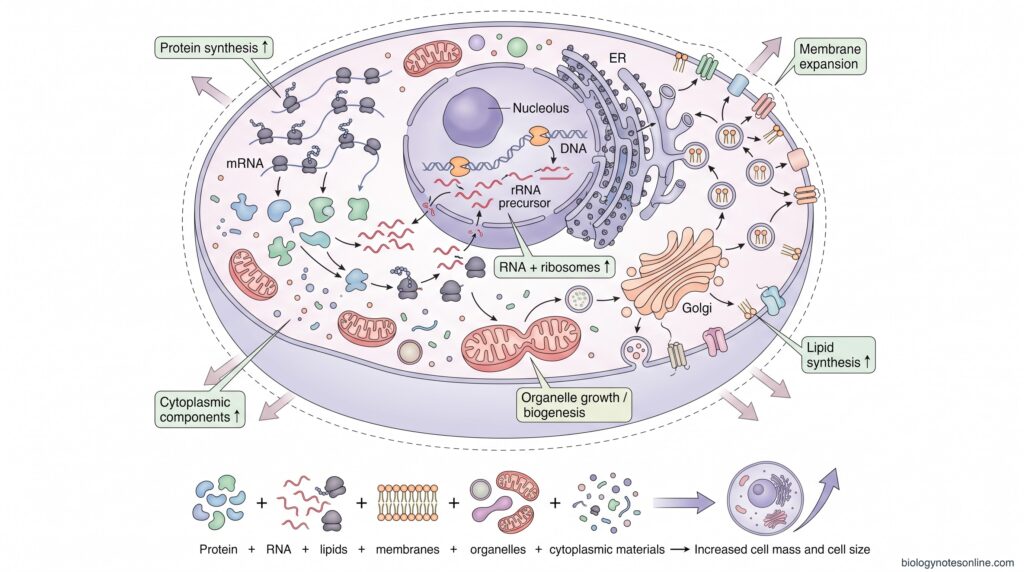
- Proteins – Proteins form a major part of the cellular mass. During growth, new proteins are synthesized by the ribosomes and accumulated within the cell. These include enzymes, structural proteins and many other proteins required for different cellular activities. Protein synthesis therefore contributes largely to the formation of new cell mass.
- RNA – The amount of RNA is also increased in a growing cell. A major part of this is ribosomal RNA (rRNA), required for making new ribosomes. Other RNAs such as mRNA and tRNA are formed for protein synthesis and other cellular functions. In actively growing cells, synthesis of rRNA and ribosomes is closely associated with the growth state of the cell.
- Lipids – New lipids are synthesized during growth, particularly the lipids required for cellular membranes. Phospholipids and sterols are important components of these membranes. In eukaryotic cells, much of the membrane lipid synthesis takes place in the endoplasmic reticulum (ER). The amount and type of lipid formed, however, varies with the cell and its growth condition.
- Membranes – The cell cannot increase its size without increasing membrane material. New lipids and membrane proteins are added, allowing expansion of the plasma membrane and membranes present inside the cell. Membrane growth is also needed during formation and enlargement of membrane-bound organelles.
- Organelles – Organelles also change as the cell grows. Their size or number may increase depending on the organelle and type of cell. Mitochondria, ER and several other organelles are maintained by their own growth, division or membrane biogenesis. Thus, the larger cell can maintain its increased metabolic requirements.
- Cytoplasmic components – Different materials present in the cytoplasm are also accumulated. These include proteins, ribosomes, metabolites and several other cellular molecules. Many of these components increase together with cell volume, which helps to maintain the composition and functioning of the growing cell. However, every cytoplasmic component does not necessarily increase at exactly the same rate.
Cell Growth vs Cell Division vs Cell Proliferation
| Features | Cell Growth | Cell Division | Cell Proliferation |
|---|---|---|---|
| Definition | Cell growth is the process where an individual cell increases its cellular material or cell mass. | Cell division is the process by which one parent cell divides into daughter cells. | Cell proliferation refers to increase in the number of cells through repeated cell growth and division. |
| What increases | Mainly cell mass increases. Cell size or volume generally increases as a result. | The number of cells increases after division of the parent cell. | Total cell number increases in a population. |
| Main process | Proteins, RNA, lipids and other cellular components are synthesized and accumulated. | Replicated chromosomes and cytoplasm are separated between daughter cells. | It involves repeated progression through the cell cycle followed by cell division. |
| Effect on cell size | Usually causes an increase in the size of an individual cell. | Division generally produces daughter cells smaller than the parent cell immediately before division. | Cell size may remain within a characteristic range when growth and division are properly coordinated. |
| Effect on cell number | Cell number does not necessarily increase. A cell can grow without dividing. | One cell is converted into two or more daughter cells depending upon the type of division. | Cell number increases over time. This is its main feature. |
| Relation with cell cycle | Growth occurs during much of the cell cycle, particularly during interphase in many cells. | It mainly occurs during the M phase and cytokinesis in eukaryotic cells. | It requires repeated completion of the cell cycle by proliferating cells. |
| Can occur independently | Yes. Some cells grow in size without undergoing division. | Division requires preparation and duplication of cellular components before normal division. | It cannot occur without production of new cells. |
| Biological role | It maintains cell mass, size and cellular components required for normal function. | It produces daughter cells and allows reproduction, development and replacement of cells. | It increases the size of a cell population and contributes to tissue growth and repair. |
| Example | Enlargement of an oocyte or increase in size of a cell during G1 phase. | Mitotic division of a somatic cell into two daughter cells. | Increase in epithelial cell number during tissue renewal. |
How Does a Cell Grow?
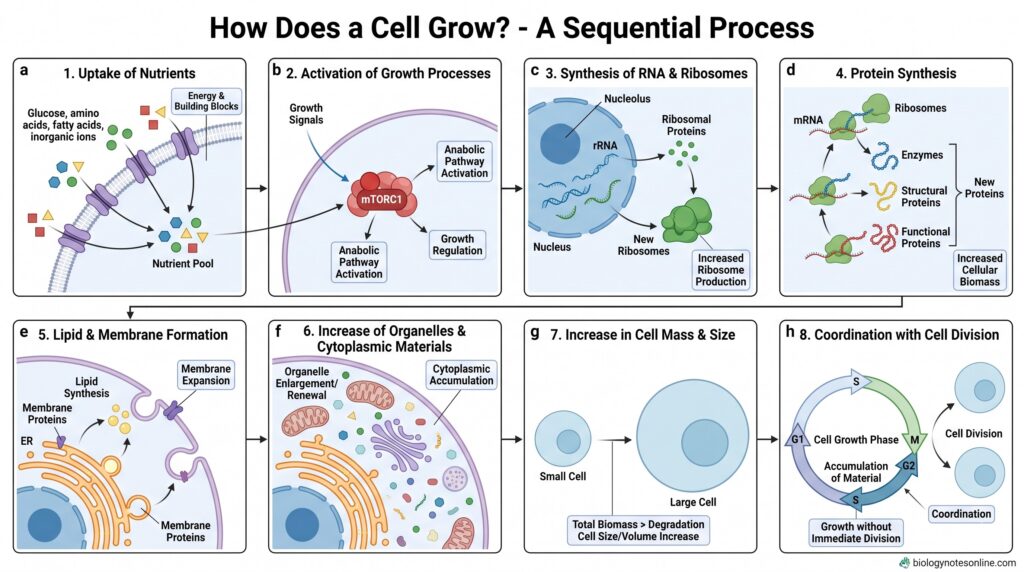
Cell growth does not occur by a single reaction. Different cellular materials are synthesized and accumulated during the process. Many of these processes take place together. The general steps of cell growth are as follows-
1. Uptake of nutrients
In the first step, the cell takes nutrients from its surrounding environment. Glucose, amino acids, fatty acids, inorganic ions and other molecules can be used depending on the type of cell. These provide energy and the basic materials required for synthesis of cellular components.
2. Activation of growth processes
When nutrients and suitable growth conditions are present, different growth-regulating pathways become active. In animal cells, mTORC1 is one of the major systems involved in this process. It responds to nutrients and growth signals and controls several anabolic activities required for cell growth.
3. Synthesis of RNA and ribosomes
The growing cell produces new RNA and ribosomal components. rRNA combines with ribosomal proteins for formation of new ribosomes. Increased ribosome production provides more machinery for synthesis of cellular proteins.
4. Protein synthesis
In this step, amino acids are joined to form new proteins by the ribosomes. Enzymes, structural proteins and different functional proteins are produced. Proteins form a large portion of cellular biomass, therefore their synthesis is an important part of increase in cell mass.
5. Lipid and membrane formation
Lipids are also synthesized as the cell grows. In eukaryotic cells, the endoplasmic reticulum (ER) has an important role in synthesis of many membrane lipids and membrane proteins. These materials are used for expansion of the plasma membrane and membranes of different organelles.
6. Increase of organelles and cytoplasmic materials
Different cellular structures are now increased according to the requirement of the growing cell. Organelles are enlarged, renewed or their number may increase. Proteins, ribosomes, metabolites and other cytoplasmic components are also accumulated. The exact process is not same for every organelle or every cell type.
7. Increase in cell mass and size
As more cellular components are formed than degraded, the total cell mass increases. This usually leads to an increase in cell size and cell volume. Growth rate is controlled so that a characteristic size can be maintained for a particular type of cell.
8. Coordination with cell division
Cell growth is commonly coordinated with the cell cycle in proliferating cells. The cell accumulates enough cellular material before it is divided between daughter cells. However, cell growth and cell division are separate processes, and growth can occur without immediate division.
Cell Growth During the Cell Cycle
Cell growth is coordinated with the cell cycle so that cellular material can be produced before the cell divides. The eukaryotic cell cycle has four major phases, G1, S, G2, and M phase. G1, S and G2 together form the interphase. Growth is not restricted only to one phase, and its pattern can also differ between cell types.
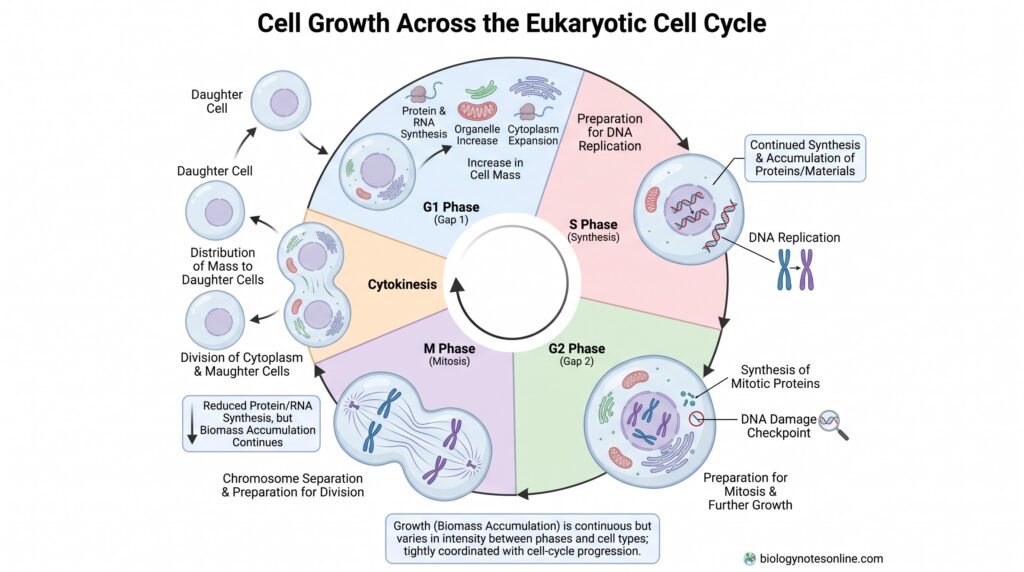
- G1 phase – G1 starts after completion of the previous cell division. During this phase, synthesis of proteins, RNA and different cellular components takes place. The amount of cytoplasm and organelles also increases. Thus, G1 is an important period for increase in cell mass and preparation for DNA replication.
- S phase – The major event of S phase is replication of DNA. Cell growth, however, does not necessarily stop during this period. Synthesis and accumulation of proteins and other cellular materials can continue while the chromosomes are being replicated.
- G2 phase – After DNA replication, the cell enters G2 phase. Further growth occurs and different proteins required for mitosis are produced. The cell also checks whether DNA replication has been completed properly before entering mitosis. G2 therefore forms another period between DNA synthesis and cell division.
- M phase – During M phase, replicated chromosomes are separated and the cell prepares for physical division. RNA and protein synthesis are generally reduced during mitosis in many animal cells, but cellular growth is not completely absent. Studies in mammalian cells have shown that biomass accumulation can continue during mitosis.
- Cytokinesis – Cytokinesis divides the cytoplasm and other cellular materials between the two daughter cells. Thus, the mass accumulated during the previous stages becomes distributed into newly formed cells. Each daughter cell can then begin another period of growth before its next division.
The amount of growth occurring in G1, S and G2 is not the same in every organism or cell type. Some cells mainly control their size around G1, whereas growth can occur throughout much of the cell cycle in others. Therefore, cell growth and cell-cycle progression are closely connected, but they are not the same process.
How is Cell Growth Regulated?
Cell growth is regulated by different extracellular and intracellular signals. These signals control synthesis and breakdown of cellular materials according to the condition of the cell. In eukaryotic cells, mTORC1 is one of the major regulator involved in this process. The following are the major mechanisms involved in regulation of cell growth-
- Growth factors – Growth factors such as insulin and IGF activate the PI3K-Akt pathway after binding with their receptors. Akt can phosphorylate TSC2, which normally acts as a negative regulator of cell growth. Inhibition of TSC2 allows Rheb to stimulate mTOR signaling. Thus, growth-promoting signals can increase cellular growth through this pathway.
- Nutrient availability – The availability of amino acids is another important factor controlling growth. Amino acids regulate mTORC1 through the Rag GTPases. When amino acids are available, Rag proteins help in bringing mTORC1 to the lysosomal surface where it can be activated. During nutrient deficiency, this activation is reduced.
- Energy status of cell – Cell growth requires a large amount of energy. When cellular energy becomes low, AMP-activated protein kinase (AMPK) is activated. AMPK phosphorylates TSC2 and also the mTORC1 component raptor, resulting in suppression of mTORC1 activity. Protein synthesis and growth are therefore reduced during energy shortage.
- mTORC1 signaling – mTORC1 acts as an important controller of increase in cell mass and cell size. It acts through downstream proteins such as S6K1 and 4EBP1/eIF4E, which regulate protein translation. Inhibition of mTOR decreases cell size, whereas increased activity of these downstream components can increase cell size.
- Cellular stress – Unfavourable conditions can slow down cell growth. For example, low oxygen causes energy stress and can activate the AMPK-TSC2 pathway, which inhibits mTOR signaling and protein translation. In this condition, energy-consuming growth processes are reduced.
- Synthesis and degradation of cellular materials – Growth finally depends on how much new cellular material is accumulated. When biosynthetic processes remain higher than degradation, cell mass increases. When nutrients or energy become limited, the cell reduces synthesis and shifts more towards maintenance and breakdown of cellular components. Thus, regulation of growth involves a balance between anabolic and catabolic processes.
- Coordination with cell division – Regulation of growth is also coordinated with the cell cycle, so that a suitable cell size can be maintained after repeated divisions. However, growth and cell-cycle progression are separable processes. Experiments in mammalian cells have shown that mTOR- and PI3K-dependent growth can continue even when cell-cycle progression is blocked.
Role of mTOR in Cell Growth
mTOR (mechanistic target of rapamycin) is a serine/threonine protein kinase involved in regulation of cell growth and metabolism. It occurs mainly in two complexes, mTORC1 and mTORC2. Among these, mTORC1 has the major direct role in controlling synthesis and accumulation of cellular materials.
The following are the major roles of mTOR in cell growth-
- Sensing nutrients and growth signals – mTORC1 responds to amino acids, growth factors, cellular energy and other conditions. When nutrients and growth signals are sufficient, mTORC1 becomes active. This allows the cell to use available materials for growth. During nutrient shortage, its activity is reduced.
- Protein synthesis – One of the major functions of mTORC1 is increasing protein synthesis. It acts on S6 kinase 1 (S6K1) and 4E-binding proteins (4E-BPs), which regulate translation of mRNA. More cellular proteins can therefore be produced during active growth. Proteins form a major part of newly formed cell mass.
- Ribosome production – mTORC1 also promotes processes required for ribosome biogenesis. Ribosomes are required for translation and production of new proteins. Increased ribosomal activity therefore supports the high protein synthesis of a growing cell.
- Lipid synthesis – Lipids are required when the plasma membrane and intracellular membranes increase. Active mTORC1 promotes lipid biosynthesis through regulation of lipogenic pathways. These lipids are used for formation of new cellular membranes and other cellular requirements.
- Nucleotide synthesis – A growing cell also requires nucleotides for formation of DNA and RNA. mTORC1 stimulates different pathways of nucleotide production, including synthesis of purine and pyrimidine nucleotides. This provides materials required for nucleic acid synthesis and cellular growth.
- Control of autophagy – Active mTORC1 suppresses autophagy, a process involved in degradation and recycling of cellular components. When nutrients become limited, mTORC1 activity decreases and autophagy can become more active. The cell then shifts from growth towards recycling and maintenance of available materials.
- Increase in cell mass and size – By promoting protein, lipid, nucleotide and other anabolic processes, mTORC1 supports accumulation of cellular material. As a result, cell mass and usually cell size are increased. Thus, mTORC1 acts as one of the central regulators that connects availability of nutrients and growth signals with actual cell growth.
mTORC2 also takes part in cellular signaling and activates proteins such as Akt, but its functions are different from mTORC1. The direct control of anabolic cell growth is mainly associated with mTORC1.
Factors Affecting Cell Growth
Cell growth is affected by different internal and external factors. Nutrients, energy and suitable environmental condition are required for synthesis of new cellular materials. Growth signals also control this process. The effect of these factors is not same for every type of cell.
- Nutrient availability – Nutrients provide the raw materials required for cell growth. Amino acids are used for proteins, while glucose provides carbon and energy for different metabolic reactions. Amino acid availability also regulates mTORC1, an important regulator of cellular growth. When nutrients become limited, biosynthetic activity is reduced and cells can shift towards recycling of cellular materials.
- Growth factors and hormones – Growth factors are extracellular molecules that can stimulate growth of many animal cells. Insulin and insulin-like growth factor (IGF) can activate signaling pathways involving PI3K, Akt and mTOR. These pathways increase protein synthesis and other processes required for accumulation of cell mass. The response, however, depends on the cell type and receptor present.
- Energy availability – Formation of proteins, lipids and other macromolecules requires energy. During low energy condition, AMP-activated protein kinase (AMPK) becomes an important growth-inhibiting signal. It can reduce mTORC1 activity and energy-consuming anabolic processes. Thus, cells generally decrease growth when adequate cellular energy is not available.
- Oxygen concentration – Oxygen availability affects cellular metabolism and production of energy in aerobic cells. Under hypoxic condition, protein translation can be decreased and the AMPK-TSC2-mTOR pathway is affected. Severe or prolonged oxygen deficiency therefore limits normal growth of many cells, although some cell types can adapt to low oxygen.
- Temperature – Cellular enzymes and different metabolic reactions function properly within a suitable temperature range. Change from this range affects protein activity, membrane processes and growth rate. The optimum temperature is not common for all cells. For example, changing culture temperature can alter growth rate of mammalian cultured cells.
- pH – Cells maintain their internal pH within a controlled range because many enzymes and cellular reactions are pH dependent. Changes in extracellular pH can also change cellular metabolism and growth. Acidic extracellular condition has been shown to suppress mTORC1 signaling in mammalian cells.
- Osmotic and ionic condition – Proper concentration of water and ions is required for maintenance of cell volume and normal cellular activities. Hyperosmotic or hypo-osmotic conditions cause water movement across the plasma membrane and produce cellular stress. Cells therefore use osmotic regulatory mechanisms to maintain a condition suitable for growth.
- Cellular stress – Oxidative stress, damaged proteins, nutrient starvation and other harmful conditions can decrease cell growth. Under severe oxidative stress, protein synthesis may become strongly reduced and cell injury can occur. Stress responses generally direct cellular resources more towards repair and survival rather than formation of new cell mass.
- Growth-regulating pathways – Internal signaling systems finally determine whether available nutrients are used for growth or not. mTORC1 promotes anabolic reactions when conditions are favourable, while pathways such as AMPK restrict these reactions during energy shortage. Therefore, cell growth depends on both the external condition and the growth-regulating state present inside the cell.
What Limits Cell Growth?
Cell growth cannot continue at the same rate under every condition. It depends on nutrients, energy, growth signals and the capacity of cell to make new cellular materials. When these become limiting, accumulation of cell mass is reduced. The following are the major factors that limit cell growth-
- Availability of nutrients – Amino acids, glucose, lipids and other nutrients are required for formation of cellular components. When nutrients become limited, synthesis of proteins and other macromolecules is decreased. Nutrient shortage also reduces mTORC1 activity, which normally promotes cell growth.
- Cellular energy – Biosynthesis requires a continuous supply of energy. During low-energy condition, AMPK becomes activated and inhibits different energy-consuming anabolic processes. It also decreases mTORC1 signaling. Thus, insufficient energy limits formation of new cell mass.
- Growth signals – Many animal cells require extracellular growth factors for normal growth. These signals increase synthesis of proteins and other macromolecules and can also decrease their degradation. In the absence of required growth signals, cell growth becomes slow or may stop.
- Protein and macromolecule synthesis – A cell must continuously produce proteins, RNA, lipids and other materials in order to grow. The capacity of ribosomes and other biosynthetic machinery therefore affects the rate of growth. If synthesis becomes lower than degradation, there will be no net increase in cell mass.
- Oxygen and metabolic condition – Oxygen is required for efficient ATP production in most aerobic eukaryotic cells. Low oxygen can change cellular metabolism and suppress energy-demanding growth processes. Cells may adapt to some extent, but severe or prolonged metabolic stress limits normal growth.
- Cellular stress and damage – Nutrient starvation, damaged proteins and other stressful conditions shift the cell away from active growth. Autophagy may increase during nutrient deficiency, where cellular materials are degraded and recycled. In this condition, maintenance and survival become more important than accumulation of new material.
- Cell size control – Cells normally do not increase their size without limit. Growth is coordinated with cell division so that a characteristic range of cell size can be maintained. Smaller cells can accumulate relatively more material before division, while growth and division are adjusted in larger cells. The exact mechanism is not same in every organism.
- Physical condition of the cell – As a cell becomes larger, its internal organization, membrane transport and distribution of cellular components also have to be maintained. The surface area relative to volume changes with increasing size for many cell shapes. However, surface-area-to-volume ratio alone is not considered a universal fixed limit for cell size, because different cells use different shapes and transport mechanisms.
Cell Growth in Different Types of Cells
Cell growth occurs in both prokaryotic and eukaryotic cells. The basic process includes increase of proteins, RNA, lipids and other cellular materials. But the pattern of growth is different depending upon the type, structure and function of the cell.
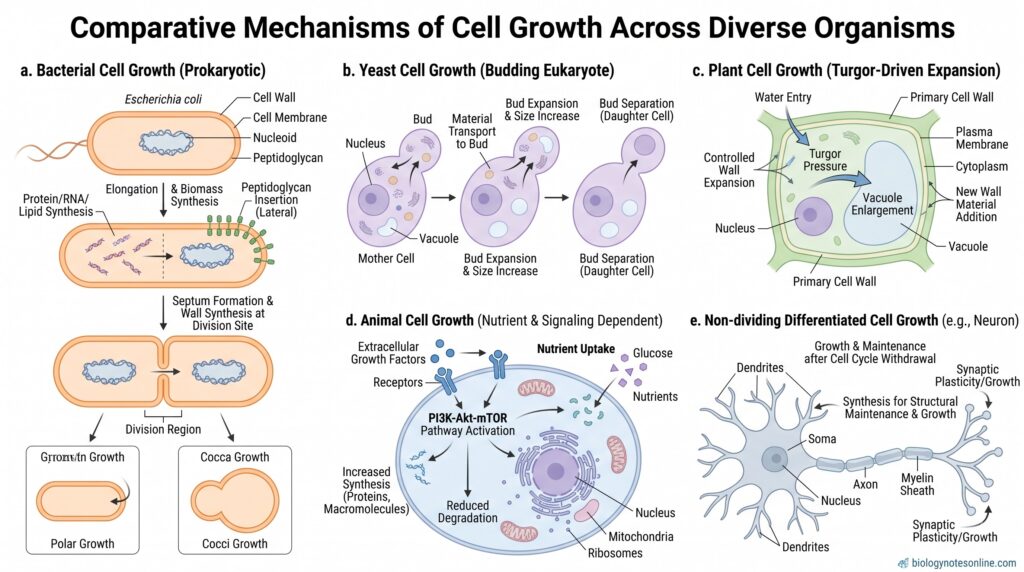
- Bacterial cells– Bacterial cells increase their cellular mass by synthesis of proteins, nucleic acids, membrane and other components. The cell wall also has to increase during growth. In many rod-shaped bacteria such as Escherichia coli, new peptidoglycan is added along the lateral wall during elongation and later at the division region. However, this pattern is not found in all bacteria. Some bacteria grow mainly from their poles, while cocci can have a different pattern of wall growth.
- Yeast cells– Yeasts are unicellular eukaryotic cells. In budding yeast Saccharomyces cerevisiae, the mother cell grows and a small bud is formed on its surface. Cellular materials are then directed into the growing bud. The bud increases its size before separating as a daughter cell. Nutrient availability also affects the extent of this growth and final cell size.
- Plant cells– Newly produced plant cells are usually small and then they can undergo a large increase in size. Water enters the cell and produces turgor pressure, while the primary cell wall becomes capable of controlled expansion. The vacuole also enlarges greatly in many plant cells. New cell wall and membrane materials are added during this process. Thus, much of plant cell enlargement takes place by controlled expansion of the existing cell.
- Animal cells– Animal cell growth mainly involves increase in proteins and other cellular macromolecules. Nutrients are required, but many animal cells also depend on extracellular growth factors. These signals activate intracellular pathways that increase synthesis and reduce degradation of macromolecules. The PI3K-Akt-mTOR pathway has an important role in this growth regulation.
- Non-dividing differentiated cells– Cell growth does not always have to be followed by cell division. Some differentiated animal cells can increase their size while remaining in a non-dividing state. Neurons are an example, where growth and maintenance of cell size can continue after permanent withdrawal from the cell cycle. Therefore, cell growth and cell division are separate processes even in specialized cells.
The amount and mechanism of growth are therefore not same in every cell. Bacterial growth involves coordinated synthesis of biomass and cell envelope, plant cells show extensive wall-controlled expansion, while animal cells depend strongly on nutrients and extracellular signaling. Yeast cells show their own growth pattern associated with budding or other forms of division.
How is Cell Growth Measured?
Cell growth can be measured by following the increase in cell mass, cell volume or size with time. Different methods are used depending upon the type of cell and experiment. Measurement of cell number alone mainly represents cell proliferation, and not the growth of an individual cell.
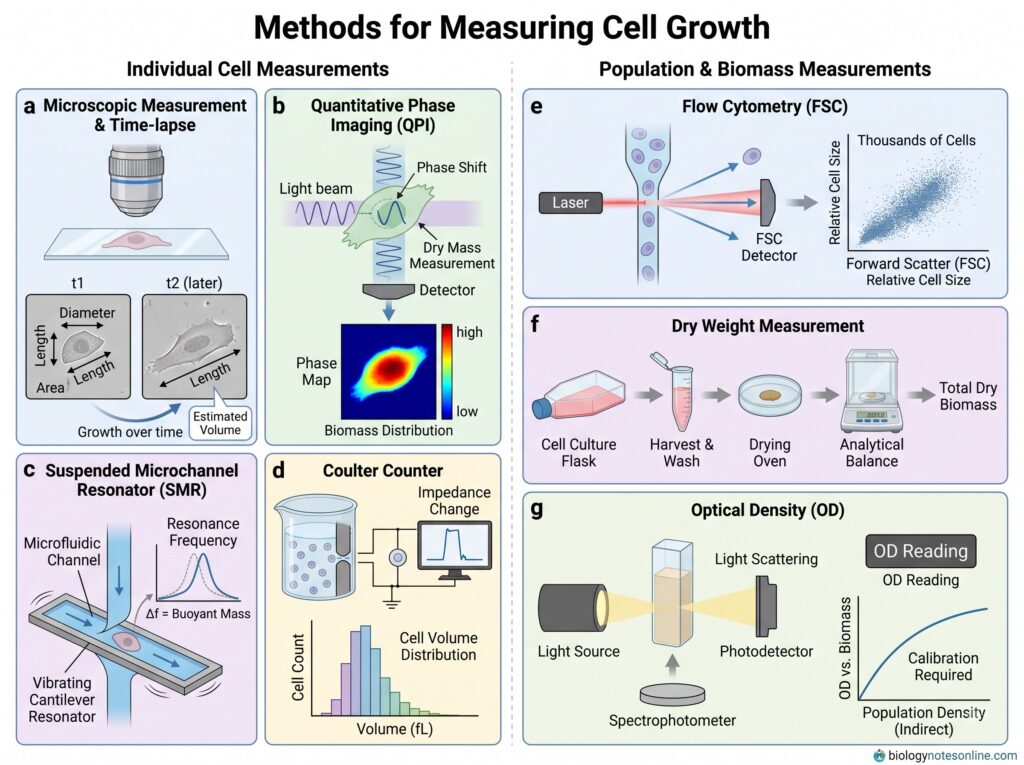
- Microscopic measurement – Cell size can be measured directly from microscopic images. Diameter, length or cell area is recorded at different time intervals. From these measurements, cell volume can also be estimated when the shape of the cell is known or by using three-dimensional imaging. It is commonly used for following growth of individual cells.
- Coulter counter – A Coulter counter measures the electrical impedance produced when a suspended cell passes through a small aperture. The change in impedance is related to the volume of the cell. Thus, large numbers of cells can be measured for their cell volume and size distribution.
- Quantitative phase imaging (QPI) – QPI is used to measure the dry mass of living cells without staining them. Light passing through a cell undergoes a phase shift which depends on the cellular material present. From this, the distribution and amount of cellular biomass can be determined. The same cell can also be followed over time to determine its growth.
- Suspended microchannel resonator (SMR) – This method measures the buoyant mass of single cells with very high sensitivity. A cell passes through a fluid-filled microchannel present inside a resonator and causes a change in its resonance frequency. Repeated measurements of the same cell can be used to calculate the rate of mass increase.
- Flow cytometry – Forward scatter (FSC) in flow cytometry is commonly used as an indication of relative cell size. Thousands of cells can be measured rapidly and their size distributions compared. However, forward scatter is related to cell size but is not an exact measurement of cell volume, because light scattering is also affected by other properties of the cell.
- Dry weight measurement – For microbial cultures, cells can be collected, washed and completely dried before measuring their weight. Increase in dry weight indicates increase in total cellular biomass. This method is especially useful for cultures where individual cells are difficult to measure, including some filamentous microorganisms.
- Optical density (OD) – Growth of bacterial and yeast populations is commonly followed by measuring the turbidity of culture with a spectrophotometer, usually as optical density. As cellular material increases, more light is scattered and the OD increases. It is an indirect measurement of population biomass or density and not a direct measurement of growth of one cell. OD also requires proper calibration because its relation with cell number is not linear over the entire concentration range.
Biological Importance of Cell Growth
Cell growth is necessary for accumulation of cellular material and maintenance of proper cell size. It is closely associated with cell division, development and normal functioning of tissues. Some of the important biological roles of cell growth are-
- Maintenance of cell size – During cell division, cellular material is distributed between the daughter cells. These cells must grow and accumulate new cell mass before another division. Coordination between growth and division therefore helps in maintaining the characteristic cell size over successive generations.
- Cell proliferation – Continuous cell proliferation requires both growth and cell division. The cell produces proteins, lipids, RNA and other materials before these are again distributed during division. If division occurs repeatedly without sufficient growth, progressively smaller cells would be formed. Growth and division are separate processes, but they have to be coordinated during normal proliferation.
- Growth and development of organisms – Cell growth has an important role during development of multicellular organisms. Increase in cell size together with increase in cell number contributes to the formation and growth of tissues and organs. Studies in Drosophila melanogaster have shown that TOR-dependent cellular growth is required for normal growth during larval development.
- Formation of cellular components – During growth, proteins and other cellular macromolecules are formed and accumulated. Membranes, ribosomes and different cellular structures also have to be maintained according to the increasing cell. Thus, cell growth provides the cellular materials required for a cell to maintain its size and biosynthetic activities.
- Tissue and organ size – Proper regulation of individual cell growth also contributes to tissue size. An abnormal increase or decrease in cellular growth can change the size of cells and finally affect the developing tissue. Growth-regulating pathways such as TOR/mTOR therefore have important roles in controlling growth at both cellular and organismal level.
- Growth of non-dividing cells – Cell growth is also important in cells which do not actively divide. Such cells can increase their size by hypertrophic growth rather than by producing more cells. This is particularly important where increase in cell size is required without cell proliferation.
- Tissue repair – In some postmitotic tissues, enlargement of the remaining cells can compensate for lost cellular material. This process is called compensatory cellular hypertrophy. It has been demonstrated in postmitotic epithelia of Drosophila, where surviving cells increase their size and help to restore tissue volume after loss of neighboring cells.
Examples of Cell Growth
Cell growth can be observed in dividing as well as non-dividing cells. Increase in cell size, cellular mass or growth of different parts of the cell can be seen. The following are some common examples-
- Cell enlarging during G1 – In dividing epidermal cells, the cell increases its volume during G1 phase. Much of the size control occurs during this phase before the cell enters the later stages of cell cycle. Smaller cells can grow more during G1 before passing to the next phase.
- Growing neuron – A developing neuron is another example of cell growth. The axon and dendrites are formed and extended as the neuron develops. Local RNA transport and protein synthesis also take part in this neuronal growth.
- Enlarging oocyte – During oocyte development, the oocyte greatly increases in size before it becomes fully grown. RNA and different proteins are also accumulated during this period. In mouse oocytes, rRNA accumulation takes place along with increase in oocyte diameter.
- Growing tissue with coordinated proliferation – In growing tissues, cellular growth and cell proliferation are generally coordinated. An example can be observed in the developing wing of Drosophila melanogaster. Changes in cell division affect cell number, while changes in cell size can compensate for it during tissue growth.
- Cell growth before division – Growth before division is clearly observed in budding yeast Saccharomyces cerevisiae. Newly formed daughter cells grow until a suitable or critical size is reached before passing through START and committing to another cell division. Thus, increase in cell size occurs before the division process.
Normal Cell Growth vs Abnormal Cell Growth
| Features | Normal Cell Growth | Abnormal Cell Growth |
|---|---|---|
| Growth pattern | Normal cell growth takes place in a regulated manner. Cellular materials are increased according to the requirement of the cell. | Growth becomes disturbed or inappropriate. The cell may accumulate cellular material more or less than normally required. |
| Cell mass and size | Cell mass and cell size are maintained within a characteristic range. Growth is adjusted with cell division to maintain size homeostasis. | Normal size control can be altered. Cells may become abnormally large or small, depending on the defect and cell type. |
| Growth signals | Normal animal cells respond to extracellular growth factors and other regulatory signals. These signals control when cellular growth should increase or decrease. | Growth-promoting pathways may remain excessively active or become insensitive to normal inhibitory signals. This is commonly seen during tumor development. |
| Biosynthesis | Synthesis of proteins, RNA, lipids and other cellular components is controlled according to nutrients and cellular requirement. | Biosynthetic pathways can become abnormally activated or suppressed. This produces an improper change in cellular biomass. |
| Relation with cell division | Cell growth and cell division are coordinated. Enough cellular material is generally produced before another division takes place. | Coordination between growth and division may be disturbed. Abnormal proliferation can occur when cell-cycle and growth-control pathways become altered. |
| Growth inhibition | Normal cells respond to signals that restrict growth and proliferation when required. Tumor-suppressor mechanisms also take part in this control. | Loss or inactivation of growth-suppressing mechanisms can remove these restrictions. The cells can then continue inappropriate proliferation. |
| Response to damage | Damaged cells can stop cell-cycle progression, repair the damage or undergo cell death depending on the condition. | These control mechanisms may become defective. Damaged cells can survive and continue proliferating in some abnormal conditions. |
| Effect on tissue | Controlled cell growth helps in maintaining normal tissue structure, development and repair. | Persistent abnormal growth together with abnormal cell proliferation can disturb tissue organization. In some cases, this takes part in tumor formation. |
Abnormal cell growth does not always mean cancer. A cell can show abnormal increase in size without uncontrolled proliferation. Cancer generally involves several defects together, including sustained proliferative signaling and loss of normal growth-suppressing controls.
References
- Alberts, B., Johnson, A., Lewis, J., Raff, M., Roberts, K., & Walter, P. (2002). Molecular biology of the cell (4th ed.). Garland Science. https://www.ncbi.nlm.nih.gov/books/NBK21054/
- Balgi, A. D., Diering, G. H., Donohue, E., Lam, K. K. Y., Fonseca, B. D., Zimmerman, C., Numata, M., & Roberge, M. (2011). Regulation of mTORC1 signaling by pH. PLoS ONE, 6(6), e21549. https://doi.org/10.1371/journal.pone.0021549
- Baltz, J. M. (2012). Media composition: Salts and osmolality. In Methods in molecular biology (Vol. 912, pp. 61–80). Humana Press. https://pubmed.ncbi.nlm.nih.gov/22829369/
- Cooper, G. M. (2000). The cell: A molecular approach (2nd ed.). Sinauer Associates. https://www.ncbi.nlm.nih.gov/books/NBK9839/
- de Anda, F. C., Rosario, A. L., Durak, O., Tran, T., Gräff, J., Meletis, K., Rei, D., Soda, T., Madabhushi, R., Ginty, D. D., Kolodkin, A. L., & Tsai, L.-H. (2016). Cortical neurons gradually attain a post-mitotic state. Cell Research, 26, 1033–1047. https://pubmed.ncbi.nlm.nih.gov/27325298/
- Dungrawala, H., Hua, H., Wright, J., Abraham, L., Kasemsri, T., McDowell, A., Stilwell, J., & Bennett, C. B. (2012). Identification of new cell size control genes in Saccharomyces cerevisiae. https://pubmed.ncbi.nlm.nih.gov/23234503/
- Fingar, D. C., Salama, S., Tsou, C., Harlow, E., & Blenis, J. (2002). Mammalian cell size is controlled by mTOR and its downstream targets S6K1 and 4EBP1/eIF4E. Genes & Development, 16(12), 1472–1487. https://doi.org/10.1101/gad.995802
- Giuliano, M. G., & Engl, C. (2021). The lifecycle of ribosomal RNA in bacteria. In I. Kotta-Loizou (Ed.), RNA damage and repair. Springer. https://www.ncbi.nlm.nih.gov/books/NBK594409/
- Inoki, K., Li, Y., Zhu, T., Wu, J., & Guan, K.-L. (2002). TSC2 is phosphorylated and inhibited by Akt and suppresses mTOR signalling. Nature Cell Biology, 4, 648–657. https://pubmed.ncbi.nlm.nih.gov/12172553/
- Inoki, K., Zhu, T., & Guan, K.-L. (2003). TSC2 mediates cellular energy response to control cell growth and survival. Cell, 115(5), 577–590. https://pubmed.ncbi.nlm.nih.gov/14651849/
- Jastrzebski, K., Hannan, K. M., Tchoubrieva, E. B., Hannan, R. D., & Pearson, R. B. (2007). Coordinate regulation of ribosome biogenesis and function by the ribosomal protein S6 kinase, a key mediator of mTOR function. Growth Factors, 25(4), 209–226. https://pubmed.ncbi.nlm.nih.gov/18092230/
- Kaldis, P. (2016). Quo vadis cell growth and division? Cell Division, 11, 8. https://pmc.ncbi.nlm.nih.gov/articles/PMC5003843/
- Liu, L., Cash, T. P., Jones, R. G., Keith, B., Thompson, C. B., & Simon, M. C. (2006). Hypoxia-induced energy stress regulates mRNA translation and cell growth. Molecular Cell, 21(4), 521–531. https://pubmed.ncbi.nlm.nih.gov/16483933/
- Neurohr, G. E., & Amon, A. (2020). Relevance and regulation of cell density. Trends in Cell Biology, 30(3), 213–225. https://pmc.ncbi.nlm.nih.gov/articles/PMC8777196/
- Øvrebø, J. I., & Edgar, B. A. (2022). Cell growth and the cell cycle: New insights about persistent questions. BioEssays. https://pmc.ncbi.nlm.nih.gov/articles/PMC10193172/
- Park, K., Jang, J., Irimia, D., Sturgis, J., Lee, J., Robinson, J. P., Toner, M., & Bashir, R. (2010). Measurement of adherent cell mass and growth. Proceedings of the National Academy of Sciences of the United States of America, 107(48), 20691–20696. https://pmc.ncbi.nlm.nih.gov/articles/PMC2996435/
- Sancak, Y., Peterson, T. R., Shaul, Y. D., Lindquist, R. A., Thoreen, C. C., Bar-Peled, L., & Sabatini, D. M. (2008). The Rag GTPases bind raptor and mediate amino acid signaling to mTORC1. Science, 320(5882), 1496–1501. https://doi.org/10.1126/science.1157535
- Tamori, Y., & Deng, W.-M. (2013). Tissue repair through cell competition and compensatory cellular hypertrophy in postmitotic epithelia. Developmental Cell, 25(4), 350–363. https://pubmed.ncbi.nlm.nih.gov/23685249/
- Tzur, A., Kafri, R., LeBleu, V. S., Lahav, G., & Kirschner, M. W. (2009). Cell growth and size homeostasis in proliferating animal cells. Science, 325(5937), 167–171. https://doi.org/10.1126/science.1174294
- Vergara, M., Becerra, S., Berrios, J., Osses, N., Reyes, J., Rodríguez-Moyá, M., Gonzalez, R., & Altamirano, C. (2014). Differential effect of culture temperature and specific growth rate on CHO cell behavior in chemostat culture. https://pubmed.ncbi.nlm.nih.gov/24699760/
- Zhu, J., & Thompson, C. B. (2019). Metabolic regulation of cell growth and proliferation. Nature Reviews Molecular Cell Biology, 20, 436–450. https://doi.org/10.1038/s41580-019-0123-5
- Carretero, J., Medina, P. P., Blanco, R., Smit, L., Tang, M., Roncador, G., Maestre, L., Conde, E., Lopez-Rios, F., Clevers, H. C., & Sanchez-Cespedes, M. (2007). Dysfunctional AMPK activity, signalling through mTOR and survival in response to energetic stress in LKB1-deficient lung cancer. https://pubmed.ncbi.nlm.nih.gov/16953221/
- Sancak, Y., & Sabatini, D. M. (2009). Regulation of mTORC1 by amino acids. https://pubmed.ncbi.nlm.nih.gov/19203585/
- Tzur, A., Kafri, R., LeBleu, V. S., Lahav, G., & Kirschner, M. W. (2009). Cell growth and size homeostasis in proliferating animal cells. Science, 325(5937), 167–171. https://doi.org/10.1126/science.1174294
- Sung, Y., Tzur, A., Oh, S., Choi, W., Li, V., Dasari, R. R., Yaqoob, Z., & Kirschner, M. W. (2013). Size homeostasis in adherent cells studied by synthetic phase microscopy. Proceedings of the National Academy of Sciences of the United States of America, 110(41), 16687–16692. https://pubmed.ncbi.nlm.nih.gov/19889953/
- Son, S., Tzur, A., Weng, Y., Jorgensen, P., Kim, J., Kirschner, M. W., & Manalis, S. R. (2012). Direct observation of mammalian cell growth and size regulation. Nature Methods, 9, 910–912. https://pmc.ncbi.nlm.nih.gov/articles/PMC2862099/
- Schmoller, K. M., & Skotheim, J. M. (2015). The biosynthetic basis of cell size control. Trends in Cell Biology, 25(12), 793–802. https://pubmed.ncbi.nlm.nih.gov/26720876/
- Lloyd, A. C. (2013). The regulation of cell size. Cell, 154(6), 1194–1205. https://doi.org/10.1016/j.cell.2013.08.053
- Saxton, R. A., & Sabatini, D. M. (2017). mTOR signaling in growth, metabolism, and disease. Cell, 168(6), 960–976. https://doi.org/10.1016/j.cell.2017.02.004
- Laplante, M., & Sabatini, D. M. (2012). mTOR signaling in growth control and disease. Cell, 149(2), 274–293. https://doi.org/10.1016/j.cell.2012.03.017
- Ben-Sahra, I., & Manning, B. D. (2017). mTORC1 signaling and the metabolic control of cell growth. Current Opinion in Cell Biology, 45, 72–82. https://doi.org/10.1016/j.ceb.2017.02.012
- Saxton, R. A., & Sabatini, D. M. (2017). mTOR signaling in growth, metabolism, and disease. Cell, 168(6), 960–976. https://doi.org/10.1016/j.cell.2017.02.004
- Liu, G. Y., & Sabatini, D. M. (2020). mTOR at the nexus of nutrition, growth, ageing and disease. Nature Reviews Molecular Cell Biology, 21, 183–203. https://doi.org/10.1038/s41580-019-0199-y
- Hall, M. N. (2008). mTOR—What does it do? Transplantation Proceedings, 40(10 Suppl.), S5–S8. https://pubmed.ncbi.nlm.nih.gov/19203585/
- Neufeld, T. P., de la Cruz, A. F. A., Johnston, L. A., & Edgar, B. A. (1998). Coordination of growth and cell division in the Drosophila wing. Cell, 93(7), 1183–1193. https://pubmed.ncbi.nlm.nih.gov/9657151/
- Tamori, Y., & Deng, W.-M. (2013). Tissue repair through cell competition and compensatory cellular hypertrophy in postmitotic epithelia. Developmental Cell, 25(4), 350–363. https://pubmed.ncbi.nlm.nih.gov/23685249/
- Liu, L., Cash, T. P., Jones, R. G., Keith, B., Thompson, C. B., & Simon, M. C. (2006). Hypoxia-induced energy stress regulates mRNA translation and cell growth. Molecular Cell, 21(4), 521–531. https://pubmed.ncbi.nlm.nih.gov/16483933/
- Balgi, A. D., Diering, G. H., Donohue, E., Lam, K. K. Y., Fonseca, B. D., Zimmerman, C., Numata, M., & Roberge, M. (2011). Regulation of mTORC1 signaling by pH. PLoS ONE, 6(6), e21549. https://doi.org/10.1371/journal.pone.0021549
- Sancak, Y., Peterson, T. R., Shaul, Y. D., Lindquist, R. A., Thoreen, C. C., Bar-Peled, L., & Sabatini, D. M. (2008). The Rag GTPases bind raptor and mediate amino acid signaling to mTORC1. Science, 320(5882), 1496–1501. https://doi.org/10.1126/science.1157535
- Fingar, D. C., Salama, S., Tsou, C., Harlow, E., & Blenis, J. (2002). Mammalian cell size is controlled by mTOR and its downstream targets S6K1 and 4EBP1/eIF4E. Genes & Development, 16(12), 1472–1487. https://doi.org/10.1101/gad.995802