

For most students studying microbial physiology and metabolism as a dedicated subject, Microbial Physiology: Unity and Diversity is the strongest overall choice. It is a current, focused textbook built around microbial growth, bioenergetics, respiration, fermentation, metabolic diversity and cellular responses. It is already being used as the primary text in university microbial physiology courses.
Students who want a more gradual treatment of bacterial metabolism should consider Fundamentals of Bacterial Physiology and Metabolism. For M.Sc. students who need greater mechanistic depth, The Physiology and Biochemistry of Prokaryotes remains one of the strongest references.
Editor’s Picks
Best Overall – Microbial Physiology: Unity and Diversity
Best for Beginners – Fundamentals of Bacterial Physiology and Metabolism
Best for M.Sc. Students – The Physiology and Biochemistry of Prokaryotes
Best for Microbial Metabolism – Bacterial Physiology and Metabolism
Best Classic Reference – Microbial Physiology
Best Broad Microbiology Foundation – Brock Biology of Microorganisms
Quick Comparison of the Best Microbial Physiology and Metabolism Books
| Book | Best for | Level | Main strength | Main limitation |
|---|---|---|---|---|
| Microbial Physiology: Unity and Diversity | Most students taking a dedicated microbial physiology course | Advanced undergraduate | Current, focused coverage of physiology and metabolic diversity | Assumes some microbiology and biochemistry background |
| Fundamentals of Bacterial Physiology and Metabolism | Beginners and structured self-study | Undergraduate to postgraduate | Builds from growth and transport into metabolic pathways | Focus is mainly bacterial |
| The Physiology and Biochemistry of Prokaryotes | M.Sc. and advanced study | Advanced undergraduate/postgraduate | Strong mechanistic treatment of bioenergetics and metabolism | Dense for beginners |
| Bacterial Physiology and Metabolism | Metabolism-centred courses | Intermediate to advanced | Strong treatment of diverse bacterial energy metabolisms | Published in 2008 and limited mainly to bacteria |
| Microbial Physiology | Detailed reference work | Advanced undergraduate/postgraduate | Deep coverage of growth, metabolism and regulation | Older and quite detailed |
| Brock Biology of Microorganisms | B.Sc. students needing wider microbiology context | Undergraduate | Strong visual presentation and broad microbial biology | Not a dedicated physiology textbook |
How These Books Were Selected
The shortlist was not based only on popularity or marketplace ratings. Current and recent university microbial physiology syllabi were checked along with publisher information, book scope, academic level and reader feedback where enough reviews were available.
Several of the books have remained on university reading lists for years. More recent courses are also moving toward Microbial Physiology: Unity and Diversity. For example, National Taiwan University uses the 2024 text as the primary structure for its microbial physiology course, while other recent syllabi continue to list White, Moat, Kim and Gadd, and Brock.
Reader reviews were treated as supporting evidence rather than a ranking system. Review volume is very small for some specialist textbooks, especially newer books. In those cases, academic adoption, coverage and publisher information provide stronger evidence than a numerical star rating.
1. Microbial Physiology: Unity and Diversity – Best Overall
Authors – Ann M. Stevens, Jayna L. Ditty, Rebecca E. Parales and Susan M. Merkel
Edition – 1st Edition
Publisher – ASM Press/Wiley
Best for – Dedicated microbial physiology courses
Level – Advanced undergraduate
Published in 2024, Microbial Physiology: Unity and Diversity is the most current specialist textbook among the main books compared here. It was written specifically around microbial physiology rather than treating physiology as several chapters inside a general microbiology textbook. The book contains 496 pages and is intended for advanced undergraduate study.
Why We Recommend It
The main advantage is its balance between the features microbes share and the metabolic diversity that separates different physiological groups.
The first part establishes the common foundation – metabolic pathways, cellular components, microbial growth, bioenergetics, respiration and fermentation. Later chapters move into different energy strategies and physiological adaptations.
The coverage moves from core metabolic pathways, growth, bioenergetics, respiration and fermentation into autotrophy, phototrophy, chemotrophy, nutrient cycles, transport, motility, quorum sensing and stress responses.
This makes the book more useful for a dedicated microbial physiology course than a broad microbiology textbook where these subjects are distributed across several sections.
Its academic use is also a strong reason for placing it first. National Taiwan University’s current microbial physiology course identifies it as the text providing the primary structure and content of the course. It has also appeared as a required text in recent University of Texas at Dallas microbial physiology teaching.
Strengths
- Current treatment of microbial physiology
- Strong integration of physiology with microbial metabolic diversity
- Covers respiration, fermentation, phototrophy and chemotrophy
- Includes transport, signaling, stress responses and microbial behavior
- Designed specifically for an advanced undergraduate course
Limitations
This is not the easiest starting point for a student who has never studied general microbiology or basic biochemistry. The course using it at NTU recommends prior knowledge of both subjects. Reader-review volume is also still limited because the book is relatively new, so long-term student feedback is not as extensive as it is for older textbooks.
Who Should Choose It?
Choose this book if microbial physiology and metabolism is a dedicated paper in your B.Sc., biotechnology or microbiology course and you already understand introductory microbiology.
Who Should Skip It?
A beginner who is still learning basic respiration, microbial growth and central metabolism may find Fundamentals of Bacterial Physiology and Metabolism easier to approach.
Alternative – Fundamentals of Bacterial Physiology and Metabolism for a more gradual introduction.
2. Fundamentals of Bacterial Physiology and Metabolism – Best for Beginners
Authors – Rani Gupta and Namita Gupta
Edition – 1st Edition
Publisher – Springer
Publication year – 2021
Best for – Beginners, undergraduate students and structured self-study
Level – Undergraduate to postgraduate
Fundamentals of Bacterial Physiology and Metabolism is particularly useful when you need a specialist book but do not want to begin with one of the denser classic references.
Springer describes the book as an introduction designed to simplify microbial metabolic pathways. Its 670 pages cover bacterial growth, transport, central metabolism, electron transport, metabolic diversity, nitrogen metabolism, lipids, cell-wall biosynthesis, nucleotides, secondary metabolism and responses to environmental signals.
Why We Recommend It
The organization is its strongest feature for students.
Its early chapters on bacterial growth, transport and central pathways make it useful before moving into electron transport, nitrogen metabolism and environmental signaling.
Instead of treating metabolism only as a collection of pathway diagrams, the later sections connect metabolic activity with stress physiology, signal transduction, adaptation and survival. The inclusion of case studies and techniques also gives the text a more applied character than some of the older physiology books.
Strengths
- More recent than most specialist bacterial physiology texts
- Logical progression from basic physiology into metabolic diversity
- Detailed central metabolic and energy-generation chapters
- Covers stress physiology and environmental signaling
- Suitable for readers progressing from undergraduate to postgraduate study
Limitations
The title accurately reflects its main limitation – this is primarily a book about bacteria. Students studying microbial physiology across bacteria, archaea and other microbial groups may want the broader treatment provided by Microbial Physiology: Unity and Diversity.
At 670 pages, it is also not a short revision book.
Who Should Choose It?
This is a good choice for B.Sc. microbiology and biotechnology students who need detailed physiology and metabolism but want the material developed in a relatively systematic order.
Who Should Skip It?
Advanced students who already understand the pathways and want deeper mechanistic discussion of prokaryotic bioenergetics may get more from White, Drummond and Fuqua.
Alternative – The Physiology and Biochemistry of Prokaryotes for greater mechanistic depth.
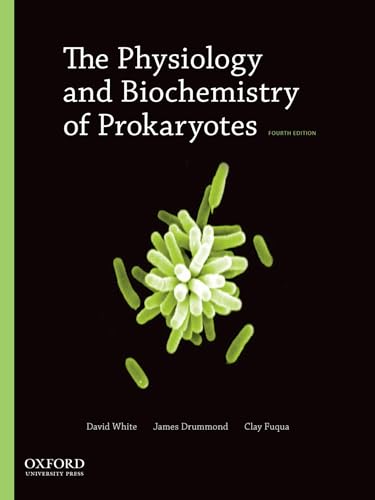
3. The Physiology and Biochemistry of Prokaryotes – Best for M.Sc. and Advanced Study
Authors – David White, James Drummond and Clay Fuqua
Edition – 4th Edition
Publisher – Oxford University Press
Publication year – 2012
Best for – M.Sc. students and advanced microbial physiology courses
Level – Advanced undergraduate to postgraduate
White’s The Physiology and Biochemistry of Prokaryotes remains one of the strongest books when the objective is to understand how prokaryotic cells function rather than simply memorize pathways.
The fourth edition covers growth, membrane bioenergetics, electron transport, photosynthesis, metabolic regulation, central pathways, biosynthesis, inorganic metabolism, fermentation, transport, chemotaxis, biofilms, quorum sensing and stress responses.
Why We Recommend It
The physiological explanations go deeper than those in most broad microbiology textbooks.
White, Drummond and Fuqua spend substantial time on membrane bioenergetics, electron transport, oxidative phosphorylation and metabolic regulation.
That becomes useful in postgraduate study, where knowing the names of glycolytic or respiratory pathways is no longer enough. Students need to understand energy conservation, regulation, membrane processes and how different pathways interact.
The book continues to appear in university microbial physiology reading lists, including recent curricula alongside Moat and Kim/Gadd.
Strengths
- Strong mechanistic treatment of prokaryotic physiology
- Detailed membrane bioenergetics and energy metabolism
- Good connection between physiology and biochemistry
- Covers metabolic regulation as well as individual pathways
- Strong reference value for advanced courses
Limitations
This is one of the denser books in the list. Reader feedback also reflects that pattern – some readers value its breadth but describe it as demanding for undergraduate study.
The fourth edition was published in 2012. The core physiology remains useful, but students wanting a newer primary text should use Microbial Physiology: Unity and Diversity and keep White as the deeper reference.
Who Should Choose It?
Choose White if you are studying microbial physiology at M.Sc. level or need a reference for bioenergetics, metabolic regulation and prokaryotic cell physiology.
Who Should Skip It?
For a first undergraduate exposure to microbial metabolism, the density can slow down learning.
Alternative – Microbial Physiology: Unity and Diversity for a more current primary textbook.
4. Bacterial Physiology and Metabolism – Best for Metabolism-Centred Study
Authors – Byung Hong Kim and Geoffrey Michael Gadd
Publisher – Cambridge University Press
Publication year – 2008
Best for – Bacterial metabolism and metabolic diversity
Level – Intermediate to advanced
Kim and Gadd’s Bacterial Physiology and Metabolism gives metabolism a larger role than many general microbial physiology texts.
Cambridge’s coverage runs from bacterial structure and transport through glycolysis, the TCA cycle and oxidative phosphorylation, followed by fermentation, anaerobic respiration, chemolithotrophy, photosynthesis and metabolic regulation.
Why We Recommend It
This book becomes especially useful once a course moves beyond ordinary aerobic glucose metabolism.
The book is especially useful for anaerobic respiration, chemolithotrophy, photosynthesis and nitrogen fixation.
These are areas where microbial metabolism differs sharply from the metabolism normally introduced in general biochemistry courses. The text helps show why microbial energy metabolism cannot be reduced to glycolysis followed by aerobic respiration.
University courses continue to list Kim and Gadd alongside White and Moat for bacterial or microbial physiology study.
Strengths
- Strong emphasis on bacterial energy metabolism
- Good coverage of anaerobic respiration
- Detailed treatment of chemolithotrophy and photosynthesis
- Connects central metabolism with microbial metabolic diversity
- Useful for environmental and applied microbiology students
Limitations
It is focused on bacterial physiology, so it is less suitable if your course has a wider emphasis on microbial diversity.
The book was published in 2008. Its treatment of fundamental pathways remains valuable, but it should not be your only source when a course requires newer molecular or genomic developments.
Reader-review volume for this specialist title is quite small, so academic use and subject coverage are more useful selection signals than marketplace ratings.
Who Should Choose It?
Choose Kim and Gadd if your syllabus gives substantial attention to bacterial respiration, fermentation, chemolithotrophy, phototrophy and other forms of metabolic diversity.
Who Should Skip It?
Students primarily looking for microbial growth, stress responses and broader cell physiology may prefer Microbial Physiology: Unity and Diversity or Moat.
Alternative – The Physiology and Biochemistry of Prokaryotes if you want a deeper physiology-biochemistry connection.
5. Microbial Physiology – Best Classic Reference
Authors – Albert G. Moat, John W. Foster and Michael P. Spector
Edition – 4th Edition
Publisher – Wiley
Publication year – 2002
Best for – Detailed physiology reference
Level – Advanced undergraduate to postgraduate
The fourth edition of Microbial Physiology is the oldest specialist textbook in this final list, but it has not disappeared from teaching.
Recent university curricula still list the fourth edition for microbial physiology and metabolism courses. The 2025-26 Universidad Pablo de Olavide guide, for example, includes Moat alongside White, Kim/Gadd, Brock and the newer Unity and Diversity. It also remains on recent microbiology and biotechnology reading lists elsewhere.
Why We Recommend It
Moat is useful because its physiology coverage is broader than energy metabolism alone.
The text develops cell structure and cellular synthesis before moving through genetics, metabolism, growth and physiological regulation. Molecular genetics is integrated into the explanation of how microorganisms grow, regulate cellular activity and respond to changing conditions.
That makes it a useful reference when a syllabus combines microbial growth, metabolism and cellular regulation rather than concentrating only on individual biochemical pathways.
Strengths
- Detailed treatment of microbial growth and metabolism
- Strong connection between molecular genetics and physiology
- Useful material on cellular synthesis and regulation
- Continues to appear in university reading lists
- Good reference for advanced students
Limitations
The publication year matters. A 2002 textbook should not be treated as the only current source for a field affected by two decades of genomic, systems-biology and molecular developments.
It is also detailed. Available reader feedback commonly treats its depth as an advantage for reference work but a possible problem for readers without the basic principles already in place.
Who Should Choose It?
Use Moat as a reference when your course follows the classic microbial physiology syllabus – growth, transport, metabolism, genetics and regulation.
Who Should Skip It?
If you are buying only one textbook today, the 2024 Microbial Physiology: Unity and Diversity is a more sensible primary choice.
Alternative – Microbial Physiology: Unity and Diversity for a newer course text.
6. Brock Biology of Microorganisms – Best Broad Foundation
Authors – Michael T. Madigan, Kelly S. Bender, Daniel H. Buckley, W. Matthew Sattley and David A. Stahl
Edition – 16th Edition
Publisher – Pearson
Best for – B.Sc. students and students needing a general microbiology foundation
Level – Undergraduate
Brock Biology of Microorganisms is different from the first five recommendations. It is a complete general microbiology textbook rather than a specialist microbial physiology book.
That difference is exactly why it earns a place here.
Students sometimes enter microbial physiology courses without being comfortable with microbial cell structure, growth, diversity and general biochemistry. Brock gives these topics a common microbiological framework before moving into microbial metabolism and other specialist areas.
Recent microbial physiology courses continue to use the 16th edition as a reference. National Taiwan University, for example, lists Brock alongside Microbial Physiology: Unity and Diversity.
Why We Recommend It
The main advantage is context.
If glycolysis, the TCA cycle and electron transport still feel disconnected from the rest of microbiology, Brock gives the broader context before you move to a specialist text.
Its visual presentation is another reason it works well at undergraduate level. Metabolic pathways become easier to follow when they are connected with microbial diversity, cell structure, growth and ecology instead of being studied in isolation.
Strengths
- Strong general microbiology foundation
- Good visual presentation of difficult concepts
- Useful introduction to microbial metabolism
- Covers microbial diversity alongside physiology
- Suitable for B.Sc. microbiology students
Limitations
Do not choose Brock solely because you need the most detailed microbial physiology book. Physiology and metabolism are parts of a much larger textbook.
A student taking an advanced dedicated course will eventually need Unity and Diversity, White, Moat or another specialist reference.
Who Should Choose It?
Brock is the better choice if you need one broad microbiology textbook that will also support microbial physiology and metabolism.
Who Should Skip It?
Students who already have a strong general microbiology background and now need detailed metabolic regulation or bioenergetics should buy a specialist book instead.
Alternative – Microbial Physiology: Unity and Diversity for focused physiology study.

- Madigan, Michael
- Aiyer, Jennifer
- Buckley, Daniel

Which Microbial Physiology and Metabolism Book Should You Choose?
| If you are… | Best choice |
| Taking a dedicated undergraduate microbial physiology course | Microbial Physiology: Unity and Diversity |
| Learning bacterial physiology for the first time | Fundamentals of Bacterial Physiology and Metabolism |
| An M.Sc. student | The Physiology and Biochemistry of Prokaryotes |
| Mainly studying microbial metabolic diversity | Bacterial Physiology and Metabolism |
| Looking for a detailed classic reference | Microbial Physiology by Moat, Foster and Spector |
| Still building your general microbiology foundation | Brock Biology of Microorganisms |
You normally do not need all six. One suitable primary textbook together with your class notes and a deeper reference is enough for most university courses.
For example, an undergraduate can use Microbial Physiology: Unity and Diversity as the primary book and consult Brock when a broader microbiology explanation is needed. At M.Sc. level, White can serve as the deeper reference.
How to Choose a Microbial Physiology and Metabolism Book
Check your academic level
A textbook can be scientifically good and still be wrong for your present level.
Students who are still developing their understanding of bacterial growth and central metabolism should begin with a structured text such as Gupta and Gupta or with Brock. White and Moat make more sense after these fundamentals are already familiar.
Match the book with your syllabus
A typical microbial physiology and metabolism course may include microbial growth, nutrient transport, glycolysis, the TCA cycle, respiration, fermentation, chemolithotrophy, phototrophy and nitrogen metabolism.
Check your actual syllabus against the book rather than choosing a title solely because it has good reviews.
Decide whether physiology or metabolism needs more attention
For broad cellular physiology, Unity and Diversity or Moat works well.
Kim and Gadd become more useful when metabolic diversity and energy-generation strategies form a large part of the course. White is stronger when physiology needs to be understood at a deeper biochemical level.
General textbook or specialist textbook
Brock is useful across an entire microbiology degree. A specialist book goes much deeper into the physiology and metabolism component.
If you already own a good current general microbiology textbook, purchasing another broad microbiology book just for this subject may add less value than buying a specialist text.
Do not ignore the edition date
Older books are not automatically useless. White, Moat and Kim/Gadd are still used in university reading lists because much of the fundamental physiology remains important.
The problem comes when an older reference is treated as the only source. For current molecular context, newer terminology and more recent organization of the field, pair an older specialist reference with a modern textbook or course material.
Common Buying Mistakes
- Buying the most detailed reference before learning basic metabolism.
- Selecting a book only from its star rating.
- Buying several general microbiology textbooks that cover nearly the same material.
- Ignoring whether the syllabus emphasizes physiology, metabolism or both.
- Assuming an older specialist text is useless simply because a newer book exists.
- Using an old edition as the only source for current molecular topics.
Frequently Asked Questions
Which is the best book for microbial physiology and metabolism?
For most advanced undergraduate students, Microbial Physiology: Unity and Diversity is the best overall choice. It is current, specifically designed around microbial physiology, and integrates central metabolism with bioenergetics, metabolic diversity, transport, signaling and physiological adaptation. It is also being used as a primary text in current university teaching.
Which book is best for B.Sc. microbiology students?
B.Sc. students with basic microbiology and biochemistry knowledge should start with Microbial Physiology: Unity and Diversity. Students who need more introductory support can use Fundamentals of Bacterial Physiology and Metabolism. Brock is better when a broader foundation in general microbiology is still required.
Which book is best for M.Sc. microbial physiology?
The Physiology and Biochemistry of Prokaryotes by White, Drummond and Fuqua is the strongest choice here for advanced study. Its treatment of bioenergetics, membrane processes and metabolic regulation goes beyond what most students require in an introductory course.
Is Moat’s Microbial Physiology still useful?
Yes, but it works better as a reference than as the only current textbook. The fourth edition continues to appear in recent university reading lists. Its age means newer material should be supplemented from a current source such as Microbial Physiology: Unity and Diversity.
Is Brock Biology of Microorganisms enough for microbial physiology?
Brock is enough for introductory coverage but not for every advanced microbial physiology course. It gives a strong foundation in microbial metabolism, growth and diversity. Dedicated courses requiring detailed metabolic regulation, membrane bioenergetics or physiological adaptation will benefit from a specialist text.
Final Recommendation
For most students taking microbial physiology and metabolism as a dedicated subject, choose Microbial Physiology: Unity and Diversity. It has the strongest combination of current coverage, subject focus and suitability for modern undergraduate teaching.
If you are still developing the basics, Fundamentals of Bacterial Physiology and Metabolism provides a more gradual route through growth, transport and metabolic pathways.
For M.Sc. and advanced study, choose The Physiology and Biochemistry of Prokaryotes. Students whose syllabus emphasizes different modes of bacterial energy metabolism should also consider Bacterial Physiology and Metabolism by Kim and Gadd.
Moat remains useful as a detailed classic reference, while Brock is the better option when microbial physiology needs to be learned within the broader framework of microbiology.
Affiliate disclosure – Biology Notes Online may earn a commission from qualifying purchases made through links on this page, at no additional cost to you. Recommendations are based on editorial research and book-selection criteria.