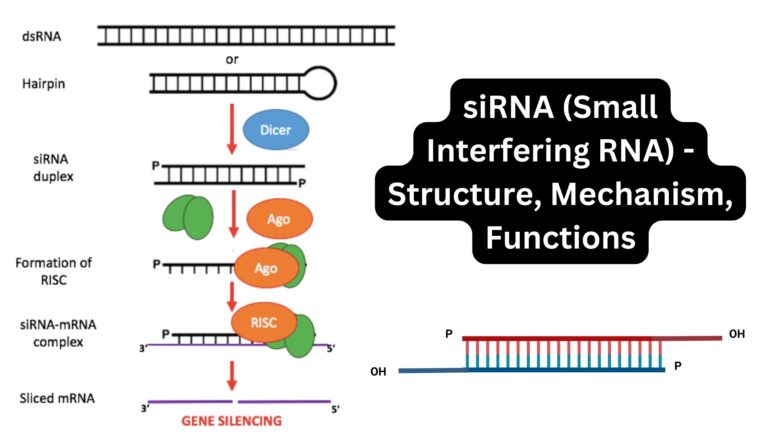
What is Small Interfering RNA (siRNA)? Properties of siRNA Structure of siRNA Naturally occurring siRNAs have a well-defined structure consisting of phosphorylated 5′ ends, hydroxylated 3′ ends, and two overhanging nucleotides. Mechanism of siRNA action The following describes the process by which natural siRNA induces gene silencing via suppression of translation. siRNA is also similar
Micro-RNAs (miRNAs) are a family of non-coding RNAs (ncRNAs) that regulate gene expression post-transcriptionally. Since their discovery in 1993, they have been the topic of extensive research due to their role in numerous crucial biological processes. Unlike other noncoding RNAs, microRNAs are created from transcriptional units that are processed by a particular group of endonucleases.
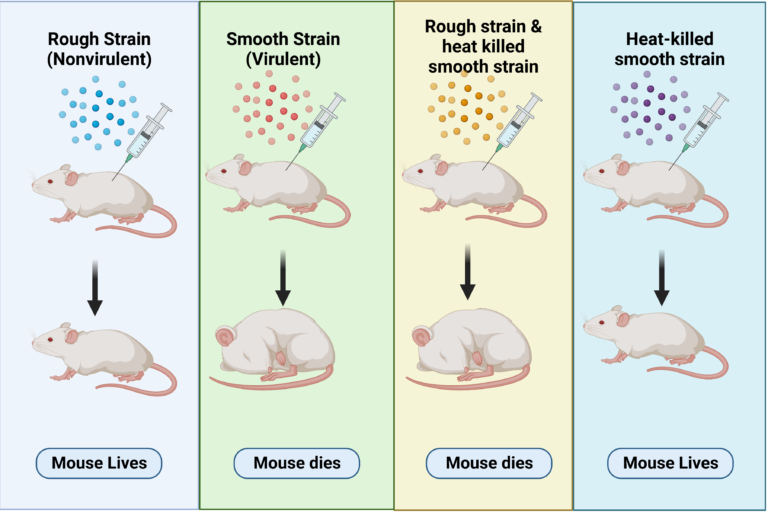
Griffith Experiment & Transforming Principle Frederick Griffith, a British bacteriologist, conducted a series of studies with Streptococcus pneumoniae bacteria and mice in 1928. Griffith was not attempting to detect genetic material; rather, he was attempting to produce a vaccine for pneumonia. Griffith utilised two strains of bacteria identified as R and S in his tests.
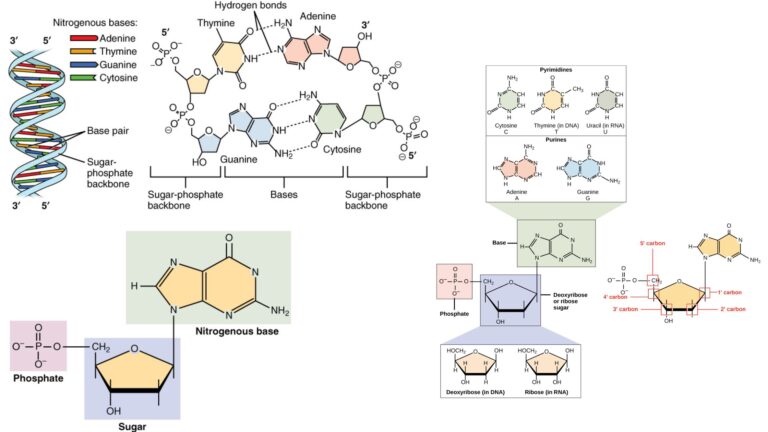
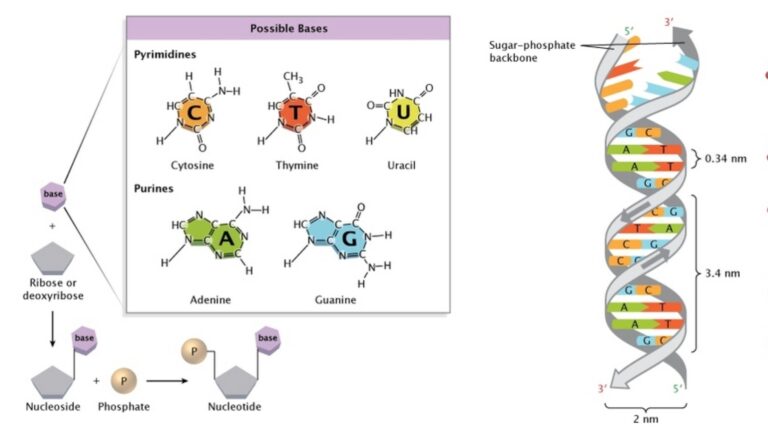
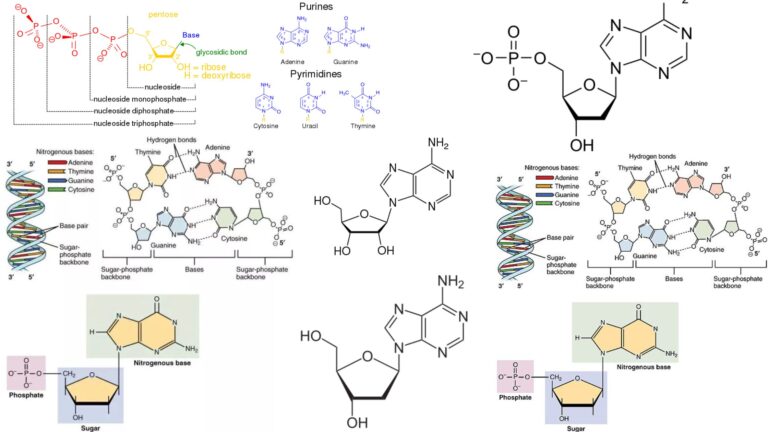
Pyrimidines and Pyrimidine Nucleotides Structure of Pyrimidines and Pyrimidine Nucleotides Occurrence of Pyrimidines and Pyrimidine Nucleotides Properties of Pyrimidines and Pyrimidine Nucleotides Biosynthesis of Pyrimidine Pyrimidine Nucleotide Examples Cytosine Thymine Uracil Purines and Purine Nucleotides Structure of Purines and Purine Nucleotides Occurrence of Purines and Purine Nucleotides Properties of Purines and Purine Nucleotides Purine Nucleotides
What is DNA? DNA is a polymer of deoxyribonucleotides stuck together (or simply deoxynucleotides). It is made up of deoxyadenylate (dAMP), deoxyguanylate (dGMP), deoxycytidylate (dCMP), and deoxythymidylate (dTMP) units (dTMP) (Some authors prefer to use TMP instead of deoxythymidylate because it is only found in DNA.) History of DNA The history of DNA begins with
Many individuals believe that in the 1950s, American biologist James Watson and English physicist Francis Crick discovered DNA. In actuality, this is not true. DNA was discovered by the Swiss chemist Friedrich Miescher in the late 1860s. Then, in the decades that followed Miescher’s discovery, other scientists, notably Phoebus Levene and Erwin Chargaff, conducted a
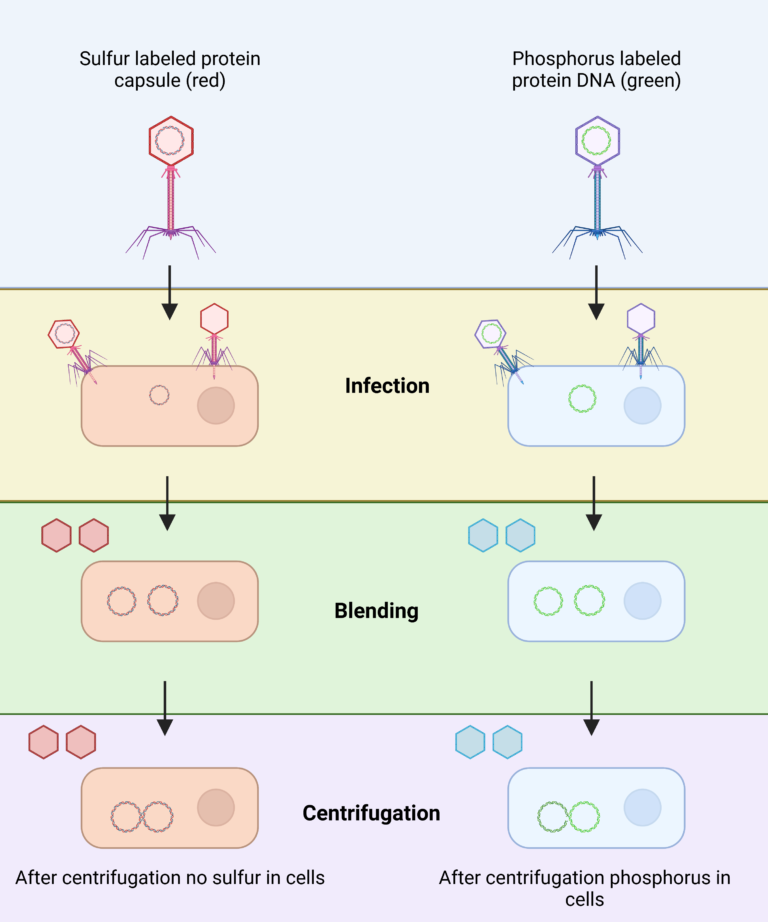
Hershey–Chase experiment Experiment DNA as Genetic Material Observation Conclusion Why is DNA Considered a Genetic Material? It was found that DNA was the most important part of most species’ genes. There were some important exceptions, such as viruses whose genes were made of RNA. But what makes DNA different from other molecules that can be
What is Nucleotide? Nucleotide Structure The structure of a nucleotide is simple, but the structure they can make when they come together is complicated. This molecule is made up of two strands that wrap around each other. Hydrogen bonds hold the structure together in the middle. Each nucleotide has a specific shape that makes this
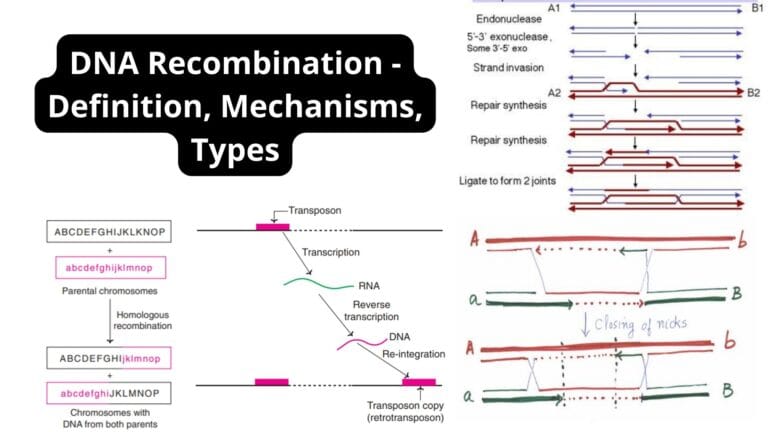
DNA recombination is the process in which the genetic material (DNA) is exchanged between two DNA molecules. It is the natural method for reshuffling of genes, and it is observed in most living organisms. It is the process where the DNA strand is broken and then repaired, and new combination of alleles is formed. It
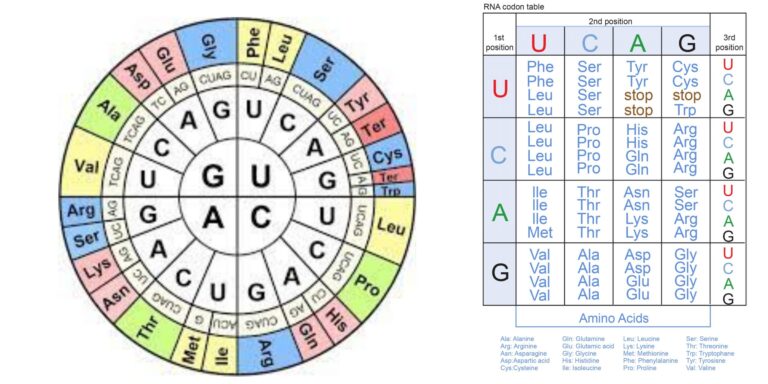
Genetic code refers to the rules which the linear nucleotide sequence identifies what is the linear structure of the polypeptide. This means that they define what sequences of nucleotides in an mRNA transformed to the amino acid sequence in the polypeptide.