

Bone marrow is a soft, spongy and gelatinous tissue present inside the hollow cavity of bones. It is mainly concerned with formation of blood cells. This process is called haematopoiesis.
Bone marrow is a soft, spongy and gelatinous tissue inside the hollow spaces of some bones.
It is present in hip bone, thigh bone, vertebrae, ribs and sternum. It is highly vascular. It is one of the largest tissue of human body and makes about 4-5% of total body weight.
The main function of bone marrow is blood cell formation. This is called haematopoiesis. It produces many blood cells every day.
The blood cells formed are red blood cells, white blood cells and platelets. Red blood cells carry oxygen. White blood cells are used in defence of body. Platelets helps in clotting of blood.
The bone marrow contains a supporting microenvironment called stroma. It contains mesenchymal stem cells, fibroblasts, macrophages and other supporting cells. These cells regulate growth, differentiation and survival of blood forming cells.
There are two types of bone marrow.
Red bone marrow
It is active marrow. It is used for formation of blood cells. At birth almost all bone marrow is red marrow because rapid growth needs more blood cells.
Yellow bone marrow
It is mainly made of fat cells called adipocytes. It works as energy reserve. It also contains stem cells which may form bone, fat and cartilage.
During severe blood loss or chronic oxygen deficiency, yellow bone marrow can change into red bone marrow. This helps to increase blood cell production in body.
Historical Background of Bone Marrow
The following are some of the important historical background of bone marrow.
- About 370 million years ago, the earliest evidence of bone marrow was found from fossil record of Devonian period. It was discovered in a lobe-finned fish called Eusthenopteron. This fish was related with early tetrapods.
- For long time, animal bone marrow was used as food material. It is used in different traditional dishes of many countries. One important example is Milanese Ossobuco.
- In late 1800s to early 1900s, the early anatomical study of bone marrow was done. In this period large animals like cats and rabbits were mostly used for studying its structure.
- During 1970s, the concept of bone marrow microenvironment was introduced. This microenvironment was considered as special niche for haematopoietic stem cells.
- In 1976, Tavassoli started the study of bone marrow adipocytes. These are fat cells present in marrow. This study helped to make first histochemical difference between fat cells of red marrow and yellow marrow.
- In 1978, Ambika et al. gave the first idea that bone marrow fat is related with erythropoiesis. In this study, breakdown of marrow fat was observed during stimulated blood cell formation.
- In 2003, it was described that bone marrow acts as a priming site for T-cell responses. These responses are formed against blood-borne antigens.
Location and Distribution of Bone Marrow
The following are the location and distribution of bone marrow.
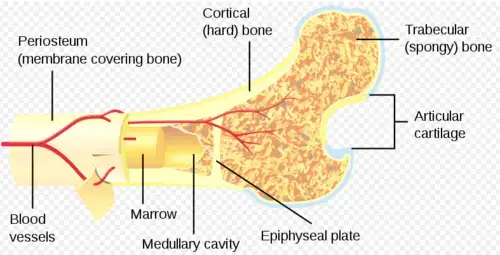
- Bone marrow is present inside the hollow cavity of bones. It is found in the medullary cavity and also in the trabeculae of spongy bone. These spongy parts are also called cancellous bone.
- In healthy adult, bone marrow is a large organ like tissue. It forms about 4-5% of total body mass. In an average adult it is about 3.7 kg.
- Bone marrow is not equally distributed in all bones. Most of the marrow is present in the axial skeleton. It is mainly present in vertebrae, pelvis, ribs and sternum.
- The approximate distribution of bone marrow in adult skeleton is as follows- Vertebrae– 28%
Pelvis– 26%
Ribs and sternum– 13%
Other bones– 33% - Red bone marrow is present in almost all bones in infants. This is because rapid growth needs more blood cell formation. In adult, red marrow is mainly limited to the axial skeleton.
- In adult, red bone marrow is found in pelvis, vertebrae, sternum, ribs and skull. It is also present in proximal epiphyseal ends of long bones like femur and humerus.
- Yellow bone marrow is mainly found in appendicular skeleton. It fills the diaphysis or shaft of long bones. It is also found in distal ends of long bones of arms and legs.
- During ageing, the distribution of marrow changes. The active red marrow is gradually replaced by fatty yellow marrow. This change is called red to yellow marrow conversion.
- This conversion is centripetal in nature. It starts from distal extremities like fingers and toes. Then it moves inward toward the central axial skeleton. It is usually completed by 25 to 30 years of age.
- Yellow marrow has two special fat depots. These are constitutive marrow adipose tissue (cMAT) and regulated marrow adipose tissue (rMAT).
- cMAT is stable fat and is located in distal bones. rMAT is found in proximal bones and it can interact with red marrow. It helps the marrow to adjust during physiological stress.
Gross Structure of Bone Marrow
The gross structure of bone marrow is as follows-
- Bone marrow is a soft, semi-solid and gelatinous tissue. It has a fluid part and a more solid part.
- It is present inside the hollow medullary cavity of long bones. It also fills the porous spaces of trabecular bone. This bone is also called spongy bone or cancellous bone.
- The marrow cavity is supported by network of trabecular bone. It is highly porous in nature. This network gives support and protection to the marrow.
- The trabecular network also helps in exchange of cells, nutrients and waste materials between marrow and blood stream.
- Structurally, bone marrow has two main functional compartments. These are haematopoietic parenchymal compartment and stromal compartment.
- Haematopoietic parenchymal compartment contains dense cords of developing blood cells. These cells are present in between the blood sinuses.
- Stromal compartment forms a three dimensional supporting network. It contains connective tissue and supporting cells.
- Bone marrow has rich blood supply. It contains many special blood vessels called sinusoids. These sinusoids are highly permeable.
- The developing blood cells are present in extravascular spaces. These spaces are packed between the sinusoids.
- The internal structure of bone marrow is arranged in a specific way. Different cells are present in different zones.
- Erythrocytes and macrophages are present mainly around blood vessels. This region is called sinusoidal niche.
- Immature granulocytes are present near inner bone surface. This region is called endosteal niche or paratrabecular niche.
Types of Bone Marrow
The following are the types of bone marrow–
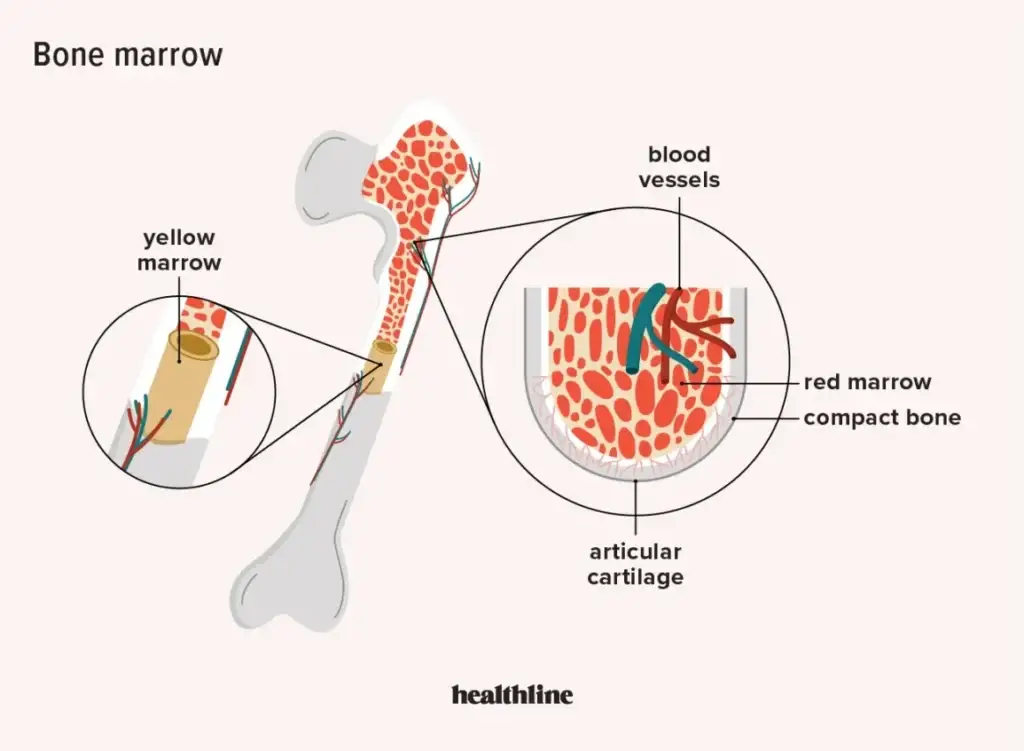
- Red Bone Marrow (Medulla ossium rubra)
- Red bone marrow is also called Medulla ossium rubra. It is the active type of bone marrow and mainly concerned with formation of blood cells. It produces red blood cells, white blood cells and platelets. Red blood cells carry oxygen, white blood cells fight against infection and platelets helps in blood clotting.
- Red bone marrow is highly vascular and contains haematopoietic stem cells, blood vessels and iron. Due to this it has red colour. In infants it is present in almost all bones. In adults it is mainly present in pelvis, vertebrae, ribs, sternum, skull and proximal ends of long bones.
- Yellow Bone Marrow (Medulla ossium flava)
- Yellow bone marrow is also called Medulla ossium flava. It is mainly fatty marrow and comparatively inactive in blood cell formation. It acts as reserve source of energy. During severe blood loss it may again change into red bone marrow and helps in formation of new blood cells.
- Yellow bone marrow is mainly made up of fat cells called adipocytes. It also contains mesenchymal stem cells which can form bone, cartilage and fat. It is mainly present in medullary cavity of long bones of arms and legs.
- Yellow marrow fat is of two types, constitutive marrow adipose tissue (cMAT) and regulated marrow adipose tissue (rMAT). cMAT forms early in life and present in distal bones. rMAT forms later in life and present in proximal bones.
Histological Structure of Bone Marrow
The histological structure of bone marrow is as follows-
- Histologically bone marrow is mainly divided into two parts. These are haematopoietic parenchymal compartment and stromal compartment.
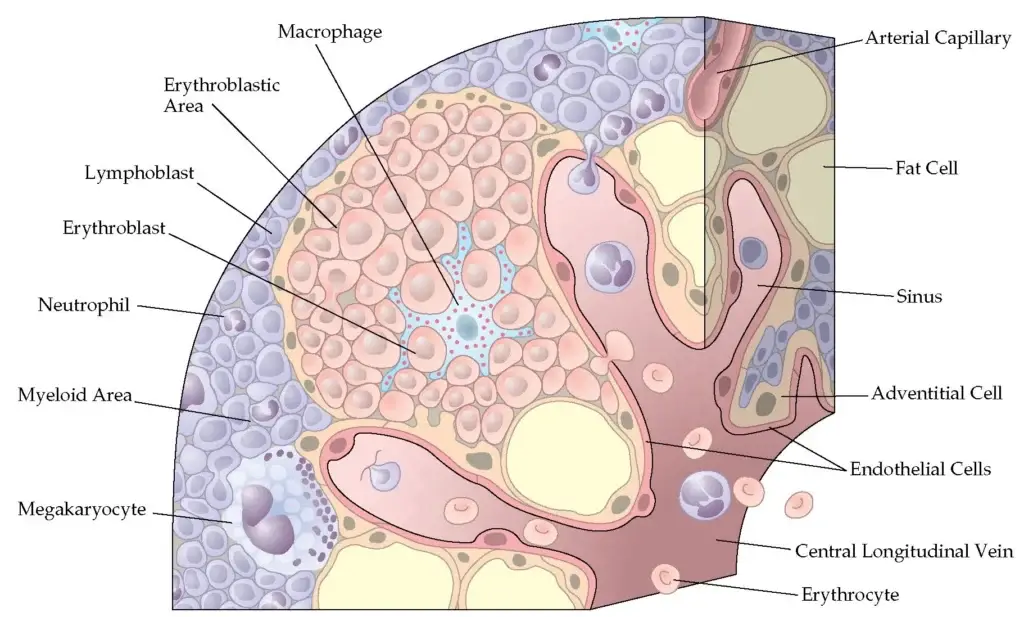
- Haematopoietic parenchyma is the functional part of bone marrow. It contains dense cords of developing blood cells. These cells are present in extravascular spaces between the blood vessels.
- The developing blood cells are arranged according to their lineage. Erythroid cells are present in small groups or islands. These are precursor cells of red blood cells. They usually show round dark nuclei with pale cytoplasmic area around it.
- Myeloid cells are the precursor cells of white blood cells. They have lighter staining nuclei and pink cytoplasm. The immature granulocytes are usually arranged near the inner surface of bone in paratrabecular region.
- Megakaryocytes are the largest cells of marrow parenchyma. These cells form platelets. They have very large multilobed nucleus and are usually present close to the blood sinuses.
- Stromal compartment is the supporting part of bone marrow. It forms a three dimensional network. It also forms extracellular matrix which holds the marrow cells together.
- The stromal compartment contains different non-haematopoietic cells. These cells include fibroblasts, reticular cells, adipocytes, macrophages and osteogenic cells.
- Osteoblasts are present along the surface of bony trabeculae. They help in formation of new bone. Osteoclasts are present near the bone surface and helps in resorption of bone.
- Bone marrow has many special blood vessels called vascular sinusoids. These are thin walled venous vessels. They are spread throughout the marrow.
- The sinusoids are lined by single layer of endothelial cells. These cells have slit like spaces between them. Due to this, the wall becomes permeable.
- Mature blood cells pass through these sinusoids and enter into the blood circulation. Thus vascular sinusoids helps in release of formed blood cells from marrow to blood.
Cellular Components of Bone Marrow
The cellular components of bone marrow are mainly divided into following two types-
- Haematopoietic cells– These are blood forming cells of bone marrow. These cells form different types of blood cells.
- Haematopoietic stem cells (HSCs)– These are main stem cells of bone marrow. They can self renew and can form all types of blood cells.
- Erythrocytes and precursors– These are related with red blood cell formation. It includes erythroblasts and mature red blood cells. These cells carry oxygen to tissues and remove carbon dioxide.
- Leukocytes and precursors– These are white blood cells and their developing cells. They helps in defence of body, infection control and wound healing.
- Granulocytes– These include neutrophils, eosinophils and basophils.
- Agranulocytes– These include lymphocytes and monocytes. Lymphocytes are of B cells, T cells and natural killer cells.
- Megakaryocytes– These are very large cells with multilobed nucleus. These cells break into small fragments and form platelets or thrombocytes, which are important for blood clotting.
- Stromal cells– These are supporting cells of bone marrow. They form the supporting framework and regulate marrow environment.
- Mesenchymal stem cells (MSCs)– These are stromal stem cells. These cells can form connective tissue cells like bone, cartilage and fat.
- Adipocytes– These are fat cells and mainly present in yellow bone marrow. They store energy and also release factors which regulate marrow environment.
- Fibroblasts or reticular cells– These are connective tissue cells. They form extracellular matrix and supporting framework which holds the marrow cells together.
- Osteoblasts– These are bone forming cells. They are present along inner bone surface and also helps in anchoring of haematopoietic stem cells.
- Osteoclasts– These are bone resorbing cells. They act with osteoblasts and helps in remodelling of bone.
- Endothelial cells– These cells line the blood vessels or sinusoids of bone marrow. They form a barrier and allow mature blood cells to enter into blood circulation.
- Macrophages– These are immune cells present in marrow stroma. They remove dead cells, provide iron for red blood cell formation and helps to maintain stem cell condition.
Development Process of Bone Marrow
The development process of bone marrow are as follows-
- During 2nd to 3rd week of embryonic life, blood cell formation does not start in bone marrow. It first starts in blood islands of yolk sac. In this stage mainly nucleated red blood cells are formed.
- During 6th week, haematopoiesis is shifted mainly to fetal liver and spleen. These organs become important site for blood cell formation in this period.
- During 14th week or second trimester, bone marrow begins to form. After this it slowly starts taking part in production of blood cells.
- At the time of birth and infancy, almost all bones are filled with active red bone marrow. It is needed because rapid growth occurs and oxygen demand is also high.
- During childhood, the need of blood cell formation becomes stable. So red bone marrow starts changing into fatty yellow bone marrow. This process is called red-to-yellow marrow conversion.
- By about 7 years of age, nearly half of the bone marrow is converted into yellow marrow. This yellow marrow is fatty and less active in blood cell formation.
- During adolescence and early adult life, the conversion of red marrow into yellow marrow occurs in centripetal pattern. It means the conversion starts from outer parts and then moves inward.
- This conversion starts from distal extremities like fingers and toes. Then it moves upward through the shafts of long bones of arms and legs.
- After this conversion, active red bone marrow remains mainly in central axial skeleton. It is present in pelvis, vertebrae and ribs.
- The primary conversion of red marrow to yellow marrow is usually completed by 25 to 30 years of age.
- In older adult life, replacement of red marrow by yellow marrow continues slowly. This occurs throughout the remaining adult life.
- In vertebrae, red marrow is about 85% at 17 years of age. It becomes nearly 40% by eighth decade of life.
- Due to this decrease of red bone marrow, the number of haematopoietic stem cells may decrease. Immune function may also become reduced with ageing.
Hematopoiesis in Bone Marrow
The step by step process of haematopoiesis in bone marrow are as follows-
- Haematopoiesis starts from haematopoietic stem cells (HSCs). These cells are present in bone marrow. These are pluripotent cells and can give rise to all blood cells.
- The HSCs are activated by different signals. These signals are produced by marrow microenvironment. Growth factors and cytokines also take part in this activation.
- After activation, HSCs divide and form multipotent progenitor cells. These cells are not fully mature. But they are more fixed than stem cells.
- The multipotent progenitor cells divide into two main lines. One is common myeloid progenitor and another is common lymphoid progenitor.
- From common myeloid progenitor, red blood cells, platelets, granulocytes and monocytes are formed.
- From common lymphoid progenitor, B cells, T cells and natural killer cells are formed.
- Then the progenitor cells are changed into committed precursor cells. These are early immature blood cells. Many of them are called blast cells such as myeloblast, proerythroblast and megakaryoblast.
- In this step, the precursor cells pass through different maturation stages. The cells changes their size, nucleus and cytoplasm. Some cells also develop granules.
- In erythropoiesis, proerythroblast changes into different erythroblast stages. Then reticulocyte is formed. After that mature erythrocyte or red blood cell is formed.
- In megakaryopoiesis, precursor cell forms megakaryocyte. It is very large cell and has multilobed nucleus. Its cytoplasm breaks into small parts and forms platelets.
- In leukopoiesis, precursor cells form different white blood cells. These include neutrophils, eosinophils, basophils, monocytes and lymphocytes.
- After full maturation, the formed cells come out from bone marrow. Red blood cells and white blood cells pass through wall of venous sinusoids.
- Platelets are released from cytoplasm of megakaryocytes. Then they enter into blood sinuses and finally into blood circulation.
Erythropoiesis in Bone Marrow
The step by step process of erythropoiesis in bone marrow are as follows-
- Erythropoiesis starts from haematopoietic stem cells present in bone marrow. These cells first become committed for red blood cell line.
- This commitment mainly occurs under the effect of erythropoietin. Erythropoietin is a hormone secreted by kidney.
- The committed stem cell then forms proerythroblast. It is also called pronormoblast. It is the earliest recognizable cell of red blood cell series.
- Proerythroblast changes into basophilic erythroblast. It is also called basophilic normoblast. In this stage the cell is still immature.
- Basophilic erythroblast changes into polychromatic erythroblast. It is also called polychromatophilic normoblast.
- Polychromatic erythroblast changes into orthochromatic erythroblast. It is also called orthochromatic normoblast. In this stage the cell becomes more nearer to mature red blood cell.
- Orthochromatic erythroblast loses its nucleus and forms reticulocyte. Reticulocyte is also called diffusely basophilic erythrocyte.
- Reticulocyte finally changes into mature erythrocyte or red blood cell. This mature cell enters into blood circulation and carries oxygen to tissues.
- The whole process occurs in special units of bone marrow called erythroblastic islands. These are present inside the marrow cavity.
- The maturation process of erythropoiesis usually takes about 5 to 7 days to complete.
Leukopoiesis in Bone Marrow
The process of leukopoiesis in bone marrow are as follows-
- Leukopoiesis is the process of formation of white blood cells in bone marrow. It starts from haematopoietic stem cells.
- The haematopoietic stem cells form two main progenitor lines.
- Common myeloid progenitor forms granulocytes and monocytes.
- Common lymphoid progenitor forms B cells, T cells and natural killer cells.
- The process is controlled by marrow microenvironment. T-cells, macrophages and other cells produce cytokines. G-CSF helps in granulocyte formation, M-CSF helps in monocyte formation and IL-5 helps in eosinophil and basophil formation.
- Granulopoiesis is the formation of granulocytes. It takes about 10 to 14 days in bone marrow.
- Myeloblast is the earliest cell. It has round nucleus and no cytoplasmic granules.
- Promyelocyte has primary granules which are dark blue or reddish blue.
- Myelocyte forms secondary or specific granules. These granules decide neutrophil, eosinophil or basophil line.
- Metamyelocyte has slightly indented nucleus and many specific granules in cytoplasm.
- Band cell has horseshoe shaped nucleus.
- Segmented granulocyte is the mature cell. It has lobulated nucleus.
- Monopoiesis is the formation of monocytes. It takes about 2 to 3 days in bone marrow.
- Monoblast has round to oval nucleus and pale blue cytoplasm.
- Promonocyte has folded nucleus and prominent nucleolus.
- Monocyte is the mature circulating cell. It helps in defence and later may form macrophage.
- Lymphopoiesis is the formation of lymphocytes from common lymphoid progenitor.
- B cells are formed and mature in bone marrow.
- T cells start in bone marrow but mature in thymus.
- Natural killer cells also arise from lymphoid line and are CD3 negative cells.
- Some B cells form plasma cell line. They pass through plasmoblast, proplasmocyte and finally mature plasmocyte or plasma cell. These cells are often present around blood vessels in marrow.
- After maturation, the formed white blood cells pass through marrow sinusoids and enter into blood circulation.
Thrombopoiesis in Bone Marrow
The process of thrombopoiesis in bone marrow are as follows-
- Thrombopoiesis is the process of formation of platelets in bone marrow. It is also called megakaryopoiesis.
- This process starts from haematopoietic stem cells. These cells first form common myeloid progenitor and then it becomes committed to platelet forming line.
- The process is mainly controlled by thrombopoietin. It is a hormone produced mainly by liver. It binds with receptors of developing cells and helps in their growth and differentiation.
- The first recognizable cell of this line is megakaryoblast. It is the earliest precursor cell which is committed for formation of platelets.
- Megakaryoblast changes into promegakaryocyte. In this stage the cell starts a special process called endomitosis.
- In endomitosis, nuclear material becomes double again and again.
- But the cell does not divide.
- Due to this a large multilobed nucleus starts to form.
- Promegakaryocyte changes into mature megakaryocyte. It is the largest cell present in bone marrow. It has large granular cytoplasm and highly multilobed nucleus.
- Mature megakaryocytes are present near the thin walled blood vessels of marrow. These blood vessels are called sinusoids. They remain attached near the sinusoidal endothelial cells.
- The attachment is helped by adhesion molecules. Example is VLA-4 binding with VCAM-1.
- The whole megakaryocyte does not enter into blood. It sends long cytoplasmic processes into the lumen of sinusoids. These processes are called pro-platelet processes.
- The cytoplasm of megakaryocyte then breaks into many small pieces. These small pieces become platelets or thrombocytes.
- Platelets are small, membrane bound and without nucleus. They enter into blood circulation from marrow sinusoids.
- These platelets are used in blood clotting. So thrombopoiesis is important for prevention of blood loss from the body.
Regulation of Bone Marrow Activity
The regulation of bone marrow activity are as follows-
- Microenvironment– Bone marrow activity is regulated by special structural areas called niches, mainly endosteal niche and vascular niche. These gives physical support and signalling network which maintain and regulate haematopoietic stem cells (HSCs).
- Cytokines and growth factors– The differentiation of blood cell lines is controlled by different local cytokines. G-CSF helps in production of granulocytes, M-CSF helps in development of monocytes and macrophages, and IL-5 helps in formation of eosinophils and basophils.
- Hormonal control– Some systemic hormones regulate specific blood cell formation. Erythropoietin is produced by kidneys and helps in survival and proliferation of red blood cell line, while thrombopoietin is produced mainly by liver and helps in formation of megakaryocytes and platelets.
- Osteoblast interaction– Osteoblasts are bone forming cells present along the inner bone surface. They regulate HSC dormancy, physical anchoring and self renewal by producing factors like osteopontin (OPN), angiopoietin-1 (ANG1) and Notch ligands.
- Vascular niche signals– Endothelial cells and perivascular stromal cells such as pericytes are present along marrow blood vessels. They secrete important growth factors like CXCL12 and Stem Cell Factor (SCF) which control HSC proliferation and homing.
- Adipocyte secretion– Bone marrow adipose tissue acts as metabolically active endocrine tissue. It secretes adiponectin for stem cell survival, leptin and IL-6 for differentiation, and prostaglandins for suppression of excessive HSC proliferation.
- Megakaryocyte regulation– Megakaryocytes are platelet forming cells and also regulate HSC viability. They secrete CXCL4 and TGF-β, which keep HSCs in inactive resting state and prevent exhaustion of stem cells.
- Macrophage activity– Bone marrow macrophages including special osteomacs interact with osteoblasts, remove blood-borne pathogens and secrete chemokines. These chemokines maintain HSC quiescence and keep them attached inside marrow.
- Overall regulation– In this way, bone marrow activity is regulated by combined action of niches, cytokines, hormones and supporting cells. These all maintain proper blood cell formation according to need of body.
Blood Supply and Circulation in Bone Marrow
The blood supply and circulation in bone marrow are as follows-
- Vascular architecture– Bone marrow has rich and special vascular network. It is made up of arterioles, interconnecting capillaries and special venous vessels called sinusoids.
- Arterioles– These vessels supply blood to the bone marrow. Blood flow in arterioles is high velocity. They are lined by endothelial cells with tight junctions and so vascular permeability is low.
- Arteriolar region– Due to low permeability and special blood flow, the area around arterioles has low oxygen condition. This low oxygen environment is important for marrow cell regulation.
- Sinusoids– These are thin walled venous capillaries present in central marrow parenchyma. They are dense and porous network. They drain the blood into a central sinus.
- Sinusoidal wall– The wall of sinusoids is made up of single layer of endothelial cells. They do not have supporting smooth muscle cells. So the wall is thin and permeable.
- Sinusoidal environment– Blood flow in sinusoids is slow and sluggish. This region has highest oxygen tension inside the medullary cavity.
- Blood-marrow barrier– The single layered endothelial wall of venous sinusoids acts as blood-marrow barrier. It prevents immature developing blood cells from entering into blood circulation early.
- Cellular egress– Fully mature blood cells can pass through the permeable sinusoidal wall. They develop special membrane proteins which helps them to attach, penetrate and cross the endothelial barrier.
- Circulation– After crossing the sinusoids, mature blood cells enter into systemic blood circulation. In this way formed cells are released from bone marrow into blood.
Clinical Significance of Bone Marrow
The clinical significance of bone marrow are as follows-
- Diagnostic testing– Bone marrow aspiration and bone marrow biopsy are important test for checking marrow condition. These are used in diagnosis of anaemia, abnormal blood cell count and fever of unknown origin. These are also used in diagnosis, staging and treatment monitoring of leukaemia, lymphoma and multiple myeloma.
- Cancer spread– Bone marrow examination is also used to detect spread of solid tumour into bone. It helps to know whether tumour cells are present in marrow or not.
- Transplantation therapy– Bone marrow transplantation or haematopoietic stem cell transplantation is used as life saving treatment in many severe diseases. It is used in malignant disease, genetic disease and immune disorder.
- Types of transplantation– Autologous transplantation uses patient own stem cells and is used after high dose chemotherapy in conditions like multiple myeloma. Allogeneic transplantation uses stem cells from healthy donor and is used in diseases like leukaemia and aplastic anaemia.
- Marrow disorders– Many malignant and non-malignant diseases directly affect bone marrow and disturb normal blood cell formation. In leukaemia, abnormal white blood cells crowd out normal cells. In aplastic anaemia, the marrow fails to produce enough blood cells.
- Clinical effects– Failure of bone marrow may cause severe infection, tiredness and bleeding. These occur due to decrease of white blood cells, red blood cells and platelets.
- Cancer treatment effect– Chemotherapy and radiation therapy act on rapidly dividing cells. So they also damage normal bone marrow cells. This may cause weak immune system, anaemia and increased bleeding tendency.
- Medical imaging– Magnetic Resonance Imaging (MRI) is used for non-invasive study of bone marrow. It can detect change in marrow composition. It is useful in detection of cancer metastasis, multiple myeloma infiltration and bone marrow oedema.
- Severe malnutrition– Gelatinous Transformation of Bone Marrow (GTBM) may occur in severe starvation, anorexia nervosa and severe systemic illness. In this condition marrow fat cells and blood forming cells atrophy and replaced by gelatinous material.
- Regenerative medicine– Bone marrow contains mesenchymal stem cells. These cells can form bone, cartilage and muscle. They are studied for tissue repair, cartilage regeneration and recovery in neurological disease.
- Fertility restoration– Bone marrow stem cells may help in repair of uterine and follicle damage caused by chemotherapy. It may improve endometrium regeneration, vascularity and fertility. It may also increase the effect of IVF treatment in cancer survivors.
Bone Marrow Related Disorders
The following are some of the important bone marrow related disorders-
Malignant (Cancerous) Disorders
- Leukemias– Leukemia is a cancer of blood forming tissue. In this disorder abnormal white blood cells are produced very rapidly. These abnormal cells occupy the marrow and normal blood cell formation becomes disturbed. The important types are Acute Myeloid Leukemia (AML), Acute Lymphoblastic Leukemia (ALL), Acute Promyelocytic Leukemia (APL) and Chronic Lymphocytic Leukemia (CLL).
- Lymphomas– Lymphoma is the cancer of lymphatic system. It may also involve bone marrow. The important types are Hodgkin lymphoma and Non-Hodgkin lymphoma.
- Multiple myeloma– Multiple myeloma is a cancer of plasma cells. In this disease abnormal plasma cells increase in bone marrow. It also causes destruction of bone. The related plasma cell disorders are plasmacytoma, Monoclonal Gammopathy of Undetermined Significance (MGUS), systemic amyloidosis and POEMS syndrome.
- Myelodysplastic syndromes (MDS)– In this condition bone marrow forms defective immature blood cells. These cells do not mature properly. Sometimes it may change into acute myeloid leukemia.
- Myeloproliferative neoplasms (MPNs)– These are blood cancers in which bone marrow produces excess blood cells. It may produce more red blood cells, white blood cells or platelets.
- Waldenstrom macroglobulinemia– It is a rare type of Non-Hodgkin lymphoma. In this condition abnormal white blood cells are present in bone marrow.
- Metastatic cancers– In this condition cancers from other organs spread to bone marrow. It may occur from cancer of breast, testis and prostate. Neuroblastoma and Ewing sarcoma may also spread to the marrow.
Non-Malignant and Bone Marrow Failure Disorders
- Aplastic anaemia– Aplastic anaemia is a severe disorder of bone marrow. In this condition marrow fails to produce enough red blood cells, white blood cells and platelets. So fatigue, infection and bleeding occurs.
- Pancytopenia– Pancytopenia is decrease of all three blood cells in blood. These are red blood cells, white blood cells and platelets. It may occur due to failure of marrow.
- Haemoglobinopathies– These are inherited disorders of haemoglobin synthesis. In these conditions red marrow may increase again for more red cell formation. Important examples are Thalassemia and Sickle Cell Disease.
- General anaemias– Anaemia is lack of healthy red blood cells. Due to this enough oxygen is not carried to body tissues.
Abnormal Blood Cell Count Conditions
- Leukopenia and leukocytosis– Leukopenia means too few white blood cells. Leukocytosis means too many white blood cells. Both may be related with abnormal marrow activity.
- Thrombocytopenia and thrombocytosis– Thrombocytopenia means too few platelets. Thrombocytosis means too many platelets. These conditions affect clotting of blood.
- Immune Thrombocytopenia (ITP)– ITP is an autoimmune disorder. In this condition immune system destroys platelets. The bone marrow stromal cells also fail to control the autoimmune response properly.
- Polycythemia– Polycythemia is overproduction of red blood cells. Polycythemia vera is one important type of this disorder.
Structural, Metabolic and Other Disorders
- Gelatinous Transformation of Bone Marrow (GTBM)– GTBM is also called serous atrophy. In this condition active haematopoietic tissue and fat cells become atrophied. They are replaced by gelatinous substance. It is seen in severe starvation, anorexia nervosa, cachexia and systemic catabolic illness.
- Myelofibrosis– Myelofibrosis is a disorder in which normal bone marrow is replaced by fibrous scar tissue. Due to this normal blood cell formation becomes disturbed.
- Systemic mastocytosis– In this disorder mast cells accumulate abnormally in many organs. Bone marrow may also be involved.
- Bone marrow edema– Bone marrow edema is accumulation of fluid in bone marrow. It may be temporary or may be related with osteoporosis, trauma and complex regional pain syndrome.
- Bone marrow necrosis– Bone marrow necrosis is diffuse death of myeloid tissue and stromal tissue present inside the marrow.
- Hemochromatosis– Hemochromatosis is excess iron accumulation in body. It may also affect bone marrow and its normal activity.
Limitations of Bone Marrow Functions
The following are some of the important limitations of bone marrow functions-
- Age related decline– With increasing age, active red bone marrow is gradually replaced by fatty yellow bone marrow. Due to this blood forming activity also becomes reduced. The aged haematopoietic stem cells (HSCs) also show less regeneration, more DNA damage and more tendency to form myeloid cells. So chances of anaemia, weak immune response and blood cancers may increase.
- Effect of treatment and toxins– Bone marrow contains rapidly dividing cells. So it is easily damaged by radiation, chemotherapy and environmental toxins. During cancer treatment many normal marrow cells are also killed. This causes weak immunity and reduced blood cell production.
- Microenvironmental failure– Normal function of bone marrow depends on supporting bone marrow stromal cells (BMSCs). In some diseases like aplastic anaemia and thalassemia, these stromal cells become weak and senescent. They lose their proliferating capacity and fail to support HSCs properly. This may lead to marrow failure.
- Malignant hijacking– In cancers like leukaemia, lymphoma and multiple myeloma, the bone marrow microenvironment becomes abnormal. Cancer cells can change the activity of BMSCs. These stromal cells then produce factors which protect tumour cells, increase malignant growth and make drug resistance. Normal blood cell formation becomes suppressed.
- Nutritional sensitivity– Bone marrow is affected by severe starvation and catabolic illness. In conditions like anorexia nervosa, Gelatinous Transformation of Bone Marrow (GTBM) may occur. In this condition marrow space is filled with gelatinous hyaluronic acid like matrix and it blocks normal stem cell survival signals.
- Metabolic limitation– During GTBM, fat cells and blood forming cells become atrophied. The remaining blood forming progenitor cells may also die. So the capacity of marrow for blood cell formation becomes severely reduced.
- Genetic limitation– In inherited disorders like thalassemia, defective haemoglobin synthesis occurs. Due to this ineffective haematopoiesis takes place and marrow tries to expand for more blood cell formation. This expansion may change the normal bone structure.
- Structural limitation– In myelofibrosis, healthy blood forming tissue of bone marrow is replaced by fibrous scar tissue. This scar tissue physically blocks normal marrow function. So normal production of blood cells becomes disturbed.
- Overall limitation– Thus bone marrow can not work normally when its stem cells, stromal cells, nutrition, genetic control or structure becomes damaged. These conditions reduce the normal blood forming capacity of marrow.
Advantages of Bone Marrow Functions
The following are some of the important advantages of bone marrow functions-
- Continuous blood supply– Bone marrow is the main blood forming tissue of body. It produces large number of blood cells every day, about 500 billion cells. These cells are needed for oxygen transport, defence and clotting.
- Oxygen transport– Red blood cells are formed in bone marrow. These cells contain haemoglobin. It carries oxygen from lungs to different tissues of body.
- Defence of body– White blood cells are also formed from bone marrow. These cells protect the body from bacteria, virus and other foreign agents. So it has important role in immunity.
- Immune memory– Bone marrow is also a storage place for memory B cells and memory T cells. These cells remember the earlier infection. Due to this, body can give quick response when same pathogen enters again.
- Blood clotting– Platelets are formed from megakaryocytes in bone marrow. These platelets helps in clotting of blood. It prevents excess loss of blood from injured part.
- Stress adaptation– Yellow bone marrow mainly stores fat. But in severe blood loss or chronic lack of oxygen, it can again change into red bone marrow. This helps to increase blood cell formation rapidly.
- Metabolic role– Bone marrow adipose tissue is not only fat storage tissue. It also acts like endocrine tissue. It secretes adiponectin, leptin and other adipokines. These helps in energy metabolism, glucose level and insulin sensitivity.
- Tissue repair– Bone marrow contains mesenchymal stem cells (MSCs). These cells can form bone, cartilage, fat and muscle. So it helps in repair of tissue, wound healing and remodelling of bone.
- Therapeutic importance– Healthy bone marrow can be used for transplantation. Bone marrow transplantation is useful in leukaemia, lymphoma, immune deficiency and some genetic disorders.
- Nutritional value– Animal bone marrow is also used as food. It contains protein, collagen, iron and vitamin B12. It is a nutritive food material and may help in skin, hair and joint health.
Difference Between Red Bone Marrow and Yellow Bone Marrow
| Basis | Red Bone Marrow | Yellow Bone Marrow |
|---|---|---|
| Primary function | Red bone marrow is the active blood forming marrow. It acts as blood cell factory of body. It forms red blood cells, white blood cells and platelets. | Yellow bone marrow mainly acts as energy reserve. It stores fat. During severe blood loss or stress, it can again change into red bone marrow. |
| Blood cell formation | It is mainly concerned with haematopoiesis. It produces oxygen carrying cells, defence cells and clot forming cells. | It is not much active in haematopoiesis. But in emergency condition it may help by changing into red marrow. |
| Composition | It is highly cellular and highly vascular. It contains about 40% water, 40% fat and 20% blood forming cells. | It is mainly made up of fat cells or adipocytes. It contains about 80% fat, 15% water and only 5% blood forming cells. |
| Colour | It has red colour due to rich blood supply, iron and haemoglobin. | It has yellow colour due to high fat and carotenoids. |
| Location in adults | It is mainly present in axial skeleton. It is found in pelvis, vertebrae, ribs, sternum and skull. It is also present in proximal ends of femur and humerus. | It is mainly present in appendicular skeleton. It fills the central medullary cavity or diaphysis of long bones of arms and legs. It is also present in hands and feet. |
| At birth | At birth, almost all bone marrow is red. It is needed for rapid growth and high oxygen demand. | At birth, yellow marrow is very less. It increases gradually with age. |
| Change with age | With increasing age, red bone marrow is slowly replaced by yellow bone marrow. | By about 7 years, nearly half of marrow becomes yellow. The main red to yellow conversion is usually completed by 25 to 30 years. |
| MRI appearance | In T1-weighted MRI, it gives intermediate signal. It is lower than fat but higher than muscle. It shows marked signal drop in out-of-phase imaging due to water and microscopic fat. | In T1-weighted MRI, it gives high signal intensity. It appears bright like subcutaneous fat. It shows very little or no signal drop in out-of-phase imaging. |
References
- Liv Hospital. (n.d.). 6 types of bone marrow transplant: Allo vs auto and more explained. https://int.livhospital.com/6-types-of-bone-marrow-transplant-allo-vs-auto-and-more-explained/
- Americord Registry. (n.d.). Allogeneic vs. autologous stem cell treatments. https://www.americordblood.com/articles/allogeneic-vs-autologous-stem-cell-treatments
- GW Blogs. (n.d.). Blood and bone marrow – Histology education. https://blogs.gwu.edu/smhs-histology/blood-and-bone-marrow/
- American Cancer Society. (n.d.). Bone marrow biopsy and aspiration. https://www.cancer.org/cancer/diagnosis-staging/tests/biopsy-and-cytology-tests/bone-marrow-biopsy-and-aspiration.html
- City of Hope. (n.d.). Bone marrow biopsy and aspiration: What to expect. https://www.cityofhope.org/tests-procedures-treatments/bone-marrow-biopsy-aspiration
- Centre for Clinical Haematology. (n.d.). Bone marrow biopsy and bone marrow aspiration. https://cfch.com.sg/bone-marrow-aspiration-2/
- PubMed Central. (n.d.). Bone marrow blood vessels: Normal and neoplastic niche. https://pmc.ncbi.nlm.nih.gov/articles/PMC5136754/
- Wang, H., Leng, Y., & Gong, Y. (2018). Bone marrow fat and hematopoiesis. Frontiers in Endocrinology, 9, Article 694. https://doi.org/10.3389/fendo.2018.00694
- PubMed Central. (n.d.). Bone marrow niches for hematopoietic stem cells and immune cells. https://pmc.ncbi.nlm.nih.gov/articles/PMC3405285/
- PubMed Central. (n.d.). Bone marrow vascular niche: Home for hematopoietic stem cells. https://pmc.ncbi.nlm.nih.gov/articles/PMC4009113/
- Liv Hospital. (n.d.). Bone marrow: Powerful source of stem cells for healing. https://int.livhospital.com/bone-marrow-powerful-source-stem-cells/
- Wikipedia. (2026, June 6). Bone marrow. https://en.wikipedia.org/wiki/Bone_marrow
- PubMed Central. (n.d.). Bone marrow adipocytes. https://pmc.ncbi.nlm.nih.gov/articles/PMC5638373/
- Mayo Clinic. (n.d.). Bone marrow biopsy and aspiration. https://www.mayoclinic.org/tests-procedures/bone-marrow-biopsy/about/pac-20393117
- Gonzalez-Berjon, J. M. (2010). Bone marrow histology [PDF]. HemePathReview. http://hemepathreview.com/Heme-Review/Part15-1-BoneMarrowSpleenExamination.pdf
- Vilanova, C., Martín-Noguerol, T., García-Figueiras, R., Baleato-González, S., & Vilanova, J. C. (2024). Bone marrow magnetic resonance imaging (MRI): Morphological and functional features from reconversion to infiltration. Quantitative Imaging in Medicine and Surgery, 14(11), 7969–7982. https://doi.org/10.21037/qims-23-1678
- PubMed Central. (n.d.). Bone marrow mesenchymal stromal cell-derived extracellular matrix displays altered glycosaminoglycan structure and impaired functionality in myelodysplastic syndromes. https://pmc.ncbi.nlm.nih.gov/articles/PMC9492883/
- PubMed Central. (n.d.). Bone marrow reconversion – imaging of physiological changes in bone marrow. https://pmc.ncbi.nlm.nih.gov/articles/PMC3529711/
- PubMed. (n.d.). Bone marrow: The workhorse organ. https://pubmed.ncbi.nlm.nih.gov/23315278/
- Northwell Health. (2024, December 2). Bone marrow: What it does and how to protect it. https://www.northwell.edu/news/insights/bone-marrow-types-functions-health-tips
- Checking your browser – reCAPTCHA. (n.d.).
- PubMed Central. (n.d.). Crosstalk between CXCR4/SDF-1 and VLA-4/VCAM-1 pathways regulates neutrophil retention in the bone marrow 1. https://pmc.ncbi.nlm.nih.gov/articles/PMC2633729/
- PubMed Central. (n.d.). Development of VLA4 and CXCR4 antagonists for the mobilization of hematopoietic stem and progenitor cells. https://pmc.ncbi.nlm.nih.gov/articles/PMC11353233/
- ResearchGate. (n.d.). Extracellular matrices of bone marrow stroma regulate cell phenotype and contribute to distinct stromal niches in vivo. https://www.researchgate.net/publication/367314957_Extracellular_matrices_of_bone_marrow_stroma_regulate_cell_phenotype_and_contribute_to_distinct_stromal_niches_in_vivo
- bioRxiv. (n.d.). Extracellular matrices of bone marrow stroma regulate cell phenotype and contribute to distinct stromal niches in vivo [PDF]. https://www.biorxiv.org/content/10.1101/2023.01.19.524473v1.full.pdf
- Hill, M. A. (2026, June 7). File:Bone marrow histology 01.jpg. Embryology UNSW. https://embryology.med.unsw.edu.au/embryology/index.php/File:Bone_marrow_histology_01.jpg
- PubMed Central. (n.d.). Gelatinous transformation of bone marrow. https://pmc.ncbi.nlm.nih.gov/articles/PMC5507563/
- Semantic Scholar. (n.d.). Gelatinous transformation of the bone marrow. https://www.semanticscholar.org/paper/Gelatinous-transformation-of-the-bone-marrow.-Seaman-Kjeldsberg/37d01088f3e3756c65aac7fc6af6ec41dd71009f
- PubMed. (n.d.). Gelatinous transformation of the bone marrow: The spectrum of underlying diseases. https://pubmed.ncbi.nlm.nih.gov/10632488/
- Mohn, E. (2017). Haematopoiesis. Health and Medicine | Research Starters – EBSCO. https://www.ebsco.com/research-starters/health-and-medicine/haematopoiesis
- PubMed Central. (n.d.). Hematopoietic stem cell and its bone marrow niche. https://pmc.ncbi.nlm.nih.gov/articles/PMC6854531/
- Kwon, M., Kim, B. S., Yoon, S., Oh, S.-O., & Lee, D. (2024). Hematopoietic stem cells and their niche in bone marrow. International Journal of Molecular Sciences, 25(13), Article 6837. https://doi.org/10.3390/ijms25136837
- Histological and molecular landscapes of the human bone marrow: Niche biology, microenvironmental dynamics, and pathological transformations. (n.d.).
- PubMed Central. (n.d.). Magnetic resonance imaging of the spinal marrow: Basic … https://pmc.ncbi.nlm.nih.gov/articles/PMC4697119/
- PubMed Central. (n.d.). Mobilization of hematopoietic stem and progenitor cells using inhibitors of CXCR4 and VLA-4. https://pmc.ncbi.nlm.nih.gov/articles/PMC3514440/
- PubMed Central. (n.d.). Osteoblastic and vascular endothelial niches, their control on … https://pmc.ncbi.nlm.nih.gov/articles/PMC3236318/
- PubMed Central. (n.d.). Quantification and three-dimensional microanatomical organization of the bone marrow. https://pmc.ncbi.nlm.nih.gov/articles/PMC5738992/
- Tonogai, I., Nakajima, D., Miyagi, R., & Sairyo, K. (2023). Republication of “Gelatinous transformation of bone marrow in the calcaneus, diagnosed by open bone biopsy in a patient with anorexia nervosa: A case report”. Foot & Ankle Orthopaedics, 8(3). https://doi.org/10.1177/24730114231193415
- PubMed Central. (n.d.). Simultaneous inhibition of CXCR4 and VLA-4 exhibits combinatorial effect in overcoming stroma-mediated chemotherapy resistance in mantle cell lymphoma cells. https://pmc.ncbi.nlm.nih.gov/articles/PMC4275387/
- PubMed Central. (n.d.). Structural organization of the bone marrow and its role in … https://pmc.ncbi.nlm.nih.gov/articles/PMC7769132/
- Li, Y., Meng, Y., & Yu, X. (2019). The unique metabolic characteristics of bone marrow adipose tissue. Frontiers in Endocrinology, 10, Article 69. https://doi.org/10.3389/fendo.2019.00069
- PubMed Central. (n.d.). The bone marrow niche for haematopoietic stem cells. https://pmc.ncbi.nlm.nih.gov/articles/PMC4514480/
- Bianco, P., & Riminucci, M. (1998). The bone marrow stroma in vivo: Ontogeny, structure, cellular composition and changes in disease. In J. N. Beresford & M. E. Owen (Eds.), Marrow stromal cell culture (pp. 10–25). Cambridge University Press. https://doi.org/10.1017/CBO9780511623219.004
- PubMed Central. (n.d.). The haematopoietic stem cell niche at a glance. https://pmc.ncbi.nlm.nih.gov/articles/PMC3215569/
- Liang, X., & Song, E. (2020). The role of bone marrow stromal cells in blood diseases and clinical significance as a crucial part of the hematopoietic microenvironment. Annals of Blood, 5, Article 2. https://doi.org/10.21037/aob.2019.12.03
- PubMed Central. (n.d.). The stem cell niches in bone. https://pmc.ncbi.nlm.nih.gov/articles/PMC1451221/
- Vibhakar, A., Tyler, P., Saifuddin, A., & Rajakulasingam, R. (2023). To help the radiologist navigate the challenging spectrum of appearances of normal and abnormal bone marrow in this pictorial review [Poster presentation]. ESSR 2023 Congress. https://www.essr2023.org/formulario-comunicaciones/posters/0f88924d083ac89550dfd45cedf32246.pdf
- Dana-Farber Cancer Institute. (n.d.). Types of stem cell transplant. https://www.dana-farber.org/health-library/types-of-stem-cell-transplant
- American Cancer Society. (n.d.). Types of stem cell or bone marrow transplant. https://www.cancer.org/cancer/managing-cancer/treatment-types/stem-cell-transplant/types-of-transplants.html
- Yatharth Hospitals. (n.d.). Understanding the different types of bone marrow transplant: Autologous versus allogeneic. https://www.yatharthhospitals.com/blogs/Understanding-the-Different-Types-of-Bone-Marrow-Transplant–Autologous-versus-Allogeneic
- Mandal, A. (2023, June 21). What is bone marrow?. News-Medical.Net. https://www.news-medical.net/health/What-is-Bone-Marrow.aspx