

Antiviral drugs are the antimicrobial drugs which are used to treat viral infections. These drugs are specially designed against the virus and its replication process. Some antiviral drugs act against one specific virus, while some drugs may act against many viral agents.
Antiviral drugs do not usually destroy the virus directly. They mainly inhibit the multiplication of virus inside the host cell. It works by blocking different stages of the viral life cycle. These stages include attachment of virus, entry into the cell, copying of genetic material, assembly and release of new viral particles.
During viral infection, the virus uses the host cell machinery for its own reproduction. So the drug must act carefully on the viral process without damaging the normal healthy cell of the body. This makes the preparation of antiviral drug difficult.
By inhibiting viral replication, the number of virus in the body is reduced. This reduced amount of virus is called viral load. It helps to reduce symptoms and complications of disease. Then the immune system of the body can clear the infection more easily.
The effectiveness of antiviral drugs is also limited by viral mutation. Many viruses change their genetic material very rapidly. Due to this, drug resistance may develop and the same drug may not work properly for long time.
Classification of Antiviral Drug
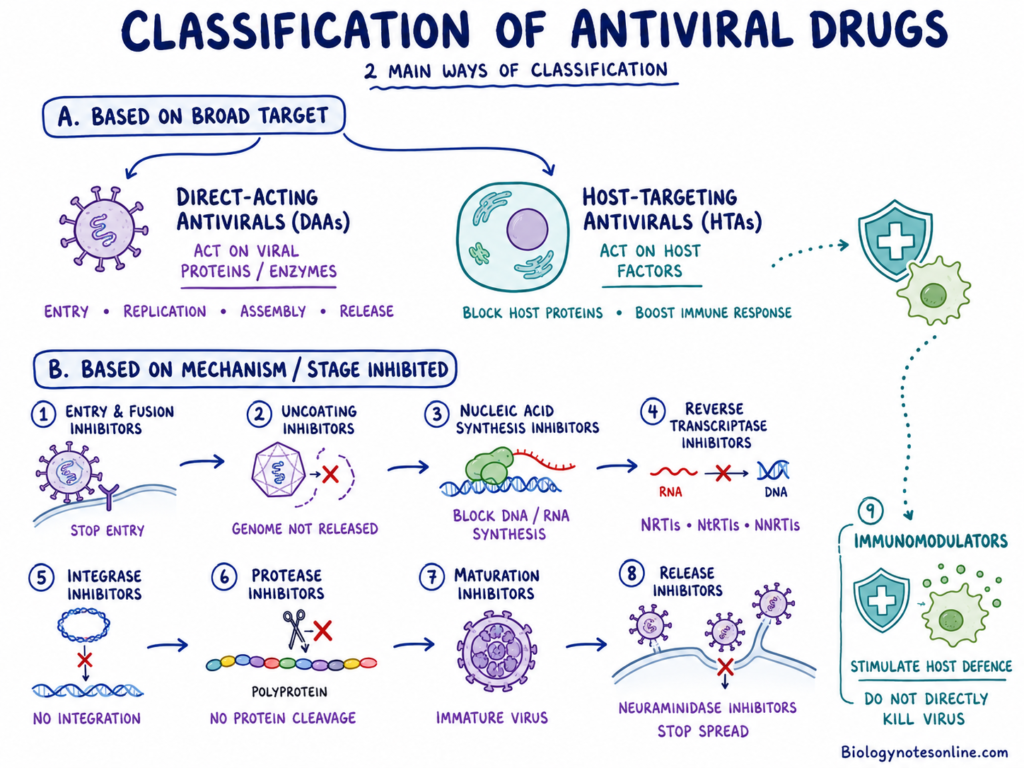
Antiviral drugs are classified into two main ways. First is based on broad target. Second is based on the stage of viral life cycle which is inhibited.
A. Classification based on broad target
1. Direct acting antiviral drugs (DAAs)
These drugs directly act on the virus. They inhibit viral proteins and viral enzymes. It may block viral entry, viral replication, assembly or release of new viral particles.
2. Host targeting antiviral drugs (HTAs)
These drugs act on the host cell factors. The virus uses host cell proteins for its multiplication. These drugs inhibit those host factors or increase the immune response against the virus.
B. Classification based on mechanism of action
1. Entry and fusion inhibitors
These drugs inhibit attachment and fusion of the virus with the host cell membrane. So the virus cannot enter into the host cell.
2. Uncoating inhibitors
These drugs inhibit uncoating of virus. In uncoating, the viral genome is released inside the host cell. So viral nucleic acid is not released properly.
3. Nucleic acid synthesis inhibitors
These drugs inhibit synthesis of viral DNA or RNA. They may act like nucleotide analogues and stop the nucleic acid chain. They also inhibit viral polymerase enzyme.
4. Reverse transcriptase inhibitors
These drugs inhibit reverse transcriptase enzyme. This enzyme converts viral RNA into DNA. NRTIs, NtRTIs and NNRTIs are included in this group.
5. Integrase inhibitors
These drugs inhibit integrase enzyme. This enzyme helps to insert viral DNA into host genome. So viral DNA cannot integrate with host DNA.
6. Protease inhibitors
These drugs inhibit viral protease enzyme. Protease cuts large viral protein chain into small functional proteins. Due to this, mature viral particles are not formed.
7. Maturation inhibitors
These drugs inhibit late stage maturation of virus. The assembly and proper formation of viral particle is affected. So immature and non-infective virus is formed.
8. Release inhibitors
These drugs inhibit release of new viral particles from infected host cell. Neuraminidase inhibitors are example of this group. They prevent spreading of newly formed virus.
9. Immunomodulators
These drugs stimulate the immune defence of the body. They do not directly kill the virus. It helps the host immune system to control viral infection.
Different Mode of Actions of Antiviral Drug
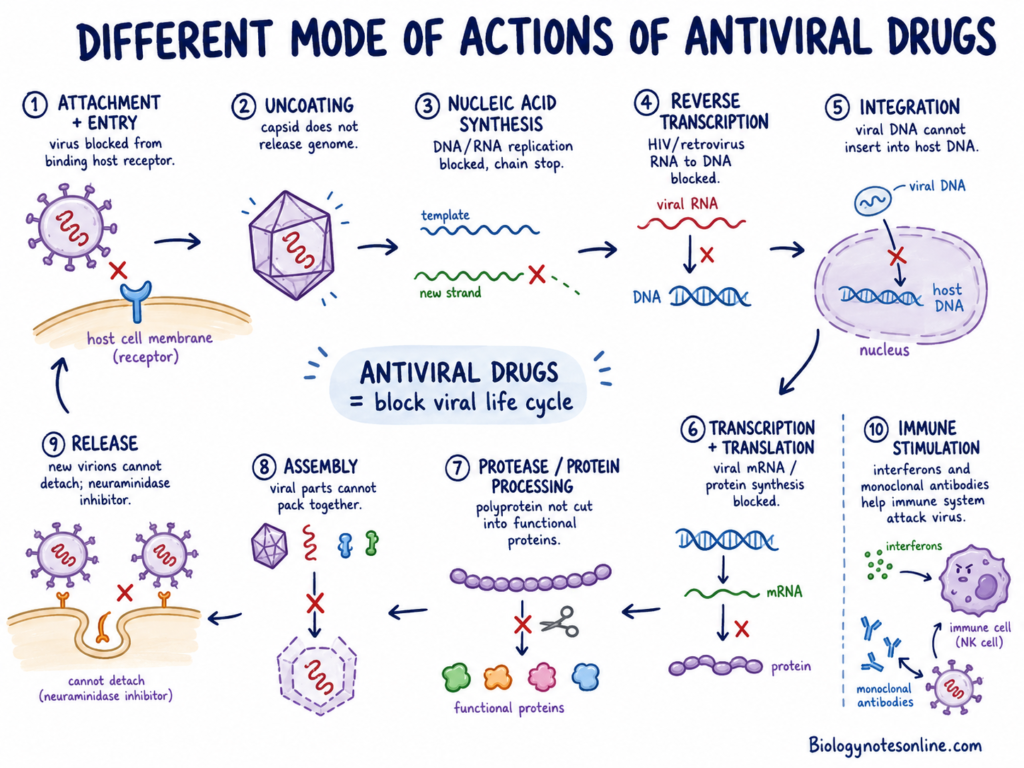
Antiviral drugs act by inhibiting different stages of viral life cycle. The virus cannot multiply properly when these steps are blocked. The following are the important mode of actions of antiviral drugs–
1. Inhibition of viral attachment and entry
In this mode, the drug prevents binding of virus with the receptor present on host cell surface. So the virus cannot attach and enter into the host cell. This is the first step inhibition of viral infection.
2. Inhibition of viral uncoating
After entry, the virus releases its genetic material into the host cell. This process is called uncoating. Some antiviral drugs inhibit this step and prevent release of viral genome and viral enzymes.
3. Inhibition of nucleic acid synthesis
These drugs inhibit synthesis of viral DNA or RNA. Some drugs act like natural nucleotides and get inserted into the growing nucleic acid chain. Due to this, chain elongation is stopped and viral genome replication is inhibited.
4. Inhibition of reverse transcription
This mode is mainly seen in retrovirus like HIV. The drug inhibits reverse transcriptase enzyme. So viral RNA cannot be converted into DNA.
5. Inhibition of integration
In this process, the newly formed viral DNA is inserted into the host chromosomal DNA. Some drugs inhibit integrase enzyme. So viral DNA cannot integrate with the genome of host cell.
6. Inhibition of transcription and translation
Some antiviral drugs inhibit formation of viral mRNA. Some drugs also prevent synthesis of viral proteins by antisense or ribozyme molecules. So viral protein formation is stopped.
7. Inhibition of protein processing
This is also called protease inhibition. Viral protease enzyme cuts long inactive protein chain into small functional proteins. Protease inhibitors block this enzyme. So final functional viral proteins are not formed.
8. Inhibition of viral assembly
In this mode, the drug interferes with packing and joining of viral components. Viral nucleic acid and viral proteins cannot assemble properly. So complete viral particles are not formed.
9. Inhibition of viral release
Some drugs inhibit release of new viral particles from infected host cell. Neuraminidase inhibitors are important example. They prevent detachment of newly formed virus and reduce spreading to other cells.
10. Immune system stimulation
This mode is also called immunomodulation. Some drugs increase the immune response of the body. Interferons and monoclonal antibodies help the immune system to recognize and attack the virus.

1. Inhibition of Viral Attachment and Entry by Antiviral Drug
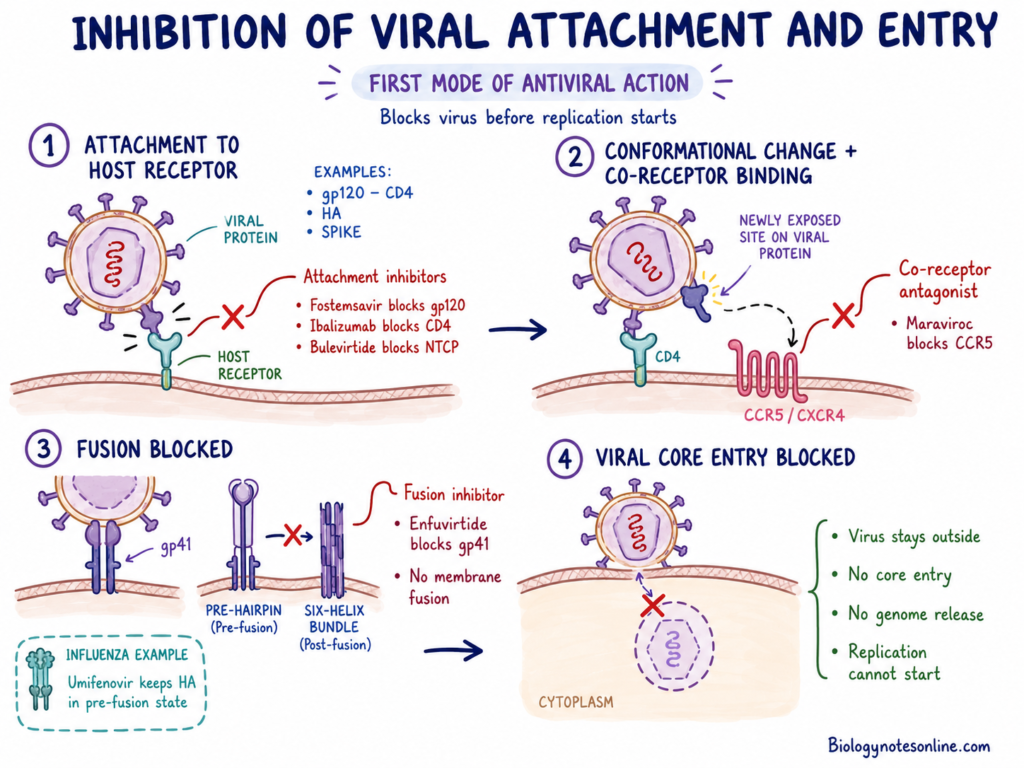
Inhibition of viral attachment and entry is the first mode of action of antiviral drugs. It prevents the virus from binding and entering into the host cell. So viral replication cannot start inside the cell.
Step 1. Viral attachment to host receptor
In this step, the virus first comes near the host cell. The surface protein of virus binds with specific receptor present on the host cell membrane.
In HIV, gp120 binds with CD4 receptor. In Influenza virus, haemagglutinin helps in attachment. In SARS-CoV-2, spike protein binds with receptor of host cell.
Antiviral action-
The attachment inhibitors block this first binding. Some drugs bind with viral surface protein. So the virus cannot attach with the receptor.
Fostemsavir binds with gp120 of HIV. It prevents attachment of HIV with CD4 receptor.
Some drugs bind with host receptor also. So receptor become blocked and virus cannot use it. Ibalizumab binds with CD4 receptor and blocks entry of HIV. Bulevirtide blocks NTCP receptor in liver cell and prevents entry of Hepatitis B virus and Hepatitis D virus.
Step 2. Conformational change and co-receptor binding
After first attachment, the viral protein changes its shape. This is called conformational change. Due to this change, new binding site is exposed.
Then the virus binds with second receptor, called co-receptor. In HIV, the important co-receptors are CCR5 and CXCR4.
Antiviral action-
The co-receptor antagonists block this second binding. Maraviroc binds with CCR5 co-receptor. So gp120 of HIV cannot bind properly with CCR5. The entry process is stopped at this stage.
Step 3. Fusion of viral membrane with host cell membrane
In enveloped virus, the viral envelope must fuse with the host cell membrane. This fusion allows the viral core to enter into the cytoplasm.
In HIV, gp41 helps in fusion. It forms a pre-hairpin structure. Then it folds and forms six-helix bundle. This pulls viral membrane and host membrane close together.
Antiviral action-
The fusion inhibitors stop this folding process. Enfuvirtide binds with gp41 of HIV. It prevents formation of six-helix bundle. So fusion between viral envelope and host cell membrane does not occur.
In Influenza virus, umifenovir acts on haemagglutinin. It keeps the protein in pre-fusion state. So the low pH induced change is not done and fusion is inhibited.
Step 4. Blockade of viral core entry
After successful fusion, the viral core and viral genome enter into the host cell cytoplasm. Then the virus starts to use the host cell machinery for replication.
Antiviral action-
When attachment, co-receptor binding or fusion is blocked, the viral core cannot enter into the cell. The virus remains outside the host cell. Its genetic material is not released into the cytoplasm. So the virus becomes neutralized before replication starts.
2. Inhibition of Viral Uncoating by Antiviral Drug
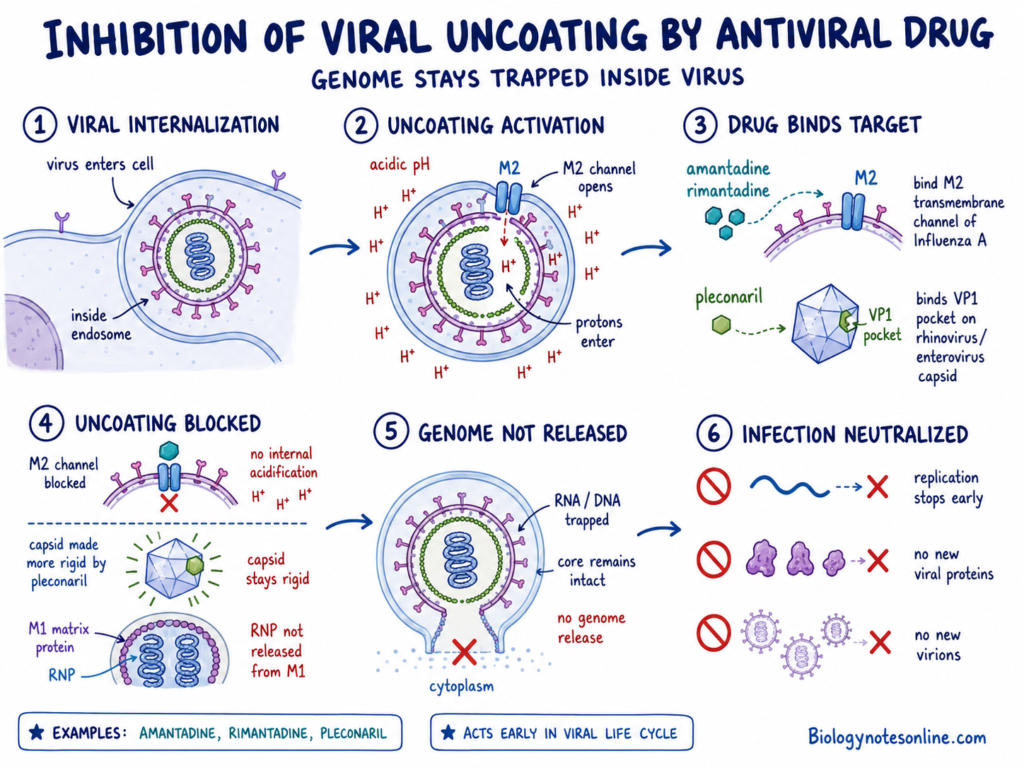
Inhibition of viral uncoating is the mode of action where antiviral drug prevents release of viral genome inside the host cell. The virus enters into the cell but it cannot open its capsid properly. So viral DNA or RNA remains trapped inside the viral particle.
Step 1. Viral internalization
After attachment and entry, the virus is taken inside the host cell. It is usually enclosed in a vesicle called endosome.
The virus remains inside the endosome for short time. Then the next step is started for releasing the viral genetic material.
Step 2. Activation of uncoating process
Inside the endosome, the environment becomes acidic. This acidic pH activates the viral uncoating process.
In Influenza A virus, the acidic environment activates M2 protein. It is an ion channel protein. This channel allows protons (H⁺) to enter into the viral particle.
Due to entry of protons, the inside of the virus becomes acidic. Then the viral core becomes loose and viral RNA is released from the protein covering.
Step 3. Binding of antiviral drug
Uncoating inhibitors bind with viral structure which is needed for uncoating. So the viral particle cannot disassemble.
Amantadine and rimantadine bind with the transmembrane part of M2 protein in Influenza A virus. These drugs block the ion channel.
Pleconaril binds with a hydrophobic pocket present on viral surface protein. It is mainly present in viral protein 1 (VP1) of rhinovirus and enterovirus.
Step 4. Blocking of proton entry or capsid change
When M2 ion channel is blocked, H⁺ ions cannot enter into the viral particle. So internal acidification of the virus does not occur.
In Influenza A virus, this prevents separation of viral ribonucleoprotein (RNP) from M1 matrix protein. So the viral genome remains attached with internal viral protein.
In case of capsid binders, pleconaril makes the viral capsid more rigid. The capsid becomes compressed and cannot open properly.
Step 5. Inhibition of viral genome release
Due to blocking of uncoating, the viral core remains intact. The viral RNA or DNA cannot come out into the cytoplasm.
The virus cannot use the host cell machinery. Viral replication is stopped at early stage.
Step 6. Neutralization of infection
As the viral genome is not released, transcription and replication cannot start. New viral proteins are not produced.
So new viral particles are not formed. The infection is controlled before multiplication of virus inside the host cell.
3. Inhibition of Nucleic Acid Synthesis by Antiviral Drug
Inhibition of nucleic acid synthesis is the mode of action where antiviral drug stops formation of viral DNA or RNA. The virus cannot copy its genome. So viral replication is stopped inside the host cell.
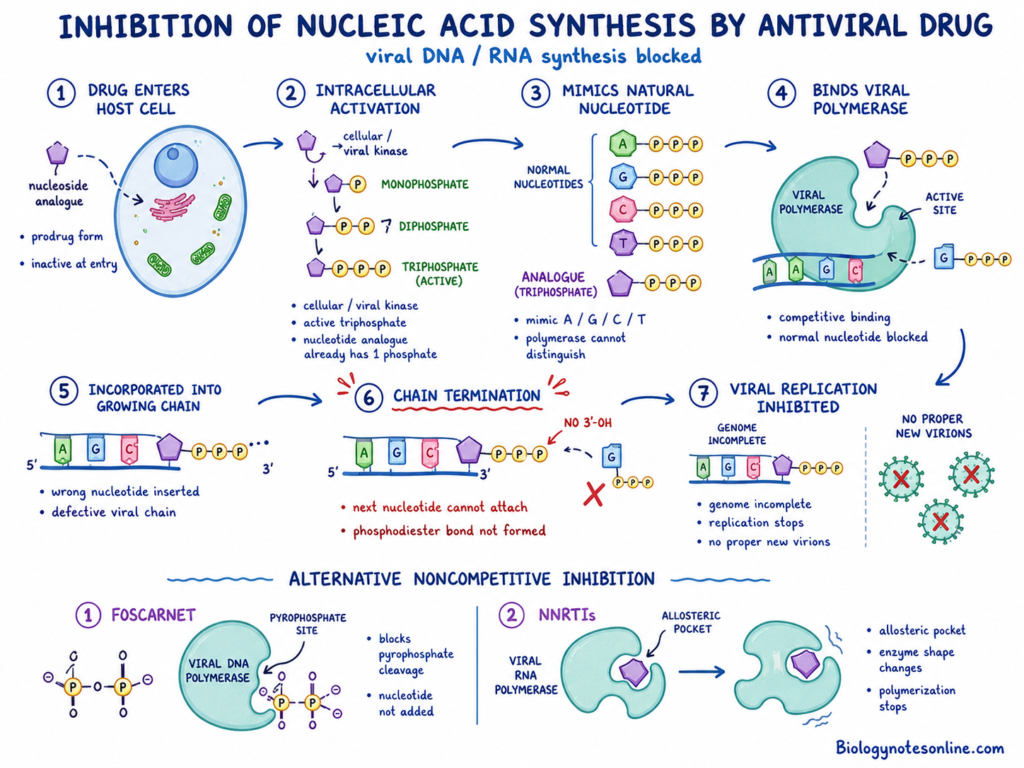
Step 1. Entry of drug into host cell
The nucleoside analogue drug first enters into the host cell. Many drugs are inactive when they enter the cell.
These inactive drugs are called prodrug form. They need activation inside the cell before acting on viral polymerase.
Step 2. Intracellular activation of drug
Inside the cell, kinase enzymes add phosphate groups to the drug. These enzymes may be cellular kinase or viral kinase.
The drug is converted into active triphosphate form. This active form can now compete with natural nucleotides.
In case of nucleotide analogues, one phosphate group is already present. So they bypass the first phosphorylation step and become active more easily.
Step 3. Mimicry of natural nucleotide
The activated drug looks like natural nucleotide building block. It may mimic guanosine, adenosine, cytidine or thymidine.
Due to this similar structure, the viral enzyme cannot distinguish it properly. The drug binds with viral polymerase in place of natural nucleotide.
Step 4. Competitive binding with viral polymerase
Viral polymerase is the enzyme which forms new viral DNA or RNA strand. The active drug competes with normal nucleotide for binding with this enzyme.
When the drug binds with polymerase, the normal nucleotide cannot bind properly. So the synthesis of viral nucleic acid becomes disturbed.
Step 5. Incorporation into growing viral chain
The viral polymerase mistakenly adds the drug into growing viral DNA or RNA chain. It is inserted in place of natural nucleotide.
This wrong incorporation makes the viral nucleic acid defective. The chain cannot grow normally after this point.
Step 6. Chain termination
Most nucleoside analogue drugs lack the important 3′-hydroxyl group. This group is needed for joining the next nucleotide.
Without 3′-OH group, new phosphodiester bond cannot be formed. So the next nucleotide cannot attach with the chain.
The viral nucleic acid elongation is stopped. This is called chain termination.
Step 7. Inhibition of viral genome replication
As the viral DNA or RNA chain is terminated, complete viral genome is not formed. The virus cannot make new copies of its genetic material.
So viral replication is inhibited. New viral particles cannot be produced properly.
Alternative mechanism. Noncompetitive inhibition
Some antiviral drugs do not act like nucleotide analogue. They directly bind with other site of viral polymerase enzyme.
Foscarnet is a pyrophosphate analogue. It binds with pyrophosphate binding site of viral DNA polymerase. So pyrophosphate cannot be cleaved and natural nucleotide cannot be added into the DNA strand.
Some drugs act as allosteric inhibitors. NNRTIs bind with a separate pocket of polymerase enzyme. This changes the shape of the enzyme. So the enzyme cannot bind DNA properly and polymerization process is stopped.
4. Inhibition of Reverse Transcription by Antiviral Drug
Inhibition of reverse transcription is the mode of action where antiviral drug inhibits the formation of viral DNA from viral RNA. This step is mainly found in retrovirus like HIV. The enzyme involved in this process is reverse transcriptase.
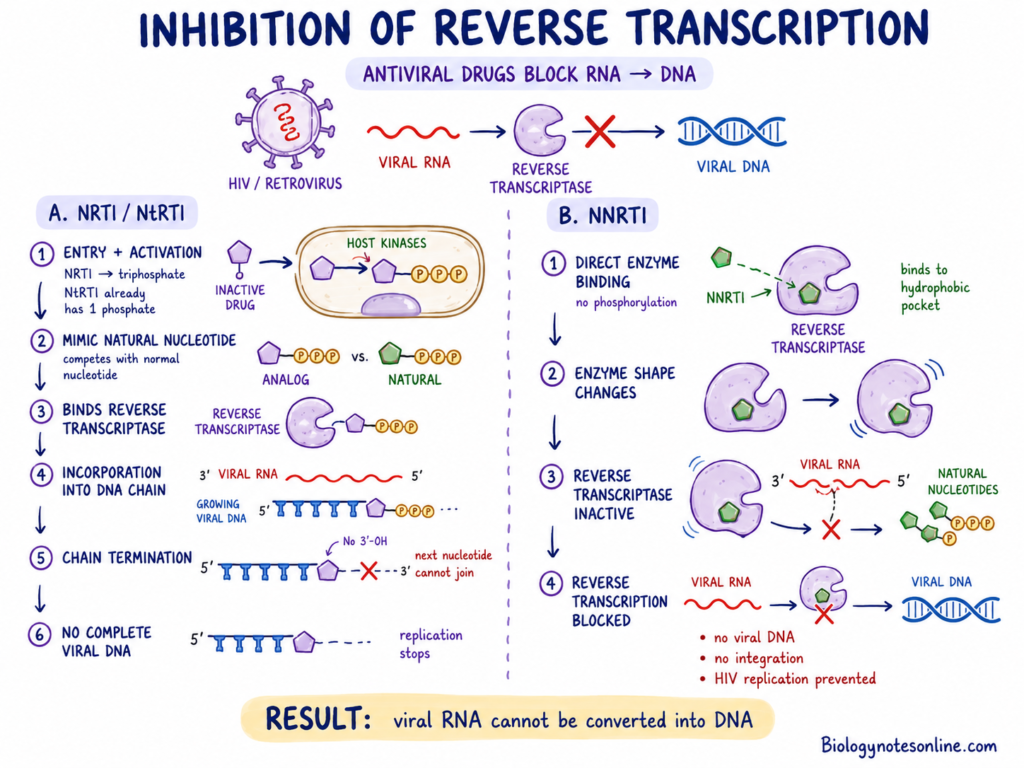
A. By Nucleoside and Nucleotide Reverse Transcriptase Inhibitors
Step 1. Entry and activation of drug
The NRTI drug first enters into the host cell. It is usually inactive form when it enters the cell.
Inside the cell, host kinase enzymes add phosphate groups to the drug. Then the drug becomes active triphosphate form.
NtRTIs already contain one phosphate group. So they do not need the first phosphorylation step.
Step 2. Mimicry of natural nucleotide
The activated drug looks like natural deoxynucleotide. These deoxynucleotides are the building blocks of viral DNA.
So the drug competes with normal nucleotide for binding with reverse transcriptase enzyme.
Step 3. Binding with reverse transcriptase
The active drug binds with the viral reverse transcriptase enzyme. This enzyme normally converts viral RNA into viral DNA.
Due to similar structure, the enzyme accepts the drug in place of normal nucleotide.
Step 4. Incorporation into viral DNA chain
The reverse transcriptase enzyme adds the drug into the growing viral DNA chain. It is wrongly inserted in place of normal nucleotide.
After this incorporation, the DNA chain cannot grow normally.
Step 5. Chain termination
These drugs lack the important 3′-hydroxyl group in their sugar part. This 3′-OH group is needed to attach next nucleotide.
Without this group, 5’–3′ phosphodiester bond cannot be formed. So the next nucleotide cannot join with the chain.
The extension of viral DNA is stopped. This is called chain termination.
Step 6. Inhibition of viral DNA formation
As the viral DNA chain is stopped, complete viral DNA is not produced. So HIV cannot continue its replication cycle.
The viral genome cannot be copied properly. New viral particles are not formed in proper way.
B. By Non-Nucleoside Reverse Transcriptase Inhibitors
Step 1. Direct binding with enzyme
NNRTIs do not look like natural nucleotide. They do not need phosphorylation for activation.
These drugs bind directly with a hydrophobic pocket near the active site of reverse transcriptase enzyme.
Step 2. Change in enzyme shape
After binding, the enzyme changes its shape. This is called conformational change.
The catalytic part of the enzyme is disturbed. The important aspartate residues and thumb region of the enzyme cannot move properly.
Step 3. Inactivation of reverse transcriptase
Due to change in shape, reverse transcriptase becomes inactive. It cannot hold viral RNA and nucleotide in proper position.
So the enzyme cannot synthesize viral DNA from viral RNA.
Step 4. Blocking of reverse transcription
The conversion of viral RNA into DNA is blocked. This is non-competitive inhibition because the drug does not compete with nucleotide.
The viral DNA is not formed. So integration and further replication of HIV is prevented.
5. Inhibition of Integration by Antiviral Drug
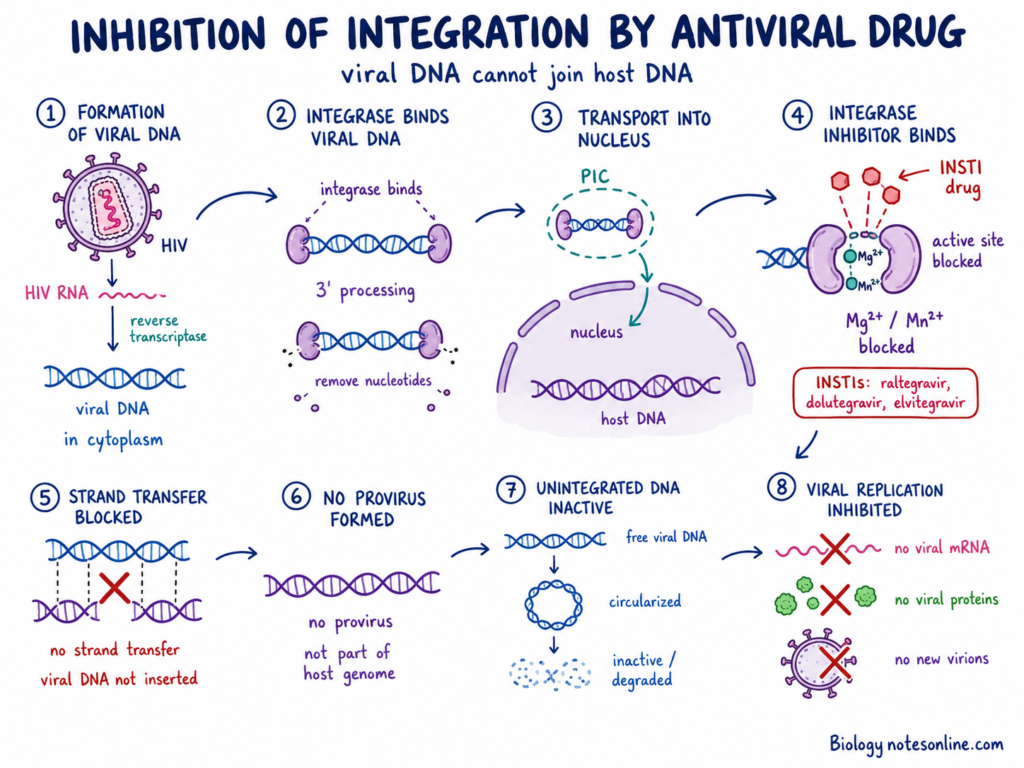
Inhibition of integration is the mode of action where antiviral drug prevents joining of viral DNA with host cell DNA. This step is mainly important in HIV. The enzyme involved in this process is integrase.
Step 1. Formation of viral DNA
After entry of HIV into the host cell, viral RNA is converted into viral DNA. This is done by reverse transcriptase enzyme.
The newly formed viral DNA is double stranded. It is still free in the cytoplasm of the host cell.
Step 2. Binding of integrase with viral DNA
The viral integrase enzyme binds with this newly formed viral DNA. It prepares the viral DNA for integration.
In this step, integrase removes some nucleotides from the 3′ end of viral DNA. This is called 3′ processing.
Step 3. Transport into nucleus
The viral DNA and integrase enzyme form a complex. This complex moves into the nucleus of the host cell.
The host chromosomal DNA is present inside the nucleus. So integration can occur only after entry into the nucleus.
Step 4. Binding of integrase inhibitor
Integrase strand transfer inhibitors (INSTIs) bind with the active site of integrase enzyme. Important drugs are raltegravir, dolutegravir and elvitegravir.
These drugs bind near the catalytic site of the enzyme. They also block important metal ions like Mg²⁺ or Mn²⁺. These metal ions are needed for the activity of integrase enzyme.
Step 5. Blocking of strand transfer
Normally, integrase cuts the host DNA and joins the viral DNA with it. This process is called strand transfer.
When INSTIs are bound, the active site becomes blocked. Viral DNA and host DNA cannot join properly.
So the viral DNA is not inserted into host chromosome.
Step 6. Failure of provirus formation
As integration is blocked, viral DNA cannot become part of host genome. So provirus is not formed.
The infected cell cannot use this viral DNA for continuous viral gene expression.
Step 7. Neutralization of viral DNA
The unintegrated viral DNA remains free inside the cell. It may become circularized by host enzymes.
Later it is degraded or becomes inactive. So transcription of viral genes does not occur properly.
Step 8. Inhibition of viral replication
As viral DNA is not integrated, new viral mRNA and viral proteins are not produced. New viral particles are not formed.
So multiplication of HIV is stopped at integration stage.
6. Inhibition of Transcription and Translation by Antiviral Drug
Inhibition of transcription and translation is the mode of action where antiviral drug prevents formation of viral mRNA or viral protein. The virus may enter into the host cell, but its genetic information cannot be expressed properly.
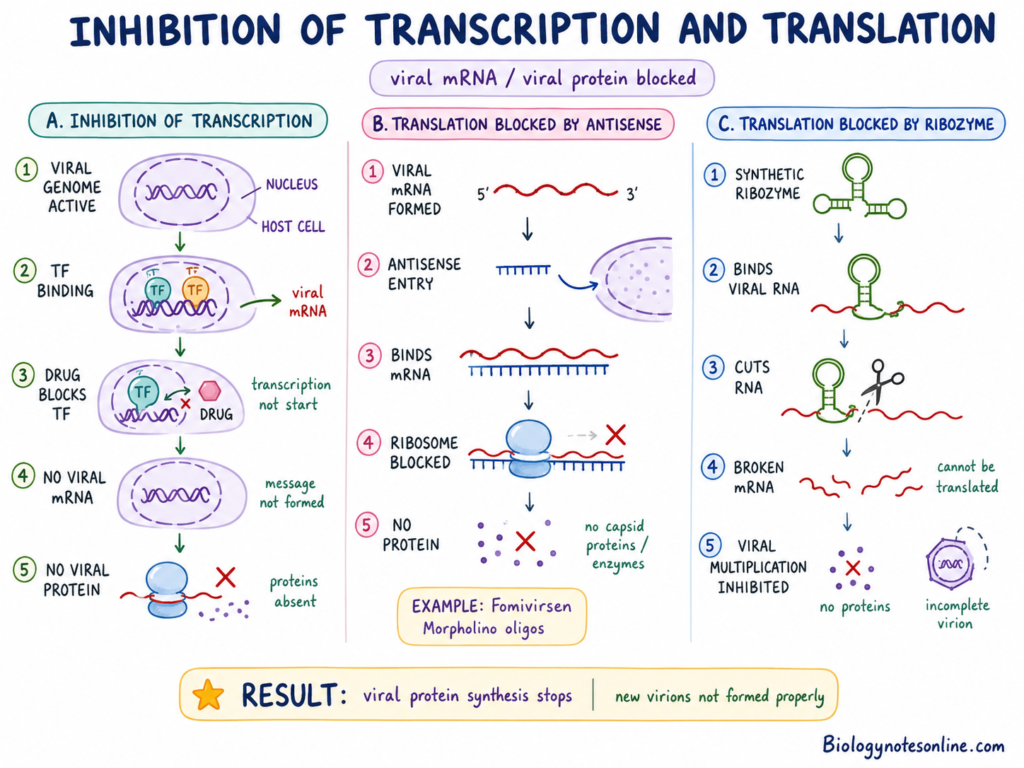
A. Inhibition of Transcription
Step 1. Activation of viral genome
After entry and uncoating, the viral genome becomes available inside the host cell. It may be viral DNA or viral RNA according to the type of virus.
This genome is needed for making viral mRNA. The mRNA then carries information for viral protein synthesis.
Step 2. Binding of transcription factors
Normally, transcription factors bind with viral DNA or regulatory region of viral genome. These factors help to start transcription.
After this binding, viral mRNA is produced. This is the first step for making viral proteins.
Step 3. Binding of antiviral drug
Some antiviral drugs block the attachment of transcription factors to viral DNA. The drug may act on the viral genome region or the required transcription machinery.
So the transcription factor cannot bind properly. The transcription process is not started.
Step 4. Blocking of viral mRNA formation
When transcription factor binding is inhibited, viral mRNA is not formed. The viral genetic information cannot be copied into messenger form.
So the virus cannot send message for protein synthesis.
Step 5. Inhibition of viral protein production
As viral mRNA is absent, the ribosome cannot produce viral proteins. Structural proteins and enzymes of virus are not formed.
So new viral particles cannot be made properly.
B. Inhibition of Translation by Antisense Molecules
Step 1. Formation of viral mRNA
Sometimes viral mRNA is already formed in the host cell. This mRNA is needed for translation.
The ribosome reads this mRNA and forms viral proteins.
Step 2. Entry of antisense molecule
Antisense antiviral molecules are short pieces of DNA or RNA. They are made complementary to a specific part of viral genome or viral mRNA.
These molecules enter the infected host cell and search the target sequence.
Step 3. Binding with viral mRNA
The antisense molecule binds with the complementary sequence of viral mRNA. This binding forms a blocked mRNA complex.
Due to this binding, ribosome cannot read the viral mRNA properly.
Step 4. Blocking of translation
When ribosome is blocked, amino acids are not joined in proper order. Viral protein synthesis is stopped.
So viral enzymes, capsid proteins and other required proteins are not formed.
Step 5. Example
Fomivirsen is an antisense drug used against Cytomegalovirus. Morpholino oligos are also used experimentally to suppress translation of different viruses.
C. Inhibition of Translation by Ribozymes
Step 1. Use of synthetic ribozyme
Ribozymes are special RNA molecules having catalytic activity. They can act like molecular scissors.
Synthetic ribozymes are designed against selected viral nucleic acid sequence.
Step 2. Binding with viral RNA
The ribozyme binds with the target region of viral RNA. It recognizes the specific sequence of the viral genome or viral mRNA.
This binding brings the ribozyme to the proper cutting site.
Step 3. Cutting of viral RNA
After binding, the ribozyme cuts the viral RNA at selected site. The viral RNA becomes broken into pieces.
So the viral genetic message becomes damaged.
Step 4. Stopping of viral protein synthesis
Broken viral RNA cannot work as proper mRNA. Ribosome cannot translate it into viral protein.
So viral protein formation is stopped.
Step 5. Inhibition of viral multiplication
As transcription or translation is blocked, the virus cannot make its important proteins. Assembly of new viral particles does not occur properly.
So viral multiplication is inhibited inside the host cell.
7. Inhibition of Protein Processing (Protease Inhibition) by Antiviral Drug
Protease inhibition is the mode of action where antiviral drug inhibits the viral protease enzyme. This enzyme is needed for cutting long viral protein chain into small functional proteins. When this cutting is stopped, mature infectious virus cannot be formed.
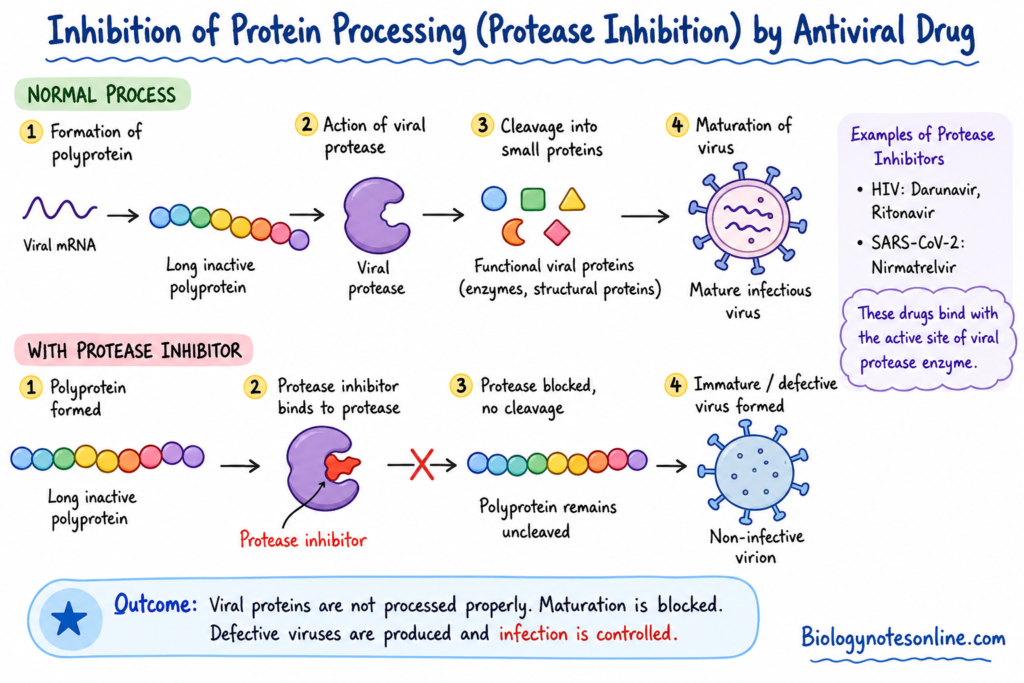
Step 1. Formation of viral polyprotein
During viral replication, the virus first produces long inactive protein chain. This long chain is called polyprotein.
These polyproteins are not functional in the beginning. They need further processing for making useful viral proteins.
Step 2. Requirement of protease enzyme
The long polyprotein must be cut into small protein units. These small units become viral enzymes, structural proteins and other functional proteins.
This cutting is done by viral protease enzyme. So protease is very important for maturation of virus.
Step 3. Binding of protease inhibitor
The protease inhibitor drug binds with the active site of viral protease enzyme. It blocks the catalytic region of the enzyme.
In HIV, drugs like darunavir and ritonavir act like peptidomimetic molecules. They mimic the natural protein chain and occupy the active site of HIV protease.
In SARS-CoV-2, nirmatrelvir binds with the catalytic residue of viral protease. It forms reversible covalent bond and inhibits protease activity.
Step 4. Blocking of polyprotein cleavage
After drug binding, the protease enzyme becomes inactive. It cannot cut the long polyprotein chain.
So the inactive precursor proteins remain uncleaved. The small functional viral proteins are not formed properly.
Step 5. Interruption of viral maturation
As the viral proteins are not processed, the newly formed viral particle cannot mature. The correct structural arrangement is not developed.
In HIV, mature core is not formed properly. The cone shaped infectious core cannot develop.
Step 6. Formation of defective virions
Due to protease inhibition, immature viral particles are produced. These particles may be released from the host cell, but they are defective.
They are non-infective and cannot infect new host cells. So viral multiplication is stopped at maturation stage.
8. Inhibition of Viral Assembly by Antiviral Drug
Inhibition of viral assembly is the mode of action where antiviral drug prevents formation of complete viral particle. The viral DNA or RNA and viral proteins are formed, but they cannot arrange properly. So infectious virion is not produced.
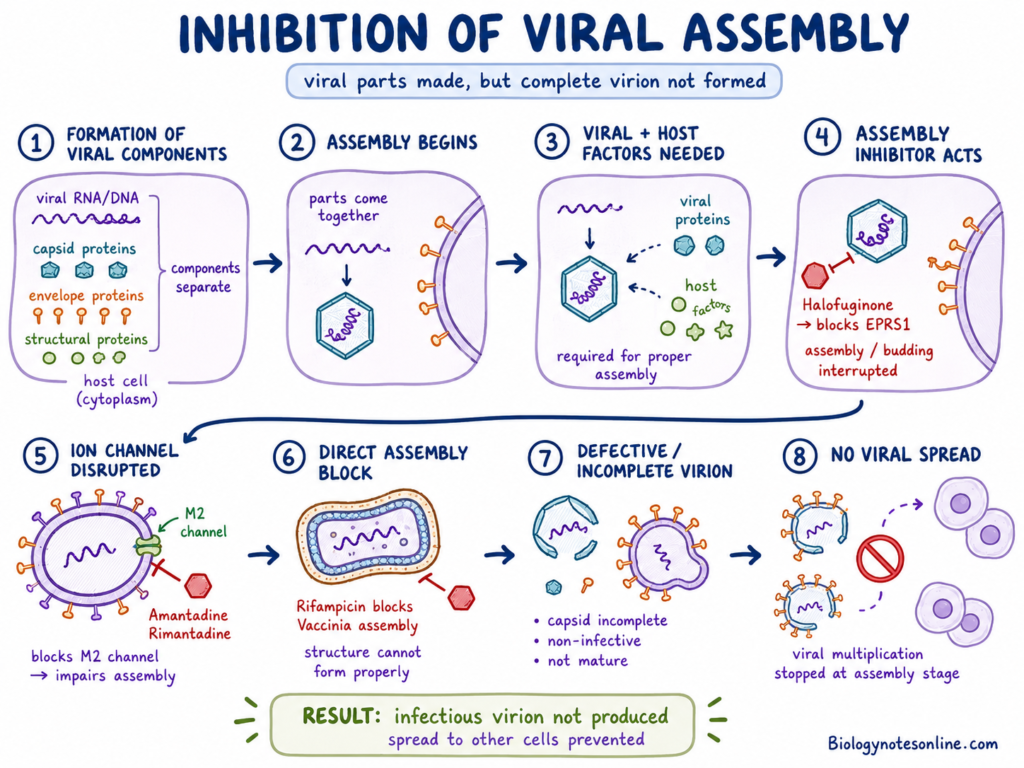
Step 1. Formation of viral components
After replication, the virus uses the host cell machinery for making its own components. Viral genome and viral proteins are produced inside the cell.
These components include viral nucleic acid, capsid proteins, envelope proteins and other structural proteins. But they are separate in this stage.
Step 2. Beginning of assembly process
In this step, all viral components come together. Viral genome is packed inside the capsid.
The capsid proteins arrange around the viral genome. In enveloped virus, envelope proteins also become arranged in proper membrane region.
Step 3. Requirement of viral and host factors
For proper assembly, the virus needs its own viral proteins and also some host cell proteins. These factors help in packing and proper shape formation of new viral particle.
If these factors are blocked, the viral components cannot organize properly. So complete virion is not formed.
Step 4. Binding or action of antiviral drug
Assembly inhibitors act at this stage. They interfere with the arrangement and packing of viral parts.
Some drugs inhibit host factors required for viral assembly. Halofuginone inhibits the host protein EPRS1. Due to this, assembly and budding of some viruses is interrupted.
Step 5. Disruption of viral ion channel
Some drugs also disturb viral ion channel which is needed in assembly. Amantadine and rimantadine act on M2 ion channel of Influenza A virus.
This not only inhibits uncoating, but also affects viral assembly process. The viral particle cannot complete its normal formation.
Step 6. Direct inhibition of assembly phase
Some antiviral drugs directly act on assembly phase. Rifampicin inhibits assembly of Vaccinia virus.
It prevents proper formation of viral structure. So the virus remains incomplete and defective.
Step 7. Failure of complete virion formation
Due to inhibition of assembly, the viral genome and proteins do not join in correct way. The capsid may remain incomplete.
The new viral particle becomes defective. It cannot become mature and infectious.
Step 8. Prevention of viral spread
As functional virions are not formed, the virus cannot spread to other cells. Even if some particles are produced, they are incomplete or non-infective.
So viral multiplication is stopped at the assembly stage. The infection becomes controlled inside the host cell.
9. Inhibition of Viral Release by Antiviral Drug
Inhibition of viral release is the mode of action where antiviral drug prevents the release of newly formed virus from the host cell. The viral particles are formed, but they cannot come out and spread to other cells.
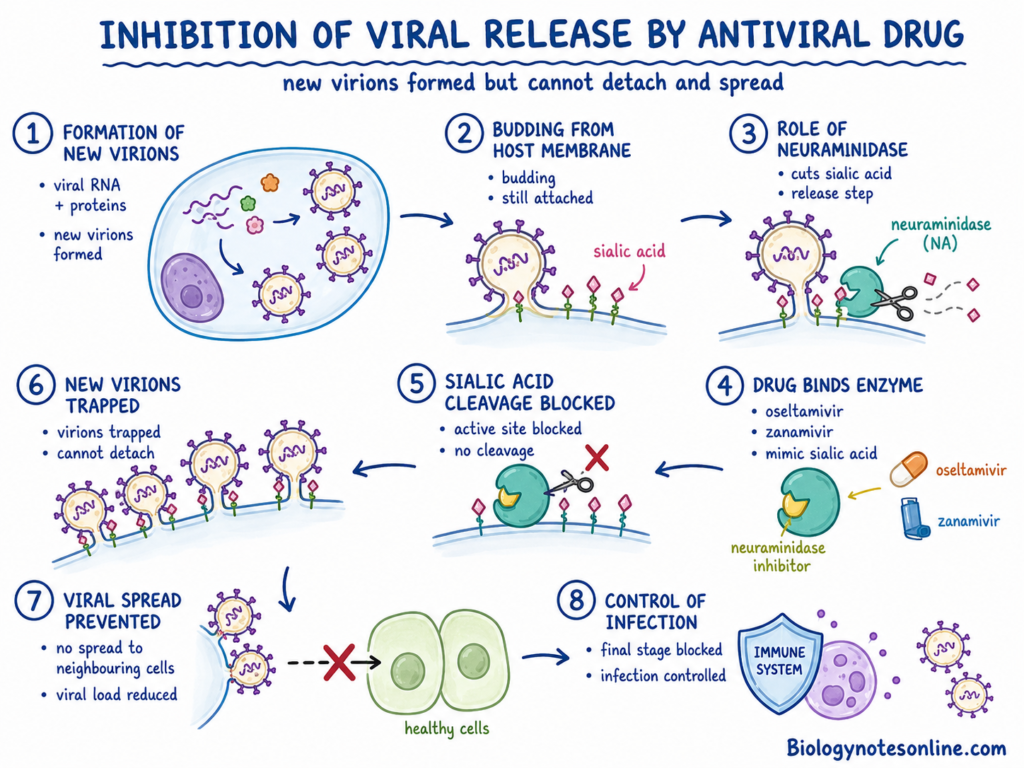
Step 1. Formation of new viral particles
After replication, the virus forms new viral RNA or DNA and viral proteins inside the host cell. These components assemble and form new viral particles.
These newly formed viral particles are called virions. In Influenza virus, these virions move towards the host cell membrane.
Step 2. Viral budding from host cell membrane
The new viral particles start budding from the host cell membrane. During budding, the viral particle comes out with a part of host cell membrane.
But after budding, the virion may still remain attached with the host cell surface. This attachment occurs through sialic acid present on host cell glycoproteins.
Step 3. Role of neuraminidase enzyme
For complete release, Influenza virus uses neuraminidase enzyme. It is a surface enzyme present on the viral envelope.
Neuraminidase cuts the sialic acid residues from the host cell surface. It acts like molecular scissors. After this cutting, the new viral particle becomes free from the host cell.
Step 4. Binding of antiviral drug
Release inhibitors bind with neuraminidase enzyme. These drugs are called neuraminidase inhibitors.
Oseltamivir and zanamivir are important examples. They look like natural sialic acid substrate. So they bind with the active site of neuraminidase enzyme.
Step 5. Blocking of sialic acid cleavage
After drug binding, neuraminidase cannot cut the sialic acid bond. The enzyme becomes blocked.
This is competitive and reversible inhibition. The normal substrate cannot bind properly with the active site.
Step 6. Trapping of new virions
As sialic acid is not cleaved, the newly formed virions remain attached on the surface of infected host cell.
The virions cannot detach properly. They remain trapped near the cell membrane.
Step 7. Prevention of viral spread
The trapped viral particles cannot move to neighbouring healthy cells. So the virus cannot spread further in the body.
New infection of other cells is reduced. The viral load also decreases slowly.
Step 8. Control of infection
Due to inhibition of release, the multiplication cycle of virus is interrupted at the final stage. New infectious particles are not distributed properly.
So the disease progression becomes limited. The immune system can clear the infection more easily.
10. Immune System Stimulation (Immunomodulation) by Antiviral Drug
Immune system stimulation or immunomodulation is the mode of action where antiviral drug increases the immune defence of the host body. These drugs do not always act directly on the virus. They help the body immune system to recognize and remove the viral infection.
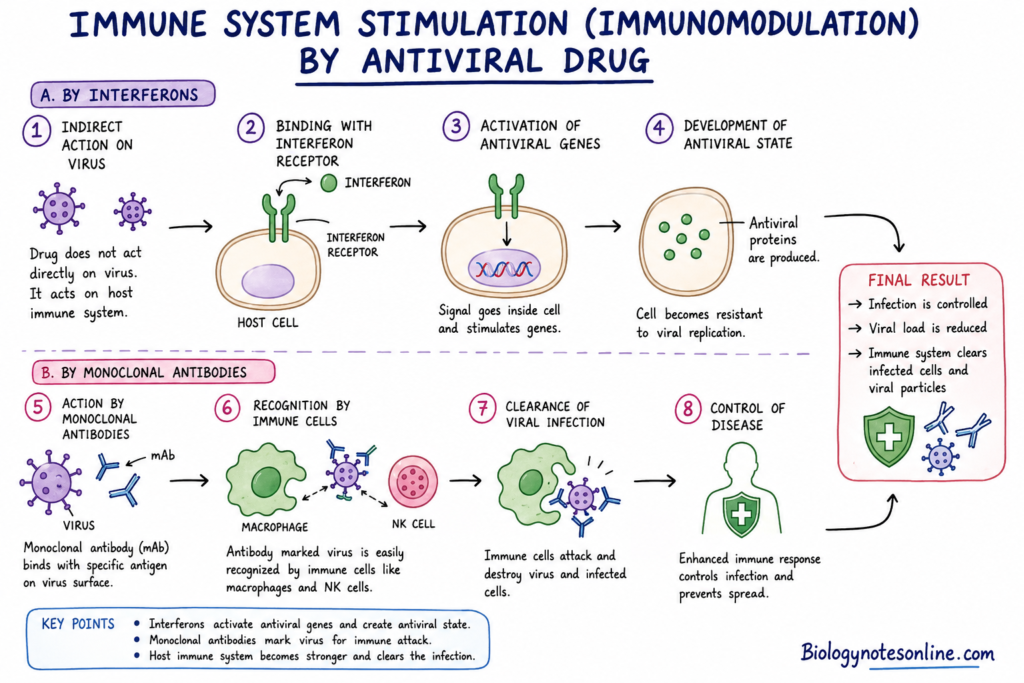
Step 1. Indirect action on virus
In this process, the drug does not directly inhibit viral enzyme or viral protein. It acts on the host immune system.
The immune response becomes stronger. So the body can fight against the virus more effectively.
Step 2. Binding with interferon receptor
Interferons are important immunomodulatory antiviral agents. They bind with interferon receptors present on the surface of host cells.
After binding, these receptors become activated. Then signal is passed inside the cell.
Step 3. Activation of antiviral genes
The activated receptor stimulates the host cell genes. These genes are involved in antiviral defence.
Due to this, many antiviral proteins are produced. These proteins inhibit viral protein synthesis and viral multiplication inside the infected cell.
Step 4. Development of antiviral state
The host cell enters into antiviral state. In this state, the cell becomes resistant to viral replication.
The virus cannot easily make its nucleic acid and proteins. So new viral particles are not formed properly.
Step 5. Action by monoclonal antibodies
Another way of immunomodulation is by monoclonal antibodies. These are laboratory prepared antibody molecules.
They bind with specific antigen present on the surface of virus. So the virus becomes marked for immune attack.
Step 6. Recognition by immune cells
After antibody binding, the marked virus is easily recognized by immune cells. Macrophages, natural killer cells and other immune cells can attack it.
This helps in removal of viral particles from the body.
Step 7. Clearance of viral infection
By interferon action and antibody marking, the immune system becomes more active. The infected cells and viral particles are cleared more easily.
So the viral load is reduced. The spread of virus to new cells is also controlled.
Step 8. Control of disease
Due to immune stimulation, the body can control infection without only depending on direct antiviral action. It is useful against many viral infections.
The final result is inhibition of viral replication and removal of virus by the host immune response.
Examples of Some Antiviral Drug and Their Mode of Action
The following are the examples of some antiviral drugs and their mode of action-
1. Acyclovir
Acyclovir is mainly used against Herpes simplex virus. It is a nucleoside analogue. After activation inside the cell, it inhibits viral DNA polymerase and stops viral DNA chain elongation. So viral DNA synthesis is inhibited.
2. Oseltamivir
Oseltamivir is used against Influenza A virus and Influenza B virus. It is a neuraminidase inhibitor. It prevents release of new viral particles from infected host cell. So the newly formed virus remain trapped on the cell surface.
3. Zidovudine (AZT)
Zidovudine is used against HIV. It is a nucleoside reverse transcriptase inhibitor (NRTI). It acts like natural nucleotide and gets inserted into viral DNA. Due to absence of 3′-OH group, chain termination occurs and viral RNA cannot be converted properly into DNA.
4. Ritonavir
Ritonavir is used against HIV. It is a protease inhibitor. It inhibits viral protease enzyme and prevents cleavage of long polyprotein chain. So immature and non-infective viral particles are formed.
5. Darunavir and Atazanavir
Darunavir and atazanavir are also HIV protease inhibitors. They bind with active site of viral protease. The viral polyproteins are not processed into functional proteins. So maturation of HIV is inhibited.
6. Remdesivir
Remdesivir is used against SARS-CoV-2. It is an RNA polymerase inhibitor. It interferes with viral RNA-dependent RNA polymerase. So copying of viral RNA genome is stopped.
7. Enfuvirtide (T-20)
Enfuvirtide is used against HIV. It is an entry and fusion inhibitor. It binds with gp41 protein of HIV. It prevents fusion of viral envelope with host cell membrane. So the virus cannot enter into the cell.
8. Amantadine
Amantadine is used against Influenza A virus. It is an uncoating inhibitor. It blocks M2 proton ion channel of the virus. So acidification of viral particle does not occur and viral genome is not released.
9. Rimantadine
Rimantadine also acts against Influenza A virus. It blocks M2 ion channel. The viral core cannot disassemble properly. So viral RNA remains trapped inside the capsid.
10. Raltegravir
Raltegravir is used against HIV. It is an integrase strand transfer inhibitor (INSTI). It binds with catalytic site of integrase enzyme. So viral DNA cannot be inserted into host chromosomal DNA.
11. Maraviroc
Maraviroc is used against HIV. It is a CCR5 co-receptor antagonist. It binds with CCR5 receptor present on host cell. So HIV cannot complete secondary attachment and entry is blocked.
12. Foscarnet
Foscarnet is used against Cytomegalovirus (CMV) and acyclovir-resistant Herpes simplex virus. It is a pyrophosphate analogue. It directly inhibits viral DNA polymerase without needing activation by kinase. So viral DNA synthesis is stopped.
13. Nirmatrelvir
Nirmatrelvir is used against SARS-CoV-2. It is a 3CL protease inhibitor. It binds with main viral protease and prevents processing of viral polyproteins. So viral replication and maturation are inhibited.
14. Interferons
Interferons are used in viral infections like Hepatitis B virus and Hepatitis C virus. They are immunomodulators. They bind with host cell receptors and increase expression of antiviral genes. So the immune system becomes active against the virus.
Reference
- 13.7A: Antiviral Agents that Prevent Virus Uncoating or Release . (n.d.). Biology LibreTexts.
- Advancements in Antiviral Drug Development: Comprehensive Insights into Design Strategies and Mechanisms Targeting Key Viral Proteins . (n.d.). PubMed Central.
- Anti-viral drugs . (2011, January). BioS 353.
- Antiviral Classification . (n.d.). PMC–NIH.
- Antiviral Drugs Study Guide: Mechanisms & Clinical Use . (n.d.). Pearson.
- Antiviral drug discovery and development: Challenges and future directions . (n.d.). PubMed Central.
- Antivirals: Past, Present and Future . (n.d.). PMC–NIH.
- Chen, S. A., Arutyunova, E., Lu, J., Khan, M. B., Rut, W., Zmudzinski, M., Shahbaz, S., Iyyathurai, J., Moussa, E. W., Turner, Z., Bai, B., Lamer, T., Nieman, J. A., Vederas, J. C., Julien, O., Drag, M., Elahi, S., Young, H. S., & Lemieux, M. J. (2023). SARS-CoV-2 Mpro Protease Variants of Concern Display Altered Viral Substrate and Cell Host Target Galectin-8 Processing but Retain Sensitivity toward Antivirals . ACS Central Science, 9(4), 696–708.
- Chong, Y., & Chu, C. K. (2004). Molecular mechanism of dioxolane nucleosides against 3TC resistant M184V mutant HIV . Antiviral Research, 63(1), 7–13.
- Coren, L. V., Thomas, J. A., Chertova, E., Sowder, R. C., II, Gagliardi, T. D., Gorelick, R. J., & Ott, D. E. (2007). Mutational Analysis of the C-Terminal Gag Cleavage Sites in Human Immunodeficiency Virus Type 1 . Journal of Virology, 81(18), 10047–10054.
- Emerging Drug List—Pleconaril . (n.d.).
- Erickson, J. W., & Burt, S. K. (1996). Structural Mechanisms of HIV Drug Resistance . Annual Review of Pharmacology and Toxicology, 36, 545–571.
- G140S/Q148R and N155H mutations render HIV-2 Integrase resistant to Raltegravir whereas Y143C does not . (n.d.). PubMed Central.
- Garikapati, S., & Nguyen, M. (2024, October 29). Foscarnet . In StatPearls. StatPearls Publishing.
- Grobler, J. A., Stillmock, K. A., Miller, M. D., & Hazuda, D. J. (2008, June 10–14). Mechanism by which the HIV Integrase Active Site Mutation N155H Confers Resistance to Raltegravir . NATAP.
- HIV-1 Protease: Structural Perspectives on Drug Resistance . (n.d.). PubMed Central.
- HIV-1 Protease: Structural Perspectives on Drug Resistance . (n.d.). ResearchGate.
- High-resolution structures of HIV-1 Gag cleavage mutants determine structural switch for virus maturation . (n.d.). Proceedings of the National Academy of Sciences.
- Highly resistant HIV-1 proteases and strategies for their inhibition . (n.d.). PMC–NIH.
- How NNRTIs Work . (n.d.). International Association of Providers of AIDS Care.
- Hsu, P. (1997, March 20). Mechanism of HIV-1 Acquired Resistance to Protease Inhibitors and Its Possible Limitations . Vaccine Revolution, Human Biology 115B.
- Hu, Z., & Kuritzkes, D. R. (2010). Effect of Raltegravir Resistance Mutations in HIV-1 Integrase on Viral Fitness . Journal of Acquired Immune Deficiency Syndromes, 55(2), 148–155.
- Stanford HIV Drug Resistance Database. (2025, December 25). INSTI Resistance Notes .
- Improving Viral Protease Inhibitors to Counter Drug Resistance . (n.d.). PMC–NIH.
- Lamivudine (3TC) resistance in HIV-1 reverse transcriptase involves steric hindrance with β-branched amino acids . (n.d.). Proceedings of the National Academy of Sciences.
- LaPoint, K. (2024). Mechanisms of action of antiviral drugs . EBSCO Research Starters.
- LaPoint, K. (2025). Integrase inhibitors . EBSCO Research Starters.
- Liu, L. (2019, June 7). Foscarnet . Medbullets Step 1.
- M2 Ion-channel Inhibitors: These antivirals target the stage of viral… . (n.d.). ResearchGate.
- Mackie, N. (2006). Resistance to non-nucleoside reverse transcriptase inhibitors . In A. M. Geretti (Ed.), Antiretroviral Resistance in Clinical Practice. Mediscript.
- Mechanism of the Maturation Process of SARS-CoV 3CL Protease . (n.d.). PubMed Central.
- Mechanistic Study of Common Non-Nucleoside Reverse Transcriptase Inhibitor-Resistant Mutations with K103N and Y181C Substitutions . (n.d.). PubMed Central.
- Meseko, C. M., Sanicas, M. S., Asha, K. A., Sulaiman, L. S., & Kumar, B. K. (2023). Antiviral options and therapeutics against influenza: History, latest developments and future prospects . Frontiers in Cellular and Infection Microbiology, 13, 1269344.
- Molecular Impact of the M184V Mutation in Human Immunodeficiency Virus Type 1 Reverse Transcriptase . (n.d.). PubMed Central.
- Molecular mechanisms of retroviral integrase inhibition and the evolution of viral resistance . (n.d.).
- Narwal, M., Armache, J.-P., Edwards, T., & Murakami, K. S. (2022). SARS-CoV-2 polyprotein substrate regulates the stepwise Mpro cleavage reaction . bioRxiv.
- National Center for Biotechnology Information. (2025, September 15). PubChem Compound Summary for CID 1684, Pleconaril . PubChem.
- National Institute of Diabetes and Digestive and Kidney Diseases. (2017, September 1). Protease Inhibitors (HIV) . In LiverTox: Clinical and Research Information on Drug-Induced Liver Injury.
- Stanford HIV Drug Resistance Database. (2025, December 25). NNRTI Resistance Notes .
- Nucleoside Reverse Transcriptase Inhibitors . (n.d.). ViralZone–ExPASy.
- Nucleotide and nucleoside-based drugs: Past, present, and future . (n.d.). PubMed Central.
- Pleconaril (PD008650, KQOXLKOJHVFTRN-UHFFFAOYSA-N) . (2025, February). Probes & Drugs.
- Persistence versus Reversion of 3TC Resistance in HIV-1 Determine the Rate of Emergence of NVP Resistance . (n.d.). PubMed Central.
- Protease Inhibitors: Types, How They Work & Side Effects . (2023, March 24). Cleveland Clinic.
- Protease-Mediated Maturation of HIV: Inhibitors of Protease and the Maturation Process . (n.d.). PubMed Central.
- Progression of Antiviral Agents Targeting Viral Polymerases . (n.d.). PMC–NIH.
- Shafer, R. W., Kantor, R., & Gonzales, M. J. (2000). The Genetic Basis of HIV-1 Resistance to Reverse Transcriptase and Protease Inhibitors . AIDS Reviews, 2, 211–228.
- Sinclair, A. (n.d.). Mechanism of Action of Integrase Inhibitors: Unlocking Antiviral Secrets . Missouri Insights.
- Structure of the Amantadine Binding Site of Influenza M2 Proton Channels in Lipid Bilayers . (n.d.).
- The SARS-CoV-2 main protease (Mpro): Structure, function, and emerging therapies for COVID-19 . (n.d.). PubMed Central.
- Therapeutic Architectures: A Comprehensive Analysis of Antiviral Pharmacodynamics and the Molecular Basis of Viral Life Cycle Inhibition . (n.d.).
- Viral proteases: Structure, mechanism and inhibition . (n.d.). PMC–NIH.
- Wang, Y.-F., Tie, Y., Boross, P. I., Tozser, J., Ghosh, A. K., Harrison, R. W., & Weber, I. T. (2007). Potent New Antiviral Compound Shows Similar Inhibition and Structural Interactions with Drug Resistant Mutants and Wild Type HIV-1 Protease . Journal of Medicinal Chemistry, 50(18), 4509–4515.
- What are M2 protein inhibitors and how do they work? . (2024, June 21). Patsnap Synapse.
- What are protease inhibitors and how do they work? . (2024, June 21). Patsnap Synapse.
- What are neuraminidase inhibitors and how do they work? . (2024, June 21). Patsnap Synapse.
- What is the mechanism of Foscarnet Sodium? . (n.d.). Patsnap Synapse.
- What is the mechanism of Rimantadine Hydrochloride? . (n.d.). Patsnap Synapse.
- Wikipedia contributors. (2025, December 21). Pleconaril . In Wikipedia, The Free Encyclopedia.
- Wikipedia contributors. (2026, March 3). Protease inhibitor (pharmacology) . In Wikipedia, The Free Encyclopedia.
- Wikipedia contributors. (2026, March 10). Entry inhibitor . In Wikipedia, The Free Encyclopedia.
- Wikipedia contributors. (2026, May 24). Reverse-transcriptase inhibitor . In Wikipedia, The Free Encyclopedia.
- Wikipedia contributors. (2026, June 29). Antiviral drug . In Wikipedia, The Free Encyclopedia.
- World Health Organization. (2024). What are the mechanisms of action of the antivirals? . In Clinical practice guidelines for influenza.