

Antifungal drug is a drug used against fungal infection. It kills the fungus or inhibit the growth of fungus. Fungal infection is also called mycoses.
Fungus and human cell both are eukaryotic. So many cell parts are similar in both. For this reason antifungal drug making is difficult. The drug should act on fungus but should not harm human cell more.
The action of antifungal drug is mainly on fungal cell membrane and fungal cell wall. These parts are different from human cell. So these are used as main target.
Ergosterol is present in fungal cell membrane. It maintain the membrane structure and fluidity. In human cell this type of work is done by cholesterol.
Polyene drugs bind with ergosterol. Examples are amphotericin B and nystatin. They form pores in the fungal membrane. Cell materials come out through this pore. Then fungal cell death occurs.
Azole drugs inhibit ergosterol synthesis. Examples are fluconazole and ketoconazole. Allylamine drug like terbinafine also inhibit ergosterol formation. So membrane become weak. Growth of fungus is stopped.
Fungal cell wall is another target. Human cell has no cell wall. So it is useful target. The wall gives shape and rigidity to fungal cell.
Echinocandins inhibit beta-glucan formation. Example is caspofungin. Ibrexafungerp also acts on beta-glucan. Beta-glucan is needed for strength of fungal cell wall. Without it wall become weak and cell rupture by osmotic pressure.
Some drugs act inside fungal cell. Flucytosine inhibits fungal RNA and DNA synthesis. Griseofulvin acts on microtubule. So fungal cell division is stopped.
Antifungal drugs may be used as topical drug, oral drug and intravenous drug. It depends on infection type. It also depends on severity of disease.
They are used in athlete’s foot, ringworm and vaginal yeast infection. They are also used in severe infection like Candida infection, Aspergillus infection and Cryptococcus meningitis.
Classification of Antifungal Drug
Antifungal drugs are classified according to their site of action. The following are the classification of antifungal drugs-
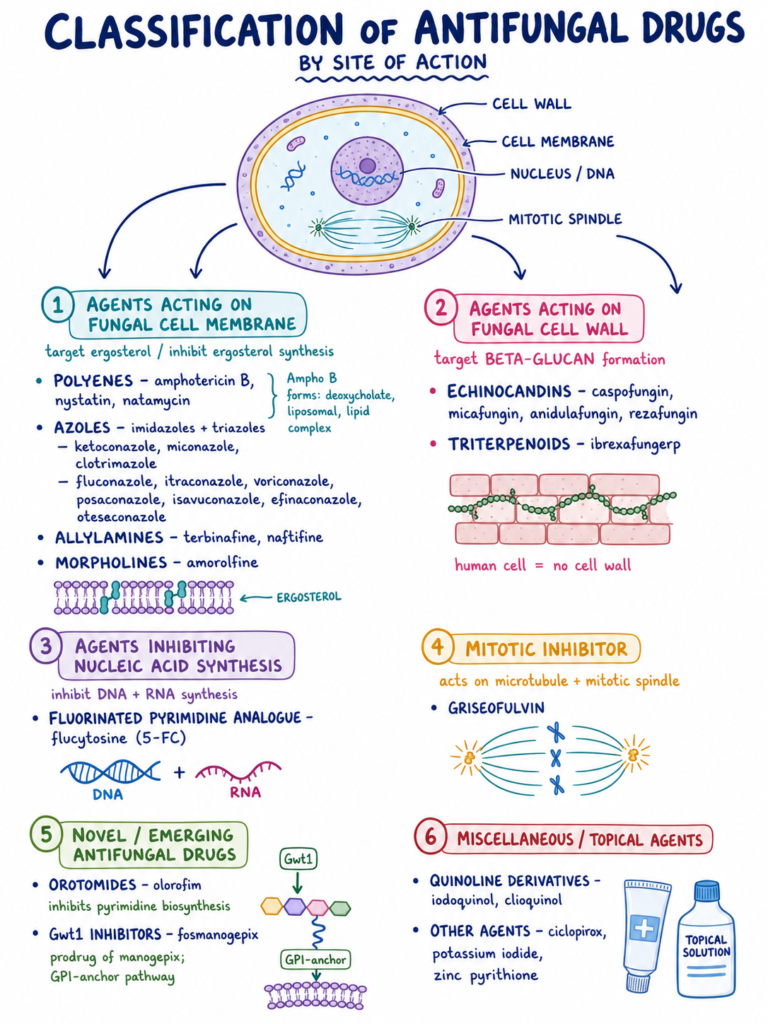
Agents acting on fungal cell membrane
These drugs act on ergosterol of fungal cell membrane or inhibit the synthesis of ergosterol.
a. Polyenes
Amphotericin B, nystatin, pimaricin (natamycin).
Amphotericin B may be deoxycholate, liposomal and lipid complex form.
b. Azoles
These are of two types, imidazoles and triazoles.
Examples- ketoconazole, miconazole, clotrimazole, fluconazole, itraconazole, voriconazole, posaconazole, isavuconazonium sulfate (isavuconazole), efinaconazole, oteseconazole.
c. Allylamines
Terbinafine, naftifine.
d. Morpholines
Amorolfine.
Agents acting on fungal cell wall
These drugs act on beta-glucan formation of fungal cell wall.
As human cell has no cell wall, so this site is important.
a. Echinocandins
Caspofungin, micafungin, anidulafungin, rezafungin.
b. Triterpenoids
Ibrexafungerp.
Agents inhibiting nucleic acid synthesis
These drugs act inside fungal cell.
They inhibit DNA and RNA synthesis.
a. Fluorinated pyrimidine analogue
Flucytosine (5-fluorocytosine).
Mitotic inhibitor
This drug inhibit fungal cell division.
It acts on microtubule and mitotic spindle.
a. Mitotic inhibitor drug
Griseofulvin.
Novel and emerging antifungal drugs
These are newer group of antifungal drugs.
They act on special fungal pathway.
a. Orotomides
Olorofim.
It inhibit pyrimidine biosynthesis.
b. Gwt1 inhibitors
Fosmanogepix.
It is prodrug form of manogepix and act on GPI-anchor pathway.
Miscellaneous and topical agents
These are used mainly as local or special antifungal agents.
a. Quinoline derivatives
Iodoquinol, clioquinol.
b. Other agents
Ciclopirox, potassium iodide, zinc pyrithione.
Different Mode of Actions of Antifungal Drug
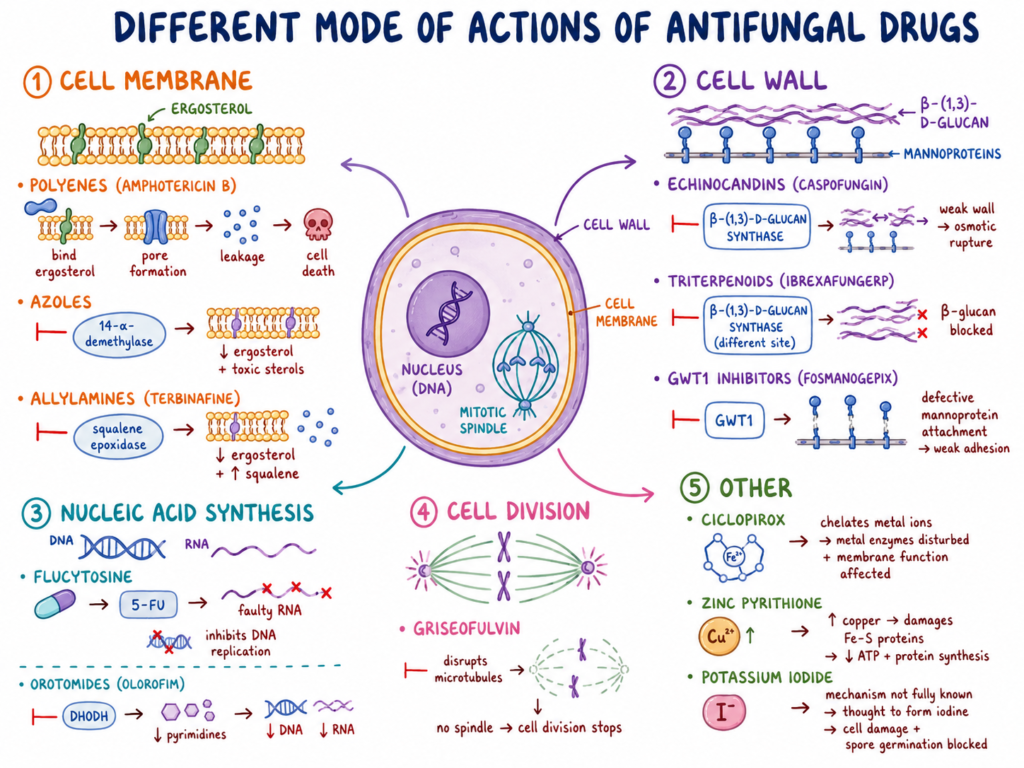
The antifungal drugs act on different parts of fungal cell. The major sites are cell membrane, cell wall, nucleic acid synthesis and cell division. The following are the different mode of actions of antifungal drug-
1. Disruption of fungal cell membrane
Polyenes bind with ergosterol present in fungal cell membrane. The important example is amphotericin B. After binding, pore is formed in the membrane. The essential cellular materials are leaked out from the cell. This causes death of fungal cell.
Azoles inhibit lanosterol 14-α-demethylase enzyme. This enzyme is needed for ergosterol synthesis. Due to inhibition, ergosterol is not formed properly. The membrane becomes weak and toxic sterol materials are accumulated.
Allylamines inhibit squalene epoxidase enzyme. The important example is terbinafine. This enzyme is required in early stage of ergosterol formation. So ergosterol becomes decreased and squalene is accumulated in fungal cell. This is toxic to the fungus.
2. Disruption of fungal cell wall
Echinocandins inhibit β-(1,3)-D-glucan synthase enzyme. The important example is caspofungin. This enzyme forms β-glucan of fungal cell wall. When β-glucan is not formed, the cell wall becomes weak. Then the fungal cell ruptures by osmotic pressure.
Triterpenoids also inhibit β-(1,3)-D-glucan synthase. The important example is ibrexafungerp. It acts on different site of the enzyme than echinocandins. But the final effect is same, the β-glucan formation is stopped.
Gwt1 inhibitors inhibit Gwt1 enzyme. The important example is fosmanogepix. This enzyme is needed for attachment of mannoproteins on fungal cell wall. Due to this inhibition, cell wall becomes weak and fungus cannot attach properly with host tissue.
3. Inhibition of nucleic acid synthesis
Flucytosine is an antimetabolite drug. It enters into fungal cell and converted into 5-fluorouracil. This compound replaces uracil in RNA. So defective protein is formed. It also inhibits DNA replication.
Orotomides inhibit dihydroorotate dehydrogenase (DHODH) enzyme. The important example is olorofim. This enzyme is needed for pyrimidine synthesis. Pyrimidine is required for DNA and RNA formation.
4. Inhibition of cell division
Griseofulvin acts on fungal microtubules. It prevents the formation of mitotic spindle. Due to this, fungal cell division is stopped. The fungus cannot multiply.
5. Other mechanism
Ciclopirox binds with metal ions like iron and aluminium. Due to this, metal dependent enzymes are disturbed. It also affects the membrane function of fungal cell.
Zinc pyrithione increases copper level inside the cell. It affects iron-sulfur cluster of fungal proteins. For this reason ATP production becomes decreased and protein synthesis is stopped.
Potassium iodide has not fully known mechanism. It is thought that immune cells convert it into iodine. This iodine damages fungal cell structure and stops spore germination.
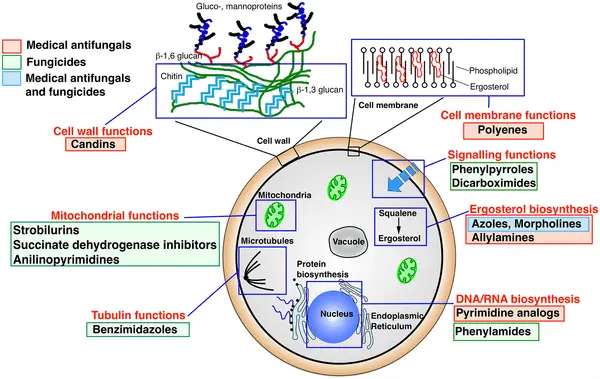
1. Disruption of the Cell Membrane by Antifungal Drug
The fungal cell membrane contains ergosterol. It is the main sterol of fungal membrane. Many antifungal drugs act on this ergosterol or on its synthesis. Due to this action, the fungal membrane becomes damaged.
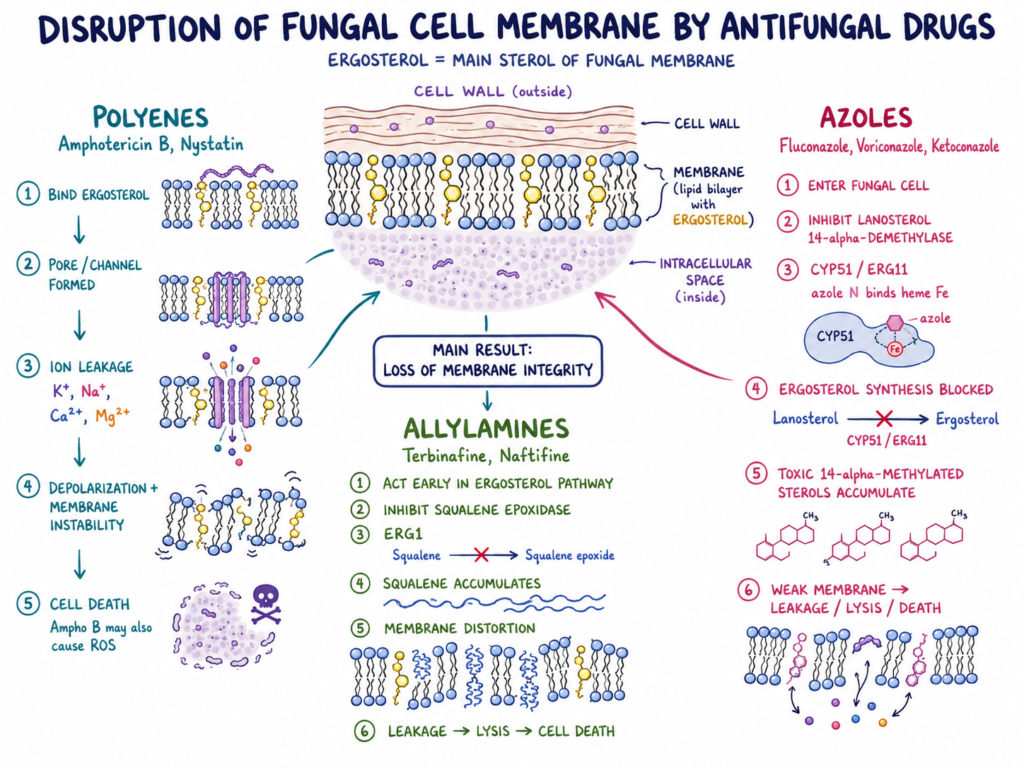
Polyene antifungal drugs
Examples are amphotericin B and nystatin.
Step 1- Binding with ergosterol
In this step, polyene drugs bind directly with ergosterol present in fungal cell membrane. Ergosterol acts as the main binding site for these drugs.
Step 2- Formation of pore
After binding, polyene-ergosterol complex is formed in the membrane. These complexes form small pores or channels in the fungal membrane. In some condition, amphotericin B also removes ergosterol from the lipid layer of membrane.
Step 3- Leakage of cell materials
Through these pores, important intracellular materials come out from the fungal cell. Mainly potassium, sodium, calcium, magnesium and small metabolites are leaked out.
Step 4- Loss of membrane balance
Due to leakage of ions, the electrochemical balance of fungal cell is lost. The membrane becomes depolarized. Membrane proteins also becomes unstable.
Step 5- Death of fungal cell
Finally fungal cell death occurs. Amphotericin B may also produce reactive oxygen species. These causes oxidative damage of fungal cell.
Azole antifungal drugs
Examples are fluconazole, voriconazole and ketoconazole.
Step 1- Entry into fungal cell
In this step, azole drug enters into the fungal cell. Then it acts on the enzyme present in ergosterol synthesis pathway.
Step 2- Inhibition of enzyme
Azoles inhibit lanosterol 14-α-demethylase enzyme. This enzyme is also called CYP51 or Erg11p. It is a cytochrome P450 enzyme.
Step 3- Binding with heme iron
The nitrogen atom of azole ring binds with heme iron present in the active site of enzyme. Due to this binding, the enzyme cannot work properly.
Step 4- Stoppage of ergosterol formation
The inhibited enzyme cannot remove methyl group from lanosterol. So ergosterol synthesis is stopped. The amount of ergosterol in fungal membrane becomes decreased.
Step 5- Accumulation of toxic sterol
Due to blockage of pathway, abnormal sterol intermediates are accumulated. Mainly 14-α-methylated sterols are formed. These sterols are toxic for fungal cell.
Step 6- Membrane damage
Due to lack of ergosterol and accumulation of abnormal sterols, the membrane becomes weak. The permeability of fungal membrane is increased. Finally cell lysis and death may occurs.
Allylamine antifungal drugs
Examples are terbinafine and naftifine.
Step 1- Action on early stage
In this step, allylamines act on early stage of ergosterol synthesis. The main enzyme affected is squalene epoxidase or Erg1.
Step 2- Inhibition of squalene epoxidase
Terbinafine inhibits squalene epoxidase enzyme. This enzyme normally converts squalene into squalene epoxide.
Step 3- Blockage of ergosterol pathway
When squalene epoxidase is inhibited, squalene epoxide is not formed. So the further steps of ergosterol synthesis are stopped.
Step 4- Accumulation of squalene
Due to blockage, squalene is accumulated inside the fungal cell. Squalene is a lipid soluble substance. Its excess amount is toxic for fungus.
Step 5- Distortion of membrane
The accumulated squalene enters into the lipid layer of fungal membrane. Due to this, the normal structure of membrane becomes distorted.
Step 6- Leakage and cell death
The membrane integrity is lost. Cell contents come out from the fungal cell. Finally fungal cell lysis and death occurs.
2. Disruption of the Cell Wall by Antifungal Drug
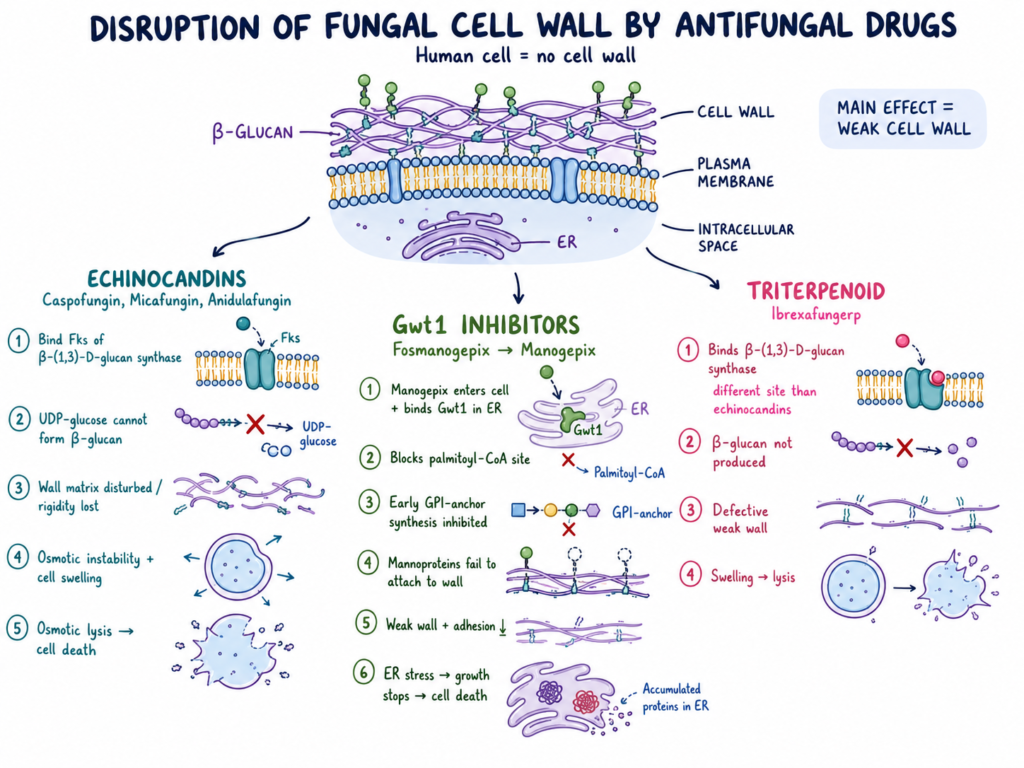
The fungal cell wall is an important site for antifungal drug action. Human cell does not contain cell wall. So the drug acting on fungal cell wall can damage the fungus with less effect on human cell.
The main antifungal drugs acting on cell wall are echinocandins, triterpenoids and Gwt1 inhibitors. These drugs mainly inhibit cell wall forming materials and make the fungal wall weak.
Echinocandin antifungal drugs
Echinocandins include caspofungin, micafungin and anidulafungin. These drugs act on β-(1,3)-D-glucan synthase enzyme of fungal cell.
Step 1- In this step, the echinocandin drug binds with Fks catalytic subunit of β-(1,3)-D-glucan synthase enzyme. This enzyme is present in the fungal plasma membrane.
Step 2- After binding, the enzyme cannot use UDP-glucose for formation of β-(1,3)-D-glucan. This glucan is the main structural carbohydrate of fungal cell wall.
Step 3- When β-glucan is not formed, the normal wall matrix becomes disturbed. The fungal cell wall loses its rigidity and mechanical strength.
Step 4- The weak cell wall cannot resist the internal turgor pressure of fungal cell. For this reason osmotic instability occurs and the cell starts swelling.
Step 5- Finally the swollen fungal cell ruptures by osmotic lysis. This results in death of fungal cell.
Triterpenoid antifungal drugs
Ibrexafungerp is an important triterpenoid antifungal drug. It also acts on β-(1,3)-D-glucan synthase enzyme.
Step 1- In this step, ibrexafungerp binds with β-(1,3)-D-glucan synthase enzyme. It binds on a different site than echinocandin drugs.
Step 2- Due to this binding, the enzyme cannot synthesize β-(1,3)-D-glucan. So the important polymer required for cell wall construction is not produced.
Step 3- The absence of β-glucan causes loss of normal cell wall integrity. The fungal wall becomes defective and weak.
Step 4- Due to weak wall, the fungal cell cannot tolerate osmotic pressure. The cell swells and finally cell lysis occurs.
Gwt1 inhibitors
Fosmanogepix is an important Gwt1 inhibitor. Its active form is manogepix. This drug acts on Gwt1 enzyme present in endoplasmic reticulum of fungal cell.
Step 1- In this step, manogepix enters the fungal cell and binds with Gwt1 enzyme. This enzyme is an inositol acyltransferase.
Step 2- The drug blocks the normal binding site of palmitoyl-CoA. Due to this, early step of glycosylphosphatidylinositol (GPI) anchor synthesis is inhibited.
Step 3- When mature GPI anchors are not formed, important mannoproteins cannot attach to the outer surface of fungal cell wall.
Step 4- Due to absence of these wall proteins, the fungal cell wall becomes physically weak. The adhesion of fungus with host tissue is also decreased.
Step 5- The unprocessed proteins remain accumulated inside endoplasmic reticulum. This produces toxic cellular stress in fungal cell.
Step 6- Finally the weak cell wall and internal stress stop normal fungal growth. Fungal cell death occurs.
3. Inhibition of Nucleic Acid (DNA/RNA) Synthesis by Antifungal Drug
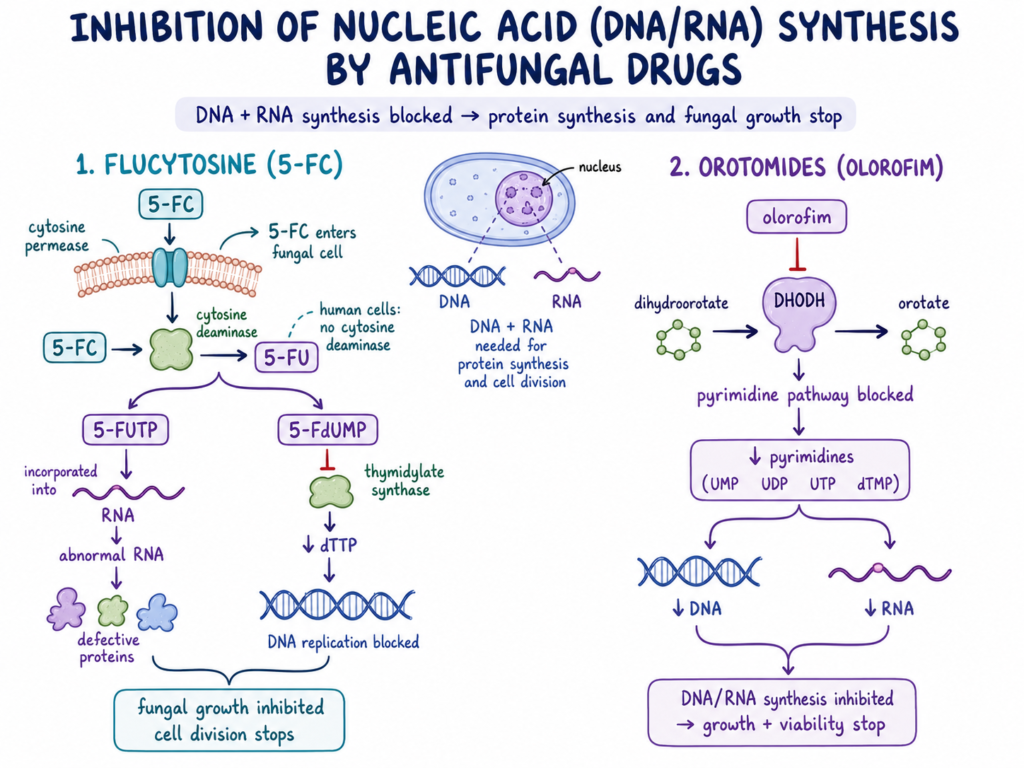
Nucleic acid synthesis is inhibited by some antifungal drugs. In this process the formation of DNA and RNA of fungal cell is affected. So protein synthesis and multiplication of fungus is stopped.
The following are the step by step mechanism-
Flucytosine (5-fluorocytosine)
Flucytosine is an antimetabolite antifungal drug. It is also called 5-fluorocytosine. It acts as a prodrug and becomes active inside the fungal cell.
Step 1- In this step, flucytosine enters into the fungal cell through cytosine permease. This is an active transport process. The drug is carried inside the fungus.
Step 2- After entering into the cell, flucytosine is converted into 5-fluorouracil. This conversion is done by cytosine deaminase enzyme. This enzyme is present in fungal cell. Human cell does not have this enzyme.
Step 3- Then 5-fluorouracil is converted into active nucleotide forms. The active forms are 5-fluorouridine triphosphate (5-FUTP) and 5-fluorodeoxyuridine monophosphate (5-FdUMP).
Step 4- 5-FUTP is used in place of normal uracil during fungal RNA synthesis. So abnormal RNA is formed. This causes wrong reading of genetic message. Due to this defective proteins are produced.
Step 5- 5-FdUMP inhibits thymidylate synthase enzyme. This enzyme is needed for formation of thymidine triphosphate (dTTP). dTTP is required for fungal DNA synthesis.
Step 6- When dTTP is not available, DNA replication is stopped. The fungal cell cannot complete cell division. So growth of fungus is inhibited.
Orotomides
Orotomides are new class of antifungal drug. Olorofim is the important example. It inhibits pyrimidine synthesis of fungal cell.
Step 1- In this step, olorofim acts on dihydroorotate dehydrogenase enzyme. This enzyme is also known as DHODH.
Step 2- DHODH normally converts dihydroorotate into orotate. This is the fourth step of de novo pyrimidine biosynthesis pathway.
Step 3- When DHODH is inhibited, orotate is not formed. So the pyrimidine pathway is blocked. The fungal cell cannot produce pyrimidine in proper amount.
Step 4- Pyrimidines are needed for synthesis of DNA and RNA. Due to deficiency of pyrimidines, nucleic acid formation is inhibited.
Step 5- Finally the fungal cell cannot form new DNA and RNA. Growth and viability of fungal cell is stopped.
4. Inhibition of Cell Division by Antifungal Drug
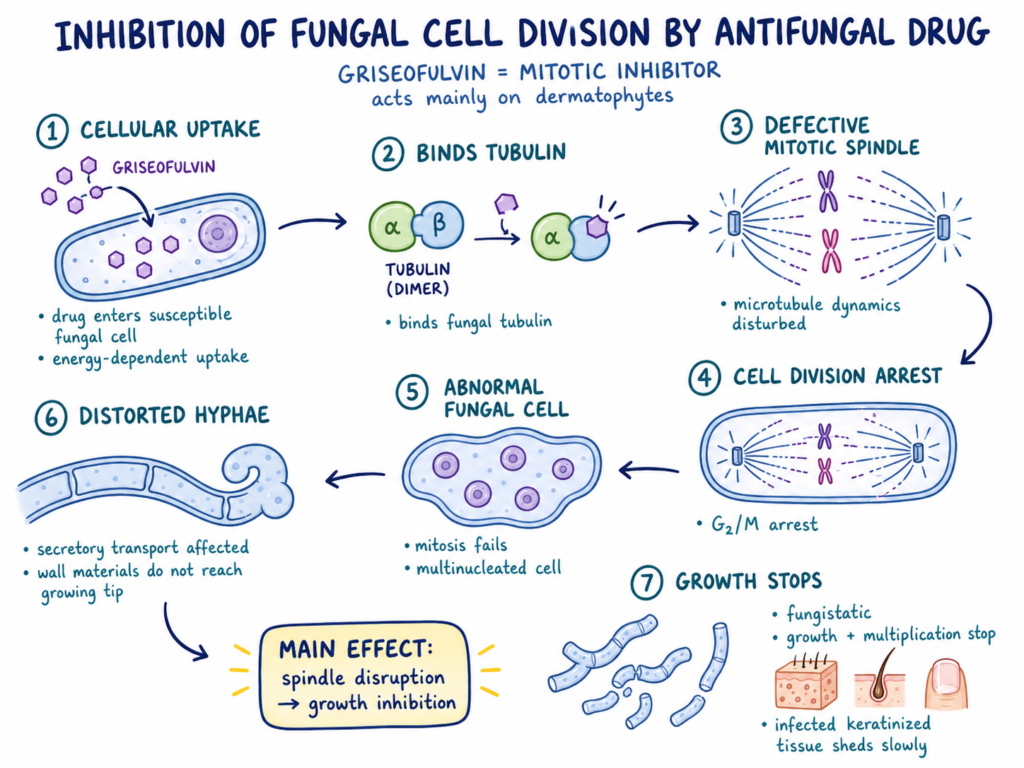
The inhibition of fungal cell division is mainly done by griseofulvin. It is a mitotic inhibitor. It acts mostly on dermatophytes and stops the multiplication of fungal cell.
The following are the step by step mechanism-
1. Cellular uptake
In this step, griseofulvin enters into susceptible fungal cell. The drug is actively concentrated inside the fungal cell by energy dependent transport process. This action is mainly seen in dermatophyte fungi.
2. Binding with tubulin
After entering into the cell, griseofulvin binds with fungal tubulin. Tubulin is the main protein needed for formation of microtubules. The drug acts on both alpha and beta tubulin subunits and changes their normal structure.
3. Disruption of mitotic spindle
In this step, the normal formation of microtubules is disturbed. The polymerization and depolymerization of microtubules cannot occur properly. So the mitotic spindle is not formed in proper way.
4. Arrest of cell division
The mitotic spindle is needed for separation of chromosomes during cell division. When spindle is defective, chromosomes cannot move properly. The fungal cell is arrested at G2/M phase of cell cycle.
5. Formation of abnormal fungal cell
Due to arrest of mitosis, proper division of fungal nucleus does not occur. The fungal cell becomes defective and sometimes multinucleated cell is formed. So normal reproduction of fungus is stopped.
6. Distortion of fungal hyphae
Microtubules also help in transport of secretory materials inside the fungal cell. These materials are needed for formation of cell wall at growing tips. When microtubules are damaged, new wall materials cannot reach properly. So fungal hyphae become distorted, swollen and sometimes curled.
7. Stopping of fungal growth
The final effect of griseofulvin is mainly fungistatic. It stops fungal growth and multiplication. Then infected keratinized tissue like skin, hair and nail is removed slowly by natural shedding, and host defence helps to clear the infection.
5. Other/Miscellaneous Mechanisms by Antifungal Drug
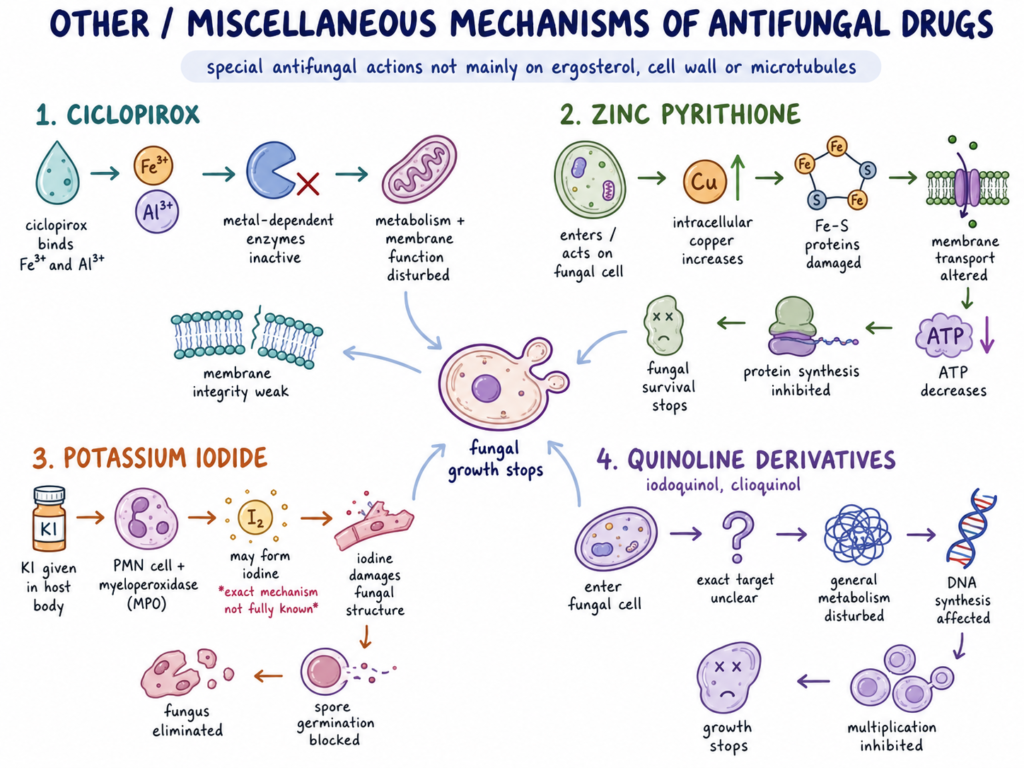
Some antifungal drugs do not act mainly on ergosterol, cell wall or microtubules. They act by different special mechanism. The following are the other and miscellaneous mechanism of antifungal drug-
Ciclopirox
Ciclopirox is a miscellaneous antifungal drug. It acts mainly by binding with metal ions which are required for fungal enzymes.
Step 1- In this step, ciclopirox binds with polyvalent metal ions. Mainly iron (Fe³⁺) and aluminium (Al³⁺) are bound by this drug.
Step 2- Due to binding of these metal ions, the fungal cell cannot use them properly. Many metal dependent enzymes become inactive.
Step 3- When these enzymes are disturbed, the normal metabolic activity of fungal cell is affected. The membrane function is also disturbed.
Step 4- Finally the structural integrity of fungal cell membrane becomes weak. So growth of fungus is stopped.
Zinc Pyrithione
Zinc pyrithione is used as topical antifungal agent. It acts by disturbing metal balance and protein function of fungal cell.
Step 1- In this step, zinc pyrithione enters or acts on fungal cell and increases the intracellular copper level.
Step 2- Increased copper level damages the formation and function of iron-sulfur clusters. These clusters are present in many fungal proteins.
Step 3- Due to damage of these proteins, transport function of fungal membrane becomes altered. The important metabolic substrates are not available in proper amount.
Step 4- For this reason ATP production becomes decreased. Protein synthesis is also inhibited.
Step 5- Finally fungal growth and survival is stopped.
Potassium Iodide
Potassium iodide is used in some fungal infection. Its exact mechanism is not fully proved. It is mainly used in infection caused by Sporothrix species.
Step 1- In this step, potassium iodide is taken in the host body. The immune cells like polymorphonuclear cells may use myeloperoxidase enzyme.
Step 2- By this enzyme action, potassium iodide may be converted into iodine.
Step 3- The formed iodine acts directly on fungal cell. It damages the cellular structure of fungus.
Step 4- It also stops the germination of fungal spores. Inside the fungal cell, important structural components are destroyed.
Step 5- Due to loss of fungal structure and spore germination, the fungus is eliminated.
Quinoline Derivatives
Quinoline derivatives are also used as miscellaneous antifungal agents. Important examples are iodoquinol and clioquinol.
Step 1- In this step, iodoquinol and clioquinol enter into fungal cell. Their exact molecular target is not clearly known.
Step 2- After entry, these drugs interfere with general fungal metabolism. The normal cellular activity of fungus becomes disturbed.
Step 3- These drugs also affect DNA synthesis. So the fungal cell cannot replicate properly.
Step 4- Finally fungal multiplication becomes inhibited and growth of fungus is stopped.
Examples of some Antifungal Drug and their Mode of Action
The following are some antifungal drugs and their mode of action-
- Amphotericin B – It is a polyene antifungal drug. It binds with ergosterol of fungal cell membrane and form pores. Through this pores, K+, Na+ and other cell materials comes out. Death of fungal cell occurs.
- Nystatin – It is also a polyene drug. It binds with ergosterol. The fungal membrane becomes porous. Intracellular materials are leaked out from fungal cell.
- Natamycin – It is a polyene antifungal drug. It acts on ergosterol present in fungal membrane. It disturbs membrane function and growth of fungus is inhibited.
- Fluconazole – It is an azole drug. It inhibits lanosterol 14-α-demethylase enzyme. This enzyme is needed for ergosterol formation. So fungal membrane becomes weak.
- Ketoconazole – It is an azole antifungal drug. It inhibits cytochrome P450 enzyme of ergosterol synthesis. Abnormal sterol materials are accumulated in fungal cell. The membrane becomes unstable.
- Voriconazole – It is a triazole drug. It blocks ergosterol synthesis. The fungal cell membrane loses its normal structure. Permeability of membrane is changed.
- Terbinafine – It is an allylamine antifungal drug. It inhibits squalene epoxidase enzyme. Ergosterol formation becomes decreased. Squalene is accumulated inside fungal cell and it is toxic.
- Naftifine – It is an allylamine drug. It also inhibits squalene epoxidase. So squalene becomes accumulated. The fungal membrane becomes defective.
- Caspofungin – It is an echinocandin drug. It inhibits β-(1,3)-D-glucan synthase enzyme. β-glucan is not formed in fungal cell wall. The wall becomes weak and cell lysis occurs.
- Micafungin – It is an echinocandin antifungal drug. It stops β-(1,3)-D-glucan formation. The fungal cell wall cannot tolerate osmotic pressure. Then rupture of cell occurs.
- Anidulafungin – It is another echinocandin drug. It blocks β-glucan synthesis. The cell wall loses strength and fungus becomes damaged.
- Ibrexafungerp – It is a triterpenoid antifungal drug. It inhibits β-(1,3)-D-glucan synthase enzyme. It binds at different site than echinocandins. Finally cell wall formation is inhibited.
- Flucytosine – It is an antimetabolite drug. It enters into fungal cell and converted into 5-fluorouracil. This affects fungal RNA synthesis. It also inhibits DNA replication.
- Olorofim – It is an orotomide drug. It inhibits dihydroorotate dehydrogenase (DHODH) enzyme. So pyrimidine synthesis is stopped. DNA and RNA formation is inhibited.
- Fosmanogepix – It is a Gwt1 inhibitor. It is converted into manogepix. It inhibits Gwt1 enzyme. GPI-anchor formation is blocked and mannoproteins cannot attach to fungal cell wall.
- Griseofulvin – It is a mitotic inhibitor. It binds with fungal tubulin. Microtubule and mitotic spindle formation is disturbed. Fungal cell division is stopped.
- Ciclopirox – It is a miscellaneous antifungal drug. It binds with metal ions like iron and aluminium. Metal dependent enzymes are disturbed. Fungal membrane function becomes abnormal.
Reference
- Alcazar-Fuoli, L., & Mellado, E. (2013). Ergosterol biosynthesis in Aspergillus fumigatus: Its relevance as an antifungal target and role in antifungal drug resistance . Frontiers in Microbiology, 3, 439.
- Antifungal agents: Mode of action, mechanisms of resistance, and correlation of these mechanisms with bacterial resistance . (n.d.). PubMed Central–NIH.
- Antifungal drugs . (n.d.). PubMed Central.
- Antifungal pharmacology . (n.d.). Doctor Fungus.
- Azole affinity of sterol 14α-demethylase (CYP51) enzymes from Candida albicans and Homo sapiens . (n.d.). PubMed Central.
- Azole binding properties of Candida albicans sterol 14-α demethylase (CaCYP51) . (n.d.). Antimicrobial Agents and Chemotherapy–ASM Journals.
- BenchChem Technical Support Team. (2026). Ergosterol biosynthesis: A validated pathway for novel antifungal drug development . BenchChem.
- BenchChem Technical Support Team. (2026). Ibrexafungerp citrate vs. echinocandins: An in vitro efficacy comparison . BenchChem.
- BenchChem Technical Support Team. (2026). Manogepix and the Gwt1 inhibition pathway: A technical guide . BenchChem.
- BenchChem Technical Support Team. (2026). Olorofim’s targeted inhibition of dihydroorotate dehydrogenase: A technical guide . BenchChem.
- Comparative study of the condensing effects of ergosterol and cholesterol . (n.d.). PMC–NIH.
- Comparison of lanosterol-14 alpha-demethylase (CYP51) of human and Candida albicans for inhibition by different antifungal azoles . (n.d.). PubMed.
- Comprehensive analysis of antifungal pharmacotherapy: Molecular mechanisms, therapeutic targets, and the evolving landscape of resistance . (n.d.).
- Differential effect of cholesterol and its biosynthetic precursors on membrane dipole potential . (n.d.). PubMed Central.
- Dixon, D. M., & Walsh, T. J. (1996). Antifungal agents . In S. Baron (Ed.), Medical Microbiology (4th ed.). University of Texas Medical Branch at Galveston.
- Clinical Trials Arena. (2026, April 23). ESCMID Global 2026: Olorofim targets invasive Aspergillus in hematology patients .
- Wikipedia contributors. (n.d.). Echinocandin . In Wikipedia, The Free Encyclopedia.
- Echinocandins—structure, mechanism of action and use in antifungal therapy . (n.d.). PubMed Central.
- Eliaš, D., Tóth Hervay, N., & Gbelská, Y. (2024). Ergosterol biosynthesis and regulation impact the antifungal resistance and virulence of Candida spp. . Stresses, 4(4), 641–662.
- Ergosterol . (n.d.). Grokipedia.
- Ergosterol biosynthesis—Antifungal drug discovery . (n.d.). Creative Biolabs.
- Evaluation of resistance development to the Gwt1 inhibitor manogepix (APX001A) in Candida species . (n.d.). PubMed Central.
- F-901318 (Olorofim): DHODH inhibitor, CAS 1928707-56-5 and antifungal agent . (n.d.). InvivoChem.
- Flucytosine . (n.d.). Inxight Drugs.
- Flucytosine . (2026, April 5). Massive Bio.
- Fungal β-1,3-glucan synthase: A review of structure, mechanism, and regulation . (n.d.). PubMed Central.
- Garcia-Effron, G., Lee, S., Park, S., Cleary, J. D., & Perlin, D. S. (2009). Effect of Candida glabrata FKS1 and FKS2 mutations on echinocandin sensitivity and kinetics of 1,3-β-D-glucan synthase: Implication for the existing susceptibility breakpoint . Antimicrobial Agents and Chemotherapy, 53(9), 3690–3699.
- Griseofulvin . (n.d.). Doctor Fungus.
- Herrick, E. J., Patel, P., & Hashmi, M. F. (2024). Antifungal Ergosterol Synthesis Inhibitors . In StatPearls. StatPearls Publishing.
- Walley, A. H., Dupuis, L. N., Woodahl, E. L., & Killam, S. R. (2025). Ibrexafungerp: Mechanism of action, clinical, and translational science . Clinical and Translational Science, 18(9), e70362.
- Inhibition mechanism of the fungal β-1,3-glucan synthases by triterpenoid antifungal drugs . (n.d.).
- Jallow, S., & Govender, N. P. (2021). Ibrexafungerp: A first-in-class oral triterpenoid glucan synthase inhibitor . Journal of Fungi, 7(3), 163.
- Kinetic suppression of microtubule dynamic instability by griseofulvin: Implications for its possible use in the treatment of cancer . (n.d.). PubMed Central.
- Lamb, D. C., Kelly, D. E., Baldwin, B. C., & Kelly, S. L. (2000). Differential inhibition of human CYP3A4 and Candida albicans CYP51 with azole antifungal agents . Chemico-Biological Interactions, 125(3), 165–175.
- ChemicalBook. (2022, March 31). Mechanism of action of Griseofulvin .
- Mechanism of activation of β-1,3-glucan synthase by Rho1 . (n.d.). ResearchGate.
- Mechanisms of other antimicrobial drugs . (n.d.). Microbiology–Lumen Learning.
- Mercer, M. A. (2024, September). Fluoropyrimidines for use in animals . In Merck Veterinary Manual. Merck & Co., Inc.
- Nagel, K. M. (2024). Polyene antifungals . EBSCO Research Starters.
- Olorofim (F901318): DHODH inhibitor . (n.d.). MedChemExpress.
- Olorofim HCl: CAS 1928707-56-5, DHODH inhibitor . (n.d.). MedKoo Biosciences.
- Padda, I. S., & Parmar, M. (2024). Flucytosine . In StatPearls. StatPearls Publishing.
- Patel, P., & Zito, P. M. (2025). Antifungal Agents . In StatPearls. StatPearls Publishing.
- Perlin, D. S. (2015). Mechanisms of echinocandin antifungal drug resistance . Annals of the New York Academy of Sciences, 1354(1), 1–11.
- Pharmacokinetics and pharmacodynamics of ibrexafungerp . (n.d.). PMC–NIH.
- Wikipedia contributors. (2026, January 10). Polyene antimycotic . In Wikipedia, The Free Encyclopedia.
- Polyene-based derivatives with antifungal activities . (n.d.). PMC–NIH.
- Qian, S., Nagy, G., Zolnierczuk, P., Mamontov, E., & Standaert, R. (2024). Nonstereotypical distribution and effect of ergosterol in lipid membranes . The Journal of Physical Chemistry Letters, 15(17), 4745–4752.
- Structural analyses of Candida albicans sterol 14α-demethylase complexed with azole drugs address the molecular basis of azole-mediated inhibition of fungal sterol biosynthesis . (n.d.). PubMed Central.
- Structural insights into the inhibition mechanism of fungal GWT1 by manogepix . (n.d.). PubMed.
- Structure of the sterols ergosterol and cholesterol . (n.d.). ResearchGate.
- Thakare, R., Dasgupta, A., & Chopra, S. (2021). Fosmanogepix: GPI-anchored wall transfer protein 1 (Gwt1) fungal inhibitor for the treatment of invasive fungal infections . Drugs of the Future, 46(4), 253.
- The multifunctional fungal ergosterol . (n.d.). PMC–NIH.
- Van Dijck, P. (2021). Polyenes . In Encyclopedia. MDPI.
- Wagener, J., & Loiko, V. (2018). Recent insights into the paradoxical effect of echinocandins . Journal of Fungi, 4(1), 5.
- Patsnap Synapse. (2024, June 27). What is Fosmanogepix used for?
- Patsnap Synapse. (2024, June 14). What is Griseofulvin used for?
- Patsnap Synapse. (2024, July 17). What is the mechanism of Flucytosine?
- Patsnap Synapse. (2024, July 17). What is the mechanism of Griseofulvin?