

Antibiotics are a group of antimicrobial chemical compounds that are used to treat bacterial infections.
It acts selectively on bacteria without causing much harm to the human host. They are used when bacteria enter into the body and produces infection.
Antibiotics may be obtained naturally from microorganisms such as moulds and fungi. Some antibiotics are also made synthetically in laboratory. Example, Penicillium is an important source of natural antibiotic.
These drugs mainly act by disturbing important structure or metabolic process of bacterial cell. They may inhibit cell wall synthesis, protein synthesis, DNA replication, or other essential bacterial activity.
On the basis of action, antibiotics are mainly of two types. Bactericidal antibiotics kill the bacteria directly. Bacteriostatic antibiotics only inhibit the growth and multiplication of bacteria, so that body immune system can remove them.
Antibiotics are given in different ways depending on type and severity of infection. They may be given orally as tablets or capsules. They may be applied topically as creams and ointments. In severe infection, they are given by intravenous or intramuscular injection.
Classification of Antibiotics
Antibiotics are divided into different groups. The classification are mainly made on the basis of mechanism of action, spectrum of activity, biological effect and chemical structure.
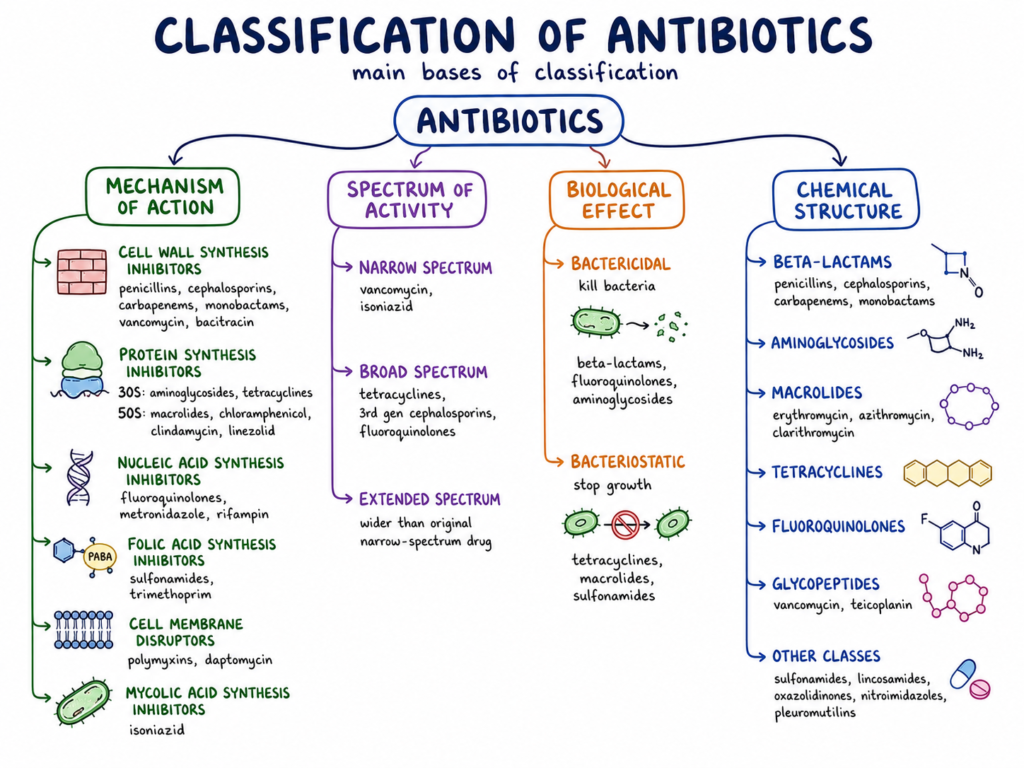
Classification on the basis of mechanism of action
- Cell wall synthesis inhibitors– The members of this group inhibit the synthesis of bacterial cell wall. The main site of action is peptidoglycan layer. As the wall become weak, the bacterial cell cannot maintain its shape and lysis occur. Example- penicillins, cephalosporins, carbapenems, monobactams, vancomycin and bacitracin.
- Protein synthesis inhibitors– These are the antibiotics which act on bacterial ribosome and stop the formation of bacterial protein. Some drugs act on 30S ribosomal subunit, such as aminoglycosides and tetracyclines. Some drugs act on 50S ribosomal subunit, such as macrolides, chloramphenicol, clindamycin and linezolid.
- Nucleic acid synthesis inhibitors– In this group, the antibiotics interfere with bacterial DNA or RNA synthesis. So the replication and transcription process are affected. Example- fluoroquinolones, metronidazole and rifampin.
- Folic acid synthesis inhibitors– This group block the synthesis of folic acid in bacteria. Folic acid is required for nucleic acid formation. So DNA and RNA synthesis is affected. Example- sulfonamides and trimethoprim.
- Cell membrane disruptors– These antibiotics act on bacterial cell membrane. They change the normal permeability of membrane. Due to this, important cellular materials leak out from the bacterial cell. Example- polymyxins and daptomycin.
- Mycolic acid synthesis inhibitors– These drugs act mainly on Mycobacterium. They inhibit the formation of mycolic acid, which is an important part of mycobacterial cell wall. Example- isoniazid.
Classification on the basis of spectrum of activity
- Narrow spectrum antibiotics– These antibiotics act on a limited group of bacteria. They may act mainly on Gram-positive bacteria or mainly on Gram-negative bacteria. Example- vancomycin and isoniazid.
- Broad spectrum antibiotics– These antibiotics act on many types of bacteria. They are effective against both Gram-positive and Gram-negative bacteria. Example- tetracyclines, third generation cephalosporins and fluoroquinolones.
- Extended spectrum antibiotics– These are modified form of narrow spectrum antibiotics. Their antibacterial range is more wide than the original drug.
Classification on the basis of biological effect
- Bactericidal antibiotics– These antibiotics kill the bacteria. The bacterial cell death occur after their action. Example- beta-lactams, fluoroquinolones and aminoglycosides.
- Bacteriostatic antibiotics– These antibiotics inhibit the growth and multiplication of bacteria. The bacteria remain stopped in growth, and then it is removed by the host defence system. Example- tetracyclines, macrolides and sulfonamides.
Classification on the basis of chemical structure
- Beta-lactams– These antibiotics contain a beta-lactam ring. The important members are penicillins, cephalosporins, carbapenems and monobactams.
- Aminoglycosides– These antibiotics contain amino group with sugar part. They are mostly protein synthesis inhibitor.
- Macrolides– These antibiotics have a large macrocyclic lactone ring. Example- erythromycin, azithromycin and clarithromycin.
- Tetracyclines– These antibiotics contain four hydrocarbon ring structure. They are broad spectrum in action.
- Fluoroquinolones– These are synthetic antibiotics having quinolone ring with fluorine atom. They mainly inhibit bacterial DNA synthesis.
- Glycopeptides– These are large complex antibiotics. The important examples are vancomycin and teicoplanin.
- Other structural classes– These include sulfonamides, lincosamides, oxazolidinones, nitroimidazoles and pleuromutilins.
Different Mode of Actions of Antibiotics
The different mode of action of antibiotics are as follows-
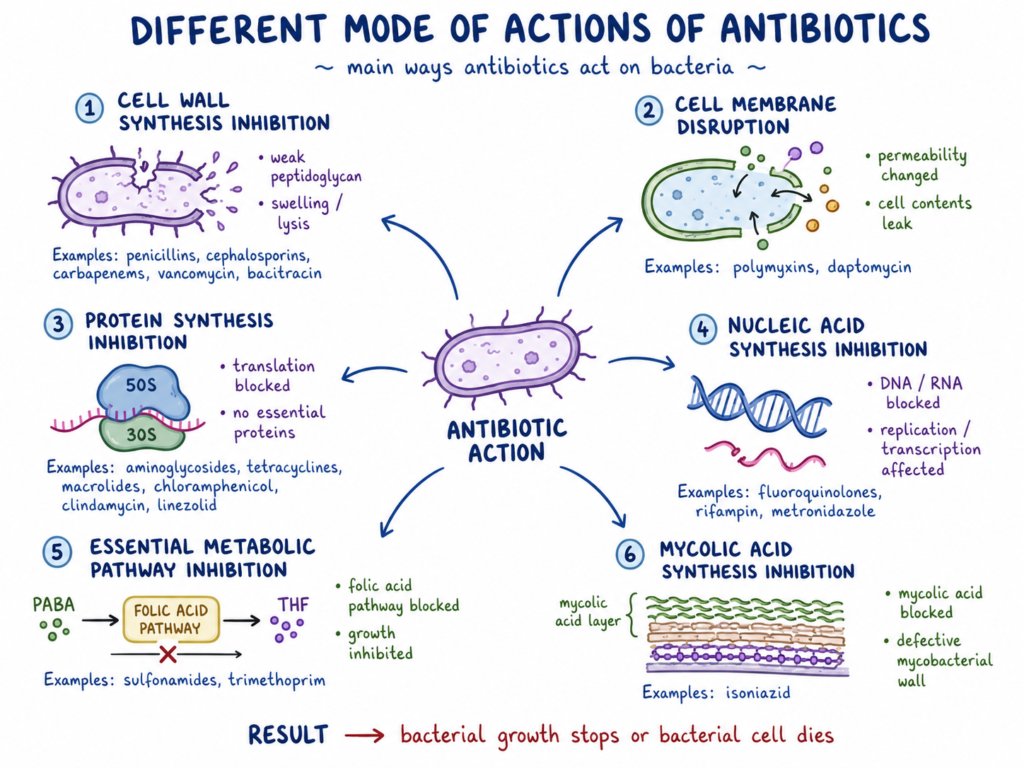
1. Inhibition of cell wall synthesis
In this mode, antibiotics inhibit the formation of bacterial cell wall. The main affected part is peptidoglycan layer, which gives strength and shape to bacterial cell. When this layer is not formed properly, the cell wall become weak. The bacteria swell, burst and finally cell lysis occur.
Example- penicillins, cephalosporins, carbapenems, vancomycin and bacitracin.
2. Disruption of cell membrane
Some antibiotics act on the bacterial cytoplasmic membrane. They damage the normal structure of membrane and changes its permeability. Due to this, important materials of cell come out. The bacterial cell cannot maintain its internal condition and death occur.
Example- polymyxins and daptomycin.
3. Inhibition of protein synthesis
In this process, antibiotics act on bacterial ribosomes. Bacterial ribosome is different from human ribosome, so it can be targeted by antibiotic. Some antibiotics bind with 30S ribosomal subunit and some bind with 50S ribosomal subunit. As a result, translation of mRNA into protein is stopped. So essential bacterial proteins are not formed.
Example- aminoglycosides, tetracyclines, macrolides, chloramphenicol, clindamycin and linezolid.
4. Inhibition of nucleic acid synthesis
This mode act on synthesis of bacterial DNA and RNA. Some antibiotics inhibit enzymes like DNA gyrase and topoisomerase, which are needed for DNA replication. Some inhibit RNA polymerase, so transcription does not occur properly. Due to this bacteria cannot reproduce and growth is stopped.
Example- fluoroquinolones, rifampin and metronidazole.
5. Inhibition of essential metabolic pathway
Some antibiotics act as metabolite inhibitors or antimetabolites. They block important metabolic pathway inside bacterial cell. The main example is inhibition of folic acid synthesis. Folic acid is required for formation of DNA, RNA and proteins. When folic acid pathway is blocked, the bacterial growth is inhibited.
Example- sulfonamides and trimethoprim.
6. Inhibition of mycolic acid synthesis
This is a special mode of action seen against Mycobacterium. In this process, antibiotic inhibit the synthesis of mycolic acid. Mycolic acid is an important component of mycobacterial cell wall. When it is not formed, the cell wall become defective and growth of bacteria is inhibited.
Example- isoniazid.
Inhibition of Cell Wall Synthesis by Antibiotics
Inhibition of cell wall synthesis is a mode of action of antibiotic in which the synthesis of bacterial peptidoglycan cell wall is inhibited. Peptidoglycan gives rigidity and shape to the bacterial cell. When this layer is not formed, the wall become weak and cell lysis takes place.
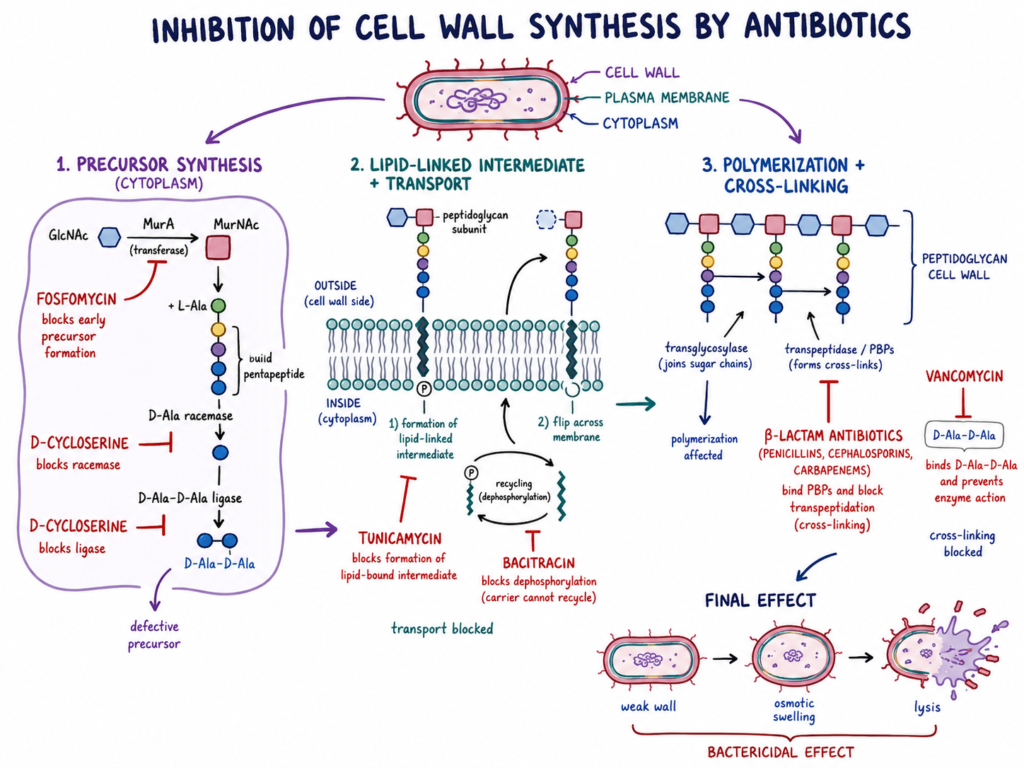
The process can be divided into three steps-
Step 1- Formation of cell wall precursors in cytoplasm
In this step, the basic precursors of peptidoglycan are formed in the bacterial cytoplasm. The important precursors are UDP-GlcNAc and UDP-MurNAc-pentapeptide.
These precursors are formed by different enzymatic reactions. The D-alanyl-D-alanine part is also formed in this step, which is important for later cross linking.
Drug involved- Fosfomycin.
It inhibits the early transferase reaction. So precursor formation is inhibited.
Drug involved- D-cycloserine.
It inhibits racemase and ligase enzymes. So D-alanyl-D-alanine formation does not occur properly.
Step 2- Formation and transport of lipid linked intermediate
In this step, the formed precursor is attached to a lipid carrier present in the bacterial cell membrane. This lipid carrier is bactoprenol or undecaprenyl phosphate.
The lipid carrier carries the peptidoglycan unit from inner side of membrane to outer side of membrane. This is necessary for adding new unit into the growing cell wall.
Drug involved- Tunicamycin.
It inhibits formation of lipid linked intermediate.
Drug involved- Bacitracin.
It inhibits recycling of bactoprenol. The carrier cannot come back again for carrying another peptidoglycan unit.
So transport of cell wall unit is stopped in this step.
Step 3- Polymerization and cross linking
In this step, the transported units are added to the already formed cell wall. Transglycosylase enzyme joins the sugar units and forms long chain.
After this, transpeptidase enzyme forms cross linking between peptide chains. These enzymes are also called Penicillin Binding Proteins (PBPs). This cross linking gives strength to the cell wall.
Drug involved- Beta-lactam antibiotics.
Example- penicillins, cephalosporins, carbapenems.
They bind with PBPs and inhibit transpeptidation. So cross linking is not formed.
Drug involved- Glycopeptide antibiotics.
Example- vancomycin.
It binds with D-alanyl-D-alanine end of precursor. Due to this the enzyme cannot act on the precursor.
Finally the peptidoglycan cell wall remain incomplete and weak. The bacteria cannot resist osmotic pressure. Swelling occur and bacterial cell undergo lysis.
Disruption of Cell (Cytoplasmic) Membrane by Antibiotics
Disruption of cytoplasmic membrane is a mode of action where the antibiotic damages the normal membrane of bacteria. The membrane lose its normal permeability. So ions and important cell materials come out from the cell. Finally bacterial death occur.
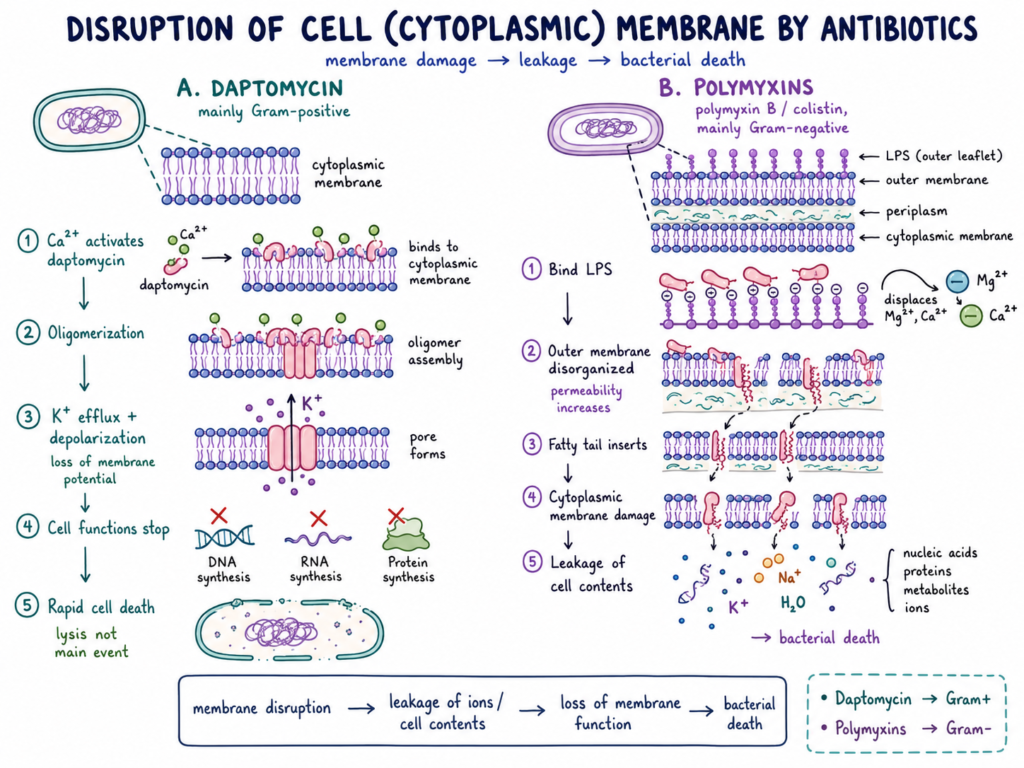
This type of action is mainly shown by daptomycin and polymyxins.
A. Mechanism of Daptomycin
Daptomycin acts mainly on Gram-positive bacteria. It damages the cytoplasmic membrane and causes loss of membrane potential.
Step 1- Binding of daptomycin with membrane
In presence of calcium ion (Ca²⁺), daptomycin molecules become active. They form small micelle like structure and their shape is changed. The lipid tail of daptomycin then enter into the bacterial membrane.
Calcium involved- Ca²⁺.
Target site- cytoplasmic membrane.
Step 2- Oligomer formation
After entering into the membrane, many daptomycin molecules come together. This is called oligomerization. These oligomeric complex remain inserted in the lipid bilayer of bacterial membrane.
In this step the membrane structure starts becoming disturbed.
Step 3- Membrane depolarization
The daptomycin complex forms pore like or channel like area in the membrane. Through this, potassium ion (K⁺) rapidly comes out from the bacterial cell.
So the normal electrical difference of membrane is lost. This is called membrane depolarization.
Step 4- Stopping of cell function
Due to loss of K⁺ and membrane potential, the bacterial cell cannot maintain its normal activity. Synthesis of DNA, RNA and protein become stopped.
Finally the bacterial cell dies. Cell lysis may not be the main event, but rapid cell death occur.
B. Mechanism of Polymyxins
Polymyxins act mainly on Gram-negative bacteria. Important examples are polymyxin B and colistin. They act first on outer membrane and then on cytoplasmic membrane.
Step 1- Binding with LPS layer
The outer membrane of Gram-negative bacteria contains lipopolysaccharide (LPS). Polymyxin has positively charged part. It binds with negatively charged phosphate group of LPS.
During this binding, Mg²⁺ and Ca²⁺ ions are displaced. These ions normally stabilize the LPS layer.
Target site- LPS layer.
Ions displaced- Mg²⁺ and Ca²⁺.
Step 2- Disorganization of outer membrane
After removal of these ions, the LPS layer become unstable. The outer membrane loses its proper arrangement. Its permeability become increased.
So the outer membrane become damaged and loose.
Step 3- Insertion of polymyxin
The fatty acid tail of polymyxin enter into the damaged membrane. Then the drug passes through the outer membrane and reaches the periplasmic space.
In this step, the membrane barrier is more damaged.
Step 4- Damage of cytoplasmic membrane
After reaching inner side, polymyxin acts on cytoplasmic membrane. It destroys the normal integrity of membrane. The membrane become leaky.
Important intracellular materials like nucleic acids, ions and other cell contents come out from the cell.
Step 5- Bacterial cell death
Due to continuous leakage, the bacterial cell cannot maintain internal environment. Metabolic activities are disturbed. Finally bacterial cell death occur.
So the final effect of membrane acting antibiotics is leakage of cell contents, loss of membrane function and death of bacteria.
Inhibition of Protein Synthesis by Antibiotics
Protein synthesis inhibitors are antibiotics which stop the formation of bacterial protein. Bacterial protein is formed on 70S ribosome. It is made up of 30S subunit and 50S subunit. These antibiotics bind with the ribosome and disturb different steps of translation.
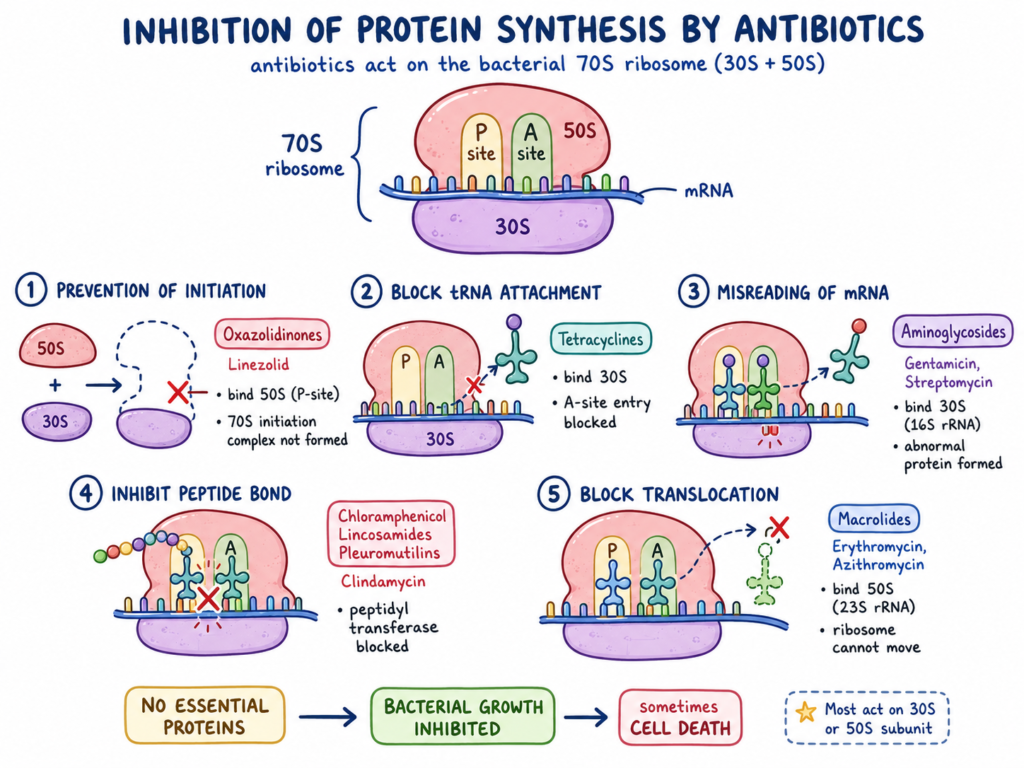
The following are the step by step mechanism-
Step 1- Inhibition of initiation complex
In the first step, 30S subunit and 50S subunit join together to form 70S initiation complex. This complex is necessary for starting protein synthesis.
Oxazolidinones act in this stage. Example- linezolid. It binds with the 50S ribosomal subunit near the P-site. So the initiation complex is not formed. The process of translation is stopped at the beginning stage.
Step 2- Blocking of aminoacyl tRNA binding
In this step, aminoacyl tRNA carrying amino acid normally comes to the A-site of ribosome. It joins according to the codon present on mRNA.
Tetracyclines act on this step. It binds with 30S ribosomal subunit. The binding of aminoacyl tRNA to A-site is blocked. So the new amino acid cannot enter into ribosome and the peptide chain does not increase.
Step 3- Misreading of mRNA codon
In normal condition, the ribosome reads the codon of mRNA and correct amino acid is added. This gives proper sequence of protein.
Aminoglycosides act in this step. Example- streptomycin, gentamicin. They bind with 16S rRNA of 30S subunit. The codon reading become wrong. Wrong amino acid is added and abnormal protein is formed.
These abnormal proteins are non-functional and sometimes toxic for bacteria. So the bacterial cell activity becomes disturbed.
Step 4- Inhibition of peptide bond formation
In this step, peptide bond is formed between amino acids. This reaction is carried out by peptidyl transferase present in 50S subunit.
Chloramphenicol inhibits peptidyl transferase activity. Clindamycin and pleuromutilins also act near this centre. So peptide bond formation does not occur. The growing protein chain remains incomplete.
Step 5- Inhibition of translocation
After peptide bond formation, ribosome normally moves along the mRNA. The tRNA moves from A-site to P-site. This movement is called translocation.
Macrolides inhibit this step. Example- erythromycin, azithromycin. They bind with 23S rRNA of 50S subunit. So ribosome cannot move forward on mRNA. The next amino acid is not added.
Final result
At the end, bacterial protein synthesis is stopped. Essential enzymes and structural proteins are not formed. So bacterial growth and multiplication is inhibited. In some antibiotics, abnormal protein formation also causes death of bacterial cell.
Inhibition of Nucleic Acid Synthesis by Antibiotics
Inhibition of nucleic acid synthesis is a mode of action of antibiotics in which formation of bacterial DNA or RNA is stopped. Due to this replication and transcription does not occur properly. The bacteria cannot multiply and cell death may occur.
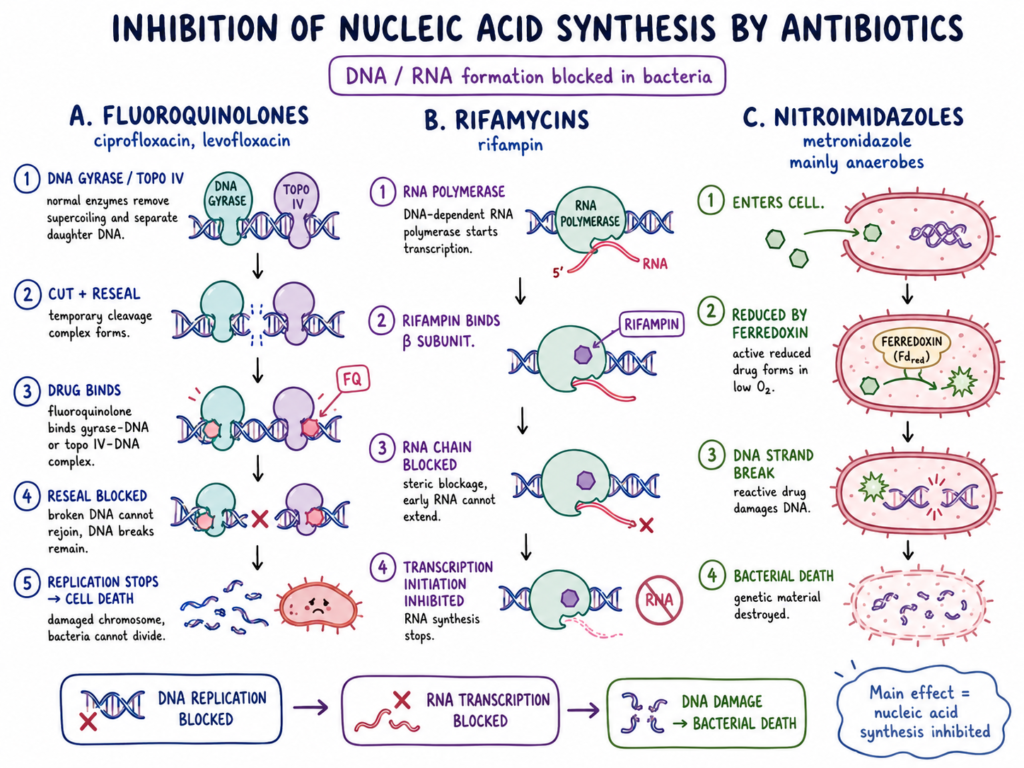
The following are the step by step mechanism-
A. Mechanism of Fluoroquinolones
Fluoroquinolones mainly inhibit bacterial DNA replication. Example- ciprofloxacin, levofloxacin.
Step 1- Action of normal enzyme
During bacterial DNA replication, the DNA become twisted and supercoiled. For removing this tension, bacterial enzyme DNA gyrase is required. Another enzyme Topoisomerase IV helps in separation of newly formed daughter DNA molecules.
These enzymes are important for proper copying of bacterial DNA.
Step 2- Cutting and joining of DNA
The enzyme first cut the bacterial DNA strand for short time. Then another part of DNA passes through the cut region. After this the enzyme again reseal the cut DNA.
This temporary enzyme-DNA form is called cleavage complex.
Step 3- Binding of fluoroquinolone
Fluoroquinolone bind with DNA gyrase-DNA complex or Topoisomerase IV-DNA complex. It does not allow the normal completion of enzyme action.
The drug trapped the enzyme with broken DNA.
Step 4- Resealing is inhibited
After binding of drug, the cut DNA cannot be joined again. The resealing step is stopped. So many breaks remain present in bacterial DNA.
This produces serious damage in bacterial chromosome.
Step 5- Stopping of replication and cell death
Due to DNA breaks, replication is stopped. The genetic material become damaged. So bacteria cannot divide and finally death of bacterial cell occur.
B. Mechanism of Rifamycins
Rifamycins inhibit bacterial RNA synthesis. Important example is rifampin.
Step 1- Target enzyme
The target enzyme is DNA dependent RNA polymerase. This enzyme reads bacterial DNA and forms RNA from it.
So it is required for transcription.
Step 2- Binding of rifampin
Rifampin binds with beta subunit of bacterial RNA polymerase. The binding is strong but non-covalent.
After binding, the enzyme cannot work normally.
Step 3- Blocking of RNA chain
The drug blocks the path from where new RNA chain grows. It gives steric obstruction in the enzyme channel.
So the first part of RNA chain cannot extend properly.
Step 4- Inhibition of transcription initiation
Rifampin mainly inhibits the initiation stage of transcription. New RNA synthesis is not started. But if RNA chain already started, it is not affected much.
Thus bacterial RNA formation is stopped at beginning stage.
C. Mechanism of Nitroimidazoles
Nitroimidazoles damage bacterial DNA. Important example is metronidazole. It acts mainly on anaerobic bacteria.
Step 1- Entry into bacterial cell
Metronidazole enters into anaerobic bacterial cell. Inside the cell, its nitro group is reduced by bacterial electron transport proteins.
Important reducing protein is ferredoxin.
Step 2- Formation of active reduced drug
After reduction, the drug become active and reactive. This reduced form can attack bacterial DNA.
It mainly acts in low oxygen condition.
Step 3- DNA strand break
The reactive drug interacts with bacterial DNA and causes strand break. The DNA structure become damaged and unstable.
So normal replication and gene expression are affected.
Step 4- Bacterial cell death
Due to accumulation of DNA breaks, bacterial genetic material is destroyed. The cell cannot repair it properly. As a result bacterial death occur.
So the main effect of nucleic acid synthesis inhibitors is inhibition of DNA replication, inhibition of RNA transcription and damage of bacterial genetic material.
Inhibition of Essential Metabolic Pathways
Inhibition of essential metabolic pathways is a mode of action of antibiotics in which the important metabolic reaction of bacteria is blocked. The best example is inhibition of folic acid synthesis. It is also called action of antimetabolites.
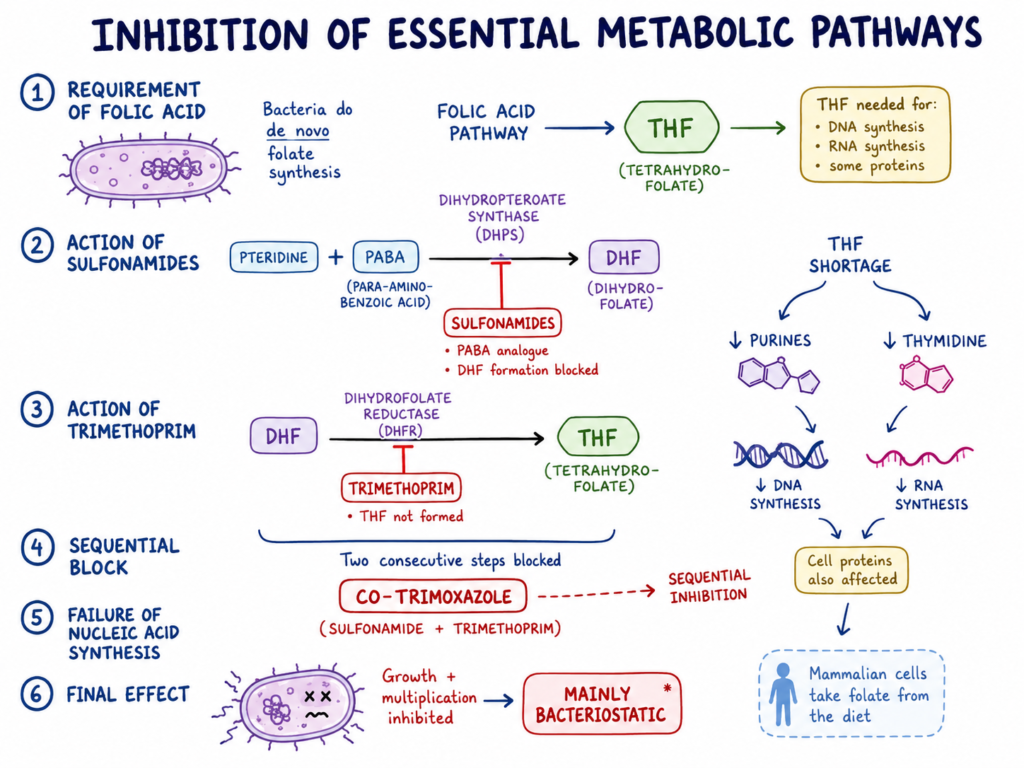
The following are the step by step mechanism-
Step 1- Requirement of folic acid
Bacteria cannot take ready made folic acid from outside. They synthesize folic acid inside the cell by their own pathway. This is called de novo synthesis.
Folic acid is converted into tetrahydrofolate (THF). THF is important for transfer of one carbon unit. It is required for synthesis of DNA, RNA and some bacterial proteins.
So folic acid pathway is essential for bacterial growth and multiplication.
Step 2- Action of sulfonamides
In this step, PABA (para amino benzoic acid) normally combines with pteridine compound. This reaction forms dihydrofolic acid (DHF).
Enzyme involved- Dihydropteroate synthase.
Sulfonamides are structural analogue of PABA. So they compete with PABA for the same enzyme. When sulfonamide binds with the enzyme, PABA cannot be used.
So DHF formation is inhibited.
Step 3- Action of trimethoprim
After formation of DHF, it is normally reduced to tetrahydrofolate (THF). This is the active form of folate.
Enzyme involved- Dihydrofolate reductase (DHFR).
Trimethoprim binds with bacterial DHFR. It inhibit the conversion of DHF into THF. So active folate is not formed.
Step 4- Sequential block
When sulfonamide and trimethoprim are used together, two steps of same pathway are blocked. This combination is called co-trimoxazole.
Sulfonamide blocks DHF formation. Trimethoprim blocks THF formation. So the folic acid pathway is blocked in sequence.
This is referred to as sequential inhibition. The action become more effective than single drug.
Step 5- Failure of nucleic acid synthesis
When THF is not formed, one carbon transfer reaction is stopped. So purine and thymidine formation are affected.
Because of this, bacterial DNA and RNA synthesis does not occur properly. Protein synthesis and cell wall related protein formation also become affected.
Step 6- Inhibition of bacterial growth
Finally the bacteria cannot produce important nucleic acid and proteins. Growth and multiplication are stopped.
This action is mainly bacteriostatic. Mammalian cells are less affected because they take folic acid from diet and do not synthesize it in the same way as bacteria.
Inhibition of Mycolic Acid Synthesis
Inhibition of mycolic acid synthesis is a special mode of action of antibiotic against Mycobacterium. Mycolic acid is a long chain fatty acid present in mycobacterial cell wall. It gives waxy nature, rigidity and resistance to the cell wall.
The important drug is isoniazid (INH). It is a nicotinamide derivative and mainly used in tuberculosis. The exact complete mechanism of isoniazid is not fully clear, but its main action is on mycolic acid synthesis.
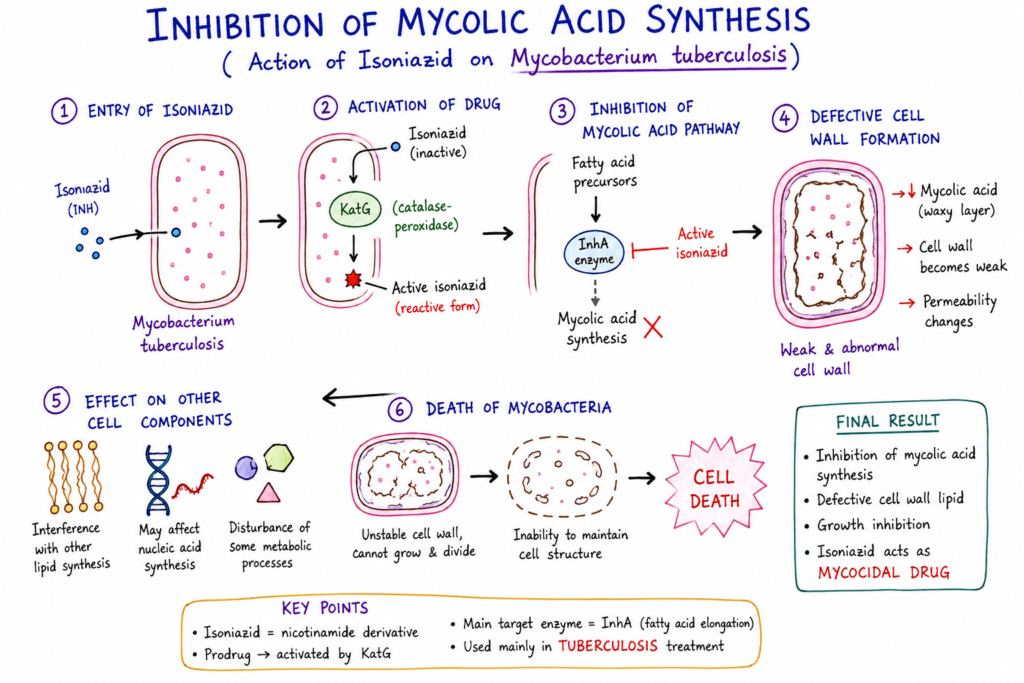
The following are the step by step mechanism-
Step 1- Entry of isoniazid into mycobacterial cell
Isoniazid enters into the cell of Mycobacterium tuberculosis. It is a small molecule and can pass inside the bacterial cell.
At first the drug is not fully active. It acts like a prodrug.
Step 2- Activation of drug
Inside the mycobacterial cell, isoniazid is activated by enzyme KatG. KatG is a catalase-peroxidase enzyme of Mycobacterium.
After activation, reactive form of isoniazid is produced. This active form then acts on enzymes of fatty acid and mycolic acid pathway.
Step 3- Inhibition of mycolic acid pathway
The active form of isoniazid mainly inhibits enzymes needed for mycolic acid synthesis. One important target is InhA, which is involved in fatty acid elongation.
Due to inhibition of this enzyme system, long chain mycolic acid is not formed properly. The lipid part of mycobacterial cell wall become defective.
Step 4- Defective cell wall formation
When mycolic acid is not produced, the cell wall of Mycobacterium loses its normal waxy and strong structure. The wall become weak and permeability also become changed.
The bacteria cannot maintain its normal cell wall arrangement. Growth of bacilli is stopped.
Step 5- Effect on other cell components
Isoniazid also interfere with synthesis of other bacterial lipids. It may also affect nucleic acid synthesis inside the bacterial cell.
So only cell wall is not affected, some internal metabolic process also become disturbed.
Step 6- Death of mycobacteria
Due to absence of proper mycolic acid, the mycobacterial cell wall become unstable. The cell cannot grow and divide normally.
Finally isoniazid acts as a mycocidal drug and kills the sensitive mycobacteria. The final result is inhibition of cell wall lipid synthesis and death of Mycobacterium tuberculosis.
Examples of some Antibiotics and their Mode of Action
The following are some important antibiotics with their mode of action-
1. Antibiotics acting on cell wall synthesis
- Penicillins
Example- Penicillin G, amoxicillin, ampicillin.
Mode of action- These drugs bind with Penicillin Binding Proteins (PBPs). The transpeptidase reaction is inhibited. So cross-linking of peptidoglycan is not completed and bacterial cell wall become weak. - Cephalosporins
Example- cefazolin, ceftriaxone, cefepime.
Mode of action- These drugs also bind with PBPs. The synthesis of peptidoglycan layer is disturbed. It causes defective cell wall formation. - Vancomycin
Mode of action- It binds with D-alanyl-D-alanine end of cell wall precursor. Due to this the precursor is not used by the cell wall enzymes. Peptidoglycan synthesis is blocked. - Bacitracin
Mode of action- It inhibits the recycling of bactoprenol. Bactoprenol is a lipid carrier used for transport of cell wall unit. When it is blocked, the peptidoglycan unit does not reach outside membrane. - Cefiderocol
Mode of action- It is a siderophore cephalosporin. It uses bacterial iron transport system for entering into the cell. After entry it binds with PBPs and inhibits cell wall synthesis.
2. Antibiotics acting on cell membrane
- Daptomycin
Mode of action- It acts on Gram-positive bacteria. In presence of Ca²⁺, it inserts into bacterial membrane. Pore like structure is formed. K⁺ comes out and membrane depolarization occur. - Polymyxin B
Mode of action- It binds with LPS of Gram-negative bacteria. It displaces Ca²⁺ and Mg²⁺ ions. The outer membrane become loose and disorganized. - Colistin
Mode of action- It has polymyxin like action. The membrane permeability is changed. Cell contents leak out and bacterial death occur.
3. Antibiotics acting on protein synthesis
- Aminoglycosides
Example- gentamicin, streptomycin.
Mode of action- These bind with 30S ribosomal subunit. Misreading of mRNA occurs. Wrong proteins are formed and the bacterial cell is damaged. - Tetracyclines
Example- doxycycline, minocycline.
Mode of action- These bind with 30S ribosomal subunit. Entry of aminoacyl tRNA at A-site is blocked. So amino acid is not added to the growing chain. - Macrolides
Example- erythromycin, azithromycin.
Mode of action- These bind with 50S ribosomal subunit. Translocation step is inhibited. Protein chain formation is stopped. - Chloramphenicol
Mode of action- It binds with 50S ribosomal subunit. Peptidyl transferase enzyme is inhibited. So peptide bond is not formed. - Linezolid
Mode of action- It is an oxazolidinone. It binds with 50S subunit. Formation of initiation complex is prevented.
4. Antibiotics acting on nucleic acid synthesis
- Ciprofloxacin
Mode of action- It inhibits DNA gyrase and topoisomerase IV. Bacterial DNA replication is stopped and DNA break may occur. - Levofloxacin
Mode of action- It also acts on DNA gyrase and topoisomerase IV. The DNA cannot be properly copied. - Rifampin
Mode of action- It binds with DNA dependent RNA polymerase. Initiation of RNA transcription is inhibited. - Metronidazole
Mode of action- It is reduced inside anaerobic bacteria. The reduced form damages bacterial DNA and produces strand break.
5. Antibiotics acting on folic acid pathway
- Sulfonamides
Example- sulfamethoxazole.
Mode of action- It is similar to PABA. It inhibits dihydropteroate synthase. So dihydrofolic acid is not formed. - Trimethoprim
Mode of action- It inhibits dihydrofolate reductase (DHFR). Dihydrofolic acid is not converted into tetrahydrofolic acid. So DNA and RNA synthesis are affected. - Co-trimoxazole
Mode of action- It contains sulfamethoxazole and trimethoprim. Two steps of folic acid synthesis are blocked together.
6. Antibiotics acting on mycobacterial cell wall
- Isoniazid
Mode of action- It acts on Mycobacterium tuberculosis. Mycolic acid synthesis is inhibited. So the waxy cell wall of mycobacteria become defective. - Ethambutol
Mode of action- It inhibits arabinosyltransferase enzyme. Formation of mycobacterial cell wall component is stopped.

References
- OLCreate. (n.d.). 1.4.5 inhibitors of cell membrane function.
- eCampusOntario Pressbooks. (n.d.). 15.3 mechanisms of antibacterial drugs – Microbiology: Canadian edition.
- Biology LibreTexts. (n.d.). 7.1.5: Antibiotic classifications.
- National Center for Biotechnology Information. (n.d.). Action and resistance mechanisms of antibiotics: A guide for clinicians. PubMed Central (PMC).
- Moore, D. W. (2026, March 5). Antibiotic classification & mechanism – Basic science. Orthobullets.
- disAMR. (n.d.). Antibiotic clinical trial landscape.
- National Center for Biotechnology Information. (n.d.). Antibiotic action and resistance: Updated review of mechanisms, spread, influencing factors, and alternative approaches for combating resistance. PubMed Central (PMC).
- Apollo, D. (2019, July 8). Antibiotics – Microbiology. Medbullets Step 1.
- BOC Sciences. (2026). Antibiotics inhibit cell wall synthesis.
- Neu, H. C., & Gootz, T. D. (1996). Antimicrobial chemotherapy. In S. Baron (Ed.), Medical microbiology (4th ed.). University of Texas Medical Branch at Galveston. NCBI Bookshelf.
- Nankervis, H., Thomas, K. S., Delamere, F. M., et al. (2016, May). Scoping systematic review of treatments for eczema (Programme Grants for Applied Research, No. 4.7). NIHR Journals Library. NCBI Bookshelf.
- National Center for Biotechnology Information. (n.d.). Bacterial metabolism and susceptibility to cell wall-active antibiotics. PubMed Central (PMC).
- National Center for Biotechnology Information. (n.d.). Bactericidal versus bacteriostatic antibacterials: Clinical significance, differences and synergistic potential in clinical practice. PubMed Central (PMC).
- Pandey, N., & Cascella, M. (2023, June 4). Beta-lactam antibiotics. StatPearls Publishing. NCBI Bookshelf.
- Morrisette, T. (2026, March 3). Beyond the labels: In vitro and clinical realities of the bactericidal versus bacteriostatic debate. Infectious Disease Special Edition.
- Xu, F., Xie, Y., Yu, W., & Wang, Z. (2026, February 24). Breaking the outer membrane barrier: Structure, targets, and antimicrobial strategies for Gram-negative bacteria. Frontiers in Microbiology, 17.
- BOC Sciences. (n.d.). Broad spectrum and narrow spectrum antibiotics.
- Global Antibiotic Research and Development Partnership (GARDP). (n.d.). Broad vs narrow spectrum. REVIVE.
- Children’s Hospital of Philadelphia (CHOP) Research Institute. (n.d.). Broad vs. narrow-spectrum antibiotics: What’s the best choice for common childhood infections?
- National Center for Biotechnology Information. (n.d.). Cefiderocol, a siderophore cephalosporin, as a treatment option for infections caused by carbapenem-resistant Enterobacterales. PubMed Central (PMC).
- Parsels, K. A., Mastro, K. A., Steele, J. M., Thomas, S. J., & Kufel, W. D. (2021, May 12). Cefiderocol: A novel siderophore cephalosporin for multidrug-resistant Gram-negative bacterial infections. Journal of Antimicrobial Chemotherapy, 76(6), 1379-1391.
- Open Resources for Nursing (Open RN), Ernstmeyer, K., & Christman, E. (Eds.). (2023). Chapter 3 Antimicrobials. In Nursing pharmacology (2nd ed.). Chippewa Valley Technical College. NCBI Bookshelf.
- reCAPTCHA. (n.d.). Checking your browser.
- Global Antibiotic Research and Development Partnership (GARDP). (n.d.). Classes of antibiotics. REVIVE.
- Khanh, N. H. P. (2025, April 10). Classification and mechanism of action of antibiotics. Vinmec.
- Kentucky Antimicrobial Stewardship Innovation Consortium (KASIC). (n.d.). Clinical pearl – Static vs cidal.
- National Center for Biotechnology Information. (n.d.). Clinical pharmacology of antibiotics. PubMed Central (PMC).
- National Center for Biotechnology Information. (n.d.). Comparative analysis of the effectiveness of narrow-spectrum versus broad-spectrum antibiotics for the treatment of childhood pneumonia. PubMed Central (PMC).
- National Center for Biotechnology Information. (n.d.). Comparative evaluation of trimethoprim-sulfonamide ratios and synergistic interactions against porcine respiratory pathogens. PubMed Central (PMC).
- Gerber, J. (2018). Comparing broad- and narrow-spectrum antibiotics for children with ear, sinus, and throat infections. Patient-Centered Outcomes Research Institute (PCORI).
- National Center for Biotechnology Information. (n.d.). Correlation of daptomycin bactericidal activity and membrane depolarization in Staphylococcus aureus. PubMed Central (PMC).
- Evolutionary pharmacodynamics and structural taxonomy: A comprehensive analysis of antibiotic mechanisms and classification systems. (n.d.).
- National Center for Biotechnology Information. (n.d.). Following the mechanisms of bacteriostatic versus bactericidal action using Raman spectroscopy. PubMed Central (PMC).
- ReAct. (n.d.). How do antibiotics work?
- Mushtaq, S., Sadouki, Z., Vickers, A., Livermore, D. M., & Woodford, N. (2020, November 17). In vitro activity of cefiderocol, a siderophore cephalosporin, against multidrug-resistant Gram-negative bacteria. Antimicrobial Agents and Chemotherapy, 64(12).
- Sigma-Aldrich. (n.d.). Inhibition of cell wall biosynthesis by antibiotics.
- Metzler, K. (n.d.). Inhibitors of metabolite synthesis: How sulfa drugs work [Video]. Study.com.
- National Center for Biotechnology Information. (n.d.). Mechanism of action and resistance to daptomycin in Staphylococcus aureus and enterococci. PubMed Central (PMC).
- Pearson. (n.d.). Microbiology study guide: Antimicrobial action & cell wall synthesis.
- National Center for Biotechnology Information. (n.d.). Molecular resistance mechanisms to newly approved antibiotics (2017–2025) in WHO priority pathogens. PubMed Central (PMC).
- National Center for Biotechnology Information. (n.d.). Mutual potentiation drives synergy between trimethoprim and sulfamethoxazole. PubMed Central (PMC).
- National Center for Biotechnology Information. (n.d.). New antibiotics for treating infections caused by multidrug-resistant bacteria. PubMed Central (PMC).
- Sullivan, C., Fisher, C. R., & Taenzer, J. (2024, November). Novel antimicrobial drug development and access: U.S. government support and opportunities. Office of the Assistant Secretary for Planning and Evaluation (ASPE). NCBI Bookshelf.
- U.S. Food and Drug Administration. (2025, July 14). Novel drug approvals for 2024.
- National Center for Biotechnology Information. (n.d.). Pipeline of known chemical classes of antibiotics. PubMed Central (PMC).
- National Center for Biotechnology Information. (n.d.). Polymyxin and lipopeptide antibiotics: Membrane-targeting drugs of last resort. PubMed Central (PMC).
- Vaisbourd, E., Glass, D. S., Yang, Y., Mayo, A., Bren, A., & Alon, U. (2025, October 17). Principles of bacteriostatic and bactericidal antibiotics at subinhibitory concentrations. mBio, 16.
- ResearchGate. (n.d.). Rapid synthesis of triazole oxazolidinone hybrid molecules via click chemistry.
- Son, J. E., Choi, U., Han, G., Lee, J., & Lee, C. R. (2026, March 31). Recent trends in dual-acting hybrid antibiotics and combination therapies against Gram-negative pathogens. Journal of Microbiology, 64(3), e2601004.
- National Center for Biotechnology Information. (n.d.). Siderophore cephalosporin cefiderocol utilizes ferric iron transporter systems for antibacterial activity against Pseudomonas aeruginosa. PubMed Central (PMC).
- Awuni, E. (2020, January 10). Status of targeting MreB for the development of antibiotics. Frontiers in Chemistry, 7.
- National Center for Biotechnology Information. (n.d.). Status of targeting MreB for the development of antibiotics. PubMed Central (PMC).
- AccessPharmacy. (n.d.). Sulfonamides, trimethoprim-sulfamethoxazole, quinolones, and agents for urinary tract infections. Goodman and Gilman’s Manual of Pharmacology and Therapeutics.
- National Center for Biotechnology Information. (n.d.). Synthesis, antibacterial activities, mode of action and acute toxicity studies of new oxazolidinone-fluoroquinolone hybrids. PubMed Central (PMC).
- Abban, R. L., Kwabena, S., Duodu, S., Mosi, L., & Abiola, I. (2023, October 19). Targeting Proteus mirabilis BAM complex proteins for development of novel antibiotics. Research Ideas and Outcomes, 9, e106849.
- National Center for Biotechnology Information. (n.d.). Targeting bacterial membrane function: An underexploited mechanism for treating persistent infections. PubMed Central (PMC).
- Centers for Disease Control and Prevention. (2026, February 4). U.S. actions & events to combat antimicrobial resistance.
- Bioguard Corporation. (n.d.). Understanding antibiotic classifications: A comprehensive guide.
- Bulloch, M. N., Anglin, C., & Hamby, G. (2025, November 25). Update on novel antimicrobials and their uses. Pharmacy Times.
- World Health Organization. (2026, March 11). WHO releases new target product profiles for urgently needed antibiotics.
- PatSnap. (2024, July 17). What is the mechanism of Cefiderocol Sulfate Tosylate? Synapse.
- PatSnap. (2024, July 17). What is the mechanism of Daptomycin? Synapse.
- National Center for Biotechnology Information. (n.d.). β-Barrel assembly machinery (BAM) complex as novel antibacterial drug target. PubMed Central (PMC).