

For most students taking their first microbiology course, Microbiology: An Introduction by Tortora and colleagues is the best overall choice. It explains the fundamentals clearly, uses strong visual teaching, and does not assume the depth expected by books written specifically for microbiology majors.
For B.Sc. microbiology students who need more depth, Prescott’s Microbiology is the stronger primary textbook. Brock Biology of Microorganisms goes further and is especially useful for advanced undergraduate, postgraduate and research-oriented study.
Medical students have different requirements. Medical Microbiology by Murray, Rosenthal and Pfaller is the strongest clinical choice from this list, while Mims’ Medical Microbiology and Immunology is particularly useful if you prefer learning infectious diseases through body systems and host-pathogen interactions.
Editor’s Picks
Best Overall – Microbiology: An Introduction
Best for B.Sc. Microbiology Students – Prescott’s Microbiology
Best Advanced Microbiology Textbook – Brock Biology of Microorganisms
Best Free Microbiology Textbook – OpenStax Microbiology
Best for Allied Health Students – Microbiology: A Systems Approach
Best for Medical Students – Medical Microbiology by Murray, Rosenthal and Pfaller
Best Systems-Based Medical Text – Mims’ Medical Microbiology and Immunology
Best Concise Medical Reference – Jawetz, Melnick & Adelberg’s Medical Microbiology
Best for Clinical Laboratory Science – Bailey & Scott’s Diagnostic Microbiology
Best Practical Lab Manual – Microbiology: Laboratory Theory & Application, Brief
Quick Comparison of the Best Microbiology Books
| Book | Best for | Level | Main strength | Main limitation |
|---|---|---|---|---|
| Microbiology: An Introduction | First microbiology course | Beginner to intermediate | Clear explanations and strong visual teaching | Less depth than Prescott or Brock |
| Prescott’s Microbiology | B.Sc. and microbiology majors | Intermediate | Broad, major-level treatment of microbiology | Can feel dense for beginners |
| Brock Biology of Microorganisms | Advanced undergraduates and M.Sc. students | Intermediate to advanced | Strong microbial biology, ecology, metabolism and evolution | More demanding than most introductory texts |
| OpenStax Microbiology | Students wanting a free textbook | Beginner | Free, accessible and suitable for a one-semester course | Not deep enough as the only text for advanced majors |
| Microbiology: A Systems Approach | Nursing and allied health | Beginner to intermediate | Accessible presentation with clinical organization | Less suitable for students wanting major-level depth |
| Medical Microbiology | Medical and health-science students | Intermediate to advanced | Strong clinical integration | Too clinically focused for a general B.Sc. course |
| Mims’ Medical Microbiology and Immunology | Medical microbiology taught by body systems | Intermediate | Connects infection, immunity and clinical disease well | Less exhaustive than a large specialist reference |
| Jawetz, Melnick & Adelberg’s Medical Microbiology | Medical review and reference | Intermediate to advanced | Concise, current clinical and diagnostic focus | Dense if used as a first microbiology book |
| Bailey & Scott’s Diagnostic Microbiology | Clinical laboratory science | Advanced/practical | Diagnostic methods and laboratory workflow | Too specialized for general microbiology |
| Microbiology: Laboratory Theory & Application, Brief | Practical microbiology courses | Beginner to intermediate | Strong laboratory procedures, images and applied exercises | Does not replace a lecture textbook |
How We Selected These Microbiology Books
The books were compared across general microbiology, microbiology-major courses, medical microbiology and laboratory microbiology rather than treating all students as if they need the same textbook.
Academic use was an important signal. Current and recent university materials continue to reference major texts such as Prescott, Tortora and Brock. A 2025-26 Kuwait University microbiology master’s admission reference, for example, specifies the 11th or 12th edition of Prescott’s Microbiology, while other university syllabi include the same core group of general microbiology texts. Medical microbiology reading lists also support books such as Mims and Murray.
Official publisher pages were used to check authors, editions and intended audiences. Reader discussions and review platforms were then used mainly to understand usability – whether students found a book approachable, overly detailed, visually useful or better suited as a reference. Student discussions repeatedly separate Tortora as an easier introduction, Prescott as a strong major-level text and Brock as the more demanding reference.
Amazon.com availability was also investigated for affiliate implementation, but it did not determine the editorial ranking.
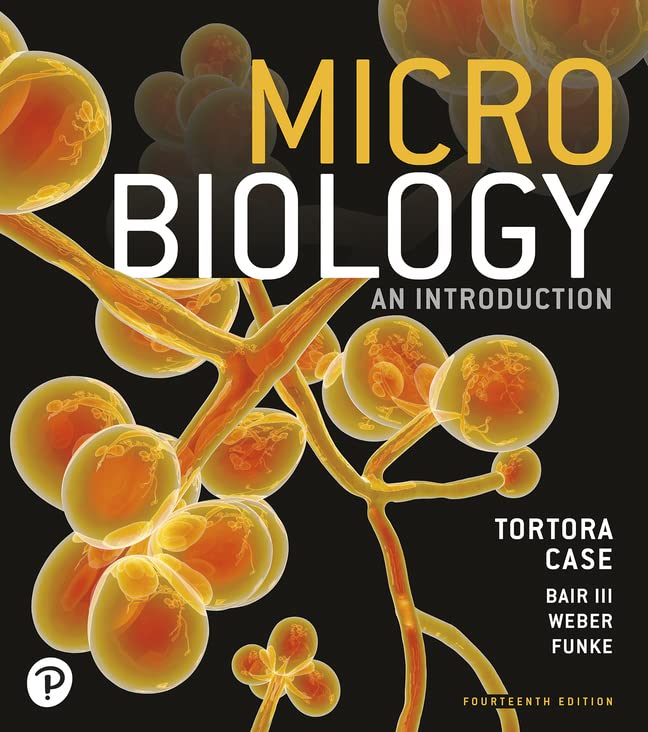
1. Microbiology: An Introduction – Best Overall for Most Students
Authors – Gerard J. Tortora, Christine L. Case, Warner B. Bair, Derek Weber and Berdell R. Funke
Edition – 14th Edition
Best for – Introductory microbiology, allied health and students entering microbiology
Level – Beginner to intermediate
Primary focus – General microbiology with considerable health and disease relevance
Why We Recommend It
Tortora’s Microbiology: An Introduction is the easiest book here to recommend to someone who says, “I am studying microbiology for the first time – which textbook should I start with?”
Pearson positions the current 14th edition for introductory microbiology courses, including pre-nursing, allied-health and mixed-major students. The text covers microbial cell biology, metabolism, genetics, control of microorganisms, immunology and infectious disease without assuming that the reader already has the background expected by an advanced microbiology major.
Student discussions also repeatedly describe Tortora as an approachable starting point. In university textbook discussions, students mention it alongside Brock and other standard texts but distinguish it as the more accessible introductory option.
What It Covers
The book gives you the core material expected from a first microbiology course – microbial structure, growth, metabolism, genetics, microbial control, immunology, microbial diversity and medically important microorganisms.
Its clinical material is useful, but the book still functions as a general introduction rather than becoming a medical microbiology reference.
Strengths
- Clearer entry point than Brock for a new student
- Strong illustrations and visual explanations
- Broad enough for a full introductory course
- Good balance between basic microbial biology and medical applications
- Suitable for self-study when your foundations are still developing
Limitations
Students majoring specifically in microbiology may eventually want more depth in microbial physiology, ecology, diversity and molecular mechanisms. Prescott or Brock is better for that stage.
Who Should Choose It?
Choose Tortora if this is your first serious microbiology course or you need one readable textbook covering the entire introductory syllabus.
Who Should Skip It?
An M.Sc. microbiology student looking for a deeper reference should move toward Brock. A B.Sc. microbiology major who already understands the basics may prefer Prescott.
Alternative – OpenStax Microbiology if cost is the main concern.
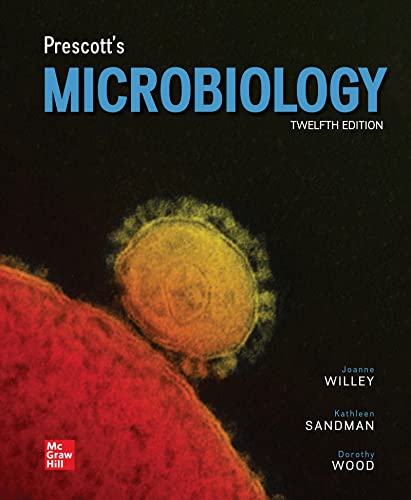
2. Prescott’s Microbiology – Best for B.Sc. Microbiology Students
Authors – Joanne Willey, Kathleen Sandman and Dorothy Wood
Edition – 12th Edition
Best for – B.Sc. microbiology students and science majors
Level – Intermediate
Primary focus – Broad general microbiology for students studying the subject in depth
Why We Recommend It
For a student majoring in microbiology, Prescott is one of the strongest all-round textbooks available.
The 12th edition covers the microbial world using evolution as an organizing framework and gives substantially more attention to microbial structure, metabolism, genetics, diversity and ecology than a typical allied-health textbook. University use remains strong – Kuwait University’s 2025-26 microbiology master’s admission material specifically lists the 11th or 12th edition as its study reference.
This academic positioning is important. Prescott is not simply a popular introductory textbook – it is useful for students who will continue into microbial physiology, genetics, environmental microbiology, biotechnology or postgraduate study.
Reader discussions tend to place it between Tortora and Brock. Students often find it more manageable than Brock while still providing enough depth for a microbiology major.
What It Covers
Prescott moves through microbial cell structure and function, metabolism, growth, genetics, molecular biology, microbial diversity, ecology, host-microbe interactions, applied microbiology and infectious disease.
Strengths
- Better depth for microbiology majors than most introductory texts
- Broad enough to remain useful across several semesters
- Strong treatment of microbial physiology, metabolism and diversity
- Widely recognized in university microbiology teaching
- Good bridge between basic introductory books and Brock
Limitations
The extra detail is also the main drawback. Students taking only one introductory microbiology course may spend time on topics that are beyond their immediate syllabus.
Who Should Choose It?
For a B.Sc. microbiology student who wants one substantial general textbook, Prescott is my preferred choice from this list.
Who Should Skip It?
Nursing, allied-health or non-major students usually do not need this much depth. Tortora or Cowan’s A Systems Approach will be easier to work through.
Alternative – Brock Biology of Microorganisms if you want still greater depth.
3. Brock Biology of Microorganisms – Best Advanced General Microbiology Textbook
Authors – Michael T. Madigan, Kelly S. Bender, Daniel H. Buckley, W. Matthew Sattley and David A. Stahl
Edition – 16th Edition
Best for – Advanced undergraduates, M.Sc. students and serious microbiology majors
Level – Intermediate to advanced
Primary focus – Microbial biology, metabolism, diversity, ecology, evolution and molecular mechanisms
Why We Recommend It
Brock is the book to choose when you want to understand microorganisms as biological systems rather than mainly as agents of human disease.
Pearson’s 16th edition is organized around major undergraduate microbiology themes including evolution, cell structure and function, metabolic pathways, genetics, microbial systems and the effects of microorganisms on the wider world.
Its academic standing is also difficult to ignore. University reading lists and microbiology syllabi repeatedly include Brock, and microbiology students describe it as one of the standard undergraduate reference texts.
The trade-off is difficulty. Student feedback commonly describes Brock as more demanding than books such as Tortora or Prescott. That is not necessarily a weakness – it means the book makes more sense after you already know the basic vocabulary of microbiology.
What It Covers
Its strongest areas include microbial physiology, energetics and metabolism, microbial genetics, bacterial and archaeal diversity, microbial ecology and evolutionary relationships.
Strengths
- Greater conceptual and mechanistic depth
- Particularly strong for microbial physiology and diversity
- Useful well beyond an introductory course
- Strong choice for postgraduate preparation
- Better reference value than a simplified health-science textbook
Limitations
It is unnecessarily heavy for many students taking microbiology only as a supporting subject.
Who Should Choose It?
Choose Brock if you are a microbiology major, advanced biology student or postgraduate learner who wants the subject explained in depth.
Who Should Skip It?
For a first semester with little biological background, begin with Tortora or OpenStax instead.
Alternative – Prescott if you need substantial coverage but prefer a somewhat more approachable primary textbook.
![Brock Biology of Microorganisms [RENTAL EDITION]](https://m.media-amazon.com/images/I/61oGnQjoHHL._SL500_.jpg "10 Best Microbiology Books for Students 3")
- Madigan, Michael T.
- Bender, Kelly S.
- Buckley, Daniel H.

4. OpenStax Microbiology – Best Free Microbiology Textbook
Authors – Nina Parker, Mark Schneegurt, Anh-Hue Thi Tu, Philip Lister and Brian M. Forster
Best for – Students needing a free or low-cost introductory textbook
Level – Beginner
Primary focus – One-semester microbiology for non-majors and allied-health students
Why We Recommend It
OpenStax changes the decision for students who do not need an expensive commercial textbook.
The book is available free online and was developed for a single-semester microbiology course for non-majors, with a particular emphasis on allied-health applications. OpenStax also describes an instructor-review process and provides the text in web and downloadable formats.
This is not a token recommendation added because it is free. Current student discussions regularly point learners toward OpenStax as a useful introduction before moving to deeper texts.
What It Covers
The text includes cell structure, microbial metabolism, genetics, growth, microbial control, microbial diversity, pathogenicity, immunology and infectious disease.
Strengths
- Free online access
- Clear enough for independent study
- Suitable scope for a one-semester introductory course
- Useful diagrams and photographs
- Particularly practical for allied-health and non-major courses
Limitations
The scope is intentionally introductory. A microbiology major should not expect it to replace Prescott or Brock throughout an entire degree.
Who Should Choose It?
Use OpenStax if you are beginning microbiology, studying independently or need a reliable secondary text without purchasing another textbook.
Who Should Skip It?
Students doing upper-level microbial physiology, ecology, genetics or advanced microbiology will need deeper material.
Alternative – Tortora if you want a more developed commercial introductory textbook.
5. Microbiology: A Systems Approach – Best for Allied Health Students
Authors – Marjorie Kelly Cowan and Heidi Smith
Edition – 7th Edition, 2026 release
Best for – Nursing, allied health and students taking microbiology as a supporting science
Level – Beginner to intermediate
Primary focus – Introductory microbiology with clinical and body-system organization
Why We Recommend It
Cowan and Smith take a different route from Prescott and Brock. Instead of assuming that the reader wants to become a microbiologist, the book is structured for students who need microbiology to understand health and disease.
McGraw Hill’s current 7th edition continues that introductory and health-oriented approach. Older-edition Goodreads feedback and descriptions consistently associate the book with non-major and allied-health teaching, accessible explanations and a strong instructional art program.
This makes it especially useful when your microbiology course belongs to a nursing, pre-health or allied-health program.
What It Covers
The early chapters establish microbial structure, metabolism, genetics, growth and control. Disease-related material then connects organisms with body systems and clinical situations.
Strengths
- Easier entry point for health-science students
- Disease material has a logical clinical context
- Good balance between basic microbiology and application
- Current 7th edition
- Less overwhelming than a microbiology-major reference
Limitations
That same accessibility makes it less appropriate for a student who needs extensive microbial ecology, physiology or evolutionary microbiology.
Who Should Choose It?
Choose it if microbiology supports a nursing, allied-health or pre-professional course.
Who Should Skip It?
A dedicated B.Sc. microbiology major will usually get more long-term use from Prescott.
Alternative – Tortora for a broader introductory approach.

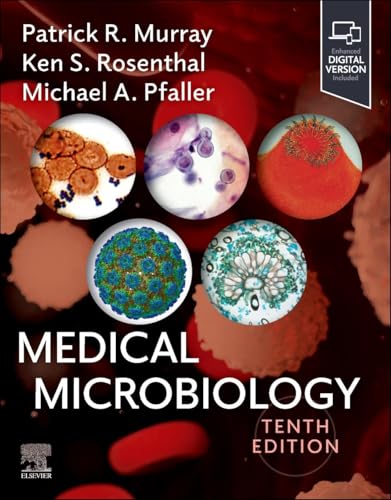
6. Medical Microbiology – Best Microbiology Book for Medical Students
Authors – Patrick R. Murray, Ken S. Rosenthal and Michael A. Pfaller
Edition – 10th Edition
Best for – Medical students and health-professional training
Level – Intermediate to advanced
Primary focus – Human pathogens, infectious disease, diagnosis and clinical microbiology
Why We Recommend It
For students whose main question is not just “How do microbes work?” but “How do microorganisms cause disease, how are infections identified, and how does this affect patient care?”, Murray is the strongest choice in this list.
Elsevier published the 10th edition in 2025 and identifies it as the latest edition. It covers bacteriology, immunology, virology, mycology and parasitology with a deliberate clinical orientation. The edition was also selected for the 2026 Doody’s Core Titles in Microbiology and received the 2026 TAA Textbook Excellence Award.
Reader feedback across earlier editions consistently values the clinical cases, illustrations, chapter organization and concise presentation compared with very large reference works.
What It Covers
The text links microbial characteristics with epidemiology, pathogenesis, diagnosis, prevention and treatment. The current edition also strengthens organization by organ system, making it easier to relate microorganisms to clinical syndromes.
Strengths
- Strong connection between microbiology and clinical disease
- Current edition
- Useful clinical cases and visual material
- Covers major pathogen groups alongside immunology
- Better fit for medicine than a general text such as Brock
Limitations
It is not the best primary text for a general B.Sc. microbiology course because its priorities are deliberately clinical.
Who Should Choose It?
Medical students who need one substantial medical microbiology textbook should start here.
Who Should Skip It?
Students mainly studying industrial, environmental or general microbiology should use Prescott or Brock instead.
Alternative – Mims if you prefer a body-systems approach.
7. Mims’ Medical Microbiology and Immunology – Best Systems-Based Medical Microbiology Book
Authors – Richard Goering, Hazel M. Dockrell, Mark Zuckerman and Peter L. Chiodini
Edition – 7th Edition
Best for – Medical students who want microbiology and immunology integrated with body systems
Level – Intermediate
Primary focus – Infection, host response and disease organized through clinical systems
Why We Recommend It
Mims works particularly well for students who find organism-by-organism memorization difficult.
The 7th edition was published in 2024, and Elsevier describes a systems-based structure covering epidemiology, pathogenesis, clinical presentation, diagnosis, treatment and infection control. It was also selected for the 2026 Doody’s Core Titles in both Infectious Disease and Microbiology.
Its academic use is not new. The London School of Hygiene & Tropical Medicine has included an earlier edition of Mims in preparatory reading for medical microbiology, highlighting its systems format and clear diagrams.
What It Covers
Microbial science is connected closely with immunology and infectious disease. Case-based material helps move from mechanism to clinical presentation rather than treating pathogens as isolated lists.
Strengths
- Strong integration of microbiology and immunology
- Body-system organization
- Good visual presentation
- Easier to connect pathogens with clinical disease
- Current edition and active academic use
Limitations
Students who want a large organism-by-organism reference may prefer Murray or Jawetz alongside it.
Who Should Choose It?
Mims is especially useful if your medical course is taught by organ system or clinical block.
Who Should Skip It?
A general microbiology major with little need for clinical medicine will get more from Prescott or Brock.
Alternative – Murray for a broader clinical microbiology text.
8. Jawetz, Melnick & Adelberg’s Medical Microbiology – Best Concise Medical Reference
Authors – Stefan Riedel and colleagues
Edition – 29th Edition
Best for – Medical microbiology review, examination preparation and concise reference
Level – Intermediate to advanced
Primary focus – Medically important microorganisms, diagnostics, infectious disease and antimicrobial therapy
Why We Recommend It
Jawetz is useful when Murray feels larger than you need but you still want a serious medical microbiology reference.
The 29th edition was published in 2026. McGraw Hill and AccessMedicine describe the text as a concise and current treatment of medical microbiology, infectious diseases, diagnostic microbiology and antimicrobial chemotherapy.
It also has a substantial question component through AccessMedicine, which makes it particularly useful for review after you have learned the underlying concepts. University medical curricula continue to include Jawetz among recommended microbiology texts.
What It Covers
The book includes fundamental microbiology, immunology, bacteriology, virology, mycology, parasitology, diagnostics and antimicrobial treatment.
Strengths
- Current 29th edition
- More concise than many large medical references
- Strong diagnostic and antimicrobial emphasis
- Useful questions for review
- Good companion to lecture-based medical courses
Limitations
Concise does not always mean beginner-friendly. A first-time learner may find it denser than Mims because the book assumes that you can process a large amount of medical information efficiently.
Who Should Choose It?
Choose Jawetz if you already understand basic microbiology and want a compact medical reference for coursework and revision.
Who Should Skip It?
If you learn better through longer explanations and clinical cases, Murray is easier to use as a primary text.
Alternative – Mims for a more systems-oriented learning approach.
9. Bailey & Scott’s Diagnostic Microbiology – Best for Clinical Laboratory Science
Author – Patricia M. Tille
Edition – 16th Edition
Best for – Clinical laboratory science, diagnostic microbiology and advanced practical study
Level – Advanced/practical
Primary focus – Laboratory detection and identification of clinically important microorganisms
Why We Recommend It
Bailey & Scott belongs on this list for a very specific reason – it teaches the diagnostic laboratory side of microbiology better than a general lecture textbook can.
Elsevier’s 16th edition was published in 2025 and selected for the 2026 Doody’s Core Titles in Laboratory Technology. The book contains extensive full-color visual material, expanded molecular content, diagnostic procedures, case studies and coverage of bacteriology, mycology, parasitology and virology.
Student discussion also shows the book being used directly in clinical microbiology education. One U.S. microbiology student specifically identified Bailey & Scott as a regularly used school text.
What It Covers
Its focus is specimen processing, organism isolation and identification, diagnostic testing, antimicrobial susceptibility, molecular methods and interpretation of laboratory findings.
Strengths
- Strong laboratory orientation
- Extensive diagnostic imagery
- Current molecular diagnostic coverage
- Relevant to clinical laboratory workflows
- Valuable bench reference after coursework
Limitations
It is far too specialized to serve as a student’s only general microbiology textbook.
Who Should Choose It?
Choose Bailey & Scott if you are studying clinical laboratory science, medical laboratory technology or diagnostic microbiology.
Who Should Skip It?
A first-year B.Sc. student studying general microbiology does not need this level of diagnostic specialization.
Alternative – Murray if you need stronger clinical explanation with less laboratory detail.
10. Microbiology: Laboratory Theory & Application, Brief – Best Practical Lab Manual for Shorter Courses
Authors – Michael J. Leboffe and Burton E. Pierce
Edition – 3rd Edition
Best for – Introductory practical microbiology, allied health and courses with limited laboratory time
Level – Beginner to intermediate
Primary focus – Microbiology laboratory techniques and interpretation
Why We Recommend It
A lecture textbook cannot teach laboratory microbiology by itself. You still need a manual that shows what you are doing at the bench, what the result should look like and why each procedure works.
Morton Publishing currently lists the Brief 3rd Edition in its microbiology catalog. It contains 85 exercises and is specifically intended for allied-health students or courses using a shorter selection of experiments. The manual includes selective and differential media, staining, microbial growth, aseptic techniques, biochemical tests and organism identification, along with color photographs, micrographs and procedural illustrations.
What It Covers
Early work includes laboratory safety, media preparation, aseptic transfer, streak and spread plates, microbial growth and microscopy. Later exercises move into staining, biochemical testing, selective and differential media, immunological methods and identification of unknown organisms.
Strengths
- Strong emphasis on actual laboratory procedures
- Extensive visual support
- Includes safety considerations
- Connects each exercise to underlying theory
- More manageable than the full Laboratory Theory & Application manual for shorter practical courses
Limitations
The edition itself is older than several lecture texts in this list, although Morton continues to sell it as part of its current microbiology catalog. More importantly, it is a lab manual, not a replacement for Tortora, Prescott or another lecture textbook.
Who Should Choose It?
Choose it when your microbiology course has a laboratory component and you want a practical reference for fundamental techniques.
Who Should Skip It?
If you need theory rather than laboratory exercises, buy your primary lecture text first.
Alternative – Microbiology: Laboratory Theory & Application, 4e for a more extensive laboratory course.

Which Microbiology Book Should You Choose?
| If you are… | Best choice |
|---|---|
| Taking microbiology for the first time | Microbiology: An Introduction |
| A B.Sc. microbiology major | Prescott’s Microbiology |
| An advanced undergraduate or M.Sc. student | Brock Biology of Microorganisms |
| Looking for a free textbook | OpenStax Microbiology |
| Studying nursing or allied health | Microbiology: A Systems Approach |
| A medical student | Medical Microbiology by Murray |
| Learning medical microbiology by organ system | Mims’ Medical Microbiology and Immunology |
| Revising medical microbiology | Jawetz, Melnick & Adelberg’s Medical Microbiology |
| Studying clinical laboratory science | Bailey & Scott’s Diagnostic Microbiology |
| Taking a microbiology practical course | Microbiology: Laboratory Theory & Application, Brief |
Tortora vs Prescott vs Brock
These three books overlap, but they are not interchangeable.
Choose Tortora if you are learning microbiology for the first time. It gives you the easiest path through the basic concepts.
Choose Prescott if microbiology is your major subject. It goes further into microbial physiology, diversity, genetics and ecology while remaining suitable as a main undergraduate textbook.
Choose Brock when you already know the basics and want greater biological and mechanistic depth. It makes more sense as an advanced textbook or reference than as the easiest first introduction.
You normally do not need to buy all three.
How to Choose the Best Microbiology Book
Match the Book to Your Course
Start with the syllabus rather than the bestseller list.
A B.Sc. microbiology student, a nursing student and a medical laboratory science student may all take a course called “Microbiology”, but the content can be very different. Biology Notes Online’s B.Sc. microbiology syllabus material alone covers bacteriology, microbial metabolism, genetics, environmental microbiology, food microbiology, industrial microbiology, immunology and medical microbiology across the degree.
That breadth is why Prescott or Brock makes more sense for a microbiology major than a purely clinical text.
Check the Required Depth
For introductory study, clarity is usually more valuable than maximum detail.
Tortora and OpenStax explain the fundamentals without demanding too much background. Prescott is a better next step. Brock is useful when the course expects detailed treatment of microbial metabolism, diversity, ecology and molecular biology.
Look at Diagrams and Micrographs
Microbiology is highly visual. Cell structure, staining results, microbial morphology, metabolic pathways, life cycles and diagnostic tests are much easier to understand when the illustrations are accurate and well integrated with the text.
This is especially important for laboratory and diagnostic courses.
Decide How Much Clinical Material You Need
Do not buy a medical microbiology textbook simply because medical examples sound useful.
If you are studying medicine, Murray, Mims and Jawetz make sense. If you are studying general B.Sc. microbiology, their strong clinical focus leaves less room for areas such as environmental microbiology, industrial applications and broader microbial ecology.
Separate Lecture and Laboratory Requirements
A good general textbook explains why Gram staining differentiates bacterial groups. A laboratory manual should tell you how to prepare the smear, perform the procedure, recognize the result and avoid common technical errors.
Students doing practical microbiology often need both types of resource.
Check the Edition Before Buying
Core principles such as bacterial cell structure or the basic stages of microbial growth do not become useless when a new edition appears. However, taxonomy, molecular methods, antimicrobial resistance, clinical diagnostics and treatment guidance can change substantially.
For medical and diagnostic microbiology, edition currency deserves greater weight.
Also check the ISBN or edition required by your instructor before purchasing a costly text.
Common Mistakes When Buying a Microbiology Textbook
- Buying the most advanced book first – Brock is a strong text, but that does not make it the easiest book for a beginner.
- Choosing only by star rating – ratings mix different editions, courses and types of readers. Academic suitability matters more.
- Buying several overlapping general textbooks – most students need one primary book and selected supplementary resources, not Tortora, Prescott and Brock at the same time.
- Ignoring laboratory requirements – a lecture textbook does not replace a practical manual.
- Using an old medical microbiology edition without checking changes – diagnostics, antimicrobial therapy and pathogen classifications are areas where newer information can matter.
Frequently Asked Questions
Which microbiology book is best for beginners?
Microbiology: An Introduction by Tortora and colleagues is the best starting point for most beginners. It provides broad introductory coverage without the level of detail found in Brock. OpenStax Microbiology is the strongest free alternative, particularly for a one-semester introductory or allied-health course.
Which microbiology book is best for B.Sc. students?
Prescott’s Microbiology is the strongest primary choice for most B.Sc. microbiology majors. It covers microbial physiology, metabolism, genetics, diversity, ecology and applied microbiology at a level that remains useful beyond the first semester. Brock is better when greater depth is required.
Is Prescott better than Brock Biology of Microorganisms?
Prescott is generally easier to use as a primary undergraduate textbook, while Brock provides greater depth. A student beginning a microbiology degree may find Prescott more manageable. Brock becomes particularly valuable in advanced undergraduate and postgraduate courses.
Which microbiology book is best for medical students?
Medical Microbiology by Murray, Rosenthal and Pfaller is the best overall medical microbiology choice in this list. Choose Mims if your course uses a body-system approach. Jawetz is useful when you want a more concise reference and review resource.
Is OpenStax Microbiology enough for a microbiology degree?
OpenStax is enough for many introductory topics, but it should not be the only microbiology textbook used throughout a specialist degree. Its scope is designed mainly for a one-semester non-major course. Microbiology majors will eventually need deeper material from Prescott, Brock or specialist books.
Can I use an older edition of a microbiology textbook?
An older edition may be sufficient for stable fundamental topics, but check your syllabus before buying it. Older editions are more problematic when you are studying taxonomy, molecular diagnostics, antimicrobial resistance, clinical testing or treatment because these areas change more quickly.
Do microbiology students need a separate laboratory manual?
A separate laboratory manual is useful when the course includes practical work. General textbooks explain the underlying science, but a lab manual provides experimental procedures, materials, result interpretation, safety guidance and practical troubleshooting.
Final Recommendation
For a first microbiology course, I would choose Microbiology: An Introduction. It gives most students the best balance of clarity, scope and visual teaching.
For a B.Sc. microbiology major, Prescott’s Microbiology is the stronger long-term textbook because it provides greater depth across the core subject.
For advanced undergraduate or M.Sc. study, move to Brock Biology of Microorganisms.
For medical students, choose Medical Microbiology by Murray, Rosenthal and Pfaller. Mims is the better alternative when your course is organized around organ systems, while Jawetz works particularly well for concise review.
Students working primarily in a clinical diagnostic laboratory should look at Bailey & Scott’s Diagnostic Microbiology, and students taking a practical microbiology course should use a dedicated laboratory manual alongside their main textbook.
You do not need all ten books. One primary textbook matched to your course, supported by a practical or specialist resource when necessary, is usually the better way to study.
Affiliate disclosure – Biology Notes Online may earn a commission from qualifying purchases made through links on this page, at no additional cost to you. Recommendations are based on editorial research and selection criteria.