

Mast cells are granulated immune cells present in connective tissues and body barrier sites. They release histamine, heparin and other mediators during inflammation, allergy and host defense.
Mast cell is a specialized type of white blood cell which takes part in immune response. It is formed from bone marrow and later moves into tissues where it mature and remain for long time.
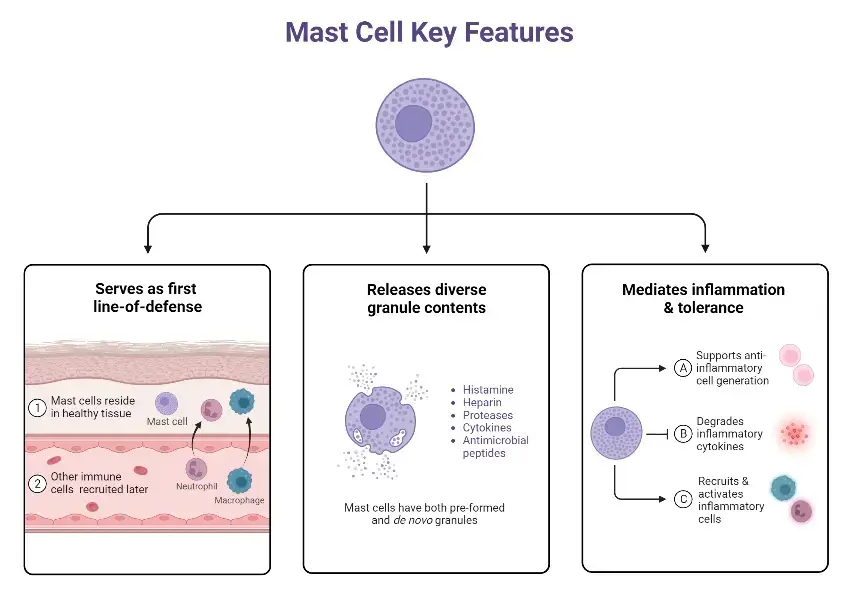
Mast cells are mostly present in skin, lungs, gastrointestinal tract and other areas which are exposed to external environment. So, they act as a first warning system of the body. They detect entry of bacteria, virus, parasite and toxic substances.
The cytoplasm of mast cell contains many small granules. These granules contain chemical mediators like histamine, heparin, proteases and other inflammatory substances. These chemicals are released when mast cell is activated.
The release of granules from mast cell is called degranulation. During this process, granules empty their content into surrounding tissue. This causes dilation of blood vessels, attraction of other immune cells and development of inflammation.
Mast cells are useful in defense against infection and also help in wound healing and tissue repair. But they are also important in allergic reactions. In allergy, mast cells react against harmless substances like pollen, dust, food or pet dander.
The activation of mast cell may produce itching, redness, swelling, sneezing, nasal congestion and hives. In severe condition, sudden and excessive activation may cause anaphylaxis, which is a life threatening allergic reaction.
Abnormal increase or improper activation of mast cells may cause mast cell disorders. Some important examples are systemic mastocytosis and mast cell activation syndrome (MCAS). These conditions are related with uncontrolled growth or abnormal release of mast cell mediators.
History and Discovery of Mast Cells
- Mast cells are considered as one of the most ancient immune cells. They are believed to originate nearly 500 million years ago in early marine animals called urochordates.
- In 1863, Friedrich von Recklinghausen first described these cells. He observed granulated cells in the connective tissue of different species.
- During 1877–1879, Paul Ehrlich rediscovered these cells by using special staining technique. These stains made the large granules of mast cells clearly visible.
- Paul Ehrlich named these cells as Mastzellen. It is a German word meaning well-fed cells or fattening cells, because he wrongly thought that the granules are present for nourishment of surrounding tissues.
- Paul Ehrlich also identified blood basophils. He observed that basophils and mast cells look similar because both cells contain large granules.
- In 1937, Holmgren and Wilander found that mast cell rich tissues also contain large amount of heparin. This showed relation between mast cells and heparin.
- In 1947, Rocha e Silva demonstrated that mast cells release both heparin and histamine. These substances are important chemical mediators.
- In 1952, Riley and West officially identified mast cells as storage site for histamine. This discovery helped to understand allergic reaction.
- In 1999, mast cells became widely recognized as important sentinel cells of immune system. After this, mast cells were not only considered as allergy causing cells, but also as cells involved in host defense and immune regulation.
Origin and Development of Mast Cells
- Mast cells are ancient immune cells. They are considered to appear nearly 500 million years ago in early marine organisms called urochordates.
- During fetal development, the first mast cells arise from erythro-myeloid progenitors (EMPs). These progenitors are present in the extraembryonic yolk sac before the formation of normal hematopoietic stem cells (HSCs).
- After this, mast cell progenitors develop in the fetal liver. From fetal liver, they move into different tissues and start their maturation process.
- In adults, mast cells develop from multipotent hematopoietic stem cells (HSCs). These cells are mainly present in the bone marrow.
- Mast cells are different from many other white blood cells. They do not circulate in blood as fully mature cells.
- They leave the bone marrow as immature and undifferentiated mast cell progenitors (MCPs). These progenitors travel through blood and reach peripheral tissues.
- After reaching tissues like skin, lungs and gastrointestinal tract, mast cell progenitors remain there permanently. In these tissues, they complete their final differentiation and maturation.
- The local tissue environment has important role in mast cell development. It controls the final shape, function, behaviour and chemical nature of mature mast cells.
- The development of mast cell lineage is controlled by transcription factors. Some important transcription factors are GATA2, PU.1 and MITF.
- Stem Cell Factor (SCF) is an important chemical growth factor for mast cell development. It binds with KIT receptor present on mast cell surface.
- The binding of SCF with KIT receptor helps in survival, differentiation and final maturation of mast cells. So, this pathway is very important for normal mast cell development.
Structure and Morphology of Mast Cells
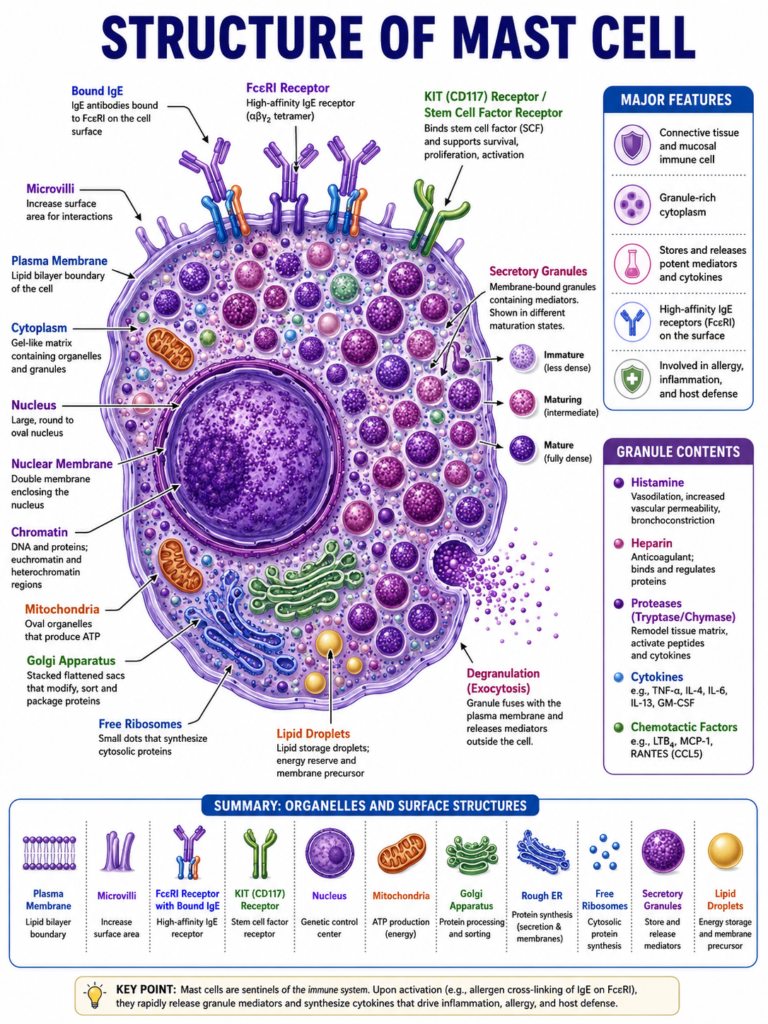
- Mast cells are mononuclear cells. Mature mast cell has a single nucleus, which is generally round in shape and present inside the cell.
- The nucleus is surrounded by large number of cytoplasmic granules. These granules are small membrane bound storage sacs present throughout the cytoplasm.
- The granules of mast cells contain different chemical mediators. Some important mediators are histamine, heparin, tryptase, chymase, cytokines and other inflammatory substances.
- These granules are the main structural feature of mast cells. Due to presence of these dense granules, mast cells can be easily identified by special staining methods.
- Under electron microscope, human mast cell granules show special internal structure. These are called intragranular scrolls.
- Intragranular scrolls are scroll like formations present inside the granules. These structures are mostly seen in mast cells present in mucosal tissues.
- Mast cells show variation in size. Their size depends on the maturity of the cell and also on the tissue where they are present.
- Immature mast cell progenitors are present in circulation. These cells are almost similar in size to lymphocytes and contain less number of granules.
- After reaching tissues, mast cells become larger and more granulated. In skin, mast cells of superficial layer are smaller, but in deeper tissue layer they become larger and contain more dense granules.
- The outer surface of mast cell contains many receptor proteins. These receptors act like sensing structures and help the cell to detect different external and internal signals.
- Some important receptors present on mast cells are FcεRI receptor, MRGPRX2 receptor, IgG receptors and toll-like receptors (TLRs).
- FcεRI receptor is the high affinity IgE receptor. It is mainly involved in allergic response by binding with IgE antibody.
- Toll-like receptors (TLRs) help mast cells to recognize pathogens directly. So, they are important in innate immune response.
- Normal mast cells are generally round or oval in shape. But in mast cell diseases, their shape may become abnormal.
- In systemic mastocytosis, mast cells may become spindle shaped or show atypical morphology in tissues. This abnormal shape is important in diagnosis of mast cell disorder.
Types of Mast Cells
A. Human Mast Cells
- Based on protease content – Human mast cells are mainly classified on the basis of granule enzymes. The important types are MC_T, MC_TC and MC_C.
- MC_T cells – MC_T cells contain high amount of tryptase. They have little or no chymase. These cells are mostly present in mucosal tissues of lungs and small intestine.
- MC_TC cells – MC_TC cells contain tryptase, chymase and carboxypeptidase. These cells are mainly present in skin, lymph nodes, respiratory submucosa and gastrointestinal submucosa.
- MC_C cells – MC_C cells contain chymase only. They lack tryptase. This is a third type of human mast cell.
- Based on genetic signature – Human mast cells are also classified by gene expression pattern. By single cell study, MC1 to MC7 mast cell subsets are described.
- MC1 to MC7 subsets – MC1 is mostly found in bladder. MC2 is mostly found in lungs. MC4, MC6 and MC7 are mainly found in skin.
B. Rodent Mast Cells
- Main rodent types – In rodents, mast cells are mainly divided into mucosal mast cells (MMCs) and connective tissue mast cells (CTMCs). This classification is used in animal studies.
- Mucosal mast cells – Mucosal mast cells (MMCs) are present in mucosa of lungs and gastrointestinal tract. They are present between epithelial cells. Their granules contain chondroitin sulfate, small amount of histamine and carboxypeptidase.
- Connective tissue mast cells – Connective tissue mast cells (CTMCs) are present in skin, intestinal submucosa, peritoneal cavity and around blood vessels. Their granules contain heparin, high amount of histamine and carboxypeptidase.
Human and rodent relation – Human MC_T cells are somewhat similar to rodent MMCs. Human MC_TC cells are somewhat similar to rodent CTMCs.
Distribution Process of Mast Cells in the Body
- Mast cells do not circulate in blood as mature cells. They leave the bone marrow in immature form as mast cell progenitors (MCPs).
- These immature mast cell progenitors enter into peripheral blood. Through blood circulation, they travel to different parts of the body.
- During movement, mast cell progenitors use special surface receptors for tissue entry. Some important receptors are integrin β7 and α4β7 integrin.
- These receptors help the progenitor cells to leave the blood vessel and enter into peripheral tissues. This process is called tissue homing.
- After leaving blood, mast cells mainly settle in body barrier sites. These sites are exposed to external environment.
- The important sites of mast cell distribution are skin, gastrointestinal tract, lungs and airways. In these places, mast cells act as sentinel cells.
- In tissues, mast cells are commonly found near blood vessels, nerve endings and lymphatic vessels. This position helps them to detect injury, infection and foreign substances quickly.
- Mast cells present near blood vessels can rapidly release mediators into surrounding tissue. This helps in dilation of vessels and recruitment of other immune cells.
- After reaching the tissue, mast cell progenitors do not remain same. They undergo final differentiation and become mature resident mast cells.
- The local tissue microenvironment controls the final nature of mast cells. It determines their size, granule content, receptor type and biochemical activity.
- Mast cells formed during embryonic life also distribute into some tissues. These cells arise from yolk sac and fetal liver.
- Embryonic mast cells can seed organs like brain, heart and spleen. Some of these cells may persist in these tissues and maintain themselves during adult life.
Surface Receptors of Mast Cells
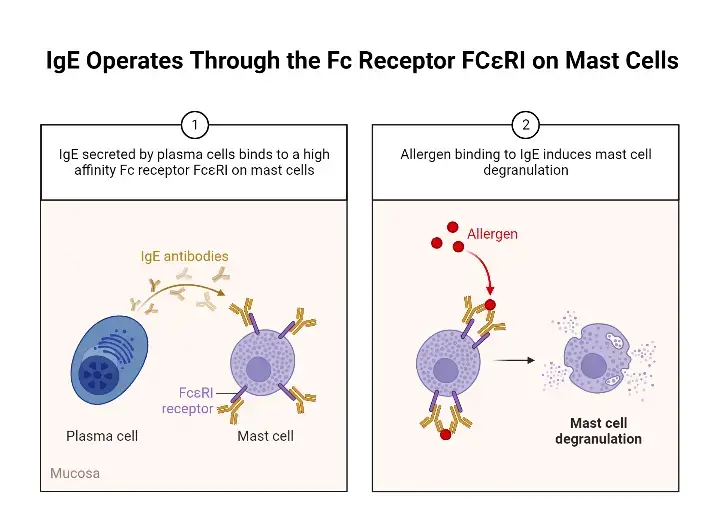
- FcεRI receptor is the high affinity IgE receptor present on mast cell surface. It binds with Immunoglobulin E (IgE) and starts immediate allergic reaction after contact with allergen.
- FcεRI receptor is the most important receptor in allergy. When allergen binds with IgE attached on this receptor, mast cell becomes activated and release its granules.
- MRGPRX2 receptor is a G protein-coupled receptor present on mast cells. It is mainly involved in IgE-independent or pseudo-allergic reactions.
- MRGPRX2 can detect many types of triggering substances. These include basic amino acids, neuropeptides, host defense peptides and some approved drugs.
- KIT receptor is also called c-Kit or CD117. It is a receptor tyrosine kinase present on the surface of mast cells.
- KIT receptor binds with Stem Cell Factor (SCF). This binding is required for mast cell development, differentiation, survival, adhesion and migration.
- Toll-like receptors (TLRs) are pattern recognition receptors. They directly recognize foreign organisms by binding with pathogen-associated molecular patterns (PAMPs).
- TLRs help mast cells to detect bacteria, viruses and parasites. So, these receptors are important in innate immune response.
- IgG receptors are present on mast cell surface. They bind with Immunoglobulin G (IgG) antibody and help the cell to recognize immune threats.
- G protein-coupled receptors (GPCRs) are a group of receptors present on mast cells. They detect lipid mediators like sphingosine-1-phosphate and also different chemokines.
- GPCRs help in movement of mast cells toward inflammatory sites. So, they are important in migration and tissue localization.
- Complement receptors are also found on mast cells. Some important examples are CD88 (C5aR), CD35, CD59 and CD11c.
- Complement receptors interact with complement proteins. They help in immune response and inflammatory functions of mast cells.
- Transforming Growth Factor-β receptors are present as type I and type II serine/threonine receptors. They recognize TGF-β isoforms.
- TGF-β receptors help mast cells to respond toward TGF-β. This factor may act as a chemoattractant for mast cells.
- Mast cells also contain many Cluster of Differentiation (CD) proteins on their surface. These proteins help in adhesion, interaction and activation of mast cells.
- Some important CD proteins are CD9, CD29, CD43, CD44, CD49D, CD51, CD54 and CD63. Their expression may vary depending on tissue environment.
- In mast cell diseases, abnormal receptors may appear on mast cell surface. These are called aberrant receptors or abnormal surface markers.
- In systemic mastocytosis, mast cells may express CD2, CD25 and CD30. These markers are usually absent in healthy mast cells and are important in diagnosis.
Mechanism of Mast Cells against pathogens
- Pathogen entry – Pathogens enter through skin, airways and gastrointestinal tract. Mast cells are already present in these sites. So they detect the pathogen early.
- Pathogen detection – Mast cells detect pathogen by surface receptors. Toll-like receptors (TLRs) detect PAMPs. TLR3 detect viral component and MRGPRX2 detect some peptides of Gram-positive bacteria.
- Parasite detection – In parasite infection, parasite antigen binds with IgE present on FcεRI receptor. This binding activates mast cell and starts the defense reaction.
- Receptor signaling – After binding of pathogen, receptor gives signal inside the cell. MRGPRX2 gives G-protein signal and FcεRI gives kinase signal. Then mast cell becomes active.
- Cell activation – During this process, calcium level increases inside mast cell. Granules move toward cell membrane and the cell becomes ready for mediator release.
- Phagocytosis – Some mast cells engulf bacteria directly. This process is called phagocytosis. By this way, bacteria are removed from local tissue.
- Antimicrobial killing – Mast cells produce reactive oxygen species (ROS), nitric oxide and antimicrobial peptides. These substances kill microbes and prevent their growth.
- MCET formation – Mast cells form mast cell extracellular traps (MCETs). In this process, DNA and granule contents come outside the cell. It forms sticky web like structure and trap microbes.
- Degranulation – Activated mast cells release granule contents outside. This is called degranulation. It releases histamine, tryptase, chymase, heparin and other mediators.
- Inflammatory signal – Mast cells release TNF-α, prostaglandins and leukotrienes B4 and C4. These mediators start inflammation and give signal to other immune cells.
- Neutrophil recruitment – Neutrophils come to infected site by action of mast cell mediators. They kill bacteria and help in clearance of infection.
- Biofilm control – Mast cell mediators help to reduce bacterial growth and biofilm formation. This makes the bacteria less protected and easier to remove.
- Antiviral action – In viral infection, mast cells produce interferon-alpha. It helps in antiviral defense and reduce viral multiplication.
- Anti-parasitic action – In parasite infection, mast cells help in Type 2 immune response. IL-4, IL-5 and IL-13 help in inflammation and expulsion of parasite.
- Final response – Against bacteria, mast cells recruit neutrophils and release antimicrobial substances. Against virus, they produce antiviral signals. Against parasites, they help in IgE mediated reaction and parasite expulsion.
Granules and Chemical Mediators of Mast Cells
Pre-formed Mediators (Stored in Granules)
These chemical mediators are already stored inside the secretory granules of mast cells. They are released immediately when mast cell is activated and undergo degranulation. This release occur within seconds to minutes.
- Biogenic Amines: These include histamine, serotonin and dopamine. Histamine causes dilation of blood vessels and increases tissue permeability, which produces swelling. It also causes airway constriction and mucus secretion.
- Proteases: These are enzyme mediators present in high amount inside mast cell granules. Important proteases are tryptase, chymase and carboxypeptidase A3. They help in breakdown of connective tissue, tissue remodeling and movement of other immune cells. Some proteases also neutralize snake and insect venoms.
- Proteoglycans: These include heparin and chondroitin sulfate. Heparin acts as an anticoagulant and prevents blood clot formation. It also helps to bind and store other mediators like chymase inside the granule matrix.
- Lysosomal Enzymes: These include β-hexosaminidase and β-glucuronidase. These enzymes help in degradative and digestive functions of mast cells.
- Pre-stored Cytokines and Growth Factors: Some cytokines are stored before activation. Important examples are Tumor Necrosis Factor (TNF) and IL-4. These mediators help to start immune response quickly.
Newly Synthesized Mediators (Delayed Release)
These mediators are not stored before activation. After mast cell activation, they are newly formed by the cell and released later. They help to maintain and regulate immune response for hours or days.
- Lipid Mediators: These are formed enzymatically after activation. Important examples are leukotrienes and prostaglandins. They maintain inflammatory reaction and cause smooth muscle contraction in airways and gut.
- De Novo Cytokines and Chemokines: These are newly synthesized signaling proteins. Important examples are IL-1, IL-6, TGF-β and MCP-1. These chemicals recruit other immune cells and help in long term inflammation and tissue repair.
- Neuropeptides and Growth Factors: These include VEGF, bFGF and VIP. VEGF and bFGF help in blood vessel growth and wound healing. VIP helps in communication between mast cells and local nervous system.
Activation Process of Mast Cells
- The activation of mast cells starts when any foreign substance or harmful signal is detected by receptors present on the surface of mast cell.
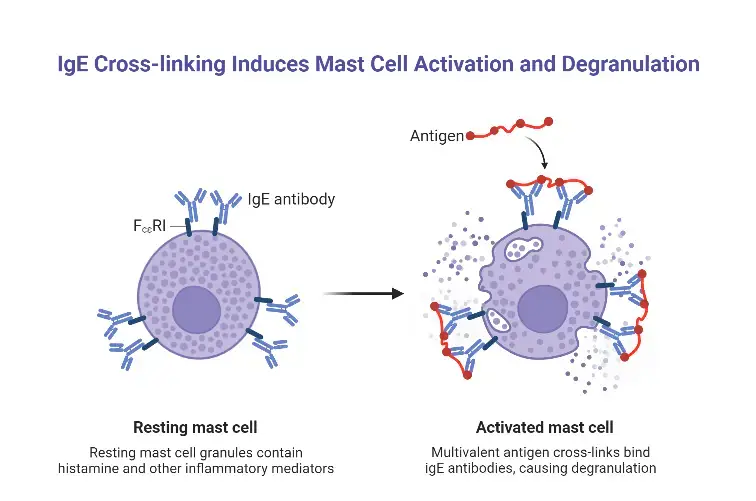
- In allergic reaction, the allergen binds with Immunoglobulin E (IgE) which is already attached with FcεRI receptors on mast cell surface.
- This binding causes cross-linking of FcεRI receptors. After cross-linking, the mast cell becomes activated and internal signaling starts.
- Mast cells can also be activated without IgE. This type of activation is called IgE-independent activation.
- In IgE-independent activation, receptors like MRGPRX2 and Toll-like receptors (TLRs) directly recognize different triggers.
- MRGPRX2 can recognize certain drugs, neuropeptides, bacterial substances and insect venoms.
- Toll-like receptors (TLRs) recognize pathogen associated molecules present on bacteria, viruses and parasites.
- After receptor binding or cross-linking, a signaling chain starts inside the mast cell. In FcεRI pathway, Lyn and Syk tyrosine kinases are activated.
- These kinases add phosphate groups to intracellular regions called ITAMs. This increases the signal and recruits other adaptor proteins.
- The signaling process produces secondary messengers like IP3. This causes rapid increase of calcium ions (Ca²⁺) inside the cell.
- Increased intracellular calcium is very important for mast cell activation. It helps to continue the process toward granule release.
- High calcium level and activated kinases like Protein Kinase C (PKC) and IKKβ activate the membrane fusion machinery.
- A membrane protein called SNAP23 becomes phosphorylated. It binds with Syntaxin 4 and VAMP8 to form the SNARE complex.
- The SNARE complex brings the granule membrane close to the outer plasma membrane of mast cell.
- After this, the granule membrane and plasma membrane fuse together. This fusion allows the stored granule contents to come outside the cell.
- The release of granule contents from mast cell is called degranulation.
- During degranulation, pre-formed mediators like histamine, heparin, tryptase, chymase and other proteases are released into surrounding tissue.
- These mediators cause blood vessel dilation, increased tissue permeability, swelling, mucus secretion and smooth muscle contraction.
- After immediate degranulation, the activated mast cell also starts to form new mediators. These are called newly synthesized mediators.
- Important newly synthesized mediators are leukotrienes, prostaglandins, cytokines and chemokines.
- These newly formed mediators are released later. They maintain inflammation and immune response for hours or days.
- Thus, mast cell activation helps in host defense and removal of harmful substances. But excess activation may produce allergy, asthma and anaphylaxis.
Mechanism of Mast Cell Degranulation
- Mast cell degranulation starts after activation of surface receptors. This activation gives signal inside the cell and prepares the granules for release.
- After receptor activation, calcium stores of endoplasmic reticulum (ER) become depleted. This depletion is detected by STIM proteins.
- STIM proteins then activate calcium channels present in the plasma membrane. This causes store-operated calcium entry (SOCE) into the mast cell.
- Due to SOCE, large amount of calcium ions (Ca²⁺) enter into the cell. This sustained rise of calcium is essential for degranulation.
- Ryanodine receptors (RYR) also help in calcium movement inside the cell. The RYR3 isoform is mainly important in this process.
- After calcium increase, the internal structure of mast cell also changes. The cytoskeleton becomes modified for movement of granules.
- Vimentin is an intermediate filament protein present in the cell. It undergoes remodeling and changes cell rigidity, so that granules can move toward the plasma membrane.
- In resting mast cell, SNAP23 protein is present on target membrane in non-phosphorylated form. It is a type of t-SNARE protein.
- After activation, the kinase enzyme IKKβ interacts with SNAP23. Then IKKβ phosphorylates SNAP23.
- The phosphorylated SNAP23 then joins with Syntaxin 4 present on plasma membrane and VAMP8 present on secretory granule membrane.
- These proteins form a stable SNARE complex. This complex is a four-helix trans-SNARE structure which helps in membrane fusion.
- The SNARE complex pulls the secretory granule membrane close to the plasma membrane. This brings both membranes in close contact.
- After close contact, the lipid layers of granule membrane and plasma membrane fuse together. This fusion helps to release granule contents outside the mast cell.
- During membrane fusion, granules swell and lose electron density. The granule membrane and matrix become detached and the stored mediators come out.
- The released mediators include histamine, heparin, tryptase, chymase and other inflammatory substances.
- Mast cells can release mediators by rapid method. This is called anaphylactic degranulation.
- In anaphylactic degranulation, pre-formed mediators are released rapidly through compound exocytosis. This type is common in immediate allergic reaction.
- Compound exocytosis may occur by sequential exocytosis. In this, deeper granules fuse with already fused granules near the membrane.
- It may also occur by multivesicular exocytosis. In this, granules fuse with each other inside the cell and form large vesicles before opening to plasma membrane.
- These processes form degranulation channels. Through these channels, granule mediators are released into extracellular space.
- Mast cells can also release mediators slowly. This is called piecemeal degranulation.
- Piecemeal degranulation is commonly seen in chronic inflammatory condition. It is a slow and selective process.
- In this process, selected mediators are carried in small vesicles to the plasma membrane. Full granule fusion does not occur.
- After piecemeal release, partially empty granules remain inside the mast cell. So, this process is different from rapid complete degranulation.
Role of Mast Cells in Innate Immunity
- First responders – Mast cells are present in body barrier sites like skin, respiratory tract and gastrointestinal tract. They remain there as early warning cells and detect bacteria, viruses, parasites and toxins.
- Direct pathogen recognition – Mast cells recognize microbes by surface receptors like Toll-like receptors (TLRs) and MRGPRX2. These receptors bind with pathogen-associated molecular patterns (PAMPs) and other harmful substances.
- Mediator release – After detection of threat, mast cells release histamine, TNF-α and leukotrienes. These mediators dilate blood vessels, increase tissue permeability and start inflammatory reaction.
- Recruitment of immune cells – Mast cell mediators attract neutrophils and other phagocytic cells to the infected site. These cells help in killing and removal of microorganisms.
- Direct killing of microbes – Some mast cells can engulf bacteria by phagocytosis. They also form antimicrobial substances like nitric oxide, reactive oxygen species (ROS) and antimicrobial peptides.
- Extracellular trap formation – Mast cells can form mast cell extracellular traps (MCETs). In this process, DNA and granule contents are released outside and form web like structure which trap and kill microbes.
- Defense against parasites – Mast cells are important against intestinal helminths and other parasites. They release chymase, produce ROS and help in inflammatory response which remove the parasites from body.
- Venom detoxification – Mast cells protect against venoms of snakes, bees and insects. Their granular enzymes like tryptase and chymase break down toxic venom components and reduce systemic damage.
- Antiviral response – Mast cells detect viral components through receptors like Toll-like receptor 3 (TLR3). They produce interferon-alpha and other antiviral signals for defense against viral infection.
- Tissue repair – After infection or injury, mast cells help in repair process. Their mediators promote wound healing, angiogenesis and restoration of damaged tissue.
Role of Mast Cells in Adaptive Immunity
- Bridge between innate and adaptive immunity – Mast cells are present at barrier tissues. They give early signal after entry of antigen. By this way, they connect immediate immunity with acquired immunity.
- Antigen presentation – Mast cells can present antigen to T-lymphocytes. This is important for starting of specific immune response against pathogen.
- Dendritic cell stimulation – Mast cells stimulate dendritic cells also. These cells take antigen from tissue to lymph node and activate T-cells.
- Lymph node activity – Mast cells release Tumor Necrosis Factor-alpha (TNF-α). This helps migration of dendritic cells from skin and other tissues to draining lymph nodes.
- T-helper cell expansion – In lymph node, T-helper cells are increased by antigen presenting cells. Mast cells support this reaction in contact hypersensitivity and psoriasis.
- Inflammation regulation – Mast cells also reduce excess immune reaction. In chronic hypersensitivity, IgG immune complexes can activate mast cells for production of Interleukin-10 (IL-10).
- IL-10 function – IL-10 is a suppressive cytokine. It decreases strong inflammation and controls adaptive immune response.
- Parasite immunity – In intestinal mucosa, mast cells help against parasites. They support adaptive immune reaction and help in removal of helminths.
- Microbial inflammation – Mast cells take part in microbe induced inflammation. They regulate local immune reaction at mucosal surface and help adaptive immune cells.
Role of Mast Cells in Allergic Reactions
- Sensitization and IgE binding – In allergic reaction, harmless substance like pollen, dust, food or pet dander is taken as harmful substance. This is called allergen. Body forms specific Immunoglobulin E (IgE) against it. These IgE antibodies attach on FcεRI receptors of mast cells.
- Priming of mast cells – After attachment of IgE, mast cell become sensitized. It remains ready in tissue. No granule release occur at this first stage.
- Second exposure – When same allergen enters again, it binds with IgE already present on mast cell surface. This causes cross-linking of FcεRI receptors and mast cell activation starts.
- Degranulation – Activated mast cell rapidly empty its granules into surrounding tissue. This process is called degranulation. The main released mediators are histamine, tryptase, heparin and other inflammatory substances.
- Immediate allergic effect – Histamine dilates blood vessels and increases permeability of tissues. This produces redness, swelling and local fluid leakage.
- Itching and irritation – Mast cell mediators stimulate nerve endings. Due to this itching, irritation and burning type sensation occur in allergic area.
- Mucus secretion and airway effect – Histamine, leukotrienes and other mediators increase mucus secretion and constrict smooth muscles. This causes sneezing, runny nose, cough, wheezing and breathing difficulty.
- Delayed mediator release – After rapid granule release, mast cell also forms new mediators. These include leukotrienes, prostaglandins and cytokines. They continue allergic inflammation for longer time.
- Anaphylaxis – In severe allergy, many mast cells degranulate throughout the body. This causes anaphylaxis. It produces severe airway constriction, sudden fall of blood pressure and shock.
- Pseudo-allergic reaction – Mast cells can also be activated without IgE. In this condition, MRGPRX2 receptor may be activated by drugs, heat, cold, venom or other triggers. This produces allergic like symptoms but it is not classical IgE mediated allergy.
Role of Mast Cells in Host Defense Against Pathogens and Parasites
- Early detection – Mast cells are present in skin, airways and gastrointestinal tract. These are common entry sites of pathogens. So mast cells detect bacteria, viruses, parasites and other harmful agents very early.
- Pathogen sensing – Mast cells recognize pathogens by surface receptors. Toll-like receptor 3 (TLR3) helps in viral detection, and MRGPRX2 receptor can recognize some peptides produced by Gram-positive bacteria.
- Phagocytosis – Some mast cells can directly engulf bacteria. This process is called phagocytosis. In this way, mast cells take part in direct killing of pathogens.
- Antimicrobial agents – Mast cells synthesize and release antimicrobial substances. These include antimicrobial peptides, nitric oxide and reactive oxygen species (ROS). These substances help in destruction of microorganisms.
- Extracellular traps – Mast cells can form mast cell extracellular traps (MCETs). In this process, DNA comes out with granule contents and forms web like structure. This traps microbes and help in killing them.
- Recruitment of immune cells – After detecting infection, mast cells release chemical signals like Tumor Necrosis Factor-alpha (TNF-α), leukotriene B4, leukotriene C4 and prostaglandins. These mediators attract neutrophils and other immune cells to infection site.
- Control of bacterial growth – Mast cell mediators help in controlling bacterial multiplication. They also help in inhibition of biofilm formation, which is important in bacterial infection.
- Defense against parasites – Mast cells are very important against intestinal worms or helminths. Parasite antigen binds with IgE present on FcεRI receptors of mast cells and this causes degranulation.
- Parasite clearing mediators – During parasite infection, mast cells release enzymes like chymase and other granule substances. These help in damage and removal of parasites from the body.
- Type 2 immune response – Mast cells help in formation of Type 2 immune response during parasitic infection. They are related with release of IL-4, IL-5 and IL-13, which helps in expulsion of parasites.
- Antiviral response – During lung viral infection, mast cell number may increase in the lungs. They produce interferon-alpha and other antiviral signals, which help in defense against virus.
- Pathogen evasion – Some pathogens can block mast cell activity. Escherichia coli can disturb SNARE membrane fusion system by affecting SNAP23 protein. Due to this, mast cell granule release is reduced and pathogen can escape from defense reaction.
Disorders Associated with Mast Cells
- Mastocytosis – Mastocytosis is a group of rare mast cell disorders. In this disease, abnormal mast cells increase in number and accumulate in different tissues of the body.
- Systemic mastocytosis – Systemic mastocytosis (SM) is a condition in which mast cells collect in internal organs like bone marrow, liver, spleen and digestive tract. It has different forms like indolent SM, smoldering SM, aggressive SM, SM with associated hematologic neoplasm and mast cell leukemia.
- Cutaneous mastocytosis – Cutaneous mastocytosis (CM) is mainly related with accumulation of mast cells in skin. It is mostly seen in children and produces skin lesions. The important forms are maculopapular CM, urticaria pigmentosa, diffuse CM and mastocytoma.
- Mast cell sarcoma – Mast cell sarcoma is a very rare malignant disorder. It is formed by cancerous mast cells and appears as localized solid tumour, but it may spread rapidly.
- Mast cell activation syndrome – Mast Cell Activation Syndrome (MCAS) is a functional disorder of mast cells. In this condition, mast cells release mediators again and again, but uncontrolled clonal growth like mastocytosis is not present. It may be primary, secondary or idiopathic type.
- Hereditary alpha-tryptasemia – Hereditary Alpha-Tryptasemia (HαT) is a genetic condition caused by extra inherited copies of TPSAB1 gene. It causes high baseline tryptase level and may be associated with IBS, GERD, dysautonomia, POTS, joint hypermobility, chronic pain and increased risk of severe anaphylaxis.
- Allergic diseases – Mast cells are important cells in type I allergic reaction. Their overactivation causes food allergy, allergic rhinitis, allergic conjunctivitis and other immediate allergic conditions.
- Anaphylaxis – Anaphylaxis is a severe systemic allergic reaction. It occurs due to sudden and massive mast cell activation and mediator release, causing fall of blood pressure, airway constriction and shock.
- Chronic urticaria – Chronic urticaria is also related with mast cell degranulation. It includes chronic spontaneous urticaria and chronic inducible urticaria, where hives appear repeatedly on skin.
- Inflammatory skin diseases – Abnormal mast cell activity is linked with atopic dermatitis, allergic contact dermatitis, psoriasis and rosacea. In these conditions mast cell mediators take part in itching, redness and inflammation.
- Gastrointestinal disorders – Mast cell mediator imbalance in gut is related with mastocytic enterocolitis, inflammatory bowel disease like Crohn’s disease and ulcerative colitis, and also celiac disease. In celiac disease, mast cell density may increase with disease severity.
- Respiratory disorders – In airways, mast cells have important role in allergic asthma, chronic obstructive pulmonary disease (COPD), viral rhinitis and idiopathic pulmonary arterial hypertension. Their mediators cause bronchoconstriction, mucus secretion and airway inflammation.
- Neurological disorders – Mast cells are closely related with nervous system. They are suspected in migraine, brain inflammation and neurodegenerative disorders like Alzheimer’s disease, Parkinson’s disease and ALS.
- Psychiatric symptoms – In mast cell disease patients, symptoms like brain fog, anxiety and depression are commonly reported. These may occur due to mast cell mediators acting on nervous system.
- Pseudo-allergic reactions – Mast cells may produce allergy like reaction without IgE. This occurs through MRGPRX2 receptor and may be triggered by opioids, muscle relaxants, venoms, heat, cold or other physical stimuli.
- Autoimmune and inflammatory diseases – Mast cells are also implicated in rheumatoid arthritis, psoriatic arthritis, gout and some cardiovascular diseases. In these disorders, mast cell mediators help in maintaining inflammation.
Functions of Mast Cells
- Immune sentinel cells – Mast cells are present at body surface and barrier tissues like skin, airways and gastrointestinal tract. They watch for entry of bacteria, viruses, parasites, fungi and venoms.
- Inflammation – After detecting harmful agent, mast cells release histamine and other mediators. These causes dilation of blood vessels and increased vascular permeability, producing swelling and redness.
- Immune cell attraction – Mast cell mediators attract other immune cells at the site of infection. Mainly neutrophils and other phagocytic cells come there for removal of microbes.
- Tissue repair – Mast cells help in repair after inflammation or injury. They help in wound healing, growth of new blood vessels and restoration of damaged tissue.
- Direct killing of pathogen – Mast cells can engulf bacteria by phagocytosis. They also produce antimicrobial peptides, reactive oxygen species (ROS) and mast cell extracellular traps (MCETs) which trap and kill microbes.
- Tissue homeostasis – Mast cells help in normal balance of tissue. They regulate cell growth, bone growth and some normal local tissue activities.
- Allergic reaction – Mast cells are main cells of immediate allergy. When harmless allergen activates them, they release mediators and causes itching, swelling, mucus secretion and sometimes anaphylaxis.
- Skin function – In skin, mast cells maintain epidermal barrier and help in epidermal regeneration. They also induce proliferation of skin fibroblasts.
- Gastrointestinal function – In gastrointestinal tract, mast cells regulate ion secretion, water secretion, blood flow, pain feeling and peristalsis.
- Nervous system function – In nervous system, mast cells communicate with neurons and brain cells like microglia and astrocytes. They also regulate permeability of blood-brain barrier.
Stain for Mast Cells
- Toluidine blue – Toluidine blue is a common stain for mast cells. It binds with acidic substances of mast cell granules like heparin and glycosaminoglycans. The granules become purple colour due to metachromasia and other cells mostly remain blue.
- Alcian blue and Safranin O – Alcian blue and Safranin O are used for different types of mast cells. Safranin O stains heparin rich connective tissue mast cells red or pink. Alcian blue stains mucosal mast cells blue.
- May-Grünwald–Giemsa stain – May-Grünwald–Giemsa (MGG) is a Romanowsky stain. In this stain, mast cell cytoplasm becomes dark blue and granules become red. It shows granules of mast cell clearly.
- Bismarck brown – Bismarck brown is used in acidic solution. It stains mast cell granules yellow brown colour. Other cells are not stained strongly by this stain.
- Berberine sulphate – Berberine sulphate is a fluorescent stain. It binds with heparin. So it stains connective tissue mast cells, but mucosal mast cells are not seen properly.
- Methylene blue – Methylene blue is a basic stain. It stains acidic granules of mast cells. It is used for showing the granulated cytoplasm.
- Astra blue – Astra blue is also used for mast cell granules. Its staining depends on tissue fixation and condition of the tissue.
- Enzymatic stain – Enzymatic staining is used for enzyme positive mast cells. Z-Gly-Pro-Arg-4-methoxy-β-naphthylamide with Fast Garnet GBC is used for tryptase containing mast cells.
- Immunohistochemical stain – Immunohistochemistry (IHC) is used in tissue biopsy. Antibodies are used against tryptase, chymase and CD25 for detection of mast cells.
- Tryptase stain – Tryptase is a common marker of mast cells. It stains most mast cells in tissue and is useful in mast cell disorders.
- Chymase stain – Chymase stain is used for chymase containing mast cells. It helps in identification of mast cell type.
- CD25 stain – CD25 is abnormal marker on mast cells. It is mainly used in systemic mastocytosis, where abnormal mast cells may show CD25 positivity.
References
- Allergy & Asthma Network. (n.d.). What are mast cell diseases?
- American Academy of Allergy, Asthma & Immunology. (n.d.). Mast cell activation syndrome (MCAS).
- Beil, W. J., Schulz, M., & Wefelmeyer, U. (2000). Mast cell granule composition and tissue location – a close correlation. Histology and Histopathology, 15, 937-946. https://doi.org/10.14670/HH-15.937
- Blank, U., & Benhamou, M. (Eds.). (2013). Deciphering new molecular mechanisms of mast cell activation. Frontiers in Immunology.
- Cleveland Clinic. (2024, May 16). Mast cells: Anatomy, function & diseases.
- Elst, J., De Puysseleyr, L. P., Ebo, D. G., Faber, M. A., Van Gasse, A. L., van der Poorten, M. L. M., Decuyper, I. I., Bridts, C. H., Mertens, C., Van Houdt, M., Hagendorens, M. M., De Clerck, L. S., Verlinden, A., Vermeulen, K., Maes, M. B., Berneman, Z. N., Valent, P., & Sabato, V. (2022). Overexpression of FcεRI on bone marrow mast cells, but not MRGPRX2, in clonal mast cell disorders with wasp venom anaphylaxis. Frontiers in Immunology, 13, 835618. https://doi.org/10.3389/fimmu.2022.835618
- Gene by Gene. (n.d.). Tryptase testing | Gene by gene – laboratory services.
- Grootens, J. (2019). Mast cell development in health and systemic mastocytosis [Doctoral dissertation, Karolinska Institutet].
- Immune Deficiency Foundation. (2024, January 13). Mast cell activation disease diagnosis can reveal PI.
- Kumar, M., Duraisamy, K., & Chow, B. K. C. (2021). Unlocking the non-IgE-mediated pseudo-allergic reaction puzzle with Mas-related G-protein coupled receptor member X2 (MRGPRX2). Cells, 10(5), 1033. https://doi.org/10.3390/cells10051033
- Lorentz, A., Baumann, A., Vitte, J., & Blank, U. (2012). The SNARE machinery in mast cell secretion. Frontiers in Immunology, 3, 143. https://doi.org/10.3389/fimmu.2012.00143
- Lyons, J. J. (n.d.). Hereditary alpha tryptasemia (HαT). The Mast Cell Disease Society, Inc.
- Mayo Clinic. (2025, December 30). Systemic mastocytosis – symptoms and causes.
- National Center for Biotechnology Information. (n.d.). Cooperative and antagonistic interplay between PU.1 and GATA-2 in the specification of myeloid cell fates – PubMed.
- National Center for Biotechnology Information. (n.d.). Development of mast cells – PMC.
- National Center for Biotechnology Information. (n.d.). Distinct phosphoinositide signatures orchestrate FcεRI versus MRGPRX2 mast cell secretion.
- National Center for Biotechnology Information. (n.d.). GATA2 and PU.1 collaborate to activate the expression of the mouse Ms4a2 gene, encoding FcεRIβ, through distinct mechanisms – PMC.
- National Center for Biotechnology Information. (n.d.). GRK2 differentially regulates FcεRI and MRGPRB2-mediated responses in mast cells – PMC.
- National Center for Biotechnology Information. (n.d.). MRGPRX2-mediated degranulation of human skin mast cells …
- National Center for Biotechnology Information. (n.d.). Mast cell peptidases: Chameleons of innate immunity and host defense – PMC – NIH.
- National Center for Biotechnology Information. (n.d.). Mast cell transcriptional networks – PMC – NIH.
- National Center for Biotechnology Information. (n.d.). Mast cell tryptases and chymases in inflammation and host defense – PMC – NIH.
- National Center for Biotechnology Information. (n.d.). Mast cell: A multi-functional master cell – PMC.
- National Center for Biotechnology Information. (n.d.). Mast cells as a unique hematopoietic lineage and cell system: From Paul Ehrlich’s visions to precision medicine concepts – PMC.
- National Center for Biotechnology Information. (n.d.). New developments in mast cell biology – PMC – NIH.
- National Center for Biotechnology Information. (n.d.). SNARE complex-mediated degranulation in mast cells – PMC.
- National Center for Biotechnology Information. (n.d.). The MRGPR family of receptors in immunity – PMC – NIH.
- National Center for Biotechnology Information. (n.d.). The transcription factors GATA2 and MITF regulate Hdc gene expression in mast cells and are required for IgE/mast cell-mediated anaphylaxis – PMC.
- National Center for Biotechnology Information. (n.d.). The transcription factors GATA2 and microphthalmia-associated transcription factor regulate Hdc gene expression in mast cells and are required for IgE/mast cell-mediated anaphylaxis – PubMed.
- National Center for Biotechnology Information. (n.d.). Using the right criteria for MCAS – PMC.
- National Institute of Allergy and Infectious Diseases. (n.d.). Hereditary alpha tryptasemia and hereditary alpha tryptasemia syndrome FAQ | NIAID.
- Occhiuto, C. J., Kammala, A. K., Yang, C., Nellutla, R., Garcia, M., Gomez, G., & Subramanian, H. (2020). Store-operated calcium entry via STIM1 contributes to MRGPRX2 induced mast cell functions. Frontiers in Immunology, 10, 3143. https://doi.org/10.3389/fimmu.2019.03143
- Paumet, F., Le Mao, J., Martin, S., Galli, T., David, B., Blank, U., & Roa, M. (2000). Soluble NSF attachment protein receptors (SNAREs) in RBL-2H3 mast cells: Functional role of syntaxin 4 in exocytosis and identification of a vesicle-associated membrane protein 8-containing secretory compartment. The Journal of Immunology, 164(11), 5850-5857. https://doi.org/10.4049/jimmunol.164.11.5850
- ResearchGate. (n.d.). Ultrastructural findings of mast cell granules from high-grade B cell…
- Ribatti, D. (2024). Mast cells are at the interface between the external environment and the inner organism. Frontiers in Medicine, 10, 1332047. https://doi.org/10.3389/fmed.2023.1332047
- Rydz, A., & Lange, M. (2023). Hereditary alpha tryptasemia: literature overview on the genetic trait and its clinical manifestations. Forum Dermatologicum, 9(4), 133-137. https://doi.org/10.5603/fd.96810
- The Mast Cell Disease Society, Inc. (n.d.). Overview & diagnosis.
- Tsai, Y. H. (n.d.). Mast cell activation. Arthritis, Autoimmune & Allergy.
- Unknown Author. (n.d.). The ontogeny, molecular architecture, and clinical spectrum of human mast cells.
- Villanova, L. (2026, February 9). When the body over-reads the world: Mast cells, sensory intelligence, and emotional skin. Global Wellness Institute.
- Wang, Z., Zhao, X., Zhou, H., Che, D., Du, X., Ye, D., Zeng, W., & Geng, S. (2023). Activation of ryanodine-sensitive calcium store drives pseudo-allergic dermatitis via Mas-related G protein-coupled receptor X2 in mast cells. Frontiers in Immunology, 14, 1207249. https://doi.org/10.3389/fimmu.2023.1207249
- Wesolowski, J., & Paumet, F. (2014). Escherichia coli exposure inhibits exocytic SNARE-mediated membrane fusion in mast cells. Traffic, 15(5), 516-530. https://doi.org/10.1111/tra.12159
- Wikipedia contributors. (2026, May 3). Mast cell. In Wikipedia, The Free Encyclopedia.