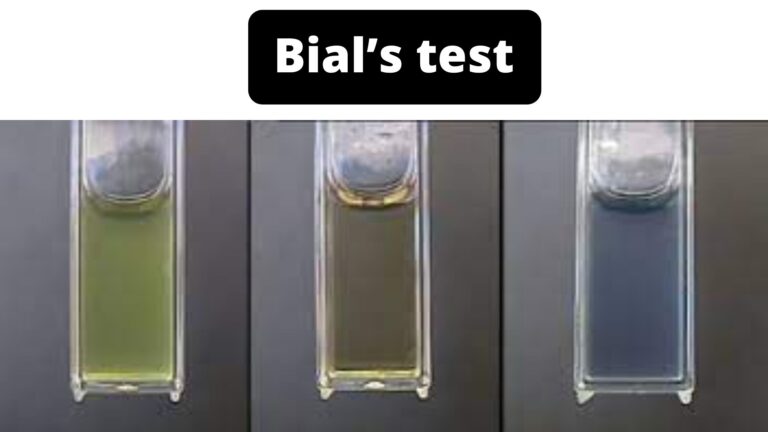
Bial’s test is a chemical test used for detection of pentoses (5-carbon sugars) and it is used to distinguish pentoses from hexoses. It was developed by German physician Manfred Bial. It is also used in laboratory for estimation of RNA because RNA contains pentose sugar ribose. It works on principle of acid dehydration of sugars.
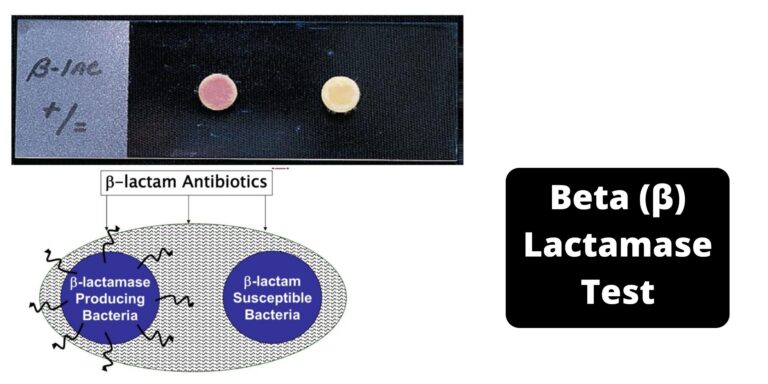
Many bacteria produce a group of enzymes known as beta-lactamases that are mediated through genes in plasmids or the chromosomes. Beta-lactamase can be a constant process or it may be triggered through contact with antimicrobials. Beta-lactamases hydrolyze (and consequently inhibit) the beta-lactam ring of many Cephalosporins as well as penicillins. Beta-Lactamase Test is a rapid test to determine the presence of beta-lactamase , an enzyme that is produced by the strains from Staphylococcus aureus Neisseria gonorrhoeae, Branhamella catarrhalis as well as Haemophilus influenzae.
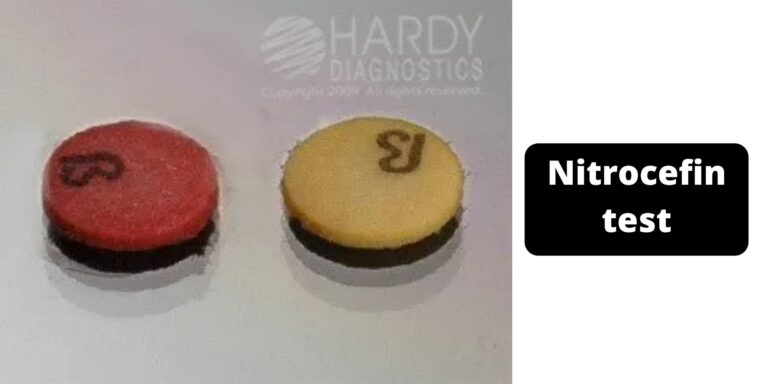
The nitrocefin biochemical test is a sensitive technique for detecting beta-lactamase-producing strains of N. gonorrhoeae, H. influenzae, Staphylococcus spp, Enterococcus spp, and Moraxella (Branhamella) catarrhalis. Nitrocefin is the only reliable test for detecting beta-lactamase-producing Enterococcus spp.
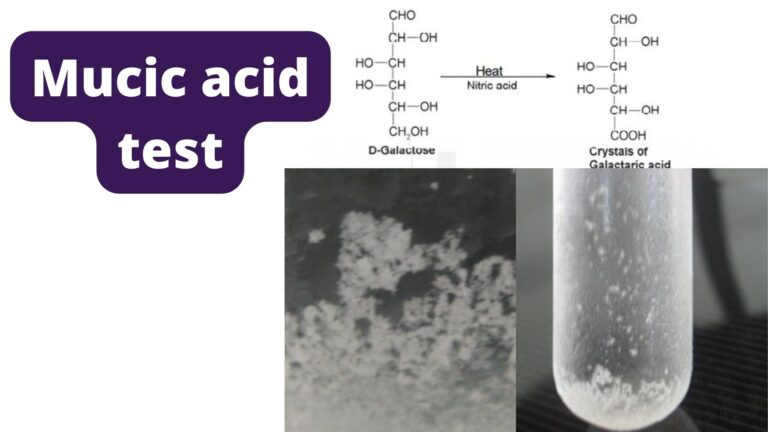
Mucic acid test is a biochemical test used to detect galactose and galactose containing carbohydrates such as lactose. It is also known as galactaric acid test. In this test, carbohydrate sample is heated with concentrated nitric acid which act as a strong oxidizing agent. The nitric acid oxidizes both aldehyde group and primary alcohol group
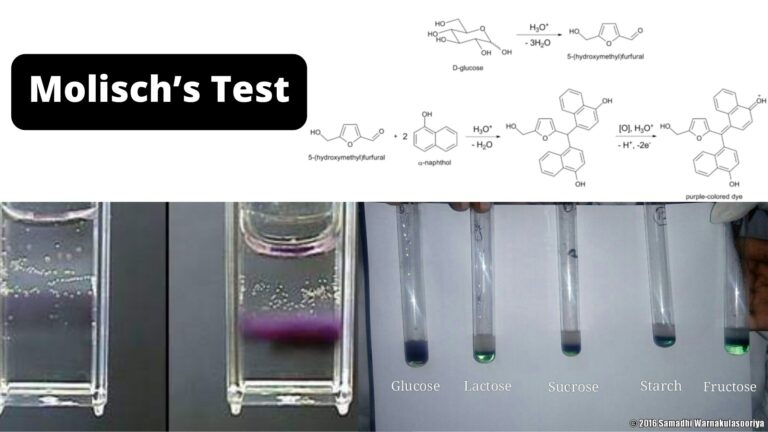
Molisch’s test is a classic chemical test used for detection of carbohydrate in a given sample. It is a highly sensitive test and it is considered as a general screening test for almost all types of carbohydrates. It is named after the Austrian botanist Hans Molisch. This test can detect monosaccharides, disaccharides and polysaccharides. It
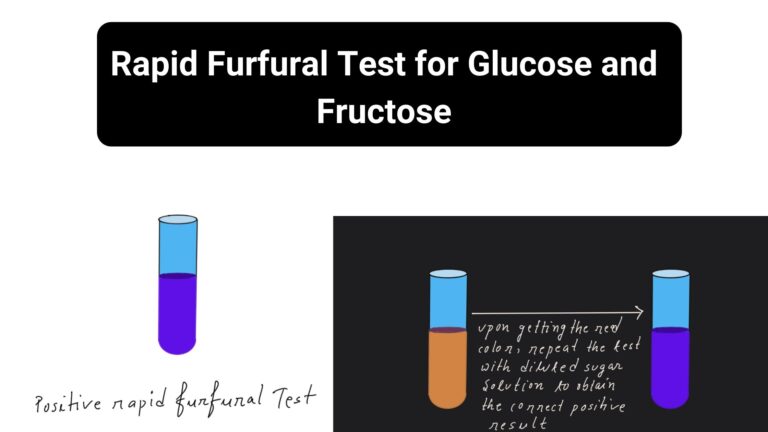
Rapid Furfural Test is a rapid chemical assay used to quickly distinguish between aldohexoses such as glucose and ketohexoses such as fructose. It is done when carbohydrate test solution is mixed with ethanolic α-naphthol solution (Molisch reagent) and concentrated hydrochloric acid (HCl) and then direct boiling is performed. It is based on the principle that
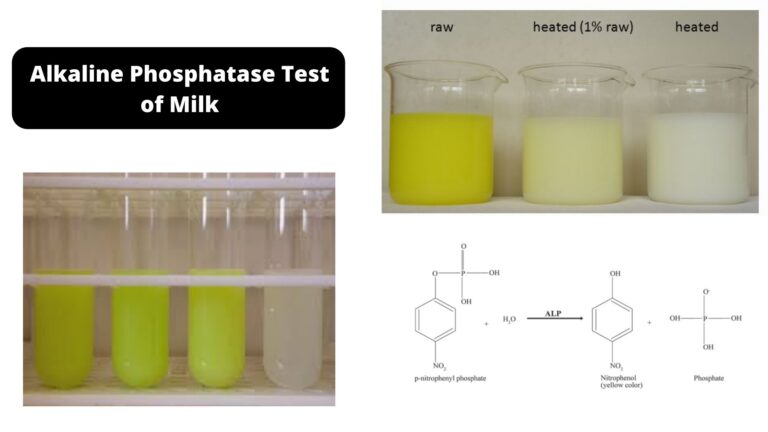
Alkaline Phosphatase (ALP) is an enzyme that is naturally found within all the raw milks that is utilized to determine the quality of pasteurization of milk. A complete pasteurization process can deactivate the enzyme below levels that can be detected by traditional methods. Because the stability of the heat of ALP is higher than the stability of pathogens that could be found in milk, it serves as a metric of security. However, failure for detection of ALP activity is not a mean an item is safe from pathogens.
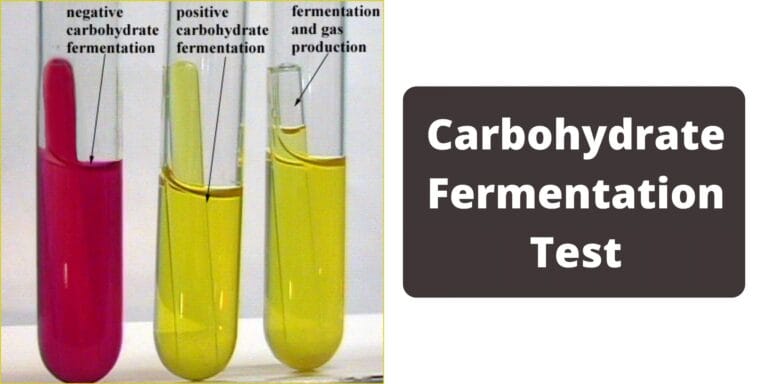
The carbohydrate fermentation test can be used to determine if bacteria are able to ferment a certain carbohydrate.
It is a test to determine any presence of acids or gas resulting from carbohydrate fermentation.