Sourav Pan is the founder and sole author of Biology Notes Online. He holds a Bachelor of Science (B.Sc.) degree and an M.Sc. in Microbiology from the University of Calcutta. He creates educational resources covering microbiology, immunology, biotechnology, genetics, cell biology, botany, zoology, and other life-science subjects.
His goal is to make complex biological concepts easier to understand through well-structured, student-friendly articles based on academic textbooks, peer-reviewed research, and authoritative scientific sources. In addition to writing new content, he regularly reviews and updates articles to improve their accuracy, clarity, and educational value.
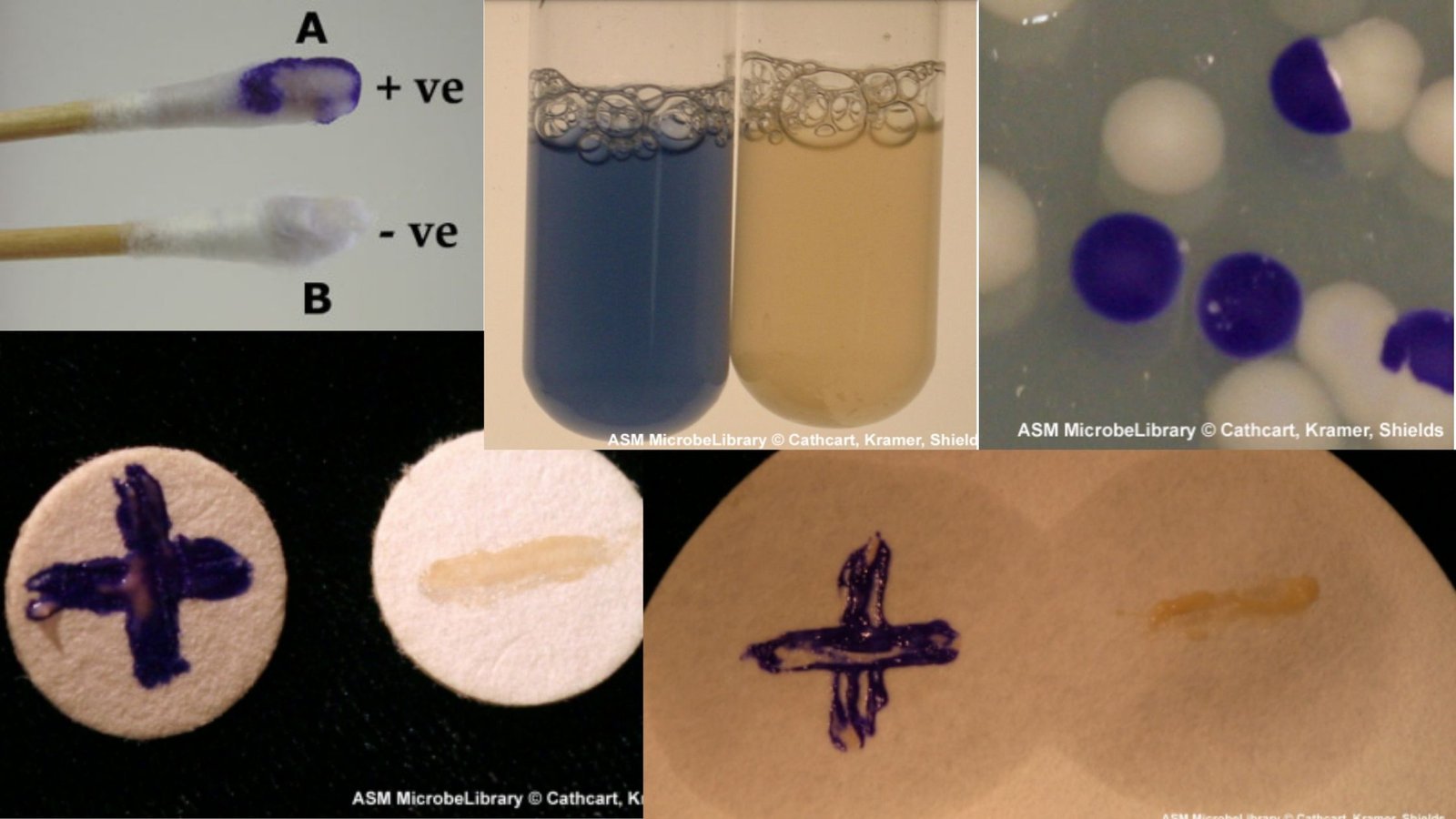
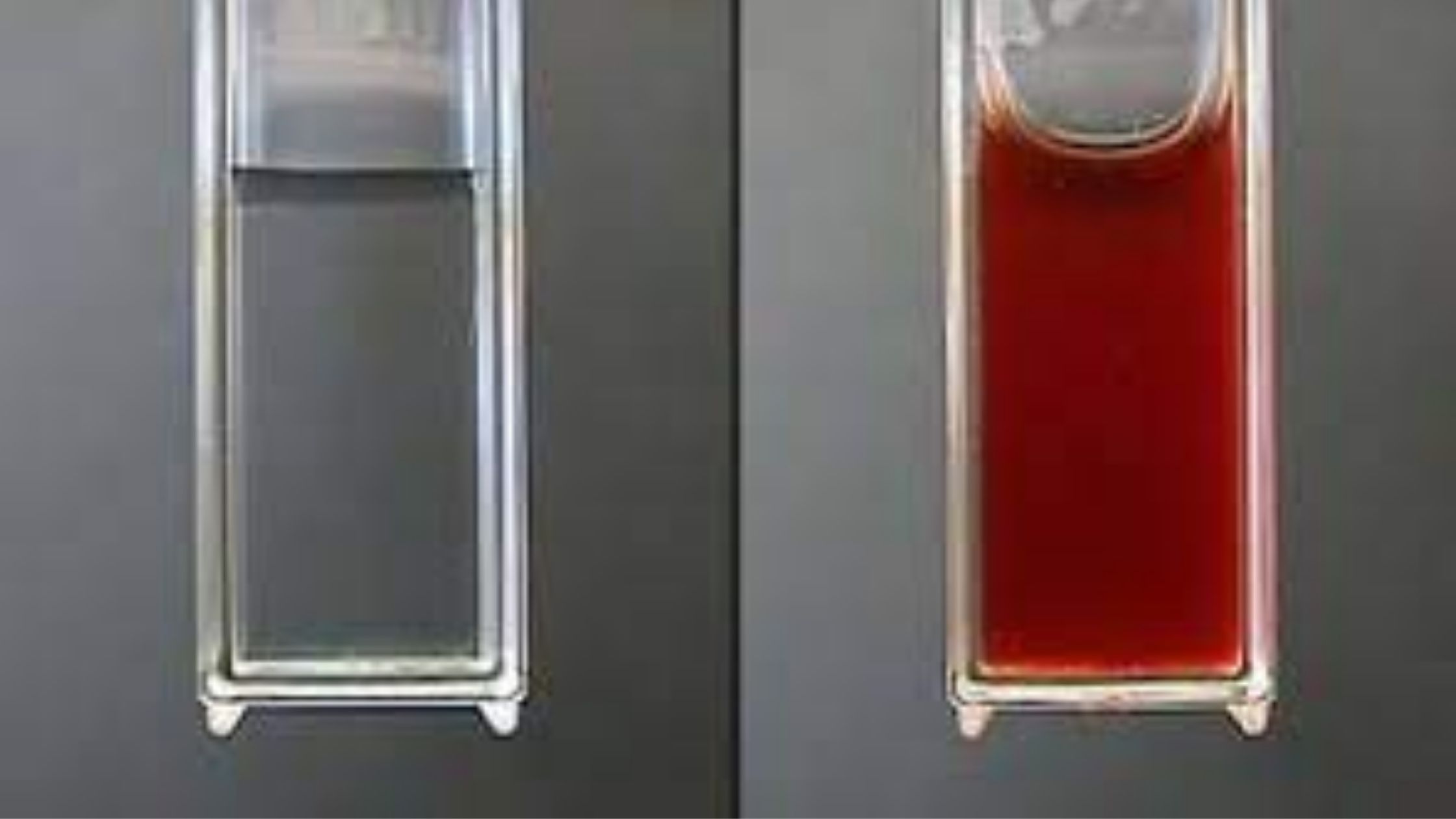
The oxidase test is a biochemical reaction that assays for the presence of cytochrome oxidase, an enzyme sometimes called indophenol oxidase. In the presence of an organism that contains the cytochrome oxidase enzyme, the reduced colorless reagent becomes an oxidized colored product .
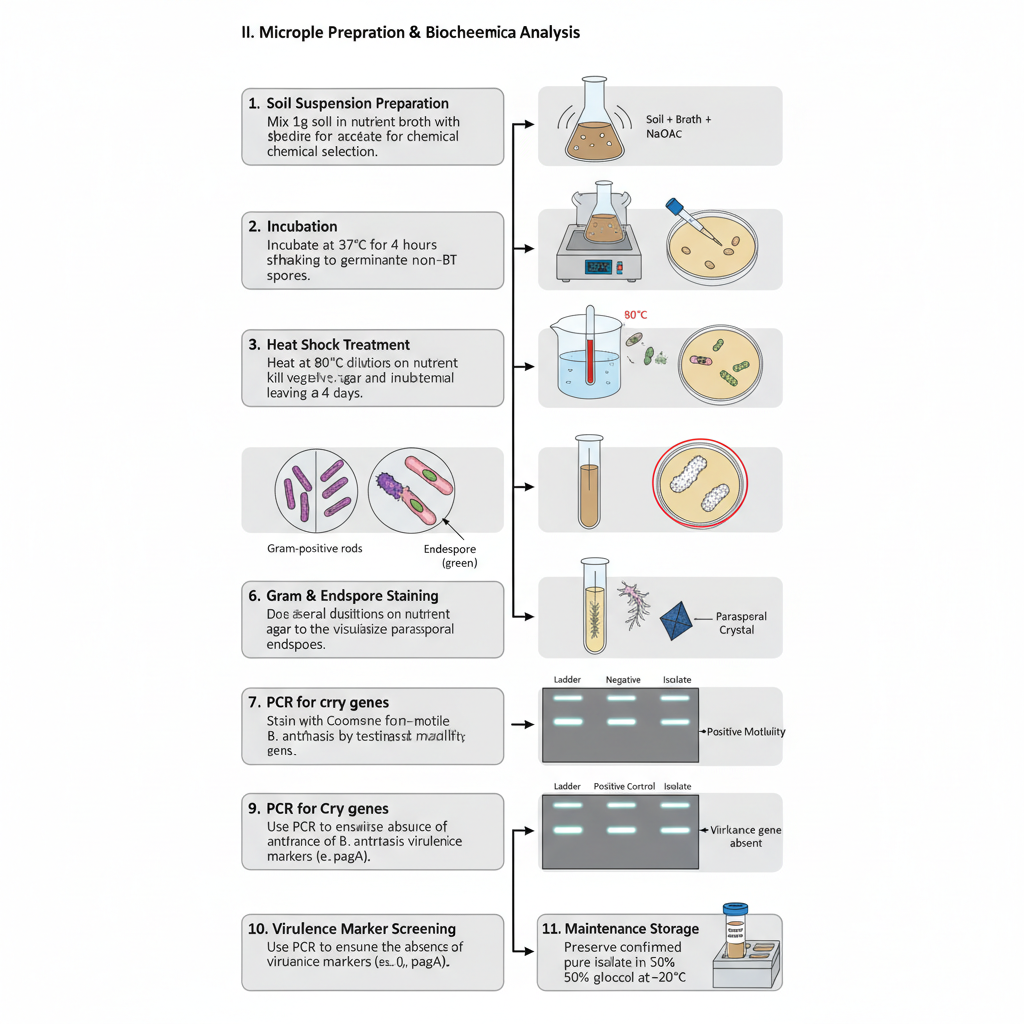
Bacillus thuringiensis (Bt) is a Gram positive bacteria. It is a spore forming bacteria. It is found naturally in different environment like soil water dead insects and plant surface. It is known for producing special protein crystal during sporulation phase. These protein crystal is known as delta endotoxin (Cry and Cyt proteins). When these crystal … Read more
Learn Nylander’s test for reducing sugars, including its principle, reagent composition, procedure, black bismuth result, interpretation, limitations, and modern relevance.
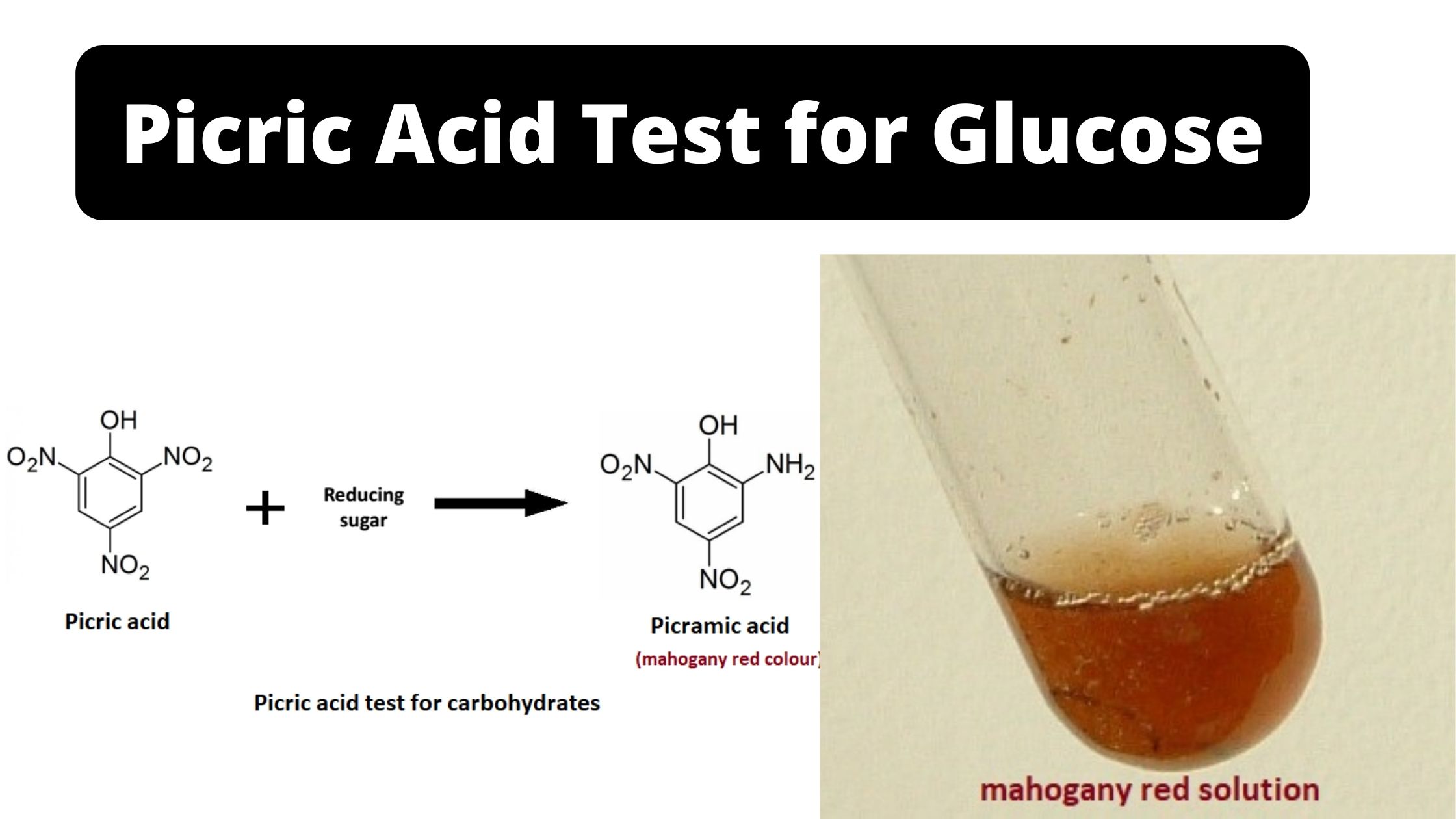
Picric Acid Test is a qualitative chemical test used for the detection of reducing sugars in a given sample. It detects sugars which can act as reducing agents under alkaline conditions. The test is based on the reducing property of these sugars. In alkaline medium, the reducing sugar reacts with yellow picric acid (2,4,6-trinitrophenol). During … Read more
The Lane–Eynon method is a volumetric titration technique used for the quantitative estimation of reducing sugars in food and dairy products. It is commonly used for the determination of sugars such as dextrose, maltose, and lactose. This method is based on the reduction of Fehling’s solution by reducing sugars under boiling conditions. It is simple, … Read more
Seliwanoff’s Test is a biochemical colour reaction that is used mainly to distinguish between ketose sugar and aldose sugar. It is performed by using Seliwanoff’s reagent (resorcinol + concentrated hydrochloric acid) and the sugar solution is heated with this reagent. In this test the acid act as dehydrating agent and the reaction is based on … Read more
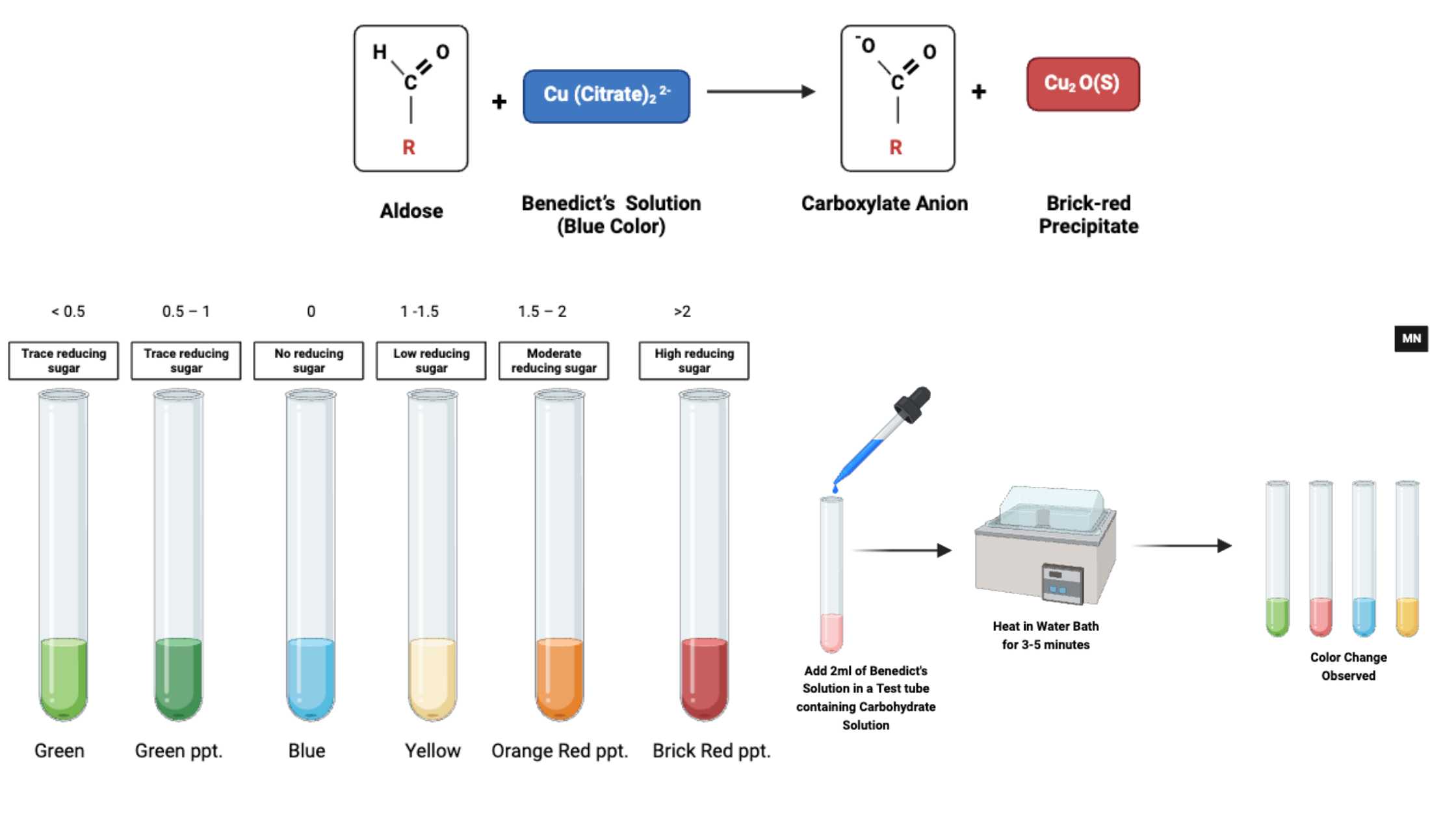
Benedict’s test is a chemical test that is used to test for the presence of reduced sugars within an analytical test. Thus, simple carbohydrates that contain an aldehyde or free ketone functional group are detected using this test. The test is basing itself upon Benedict’s Reagent (also called Benedict’s solution) which is a complex mix of sodium carbonate, sodium citrate, and the pentahydrate of copper(II) Sulfate.
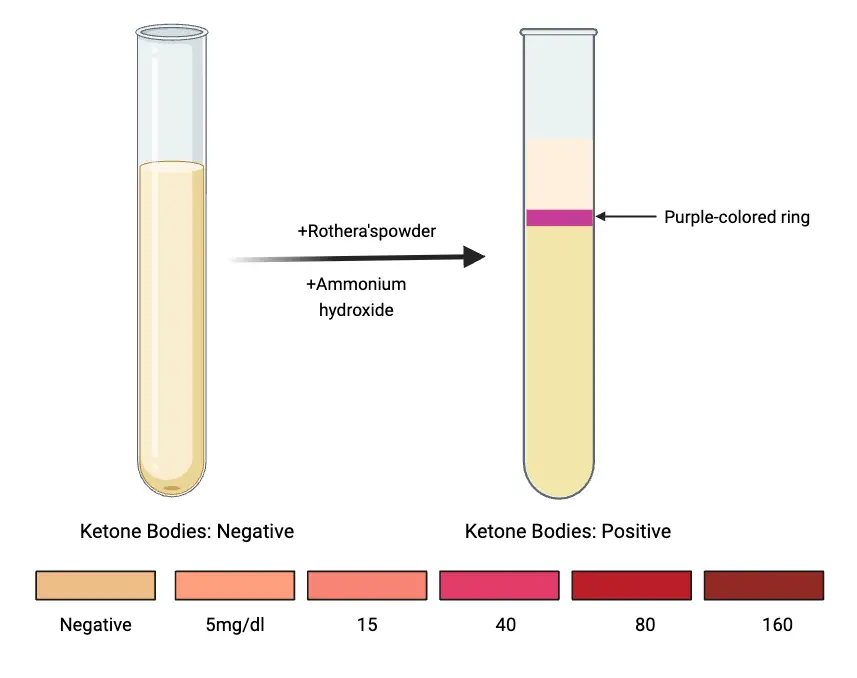
Acetoacetic acid and acetone react with an alkaline solution of sodium nitroprusside to form a purple-colored complex. This method can detect above 1-5 mg/dl of acetoacetic acid and 10-20 mg/dl of acetone. Beta-hydroxybutyrate is not detected.
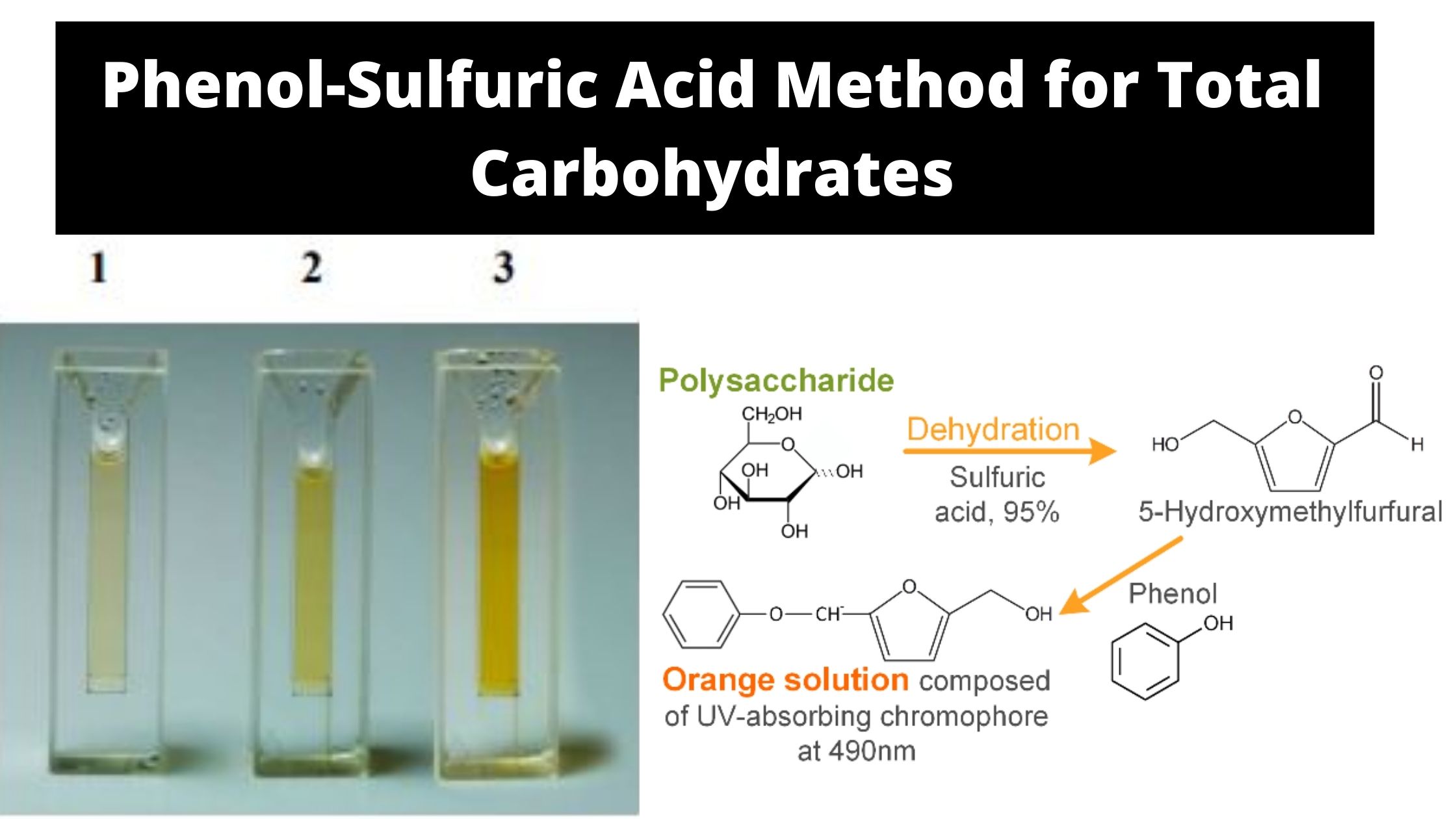
What is Phenol-Sulfuric Acid Method for Total Carbohydrates? Phenol-sulfuric acid method is a colorimetric method which is used for quantitative estimation of total carbohydrates. It was formalized by DuBois in 1956. It is simple rapid and reliable method. It can detect almost all type of carbohydrates like monosaccharides disaccharides oligosaccharides and polysaccharides. In this method … Read more