

Complement pathway is a part of innate immune system of body. It is also called complement cascade. It consists of more than 50 proteins which are present in blood and also attached on the cell surfaces.
These proteins normally remain in inactive condition. When any foreign invader, pathogen or damaged cell is detected, these proteins become activated. Then one protein activates another protein and a chain reaction is formed. This is referred to as cascade reaction.
The complement pathway acts as first line defence of body. It acts very rapidly and helps in removal of microbes before strong immune response is developed.
The complement cascade is activated by three pathways. The following are the three pathways-
- Classical pathway
It is activated when antibody binds with antigen on the pathogen surface. - Lectin pathway
It is activated by special sugars present on the surface of microbes. - Alternative pathway
It remains active at low level continuously. It directly checks for pathogens and also increases the complement response.
All the three pathways finally meet at the activation of C3 protein. C3 is the central protein of complement pathway. After activation, it is broken into active fragments and these fragments take part in different immune reactions.
The complement pathway protects body mainly by three processes. These are opsonization, inflammation, and formation of membrane attack complex (MAC).
During opsonization, complement proteins cover the surface of pathogen. So the pathogen is easily recognized by phagocytic cells and then engulfed.
During inflammation, small complement fragments like C3a and C5a attract immune cells at infection site. It helps in producing inflammatory response.
At the end, membrane attack complex (MAC) is formed. It makes holes or pores in the membrane of pathogen. Due to this, pathogen cell is lysed and destroyed.
Types of The Complement Pathway
The complement pathway is mainly of three types. The following are the three types-
- Classical pathway– It is mainly activated when C1 complex binds with antibody attached to antigen. In this pathway C1q protein binds with IgG or IgM antibody. It may also start when C1q directly binds on some pathogen surface or apoptotic cells.
- Lectin pathway– It is activated without antibody. In this pathway mannose-binding lectin (MBL) or ficolins bind with specific sugars and carbohydrates present on pathogen surface. After this binding, complement proteins become activated.
- Alternative pathway– It remains active at low level continuously. This is due to spontaneous breakdown of C3 protein, also called tick-over. It becomes fully activated when it contact with foreign surface, pathogen or damaged cell.
- Amplification role– The alternative pathway also increases the reaction of classical pathway and lectin pathway. So it acts as a powerful amplification loop of complement system.
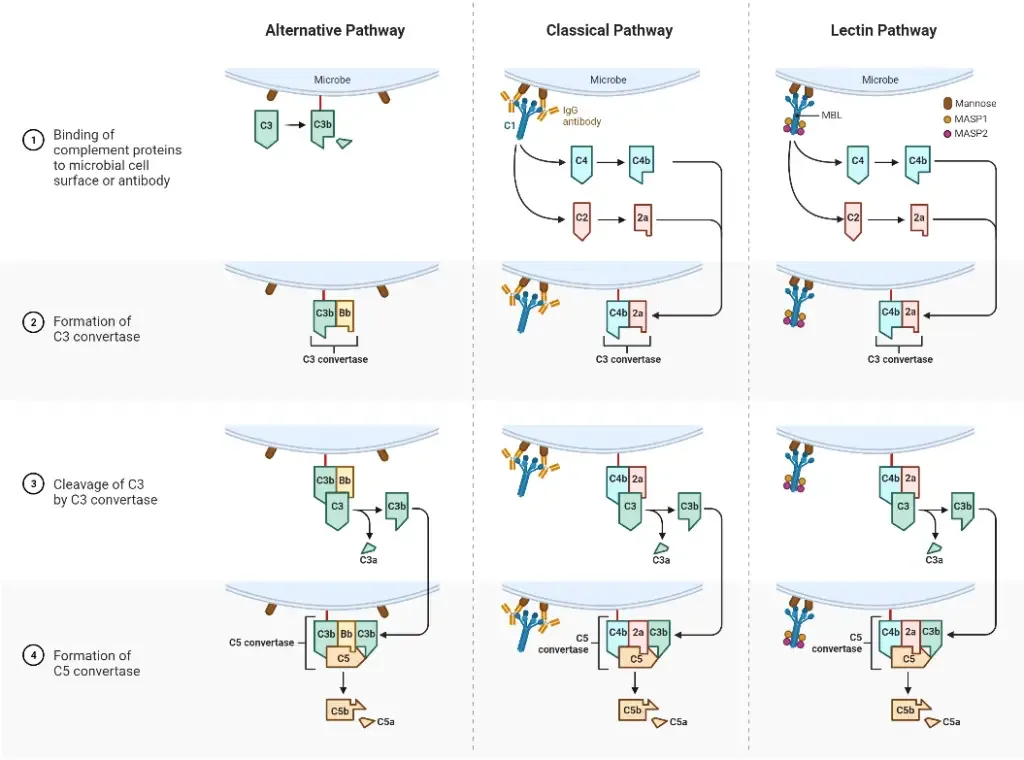
Activation of the Complement Pathway
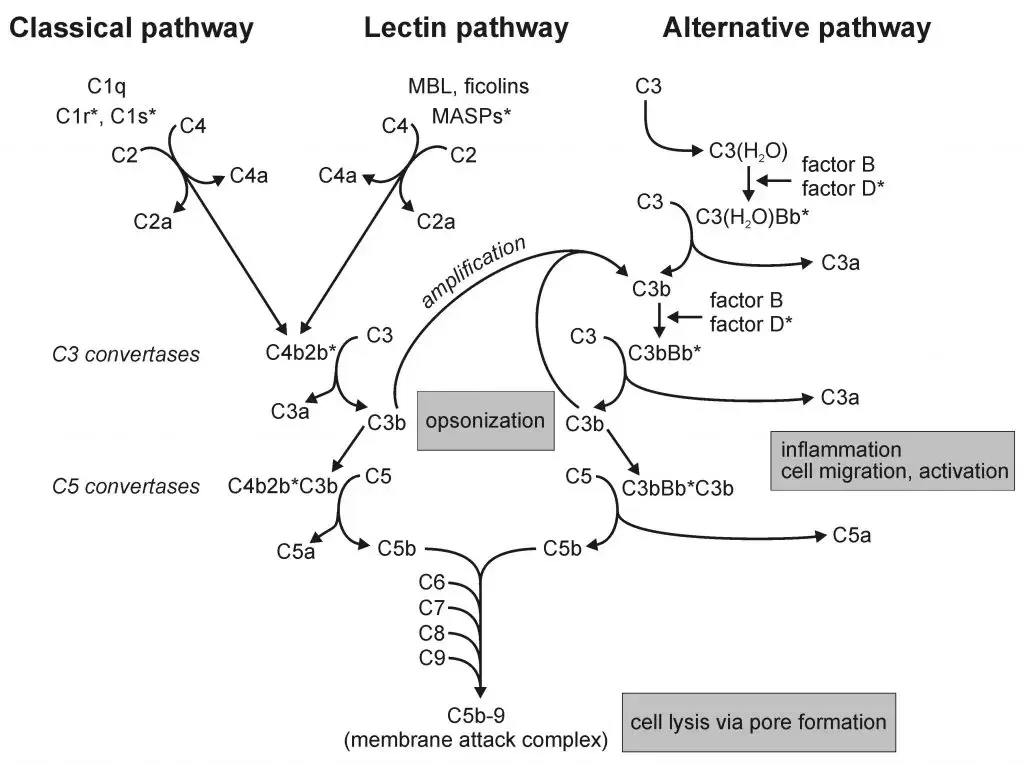
The activation of the complement pathway is accomplished by these three pathways;
- The Classical Pathway
- The Alternative Pathway
- The Mannose-Binding Lectin Pathways
The Classical Pathway Activation
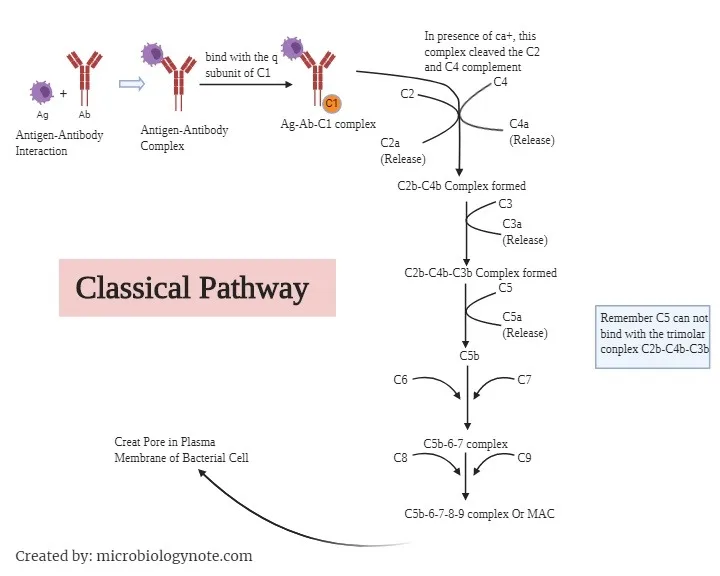
Classical pathway is activated mainly by antigen-antibody complex. It starts when C1 complex binds with antibody present on the target surface. The following are the steps-
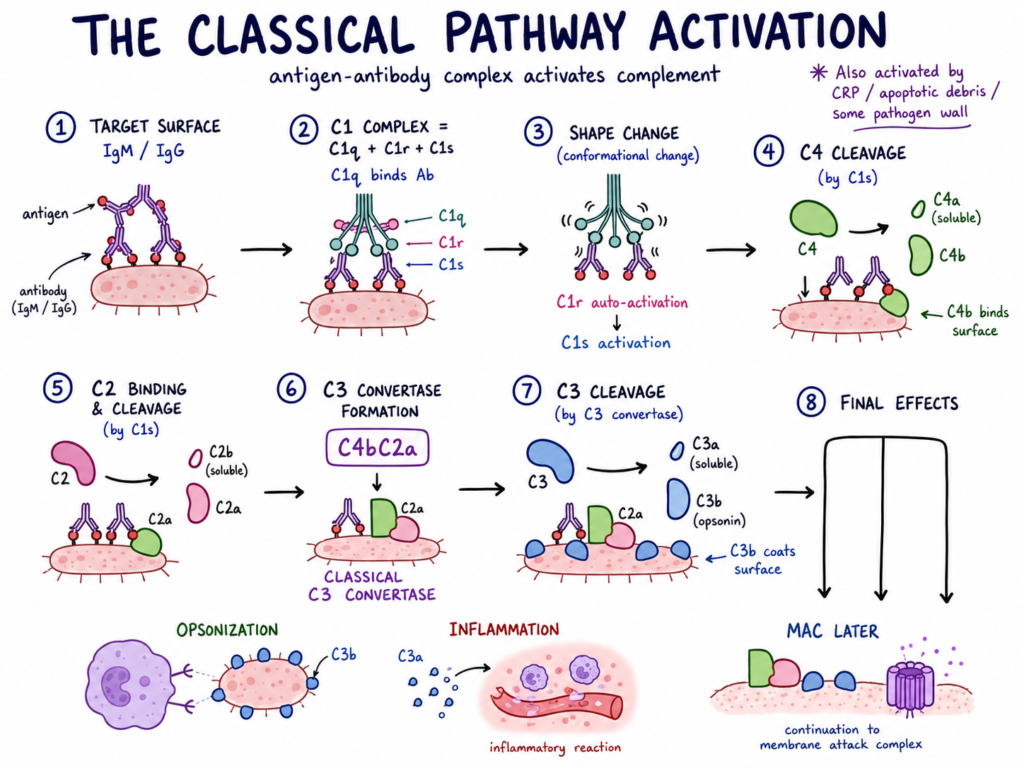
- Target binding– The first step is binding of C1 complex with target surface. C1 complex is made up of C1q, C1r and C1s. The C1q part acts as recognition molecule.
- C1q attachment– The globular head of C1q binds with antibody which is already attached with antigen. It mainly binds with IgM or clustered IgG. C1q may also bind with C-reactive protein (CRP), apoptotic debris or directly with some pathogen cell wall.
- Shape change– After binding of C1q, a structural change occurs in the C1 complex. This change passes through the collagen like tail of C1q. Then the inactive protease part becomes ready for activation.
- C1r activation– Due to this conformational change, C1r becomes activated by itself. This is called auto-activation of C1r. C1r is a serine protease.
- C1s activation– The activated C1r then cleaves and activates C1s. So C1s becomes active serine protease. Now it can cleave next complement proteins.
- C4 cleavage– Activated C1s acts on C4 protein. It cleaves C4 into small C4a and large C4b fragments. C4a goes into fluid phase and C4b attaches with target surface.
- C4b attachment– During cleavage, a reactive thioester bond is exposed on C4b. This helps C4b to bind covalently with pathogen or target cell surface. This step is important for formation of convertase.
- C2 binding– Surface attached C4b then binds with C2 protein. After binding, C2 becomes the substrate for activated C1s enzyme.
- C2 cleavage– Activated C1s cleaves bound C2 into small fragment and large active fragment. The larger active fragment is called C2a. In some old books it is also written as C2b.
- C3 convertase formation– The large active C2a remains attached with C4b on the target surface. Together they form C4bC2a complex. This complex is called classical pathway C3 convertase.
- C3 cleavage– The C3 convertase cleaves large amount of C3 protein into C3a and C3b. C3b coats the target surface and helps in opsonization. This also amplifies the complement cascade.
- Final effect– After this step, more complement proteins are activated. The target becomes marked for destruction. It can lead to opsonization, inflammation and later formation of membrane attack complex (MAC).
The Lectin Pathway Activation
Lectin pathway is activated without antibody. It is an antibody independent pathway. It starts when lectin like proteins bind with sugars present on pathogen surface. The following are the steps-
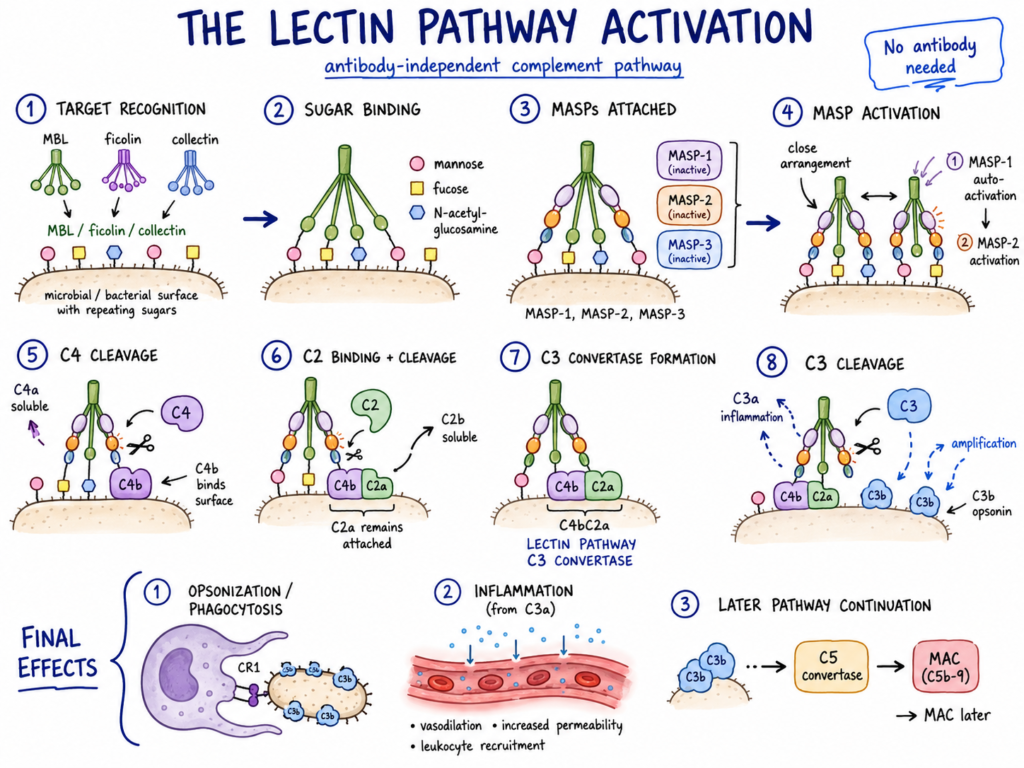
- Target recognition– The first step is recognition of pathogen surface by mannose-binding lectin (MBL), ficolins and collectins. These are pattern recognition molecules present in plasma.
- Sugar binding– MBL and other lectin molecules bind with repeated carbohydrate structures present on microbes. These sugars may be D-mannose, L-fucose and N-acetyl-glucosamine. These are commonly present on pathogen or apoptotic cell surface.
- MASP attachment– The recognition molecules are already associated with MBL-associated serine proteases (MASPs). These are mainly MASP-1, MASP-2 and MASP-3. They circulate in inactive form with MBL or ficolins.
- Complex closeness– When many MBL or ficolin molecules bind on the same target surface, their attached MASP complexes come close to each other. This close position is required for activation.
- MASP-1 activation– Due to close arrangement on pathogen surface, MASP-1 becomes activated. MASP-1 may activate by itself. This is called auto-activation.
- MASP-2 activation– Activated MASP-1 then cleaves and activates nearby MASP-2. After activation, MASP-2 acts like enzyme for next complement proteins.
- C4 cleavage– Activated MASP-2 cleaves C4 into C4a and C4b. C4a moves away in fluid phase. C4b becomes attached on the pathogen surface.
- C4b attachment– C4b binds strongly with target surface by its reactive site. This surface bound C4b is important for formation of convertase.
- C2 binding– The attached C4b then binds with C2 protein. After binding, C2 becomes ready for cleavage by activated MASP-2.
- C2 cleavage– MASP-2 cleaves C2 into small fragment and large active fragment. The large active fragment is C2a. It remains attached with C4b.
- C3 convertase formation– C4b and C2a join together and form C4bC2a complex. This complex is called lectin pathway C3 convertase. It is same as the C3 convertase of classical pathway.
- C3 activation– The C3 convertase cleaves many C3 molecules into C3a and C3b. C3b binds with pathogen surface and causes opsonization. C3a helps in inflammation.
- Cascade amplification– More and more C3b is formed on the surface. So the complement reaction becomes amplified. After this, later steps can lead to C5 convertase formation and membrane attack complex (MAC) formation.
The Alternative Pathway Activation
Alternative pathway is activated without antibody. It remains active at low level all time. It starts from spontaneous change of C3 protein. The following are the steps-
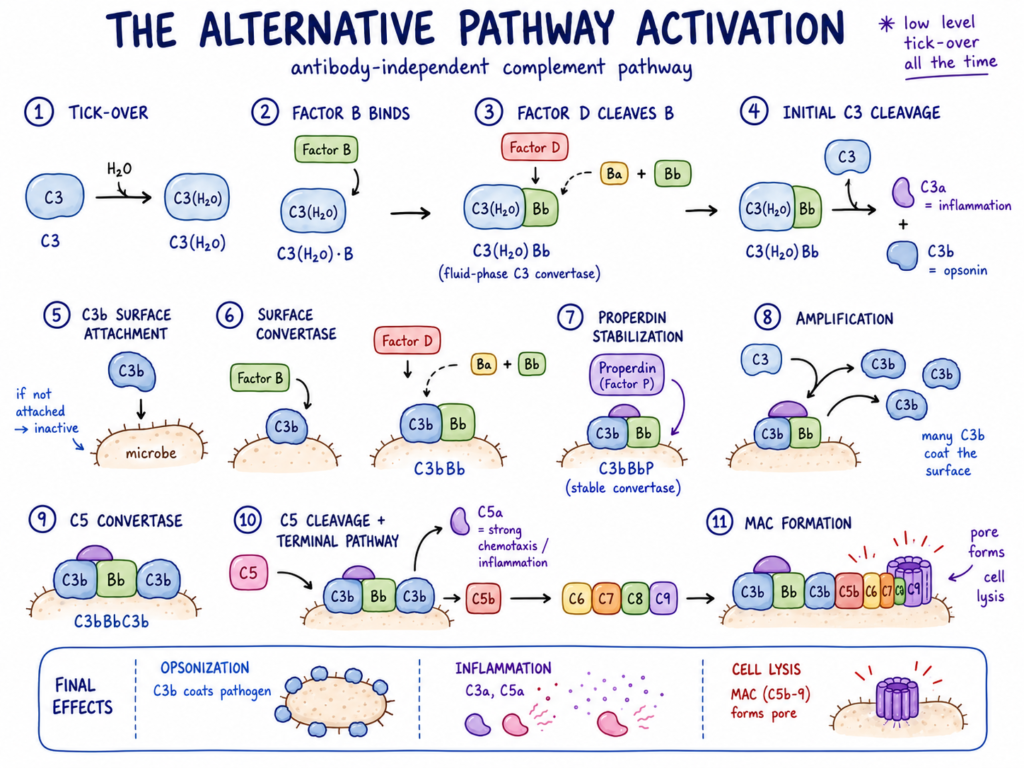
- Tick-over– In blood, some C3 proteins are slowly hydrolysed by water. This happens continuously at low level. This spontaneous hydrolysis is called tick-over.
- C3(H₂O) formation– During tick-over, internal thioester bond of C3 is hydrolysed. Then C3 changes into C3(H₂O). This changed form can now bind with Factor B.
- Factor B binding– C3(H₂O) binds with Factor B in fluid phase. After binding, Factor B becomes ready for cleavage by Factor D.
- Factor D action– Factor D is a serine protease. It cleaves bound Factor B into two parts. Small part is Ba and large active part is Bb.
- Fluid phase C3 convertase– The Bb fragment remains attached with C3(H₂O). Together they form C3(H₂O)Bb. This is called fluid phase C3 convertase of alternative pathway.
- Initial C3 cleavage– C3(H₂O)Bb cleaves normal C3 molecules into C3a and C3b. C3a acts as anaphylatoxin. C3b acts as opsonin.
- C3b surface attachment– Newly formed C3b has reactive thioester group. It binds covalently with nearby pathogen surface or foreign cell surface. If it does not bind, it becomes inactive in fluid.
- Surface Factor B binding– Surface attached C3b binds with another Factor B. This forms C3bB complex on the activating surface.
- Surface Factor B cleavage– Factor D again cleaves the bound Factor B. It forms Ba and Bb. The Bb part remains attached with C3b.
- Surface C3 convertase– C3b and Bb together form C3bBb. This is the surface bound alternative pathway C3 convertase. It can cleave more C3 molecules.
- Properdin stabilization– C3bBb is unstable by itself. Properdin (Factor P) binds with it and stabilizes the convertase. The stable complex is written as C3bBbP.
- Amplification– Stabilized C3bBbP cleaves large amount of C3. More C3b molecules are deposited on pathogen surface. This makes strong amplification loop of complement pathway.
- C5 convertase formation– When more C3b are present on surface, one extra C3b binds with C3bBb. This forms C3bBbC3b. It is the alternative pathway C5 convertase.
- C5 cleavage– C5 convertase cleaves C5 into C5a and C5b. C5a is strong inflammatory and chemotactic factor. C5b starts the terminal pathway.
- MAC formation– C5b binds with C6, C7, C8 and C9. These proteins form membrane attack complex (MAC). MAC makes pores in pathogen membrane and causes cell lysis.
Convergence and Terminal Pathway Activation
All three complement pathways finally meet at C3 activation. After this, common terminal pathway starts. The following are the steps-
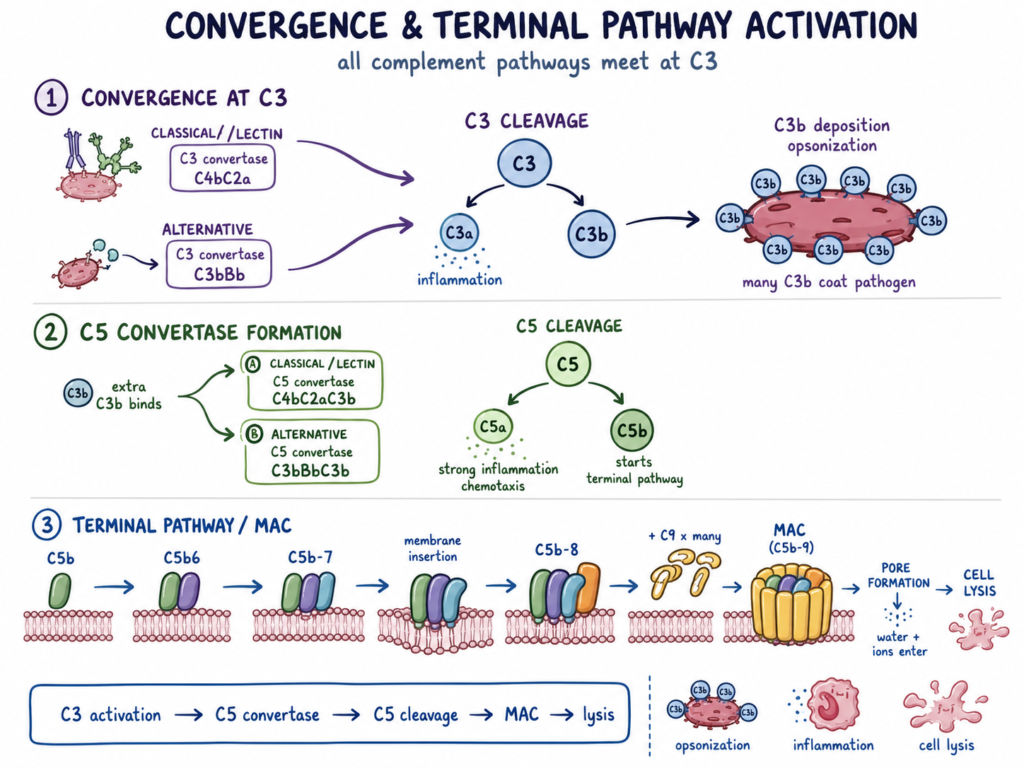
A. Convergence at C3 level
- C3 convertase formation– The classical pathway and lectin pathway form C4bC2a. The alternative pathway forms C3bBb. These both act as C3 convertase.
- C3 cleavage– The C3 convertase cleaves large amount of C3 into C3a and C3b. C3a goes into fluid phase and helps in inflammation. C3b attaches on the target pathogen surface.
- C3b deposition– Many C3b molecules are deposited on the pathogen surface. This makes the pathogen coated by complement protein. It also helps in further activation of the pathway.
B. Formation of C5 convertase
- Extra C3b binding– When enough C3b is present on the surface, one more C3b binds with existing C3 convertase. This changes the function of the enzyme.
- Classical C5 convertase– In classical and lectin pathway, C4bC2a binds with C3b and forms C4bC2aC3b. This is called C5 convertase.
- Alternative C5 convertase– In alternative pathway, C3bBb binds with extra C3b and forms C3bBbC3b. This is the alternative pathway C5 convertase.
- C5 cleavage– The C5 convertase cleaves C5 into C5a and C5b. C5a is a strong inflammatory and chemotactic fragment. C5b starts the terminal pathway.
C. Terminal pathway activation
- C5b formation– C5b is the first component of terminal pathway. It is unstable and quickly binds with next complement proteins.
- C6 binding– C5b binds with C6 and forms C5b6 complex. This complex is still in fluid phase.
- C7 binding– C7 binds with C5b6 and forms C5b-7 complex. After binding of C7, the complex becomes lipophilic in nature.
- Membrane insertion– The C5b-7 complex exposes hydrophobic site. So it inserts into the lipid bilayer of pathogen cell membrane.
- C8 binding– C8 binds with membrane attached C5b-7. It forms C5b-8 complex. C8 penetrates into the pathogen membrane and starts small pore formation.
- C9 polymerization– C5b-8 attracts many C9 molecules. About 10 to 18 C9 molecules join together. This forms a complete pore like structure.
- MAC formation– The complex formed by C5b, C6, C7, C8 and many C9 molecules is called Membrane Attack Complex (MAC) or C5b-9.
- Pore formation– MAC forms a rigid pore in the pathogen cell membrane. The pore is about 10 nm wide. It disturbs the normal membrane barrier.
- Cell lysis– Due to pore formation, water and ions enter into the pathogen cell. The cell swells, burst and dies. This is called complement mediated cell lysis.
Deficiencies of the Complement Pathway
Complement pathway deficiencies are caused by lack of different complement proteins. These deficiencies may cause recurrent infection, autoimmune disease and uncontrolled complement attack on own body cells. The following are the important deficiencies-
- Early classical pathway deficiency– Deficiency of C1, C2 and C4 is related with autoimmune disorder. It is commonly associated with Systemic Lupus Erythematosus (SLE). These patients also get recurrent respiratory and systemic infections by encapsulated bacteria like Streptococcus pneumoniae and Haemophilus influenzae.
- C3 deficiency– C3 is the central protein of all complement pathways. So its deficiency is very severe. It causes severe recurrent pyogenic bacterial infections from early life. It is also associated with immune complex kidney disease like membranoproliferative glomerulonephritis.
- Terminal pathway deficiency– Deficiency of C5, C6, C7, C8 and C9 affects formation of membrane attack complex (MAC). Due to absence of proper MAC, direct killing of bacteria is reduced. These deficiencies mainly cause recurrent infection by Neisseria species, especially Neisseria meningitidis and Neisseria gonorrhoeae.
- Alternative pathway deficiency– Deficiency of properdin, Factor B and Factor D affects alternative pathway activation. It mainly predisposes to severe and recurrent Neisseria meningitidis infection. Properdin deficiency is inherited as X-linked recessive pattern and mainly affects males.
- Lectin pathway deficiency– Deficiency of mannose-binding lectin (MBL) is the most common complement deficiency. It is usually silent in healthy adults. But in neonates and young children it may increase pyogenic infection and sepsis, because their adaptive immunity is not fully developed.
- C1-inhibitor deficiency– Deficiency of C1-inhibitor (C1-INH) causes Hereditary Angioedema (HAE). It is a genetic disorder. It produces repeated swelling or edema in limbs, face, intestine and airways. Airway swelling may become life threatening.
- Factor H, Factor I and CD46 deficiency– Deficiency of these regulatory proteins causes uncontrolled activation of alternative pathway. So complement reaction continue on own tissue. It commonly causes kidney damaging diseases like Atypical Hemolytic Uremic Syndrome (aHUS) and C3 Glomerulopathy (C3G).
- CD55 and CD59 deficiency– Lack of CD55 (DAF) and CD59 removes protection from own blood cells. It causes Paroxysmal Nocturnal Hemoglobinuria (PNH). In this disease red blood cells are destroyed, bone marrow failure may occur and blood clot formation is increased.
- CD55 inherited deficiency– Inherited lack of only CD55 causes CHAPLE syndrome. It is a very rare disease. It causes loss of large amount of protein through gut, called protein-losing enteropathy, and also dangerous thrombosis in blood vessels.
Regulation of the Complement Pathway
Complement pathway is regulated by different controlling proteins. It protect normal host cells and stop excess inflammation. The regulation is mainly done in three ways-
A. Spontaneous inactivation
- Thioester bond hydrolysis– Activated C3b and C4b contain reactive thioester bond. If they do not bind quickly with pathogen or cell surface, this bond reacts with water. Then C3b and C4b become inactive.
B. Soluble plasma regulators
- C1-inhibitor– C1-inhibitor (C1-INH) is a plasma protein. It controls starting of classical pathway and lectin pathway. It binds and inactivates C1r, C1s, MASP-1 and MASP-2.
- Factor H– Factor H (FH) is the main regulator of alternative pathway. It binds on host cell surface. It prevents binding of Factor B, breaks alternative C3 convertase and also acts with Factor I.
- Factor I– Factor I (FI) is a circulating serine protease. It cleaves and inactivates C3b and C4b. It cannot work alone. It needs cofactor like Factor H, C4BP, MCP or CR1.
- C4-binding protein– C4-binding protein (C4BP) regulates classical pathway and lectin pathway. It breaks their C3 convertase. It also helps Factor I to cleave C4b.
- Carboxypeptidase N/R– Carboxypeptidase N (CPN) and Carboxypeptidase R (CPR) reduce inflammatory response. They cleave C3a and C5a. So their anaphylatoxin activity becomes reduced.
- Clusterin and vitronectin– Clusterin and vitronectin (S protein) bind with terminal complement complexes like C5b-7. They make the complex water soluble. So it cannot insert into normal host cell membrane.
C. Membrane bound regulators
- Decay accelerating factor– Decay accelerating factor (DAF or CD55) is present on host cell surface. It breaks C3 convertase and C5 convertase of classical and alternative pathway. So complement cascade stops on healthy cell.
- Membrane cofactor protein– Membrane cofactor protein (MCP or CD46) is present on almost all nucleated host cells. It works as cofactor for Factor I. It helps in cleavage of wrongly attached C3b and C4b.
- Complement receptor 1– Complement receptor 1 (CR1 or CD35) is present on erythrocytes and leukocytes. It breaks C3 and C5 convertases. It also helps Factor I mediated inactivation of C3b and C4b.
- CD59 protectin– CD59 is also called protectin. It prevents full formation of membrane attack complex (MAC). It blocks final binding and polymerization of C9 on host cell membrane. So host cell lysis is prevented.
Functions of the Complement Pathway
The complement pathway has many important functions in body defence. The following are the important functions-
- Opsonization– It is the process by which pathogen, foreign particles and dying cells are coated by complement proteins. C3b acts as main opsonin. It marks the pathogen so that macrophages and neutrophils can easily recognize, engulf and destroy it.
- Cell lysis– It is direct killing of pathogen by complement system. The terminal complement proteins C5b, C6, C7, C8 and C9 join together and form membrane attack complex (MAC). This complex makes pores in pathogen membrane. Due to this, the cell swells, burst and dies.
- Inflammation– Complement pathway helps in producing inflammatory response. Small fragments like C3a and C5a are released during the cascade. These fragments increase blood vessel permeability and also helps in histamine release.
- Chemotaxis– C5a acts as a strong chemotactic factor. It attracts immune cells towards the site of infection. So more neutrophils, macrophages and other immune cells come to infected area.
- Clearance of waste– Complement proteins bind with apoptotic cells, damaged tissue debris and foreign particles. These marked materials are then removed from blood by liver and spleen. It helps in maintaining normal tissue condition.
- Removal of immune complex– Complement pathway helps in clearing antigen-antibody complexes from circulation. These complexes are taken away from blood and destroyed. This prevents their deposition in tissues and helps to prevent autoimmune damage.
- Adaptive immune support– Complement system also connects innate immunity with adaptive immunity. It binds with receptors present on B-cells and T-cells. This helps in starting and increasing a specific immune response.
Reference
- Abouelhag, H. A. (2025). A Comprehensive Review of the Complement System: Molecular Mechanisms, Regulatory Networks, and Therapeutic Applications. Ricos Biology, 3(9), 32-39. https://doi.org/10.33687/ricosbiol.03.09.77
- Advances in complement research: from pathophysiology to … (n.d.). PubMed Central (PMC).
- Anti-C1q antibodies and their association with complement components in Indian systemic lupus erythematosus patients. (n.d.). PubMed Central (PMC).
- Arbore, G., Kemper, C., & Kolev, M. (2017). Intracellular complement − the complosome − in immune cell regulation. Molecular Immunology, 89, 2-9. https://doi.org/10.1016/j.molimm.2017.05.012
- Arkansas Blue Cross and Blue Shield. (2025). Pegcetacoplan (eg, Empaveli) – Coverage Policy Manual (Policy No. 2022041).
- Beyond the Role of CD55 as a Complement Component. (n.d.). PubMed Central (PMC).
- COMPLEMENT: AN OVERVIEW FOR THE CLINICIAN. (n.d.). PubMed Central (PMC).
- Comparative Effectiveness of Pegcetacoplan Versus Ravulizumab and Eculizumab in Complement Inhibitor-Naïve Patients with Paroxysmal Nocturnal Hemoglobinuria: A Matching-Adjusted Indirect Comparison. (n.d.). PubMed Central (PMC).
- Complement Regulatory Proteins. (n.d.). MedChemExpress.
- Complements and Their Role in Systemic Disorders. (n.d.). PubMed Central (PMC).
- Creative Biolabs. (2026). Anti-factor H Autoantibody Test.
- Creative Biolabs. (2026). C3 Nephritic Factors (C3Nefs) Test.
- Daha, M. R., Fearon, D. T., & Austen, K. F. (1976). C3 nephritic factor (C3NeF): stabilization of fluid phase and cell-bound alternative pathway convertase. Journal of Immunology, 116(1), 1-7.
- El Sissy, C., Rosain, J., Vieira-Martins, P., Bordereau, P., Gruber, A., Devriese, M., de Pontual, L., Taha, M.-K., Fieschi, C., Picard, C., & Frémeaux-Bacchi, V. (2019). Clinical and Genetic Spectrum of a Large Cohort With Total and Sub-total Complement Deficiencies. Frontiers in Immunology, 10, Article 1936. https://doi.org/10.3389/fimmu.2019.01936
- Epocrates. (n.d.). Complement deficiencies.
- Haddad, A., & Wilson, A. M. (2023). Biochemistry, Complement. StatPearls Publishing.
- Heo, Y. A. (2022). Pegcetacoplan: A Review in Paroxysmal Nocturnal Haemoglobinuria. Drugs, 82(18), 1727-1735. https://doi.org/10.1007/s40265-022-01809-w
- Immune Deficiency Foundation. (2019). Complement deficiencies.
- Janeway, C. A., Jr., Travers, P., Walport, M., & Shlomchik, M. J. (2001). The complement system and innate immunity. In Immunobiology: The Immune System in Health and Disease (5th ed.). Garland Science.
- Kunz, N., & Kemper, C. (2021). Complement Has Brains—Do Intracellular Complement and Immunometabolism Cooperate in Tissue Homeostasis and Behavior? Frontiers in Immunology, 12, Article 629986. https://doi.org/10.3389/fimmu.2021.629986
- Mechanism of action of nephritic factors. (A) C3NeF binds to a… (n.d.). ResearchGate.
- Mellors, J., Tipton, T., Longet, S., & Carroll, M. (2020). Viral Evasion of the Complement System and Its Importance for Vaccines and Therapeutics. Frontiers in Immunology, 11, Article 1450. https://doi.org/10.3389/fimmu.2020.01450
- Merle, N. S., Church, S. E., Fremeaux-Bacchi, V., & Roumenina, L. T. (2015). Complement System Part I – Molecular Mechanisms of Activation and Regulation. Frontiers in Immunology, 6, Article 262. https://doi.org/10.3389/fimmu.2015.00262
- Merle, N. S., Church, S. E., Fremeaux-Bacchi, V., & Roumenina, L. T. (2015). Complement System Part I – Molecular Mechanisms of Activation and Regulation. Frontiers in Immunology, 6, Article 262. https://doi.org/10.3389/fimmu.2015.00262 (Note: Appears as an identical second entry in your sources)
- Molecular Dynamics, Pathophysiological Consequences, and Therapeutic Targeting of the Complement System. (n.d.).
- Mollah, F., & Tam, S. (2023). Complement Deficiency. StatPearls Publishing.
- Nandakumar, V., & Saadalla, A. (2025). Complement Testing – Complement Deficiency and Anticomplement Therapeutic Response Monitoring. ARUP Consult.
- Nesargikar, P. N., Spiller, B., & Chavez, R. (2012). The complement system: history, pathways, cascade and inhibitors. European Journal of Microbiology & Immunology, 2(2), 103-111.
- Noris, M., & Remuzzi, G. (2013). Overview of Complement Activation and Regulation. Seminars in Nephrology, 33(6), 479-492.
- Pampel, J. (n.d.). Pathways: Complement System. Antibodies-online.com.
- PatSnap. (2026). Iptacopan vs. ravulizumab in PNH: oral Factor B shift.
- Pegcetacoplan: A New Opportunity for Complement Inhibition in PNH. (n.d.). PubMed Central (PMC).
- Premera Blue Cross. (2026). 5.01.571 C3 and C5 Complement Inhibitors [Medical policy].
- Regeneron Pharmaceuticals, Inc. (2023). What is CHAPLE disease?
- Schröder-Braunstein, J., & Kirschfink, M. (2019). Complement deficiencies and dysregulation: Pathophysiological consequences, modern analysis, and clinical management. Molecular Immunology, 114, 299-311.
- Sino Biological. (n.d.). Complement System in Innate Immunity.
- The patient experience of CHAPLE disease: results from interviews conducted as part of a clinical trial for an ultra-rare condition. (n.d.). PubMed Central (PMC).
- The role of complement regulatory proteins (CD55 and CD59) in the pathogenesis of autoimmune hemocytopenias. (n.d.). ResearchGate.
- U.S. Food and Drug Administration. (2021, May 18). FDA approves new treatment for adults with serious rare blood disease.
- Welsh, S. J., Culek, C. T., Xu, Z., Merinero, H., Sichau, J., Walls, D., Goodfellow, R., Shao, D., Donelson, C., Kruger, K., Roberts, S., Meyer, N. C., Nelson, A. F. M., Carmen, A. R., Jellison, S. S., Cook, S. N., Hall, M. D., Franklin, R., Liu, T., Hall, J., Fergus, L. O., Schnicker, N. J., Schmidt, C. Q., Zhang, Y., Nester, C. M., & Smith, R. J. H. (n.d.). Monoclonal nephritic factors reveal insights into C3 convertase dynamics and dysregulation. bioRxiv.
- West, E. E., & Kemper, C. (2023). Complosome — the intracellular complement system. Nature Reviews Nephrology, 19(7), 426-439.
- Wikipedia contributors. (2024, October 16). CD55 deficiency. Wikipedia, The Free Encyclopedia.
- Wikipedia contributors. (2026, May 21). Complement system. Wikipedia, The Free Encyclopedia.
- Xiao, F., Guo, J., Tomlinson, S., Yuan, G., & He, S. (2023). The role of the complosome in health and disease. Frontiers in Immunology, 14, Article 1146167. https://doi.org/10.3389/fimmu.2023.1146167
- Xu, B. (2023). Novel targeted C3 inhibitor pegcetacoplan for paroxysmal nocturnal hemoglobinuria. Clinical and Experimental Medicine, 23(3), 717-726. https://doi.org/10.1007/s10238-022-00830-3
- Zadroga, Ł., Lewandowski, F., Bębnowska, D., Majchrzak, A., Czyż, A., & Niedźwiedzka-Rystwej, P. (2026). The Complosome: An Emerging Intracellular Complement Network in Cancer Development and Therapy. International Journal of Molecular Sciences, 27(9), 4111. https://doi.org/10.3390/ijms27094111
- Zhang, Y., Ghiringhelli Borsa, N., Shao, D., Dopler, A., Jones, M. B., Meyer, N. C., … & Smith, R. J. H. (2020). Factor H Autoantibodies and Complement-Mediated Diseases. Frontiers in Immunology, 11, Article 607211.
nice information