
Hypersensitivity – Definition, Types, Mechanisms, Examples

Hypersensitivity - Definition, Types, Mechanisms, Examples
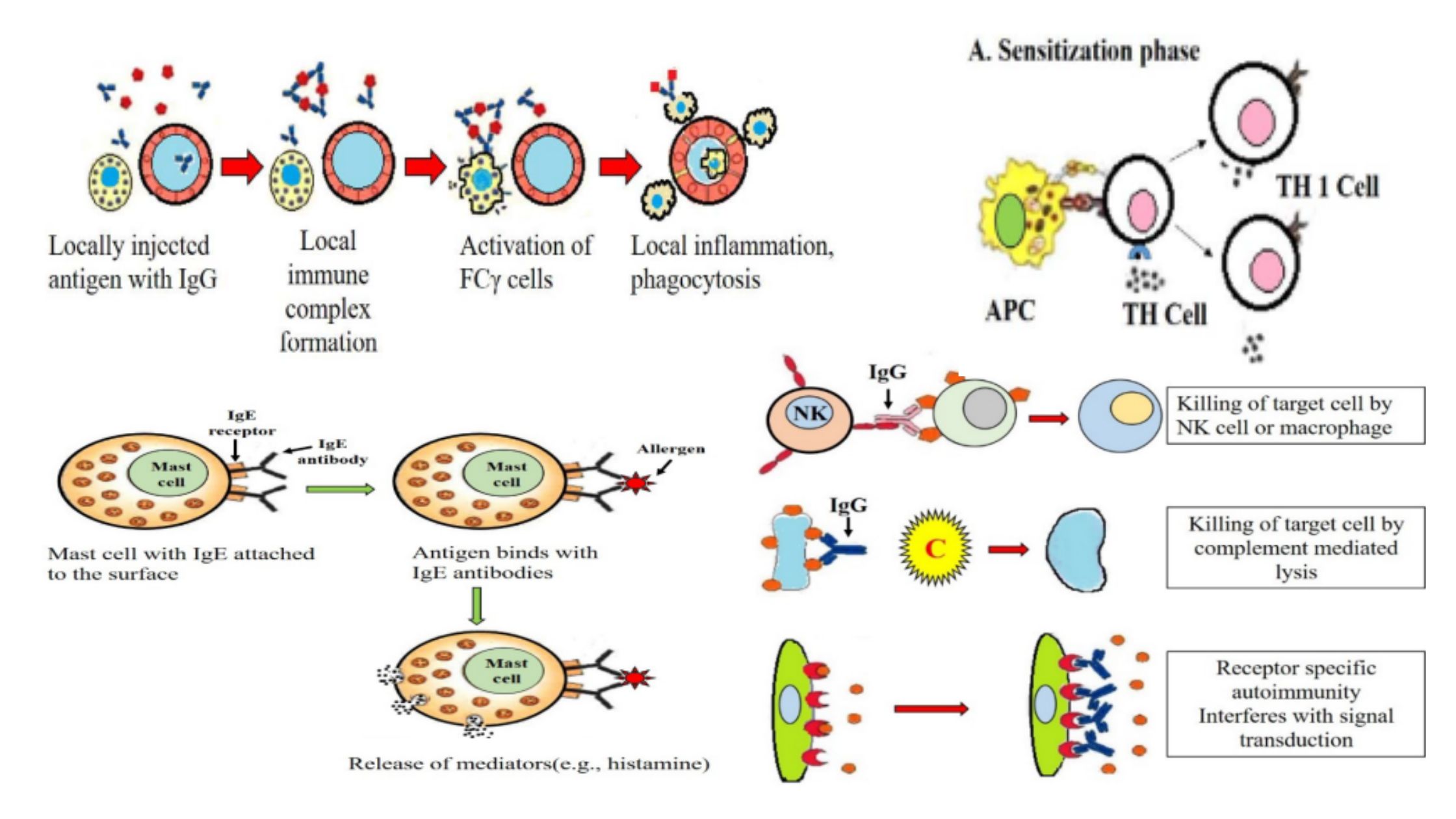
Hypersensitivity is an abnormal immune reaction of the body. It is an exaggerated response against an antigen. This reaction causes tissue damage and different physiological disturbances in the body. Normally immune system protects the body from harmful substances. But in hypersensitivity, the same immune system reacts in harmful way. It may react against harmless substances … Read more
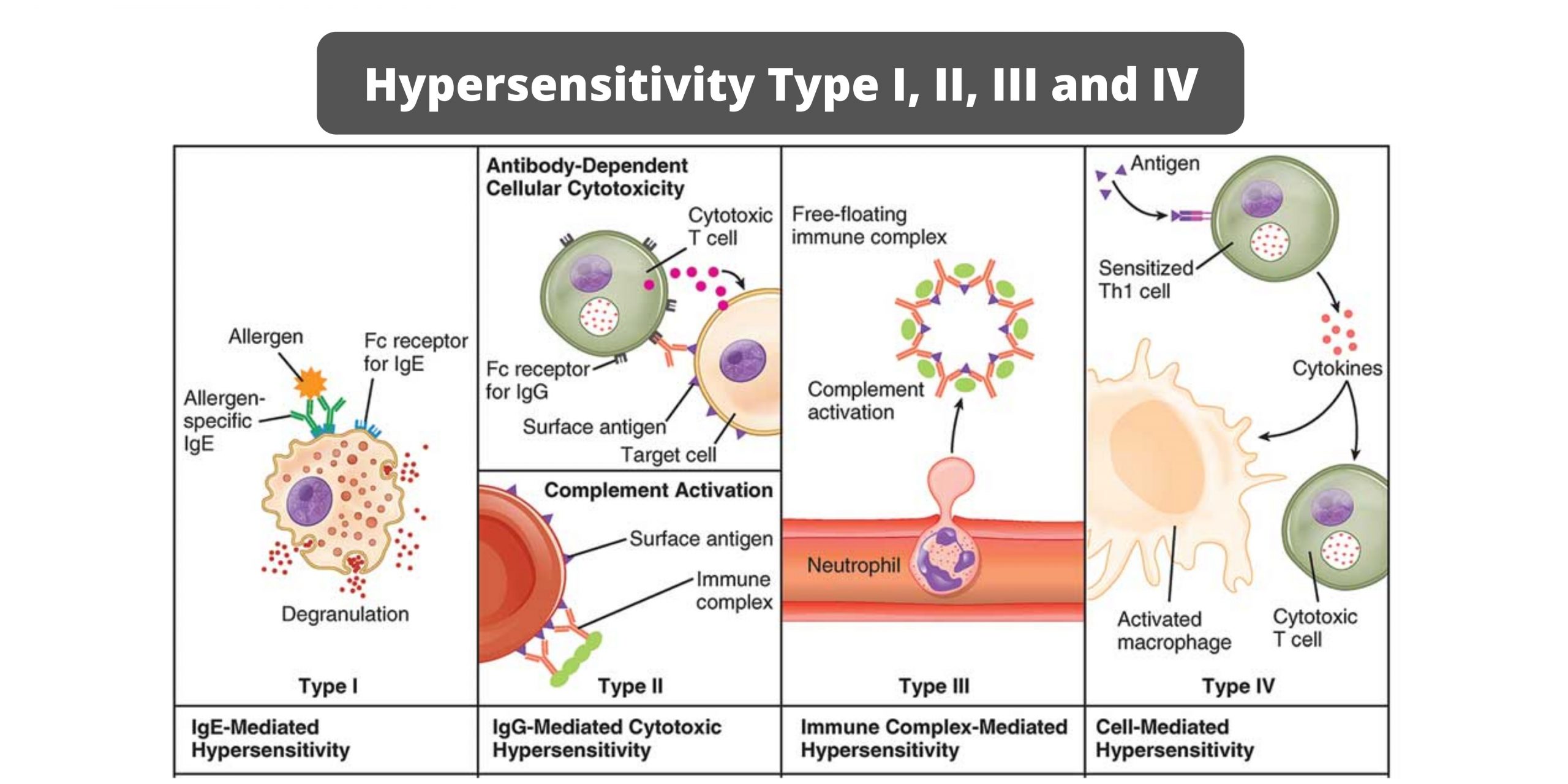
Hypersensitivity Type I, II, III and IV- Summary in table form

Hypersensitivity Type I, II, III and IV- Summary in table form

Hypersensitivity (also known as hypersensitivity response or intolerance) is a term used to describe undesirable reactions that are caused by the immune system, which includes autoimmunity and allergies. These are typically called an overreaction of the immune system, and these reactions can be harmful and uncomfortable. It is an immunologic term , and should not be misinterpreted as a psychiatric term of being hypersensitive, which refers that a person is hypersensitive to physical (ie sounds, touch light, sound, etc.) or emotional stimuli. However, there is a link between the two , studies have demonstrated that with ADHD (a mental disorders) tend to experience hypersensitivity reactions, such as asthma, allergies, or eczema and more than people who don’t have ADHD.