

Parthenogenesis is a type of reproduction where the egg develops into a new individual without fertilization by a male gamete. No fertilization takes place. This is a form of uniparental reproduction and is generally included under asexual reproduction. It is found especially in many invertebrates, while some vertebrates including fishes, reptiles and birds also show parthenogenesis. Depending upon the mechanism of egg development, the offspring formed can be haploid or diploid.
Parthenogenesis is the development of an organism from an unfertilized egg, without the fusion of male and female gametes. It is a form of uniparental or asexual reproduction. The offspring may be haploid or diploid depending on the mechanism involved.
What is Parthenogenesis?
The term parthenogenesis is derived from the Greek words parthenos meaning “virgin” and genesis meaning “origin” or “generation”. Parthenogenesis is a type of uniparental reproduction where a new individual is developed from an unfertilized egg. Fertilization is absent in this process.
The egg, however, still takes part in the reproduction and starts its development without fusion with male gamete. An individual formed through this process is referred to as a parthenote. It occurs naturally in many invertebrates and also in some vertebrates.
In ordinary sexual reproduction, male and female gametes fuse during fertilization and a zygote is formed. During parthenogenesis, such fusion does not take place. The development is started from the egg itself.
Characteristics of Parthenogenesis
- Parthenogenesis involves the development of an individual from an unfertilized egg, without fusion with male gamete.
- It is generally a uniparental mode of reproduction. Only one parent is involved in producing the offspring.
- The egg takes part in the formation of new individual. Fertilization, however, does not occur.
- Offspring formed by parthenogenesis may be haploid or diploid depending upon the mechanism of development.
- Parthenogenesis is commonly present among many invertebrates. It is also reported in some vertebrates including fishes, reptiles and birds.
- On the basis of offspring produced, it may occur as arrhenotoky where males are produced from unfertilized eggs and thelytoky, producing females.
- It may be obligate, facultative or cyclical. Some organisms reproduce regularly through parthenogenesis, while in others it occurs only under particular conditions or alternates with sexual reproduction.
- Meiosis is not absent in all forms of parthenogenesis. Different cytological mechanisms are involved in maintaining or restoring the chromosome number.
- Parthenogenetic offspring are not always genetically identical with the parent. In some forms they are nearly clonal, whereas meiotic forms can show changes in genetic heterozygosity.
How Does Parthenogenesis Work? – Parthenogenetic Pathway
The following are the main steps involved in the Parthenogenetic Pathway:
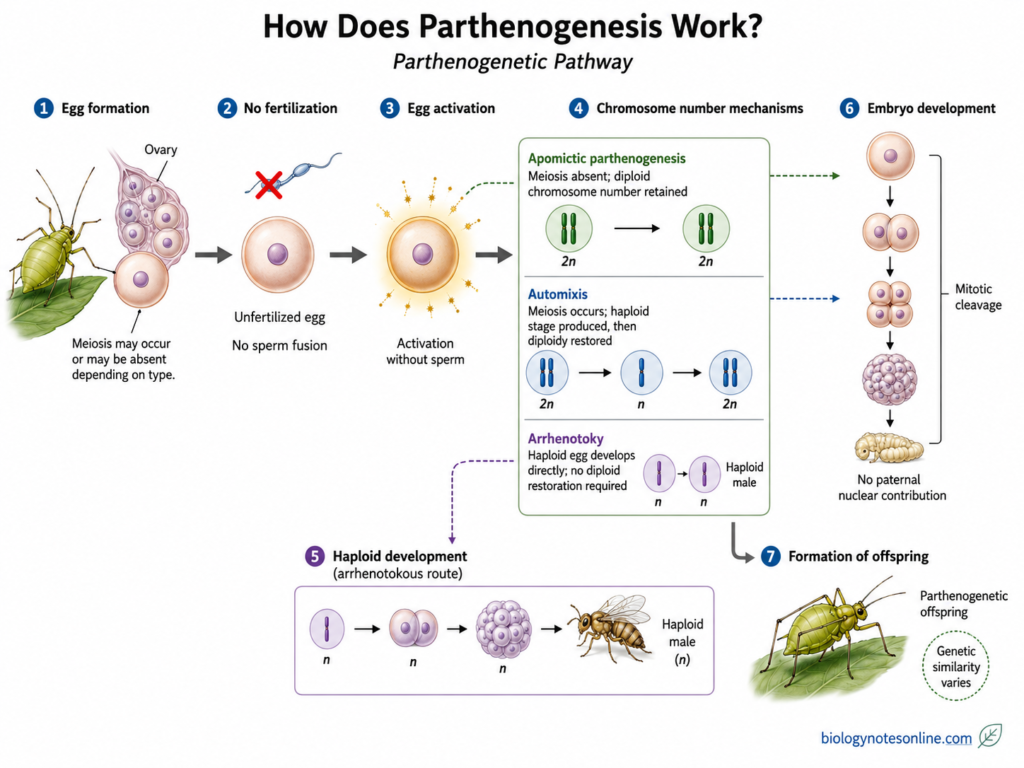
- Formation of egg – The process begins with formation of egg in the female. Meiosis may occur during egg formation or can be absent, depending upon the type of parthenogenesis.
- No fertilization – The formed egg remains unfertilized. Fusion of sperm with egg does not take place in this process.
- Activation of egg – The unfertilized egg becomes activated and starts development. This activation takes place without the participation of sperm, but the mechanism may differ among organisms.
- Chromosome number – The chromosome number depends upon the mechanism involved. In apomictic parthenogenesis, meiosis is absent and chromosome number is retained, whereas in automixis, meiosis occurs and diploidy can be restored by different processes.
- Haploid development – Restoration of diploid chromosome number is not always required. In arrhenotokous parthenogenesis, the haploid unfertilized egg develops directly into a haploid male.
- Development of embryo – After activation, repeated cell divisions take place and an embryo is formed. There is no paternal nuclear contribution during this development.
- Formation of offspring – The embryo further develops into a parthenogenetic individual. Genetic similarity of the offspring with mother can vary depending upon the type and mechanism of parthenogenesis.
Types of Parthenogenesis
Parthenogenesis can occur in different forms depending upon the cytological mechanism, sex of offspring and its occurrence in the life cycle. The different types are mentioned below-
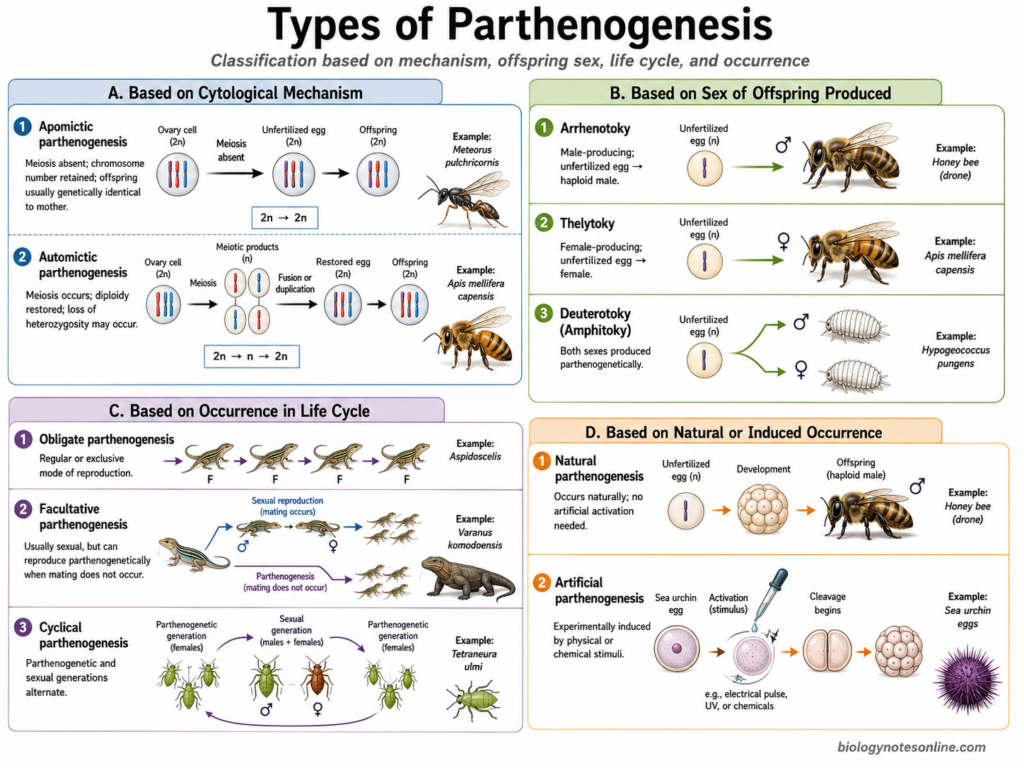
A. Based on Cytological Mechanism
- Apomictic Parthenogenesis – In this type, meiosis is absent during formation of egg. The maternal chromosome number is retained and development takes place without fertilization. Offspring produced are generally genetically identical with the mother, except for new mutations. Example – The parasitoid wasp Meteorus pulchricornis shows apomictic parthenogenesis.
- Automictic Parthenogenesis – Meiosis takes place and reduced meiotic products are formed. Diploidy is then restored by fusion of meiotic products or by duplication of chromosomes. Since meiosis occurs, loss of heterozygosity can be present in the offspring. Example – The Cape honey bee Apis mellifera capensis shows automictic parthenogenesis with central fusion.
B. Based on Sex of Offspring Produced
- Arrhenotoky – It is a type of parthenogenesis in which males are produced from unfertilized eggs. This type is commonly found in many Hymenoptera. Example – Honey bees show arrhenotoky, where unfertilized eggs develop into haploid males or drones.
- Thelytoky – In this type, unfertilized eggs develop into female offspring. It is also referred to as female-producing parthenogenesis. Example – The Cape honey bee Apis mellifera capensis is an example, where females can be produced through thelytokous parthenogenesis.
- Deuterotoky or Amphitoky – Both male and female offspring can be produced parthenogenetically. This form is referred to as deuterotokous parthenogenesis or amphitoky. (link.springer.com)Example – The mealybug Hypogeococcus pungens shows deuterotokous parthenogenesis.
C. Based on its Occurrence in Life Cycle
- Obligate Parthenogenesis – Parthenogenesis is the regular or almost exclusive mode of reproduction in these organisms. Sexual reproduction is absent or occurs very rarely. Example – Several parthenogenetic whiptail lizards of the genus Aspidoscelis reproduce by obligate parthenogenesis.
- Facultative Parthenogenesis – Organisms normally have the capacity for sexual reproduction but can also produce offspring parthenogenetically. It may occur when mating does not take place or under particular biological conditions. Example – The Komodo dragon Varanus komodoensis is a well-known example of facultative parthenogenesis.
- Cyclical Parthenogenesis – Parthenogenetic and sexual generations alternate during the life cycle. Several parthenogenetic generations may occur before a sexual generation, as commonly found in aphids and some other groups. Example – The aphid Tetraneura ulmi is a classic example of cyclical parthenogenesis.
D. Based on Natural or Induced Occurrence
- Natural Parthenogenesis – It occurs naturally as a part of reproduction of an organism. No artificial treatment is required for activation and development of the unfertilized egg. Example – Natural parthenogenesis occurs in honey bees, where unfertilized eggs normally develop into males.
- Artificial Parthenogenesis – Development of an unfertilized egg is induced experimentally by different physical or chemical stimuli. Artificial activation has been produced in the eggs of different animals, including mammalian oocytes under laboratory conditions. Example – Unfertilized sea urchin eggs can be artificially activated and induced to start parthenogenetic development.
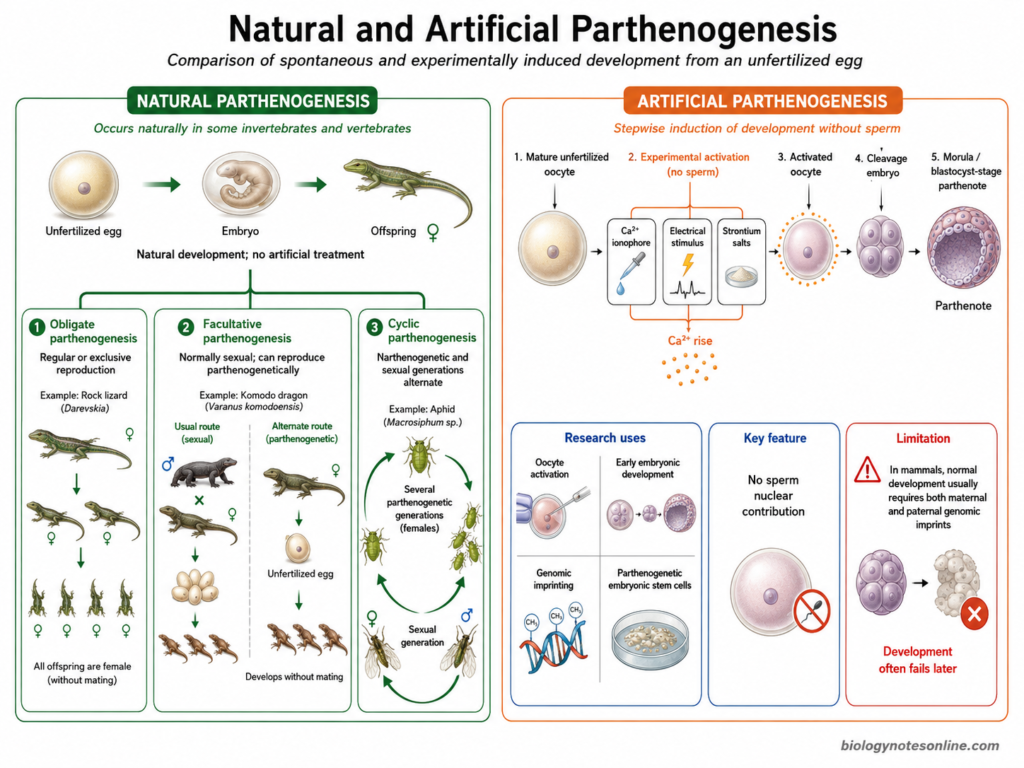
Natural Parthenogenesis
Natural parthenogenesis is the development of an individual from an unfertilized egg under natural conditions. No artificial treatment is required for activation and development of the egg. It is found in different invertebrates and also occurs naturally in some vertebrates.
Natural parthenogenesis can occur in the following forms-
- Obligate Parthenogenesis – In this type, parthenogenesis is the regular or exclusive mode of reproduction. Sexual reproduction is absent or occurs very rarely. Example – Parthenogenetic rock lizards of the genus Darevskia show natural obligate parthenogenesis.
- Facultative Parthenogenesis – Organisms normally have the ability for sexual reproduction but can also reproduce through parthenogenesis. The unfertilized egg develops without mating or fertilization. Example – The Komodo dragon Varanus komodoensis is a well-known example of facultative parthenogenesis.
- Cyclic Parthenogenesis – Parthenogenetic reproduction alternates with sexual reproduction during the life cycle. Several parthenogenetic generations can be produced before a sexual generation occurs. Example – Aphids commonly show cyclic or cyclical parthenogenesis.
Artificial Parthenogenesis
Artificial parthenogenesis is the development of an unfertilized oocyte after its activation by artificial means. The egg does not receive sperm nuclear material. Instead, activation is produced experimentally and the oocyte is induced to start embryonic development.
The important features of artificial parthenogenesis are-
- Artificial activation of oocyte – An unfertilized mature oocyte is first taken for the process. It is then activated without fertilization by sperm. The activation can cause completion of meiosis and beginning of embryonic cell divisions.
- Experimental activation – Different physical or chemical treatments can be used for activation. Calcium ionophores, electrical stimulation and strontium salts in some experimental animals are among the methods used. These treatments produce intracellular signals, especially increase in Ca²⁺, similar to an important part of normal egg activation.
- Development of parthenote – After activation, the oocyte starts cleavage and a parthenogenetic embryo or parthenote is formed. Depending upon activation method and chromosome condition, development can continue through different early embryonic stages and in some experiments up to the blastocyst stage.
- Embryology and developmental research – Artificial parthenogenesis is used for studying oocyte activation, early embryonic development and genomic imprinting. Parthenogenetic embryos have also been used for studying maternal genome activity and for derivation of parthenogenetic embryonic stem cells.
- Limitations – Artificial activation does not completely replace normal fertilization. In mammals, normal development generally requires both maternal and paternal genomic imprints, and parthenogenetic embryos usually fail during further development. Developmental ability can also vary with the activation method and chromosome constitution of the parthenote.
Parthenogenesis in Honey Bees
Parthenogenesis in honey bees is a common example of arrhenotokous parthenogenesis. In this type, unfertilized eggs develop into males or drones, while fertilized eggs normally produce females. Honey bees therefore show a haplodiploid system of reproduction.
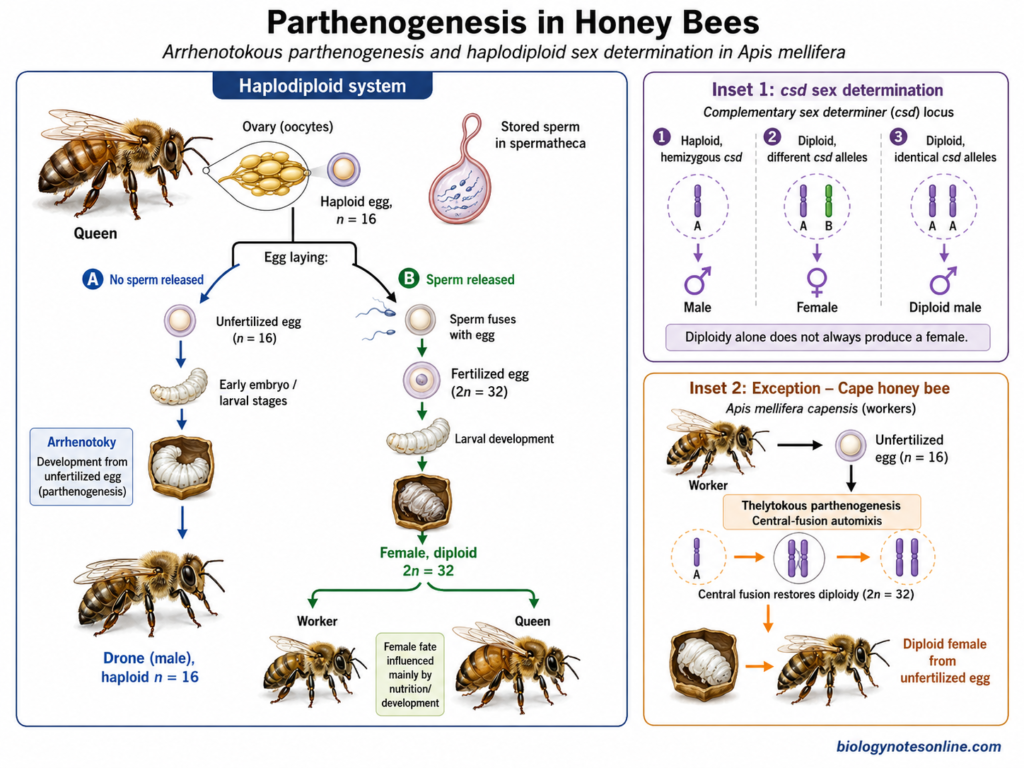
The process of parthenogenesis in honey bees is as follows-
- The queen honey bee produces eggs by meiosis. These eggs contain a haploid set of chromosomes. In Apis mellifera, the haploid number is 16 chromosomes.
- After mating, sperms are stored in the spermatheca of queen. During egg laying, an egg may be fertilized with stored sperm or can be laid without fertilization.
- An unfertilized egg starts development without fusion with sperm and forms a male honey bee or drone. Such males are haploid, having only one set of chromosomes derived from the mother. This is referred to as arrhenotoky.
- When an egg is fertilized, the diploid chromosome number is formed and it generally develops into a female. The females may become workers or queen, depending mainly upon their developmental and nutritional conditions.
- In the western honey bee Apis mellifera, sex is controlled by the complementary sex determiner (csd) system. Haploid individuals are hemizygous at this locus and develop as males, while diploid individuals with two different csd alleles develop as females.
- Diploidy alone does not always result in a female. A fertilized egg having two identical alleles at the csd locus can develop into a diploid male, instead of a normal female.
- An exception is present in the Cape honey bee, Apis mellifera capensis. Workers of this subspecies can produce diploid female offspring from unfertilized eggs by thelytokous parthenogenesis, generally through central-fusion automixis.
Parthenogenesis in Aphids
Parthenogenesis is commonly present in aphids and most of the aphids show cyclical parthenogenesis. During favourable conditions, a number of parthenogenetic generations are produced one after another. Sexual generation appears later, generally when the environmental conditions change.
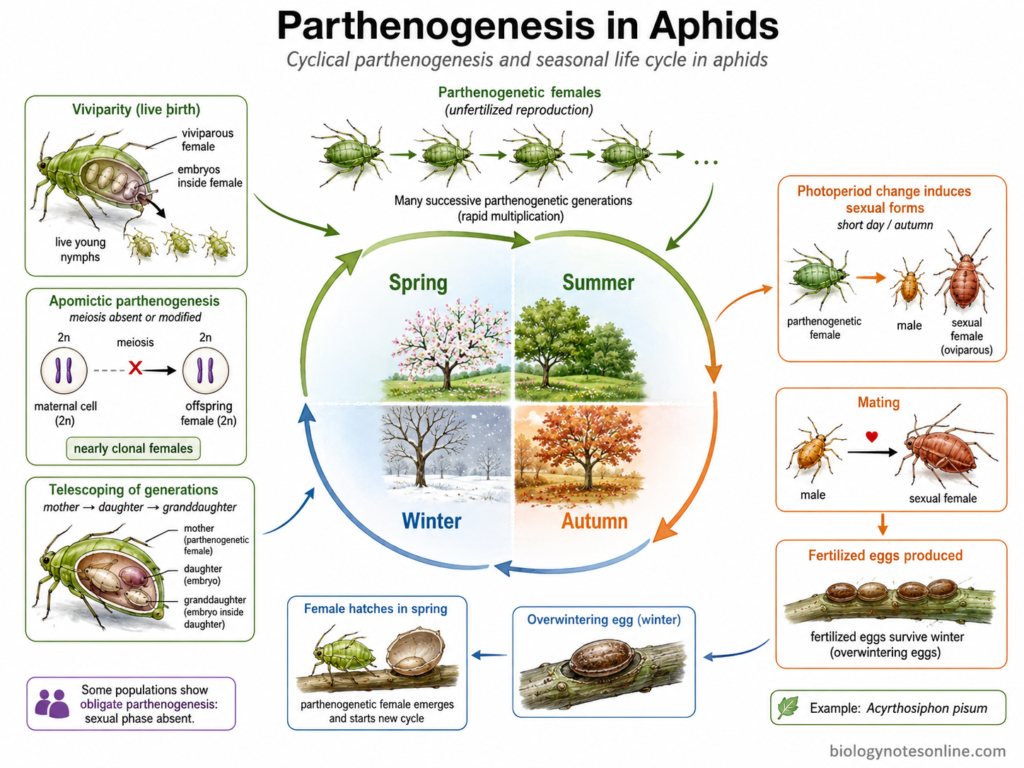
- During spring and summer, female aphids reproduce without mating. The eggs are unfertilized and mostly female offspring are produced. Several generations can be formed in a short period.
- Parthenogenetic females are generally viviparous. Instead of laying eggs, they give birth directly to young nymphs and development of embryo takes place inside the female.
- In pea aphid Acyrthosiphon pisum, parthenogenetic reproduction is generally apomictic. Normal meiotic reduction and recombination are absent or modified, and the offspring formed are nearly clonal females.
- Aphids also show telescoping of generations. A developing female present inside the mother may already contain developing embryos of the next generation. Thus, more than one generation can be present at the same time.
- During late summer or autumn, change in photoperiod induces production of sexual forms in many cyclical aphids. Males and egg-producing females are formed instead of the usual parthenogenetic females.
- The sexual females mate with males and fertilized eggs are produced. These eggs can survive the winter period. In the next spring, females hatch from these eggs and parthenogenetic reproduction again starts.
- Acyrthosiphon pisum is a common example of aphid showing cyclical parthenogenesis. Some aphid populations, however, show obligate parthenogenesis, where sexual reproduction is absent and parthenogenetic reproduction continues.
Parthenogenesis in Daphnia
Parthenogenesis is commonly found in Daphnia and most of the species show cyclical parthenogenesis. During favourable conditions, females reproduce parthenogenetically and several female generations are formed. Sexual reproduction occurs when the environmental conditions become unfavourable.
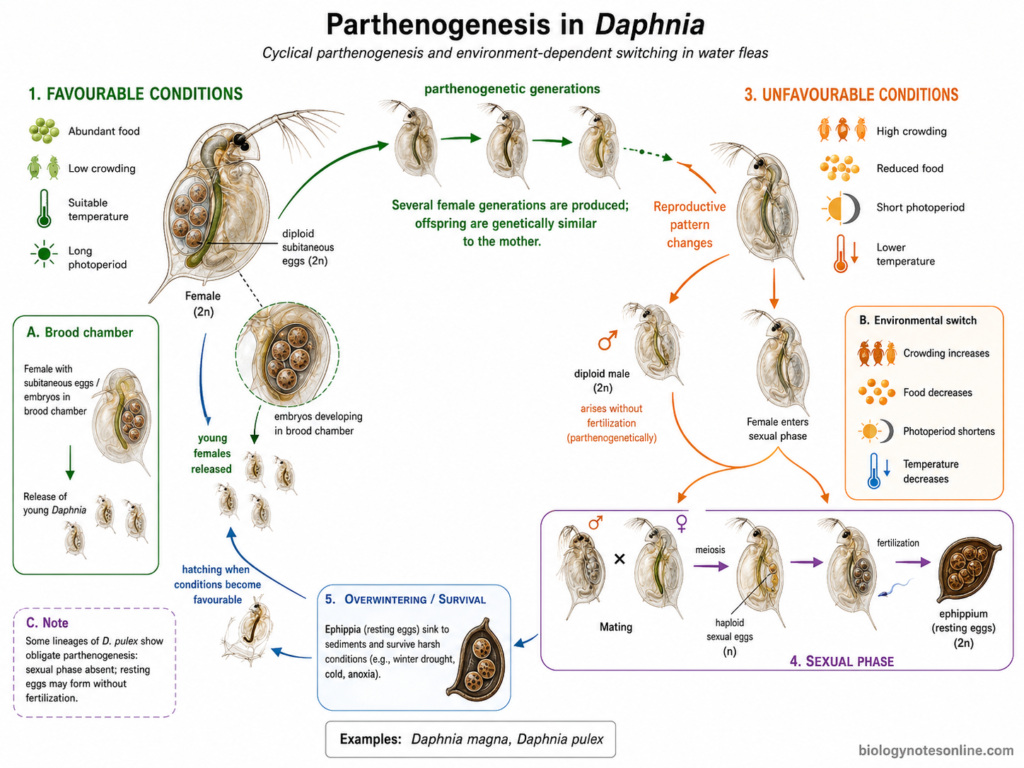
- During favourable conditions, female Daphnia produce diploid eggs without fertilization. These eggs develop into females. Several generations are produced in this way and the offspring are generally genetically similar to the mother.
- The parthenogenetic eggs are also called subitaneous eggs. These eggs are carried inside the brood chamber of female and development takes place there. After development, young Daphnia are released from the brood chamber.
- When the conditions become unfavourable, the reproductive process changes. Crowding, less availability of food, change in photoperiod and temperature are some of the conditions involved in this change. Males are then produced parthenogenetically.
- The males produced in Daphnia are diploid. Fertilization is not involved in their formation. Depending upon the environmental conditions, male or female offspring can be produced from the parthenogenetic eggs.
- During sexual phase, females produce haploid sexual eggs instead of the diploid parthenogenetic eggs. Meiosis takes place during formation of these eggs and fertilization is required for their further development.
- After mating, the eggs are fertilized and enclosed inside a protective structure called ephippium. These are the resting eggs which can survive during unfavourable conditions. When favourable conditions return, the eggs hatch and females are produced.
- Daphnia magna and Daphnia pulex are common examples showing cyclical parthenogenesis. Some lineages of D. pulex, however, show obligate parthenogenesis, where sexual reproduction is absent and resting eggs can also be produced without fertilization.
Parthenogenesis in Vertebrates
Parthenogenesis is comparatively rare in vertebrates. It has been reported in some reptiles, fishes and birds, and is also recorded in crocodilians. In this process, an unfertilized egg starts development without paternal genetic contribution. Both obligate and facultative forms are present, but obligate parthenogenesis is mainly known among squamate reptiles.
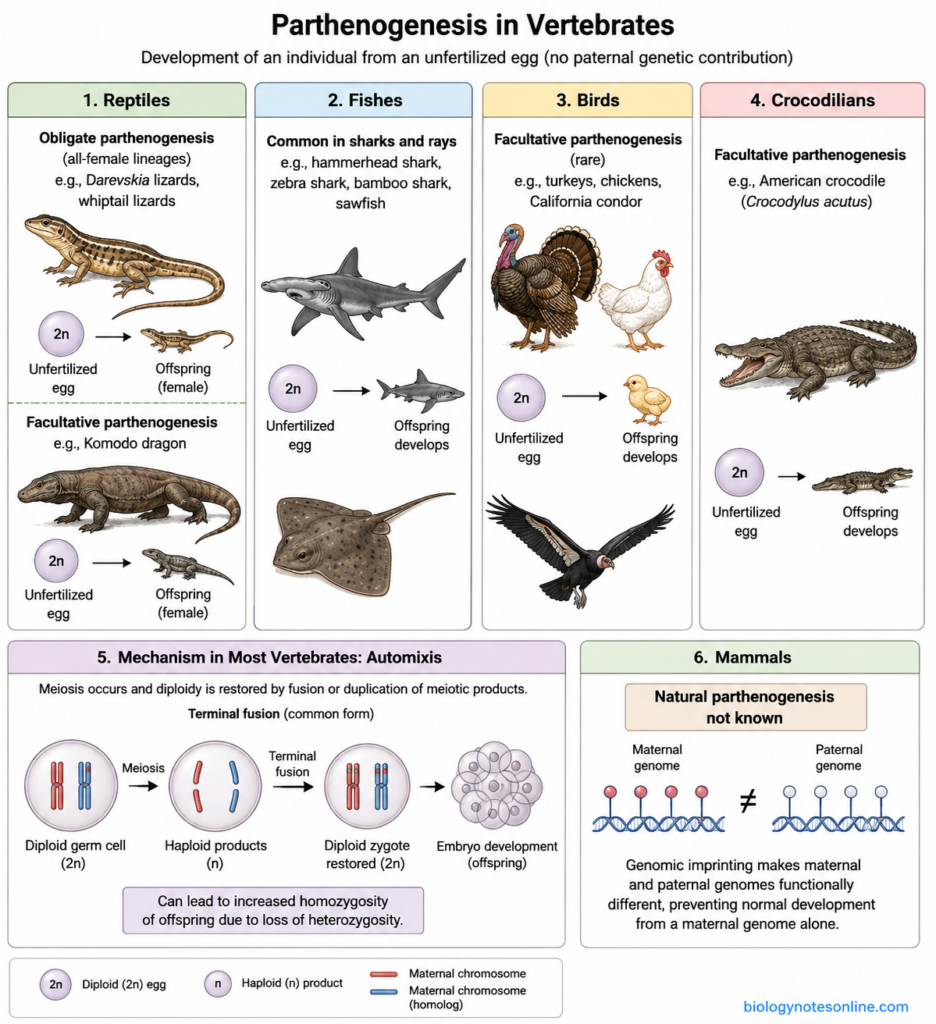
- Among reptiles, parthenogenesis is well known in several lizards. Some all-female lineages of Darevskia and whiptail lizards reproduce through obligate parthenogenesis, where males are normally absent and the unfertilized eggs develop into new individuals.
- The Komodo dragon Varanus komodoensis is a well-known example of facultative parthenogenesis. Females which normally reproduce sexually can also produce offspring from unfertilized eggs. Parthenogenetic reproduction has been genetically confirmed in this species.
- Parthenogenesis also occurs in different snakes. Boa constrictors, pythons, pitvipers and king cobras are some of the recorded examples. In these animals, females normally reproduce sexually but parthenogenetic offspring can also be produced.
- Among fishes, it is especially well documented in sharks and rays. Hammerhead shark, zebra shark, bamboo shark and sawfish are some examples. Genetic studies have confirmed that these offspring developed without contribution from a male.
- Facultative parthenogenesis is also reported in birds, although it is uncommon. Parthenogenetic development has been observed in turkeys, chickens and some other birds. In the California condor Gymnogyps californianus, two parthenogenetic offspring were genetically identified even though the females had access to fertile males.
- Parthenogenesis has also been confirmed in the American crocodile Crocodylus acutus. An isolated female produced an embryo without fertilization, and genetic analysis supported facultative parthenogenesis. This was the first genetically confirmed case reported in a crocodilian.
- In most cases of facultative parthenogenesis in vertebrates, automixis is involved. Meiosis takes place and diploidy is then restored by fusion or duplication of meiotic products. Terminal fusion is one of the commonly recorded mechanisms, which can result in increased homozygosity of offspring.
- Natural parthenogenetic reproduction is not known in mammals. Genomic imprinting makes maternal and paternal genomes functionally different during mammalian development, which prevents normal development from a maternal genome alone under natural conditions.
Parthenogenesis in Plants
Parthenogenesis in plants is the development of embryo from an egg cell without fertilization. It is generally associated with gametophytic apomixis, where seed formation takes place without the normal sexual process. The egg is involved in formation of embryo, but fusion with male gamete is absent.
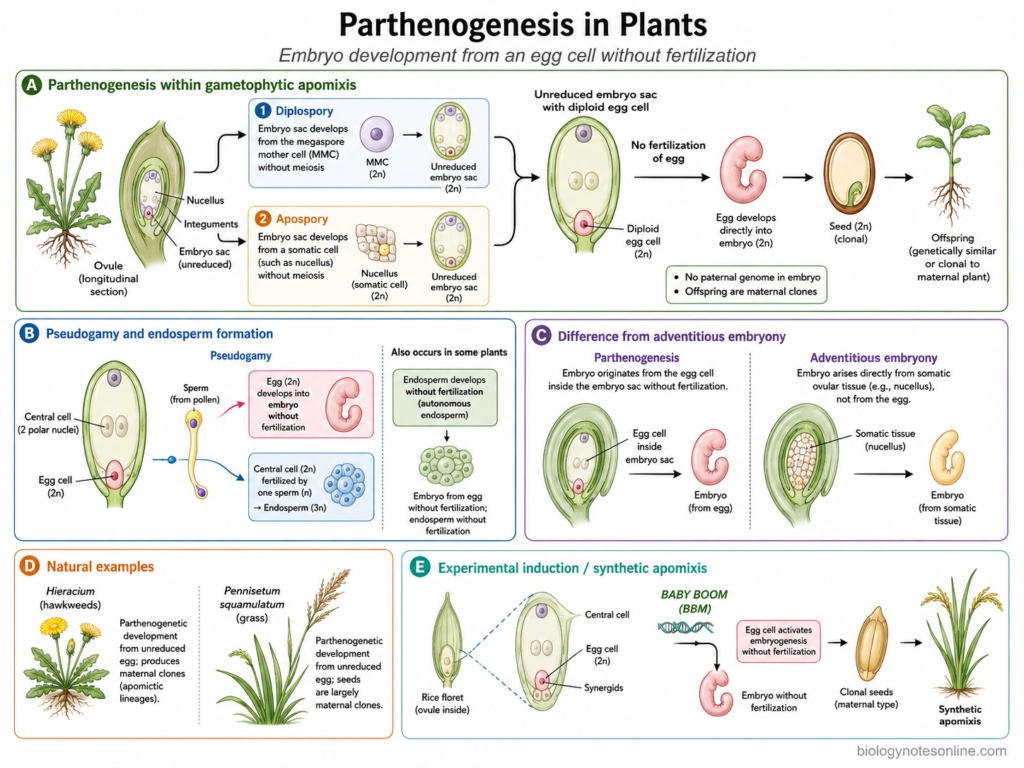
- In many apomictic plants, an unreduced embryo sac is formed without the normal meiotic process. The egg present in this embryo sac remains diploid. It later develops into embryo without fertilization.
- The unreduced embryo sac may be formed through diplospory or apospory. In diplospory, embryo sac develops from the megaspore mother cell without normal reduction division. During apospory, it is formed from a somatic cell of the ovule. The unreduced egg then can undergo parthenogenetic development.
- During this process, the egg starts embryonic development without fusion with male gamete. No paternal genome is therefore received by the embryo. In many gametophytic apomicts, offspring formed are genetically similar to the maternal plant and are generally clonal.
- Fertilization of egg is absent, but formation of endosperm may still require fertilization in many apomictic plants. Here, the sperm fertilizes the central cell but not the egg. This is referred to as pseudogamy. In some plants, however, endosperm can also develop without fertilization.
- Parthenogenesis is different from adventitious embryony. In parthenogenesis, the embryo is developed from an egg cell. During adventitious embryony, embryo develops directly from somatic tissues of the ovule such as nucellus and the egg does not form the embryo.
- Parthenogenetic development is naturally present in several apomictic plants. Species of Hieracium are common examples where embryo develops from an unreduced egg without fertilization. Pennisetum squamulatum is another studied example of this type.
- Parthenogenesis can also be produced experimentally in some crop plants. Expression of BABY BOOM (BBM) genes in egg cells has been used for development of embryo without fertilization in rice and some other grasses. Such process is being studied for production of synthetic apomixis and clonal seeds.
Can Parthenogenesis Occur in Mammals?
Natural parthenogenesis producing a normal living offspring is not known in mammals. Mammalian eggs can start development without fertilization. This can occur spontaneously in some cases or can be produced by artificial activation. The parthenogenetic embryo may undergo early cleavage and can reach the blastocyst stage. Further development generally does not continue normally.
The main problem is genomic imprinting. In mammals, some genes show different expression depending upon whether they are inherited from mother or father. A parthenogenetic embryo contains maternal genomes only. The normal maternal and paternal pattern of gene expression is therefore absent. Abnormal development of embryo and extraembryonic tissues can result from this.
Parthenogenesis has also been produced experimentally in mammals. Mouse oocytes have been artificially activated for studying early development, genomic imprinting and embryonic stem cells. In one experiment, a viable mouse was produced using two maternal genomes after changes involving H19 and Igf2 imprinting. The mouse survived to adulthood and was fertile. This was produced under experimental conditions and is not natural parthenogenesis.
Mammalian oocytes can therefore start parthenogenetic development, but complete natural development normally does not occur. Normal mammalian development generally requires contribution from both maternal and paternal genomes.
Can Parthenogenesis Occur in Humans?
Natural parthenogenesis producing a human individual has not been reported. Human oocytes, however, can undergo parthenogenetic activation without fertilization. An unfertilized human oocyte may start cell division after spontaneous activation or it can be activated experimentally. Human parthenogenetic embryos have also been developed to the blastocyst stage under laboratory conditions.
Complete development does not normally take place. One of the major reasons is genomic imprinting, where some genes have different activity depending upon their maternal or paternal origin. A human parthenote contains maternal genetic contribution only. The paternal genome and its imprinting pattern are absent, which affects normal embryonic and placental development.
Artificially activated human oocytes have been used in developmental and stem cell studies. Human parthenogenetic embryonic stem cells (hpESCs) have been obtained from blastocysts formed after activation of unfertilized oocytes. These cells have been studied for pluripotency, genomic imprinting and their possible use in regenerative research.
Hence, the human egg has the ability to begin parthenogenetic development, but a normal human offspring is not produced by this process. Natural human reproduction requires contribution from both maternal and paternal genomes for normal development to term.
Advantages of Parthenogenesis
Some of the important advantages of parthenogenesis are-
- Parthenogenesis does not require male for reproduction. A single female can produce offspring when mate is absent.
- One parthenogenetic female can start a new population. This is useful during colonization of new areas.
- In female-producing parthenogenesis, most individuals can reproduce. Hence, population can increase rapidly.
- Mating is not required during this process. Time and energy used for finding mate are reduced.
- In apomictic parthenogenesis, the maternal genotype can be maintained in the offspring without normal recombination.
- Reproduction can continue when males are temporarily unavailable. This is important in facultative parthenogenesis.
- Several parthenogenetic generations can be produced during favourable conditions. This allows rapid increase in population.
Disadvantages of Parthenogenesis
Some of the important disadvantages of parthenogenesis are-
- Parthenogenetic populations generally have less genetic variation, especially in clonal forms. Normal recombination is absent.
- Harmful or deleterious mutations can accumulate through generations. Their removal by natural selection may become less effective.
- Low genetic variation can reduce adaptation to changing environmental conditions. The same genotype may not remain favourable under new conditions.
- Genetically similar individuals may become more affected by parasites and pathogens adapted to common host genotypes. This forms the basis of the Red Queen hypothesis.
- In automictic parthenogenesis, heterozygosity can be reduced. Harmful recessive alleles may then become homozygous in the offspring.
- Beneficial mutations present in different individuals cannot be easily combined through sexual recombination. This can reduce the evolutionary response of a parthenogenetic population.
- Obligately parthenogenetic lineages can face problems during long-term evolution due to mutation accumulation and reduced adaptive potential. Facultative or cyclical forms can avoid some of these problems by returning to sexual reproduction.
Significance of Parthenogenesis
Some of the important significance of parthenogenesis are-
- Parthenogenesis allows reproduction when male is absent. Thus, reproduction can continue in isolated and small populations.
- It helps in rapid increase of population. Several generations can be produced within a short period.
- A single female can start a population in a new area. Hence, it has importance during colonization and dispersal.
- In clonal forms, successful genetic combinations can be maintained for many generations. Normal recombination is absent in this process.
- Parthenogenetic organisms are useful for studying the evolution of sex and recombination. They also help in comparison of sexual and asexual reproduction.
- Artificial parthenogenesis is used for studying oocyte activation and early embryonic development. Parthenogenetic embryos are also useful in stem cell research.
- In plants, parthenogenesis is an important part of apomixis. It has importance in crop breeding for maintaining hybrid characters and production of clonal seeds.
Parthenogenesis vs Sexual Reproduction
| Feature | Parthenogenesis | Sexual Reproduction |
|---|---|---|
| Meaning | Development takes place from an unfertilized egg. | Development takes place after fusion of male and female gametes. |
| Fertilization | Fertilization does not occur. | Fertilization is required. |
| Number of parents | Usually one parent is involved. | Generally two parents are involved. |
| Male gamete | Male gamete does not take part in formation of offspring. | Male gamete takes part and fuses with the female gamete. |
| Zygote formation | A normal fertilization-derived zygote is not formed. | A zygote is formed after fertilization. |
| Genetic contribution | Genetic material is obtained from the maternal parent only. | Genetic material is obtained from both male and female parents. |
| Genetic variation | Genetic variation is generally lower, especially in clonal forms. | Greater genetic variation is produced due to meiosis and recombination. |
| Meiosis | May be absent or modified depending upon the type. | Meiosis normally occurs during formation of gametes. |
| Chromosome number | Offspring may be haploid or diploid depending upon the mechanism. | Diploid chromosome number is normally restored after fertilization. |
| Rate of reproduction | Population can increase rapidly under favourable conditions. | Reproduction is generally slower because mating and fertilization are involved. |
| Occurrence | Common in many invertebrates and present in some vertebrates and plants. | Common mode of reproduction in most animals and many plants. |
| Examples | Honey bees, aphids, Daphnia, some lizards and sharks. | Humans, birds, most mammals and many flowering plants. |
Parthenogenesis vs Apomixis
| Feature | Parthenogenesis | Apomixis |
|---|---|---|
| Meaning | Development of a new individual takes place from an unfertilized egg. | Formation of seed without normal sexual reproduction. |
| Occurrence | Found in many invertebrates, some vertebrates and also in plants. | Mainly found in plants. |
| Egg involvement | The egg cell directly develops into embryo. | Egg may develop without fertilization in gametophytic apomixis, but some forms develop embryo from somatic ovule tissues. |
| Fertilization | Fertilization of egg does not occur. | Fertilization of egg is absent. Endosperm, however, may require fertilization in some plants. |
| Meiosis | Meiosis may be absent, modified or followed by restoration of diploidy. | Normal meiosis is usually bypassed or altered in gametophytic apomixis. |
| Main process | Unfertilized egg starts embryonic development. | Asexual seed formation takes place through apospory, diplospory or adventitious embryony. |
| Relation with embryo | Embryo is always formed from an egg cell. | Embryo may be formed from an unfertilized egg or directly from somatic tissue of ovule. |
| Genetic nature | Offspring may be clonal or may show some genetic changes depending upon the mechanism. | Offspring are generally genetically similar to the maternal plant. |
| Scope | It is a reproductive process found in animals and plants. | It is a broader plant reproductive process associated with asexual seed formation. |
| Relation between both | In plants, parthenogenesis can form one part of gametophytic apomixis. | Apomixis can include parthenogenesis, but both terms are not the same. |
| Examples | Honey bees, aphids, Daphnia, some lizards and some apomictic plants. | Hieracium, Taraxacum, Pennisetum and some Citrus species. |
Parthenogenesis vs Parthenocarpy
| Feature | Parthenogenesis | Parthenocarpy |
|---|---|---|
| Meaning | Embryo or individual develops without fertilization. | Fruit develops without fertilization. |
| Main structure involved | The egg cell is involved. | The ovary develops into fruit. |
| Fertilization | Fertilization of egg does not take place. | Fruit formation takes place without fertilization. |
| Embryo formation | An embryo can develop from the unfertilized egg. | Embryo is generally not formed because fertilization is absent. |
| Seed formation | Offspring may be formed from the unfertilized egg. | Fruits are usually seedless or contain no normally developed seeds. |
| Occurrence | Found in many invertebrates, some vertebrates and also in plants. | Mainly found in flowering plants. |
| Result | A new individual or embryo is produced. | A fruit is produced without normal seed formation. |
| Importance | It is a mode of reproduction without fertilization. | It is important for production of seedless fruits. |
| Examples | Honey bees, aphids, Daphnia and some lizards. | Banana, seedless grapes and some varieties of citrus. |
Parthenogenesis vs Gynogenesis
| Feature | Parthenogenesis | Gynogenesis |
|---|---|---|
| Meaning | Development of embryo takes place from an unfertilized egg. | Development of embryo starts after stimulation by sperm, but paternal genetic material is not incorporated. |
| Role of sperm | Sperm is not required for activation or development of egg. | Sperm is required only for activation of egg. |
| Fertilization | Fertilization does not occur. | True fertilization does not occur because sperm nucleus does not fuse with egg nucleus. |
| Paternal genome | Paternal genome is completely absent. | Paternal genome is also absent from the developing embryo. |
| Egg activation | Egg becomes activated without sperm. | Egg activation is triggered by contact or entry of sperm. |
| Genetic contribution | Genetic material is obtained from female parent only. | Genetic material is also obtained from female parent only. |
| Chromosome number | Offspring may be haploid or diploid depending upon the mechanism. | Diploidy is usually maintained or restored by different mechanisms in the maternal genome. |
| Male requirement | Male is not required for reproduction. | Male or sperm donor is required for activation of egg. |
| Main difference | Egg develops without fertilization and without sperm stimulation. | Sperm stimulates the egg, but does not genetically contribute to offspring. |
| Occurrence | Found in many invertebrates and some vertebrates. | Found mainly in some fishes, amphibians and a few other animal groups. |
| Examples | Honey bees, aphids, Daphnia and some lizards. | Poecilia formosa and some gynogenetic fishes and amphibians. |
Examples of Parthenogenesis
| Organism | Group | Type of Parthenogenesis | Main Feature |
|---|---|---|---|
| Honey bee (Apis mellifera) | Insect | Arrhenotokous parthenogenesis | Unfertilized haploid eggs develop into male drones. Fertilized eggs normally produce females. |
| Aphid | Insect | Cyclical parthenogenesis | Several all-female parthenogenetic generations alternate with a sexual generation. |
| Daphnia | Crustacean | Cyclical parthenogenesis | Females reproduce clonally during favourable conditions and switch to sexual reproduction during another part of the life cycle. |
| Bdelloid rotifer | Rotifer | Obligate parthenogenesis / asexuality | Males are unknown in the studied bdelloid groups and reproduction occurs without fertilization. |
| Trichogramma parasitic wasp | Insect | Thelytokous parthenogenesis | Unfertilized eggs develop into females. In many species, the process is induced by Wolbachia bacteria. |
| Marbled crayfish (Procambarus virginalis) | Crustacean | Obligate parthenogenesis | It is a triploid, all-female species producing clonal offspring without mating. |
| Whiptail lizard (Aspidoscelis uniparens) | Reptile | Obligate parthenogenesis | Populations are all-female and reproduction takes place without males. |
| Brahminy blindsnake (Indotyphlops braminus) | Reptile | Obligate parthenogenesis | It is a triploid, all-female snake and the only known snake species showing obligate parthenogenesis. |
| Komodo dragon (Varanus komodoensis) | Reptile | Facultative parthenogenesis | Females which normally reproduce sexually can also produce offspring without mating. |
| Zebra shark (Stegostoma tigrinum) | Cartilaginous fish | Facultative parthenogenesis | A female has been recorded switching from sexual reproduction to parthenogenetic reproduction. |
| Whitespotted bamboo shark (Chiloscyllium plagiosum) | Cartilaginous fish | Facultative parthenogenesis | Parthenogenetic offspring have been produced, and second-generation parthenogenesis has also been recorded. |
| Smalltooth sawfish (Pristis pectinata) | Cartilaginous fish | Facultative parthenogenesis | Viable parthenogenetic individuals were identified in a natural wild population. |
| Turkey (Meleagris gallopavo) | Bird | Facultative parthenogenesis | Unfertilized eggs can start development without mating. Parthenogenetic offspring that develop successfully are males. |
| California condor (Gymnogyps californianus) | Bird | Facultative parthenogenesis | Two parthenogenetic offspring were genetically identified even though the females had access to reproductively capable males. |
Parthenogenesis Quick Revision Table
| Feature | Description |
|---|---|
| Definition | Development of a new individual from an unfertilized egg, without fertilization. |
| Parent | Generally only one parent, the female, is involved. |
| Fertilization | Fertilization does not take place. |
| Gamete involved | The egg cell takes part in development. Male gamete is not involved in genetic contribution. |
| Main mechanisms | It may occur through apomixis, automixis, central fusion, terminal fusion or chromosome duplication. |
| Chromosome number | Offspring may be haploid or diploid, depending upon the mechanism involved. |
| Arrhenotoky | Unfertilized eggs develop into male offspring. Example- honey bee drones. |
| Thelytoky | Unfertilized eggs develop into female offspring. Example- Cape honey bee. |
| Deuterotoky | Both male and female offspring can be produced parthenogenetically. |
| Obligate | Parthenogenesis is the regular or almost exclusive mode of reproduction. |
| Facultative | Organisms normally reproduce sexually but can also reproduce by parthenogenesis. |
| Cyclic | Parthenogenetic and sexual generations alternate during the life cycle. |
| Classic examples | Honey bee, aphid, Daphnia, rotifers, marbled crayfish, whiptail lizard, Komodo dragon and some sharks. |
| Advantages | Male is not required, population can increase rapidly and a single female can establish a new population. |
| Disadvantages | Genetic variation is generally lower, harmful mutations can accumulate and adaptability may be reduced. |
References
- Alberts, B., Johnson, A., Lewis, J., Raff, M., Roberts, K., & Walter, P. (2002). Molecular biology of the cell (4th ed.). Garland Science. https://www.ncbi.nlm.nih.gov/books/NBK21054/
- Booth, W., Levine, B. A., Corush, J. B., Davis, M. A., Dwyer, Q., De Plecker, R., & Schuett, G. W. (2023). Discovery of facultative parthenogenesis in a New World crocodile. Biology Letters, 19(6), 20230129. https://doi.org/10.1098/rsbl.2023.0129
- Bos-Mikich, A., Bressan, F. F., Ruggeri, R. R., Watanabe, Y. F., & Meirelles, F. V. (2016). Parthenogenesis and human assisted reproduction. Stem Cells International, 2016, 1970843. https://doi.org/10.1155/2016/1970843
- Brevini, T. A. L., & Gandolfi, F. (2013). Parthenogenesis and parthenogenetic stem cells. In A. Trounson, R. Gosden, & U. Eichenlaub-Ritter (Eds.), Biology and pathology of the oocyte: Role in fertility, medicine, and nuclear reprogramming (2nd ed., pp. 250–260). Cambridge University Press. https://doi.org/10.1017/CBO9781139135030.022
- Beye, M., Hasselmann, M., Fondrk, M. K., Page, R. E., Jr., & Omholt, S. W. (2003). The gene csd is the primary signal for sexual development in the honeybee and encodes an SR-type protein. Cell, 114(4), 419–429. https://doi.org/10.1016/S0092-8674(03)00606-8
- Chapman, D. D., Shivji, M. S., Louis, E., Sommer, J., Fletcher, H., & Prodöhl, P. A. (2007). Virgin birth in a hammerhead shark. Biology Letters, 3(4), 425–427. https://doi.org/10.1098/rsbl.2007.0189
- Dudgeon, C. L., Coulton, L., Bone, R., Ovenden, J. R., & Thomas, S. (2017). Switch from sexual to parthenogenetic reproduction in a zebra shark. Scientific Reports, 7, 40537. https://doi.org/10.1038/srep40537
- Engelstädter, J. (2017). Asexual but not clonal: Evolutionary processes in automictic populations. Genetics, 206(2), 993–1009. https://doi.org/10.1534/genetics.116.196873
- Fields, A. T., Feldheim, K. A., Poulakis, G. R., & Chapman, D. D. (2015). Facultative parthenogenesis in a critically endangered wild vertebrate. Current Biology, 25(11), R446–R447. https://doi.org/10.1016/j.cub.2015.04.018
- Fricke, L. C., & Lindsey, A. R. I. (2024). Examining Wolbachia-induced parthenogenesis in Hymenoptera. In A. M. Fallon (Ed.), Wolbachia: Methods and protocols (pp. 55–68). Humana. https://doi.org/10.1007/978-1-0716-3553-7_4
- Fujita, M. K., Singhal, S., Brunes, T. O., & Maldonado, J. A. (2020). Evolutionary dynamics and consequences of parthenogenesis in vertebrates. Annual Review of Ecology, Evolution, and Systematics, 51, 191–214. https://doi.org/10.1146/annurev-ecolsys-011720-114900
- Fusco, G., & Minelli, A. (2019). The natural history of reproduction. In The biology of reproduction (pp. 86–195). Cambridge University Press. https://doi.org/10.1017/9781108758970.005
- Fusco, G., & Minelli, A. (2023). One-parent (or nearly so) sexual reproduction. In Understanding reproduction (pp. 108–122). Cambridge University Press. https://doi.org/10.1017/9781009225922.008
- Gutekunst, J., Andriantsoa, R., Falckenhayn, C., Hanna, K., Stein, W., Rasamy, J., & Lyko, F. (2018). Clonal genome evolution and rapid invasive spread of the marbled crayfish. Nature Ecology & Evolution, 2, 567–573. https://doi.org/10.1038/s41559-018-0467-9
- Gwatkin, R. B. L. (1977). Parthenogenesis. In Fertilization mechanisms in man and mammals (pp. 115–119). Springer. https://doi.org/10.1007/978-1-4615-8804-7_15
- Hanson, S. J., Stelzer, C.-P., Welch, D. B. M., & Logsdon, J. M., Jr. (2013). Comparative transcriptome analysis of obligately asexual and cyclically sexual rotifers reveals genes with putative functions in sexual reproduction, dormancy, and asexual egg production. BMC Genomics, 14, 412. https://doi.org/10.1186/1471-2164-14-412
- Heimpel, G. E., & de Boer, J. G. (2008). Sex determination in the Hymenoptera. Annual Review of Entomology, 53, 209–230. https://doi.org/10.1146/annurev.ento.53.103106.093441
- Jaquiéry, J., Stoeckel, S., Larose, C., Nouhaud, P., Rispe, C., Mieuzet, L., Bonhomme, J., Mahéo, F., Legeai, F., Gauthier, J.-P., Prunier-Leterme, N., Tagu, D., & Simon, J.-C. (2014). Genetic control of contagious asexuality in the pea aphid. PLOS Genetics, 10(12), e1004838. https://doi.org/10.1371/journal.pgen.1004838
- Jaron, K. S., Bast, J., Ranallo-Benavidez, T. R., Robinson-Rechavi, M., & Schwander, T. (2021). Genomic features of parthenogenetic animals. Journal of Heredity, 112(1), 19–33. https://doi.org/10.1093/jhered/esaa031
- Kato, Y., Kobayashi, K., Watanabe, H., & Iguchi, T. (2011). Environmental sex determination in the branchiopod crustacean Daphnia magna: Deep conservation of a Doublesex gene in the sex-determining pathway. PLOS Genetics, 7(3), e1001345. https://doi.org/10.1371/journal.pgen.1001345
- Koltunow, A. M., & Grossniklaus, U. (2003). Apomixis: A developmental perspective. Annual Review of Plant Biology, 54, 547–574. https://doi.org/10.1146/annurev.arplant.54.110901.160842
- Koltunow, A. M. G., Johnson, S. D., & Okada, T. (2011). Apomixis in hawkweed: Mendel’s experimental nemesis. Journal of Experimental Botany, 62(5), 1699–1707. https://doi.org/10.1093/jxb/err011
- Kono, T., Obata, Y., Wu, Q., Niwa, K., Ono, Y., Yamamoto, Y., Park, E. S., Seo, J. S., & Ogawa, H. (2004). Birth of parthenogenetic mice that can develop to adulthood. Nature, 428, 860–864. https://doi.org/10.1038/nature02402
- Li, Z., Wan, H., Feng, G., Wang, L., He, Z., Wang, Y., Wang, X.-J., Li, W., Zhou, Q., & Hu, B. (2016). Birth of fertile bimaternal offspring following intracytoplasmic injection of parthenogenetic haploid embryonic stem cells. Cell Research, 26(1), 135–138. https://doi.org/10.1038/cr.2015.151
- Markow, T. A. (2013). Parents without partners: Drosophila as a model for understanding the mechanisms and evolution of parthenogenesis. G3: Genes|Genomes|Genetics, 3(4), 757–762. https://doi.org/10.1534/g3.112.005421
- Mirzaghaderi, G., & Hörandl, E. (2016). The evolution of meiotic sex and its alternatives. Proceedings of the Royal Society B: Biological Sciences, 283(1838), 20161221. https://doi.org/10.1098/rspb.2016.1221
- Moran, N. A. (1992). The evolution of aphid life cycles. Annual Review of Entomology, 37, 321–348. https://doi.org/10.1146/annurev.en.37.010192.001541
- Normark, B. B. (2003). The evolution of alternative genetic systems in insects. Annual Review of Entomology, 48, 397–423. https://doi.org/10.1146/annurev.ento.48.091801.112703
- Ozias-Akins, P., & van Dijk, P. J. (2007). Mendelian genetics of apomixis in plants. Annual Review of Genetics, 41, 509–537. https://doi.org/10.1146/annurev.genet.40.110405.090511
- Rabeling, C., & Kronauer, D. J. C. (2013). Thelytokous parthenogenesis in eusocial Hymenoptera. Annual Review of Entomology, 58, 273–292. https://doi.org/10.1146/annurev-ento-120811-153710
- Revazova, E. S., Turovets, N. A., Kochetkova, O. D., Kindarova, L. B., Kuzmichev, L. N., Janus, J. D., & Pryzhkova, M. V. (2007). Patient-specific stem cell lines derived from human parthenogenetic blastocysts. Cloning and Stem Cells, 9(3), 432–449. https://doi.org/10.1089/clo.2007.0033
- Ryder, O. A., Thomas, S., Martin Judson, J., Romanov, M. N., Dandekar, S., Papp, J. C., Sidak-Loftis, L. C., Walker, K., Stalis, I. H., Mace, M., Steiner, C. C., & Chemnick, L. G. (2021). Facultative parthenogenesis in California condors. Journal of Heredity, 112(7), 569–574. https://doi.org/10.1093/jhered/esab052
- Satow, T., & Matsuda, H. (2023). Range expansions of sexual versus asexual organisms. Journal of Evolutionary Biology, 36(4), 698–708. https://doi.org/10.1111/jeb.14161
- Schurko, A. M., Logsdon, J. M., Jr., & Eads, B. D. (2009). Meiosis genes in Daphnia pulex and the role of parthenogenesis in genome evolution. BMC Evolutionary Biology, 9, 78. https://doi.org/10.1186/1471-2148-9-78
- Šarhanová, P., Majeský, Ľ., & Sochor, M. (2024). A novel strategy to study apomixis, automixis, and autogamy in plants. Plant Reproduction, 37, 379–392. https://doi.org/10.1007/s00497-024-00499-6
- Suomalainen, E. (1962). Significance of parthenogenesis in the evolution of insects. Annual Review of Entomology, 7, 349–366. https://doi.org/10.1146/annurev.en.07.010162.002025
- Tsutsui, Y., Maeto, K., Hamaguchi, K., Isaki, Y., Takami, Y., Naito, T., & Miura, K. (2014). Apomictic parthenogenesis in a parasitoid wasp Meteorus pulchricornis, uncommon in the haplodiploid order Hymenoptera. Bulletin of Entomological Research, 104(3), 307–313. https://doi.org/10.1017/S0007485314000017
- van der Kooi, C. J., Matthey-Doret, C., & Schwander, T. (2017). Evolution and comparative ecology of parthenogenesis in haplodiploid arthropods. Evolution Letters, 1(6), 304–316. https://doi.org/10.1002/evl3.30
- Vernet, A., Meynard, D., Lian, Q., Mieulet, D., Gibert, O., Bissah, M., Mbelo, S., Droc, G., Callot, C., Chalabi, S., Nguyen, T. H. N., Courtois, B., Guiderdoni, E., & Mercier, R. (2022). High-frequency synthetic apomixis in hybrid rice. Nature Communications, 13, 7963. https://doi.org/10.1038/s41467-022-35679-3
- Watts, P. C., Buley, K. R., Sanderson, S., Boardman, W., Ciofi, C., & Gibson, R. (2006). Parthenogenesis in Komodo dragons. Nature, 444, 1021–1022. https://doi.org/10.1038/4441021a
- Wyffels, J. T., Adams, L. M., Bulman, F., Fustukjian, A., Hyatt, M. W., Feldheim, K. A., & Penfold, L. M. (2021). Artificial insemination and parthenogenesis in the whitespotted bamboo shark Chiloscyllium plagiosum. Scientific Reports, 11, 9966. https://doi.org/10.1038/s41598-021-88568-y
- Xiong, J., Hu, F., Ren, J., Huang, Y., Liu, C., & Wang, K. (2023). Synthetic apomixis: The beginning of a new era. Current Opinion in Biotechnology, 79, 102877. https://doi.org/10.1016/j.copbio.2022.102877