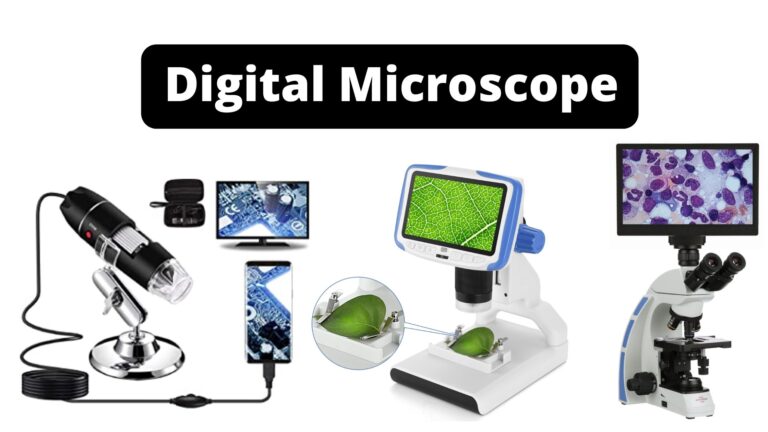
Digital microscopes are modern microscope which does not have an eyepiece. This is a huge contrast from an optical microscope. Digital microscopes have an electronic camera that acts as the detector as well as the imaging output gadget. It displays the images takes place via a computer’s screen or monitor, which defines the scope of the microscope’s digital.
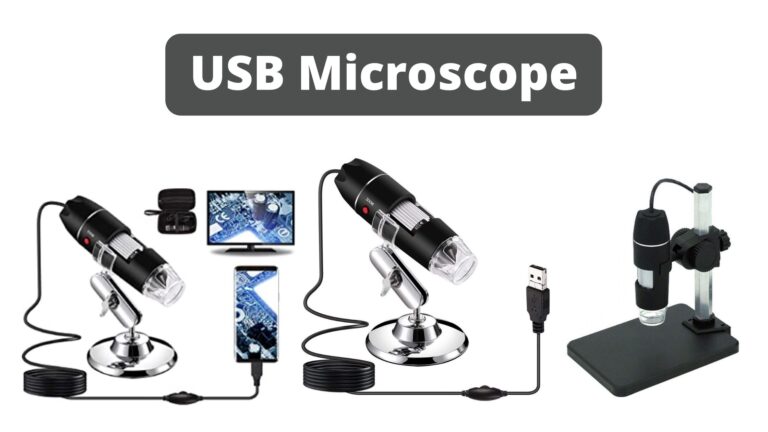
This is a form of digital Microscope which is connected to a computer using an USB port. It operates on low power. The camera is fitted with a powerful macro lens. Additionally, they have an integrated LED light that is built into the lens.
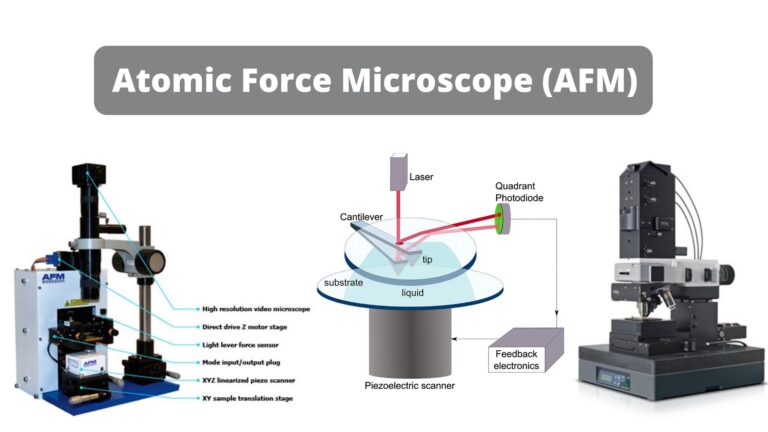
The AFM, also known as the atomic force microscope (AFM) is a sort scanner probe. Its principal functions include measuring characteristics like height, magnetism and friction.
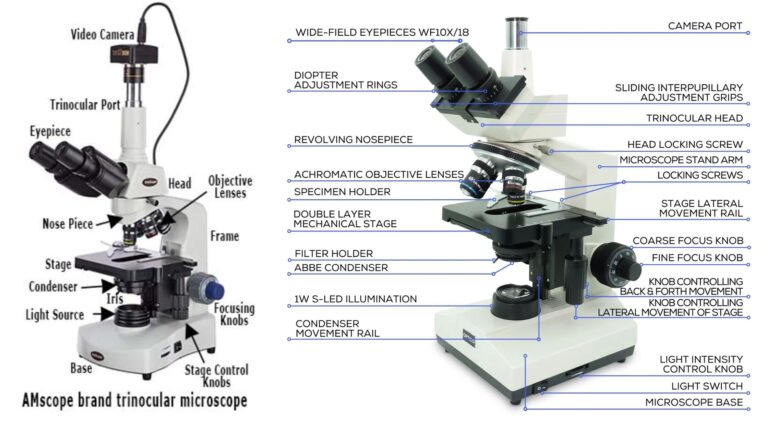
A trinocular microscope can define as a specialized Light-Microscopy instrument that adds a third optical tube for imaging or recording purpose’s, and this design is widely used in laboratory Observation’s where detailed visualization of micro-structures are needed. It is important to note that the three-tube arrangement give’s a look into how researchers try to observe
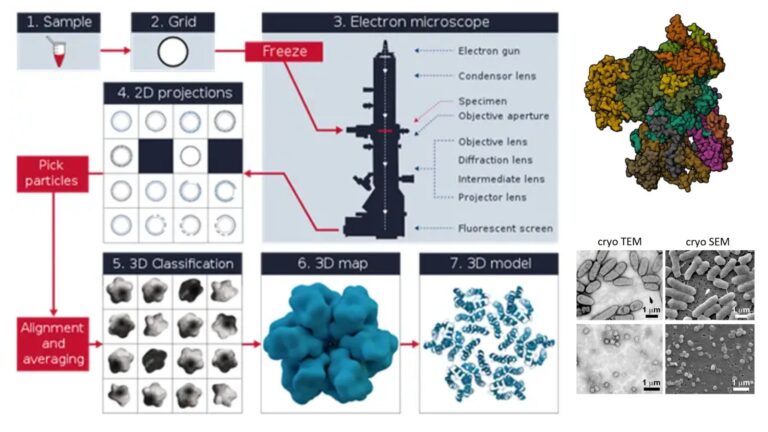
What is cryo-EM? Principle of cryo EM Types of cryo EM Cryo-electron microscopy (cryo-EM) is a collection of special methods. These are broadly categorized into two types, mainly cryo-transmission electron microscopy (cryo-TEM) and cryo-scanning electron microscopy (cryo-SEM). Each has its own advantage in the analysis of biological samples in their native state, frozen by cryo-preparation.
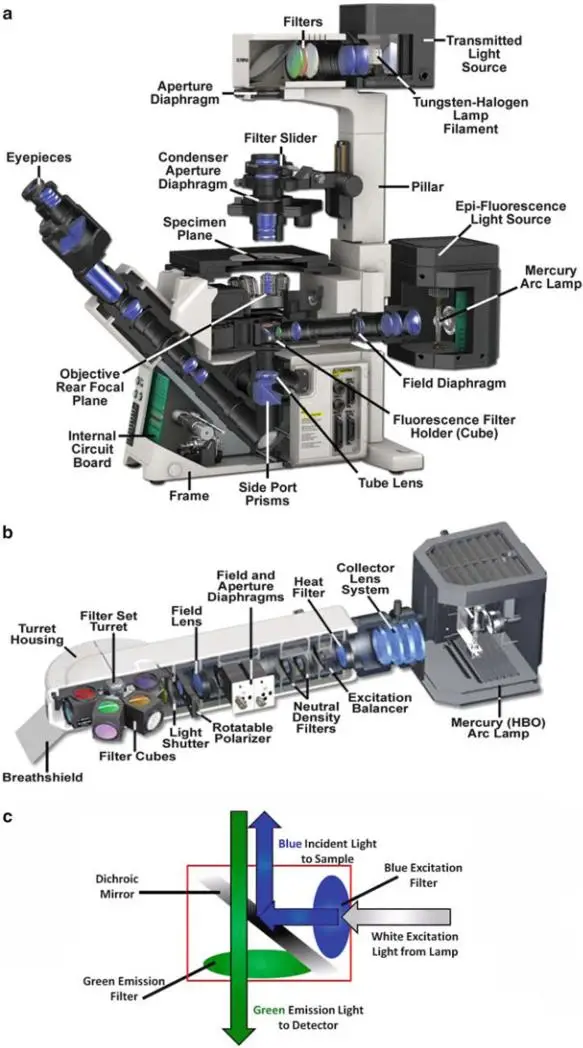
Epi-Fluorescence Microscopy is defined as an optical imaging method, which is employed in laboratories for visualization of fluorescent-labeled samples. The technique is widely described as an essential approach, and it has been repeatedly applied in cell studies, tissue examinations, and even in material analysis. In this method, illumination is delivered from the same side /
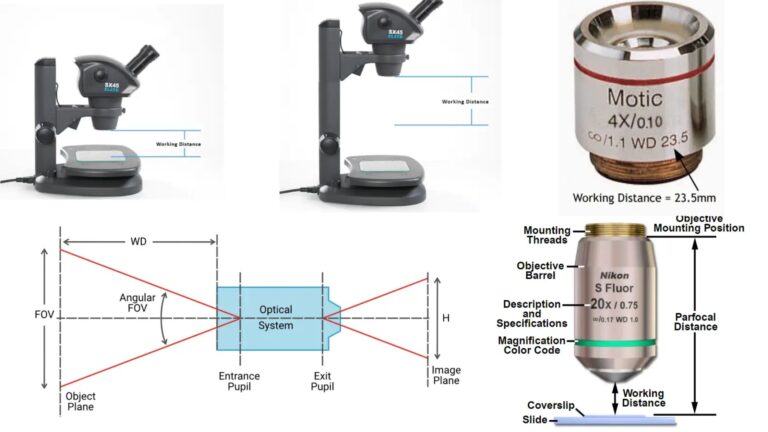
What is Working Distance? Working distance is defined as the distance that is maintained between the “objective lens” and the specimen, during focusing; it is measured along the optical axis of the microscope. It is considered critical, because it determines the space available for manipulating the specimen, adding reagents, or using tools; a short working