

For a dedicated molecular biology course, Molecular Biology: Principles of Genome Function, 3rd Edition is my strongest overall recommendation. It stays focused on how genomes work, connects molecular mechanisms with experimental evidence, and is currently used as a required text in an upper-level molecular biology course at the University of Connecticut.
Students who want a much broader cell and molecular biology reference should choose Molecular Biology of the Cell, 7th Edition. For beginners, Fundamental Molecular Biology, 3rd Edition is easier to approach. Molecular Biology of the Gene remains one of the strongest gene-centered texts, while Gene Cloning and DNA Analysis is the better choice when laboratory methods and DNA manipulation are the main priority.
Editor’s Picks
Best overall – Molecular Biology: Principles of Genome Function, 3rd Edition
Best comprehensive reference – Molecular Biology of the Cell, 7th Edition
Best for beginners – Fundamental Molecular Biology, 3rd Edition
Best for cell and molecular biology – Molecular Cell Biology, 9th Edition
Best gene-centered textbook – Molecular Biology of the Gene, 7th Edition
Best for biotechnology-oriented students – Molecular Biology, 3rd Edition by Clark, Pazdernik and McGehee
Best for molecular genetics – Lewin’s Essential GENES, 4th Edition
Best for cloning and DNA-analysis methods – Gene Cloning and DNA Analysis, 9th Edition
Quick Comparison of the Best Molecular Biology Books
| Book | Best for | Level | Main strength | Main limitation |
|---|---|---|---|---|
| Molecular Biology: Principles of Genome Function | Best overall molecular biology study | Upper undergraduate to postgraduate | Strong integration of molecular mechanisms and experimental evidence | Assumes some genetics and cell biology background |
| Molecular Biology of the Cell | Comprehensive reference | Upper undergraduate to postgraduate | Exceptional depth, illustrations and cell-molecular integration | Very large for a short molecular biology course |
| Fundamental Molecular Biology | Beginners and first courses | Undergraduate | Clearer, more selective introduction | Less depth than the major reference texts |
| Molecular Cell Biology | Cell and molecular biology | Upper undergraduate to postgraduate | Experimental techniques and disease connections | Broad cell-biology content can exceed a molecular-only syllabus |
| Molecular Biology of the Gene | Gene structure, expression and regulation | Intermediate to advanced | Detailed treatment of gene mechanisms | Current verified edition is older than several alternatives |
| Molecular Biology by Clark et al. | Broad undergraduate and biotechnology study | Undergraduate | Molecular biology plus practical and biotechnology applications | Less focused than a dedicated genome-function text |
| Lewin’s Essential GENES | Molecular genetics | Upper undergraduate | Strong gene and genome framework | Dense if you only need introductory molecular biology |
| Gene Cloning and DNA Analysis | Cloning, PCR, sequencing and DNA analysis | Undergraduate to postgraduate | Practical molecular biology methods | A specialist companion rather than a complete core text |
How These Books Were Selected
The shortlist was built from a larger group of molecular biology, molecular genetics, cell biology and laboratory-method texts. Selection was based on current publisher information, university course and reading-list evidence, relevance to molecular biology syllabi, edition currency, academic level, coverage, and recurring reader comments.
University materials continue to recommend texts by Alberts, Lodish, Watson and other established authors. A recent University of Connecticut course specifically requires the third edition of Molecular Biology: Principles of Genome Function. Publisher records were then used to verify current editions and scope. Reader discussions were useful mainly for identifying practical issues such as whether a book feels too dense for first-time learners.
Amazon availability was checked separately from academic quality. A book was not ranked higher simply because it has more reviews or a convenient product listing.
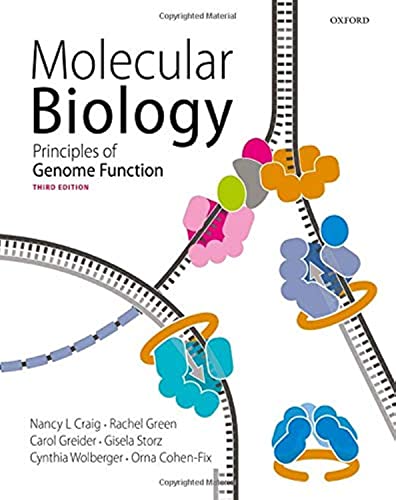
1. Molecular Biology: Principles of Genome Function – Best Overall
Authors – Nancy L. Craig, Rachel Green, Carol Greider, Gisela Storz, Cynthia Wolberger and Orna Cohen-Fix
Edition – 3rd Edition
Best for – Molecular biology majors and students taking a dedicated molecular biology course
Level – Upper undergraduate to postgraduate
Primary focus – Genome organization, replication, gene expression, regulation and experimental molecular biology
Why We Recommend It
This is the strongest all-round choice when the course is actually molecular biology, rather than a broader cell-biology course.
The book is organized around genome function – how genetic information is stored, maintained, expressed and regulated. That makes the progression from DNA and chromosome organization through replication, transcription, RNA processing, translation, regulatory RNA, DNA repair and genome dynamics feel connected rather than like separate topics.
Its academic use is a particularly strong signal. The University of Connecticut’s MCB 3418 Principles of Genome Function course requires the third edition and uses it across chromosome structure, DNA replication, transcription, RNA processing, translation, regulatory RNAs and DNA repair. The course is explicitly described as upper-level, which also tells you something important about the book’s difficulty.
Another useful feature is its treatment of experiments. Molecular biology makes more sense when students understand how mechanisms were demonstrated rather than memorizing diagrams, and the text uses Experimental Approach material to make that connection. Reader feedback also tends to praise the organization and conceptual clarity, although the available Goodreads review sample is small.
Strengths –
- Strong focus on the actual mechanisms of molecular biology
- Connects concepts with experimental evidence
- Good treatment of genome regulation and RNA biology
- Current enough to cover topics such as genome editing and newer regulatory mechanisms
Limitations – This is not the easiest first biology textbook. Students without a reasonable foundation in genetics and cell biology may need a more introductory text first.
Choose it if – you already know basic genetics and cell biology and want one primary book for an undergraduate or early postgraduate molecular biology course.
Skip it if – this is your first exposure to DNA replication, transcription and translation. Fundamental Molecular Biology will be easier to start with.
Alternative – Choose Molecular Biology of the Gene if you want an even stronger emphasis on classical gene mechanisms and molecular genetics.
2. Molecular Biology of the Cell – Best Comprehensive Reference
Authors – Bruce Alberts, Rebecca Heald, Alexander Johnson, David Morgan, Martin Raff, Keith Roberts and Peter Walter
Edition – 7th Edition
Best for – Advanced undergraduate students, postgraduate students and long-term reference use
Level – Upper undergraduate to postgraduate
Primary focus – Cell biology explained at the molecular level
Why We Recommend It
Molecular Biology of the Cell is broader than the title of this article requires, but it would be difficult to leave it out. It remains one of the major reference texts linking molecular mechanisms to the functioning of whole cells.
W. W. Norton lists the seventh edition as a 2022 revision with updated research. The current edition includes newer material in areas such as genome analysis, chromosome organization and modern experimental approaches.
Its main advantage is depth. DNA, RNA, proteins, membranes, signaling, cytoskeleton, cell cycle, intracellular organization and development are treated as parts of one biological system. That is especially useful for students who later move into cell biology, biotechnology, cancer biology or biomedical research.
Student discussions repeatedly describe Alberts as a standard or “go-to” reference, but the same discussions also point to its obvious disadvantage – it is a very large book. That matters. A student preparing for a single-semester molecular biology examination probably does not need to read it from cover to cover.
Strengths –
- Very strong illustrations and explanation of molecular mechanisms
- Large enough to remain useful beyond one course
- Strong experimental perspective
- Current seventh edition
Limitations – Its breadth is also its weakness for this specific search. Much of the book deals with cell biology beyond a normal molecular biology syllabus, and the level of detail may slow down beginners.
Choose it if – you want one substantial reference that will remain useful across molecular biology, cell biology, genetics and biomedical subjects.
Skip it if – you need a concise primary textbook for a first molecular biology course.
Alternative – Molecular Cell Biology by Lodish and colleagues is somewhat easier to align with a conventional course and places considerable emphasis on experiments and disease connections.

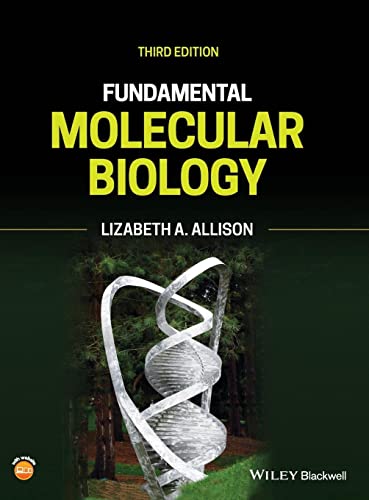
3. Fundamental Molecular Biology – Best for Beginners
Author – Lizabeth A. Allison
Edition – 3rd Edition
Best for – Beginners and undergraduate molecular biology courses
Level – Introductory to intermediate undergraduate
Primary focus – Core concepts without encyclopedic detail
Why We Recommend It
Students do not always need the biggest textbook. For someone encountering molecular biology as a separate subject for the first time, Allison’s Fundamental Molecular Biology is one of the more sensible starting points.
Wiley describes the third edition as an introductory molecular biology text focused on essential concepts. Its sequence includes DNA structure, RNA, proteins, genome organization, DNA replication and repair, bacterial and eukaryotic transcription, epigenetic regulation, RNA processing, translation, recombinant DNA technology, analytical methods and medical molecular biology.
The important difference from Alberts is selection. Allison does not try to turn every topic into a full reference chapter. That makes it easier to identify what needs to be learned first.
Available reader feedback is limited, so it should not be treated as a large consensus. However, one recurring positive point is accessibility, while some readers still find individual parts more detailed than expected.
Strengths –
- Beginner-friendly organization
- Covers both prokaryotic and eukaryotic molecular biology
- Includes experimental tools and medical examples
- Current third edition
Limitations – Advanced postgraduate students will eventually need greater depth, particularly in specialized gene regulation, chromosome biology and current research literature.
Choose it if – you are a B.Sc. or similar undergraduate student taking your first dedicated molecular biology paper.
Skip it if – you already understand the core mechanisms well and need a detailed reference.
Alternative – Molecular Biology by Clark, Pazdernik and McGehee offers broader biotechnology and applied coverage.
4. Molecular Cell Biology – Best for Connecting Molecular Biology with Cell Function
Authors – Harvey Lodish, Arnold Berk, Chris A. Kaiser, Monty Krieger, Anthony Bretscher, Hidde Ploegh, Kelsey C. Martin, Michael Yaffe and Angelika Amon
Edition – 9th Edition
Best for – Cell biology, molecular biology and biomedical students
Level – Upper undergraduate to postgraduate
Primary focus – Molecular mechanisms within cells, experimental techniques and disease
Why We Recommend It
Lodish’s Molecular Cell Biology is the main alternative to Alberts if you need a large cell-and-molecular textbook.
The ninth edition covers molecular genetic mechanisms, molecular genetic techniques, genes and genomics, transcriptional and post-transcriptional control before moving into membranes, energetics, signaling, cell organization, the cell cycle, tissues, immunology and cancer. Macmillan specifically emphasizes new experimental techniques and connections between cellular mechanisms and human disease.
For molecular biology students, chapters on molecular genetic mechanisms, laboratory techniques, genomics and gene regulation are especially useful. The biomedical connections may also make this a better fit than Alberts for students whose course crosses into medicine, immunology or cancer biology.
Reader opinions on difficulty are mixed. Its detail is a major advantage when used as a reference, but students wanting a short, linear introduction can find the volume dense.
Strengths –
- Strong experimental orientation
- Good molecular genetics and genomics coverage
- Connects molecular mechanisms with health and disease
- Useful across several advanced life-science courses
Limitations – Like Alberts, it covers substantially more cell biology than a dedicated molecular biology syllabus requires.
Choose it if – your molecular biology course is closely integrated with cell biology or biomedical science.
Skip it if – you want a book devoted mainly to genome structure, replication and gene expression.
Alternative – Molecular Biology: Principles of Genome Function is more tightly aligned with a dedicated molecular biology course.


5. Molecular Biology of the Gene – Best Gene-Centered Textbook
Authors – James D. Watson, Tania A. Baker, Stephen P. Bell, Alexander Gann, Michael Levine and Richard Losick
Edition – 7th Edition
Best for – Gene structure, replication, transcription, translation and regulation
Level – Intermediate to advanced undergraduate
Primary focus – Molecular mechanisms of genetic information
Why We Recommend It
If your syllabus is built around DNA, RNA and gene expression, Molecular Biology of the Gene remains one of the most directly relevant books in this list.
The seventh edition follows the subject from nucleic-acid and protein structure into genome organization, DNA replication and repair, recombination, transcription, RNA splicing, translation, the genetic code and gene regulation. Pearson continues to list the seventh edition, and university course materials still use it as a molecular biology text.
Compared with Alberts, the book spends less time building a complete picture of cell structure and more time on the molecular logic of genes. Compared with Principles of Genome Function, it feels more like the classic gene-centered treatment of the discipline.
The major issue is edition age. The seventh edition remains useful for fundamental mechanisms, but molecular biology has moved quickly in genome editing, high-throughput sequencing, single-cell methods and other areas. For that reason, I would not use it as the only current reference for an advanced course in 2026.
Strengths –
- Strong treatment of replication, transcription and gene regulation
- Clear connection between classic experiments and molecular mechanisms
- Good balance of prokaryotic and eukaryotic systems
- Still appears in university course materials
Limitations – The currently verified seventh edition is older than several other books in this list.
Choose it if – the central part of your course is molecular genetics and the flow and regulation of genetic information.
Skip it if – you want the most current single-volume treatment of modern genome technologies.
Alternative – Molecular Biology: Principles of Genome Function provides a more current route into genome regulation and modern molecular biology.

6. Molecular Biology by Clark, Pazdernik and McGehee – Best for Broad Undergraduate and Biotechnology Study
Authors – David P. Clark, Nanette J. Pazdernik and Michelle R. McGehee
Edition – 3rd Edition
Best for – Undergraduate molecular biology and biotechnology students
Level – Undergraduate
Primary focus – Molecular biology from fundamentals to laboratory and applied topics
Why We Recommend It
Clark, Pazdernik and McGehee take a broader applied route than the gene-centered books.
The third edition starts with basic genetics and nucleic acids but quickly moves into DNA manipulation, PCR, cloning, sequencing, genomics, DNA replication, transcription, protein synthesis and gene regulation. Later sections cover plasmids, viruses, mobile DNA, mutations, recombination, bacterial genetics and molecular evolution. Elsevier identifies undergraduate molecular biology students as its primary readership and also positions it for microbiology, genetics, biotechnology and biochemistry students.
That combination is useful for B.Sc. microbiology and biotechnology students because many syllabi do not separate molecular mechanisms neatly from recombinant DNA technology and molecular techniques.
The third edition is still listed by Elsevier as the latest edition. It contains expanded material on RNA interference, CRISPR, genome editing and proteomics, although its 2018 publication date should still be kept in mind for rapidly developing technologies.
Strengths –
- Broad undergraduate coverage
- More attention to PCR, cloning, sequencing and biotechnology than many general texts
- Useful for microbiology and biotechnology curricula
- Logical progression from basic concepts to applications
Limitations – Students wanting a tightly focused treatment of genome function may find its applied breadth less cohesive than Craig and colleagues’ book.
Choose it if – your B.Sc. syllabus combines molecular biology with genetics, microbiology or biotechnology techniques.
Skip it if – you primarily need an advanced reference on chromosome and gene-regulation mechanisms.
Alternative – Fundamental Molecular Biology is the easier starting point, while Principles of Genome Function provides greater mechanistic depth.

7. Lewin’s Essential GENES – Best for Molecular Genetics
Authors – Jocelyn E. Krebs, Elliott S. Goldstein and Stephen T. Kilpatrick
Edition – 4th Edition
Best for – Molecular genetics and advanced gene-focused courses
Level – Upper undergraduate
Primary focus – Genes, genomes, DNA, RNA, proteins and gene regulation
Why We Recommend It
Lewin’s Essential GENES is the book to consider when molecular biology is being taught from a genetics perspective.
Jones & Bartlett describes the fourth edition as a text designed for a one-semester majors course in molecular biology or molecular genetics for junior and senior students. That is a much more useful description of its audience than simply calling it an introductory genetics textbook.
The material is organized around genes and genomes rather than around whole-cell biology. That makes it especially useful for gene structure, genome organization, replication, transcription, RNA biology, translation and regulation.
Compared with Molecular Biology of the Gene, Lewin’s framework feels more explicitly genetic. Watson and colleagues are stronger when the reader wants to follow the molecular mechanisms and experimental history of gene function in depth.
Strengths –
- Designed specifically for a majors-level molecular biology or molecular genetics course
- Strong gene and genome organization
- Good option for advanced genetics students
- More focused than the large cell-biology references
Limitations – The amount of gene-level detail can be excessive for a first molecular biology course, and it gives less attention to whole-cell context than Alberts or Lodish.
Choose it if – your course is essentially molecular genetics or genomics with substantial coverage of gene regulation.
Skip it if – you first need a simple introduction to the central dogma and basic molecular processes.
Alternative – Molecular Biology of the Gene provides a different, mechanism-centered treatment of much of the same territory.

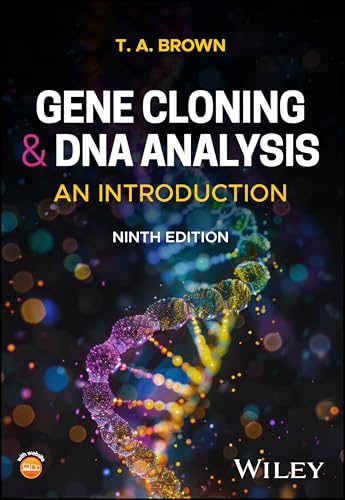
8. Gene Cloning and DNA Analysis – Best for Molecular Biology Laboratory Methods
Author – T. A. Brown
Edition – 9th Edition
Best for – Gene cloning, DNA analysis, molecular biotechnology and laboratory-method study
Level – Undergraduate to postgraduate
Primary focus – Practical manipulation and analysis of DNA
Why We Recommend It
This is the one book in the list that should normally be bought alongside a core molecular biology textbook rather than instead of one.
The ninth edition was published in 2025, making it one of the newest books selected here. Wiley’s current contents include cloning vectors, purification and manipulation of DNA, introduction of DNA into cells, PCR, sequencing, analysis of gene expression, genomics, transcriptomics, proteomics and DNA editing. It then connects these methods with medicine, agriculture, biotechnology, forensic science and archaeology.
That makes it especially useful for microbiology and biotechnology students whose molecular biology paper is followed by recombinant DNA technology or a practical course.
The book has also had a long-standing reputation for accessibility. An earlier academic review described previous editions as suitable for undergraduate study and useful for explaining the principles of DNA cloning and analysis. The current edition has been substantially updated, so that older review is useful mainly as evidence of its teaching approach rather than its present-day content.
Strengths –
- Current ninth edition
- Strong treatment of PCR, cloning, sequencing and DNA editing
- Easier bridge from molecular biology theory to laboratory methods
- Useful for biotechnology and recombinant DNA courses
Limitations – It is not a complete substitute for a molecular biology textbook. Cell biology, chromosome biology and the full conceptual treatment of gene expression are not its main purpose.
Choose it if – you already have a core molecular biology text and need stronger coverage of cloning and DNA-analysis techniques.
Skip it if – you are buying only one book for a general molecular biology examination.
Alternative – Clark’s Molecular Biology combines more molecular-biology theory with practical and biotechnology applications in one volume.
Which Molecular Biology Book Should You Choose?
| If you are… | Best choice |
|---|---|
| Taking a dedicated upper-level molecular biology course | Molecular Biology: Principles of Genome Function |
| Looking for the most comprehensive reference | Molecular Biology of the Cell |
| Learning molecular biology for the first time | Fundamental Molecular Biology |
| Studying both cell and molecular biology | Molecular Cell Biology |
| Focusing on DNA, RNA and gene regulation | Molecular Biology of the Gene |
| A B.Sc. biotechnology or microbiology student | Molecular Biology by Clark et al. |
| Studying molecular genetics | Lewin’s Essential GENES |
| Studying cloning and molecular techniques | Gene Cloning and DNA Analysis |
You do not need all eight books. For most students, one primary textbook plus one specialist reference is enough.
A useful combination for a beginner would be Fundamental Molecular Biology + Gene Cloning and DNA Analysis if the course contains practical molecular techniques.
For a stronger advanced combination, Molecular Biology: Principles of Genome Function + Molecular Biology of the Cell covers both focused genome mechanisms and wider cell biology.
How to Choose the Best Molecular Biology Book
Match the Book to the Actual Syllabus
Check whether your course concentrates on DNA replication, transcription, translation and gene regulation, or whether it also includes membranes, signaling, cell cycle and organelles.
A pure molecular biology course is better matched by Principles of Genome Function or Molecular Biology of the Gene. A combined cell-and-molecular course is better served by Alberts or Lodish.
Consider Your Current Level
A reference book can be academically strong and still be the wrong first book.
Students who are still learning the basic relationships between DNA, RNA and proteins will usually progress faster with Allison than by beginning with a very large reference such as Alberts.
Check How Much Experimental Biology You Need
Molecular biology is not only a collection of pathways. If your course asks how experiments established particular mechanisms, choose a text that regularly connects concepts with experimental evidence.
If PCR, cloning, sequencing or DNA editing are major syllabus components, Brown or Clark can be especially useful.
Distinguish Molecular Biology from Molecular Genetics
The subjects overlap heavily but are not identical.
A molecular genetics course usually spends more time on genes, genomes, mutation, inheritance and regulation. Lewin’s Essential GENES fits that emphasis well.
A broader molecular biology course may also require RNA processing, protein synthesis, macromolecular interactions and experimental methods.
Check the Edition Before Buying
This matters more in molecular biology than in subjects where the core content changes slowly.
DNA replication and the central dogma do not become wrong because a textbook is a few years old, but genome editing, sequencing, regulatory RNA, epigenomics and other research areas continue to develop.
An older edition can still be useful for fundamentals. For advanced study, however, it should be supplemented with current material.
Common Mistakes When Buying a Molecular Biology Textbook
- Buying the largest reference book simply because it is famous
- Choosing a cell-biology book when the syllabus is almost entirely gene-centered
- Relying on marketplace star ratings instead of academic suitability
- Buying several books with almost identical coverage
- Ignoring whether laboratory techniques form a separate part of the course
- Assuming that an old edition covers fast-moving molecular methods adequately
Frequently Asked Questions
Which book is best for molecular biology?
For a dedicated upper-level molecular biology course, Molecular Biology: Principles of Genome Function, 3rd Edition is the best overall choice from this comparison. It provides a focused treatment of genome structure and function while keeping experimental evidence visible. Students wanting a broader long-term reference should choose Molecular Biology of the Cell instead.
Which molecular biology book is best for beginners?
Lizabeth Allison’s Fundamental Molecular Biology, 3rd Edition is the strongest beginner option in this list. It covers the essential mechanisms without the encyclopedic scale of Alberts or Lodish. Students with very little prior cell biology or genetics background are likely to find it easier to use as a first textbook.
Molecular Biology of the Cell vs Molecular Cell Biology – which is better?
Choose Alberts’ Molecular Biology of the Cell for deeper reference use, and choose Lodish’s Molecular Cell Biology when you want a course-oriented combination of molecular mechanisms, experimental techniques and disease connections. Both extend well beyond molecular biology into wider cell biology, so neither is the most concise option for a gene-focused course.
Which molecular biology book is best for B.Sc. students?
For many B.Sc. students, Fundamental Molecular Biology is the easier primary text, while Clark’s Molecular Biology is particularly useful when the syllabus also includes biotechnology and molecular techniques. Students with a stronger genetics background can move directly to Principles of Genome Function.
Is Molecular Biology of the Gene still worth buying?
Yes, particularly for the core mechanisms of molecular genetics, but the seventh edition should not be your only source for rapidly developing modern techniques. Its treatment of replication, recombination, transcription, translation and regulation remains highly useful, while newer texts can supplement more recent developments. Pearson still lists the seventh edition and university courses continue to reference it.
Which book is best for molecular biology laboratory techniques?
T. A. Brown’s Gene Cloning and DNA Analysis, 9th Edition is the strongest methods-focused choice here. It covers vectors, DNA manipulation, PCR, sequencing, gene-expression analysis, genomics and DNA editing. Use it as a companion to a core molecular biology textbook rather than as the only book for the subject.
Final Recommendation
For a student taking molecular biology as a dedicated subject, Molecular Biology: Principles of Genome Function, 3rd Edition is the strongest overall choice. It stays close to the core subject, connects mechanisms with evidence, and has current university-course adoption.
If you want a book that will remain useful well beyond one course, choose Molecular Biology of the Cell, 7th Edition. It is much larger, but its depth makes it the strongest reference book in this comparison.
Beginners should start with Fundamental Molecular Biology, 3rd Edition rather than struggle through an encyclopedic reference. Students focusing on molecular genetics should consider Lewin’s Essential GENES or Molecular Biology of the Gene. For cloning, PCR, sequencing and other practical methods, add Gene Cloning and DNA Analysis.
The important point is not to buy several overlapping textbooks. Choose one main book that matches your academic level, then add a specialist book only when your syllabus requires it.
Affiliate disclosure – Biology Notes Online may earn a commission from qualifying purchases made through links on this page, at no additional cost to you. Recommendations are based on editorial research and selection criteria.