

For most undergraduate students, Genetics: A Conceptual Approach by Benjamin A. Pierce is the best overall genetics textbook in this list. It explains both classical and molecular genetics clearly, gives enough problem-solving practice, and does not assume that students already think like geneticists.
Students taking a more analytical genetics course should look at Introduction to Genetic Analysis, while Concepts of Genetics is a strong alternative for a broad course with plenty of problem-solving. For advanced molecular genetics, Lewin’s GENES XII offers much greater depth. Medical and genetic-counseling students have a different requirement – Thompson & Thompson Genetics and Genomics in Medicine is the better choice for clinical genetics.
Editor’s Picks
Best Overall – Genetics: A Conceptual Approach, 7th Edition
Best for Genetic Analysis – Introduction to Genetic Analysis, 12th Edition
Best Broad Undergraduate Text – Concepts of Genetics, 13th Edition
Best Advanced Molecular Genetics Book – Lewin’s GENES XII
Best for Medical Students – Thompson & Thompson Genetics and Genomics in Medicine, 9th Edition
Quick Comparison of the Best Genetics Books
| Book | Best for | Level | Main strength | Main limitation |
|---|---|---|---|---|
| Genetics: A Conceptual Approach | Most students and self-study | Undergraduate | Clear concepts with good problem solving | Quite large for a short course |
| Introduction to Genetic Analysis | Genetics majors and problem solving | Undergraduate | Strong analytical and experimental approach | Denser for beginners |
| Concepts of Genetics | Broad genetics courses | Undergraduate | Current coverage and structured problem solving | Extensive coverage can feel heavy |
| Genetics: Analysis and Principles | Learning genetics through experiments | Undergraduate | Connects principles with experimental evidence | More detail than revision-focused students need |
| Genetics: From Genes to Genomes | Genetics majors and molecular genetics | Intermediate undergraduate | Strong molecular and genomic perspective | Less gentle as a first genetics book |
| Essential Genetics and Genomics | Short courses and beginners | Undergraduate | More concise treatment of core genetics | Older than several competing editions |
| Lewin’s GENES XII | Molecular genetics and advanced study | Advanced undergraduate/postgraduate | Detailed treatment of genes and gene regulation | Too advanced for most introductory courses |
| Thompson & Thompson Genetics and Genomics in Medicine | Medicine and genetic counseling | Medical/advanced | Strong clinical genetics and genomics coverage | Not a complete general genetics textbook |
How We Selected These Genetics Books
The books were compared using current publisher information, university course materials and reading lists, independent recommendations, edition information, reader feedback, subject coverage and academic level.
More weight was given to books that are useful as actual course textbooks rather than books that happen to discuss genetics. We also looked at the balance between classical genetics, molecular genetics, genomics, problem solving and applications.
The final list deliberately contains different types of books. An introductory B.Sc. student, a genetics major and a medical student do not need the same textbook. Amazon availability was checked separately for implementation of the site’s affiliate product cards and did not determine the ranking.
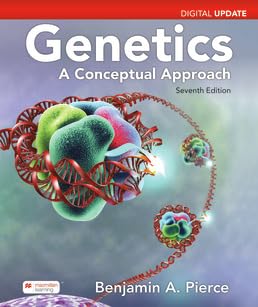
1. Genetics: A Conceptual Approach – Best Overall for Most Students
Author – Benjamin A. Pierce
Edition – 7th Edition Digital Update
Best for – Undergraduate students, B.Sc. students and self-study
Level – Introductory to intermediate
Primary focus – Conceptual understanding and genetics problem solving
Why We Recommend It
Pierce is the strongest all-round choice if you need one textbook for an undergraduate genetics course. The main advantage is not simply the amount of material covered. The book is built around understanding how individual genetic ideas relate to one another.
Its explanations connect Mendelian inheritance, chromosome behavior, molecular genetics, gene regulation, genomics, and population genetics without making the course feel like a list of unrelated facts.
That approach matters in genetics. A student may understand a monohybrid cross but still have difficulty connecting segregation with meiosis, linkage or chromosome behavior. Pierce spends enough time building those connections before moving into harder applications.
The 7th Edition Digital Update is also relatively current. Its revisions include updated research, additional end-of-chapter questions and material related to modern genome-editing methods.
What It Covers
The text moves from basic inheritance and chromosome genetics into DNA structure and replication, gene expression, gene regulation, developmental genetics, cancer genetics, quantitative genetics, population genetics and evolutionary genetics.
This range makes it suitable as the main book for a conventional undergraduate genetics course rather than just a supplementary reference.
Strengths
Concept clarity – The big-picture approach is especially useful when genetics is being studied for the first time.
Problem solving – Problems are integrated with the concepts rather than being treated as a separate exercise section with little explanation.
Coverage – Classical, molecular and population genetics are all represented, so students are unlikely to outgrow the book after the first few chapters.
Limitations
At more than 900 pages, it is still a substantial textbook. A student taking a short introductory module may not need this much material.
It is also not the most rigorous option here for students whose course emphasizes experimental genetic analysis. Griffiths is stronger for that purpose.
Who Should Choose It?
Choose Pierce if you are a B.Sc. biology, biotechnology, microbiology or genetics student who wants one dependable primary textbook. It is also one of the better options in this list for self-study because the explanations do not depend completely on an instructor.
Who Should Skip It?
Students who already understand introductory genetics and mainly need advanced molecular detail should move to Lewin’s GENES XII. Medical students focused on inherited disease and clinical genomics will get more relevant material from Thompson & Thompson.
Alternative – Introduction to Genetic Analysis is the better alternative when genetic problems and experimental reasoning are a major part of the course.
2. Introduction to Genetic Analysis – Best for Problem Solving
Authors – Anthony J. F. Griffiths, John Doebley, Catherine Peichel and David A. Wassarman
Edition – 12th Edition Digital Update
Best for – Genetics majors and problem-heavy courses
Level – Intermediate undergraduate
Primary focus – Genetic analysis, experimentation and quantitative problem solving
Why We Recommend It
Introduction to Genetic Analysis has a different strength from Pierce. Griffiths places more emphasis on how genetic information is obtained from crosses, experiments, observations and data.
That makes it particularly valuable when students need to do more than remember definitions. Mapping, recombination, inheritance patterns and experimental results have to be interpreted rather than simply recognized.
Students work through mutation, recombination, mapping, gene regulation, and genomic analysis as evidence-based problems rather than isolated definitions.
The current Digital Update retains the 12th Edition designation but was updated in 2025. Its publisher continues to emphasize genetic analysis, quantitative problem solving and experimentation as central parts of the book.
What It Covers
The book includes classical genetic analysis, chromosome inheritance, gene interaction, linkage and mapping, molecular genetics, gene regulation, development, genomics, population genetics and quantitative approaches.
Its treatment of experiments is one reason it remains useful even when students already own a simpler introductory genetics book.
Strengths
The problem sets are one of its strongest features. It encourages students to work from evidence toward an explanation, which is much closer to how genetics is actually practiced.
The book also gives classical genetics proper attention before integrating modern molecular and genomic methods.
Limitations
The same analytical approach that makes Griffiths useful can make it harder for a complete beginner. Students wanting a straightforward first explanation of a difficult topic may find Pierce easier to read.
It is therefore a particularly good course book when an instructor assigns regular genetics problems, but it may be unnecessarily demanding for a short introductory unit.
Who Should Choose It?
Choose Griffiths if your course includes substantial work on genetic crosses, mapping, recombination, pedigrees, mutant analysis or interpretation of experimental data.
It is especially useful for genetics majors and students preparing for higher-level molecular or experimental biology.
Who Should Skip It?
If this is your first genetics course and conceptual understanding is currently a bigger problem than calculations or analysis, Pierce or Hartl will probably be easier starting points.
Alternative – Choose Pierce if readability and concept building are more important than analytical depth.

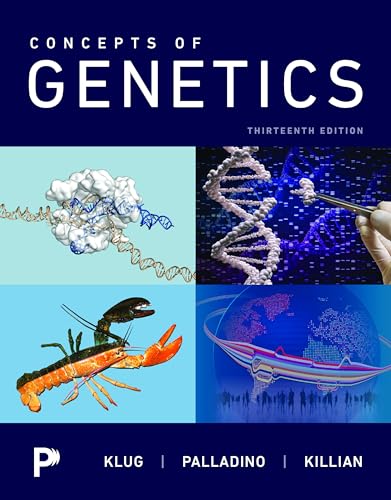
3. Concepts of Genetics – Best Broad Undergraduate Genetics Text
Authors – William S. Klug, Michael A. Palladino and Darrell Killian
Edition – 13th Edition
Best for – Full undergraduate genetics courses
Level – Introductory to intermediate
Primary focus – Core genetics, modern applications and problem solving
Why We Recommend It
The 13th Edition of Concepts of Genetics is one of the most current general genetics textbooks in this comparison. It works well for courses that want a traditional genetics foundation while still covering recent genomic technologies and applications.
A strong general genetics text should make the chromosomal basis of inheritance easy to connect with Mendelian ratios, linkage, recombination and molecular mechanisms. Klug handles that progression in a structured course-textbook format.
The recent edition includes updated material related to genome-editing therapy, bioinformatics, synthetic biology, human genomic diversity, genetic testing and modern genetic techniques.
This gives it an advantage over older introductory books whose basic genetics remains sound but whose discussion of genomics is starting to show its age.
What It Covers
The book spans Mendelian genetics, chromosomes, linkage, DNA structure and replication, mutation, gene expression, regulation, recombinant DNA methods, genomics, developmental genetics, quantitative genetics and population genetics.
Ethical and societal applications are also integrated into the broader genetics material.
Strengths
The organization works well for a semester course, and problem solving remains a major part of the book rather than an afterthought.
The 13th Edition also has one of the better claims to current coverage among the broad undergraduate textbooks compared here.
Limitations
Students who only need the fundamentals may find it larger than necessary. It covers many branches of genetics, which is useful for a complete course but less useful if the goal is rapid revision before an examination.
Griffiths remains stronger when the course is centered specifically on genetic analysis and experimental reasoning.
Who Should Choose It?
Choose Concepts of Genetics if you want a conventional full-course textbook with current coverage and regular opportunities to apply genetics concepts through problems.
Who Should Skip It?
Students taking a shorter course may prefer Hartl’s Essential Genetics and Genomics. Those wanting more molecular detail should consider Genetics: From Genes to Genomes or Lewin.
Alternative – Pierce is the stronger alternative when an easier conceptual narrative is the priority.
4. Genetics: Analysis and Principles – Best Experimental Approach
Author – Robert J. Brooker
Edition – 8th Edition
Best for – Students who learn well from experiments and worked applications
Level – Undergraduate
Primary focus – Genetics principles explained through experimental evidence
Why We Recommend It
Brooker’s book is especially useful for students who keep asking a productive question – how do we know this?
Instead of presenting every genetic rule as an established fact and moving on, the text regularly connects principles with the experiments from which those principles were derived. That makes chromosome behavior, gene function, recombination and molecular genetics easier to understand as scientific conclusions rather than facts to memorize.
This approach also provides useful preparation for laboratory work and later research-based courses.
What It Covers
Coverage includes Mendelian inheritance, chromosomes, linkage and mapping, molecular genetics, gene regulation, genomic methods, development, quantitative genetics, population genetics and evolutionary genetics.
The distinctive part is the experimental framing. Individual experiments are used throughout the chapters to demonstrate the scientific process behind genetic concepts.
Strengths
Brooker sits between a very accessible conceptual text and a demanding genetic-analysis book. There is enough explanation for undergraduate learners, but the experiments provide more scientific context than a purely descriptive textbook.
Its problem-solving material also makes it useful for structured coursework.
Limitations
Students primarily looking for concise examination revision may find the experimental detail unnecessary. It also overlaps substantially with other broad undergraduate texts, so there is little reason to buy Brooker and Pierce unless a course specifically requires one of them.
Who Should Choose It?
This is a good choice for students who prefer learning principles from experiments, figures and worked reasoning rather than reading long blocks of descriptive genetics.
Who Should Skip It?
If you want the easiest general introduction, choose Pierce. If your course requires more intensive genetic analysis and harder problems, Griffiths is the stronger option.
Alternative – Introduction to Genetic Analysis provides a more rigorous analytical treatment.

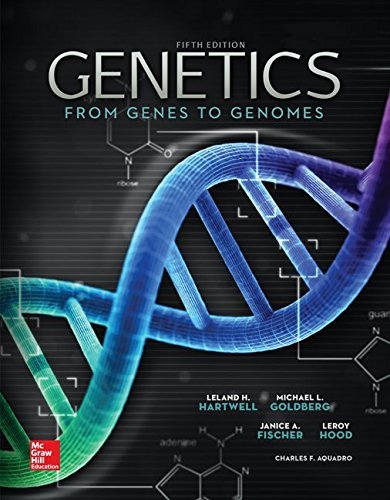
5. Genetics: From Genes to Genomes – Best for Genetics Majors
Authors – Michael L. Goldberg and Janice Fischer
Edition – 8th Edition
Best for – Genetics majors and molecular/genomic courses
Level – Intermediate undergraduate
Primary focus – Connecting classical genetics with molecular genetics and genomics
Why We Recommend It
Genetics: From Genes to Genomes is a good step up for students whose genetics course moves quickly from inheritance into molecular mechanisms, genomics and modern experimental methods.
The book still covers classical genetics, but the emphasis increasingly shifts toward how genes and genomes are analyzed at the molecular level. This makes it particularly useful for genetics majors and students moving toward molecular biology, biotechnology or genomic research.
Students moving into genomics should also become comfortable with databases such as NCBI, because modern genetics increasingly depends on sequence and genome data rather than textbook examples alone.
The 8th Edition is also used as a course text in contemporary university genetics teaching, which strengthens its position as more than a general reference book.
What It Covers
It combines Mendelian genetics and chromosome analysis with DNA-level mechanisms, gene function, molecular techniques, genome analysis and modern genetic experimentation.
The integration is the important part. Classical genetics is not treated as an isolated historical subject before the book suddenly switches to molecular biology.
Strengths
For a student planning to study molecular genetics seriously, the molecular and genomic perspective is more useful than the lighter treatment found in many introductory books.
The text also helps bridge the gap between basic genetics courses and research-oriented molecular biology.
Limitations
It would not be my first recommendation for a complete beginner studying Mendelian genetics for the first time. Pierce explains the initial conceptual framework more gently.
Students studying medical genetics specifically will also find much of the material less directly relevant than Thompson & Thompson.
Who Should Choose It?
Choose this book if genetics is a major part of your degree and you want a textbook that can carry you from classical genetic analysis into molecular and genomic genetics.
Who Should Skip It?
A student who only needs basic inheritance, chromosome genetics and a first introduction to molecular genetics will probably get better value from Pierce or Hartl.
Alternative – Brooker is a good alternative when experiments and the scientific method are the main attraction.
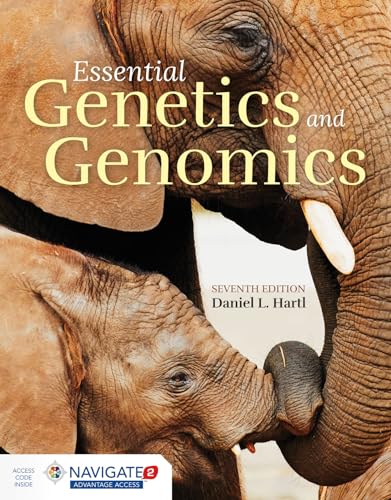
6. Essential Genetics and Genomics – Best Concise Genetics Textbook
Author – Daniel L. Hartl
Edition – 7th Edition
Best for – Short courses, beginners and students who want a less bulky textbook
Level – Undergraduate
Primary focus – Core genetics with a genomics perspective
Why We Recommend It
Hartl’s Essential Genetics and Genomics deserves a place because not every student needs an 800- or 900-page genetics textbook.
The book is designed around a more selective treatment of the subject while retaining the core material needed for an undergraduate genetics course. It is particularly useful for students taking genetics as one part of a broader biology, biotechnology or life-science program.
Hartl also includes support for the mathematics and basic scientific skills needed for genetics problems. That can make the transition into probability, genetic ratios and quantitative reasoning less abrupt.
What It Covers
The book provides a foundation in inheritance, chromosomes, gene mapping, DNA and molecular genetics, gene expression, genomics, quantitative genetics and population genetics.
The genomics perspective prevents the shorter format from feeling like an old-style Mendelian genetics book.
Strengths
The main advantage is focus. Students can work through a substantial portion of the book during a normal course rather than constantly deciding which sections of a much larger text to ignore.
It is also a sensible self-study option for learners who find the size of Pierce, Klug or Griffiths discouraging.
Limitations
The 7th Edition is older than the current Pierce and Klug editions. Fundamental genetics does not become obsolete quickly, but fast-changing examples involving genome editing, sequencing and newer genomic applications are naturally better represented in more recent editions.
Its concise approach also means advanced students will eventually need another reference.
Who Should Choose It?
Choose Hartl if you need a manageable first textbook for a one-semester genetics course or want a shorter route through the subject before moving into advanced molecular genetics.
Who Should Skip It?
Students majoring in genetics or taking a very detailed genetic-analysis course may outgrow it. Griffiths or From Genes to Genomes gives those readers more depth.
Alternative – Pierce provides a broader and more current general textbook while remaining accessible.
7. Lewin’s GENES XII – Best Advanced Molecular Genetics Book
Authors – Jocelyn E. Krebs, Elliott S. Goldstein and Stephen T. Kilpatrick
Edition – 12th Edition
Best for – Advanced undergraduates, postgraduate students and molecular genetics courses
Level – Advanced undergraduate to graduate
Primary focus – Molecular genetics, gene structure, gene expression and regulation
Why We Recommend It
Lewin’s GENES XII is not here as another introductory genetics textbook. Its purpose is different.
Once a student moves past basic inheritance and begins studying gene structure, chromatin, transcription, RNA processing, regulation, epigenetics and genome organization in detail, Lewin becomes much more useful than a general introductory book.
The level of molecular detail makes it suitable for upper-level molecular genetics and molecular biology courses. It can also function as a reference alongside a simpler primary genetics textbook.
The sequence from DNA organization to gene expression receives much more attention here than it does in concise undergraduate books.
What It Covers
Major areas include genes and chromosomes, DNA replication and repair, recombination, transposable elements, transcription, RNA processing, translation, gene regulation, chromatin, epigenetics and genome-level organization.
The emphasis is strongly molecular.
Strengths
Depth is the main reason to buy this book. Students can use it to go beyond the brief explanations of transcriptional control and genome organization found in introductory texts.
It is also useful when a molecular genetics course overlaps substantially with molecular biology.
Limitations
The book is unnecessarily advanced for most first-year or basic B.Sc. genetics courses. It should not be purchased simply because it appears to be the most detailed book in the list.
The edition is also older than several introductory competitors, which matters more in a rapidly developing molecular field than it does for Mendelian fundamentals.
Who Should Choose It?
Choose GENES XII if you already know basic genetics and need substantially greater molecular depth for advanced undergraduate or postgraduate study.
Who Should Skip It?
Beginners should start with Pierce or Hartl. Students whose main interest is human genetic disease rather than molecular mechanisms should look at Thompson & Thompson.
Alternative – Genetics: From Genes to Genomes offers a more undergraduate-friendly bridge between classical and molecular genetics.
8. Thompson & Thompson Genetics and Genomics in Medicine – Best for Medical Genetics
Editors – Ronald Cohn, Stephen Scherer and Ada Hamosh
Edition – 9th Edition
Best for – Medical students, genetic counseling students and clinical genetics
Level – Medical and advanced undergraduate/postgraduate
Primary focus – Human genetics, genomic medicine and inherited disease
Why We Recommend It
Medical students should not automatically buy the same genetics textbook as a general biology student. A medical genetics course requires greater attention to genetic disease, genomic testing, clinical interpretation and patient-related applications.
That is where Thompson & Thompson Genetics and Genomics in Medicine is strongest.
The book links fundamental genetics with human disease and genomic medicine, including clinical cases that show how genetic principles are applied to actual diagnostic questions. It is therefore much better aligned with medicine, genetic counseling and laboratory medicine than a book centered on model-organism crosses.
What It Covers
The text includes human genome organization, chromosome abnormalities, single-gene disorders, complex disease, genetic variation, cancer genetics, genetic testing, screening, counseling and genomic medicine.
Clinical cases help connect inheritance mechanisms with disease presentation and diagnosis.
Strengths
The clinical orientation is its major advantage. Students learn why a genetic principle matters in diagnosis and patient care rather than studying inheritance only as an abstract biological mechanism.
The 9th Edition also reflects the increasing role of genomic approaches in medical genetics.
Limitations
It is not the right single textbook for a broad biology genetics course. Population genetics, classical model-organism analysis and general experimental genetics are not its main purpose.
A B.Sc. genetics student should normally choose Pierce, Griffiths or Klug first and use a medical genetics text only when human disease becomes a major part of the syllabus.
Who Should Choose It?
Choose Thompson & Thompson if you are studying medicine, genetic counseling, clinical laboratory science or human genetics and need clinical application to be central.
Who Should Skip It?
Students taking a general introductory genetics course should choose a broader textbook instead.
Alternative – Students who want advanced general molecular genetics rather than clinical genetics should choose Lewin’s GENES XII.

Which Genetics Book Should You Choose?
| If you are… | Best choice | Why |
| Learning genetics for the first time | Genetics: A Conceptual Approach | Strong explanations without sacrificing problem solving |
| Taking a shorter introductory course | Essential Genetics and Genomics | More concise and manageable |
| A B.Sc. genetics student | Genetics: A Conceptual Approach | Best balance of breadth, clarity and problems |
| In a problem-heavy genetics course | Introduction to Genetic Analysis | Strong genetic analysis and experimental reasoning |
| Following a broad modern genetics syllabus | Concepts of Genetics | Current coverage with structured problems |
| Interested in experimental genetics | Genetics: Analysis and Principles | Genetic concepts are connected with experiments |
| A genetics or molecular biology major | Genetics: From Genes to Genomes | Strong transition from classical genetics to genomics |
| Studying advanced molecular genetics | Lewin’s GENES XII | Much greater molecular depth |
| A medical or genetic-counseling student | Thompson & Thompson | Human disease and clinical genomics are central |
For most students who are unsure, Pierce is the safest starting point. It covers enough genetics to remain useful after an introductory course without becoming as demanding as Griffiths or Lewin.
How to Choose the Best Genetics Book
Match the Book to Your Academic Level
The thickest or most detailed genetics book is not automatically the best choice.
For an introductory course, clarity is more useful than having every molecular detail available. Pierce and Hartl work well at this stage.
A genetics major who already understands segregation, recombination and basic molecular genetics can use Griffiths or From Genes to Genomes more effectively. Lewin belongs later, when the course has moved into advanced molecular genetics.
Check How Much Problem Solving Your Course Requires
Genetics is not learned effectively by reading alone. Ratios, probability, linkage, mapping, pedigree analysis and experimental interpretation require practice.
If these form a large part of your examinations, Griffiths deserves serious consideration. Pierce and Klug also provide substantial problem-solving support while remaining more approachable.
Look at the Balance Between Classical and Molecular Genetics
Some courses begin heavily with Mendelian crosses and chromosome genetics. Others move quickly into molecular genetics, genomics and genome editing.
Your textbook should follow roughly the same balance as your syllabus.
A first course should still establish classical genetics properly. Students who do not understand segregation, linkage and recombination usually struggle when the same principles reappear at the molecular or genomic level.
Consider Gene Expression and Molecular Processes
Students often find genetics harder once the subject moves from crosses to DNA-level mechanisms.
A textbook should explain gene expression, DNA replication, mutation, recombination and gene regulation with diagrams that make the sequence of events understandable. Advanced molecular courses need much more detail in these areas, which is where Lewin becomes useful.
Decide Whether You Need General or Medical Genetics
General genetics and medical genetics overlap, but they are not interchangeable.
Biology and genetics students usually need a broad textbook covering classical, molecular, population and quantitative genetics. Medical students need greater attention to human genetic disease, testing, counseling and clinical genomics.
Buying a clinical text for a general genetics course can leave major parts of the syllabus poorly covered.
Check the Edition Before Buying
Recent editions matter most where genetics changes quickly – genomics, sequencing technologies, genome editing, genetic testing and clinical applications.
An older edition can still explain Mendelian inheritance or recombination correctly. The problem is that chapter numbers, assigned questions, examples and online resources may not match your current course.
Always check the edition listed in your syllabus before ordering.
Decide Between a Primary Textbook and a Reference Book
Most students do not need several large genetics textbooks covering the same material.
A better approach is one primary text plus a specialist reference only when necessary. Pierce plus Lewin, for example, makes sense for a student progressing into molecular genetics. Buying Pierce, Klug and Brooker together gives much more duplication.
Common Mistakes When Buying a Genetics Textbook
- Buying the most advanced book because it appears more authoritative, even when an introductory text would be easier to learn from.
- Choosing a book only from its star rating without checking the academic level or course coverage.
- Buying several general genetics books that explain almost the same syllabus.
- Ignoring the edition specified by an instructor when homework uses numbered textbook problems.
- Choosing a medical genetics book for a general biology genetics course, or a general genetics book when the course is primarily clinical.
Frequently Asked Questions
Which genetics book is best for beginners?
Genetics: A Conceptual Approach by Benjamin A. Pierce is the best starting point for most beginners. Its strongest feature is the way it connects concepts instead of expecting students to memorize separate rules. Students taking a shorter course who want a smaller text can consider Daniel L. Hartl’s Essential Genetics and Genomics.
Which genetics book is best for B.Sc. students?
Pierce is the best general choice for most B.Sc. students. It covers classical, molecular, quantitative and population genetics at a useful undergraduate level. Students specializing in genetics and taking a more analytical course may prefer Griffiths, while Genetics: From Genes to Genomes becomes useful when the syllabus has a stronger molecular and genomic focus.
Which is better – Pierce or Griffiths?
Pierce is easier for conceptual learning, while Griffiths is stronger for genetic analysis and difficult problem solving. A first-time genetics student will usually find Pierce easier to work through. Griffiths is preferable when the course emphasizes mapping, recombination, experimental reasoning and interpretation of genetic data.
What is the best genetics book for medical students?
Thompson & Thompson Genetics and Genomics in Medicine is the strongest choice in this list for medical students. Its coverage is centered on human genetics, inherited disease, genomic medicine, genetic testing and clinical applications. A general text such as Pierce may still be useful for foundational genetics, but it is not as clinically focused.
Do I need the newest edition of a genetics textbook?
A current edition is preferable, particularly for genomics, genome editing and medical genetics, but an older edition can still teach established genetic principles correctly. Check your course requirements first. If homework refers to specific textbook questions or an online learning platform, using the assigned edition becomes much more important.
Can one genetics textbook cover everything?
One general textbook is enough for most undergraduate courses, but no single book is ideal for every branch of genetics. Pierce or Klug can serve as a primary book. Students moving into advanced molecular genetics can add Lewin later, while medical students may need Thompson & Thompson for clinical material.
Final Recommendation
For most undergraduate and B.Sc. students, Genetics: A Conceptual Approach by Benjamin A. Pierce is the best overall choice. It has the most useful balance of clear explanations, broad coverage and genetics problem solving.
Choose Introduction to Genetic Analysis instead if your course is strongly analytical and problem based. Concepts of Genetics is another strong general textbook, particularly if you want a current edition covering modern genomic applications.
For a shorter introductory course, Essential Genetics and Genomics is easier to manage. Genetics majors moving toward molecular and genomic work should consider Genetics: From Genes to Genomes, while Lewin’s GENES XII is better reserved for advanced molecular study.
Medical and genetic-counseling students should choose Thompson & Thompson Genetics and Genomics in Medicine rather than relying entirely on a general biology genetics text.
Affiliate disclosure – Biology Notes Online may earn a commission from qualifying purchases made through links on this page, at no additional cost to you. Recommendations are based on editorial research and selection criteria.