Negative Feedback – The Biological Balancing Act

Transcript
Introduction to Negative Feedback -Welcome to our exploration of negative feedback systems. In this video, we’ll examine how these crucial regulatory mechanisms work in biological and man-made systems. Negative feedback is fundamentally a process where the output of a system acts to oppose or reduce the input that created it, helping maintain stability and balance.
Definition of Negative Feedback -Negative feedback is a regulatory mechanism where the final product of a process inhibits its own production. This self-regulating system ensures stability and homeostasis in biological organisms. Think of it as a built-in control system that prevents excessive reactions by automatically applying the brakes when needed.
The Basic Mechanism -The core mechanism of negative feedback involves three key components: a sensor that detects changes, a control center that processes this information, and an effector that responds. When the final product of a specific process accumulates, it triggers inhibition of the process that created it, effectively creating a self-regulating loop.
Negative Feedback as a Control System -Negative feedback functions like a sophisticated control system that continuously modulates biological reactions. It monitors output levels and adjusts inputs accordingly to maintain optimal conditions. This is similar to how a thermostat works in your home, turning heating or cooling on and off to maintain a set temperature.
The Biochemical Switch Analogy -A helpful way to understand negative feedback is to think of it as a biochemical switch that automatically turns off when end products reach sufficient levels. This prevents wasteful overproduction and ensures resources are allocated efficiently. When levels drop below the threshold, the switch turns back on to restore balance.
Homeostasis: The Primary Goal -The first and most crucial function of negative feedback is maintaining homeostasis—the relatively stable internal conditions necessary for survival. From body temperature to blood pH, negative feedback mechanisms constantly work to keep vital parameters within narrow, life-sustaining ranges despite changing external conditions.
Enabling Adaptive Responses -Negative feedback enables organisms to adapt to changing environments. When external conditions shift, these systems detect deviations from optimal states and trigger appropriate responses. This adaptability is essential for survival in variable environments and helps organisms maintain function despite external challenges.
Prevention of Overreaction -A critical function of negative feedback is preventing biological overreactions. Without these controls, small stimuli could trigger runaway processes with potentially harmful consequences. Negative feedback ensures proportional responses to stimuli, dampening excessive reactions before they become problematic.
Resource Conservation -Negative feedback systems help conserve valuable resources and energy by preventing unnecessary biological processes. By shutting down production when sufficient end products exist, organisms avoid wasting metabolic energy and raw materials. This efficiency is particularly important during times of resource scarcity.
System Stabilization -Negative feedback provides crucial stability to biological systems. By counteracting deviations from setpoints, these mechanisms create resilient systems that can withstand disturbances. This stability is essential for maintaining consistent internal function despite variable external conditions.
Enhanced Control and Precision -The precision of biological processes is greatly enhanced by negative feedback. These systems allow for fine-tuned control of complex reactions, ensuring that biological processes operate within optimal parameters. This precision is particularly important for sensitive processes like hormone regulation and neural signaling.
Protection Against Fluctuations -Negative feedback protects organisms against harmful internal and external fluctuations. By quickly responding to deviations from optimal conditions, these systems buffer against potentially damaging changes. This protection is essential for maintaining cellular integrity and organismal function in changing environments.
Applications in Technology -The principles of negative feedback extend beyond biology into technological systems. Engineers have adopted these concepts to create self-regulating machines and processes. From thermostats to cruise control in cars, negative feedback principles help create stable, self-correcting technological systems.
Blood Sugar Regulation: A Classic Example -One of the most well-known examples of negative feedback is blood glucose regulation. When blood sugar rises, the pancreas secretes insulin, which facilitates glucose uptake by cells, lowering blood sugar. As glucose levels fall, insulin secretion decreases, creating a continuous self-regulating cycle that maintains optimal blood glucose levels.
The Insulin-Glucose Feedback Loop -Let’s examine the insulin-glucose feedback loop in more detail. After eating, blood glucose rises, triggering insulin release from pancreatic beta cells. Insulin helps cells absorb glucose, reducing blood levels. As glucose levels normalize, insulin secretion decreases. This elegant system prevents both hyperglycemia and hypoglycemia.
Thermoregulation in Endotherms -Body temperature maintenance in warm-blooded animals (endotherms) is another prime example of negative feedback. The hypothalamus acts as a thermostat, initiating cooling mechanisms like sweating when body temperature rises and warming responses like shivering when temperature falls, maintaining a consistent core temperature around 98.6°F (37°C).
The Mechanics of Thermoregulation -In thermoregulation, temperature-sensitive neurons in the hypothalamus detect deviations from the setpoint. When too hot, the body initiates vasodilation and sweating to release heat. When too cold, vasoconstriction conserves heat while shivering generates more. This continuous adjustment maintains optimal temperature for cellular function and enzyme activity.
Toilet Tank: A Mechanical Example -Negative feedback isn’t limited to biological systems. A common household example is the toilet tank mechanism. As water drains during flushing, a float drops, opening a valve that allows water to refill the tank. As the tank refills, the float rises until it reaches a certain level, closing the valve and stopping water flow.
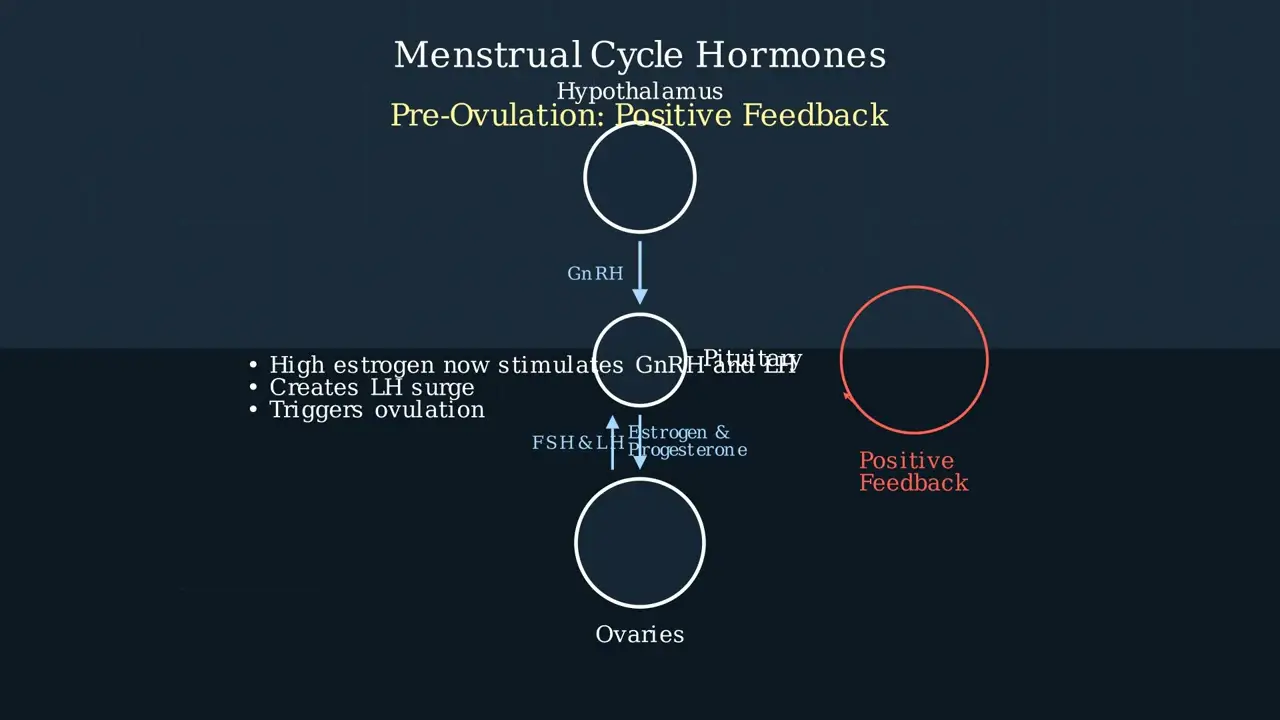
Hormonal Regulation Systems -Many hormonal systems rely on negative feedback. For example, thyroid hormone production is regulated by a complex feedback loop involving the hypothalamus, pituitary, and thyroid gland. When thyroid hormone levels rise, they inhibit the release of thyroid-stimulating hormone (TSH), preventing overproduction.
Blood Pressure Regulation -Blood pressure maintenance is another sophisticated negative feedback system. Baroreceptors in blood vessels detect pressure changes and signal the brain. If pressure rises too high, the brain triggers vasodilation and decreased heart rate. If pressure drops too low, vasoconstriction and increased heart rate restore normal pressure.
Calcium Homeostasis -Calcium levels in the blood are tightly controlled through negative feedback involving parathyroid hormone (PTH) and calcitonin. When calcium levels drop, PTH increases, promoting calcium release from bones and reabsorption in kidneys. When levels rise, calcitonin inhibits bone calcium release, maintaining optimal concentrations.
Acid-Base Balance -The body maintains precise pH levels through negative feedback systems. If blood becomes too acidic, the respiratory system increases breathing rate to expel more CO2, while the kidneys retain bicarbonate. If blood becomes too alkaline, breathing slows to retain CO2, and the kidneys excrete more bicarbonate.
Negative Feedback in Ecosystems -Negative feedback also operates at the ecosystem level. Predator-prey relationships demonstrate this principle: as prey populations increase, predator populations grow in response, increasing predation and reducing prey numbers. As prey decline, predator populations subsequently fall, allowing prey to recover.
When Negative Feedback Fails -Disruptions in negative feedback systems can lead to disease states. Diabetes results from failure of the insulin-glucose feedback loop. Fever occurs when the thermoregulatory setpoint is reset. Hypertension may involve malfunctions in blood pressure feedback mechanisms. Understanding these failures helps in developing medical treatments.
Conclusion: The Importance of Balance -Negative feedback systems are fundamental to life, maintaining the delicate balance necessary for survival. From cellular processes to whole-body systems and even ecosystems, these self-regulating mechanisms ensure stability, efficiency, and adaptability. Their elegant simplicity belies their critical importance in both biological and man-made systems.
Related Videos