

Tumor antigen is a molecule present in cancer cell. It may be present on cell surface or inside the cell. It is recognized by the immune system and helps to identify malignant cell from normal cell.
These antigens are important in cancer immunotherapy. They act as target molecule. By this target, immune system can attack the cancerous tissue.
Tumor antigens are mainly divided into two types. These are tumor associated antigen (TAA) and tumor specific antigen (TSA).
Tumor associated antigen (TAA) are present in normal tissue and also in malignant tissue. But in cancer cell they are found in very high amount or in abnormal form. So it is not fully new antigen, but its expression is changed.
Tumor specific antigen (TSA) are found only in malignant cell. They are absent in normal healthy tissue. These antigen are produced due to mutation, formation of neoantigen, or viral protein produced by cancer causing virus.
TSA is strongly immunogenic. It is recognized as non-self by immune system. So immune tolerance is not developed against it.
Thus, tumor antigen is the basic target for cancer immune response. It is used for detection and treatment of cancer. TSA is more specific and safer target than TAA.
Characteristics of Tumor Antigens
The following are the important characteristics of tumor antigens–
- Tumor antigens are molecular marker of cancer cells. It is used by host immune system to recognize and target the malignant cells.
- These antigens help to distinguish cancer cell from normal healthy somatic cell. So it is important in cancer immunotherapy.
- Tumor antigens are mainly classified into two types. These are tumor associated antigens (TAAs) and tumor specific antigens (TSAs).
- Tumor associated antigens (TAAs) are endogenous self-proteins. They are present in malignant tumor and also in some normal healthy cells.
- TAAs are usually formed due to genetic amplification or post translational modification. Because of this, they are expressed in very high amount or altered form in cancer cells.
- TAAs are present during normal cellular development. So immune system shows self tolerance against these antigen and immune response is generally weak.
- Targeting of TAAs may cause autoimmune reaction. It may also cause on-target off-tumor toxicity because normal tissues also express these antigens.
- Some examples of TAAs are overexpressed antigen like HER2, PSA, cancer-testis antigen like MAGE, NY-ESO-1, and oncofetal antigen like CEA and AFP.
- Tumor specific antigens (TSAs) are present only in malignant cells. They are completely absent in normal healthy tissue.
- TSAs act as true non-self antigen. So they can escape central immune tolerance and are easily recognized by immune system.
- TSAs are highly immunogenic than TAAs. They are also safer target for clinical use because they do not attack normal healthy cells.
- TSAs are formed from somatic oncogenic mutation, neoantigen, cancer causing virus like HPV or EBV, and non-canonical translational events.
- Tumor antigens may show antigenic heterogeneity. In solid tumor, different area of same tumor may express different antigen.
- Due to this heterogeneity, some cancer cells may hide from immune response. This helps in escape from antigen targeted therapy.
Origin and Formation of Tumor Antigens
The following are the main origin and formation of tumor antigens–
- Somatic mutation is one important source of tumor antigen. In this case DNA of cancer cell get changed by missense mutation, insertion, deletion or stop-loss mutation. It changes amino acid sequence and new antigen called neoantigen is formed.
- Chromosomal rearrangement also forms new tumor antigen. In this process translocation or inversion may join two different genes together. This forms fusion transcript and then new foreign peptide is produced.
- Viral infection is another source of tumor antigen. Cancer causing virus like Human papillomavirus (HPV), Epstein-Barr virus (EBV) and Hepatitis B virus (HBV) enter the host cell. The viral protein produced inside cell act as specific tumor antigen.
- Gene amplification may form tumor-associated antigen (TAA). Here normal self protein is produced in very high amount. Due to this over expression, the normal protein become antigenic in cancer cell.
- Gene dysregulation also causes formation of tumor antigen. In this case transcription factor become abnormal and normal protein is produced in altered amount. This helps in formation of overexpressed antigen.
- Reactivation of silenced gene is seen in many cancer cells. Loss of normal suppression or loss of DNA methylation activate the genes which are normally silent. This forms oncofetal antigens and cancer-testis antigens.
- Oncofetal antigens are formed when cancer cell express proteins of early embryonic development. These proteins are normally absent or very low in adult tissue.
- Cancer-testis antigens are formed when genes normally present in testis are expressed in cancer cells. Testis is immune privileged site, so these antigen become important target in tumor immunity.
- Alternative splicing may produce tumor antigen. In this process pre-mRNA is not processed normally. Sometimes intron remain or exon joining become abnormal. So a different protein sequence is formed.
- RNA editing also changes the RNA sequence after transcription. This altered RNA may translate into new peptide. This peptide acts as tumor antigen.
- Circular RNA may also form antigen. It is produced by back-splicing event. Some circular RNA can be translated and unique antigenic peptide is formed.
- Non-coding region translation is another source. In cancer cell, long non-coding RNA, pseudogene or transposable element may get translated. These are usually not translated in normal cell, so new antigen may appear.
- Alternative translation initiation can produce abnormal protein. Translation may start from unusual site and a different peptide is formed.
- Read-through translation also forms tumor antigen. In this case translation machinery cross the normal stop codon. So longer and abnormal protein is produced.
- Post-translational modification may change normal protein into tumor antigen. Abnormal glycosylation, phosphorylation or other chemical change alter the protein structure. This makes a new antigenic target.
- Proteasomal splicing also helps in formation of tumor antigen. Proteasome normally break protein into small peptide. Sometimes it join different peptide fragments together and forms new antigen sequence.
Classification of Tumor Antigens
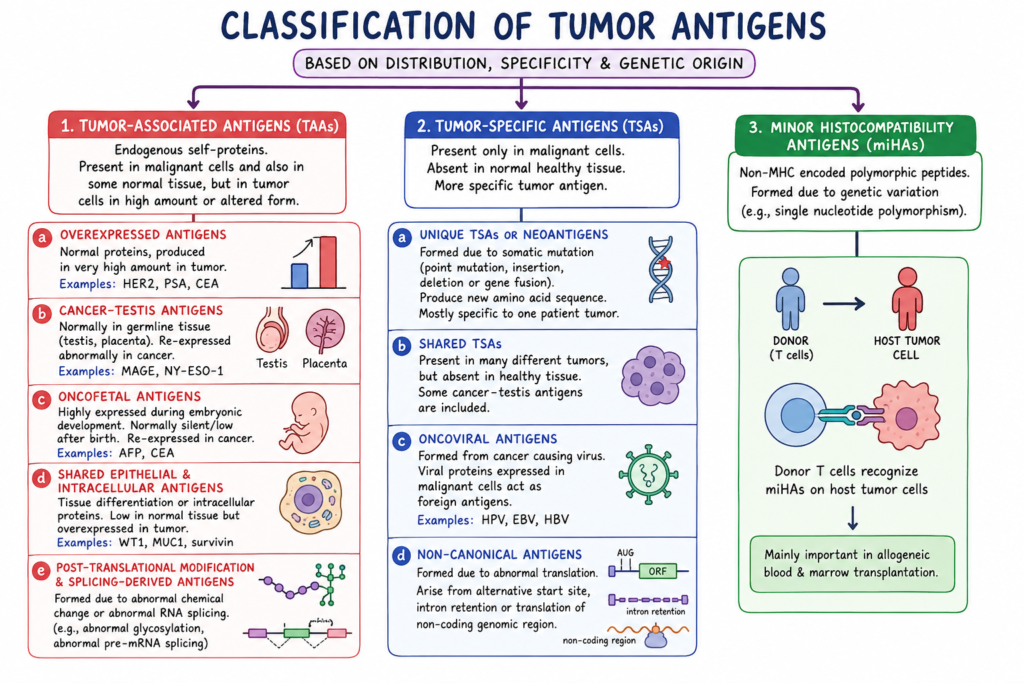
Tumor antigens are classified mainly on the basis of their distribution, specificity and genetic origin.
The following are the main classification of tumor antigens–
1. Tumor-associated antigens (TAAs)
Tumor-associated antigens (TAAs) are endogenous self-proteins. They are present in malignant cells and also in some normal healthy tissue. But in tumor cells they are present in high amount or in altered form.
The following are the types of TAAs–
a. Overexpressed antigens
These are normal cellular proteins. But in tumor cells they are produced in very high amount. Examples are HER2, PSA and CEA.
b. Cancer-testis antigens
These antigens are normally present in germline tissue like testis and placenta. But in cancer cell these genes are again expressed abnormally. Examples are MAGE and NY-ESO-1.
c. Oncofetal antigens
These antigens are highly expressed during embryonic development. After birth they are normally silent or very low. During malignant transformation they are again expressed. Examples are AFP and CEA.
d. Shared epithelial and intracellular antigens
These are tissue differentiation antigens or intracellular proteins. They are normally present in low amount but become overexpressed in tumor. Examples are WT1, MUC1 and survivin.
e. Post-translational modification and splicing-derived antigens
These antigens are formed due to abnormal chemical change or abnormal RNA splicing in tumor cells. Abnormal glycosylation and unusual pre-mRNA splicing can form these antigens.
2. Tumor-specific antigens (TSAs)
Tumor-specific antigens (TSAs) are present only in malignant cells. They are absent in normal healthy tissue. So they are more specific tumor antigen.
The following are the types of TSAs–
a. Unique TSAs or neoantigens
These are formed due to somatic mutation. Point mutation, insertion, deletion or gene fusion may produce new amino acid sequence. These antigens are mostly specific to one patient tumor.
b. Shared TSAs
These antigens are present in many different tumors. But they are not present in healthy tissue. Some cancer-testis antigens are also included in this group.
c. Oncoviral antigens
These antigens are formed from cancer causing virus. Viral proteins are expressed in malignant cells and act as foreign antigen. Examples are HPV, EBV and HBV associated antigens.
d. Non-canonical antigens
These antigens are formed due to abnormal translation. They may arise from alternative translation start site, intron retention or translation of non-coding genomic region.
3. Minor histocompatibility antigens (miHAs)
Minor histocompatibility antigens (miHAs) are non-MHC encoded polymorphic peptides. They are formed due to genetic variation like single nucleotide polymorphism (SNP).
These antigens are mainly important in allogeneic blood and marrow transplantation. In this condition donor T cells recognize these antigens on host tumor cells.
Expression of Tumor Antigens on Cancer Cells
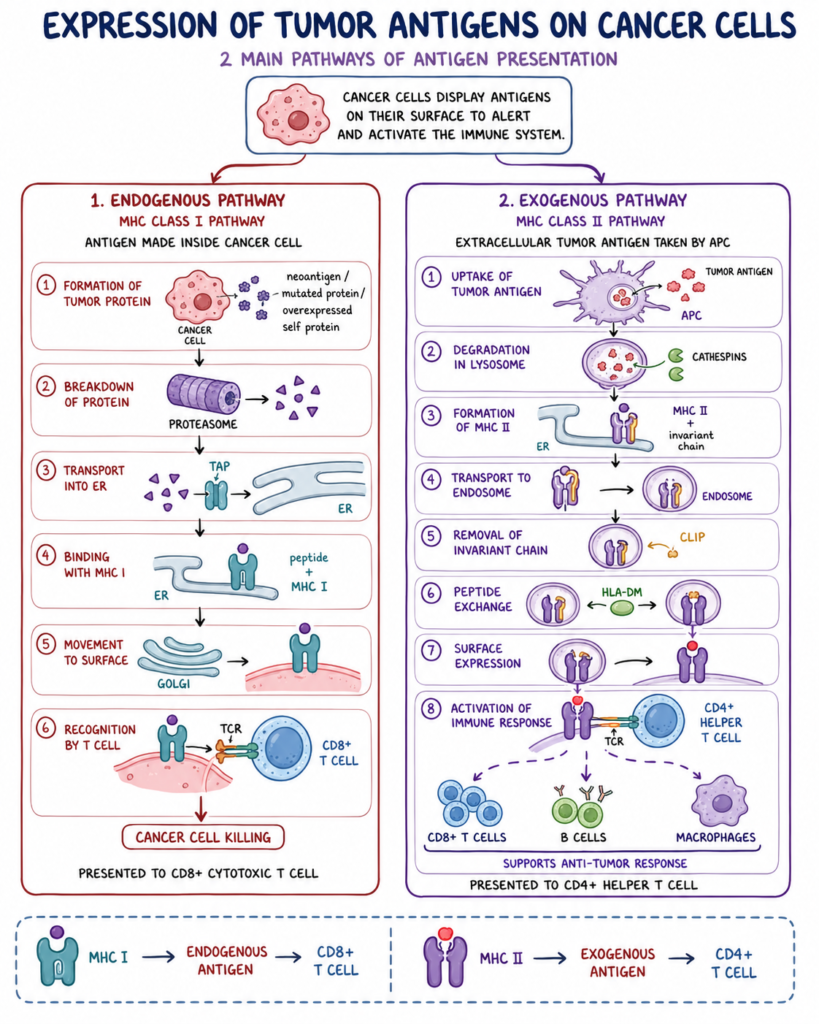
The expression of tumor antigens on cancer cell surface occurs mainly by two pathways.
These are-
- Endogenous pathway (MHC class I pathway)
- Exogenous pathway (MHC class II pathway)
1. Endogenous pathway (MHC Class I pathway)
This pathway is used for antigen produced inside the cancer cell. It presents antigen to CD8+ cytotoxic T cells.
Step 1- Formation of tumor protein
In cancer cell, abnormal protein is formed inside cytoplasm. These may be neoantigens, mutated proteins or overexpressed self proteins.
Step 2- Breakdown of protein
The tumor protein is broken into small peptide fragments. This is done by proteasome present in cytoplasm.
Step 3- Transport of peptide into ER
The small peptide fragments are transported into endoplasmic reticulum (ER). This transport is done by TAP (Transporter associated with antigen processing).
Step 4- Binding with MHC class I
Inside ER, the tumor peptide bind with newly formed MHC class I molecule. This forms peptide-MHC class I complex.
Step 5- Movement to cell surface
The stable peptide-MHC class I complex moves through Golgi apparatus and reaches the cancer cell membrane.
Step 6- Recognition by T cell
On cell surface, this complex is recognized by T cell receptor (TCR) of CD8+ T cell. Then the cytotoxic T cell can kill the cancer cell.
2. Exogenous pathway (MHC Class II pathway)
This pathway is mainly used by antigen presenting cells (APCs) like dendritic cells and macrophages. It presents tumor antigen to CD4+ helper T cells.
Step 1- Uptake of tumor antigen
The extracellular tumor antigen is taken up by APCs. It enters inside the cell in endosomal vesicle.
Step 2- Degradation in lysosome
The tumor antigen is degraded inside endo-lysosomal vesicle. Lysosomal enzymes like cathepsins break it into peptide fragments.
Step 3- Formation of MHC class II molecule
At same time, MHC class II molecule is formed in endoplasmic reticulum (ER). Its binding groove is blocked by invariant chain.
Step 4- Transport to endosome
The MHC class II-invariant chain complex is transported to endosomal compartment. In this region antigen peptide is already present.
Step 5- Removal of invariant chain
The invariant chain is cleaved inside endosome. A small fragment called CLIP remains in the binding groove.
Step 6- Peptide exchange
With help of HLA-DM, the CLIP fragment is removed. Then tumor peptide bind with MHC class II molecule.
Step 7- Surface expression
The stable peptide-MHC class II complex moves to the cell surface. It is then presented to CD4+ helper T cells.
Step 8- Activation of immune response
The CD4+ T cell helps in activation of other immune cells. It supports anti-tumor immune response by helping CD8+ T cells, B cells and macrophages.
Recognition of Tumor Antigens by the Immune System
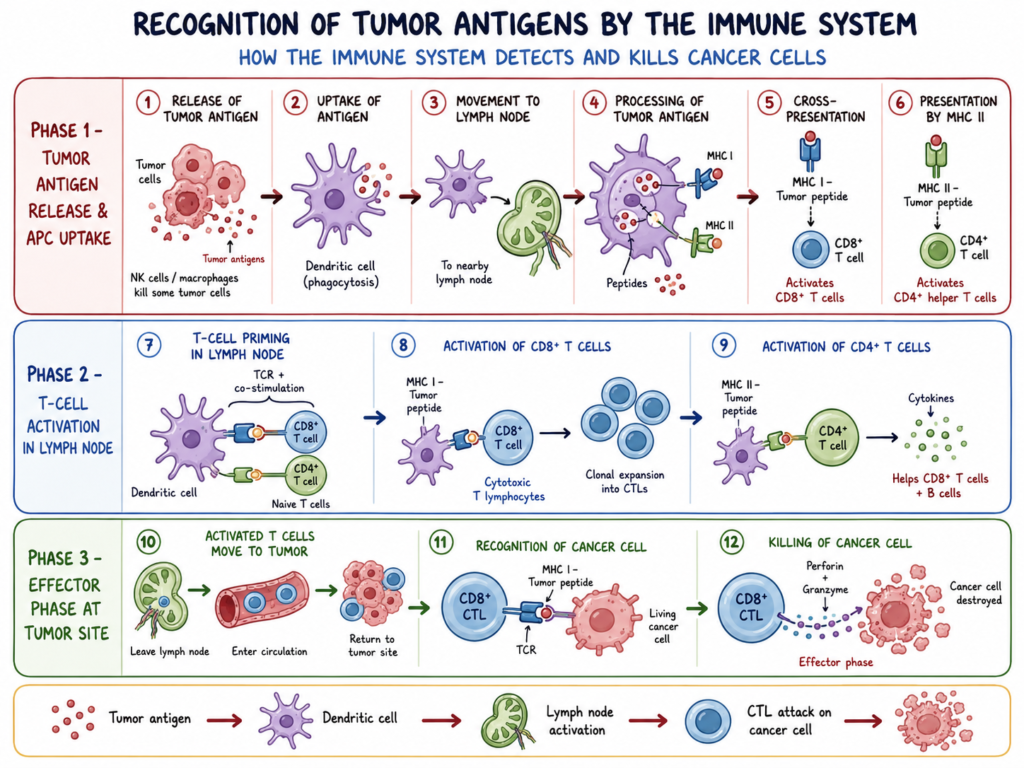
The following are the steps of recognition of tumor antigens by immune system-
Step 1- Release of tumor antigen
First some malignant cells are damaged or killed. This may be done by natural killer cells (NK cells) or macrophages. After killing, tumor cells release abnormal proteins called tumor antigens in the tumor microenvironment.
Step 2- Uptake of antigen
The released tumor antigens are taken up by antigen presenting cells (APCs). Mainly dendritic cells perform this function. They engulf the antigen by phagocytosis.
Step 3- Movement to lymph node
After taking the antigen, dendritic cells move away from tumor area. They travel to nearby or peripheral lymph nodes. This is needed for activation of T cells.
Step 4- Processing of tumor antigen
Inside the dendritic cell, the tumor antigen is broken into small peptide fragments. These peptides are then loaded with MHC molecules.
Step 5- Cross presentation
Some exogenous tumor antigen are presented on MHC class I molecule. This special process is called cross-presentation. It is important because it helps to activate CD8+ T cells against tumor.
Step 6- Presentation by MHC class II
Some tumor peptides are also presented with MHC class II molecule. This is mainly for activation of CD4+ helper T cells.
Step 7- T cell priming in lymph node
In lymph node, dendritic cell shows antigen-MHC complex to naive T cells. The T cell receptor (TCR) bind with this antigen. Co-stimulatory signals are also required for proper activation.
Step 8- Activation of CD8+ T cells
The MHC class I-tumor peptide complex bind with TCR of CD8+ T cell. After activation, these cells divide and become cytotoxic T lymphocytes (CTLs). These are killer T cells.
Step 9- Activation of CD4+ T cells
The MHC class II-tumor peptide complex bind with CD4+ helper T cell. These cells release cytokines and help in stronger immune response. They also help CD8+ T cells and B cells.
Step 10- Movement of activated T cells to tumor
The activated tumor specific CD8+ T cells leave the lymph node. They enter blood circulation and go back to the tumor site.
Step 11- Recognition of cancer cell
At tumor site, CD8+ T cells recognize the same tumor antigen present on living cancer cell. The antigen is shown on MHC class I molecule of cancer cell.
Step 12- Killing of cancer cell
After recognition, cytotoxic T cells attack the cancer cell. They release killing molecules and destroy malignant cell. This is the effector phase of anti-tumor immune response.
Antigen Processing and Presentation of Tumor Antigens
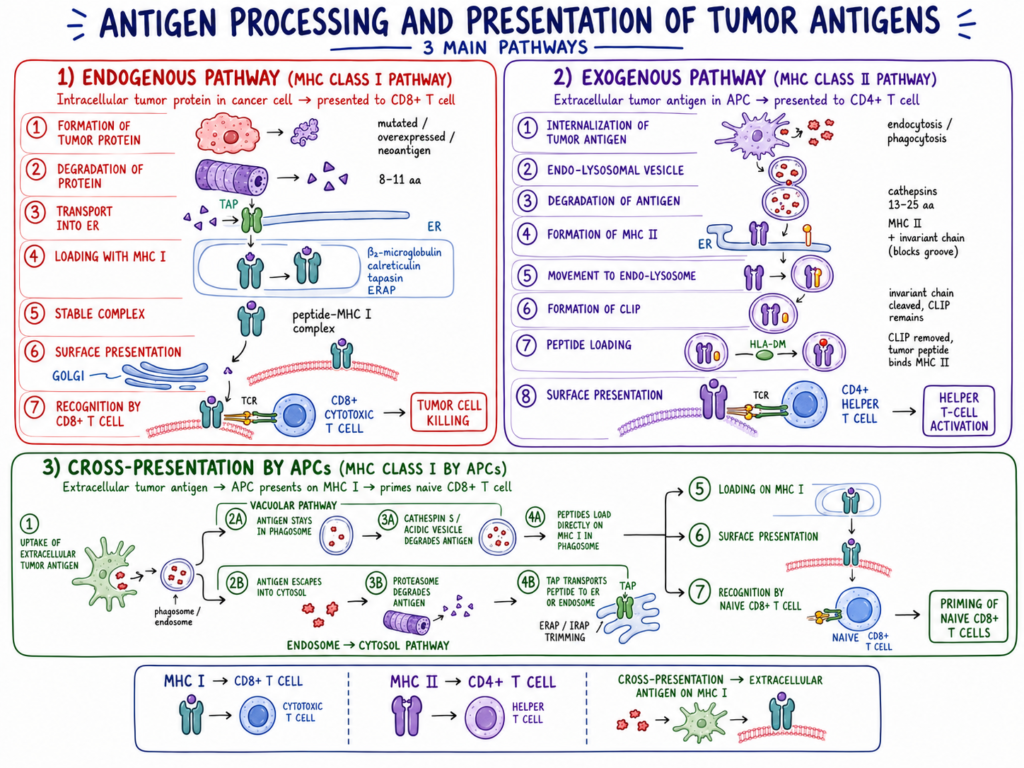
The following are the step by step process of antigen processing and presentation of tumor antigens–
1. Endogenous pathway (MHC Class I pathway)
This pathway is used for intracellular tumor protein. It presents tumor peptide on cancer cell surface. It is mainly recognized by CD8+ cytotoxic T lymphocytes.
Step 1- Formation of tumor protein
In cancer cell, abnormal protein is formed inside cytoplasm. These may be mutated protein, overexpressed protein or neoantigen.
Step 2- Degradation of protein
The intracellular tumor protein is broken into small peptide fragments. This is done by proteasome. The peptide length is usually 8 to 11 amino acids.
Step 3- Transport into ER
The small peptide fragments are transported from cytosol into endoplasmic reticulum (ER). This transport is done by TAP (Transporter associated with Antigen Processing).
Step 4- Loading with MHC Class I
Inside ER, the tumor peptide is loaded on newly formed MHC Class I molecule. This loading is helped by β₂-microglobulin, calreticulin, ERAP and tapasin.
Step 5- Formation of stable complex
After peptide loading, a stable peptide-MHC Class I complex is formed. This complex is now ready for surface expression.
Step 6- Presentation on cell surface
The complex moves through Golgi apparatus and reaches the plasma membrane. It is displayed on cancer cell surface.
Step 7- Recognition by CD8+ T cell
The CD8+ cytotoxic T cell recognize this peptide-MHC Class I complex by its T cell receptor (TCR). Then tumor cell can be killed.
2. Exogenous pathway (MHC Class II pathway)
This pathway is used for extracellular tumor antigen. It is mainly done by antigen presenting cells (APCs) like dendritic cells and macrophages.
Step 1- Internalization of tumor antigen
The extracellular tumor antigen is taken up by APCs. It enters inside the cell through endocytosis or phagocytosis.
Step 2- Formation of endo-lysosomal vesicle
The antigen remains inside endo-lysosomal vesicles. These vesicles contain enzymes for protein breakdown.
Step 3- Degradation of antigen
The tumor antigen is degraded by lysosomal proteases like cathepsins. Larger peptide fragments are formed. Usually they are 13 to 25 amino acids long.
Step 4- Formation of MHC Class II molecule
At same time, MHC Class II molecule is synthesized in ER. Its peptide binding groove is blocked by invariant chain.
Step 5- Movement to endo-lysosome
The MHC Class II-invariant chain complex moves to the endo-lysosomal compartment. Here tumor peptides are already present.
Step 6- Formation of CLIP
Inside vesicle, invariant chain is cleaved. A small fragment called CLIP remains in the groove of MHC Class II.
Step 7- Peptide loading
With the help of HLA-DM, CLIP is removed. Then tumor peptide bind with MHC Class II molecule.
Step 8- Surface presentation
The stable peptide-MHC Class II complex moves to cell surface. It is presented to CD4+ helper T cells.
3. Cross-presentation (MHC Class I pathway by APCs)
This is a special pathway. In this process APCs, mainly dendritic cells, take extracellular tumor antigen but present it by MHC Class I. It is important for activation of naive CD8+ T cells.
Step 1- Uptake of extracellular tumor antigen
The dendritic cell takes up extracellular tumor antigen from tumor area. It enters inside phagocytic vesicle or endosome.
Step 2- Vacuolar pathway
In some cases antigen remains inside phagosome. Acidic condition and lysosomal enzyme like Cathepsin S degrade the antigen into peptide.
Step 3- Loading inside phagosome
These peptides are loaded directly on MHC Class I molecule inside the phagosome. Then peptide-MHC Class I complex moves to cell surface.
Step 4- Endosome to cytosol pathway
In other case, antigen move from endosome into cytoplasm. In cytoplasm, antigen is degraded by proteasome.
Step 5- Transport of peptide
The peptide is transported by TAP into ER or again into endosome. In ER, peptide may be trimmed by ERAP. In endosome, it may be trimmed by IRAP.
Step 6- Loading on MHC Class I
The processed peptide bind with MHC Class I molecule. Stable peptide-MHC Class I complex is formed.
Step 7- Presentation to CD8+ T cell
The complex is transported to cell surface. It is recognized by naive CD8+ T cell and anti-tumor immune response is started.
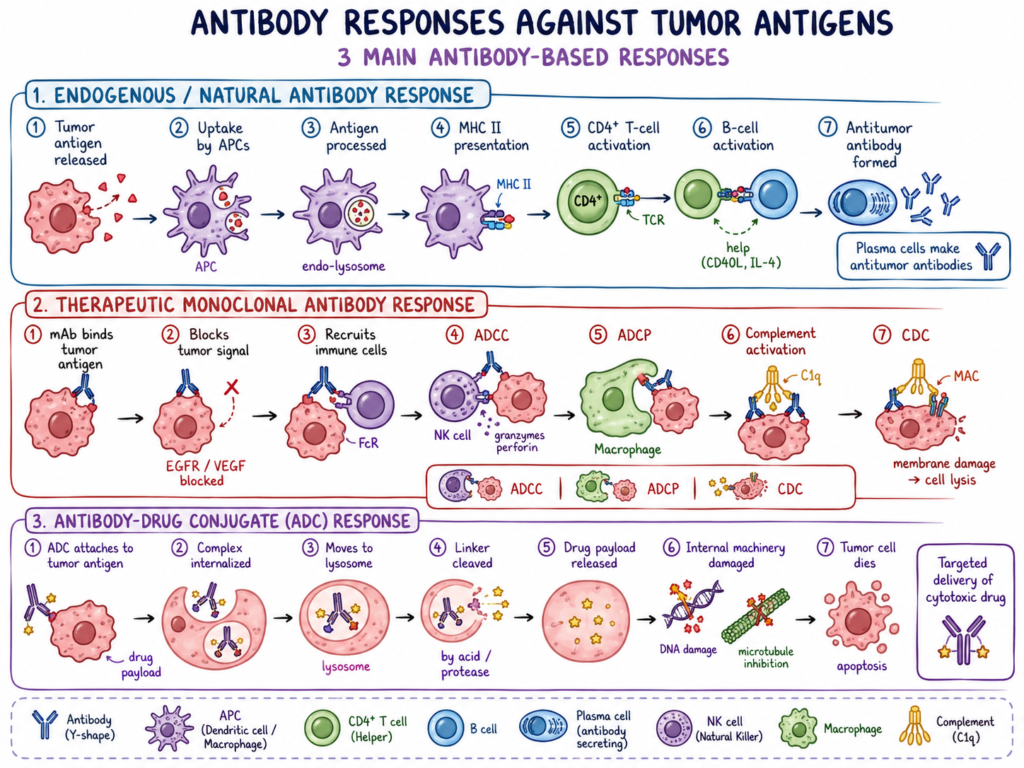
Antibody Responses Against Tumor Antigens
The following are the step by step process of antibody response against tumor antigens–
1. Endogenous or natural antibody response
This response occurs naturally by the immune system against tumor antigen.
Step 1- Release of tumor antigen
The malignant cell release tumor antigens in the surrounding area. It may occur after tumor cell damage or death.
Step 2- Uptake by APCs
The released antigen is taken up by antigen presenting cells (APCs). Mainly dendritic cells and macrophages do this function.
Step 3- Processing of antigen
Inside the APCs, tumor antigen is degraded into small peptide fragments. This occurs inside endo-lysosomal vesicles.
Step 4- Presentation by MHC class II
The peptide fragments are attached with MHC class II molecules. Then this antigen-MHC II complex is shown on the surface of APCs.
Step 5- Activation of helper T cell
The CD4+ helper T cell recognize this complex by T cell receptor (TCR). After this, helper T cell become activated.
Step 6- Activation of B cell
The activated CD4+ T cell interact with B cell. It gives signal to B cell for activation and antibody formation.
Step 7- Formation of antitumor antibody
The activated B cells change into plasma cells. These plasma cells produce antitumor antibodies against the recognized tumor antigen.
2. Therapeutic monoclonal antibody response
This response is produced by externally given monoclonal antibodies (mAbs). These antibodies are made to target specific tumor antigen.
Step 1- Binding with tumor antigen
The monoclonal antibody bind directly with tumor antigen present on cancer cell surface. The binding occurs by Fab region of antibody.
Step 2- Blocking of tumor signal
After binding, antibody may block growth and survival signal of cancer cell. It may block pathway like VEGF or EGFR pathway.
Step 3- Recruitment of immune cell
The Fc region of antibody bind with Fc receptors present on immune cells. This brings immune cells near the antibody coated tumor cell.
Step 4- ADCC reaction
In antibody-dependent cell-mediated cytotoxicity (ADCC), NK cells bind with Fc region of antibody. Then NK cells kill the tumor cell directly.
Step 5- ADCP reaction
In antibody-dependent cellular phagocytosis (ADCP), macrophage bind with antibody coated tumor cell. Then macrophage engulf and digest the cancer cell.
Step 6- Complement activation
The Fc region may also bind with complement protein like C1q. This activates complement system.
Step 7- CDC reaction
In complement-dependent cytotoxicity (CDC), complement proteins damage the tumor cell membrane. Finally tumor cell is destroyed.
3. Antibody-drug conjugate response
Antibody-drug conjugate (ADC) is a monoclonal antibody attached with cytotoxic drug. It carries drug directly to cancer cell.
Step 1- Attachment with tumor antigen
The antibody part of ADC bind with specific tumor antigen on malignant cell surface. It acts like delivery vehicle.
Step 2- Internalization of complex
After binding, the ADC-antigen complex enters inside the cancer cell. This occurs by receptor mediated endocytosis.
Step 3- Movement to lysosome
The internalized complex goes to lysosome. Lysosome has acidic condition and degradative enzymes.
Step 4- Cleavage of linker
Inside lysosome, the linker between antibody and drug is cleaved. It may be cleaved by protease enzyme or acidic pH.
Step 5- Release of drug payload
After linker cleavage, the cytotoxic drug is released inside cancer cell. The drug is very potent and acts locally.
Step 6- Damage of internal machinery
The released drug damage the internal machinery of tumor cell. It may cause DNA double strand break or inhibit microtubule assembly.
Step 7- Death of tumor cell
Due to this damage, cell cycle arrest occurs. Then cancer cell undergo apoptosis and dies.
Methods for Identification and Detection of Tumor Antigens
- Immunopeptidomics-It is a method used to detect HLA/MHC bound tumor peptides directly from tumor cells. In this method HLA/MHC-peptide complexes are isolated by immunoaffinity purification. The bound peptides are then eluted, separated by HPLC and identified by LC-MS/MS.
- Proteogenomics-It is a combined method of proteomics and genomics. It uses whole exome sequencing (WES), whole genome sequencing (WGS), RNA-seq and Ribo-seq. This method helps to identify tumor antigens from coding region, mutated region and also from non-coding genomic region.
- Forward immunology-It starts from immune response of the patient. In this method tumor reactive T cells or tumor infiltrating lymphocytes (TILs) are isolated. These cells are used to screen tumor derived cDNA library and the reactive clone is selected.
- Reverse immunology-It starts from genetic sequence of tumor. Computer based prediction is used to find which peptide can bind with HLA/MHC molecule. Then the predicted peptide is synthesized and tested by MHC tetramer, flow cytometry and T cell response.
- In silico method-It is a bioinformatics based method. It uses computer tools and machine learning for prediction of neoantigens. Some important tools are NetMHCpan, MHCnuggets, ImmuneMirror and Naso.
- Spatial transcriptomics-It is used to study tumor antigen expression in tissue position. It shows where the antigen expressing tumor cells are present. It also helps to know the relation between tumor cells, immune cells and tumor microenvironment (TME).
- Single-cell transcriptomics-It is used to study antigen expression in single cancer cell. This method helps to detect variation of tumor antigen between different cells of same tumor. It is important because all tumor cells do not express same antigen.
- Clinical immunoassay-It is used to detect soluble tumor antigens present in blood. These antigens are shed from tumor cells into serum. Examples are CEA, CA-125, CA 19-9 and PSA.
- ELISA–Enzyme-linked immunosorbent assay (ELISA) is based on antigen-antibody reaction. It is used to measure amount of tumor antigen in serum. It is used in diagnosis, prognosis and monitoring of treatment.
- Chemiluminescent assay-It is an enzyme immunoassay method. In this method light signal is produced after reaction. The intensity of light is measured and it indicates the amount of tumor antigen present in sample.
Clinical Significance of Tumor Antigens
The following are the important clinical significance of tumor antigens–
- Targeted therapy–Tumor antigens act as specific target site for targeted cancer treatment. Monoclonal antibodies (mAbs) bind with these antigen and block growth or survival signal of cancer cell. Example Trastuzumab binds with HER2 positive tumor cell.
- Antibody-drug conjugate–Antibody-drug conjugates (ADCs) use tumor antigen as entry point. The antibody part bind with antigen like CD30, Trop-2 or Nectin-4. Then cytotoxic drug is carried inside malignant cell and damage to normal tissue is reduced.
- Adoptive cell therapy–Tumor antigens are used as target in CAR-T cell therapy and TCR therapy. In this treatment patient T cells are modified to recognize specific antigen. Examples are CD19, BCMA, GD2 and CEA.
- Cancer vaccine–Tumor-associated antigens and neoantigens are used for preparation of therapeutic cancer vaccine. Antigens like WT1, MUC1 and MAGE may be given as peptide, mRNA or by dendritic cell. It helps immune system to form anti-tumor T cell response.
- Checkpoint response-Amount of neoantigen in tumor help to predict response to immune checkpoint therapy. Tumor with high tumor mutational burden (TMB) or mismatch repair defect produce more neoantigen. So they may respond better to anti-PD-1 or anti-CTLA-4 therapy.
- Cancer diagnosis-Some tumor antigens are released into blood and used as biomarker. PSA is used in prostate cancer. AFP and beta-hCG are used in germ cell tumor diagnosis and risk grouping.
- Treatment monitoring-Serum level of tumor antigen is measured during treatment. CEA is used in colorectal cancer, CA-125 in ovarian cancer and CA 15-3 in breast cancer. Decrease level indicate good response and increase level may show relapse or resistance.
- Disease recurrence-Rise of tumor antigen after treatment may be an early sign of recurrence. This is useful before clear clinical symptoms appear. So regular antigen measurement help in follow up of cancer patient.
- Prognosis-High level of some tumor antigen gives poor prognostic information. Increased CEA, AFP or CA 19-9 may indicate high tumor burden, metastasis and poor survival chance.
- Personalized treatment-Patient specific neoantigens help to make personalized cancer treatment. The antigen profile of one tumor may be different from another tumor. So therapy can be selected according to antigen present in that patient tumor.
Limitations and Challenges of Tumor Antigen-Based Therapies
The following are the important limitations and challenges of tumor antigen-based therapies–
- Antigenic heterogeneity-Solid tumors are not made by same type of cancer cells. They contain many polyclonal cell populations and all cells do not express same antigen. So when one antigen is targeted, antigen negative cells may survive.
- Antigen escape-Some cancer cells may lose or downregulate the target antigen. These cells are not recognized by therapy. Then they grow again and cause tumor resistance and relapse.
- Off-tumor toxicity-Many targets are tumor-associated antigens (TAAs). These are also present in some normal healthy tissue in low amount. So therapy may attack normal organ also.
- Tissue damage-Due to on-target off-tumor toxicity, serious damage may occur in normal tissues. It may cause respiratory distress, digestive hemorrhage and life threatening tissue destruction.
- Cytokine release syndrome-T cell based therapy may produce strong systemic immune reaction. Large amount of cytokines are released. This condition is called cytokine release syndrome (CRS) and it may become life threatening.
- Neurotoxicity-Some patients develop immune effector cell-associated neurotoxicity syndrome (ICANS). It affects nervous system function. It is one serious adverse effect of cellular immunotherapy.
- Long term toxicity-Some patients may develop prolonged myelosuppression. Due to this blood cell formation become low. Risk of opportunistic infection also increases.
- Immunosuppressive TME-The tumor microenvironment (TME) suppress the immune response. Tumor recruit regulatory T cells (Tregs) and myeloid-derived suppressor cells (MDSCs). These cells inhibit anti-tumor T cell activity.
- Inhibitory cytokines-Tumor cells and suppressor cells release inhibitory cytokines like IL-10 and TGF-β. These cytokines reduce immune cell activity and help tumor survival.
- T cell exhaustion-In solid tumor, hypoxia, acidic metabolites and nutrient deficiency are present. These condition make therapeutic T cells weak. Their function, proliferation and survival become reduced.
- Poor T cell trafficking-Therapeutic T cells cannot easily reach solid tumor. Solid tumor has abnormal blood vessels and low chemokine signal. So migration of T cells into tumor tissue become difficult.
- Poor tumor infiltration-Even after reaching tumor area, T cells may not enter deep inside tumor parenchyma. This reduces killing of cancer cells present inside solid tumor mass.
- Self tolerance-Many TAAs are normal self proteins. Immune system is already trained to tolerate these antigen. So T cells against them show low or moderate binding and weak immune response.
- Manufacturing difficulty-Therapies like CAR-T, TCR-T and TIL therapy need ex vivo cell culture, genetic engineering and expansion. This process is complex and time taking.
- High cost-Personalized cellular therapy is very expensive. It also need special laboratory and trained medical center. So many patients cannot get this treatment easily.
- Poor T cell quality-Autologous therapy depends on patient own T cells. Patients who received heavy chemotherapy may have exhausted or damaged T cells. So final cell product may show low therapeutic effect.
References
- Huateng Pharmaceutical CO Ltd. (2025, December 5). 21 Approved ADCs Worldwide: The Ultimate Guide (Updated 2025).
- Parums, D. V. (2025). A Review of CAR T Cells and Adoptive T-Cell Therapies in Lymphoid and Solid Organ Malignancies. Medical Science Monitor, 31, e948125.
- Zhang, J., Zhou, W., Yu, J., Yan, C., & Liu, J. (2025). A machine learning-based method to optimize the immunogenicity of human leukocyte antigen class I-restricted neoantigens. Briefings in Bioinformatics, 26(6), bbaf582.
- Cancer Research Institute. (n.d.). Adoptive Cell Therapy.
- ASCO Publications. (n.d.). Adoptive Cell Therapy for Solid Tumors: Current Status in Melanoma and Next-Generation Therapies.
- Harris, D. T., & Kranz, D. M. (2016). Adoptive T Cell Therapies: A Comparison of T Cell Receptors and Chimeric Antigen Receptors. Trends in Pharmacological Sciences, 37(3), 220–230.
- Albarrán, V., San Román, M., Pozas, J., Chamorro, J., Rosero, D. I., Guerrero, P., Calvo, J. C., González, C., García de Quevedo, C., Pérez de Aguado, P., Moreno, J., Cortés, A., & Soria, A. (2024). Adoptive T cell therapy for solid tumors: current landscape and future challenges. Frontiers in Immunology, 15, 1352805.
- Advances in Tumor Antigen Vaccines: A New Frontier in Cancer… (n.d.).
- Cleveland Clinic. (2024, March 28). Antibody-Drug Conjugates (ADCs).
- Wikipedia contributors. (2026, June 3). Antibody–drug conjugate. In Wikipedia, The Free Encyclopedia.
- Zarour, H. M., DeLeo, A., Finn, O. J., & Storkus, W. J. (2003). Application of Tumor Antigens for Clinical Immunotherapy. In D. W. Kufe, R. E. Pollock, R. R. Weichselbaum, et al. (Eds.), Holland-Frei Cancer Medicine (6th ed.). BC Decker.
- Benchmarking predictions of MHC class I restricted T cell epitopes in a comprehensively studied model system. (n.d.). PMC.
- Stanford Health Care. (n.d.). CA 125 Tumor Marker.
- Desrichard, A., Snyder, A., & Chan, T. A. (2016). Cancer Neoantigens and Applications for Immunotherapy. Clinical Cancer Research, 22(4), 807–812.
- Desai, S., & Guddati, A. K. (2023). Carcinoembryonic Antigen, Carbohydrate Antigen 19-9, Cancer Antigen 125, Prostate-Specific Antigen and Other Cancer Markers: A Primer on Commonly Used Cancer Markers. World Journal of Oncology, 14(1), 4–14.
- Classification and characteristics of tumor antigens. (n.d.). ResearchGate.
- Liu, C., Yang, M., Zhang, D., Chen, M., & Zhu, D. (2022). Clinical cancer immunotherapy: Current progress and prospects. Frontiers in Immunology, 13, 961805.
- Wikipedia contributors. (2026, January 20). Cross-presentation. In Wikipedia, The Free Encyclopedia.
- Embgenbroich, M., & Burgdorf, S. (2018). Current Concepts of Antigen Cross-Presentation. Frontiers in Immunology, 9, 1643.
- Zhang, B., & Bassani-Sternberg, M. (2023). Current Perspectives on Mass Spectrometry-Based Immunopeptidomics: The Computational Angle to Tumor Antigen Discovery. Journal for ImmunoTherapy of Cancer, 11, e007073.
- Çalışkan Kamış, Ş., Çil, M., & Yağcı, B. (2026). Diagnostic Value of CA-125 and Other Tumor Biomarkers in Children with Suspected Malignancy: A Retrospective Cohort Study. Diagnostics, 16(1), 54.
- Mühlegger, M. (2026, January 29). FDA approved Antibody Drug Conjugates (ADCs). Single Use Support.
- Davies, D. M., & Maher, J. (2016). Gated chimeric antigen receptor T-cells: the next logical step in reducing toxicity? Translational Cancer Research, 5(Suppl 1), S61–S65.
- High-Throughput Antigen Profiling and Precision Immunotherapy: A Comprehensive Review of Tumor Antigens, Processing Pathways, and Therapeutic Delivery Systems. (n.d.).
- Shao, X. M., Bhattacharya, R., Huang, J., Sivakumar, I. K. A., Tokheim, C., Zheng, L., Hirsch, D., Kaminow, B., Omdahl, A., Bonsack, M., Riemer, A. B., Velculescu, V. E., Anagnostou, V., Pagel, K. A., & Karchin, R. (2020). High-Throughput Prediction of MHC Class I and II Neoantigens with MHCnuggets. Cancer Immunology Research, 8(3), 396–408.
- Thermo Fisher Scientific. (n.d.). Immunopeptidomics Overview.
- Scheid, J., Lemke, S., Hoenisch-Gravel, N., Dengler, A., Sachsenberg, T., Declerq, A., Gabriels, R., Bauer, J., Wacker, M., Bichmann, L., Martens, L., Dubbelaar, M. L., Nahnsen, S., & Walz, J. S. (2025). MHCquant2 refines immunopeptidomics tumor antigen discovery. Genome Biology, 26, 290.
- Overcoming On-Target Off-Tumor Toxicity of CAR T-Cell Therapy for Solid Tumors. (n.d.). Creative Biolabs CAR-T Blog.
- Immudex. (2021, October). Published list of Cancer T-cell epitopes.
- Dean, A., & Zhang, B. (2021). Recent Advances in the Antibody-Drug Conjugate Clinical Pipeline. FDA Science Forum.
- Zhu, L., et al. (2026). The cellular actors of the tumor microenvironment: a single-cell atlas perspective on specialized subtypes, coordinated networks, and immunotherapy. Immunity & Inflammation, 2(27). News-Medical.net.
- Zilberberg, J., Feinman, R., & Korngold, R. (2015). Strategies for the Identification of T Cell–Recognized Tumor Antigens in Hematological Malignancies for Improved Graft-versus-Tumor Responses after Allogeneic Blood and Marrow Transplantation. Biology of Blood and Marrow Transplantation, 21(6), 1000–1007.
- Strategies to Overcome Antigen Heterogeneity in CAR-T Cell Therapy. (n.d.). PMC – NIH.
- Wang, R., & Guo, Y. (2026). T-cell exhaustion in tumor immunology: mechanisms, heterogeneity, and therapeutic strategies. Frontiers in Immunology, 17, 1841281.
- Bourré, L. (2019, September 17). Targeting Tumor-Associated Antigens and Tumor-Specific Antigens. Crown Bioscience Blog.
- Bashizadeh-Fakhar, H., Rezaie-Tavirani, M., Zali, H., Faraji, R., Kazem Nejad, E., & Aghazadeh, M. (2018). The Diagnostic Value of Serum CEA, CA-125, and ROMA Index in Low-Grade Serous Ovarian Cancer. International Journal of Cancer Management, 11(5), e63397.
- Tmod cellular logic gate as a solution to on-target, off-tumor toxicity in CAR-T for solid tumors. (n.d.). YouTube.
- Tumor Antigen Cross-Presentation and the Dendritic Cell: Where it All Begins? (n.d.). PMC.
- Majzner, R. G., & Mackall, C. L. (2018). Tumor Antigen Escape from CAR T-cell Therapy. Cancer Discovery, 8(10), OF1–OF8.
- Tumor Markers Antibodies and Antigens. (n.d.). Creative Diagnostics.