

Cancer immunotherapy is a type of cancer treatment that uses the body’s own immune system to identify and destroy cancer cells. It does not directly attack the tumour like chemotherapy and radiation therapy. It stimulates or restores the natural cancer fighting capacity of immune system.
In this treatment, the immune cells mainly T-cells are activated against abnormal cancer cells. The immune system can remember some tumour antigens, so it may give long term control of the disease. This is one important reason for its use in modern cancer treatment.
The most commonly used immunotherapy is Immune Checkpoint Inhibitors (ICIs). Cancer cells can use natural brakes of immune system such as PD-1 and CTLA-4 proteins. These brakes stop immune attack and help the tumour cells to escape from immune surveillance.
Checkpoint inhibitors block these brake signals. Then T-cells can recognize the cancer cells properly and kill them. This process improves the immune response against tumour cells.
The following are the important types of cancer immunotherapy.
Adoptive cell therapy is a method where patient’s own immune cells are collected and changed in laboratory. In CAR T-cell therapy, the T-cells are engineered to recognize cancer cells better. Then these cells are infused again into the patient body.
Cancer vaccines are used to stimulate immune response against tumour antigens. These vaccines teach the body to identify abnormal proteins which are made by cancer cells. After recognition, immune system can attack the cancer cells.
Bispecific antibodies are artificially made antibody molecules. They bring the immune cell and cancer cell close to each other. This helps in rapid killing of cancer cell.
Cytokine therapy uses immune signalling molecules such as interleukins and interferons. These substances increase immune communication and improve the cancer killing action of immune cells.
Oncolytic virus therapy uses modified viruses which can infect and kill tumour cells. These viruses selectively grow inside cancer cells and destroy them. It also may stimulate more immune reaction against the tumour.
History and Development of Cancer Immunotherapy
The history of cancer immunotherapy started from the late 19th century. It developed slowly by many discoveries related with immune system, T-cells, cytokines, antibodies and immune checkpoints.
- Late 19th century
William B. Coley injected bacteria into patients having inoperable tumours. He observed that infection can reduce the size of some tumours. These bacterial preparations were called Coley’s toxins. But later it was stopped due to side effects. - 1960s
The role of interferons in suppression of tumour growth was established. This discovery helped in the development of cytokine-based immunotherapy. - 1984
GD2 was identified as a tumour protein. This later helped in making therapeutic antibodies which can target cancer cells. - 1986
Interferon-alpha (IFNα) became the first FDA-approved cancer immunotherapy. It was approved for hairy-cell leukemia. - 1987
The CTLA-4 gene was discovered. It showed an important brake system of immune response. Later CTLA-4 became a major target for immune checkpoint inhibitors (ICIs). - 1988
Early research on tumor-infiltrating lymphocyte (TIL) therapy was proved by Dr. Steven Rosenberg at the National Cancer Institute. It showed that immune cells can be used against advanced melanoma. - Late 1980s
The idea of synthetic immune receptor was first reported. This became the basic foundation for modern CAR T-cell therapy. - 1990
Bacillus Calmette-Guérin (BCG) was approved for bladder cancer. It is one of the earliest approved cancer immunotherapy. - 1990s
Researchers developed methods to expand T-cells in large number in laboratory. These cells were then returned back to the body to attack cancer cells. - 2011
Ipilimumab became the first FDA-approved immune checkpoint inhibitor. It targets CTLA-4 protein. It was an important treatment because it improved survival in metastatic melanoma. - Early 2010s
First clinical studies of CAR T-cell therapy were done in advanced leukemia patients. This was an important step for adoptive cell therapy. - 2014
Pembrolizumab was approved as first PD-1 immune checkpoint inhibitor for metastatic melanoma. In the same year blinatumomab, a T-cell engaging bispecific antibody, was also approved for B-cell acute lymphoblastic leukemia. - 2015
Dinutuximab was approved for children with high-risk neuroblastoma. It works by marking cancer cells for killing by antibody-dependent cellular cytotoxicity (ADCC). - 2017
Tisagenlecleucel became the first FDA-approved CAR T-cell therapy. It was used for children and young adults with relapsed or refractory leukemia. In the same year, pembrolizumab got tissue-agnostic approval for solid tumours having MSI-H or dMMR biomarkers. - 2018
The Nobel Prize in Physiology or Medicine was given to Dr. James P. Allison and Dr. Tasuku Honjo. They discovered cancer therapy by inhibition of negative immune regulation. - 2022
The first LAG-3 checkpoint inhibitor, relatlimab, was approved. It is used in combination therapy for some melanoma patients. - 2024
The first TIL therapy, lifileucel, was approved for solid tumour, mainly advanced melanoma. In the same year, first genetically engineered T-cell receptor (TCR) therapy, afamitresgene autoleucel, was approved for synovial sarcoma. - 2025–2026
Cancer immunotherapy has become a mature field with more than 150 FDA-approved immunotherapies. Recent development includes subcutaneous delivery of ICIs, new bispecific antibodies, and personalized mRNA neoantigen vaccines such as intismeran autogene. These vaccines are made according to tumour mutation of individual patient.
Basic Principles of Cancer Immunotherapy
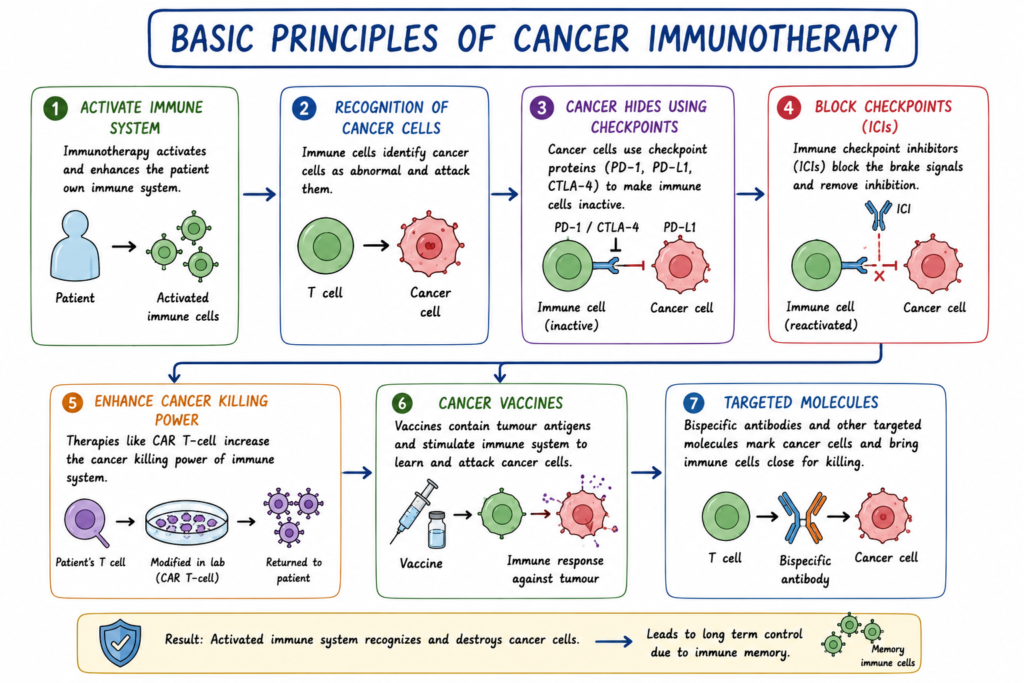
Principles of Cancer Immunotherapy is based on activation and enhancement of the patient own immune system to recognize and destroy tumour cells. In this treatment the immune system is made stronger against cancer. It does not directly kill the tumour like chemotherapy or radiation therapy.
The main principle is to make the body identify cancer cells as abnormal cells. After recognition, T-cells and other immune cells attack the tumour cells. This process may give long term control because the adaptive immune system has memory.
Cancer cells can hide from immune attack. They use natural brake system of immune response known as immune checkpoints. Important checkpoint proteins are PD-1, PD-L1 and CTLA-4. These proteins reduce the activity of immune cells and help cancer cells to escape.
Immune checkpoint inhibitors (ICIs) work by blocking these brake signals. When these brakes are removed, T-cells again become active. Then they recognize and kill the cancer cells more properly.
Some immunotherapies also increase the cancer killing power of immune system. In this method patient’s immune cells can be modified in laboratory and returned back to body. This is seen in CAR T-cell therapy.
Cancer vaccines are used to stimulate immune response against tumour antigens. These antigens are abnormal proteins present on cancer cells. The vaccine helps the immune system to learn and attack such cells.
Some targeted molecules are also used to mark cancer cells. Bispecific antibodies bring immune cell and cancer cell close together. This helps in fast destruction of cancer cells.
Relationship Between the Immune System and Cancer
Immune system has a close relation with cancer. It continuously checks the body tissues and removes abnormal or damaged cells. This process is called cancer immune surveillance.
In this process both innate immune system and adaptive immune system are involved. Natural killer cells (NK cells), cytotoxic T-cells, macrophages and other immune cells can recognize abnormal cells. They destroy these cells before they develop into large tumour.
The relation between cancer and immune system is explained by cancer immunoediting. It has three phases. These are elimination, equilibrium and escape.
In elimination phase, immune cells successfully recognize newly formed malignant cells. Cytotoxic T-cells and natural killer cells kill these cancer cells. So tumour does not become clinically visible.
In equilibrium phase, immune system cannot remove all cancer cells completely. But it keeps the remaining tumour cells in a dormant condition. During this time, continuous immune pressure acts on cancer cells.
Because of this pressure, some cancer cells change by mutation. These changed cells may have less immunogenicity. This means they are less easily recognized by immune system.
In escape phase, the tumour cells become able to avoid immune attack. These selected tumour cells grow without control. Then clinically detectable and progressive cancer is formed.
Cancer cells use different mechanisms for immune evasion. They may lose or reduce tumour antigens. They may also reduce major histocompatibility complex (MHC) molecules, so T-cells cannot recognize them properly.
Cancer cells also use immune brake system. They activate checkpoint pathways like PD-1, CTLA-4 and LAG-3. These pathways suppress T-cell activation, proliferation and killing function.
Tumour also makes an immunosuppressive microenvironment. It recruits regulatory T-cells (Tregs) and myeloid-derived suppressor cells (MDSCs). These cells reduce the immune attack against tumour.
Cancer cells can also release inhibitory cytokines like TGF-β and IL-10. These cytokines weaken and exhaust the immune cells. Thus cancer and immune system have a continuous interaction, where immune system tries to remove cancer but cancer tries to escape from it.
Targets of Cancer Immunotherapy
The following are the important targets of cancer immunotherapy.
- Checkpoints-These are the brake molecules of immune system. Tumour cells use these molecules to stop T-cells. So the immune cells cannot attack properly. Important targets are PD-1, PD-L1, PD-L2, CTLA-4, LAG-3, TIGIT, TIM-3, VISTA, BTLA, B7-H3 and B7-H4.
- Antigens-These are proteins present on cancer cells. They are recognized by CAR T-cells, bispecific antibodies and cancer vaccines. They may be neoantigens produced due to mutation like mutant KRAS. They may also be tumour associated antigens (TAAs) like HER2, MAGE-A4, BCMA, CD19 and CD20.
- Co-stimulators-These are the activating receptors of immune cells. They increase the immune response. Some important targets are 4-1BB (CD137), OX40 and CD40. By activating these receptors, T-cell proliferation and immune activation is increased.
- Cytokines-These are signalling substances present in tumour area. Some cytokines suppress immune response. TGF-β and VEGF are targeted to reduce immunosuppression. Other cytokines like Interleukin-2 (IL-2), Interleukin-15 (IL-15) and interferons are used to increase immune killing activity.
- Metabolites-Some enzymes and metabolites make T-cells weak. IDO1 removes tryptophan and forms kynurenine. This creates immunosuppressive condition. Adenosine and lactate also reduce activity of attacking T-cells.
- Microbiome-The gut microbiome includes intestinal bacteria. It can affect body immune response. Fecal microbiota transplantation (FMT) and diet changes are used to change immune condition. This may help to improve response to checkpoint inhibitors.
Classification of Cancer Immunotherapy
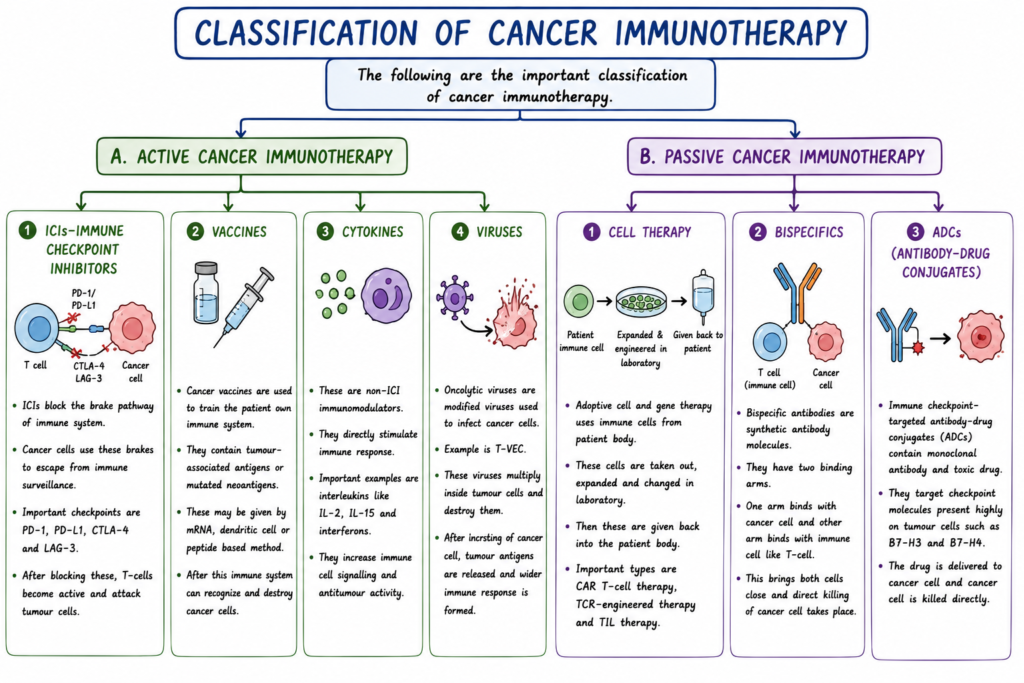
The following are the important classification of cancer immunotherapy.
A. Active cancer immunotherapy
- ICIs–Immune checkpoint inhibitors (ICIs) block the brake pathway of immune system. Cancer cells use these brakes to escape from immune surveillance. Important checkpoints are PD-1, PD-L1, CTLA-4 and LAG-3. After blocking these, T-cells become active and attack tumour cells.
- Vaccines–Cancer vaccines are used to train the patient own immune system. They contain tumour-associated antigens or mutated neoantigens. These may be given by mRNA, dendritic cell or peptide based method. After this immune system can recognize and destroy cancer cells.
- Cytokines-These are non-ICI immunomodulators. They directly stimulate immune response. Important examples are interleukins like IL-2, IL-15 and interferons. They increase immune cell signalling and antitumour activity.
- Viruses–Oncolytic viruses are modified viruses used to infect cancer cells. Example is T-VEC. These viruses multiply inside tumour cells and destroy them. After bursting of cancer cell, tumour antigens are released and wider immune response is formed.
B. Passive cancer immunotherapy
- Cell therapy–Adoptive cell and gene therapy uses immune cells from patient body. These cells are taken out, expanded and changed in laboratory. Then these are given back into the patient body. Important types are CAR T-cell therapy, TCR-engineered therapy and TIL therapy.
- Bispecifics–Bispecific antibodies are synthetic antibody molecules. They have two binding arms. One arm binds with cancer cell and other arm binds with immune cell like T-cell. This brings both cells close and direct killing of cancer cell takes place.
- ADCs–Immune checkpoint-targeted antibody-drug conjugates (ADCs) contain monoclonal antibody and toxic drug. They target checkpoint molecules present highly on tumour cells such as B7-H3 and B7-H4. The drug is delivered to cancer cell and cancer cell is killed directly.
Role of Tumor Antigens in Cancer Immunotherapy
Tumor antigens are the protein substances by which immune system identify cancer cell. These are present on cancer cell surface or formed inside cancer cell. It acts as the main mark for immune attack.
- Recognition–Tumor antigens are recognized by CD8+ cytotoxic T-cells and dendritic cells. By this cancer cell is identified as abnormal cell. Then immune response is started against the tumour cell.
- Separation-These antigens help to separate cancer cell from normal body cell. Tumor-specific antigens (TSAs) are present only on cancer cells. They are also called neoantigens. These are formed due to mutation, such as mutant KRAS.
- TAAs–Tumor-associated antigens (TAAs) are normal body proteins. But in cancer cells these are present in high amount. So immune system can use these proteins for tumour recognition.
- CAR T-cell-In CAR T-cell therapy, the T-cells are changed in laboratory. These changed cells carry special receptor. This receptor binds with antigen present on cancer cell surface. After binding, cancer cell is killed.
- TCR therapy-In T-cell receptor (TCR) therapy, intracellular tumour antigens are detected. These antigens are first processed inside cell. Then they are presented with MHC molecules on cell surface. The engineered T-cells recognize it and attack.
- Vaccines–Cancer vaccines use TAAs or neoantigens. These antigens are given into body to train immune system. Then T-cells are activated and increased. They search cancer cells having same antigen.
- ICI response–Neoantigens are important for good response to immune checkpoint inhibitors (ICIs). Tumour with high tumor mutational burden (TMB) forms more neoantigens. So T-cells can see the tumour cells better.
- Resistance-Cancer cells may lose these antigens. They may delete, mutate or silence antigen expression. Then T-cells cannot recognize cancer cell properly. This is one important cause of resistance in cancer immunotherapy.
Biomarkers Used in Cancer Immunotherapy
The following are the important biomarkers used in cancer immunotherapy.
- PD-L1–PD-L1 expression is the amount of PD-L1 protein present on tumour cell or immune cell. It is measured by Tumor Proportion Score (TPS) or Combined Positive Score (CPS). It is used to predict response to anti-PD-1 and anti-PD-L1 therapy.
- TMB–Tumor mutational burden (TMB) means the number of mutations present in tumour DNA. High TMB produces more neoantigens. So tumour becomes more visible to immune system. It helps in response to immune checkpoint inhibitors (ICIs).
- MSI/dMMR–Microsatellite instability (MSI) and mismatch repair deficiency (dMMR) are related with defective DNA repair. MSI-high or dMMR tumours collect many genetic errors. These tumours form more neoantigens and show good response to immunotherapy.
- TILs–Tumor-infiltrating lymphocytes (TILs) are immune cells present inside tumour area. Mainly CD8+ cytotoxic T-cells, CD4+ helper T-cells and B-cells are seen. High number of these cells means active immune attack is present.
- Gene signatures-These are RNA based expression patterns of tumour and immune cells. Important signatures are T-cell inflamed gene expression profile (GEP), melanocytic plasticity signature (MPS) and T-cell dysfunction and exclusion (TIDE). These can predict immunotherapy response better than single marker.
- Mutations-Some gene changes are used as biomarkers. Mutation or loss of genes like PTEN, POLE, KRAS and STK11 can affect tumour immunogenicity. Some mutations show better response and some are related with resistance.
- HLA–Human leukocyte antigen (HLA) molecules present tumour antigens to T-cells. Good HLA expression helps immune recognition. Loss of HLA heterozygosity (LOH) reduces antigen presentation and tumour can escape from immune attack.
- ctDNA–Circulating tumour DNA (ctDNA) is tumour DNA released into blood. It is used as liquid biopsy. Low level of ctDNA before treatment or fast decrease during treatment shows good response to checkpoint inhibitors.
- Blood markers-Some soluble markers are present in blood. These include sPD-1, sPD-L1, sCTLA-4, sLAG-3, Kidney Injury Molecule-1 (KIM-1) and neutrophil-lymphocyte ratio (NLR). These are used for non-invasive checking of immune activation and treatment effect.
- Microbiome–Gut microbiome also works as biomarker. Certain intestinal bacteria improve antitumour immunity. Presence of Akkermansia muciniphila and F. prausnitzii may be related with better response to immune checkpoint blockade.
Combination Immunotherapy Approaches
The following are the important combination immunotherapy approaches.
- Dual ICIs-Two different immune checkpoint inhibitors (ICIs) are used together. Common combination is PD-1/PD-L1 inhibitor with CTLA-4 or LAG-3 inhibitor. It increases anti-tumour immune response. It also helps to reduce T-cell exhaustion and resistance.
- Chemotherapy–ICIs are combined with chemotherapy. Chemotherapy kills cancer cells and releases tumour antigens. It also decreases some immunosuppressive cells in tumour area. So cold tumour may become hot tumour.
- Radiotherapy–ICIs are given with radiotherapy. Radiation increases tumour antigen release and T-cell entry into tumour. Sometimes it also gives abscopal effect. In this effect, immune response also acts on distant tumour sites which are not irradiated.
- Targeted drugs–ICIs are used with targeted therapy drugs. These include PARP inhibitors, EGFR-TKIs and MET inhibitors. These drugs block tumour helping pathways. They may increase antigen presentation and change tumour microenvironment.
- Anti-VEGF drugs–ICIs are combined with antiangiogenic agents. These drugs block VEGF/VEGFR pathway. It reduces abnormal tumour blood vessel effect. It also helps CD8+ T-cells to enter into tumour.
- ADCs–ICIs are combined with antibody-drug conjugates (ADCs). ADCs carry toxic drug directly to cancer cells. When cancer cells are killed, immune response is increased by ICIs.
- Vaccines–ICIs are used with cancer vaccines. These may be personalized mRNA neoantigen vaccines or dendritic cell vaccines. Vaccine trains tumour specific T-cells. ICI removes brake from these T-cells.
- Viruses–ICIs are combined with oncolytic viruses. These viruses infect tumour cells and burst them. After bursting, tumour antigens are released. This increases T-cell infiltration and immune attack.
- Microbiome–ICIs may be combined with gut microbiome modulation. Fecal microbiota transplantation (FMT) is used in this method. It changes intestinal bacteria. This can improve antitumour immunity and may reduce resistance to ICIs.
- Epigenetic drugs–ICIs are combined with epigenetic drugs. These include HDAC inhibitors and DNA methyltransferase inhibitors. They can restore MHC-I expression. So tumour antigens become more visible to T-cells.
- Surgery–ICIs are used before or after surgery. Before surgery it is called neoadjuvant therapy. It may shrink tumour and form immune memory. After surgery it is called adjuvant therapy. It is used to remove hidden micrometastases and prevent recurrence.
- Cell therapy–ICIs are combined with adoptive cell therapies like CAR T-cell therapy. This combination improves activity and survival of modified immune cells. It also helps these cells to enter tumour better.
Adverse Effects and Toxicities of Cancer Immunotherapy
The following are the important adverse effects and toxicities of cancer immunotherapy.
A. Immune-related adverse events (irAEs)
- Skin-It is common toxicity of immune checkpoint inhibitors (ICIs). Rash is seen early. Pruritus, skin blister and vitiligo may occur. It is due to immune attack on skin tissue.
- GIT-Diarrhoea and immune-mediated colitis are common. It is more seen with CTLA-4 inhibitors. Abdominal pain, blood in stool and mucus may present.
- Endocrine-Endocrine glands are affected. Thyroid dysfunction is common. Hypothyroidism, hyperthyroidism, hypophysitis, adrenal insufficiency and type 1 diabetes may occur. Some need hormone replacement for long time.
- Lung–Pneumonitis is the main lung toxicity. It is more related with PD-1/PD-L1 inhibitors. Cough, chest pain and shortness of breath is seen.
- Liver–Immune-mediated hepatitis occur in some patient. It may not show symptoms first. Increased AST and ALT are found. Severe case show jaundice, dark urine and right abdominal pain.
- Heart-Cardiac toxicity is rare but very serious. Myocarditis, pericarditis and heart failure may occur. It can become fatal.
- Nerve-Neurological toxicity is less common. But it is severe. Encephalitis, aseptic meningitis, Guillain-Barré syndrome and myasthenia gravis may occur.
- Kidney-Kidney toxicity include acute kidney injury and immune-mediated nephritis. Low urine output may occur. Blood in urine also may be found.
B. Cell therapy and bispecific antibody toxicity
- CRS–Cytokine release syndrome (CRS) is severe immune reaction. It occurs after CAR T-cell therapy and bispecific antibodies. Fever, chills, fatigue, fast heart beat and organ dysfunction are seen.
- ICANS–Immune effector cell-associated neurotoxicity syndrome (ICANS) is brain related toxicity. Speech problem, confusion, poor concentration and handwriting difficulty occur. It is seen after CAR T-cells and bispecific therapy.
- Cytopenia-Blood cell count become low for long time. Anemia, thrombocytopenia and neutropenia may occur. Weakness, bleeding tendency and infection risk increase.
- B-cell aplasia-Some CAR T-cells also kill normal B-cells. Antibody production decreases. So infection risk increase, mainly respiratory viral infection.
C. Other immunotherapy toxicity
- Vaccines–Cancer vaccines are mostly well tolerated. Fatigue, fever, chills and injection site pain may occur. These are usually mild and temporary.
- ADCs–Antibody-drug conjugates (ADCs) may cause liver toxicity. Hepatotoxicity and hepatic veno-occlusive disease may occur. Edema, infusion reaction, hypokalemia and sulfite allergy also seen.
Advantages of Cancer Immunotherapy
The following are the important advantages of cancer immunotherapy.
- Natural defense-It uses the body own immune system. It does not attack tumour only by toxic chemicals. The immune cells are activated to identify and kill cancer cells.
- Long control-It may give long term disease control. This is due to adaptive immune memory. The immune system can remember the tumour antigen and again attack if cancer cells come back.
- Precision-It acts more specific than many traditional treatment. It targets immune pathways like checkpoint proteins or specific tumour antigens. So cancer cells are attacked in more directed way.
- Less toxicity-It does not kill all rapidly dividing cells like many chemotherapy drugs. It works through selected immune proteins and immune cells. So some traditional side effects may be less.
- Difficult cancer-It is useful in advanced and hard to treat cancers. Good effect is seen in some metastatic cancers. Examples are advanced melanoma and lung cancer where previous survival was poor.
- Combination use-It can be combined with chemotherapy, radiation therapy, surgery and targeted therapy. This combination can change tumour microenvironment. It also increase the total anti-tumour response.
- Durable remission-Some patients show long lasting remission after treatment. Treatment may stop but immune response can continue. This is one major benefit of cancer immunotherapy.
Limitations of Cancer Immunotherapy
The following are the important limitations of cancer immunotherapy.
- Resistance-Many patients do not respond to immune checkpoint inhibitors (ICIs) from beginning. This is called primary resistance. Some patient respond first but later tumour come back. This is called acquired resistance. It occurs when cancer cells lose antigens or reduce immune signalling pathway.
- Toxicity-Immunotherapy may activate immune system against normal organs. This cause immune-related adverse events (irAEs). Important toxicities are colitis, pneumonitis and myocarditis. These may be serious in some cases.
- CAR T toxicity–CAR T-cell therapy has special toxic effects. Cytokine release syndrome (CRS) may occur. ICANS, prolonged cytopenia and B-cell aplasia also occur. These reactions need special care.
- Biomarkers-Biomarkers are not always accurate. PD-L1 expression and tumor mutational burden (TMB) are used, but they cannot predict response in all patient. Tumour markers may vary from one tumour site to another. They also change with time.
- Cost-Cancer immunotherapy is very costly. The cost may reach very high amount for one patient. So many patient cannot get this treatment easily. It creates difference in healthcare access.
- Access-There are social and economic differences in use of immunotherapy. Some racial and ethnic groups get late treatment. Clinical trial entry is also low in people with low income and low education.
- Evaluation-It is difficult to check treatment response. Normal imaging method may not show true response. Sometimes tumour looks bigger first due to immune cell entry. This is called pseudoprogression. Sometimes tumour grows very fast, called hyperprogression.
- Genetic data-Cancer genetic database are not equally made from all population. Non-European ancestry groups are less represented. This may cause wrong classification of biomarkers like TMB. So treatment decision may become less correct.
- Manufacturing-Advanced therapies like CAR T-cells and tumor-infiltrating lymphocytes (TILs) need complex preparation. Patient cells are collected, changed and expanded in laboratory. It takes time and special centre.
- Infrastructure-These treatments need expert hospital setup. Lymphodepleting chemotherapy and toxicity management are also needed. So these therapies are mainly available in big cancer centres, not easily in small community hospitals.
Clinical Applications of Cancer Immunotherapy
The following are the important clinical applications of cancer immunotherapy.
- Skin cancer-It is used in highly immunogenic skin cancers. These include advanced melanoma, Merkel cell carcinoma and cutaneous squamous cell carcinoma. ICIs, TIL therapy and personalized cancer vaccines are used.
- Lung cancer-It is used in non-small cell lung cancer (NSCLC) and small cell lung cancer (SCLC). ICIs are used alone or with chemotherapy. It is also used before and after surgery. Tarlatamab is used as bispecific antibody in SCLC.
- Blood cancer-It is widely used in haematological malignancies. These include Hodgkin’s lymphoma, acute lymphoblastic leukemia (ALL), multiple myeloma, non-Hodgkin lymphoma and BPDCN. CAR T-cell therapy, bispecific antibodies and ICIs are mainly used.
- Bladder cancer-It is used in urothelial cancer. It is used in muscle-invasive bladder cancer (MIBC) and non-muscle-invasive bladder cancer (NMIBC). It may be combined with BCG or antibody-drug conjugates (ADCs).
- Kidney cancer-It is used in renal cell carcinoma (RCC). Checkpoint inhibitors are commonly used. Sometimes they are combined with targeted drugs.
- Breast cancer-It is mainly used in triple-negative breast cancer (TNBC). This is more immunogenic type of breast cancer. ICIs are used with chemotherapy in early high-risk disease and advanced PD-L1 positive disease.
- GIT cancer-It is used in many gastrointestinal cancers. These include colorectal cancer, hepatocellular carcinoma, gastric cancer, esophageal cancer, biliary tract cancer and anal canal squamous cell carcinoma.
- Gynecological cancer-It is used in advanced or recurrent endometrial carcinoma. It is also used in cervical cancer. Mainly immune checkpoint inhibitors are used.
- Head-neck cancer-It is used in head and neck squamous cell carcinoma (HNSCC). Checkpoint blockade is given before surgery or after surgery. It may also be combined with chemoradiotherapy.
- Sarcoma-It is used in some rare and difficult sarcomas. Afamitresgene autoleucel is used as engineered T-cell receptor (TCR) therapy in synovial sarcoma. Atezolizumab is used in alveolar soft part sarcoma.
- Tissue-agnostic use-It is used in any solid tumour if special biomarker is present. These biomarkers include dMMR, MSI-H and TMB-H. In this use, origin of tumour is not the main matter.
Future Prospects of Cancer Immunotherapy
The following are the important future prospects of cancer immunotherapy.
- mRNA vaccines–Personalized mRNA cancer vaccines are future important approach. These are made against patient own tumour mutations or neoantigens. Some vaccines also target shared mutation like KRAS. They may give better effect when combined with checkpoint inhibitors.
- New checkpoints-New checkpoint targets are being studied. These include TIGIT, TIM-3, VISTA and BTLA. These targets are related with T-cell exhaustion. CD47/SIRPα pathway is also important because it helps macrophage to attack tumour cells.
- ACT–Adoptive cell therapy (ACT) is developing more. It is not limited to CAR T-cells only. NK cells and engineered T-cell receptor (TCR) therapy are also being developed. These may help in solid tumours by targeting intracellular tumour proteins.
- In vivo CAR T-In this method T-cells are programmed inside patient body. Viral vectors or nanoparticles may be used. It may reduce long laboratory preparation of CAR T-cell therapy.
- Bispecifics–Bispecific antibodies are increasing in use. These bind two targets at same time. In future they may be used earlier in blood cancers. New bispecifics are also tested in solid tumours, such as PD-1/VEGF targeting antibody ivonescimab.
- Surgery-free therapy–Immunotherapy may be used before surgery as neoadjuvant therapy. In some dMMR solid tumours, checkpoint inhibitors may give complete clinical response. So in future some patients may not need surgery.
- Microbiome–Gut microbiome modulation is becoming important. Fecal microbiota transplantation (FMT), prebiotics, probiotics and diet change may be used. These can change immune response and may restore response in resistant patients.
- Combinations-Future treatment may use rational combinations. ICIs may be combined with ADCs, epigenetic drugs, metabolic regulators, radiotherapy and small molecule inhibitors. This is used to increase anti-tumour response and reduce resistance.
- Subcutaneous route-Immunotherapy may be given by subcutaneous injection. It is given under the skin. It takes less time than intravenous infusion. This may reduce hospital burden and make treatment easy for patient.
References
- AbbVie. (2026, May 27). U.S. FDA approves DECNUPAZ™ (pivekimab sunirine-pvzy) for treatment of adult patients with blastic plasmacytoid dendritic cell neoplasm, an ultra-rare and aggressive blood cancer with limited treatment options.
- Adaptive mechanisms of tumor therapy resistance driven by tumor microenvironment. (n.d.). PMC.
- Advancing cancer treatment: A review of immune checkpoint inhibitors and combination strategies. (n.d.). PMC.
- Alturki, N. A. (2023). Review of the immune checkpoint inhibitors in the context of cancer treatment. Journal of Clinical Medicine, 12(13), 4301. https://doi.org/10.3390/jcm12134301
- American Association for Cancer Research. (n.d.). Spotlight on immunotherapy: Pushing the frontier of cancer medicine. AACR Cancer Progress Report.
- AstraZeneca. (2026). Imfinzi approved in the US in first and only immunotherapy combination for patients with BCG-naïve, high-risk non-muscle-invasive bladder cancer.
- Barnett, K. K., Johnson, A. R., Das, A., Lee, C. J., Wang, C., Wang, X., Cho, E. S., Kluetz, P. G., & Fashoyin-Aje, L. A. (2025). FDA approval summary: Afamitresgene autoleucel for adults with HLA-restricted, MAGE-A4-positive unresectable or metastatic synovial sarcoma after prior chemotherapy. Clinical Cancer Research, 31(15), 3112-3117. https://doi.org/10.1158/1078-0432.CCR-25-0595
- Bertucci, A., Taleb, K., Billon, E., Fernez, T., & Rochigneux, P. (2026). A comprehensive review of mechanisms underlying resistance to immune checkpoint inhibitors. Frontiers in Immunology, 17, 1735741. https://doi.org/10.3389/fimmu.2026.1735741
- Brandao, R., & Ott, P. A. (2016). Resistance mechanisms to PD-1 inhibition in melanoma. Translational Cancer Research, 5(Suppl 6), S1123-S1125. https://doi.org/10.21037/tcr.2016.11.03
- Cancer resistance to immunotherapy: Molecular mechanisms and tackling strategies. (n.d.).
- Cancer Research Catalyst Staff. (2026, April 1). FDA approvals in oncology: January-March 2026. AACR.
- Cancer Research Institute. (2025). 2025 cancer immunotherapy insights + impact report.
- Cancer Research Institute. (2026). 2026 cancer immunotherapy insights + impact report.
- Chen, H., Yang, H., Guo, L., & Sun, Q. (2025). The role of immune checkpoint inhibitors in cancer therapy: Mechanism and therapeutic advances. MedComm, 6(10), e70412. https://doi.org/10.1002/mco2.70412
- Cortese, T. (2026, May 15). FDA approves atezolizumab in MIBC post-cystectomy with ctDNA MRD. CancerNetwork.
- Das, J. (2026, May 19). Tecentriq and Tecentriq Hybreza: FDA approves first ctDNA-guided adjuvant immunotherapies to target residual muscle-invasive bladder cancer after surgery. WebMD.
- ecancer. (2026, January 28). Fecal microbiota transplantation improves response to immunotherapy in advanced kidney cancer.
- Exploring fecal microbiota transplantation: Potential benefits, associated risks, and challenges in cancer treatment. (n.d.). PMC.
- FDA approves Pivekimab Sunirine for BPDCN. (n.d.). Targeted Oncology.
- FDA grants accelerated approval to Afami-Cel for advanced synovial sarcoma. (n.d.). OncLive.
- Fortis Life Sciences. (n.d.). Mechanisms of resistance to cancer immunotherapy.
- Genentech. (2026, May 15). FDA approves Genentech’s Tecentriq for adjuvant muscle-invasive bladder cancer with ctDNA-guided treatment.
- Gevorgyan, A. (2025, August 8). Immunotherapy for cancer success rate: What patients need to know in 2025. OncoDaily.
- Grisham, J. (2025, December 15). MSK-led research resulted in new FDA approvals for cancer drugs in 2025. Memorial Sloan Kettering Cancer Center.
- Han, X., Zhang, J., Li, W., Huang, X., Wang, X., Wang, B., Gao, L., & Chen, H. (2025). The role of B2M in cancer immunotherapy resistance: Function, resistance mechanism, and reversal strategies. Frontiers in Immunology, 16, 1512509. https://doi.org/10.3389/fimmu.2025.1512509
- How fecal microbiota transplantation could transform cancer immunotherapy. (n.d.).
- Howell, B. (2026, May 27). The U.S. FDA approves pivekimab sunirine-pvzy for BPDCN. HealthTree for Blastic Plasmacytoid Dendritic Cell Neoplasm.
- Immune co-inhibitory receptors CTLA-4, PD-1, TIGIT, LAG-3, and TIM-3 in upper tract urothelial carcinomas: A large cohort study. (n.d.). PMC.
- Immune-related adverse events due to cancer immunotherapy: Immune mechanisms and clinical manifestations. (n.d.). PubMed.
- Immunotherapy: Precision medicine in action. (n.d.).
- Mechanisms driving immune-related adverse events in cancer patients treated with immune checkpoint inhibitors. (n.d.). PubMed.
- Mechanisms of immune-related adverse events during the treatment of cancer with immune checkpoint inhibitors. (n.d.). PMC.
- McQuade, J. L., Ologun, G. O., Arora, R., & Wargo, J. A. (2020). Gut microbiome modulation via fecal microbiota transplant to augment immunotherapy in patients with melanoma or other cancers. Current Oncology Reports, 22(74). https://doi.org/10.1007/s11912-020-00938-0
- Merck. (2026, January 20). Moderna & Merck announce 5-year data for intismeran autogene in combination with KEYTRUDA® (pembrolizumab) demonstrated sustained improvement in the primary endpoint of recurrence-free survival in patients with high-risk stage III/IV melanoma following complete resection.
- National Cancer Institute. (2024). FDA approves engineered cell therapy for advanced synovial sarcoma.
- Oncology Central. (2026, June 8). KEYNOTE-942 study: Pembrolizumab-vaccine combination cuts melanoma recurrence by 49%.
- Overcoming genetically-based resistance mechanisms to PD-1 blockade. (n.d.). PMC.
- Pelosci, A. (2026, January 20). mRNA vaccine/pembrolizumab shows sustained 5-year RFS in high-risk melanoma. CancerNetwork.
- Personalized cancer vaccine shows durable benefit at 5 years. (2026). Cancer Discovery, 16(3), OF1. https://doi.org/10.1158/2159-8290.CD-NW2026-0009
- Primary, adaptive and acquired resistance to cancer immunotherapy. (n.d.). PMC.
- Qiu, X., Yu, Z., Lu, X., Jin, X., Zhu, J., & Zhang, R. (2024). PD-1 and LAG-3 dual blockade: Emerging mechanisms and potential therapeutic prospects in cancer. Cancer Biology & Medicine, 21(11), 970-976. https://doi.org/10.20892/j.issn.2095-3941.2024.0436
- Rddad, Y. (2026, May 28). FDA approves pivekimab sunirine for rare blood cancer. Oncology News Central.
- Ribas, A. (2015). Adaptive immune resistance: How cancer protects from immune attack. Cancer Discovery, 5(9), 915–919. https://doi.org/10.1158/2159-8290.CD-15-0563
- Seidel, J. A., Otsuka, A., & Kabashima, K. (2018). Anti-PD-1 and anti-CTLA-4 therapies in cancer: Mechanisms of action, efficacy, and limitations. Frontiers in Oncology, 8, 86. https://doi.org/10.3389/fonc.2018.00086
- Syrek, R. (2026, May 29). FDA approves durvalumab for non-muscle invasive bladder cancer. Oncology News Central.
- The evolving landscape of cancer immunotherapy: A comprehensive evaluation of mechanisms, clinical efficacy, resistance, and next-generation modalities. (n.d.).
- The ASCO Post Staff. (2026, May 15). FDA approves atezolizumab for adjuvant treatment of MRD-positive muscle-invasive bladder cancer. The ASCO Post.
- The ASCO Post Staff. (2026, May 28). FDA approves durvalumab plus BCG for high-risk NMIBC. The ASCO Post.
- Three-year update of a randomized phase IIb study of the individualized neoantigen therapy intismeran autogene (mRNA-4157, V940) plus pembrolizumab versus pembrolizumab in resected melanoma. (n.d.). ASCO Publications.
- Torrejon, D. Y., Abril-Rodriguez, G., Champhekar, A. S., Tsoi, J., Campbell, K. M., Kalbasi, A., Parisi, G., Zaretsky, J. M., Garcia-Diaz, A., Puig-Saus, C., Cheung-Lau, G., Wohlwender, T., Krystofinski, P., Vega-Crespo, A., Lee, C. M., Mascaro, P., Grasso, C. S., Berent-Maoz, B., Comin-Anduix, B., Hu-Lieskovan, S., & Ribas, A. (2020). Overcoming genetically based resistance mechanisms to PD-1 blockade. Cancer Discovery, 10(8), 1140–1157. https://doi.org/10.1158/2159-8290.CD-19-1409
- Updated estimates of eligibility and response: Immune checkpoint inhibitors. (n.d.).
- U.S. Food and Drug Administration. (2024, August 2). FDA approves first gene therapy to treat adults with metastatic synovial sarcoma.
- U.S. Food and Drug Administration. (2024, August 2). FDA grants accelerated approval to afamitresgene autoleucel for unresectable or metastatic synovial sarcoma.
- U.S. Food and Drug Administration. (2026). Oncology (cancer)/hematologic malignancies approval notifications.
- U.S. Food and Drug Administration. (2026, May 15). FDA approves atezolizumab for adjuvant treatment of muscle invasive bladder cancer in patients with molecular residual disease.
- U.S. Food and Drug Administration. (2026, May 27). FDA approves pivekimab sunirine-pvzy for blastic plasmacytoid dendritic cell neoplasm, an ultra-rare hematologic malignancy.
- U.S. Food and Drug Administration. (2026, May 28). FDA approves durvalumab in combination with Bacillus Calmette-Guerin for high-risk non-muscle invasive bladder cancer.
- Wang, S. J., Dougan, S. K., & Dougan, M. (2023). Immune mechanisms of toxicity from checkpoint inhibitors. Trends in Cancer, 9(7), 543–553. https://doi.org/10.1016/j.trecan.2023.04.002
- Wei, D., Zhang, Y., Wu, Y., Ren, L., & He, Q. (2026). Advancements in immune checkpoint-based immunotherapy for triple-negative breast cancer. Current Issues in Molecular Biology, 48(6), 615. https://doi.org/10.3390/cimb48060615
- Williams Cancer Institute. (2026, February 3). Fecal microbiota transplantation: Redefining cancer immunotherapy.
- Yin, Q., Wu, L., Han, L., Zheng, X., Tong, R., Li, L., Bai, L., & Bian, Y. (2023). Immune-related adverse events of immune checkpoint inhibitors: A review. Frontiers in Immunology, 14, 1167975. https://doi.org/10.3389/fimmu.2023.1167975