

Humoral immunity is a major part of adaptive immune system. It gives specific and long-lasting defence against extracellular pathogens and their toxic products. It mainly works in blood plasma and other body fluids.
It is called humoral immunity because it depends on antibodies present in the fluid part of blood and extracellular body fluids. These body fluids were earlier known as humors. So this type of immunity is antibody mediated immunity.
The main cells involved in this immunity are B cells. When B cells recognize a specific foreign antigen, they become activated and change into plasma cells. These plasma cells produce and secrete large amount of antibodies.
The released antibodies circulate in body fluids. They bind with specific foreign particles such as bacteria, viruses or toxins. This binding is very specific, because one antibody can bind only with its suitable antigen.
Antibodies protect the body by different ways. They neutralize viruses and bacterial toxins and prevent their entry into host cells. They also coat the pathogen surface, so that phagocytes and complement system can easily remove and destroy them.
Characteristics of Humoral Immunity
The following are the important characteristics of humoral immunity–
- Mediated by B cells and antibodies
Humoral immunity is mediated by B lymphocytes and antibodies. When B cells come in contact with specific antigen, they become activated. Then they divide and form plasma cells. These plasma cells secrete antibody in body fluid. - Acts against extracellular pathogens
It mainly acts against extracellular pathogens. These are bacteria, free viruses and toxins present in blood, lymph and tissue fluid. It protect the body before the pathogen enter into host cell. - Antibody dependent response
The main protective substance is antibody. Antibody bind with the specific antigen. Then the antigen is blocked, neutralized or removed from the body. - Neutralization
In this process antibodies bind with virus or bacterial toxin. So they cannot attach with host cell. This prevents their entry and harmful action. - Agglutination
Antibodies can join many antigen particles together. This forms clumps. This process is called agglutination. It helps in easy removal of pathogen. - Opsonization
In opsonization, antibodies coat the surface of pathogen. Then phagocytic cells can easily recognize it. After that the pathogen is engulfed and destroyed. - Complement activation
Humoral immunity also activates the complement system. Complement proteins damage the microbial membrane. This causes lysis of the microorganism. - Help from T helper cells
In most antigen, B cells need help from CD4+ helper T cells. These cells release cytokines and give activation signal. Then B cells produce more antibody. - Primary and secondary response
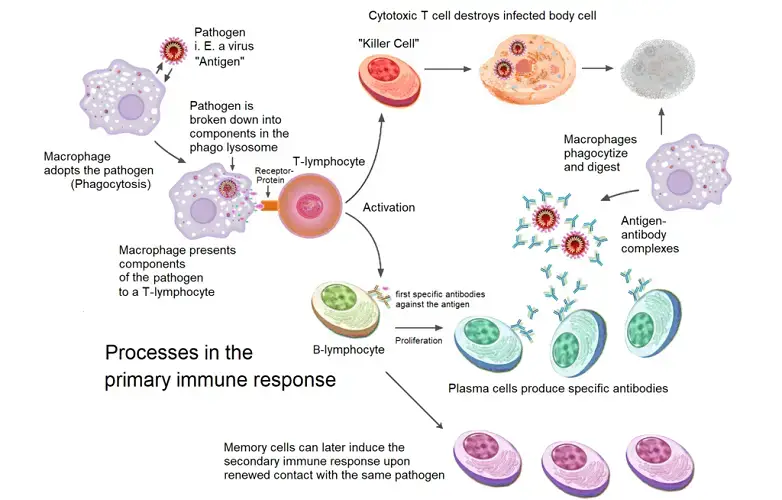
It shows primary immune response and secondary immune response. Primary response is slow and mainly produce IgM. Secondary response is fast and strong and mainly produce IgG. - Formation of memory cells
Some activated B cells form memory B cells. These cells remain in the body for long time. When same antigen enter again, they give quick and strong response. - Active and passive type
Humoral immunity may be active or passive. Active immunity is formed when body produce its own antibody after infection or vaccination. Passive immunity is formed when ready-made antibody is received from mother, breast milk or antibody injection.
Components of Humoral Immunity
The following are the important components of humoral immunity–
- B lymphocytes (B cells)
B lymphocytes are the main cells of humoral immunity. They recognize specific foreign antigen. After recognition they become activated and start the immune response. - Plasma cells
Plasma cells are formed from activated B cells. They act as antibody forming cells. They secrete large amount of antibodies into blood and other body fluids. - Memory B cells
Memory B cells are long living B cells. They are produced during immune response. They remain in body and give fast and strong response when same antigen enter again. - Antibodies (Immunoglobulins)
Antibodies are the main effector proteins of humoral immunity. They are secreted by plasma cells. The five important classes are IgG, IgA, IgM, IgE and IgD. They neutralize pathogen, form clumps and mark them for destruction. - B-cell receptor (BCR) complex
B-cell receptor (BCR) is present on the surface of B cells. It is made up of membrane bound immunoglobulin with signalling chains, Igα and Igβ. It binds with specific extracellular antigen. - Helper T cells (CD4+ T cells)
Helper T cells help in most humoral immune response. They give co-stimulatory signal and cytokines to B cells. Due to this B cells divide and change into plasma cells and memory cells. - Complement system proteins
Complement proteins are plasma proteins present in blood. They are activated by antigen-antibody complex. They help in lysis of microbial membrane, inflammation and clearing of pathogen. - Fc receptor bearing effector cells
These are immune cells having receptor for Fc region of antibody. It includes macrophages, neutrophils and Natural Killer (NK) cells. They bind antibody coated pathogen and destroy them by phagocytosis or ADCC. - Antigens
Antigens are foreign substances that start humoral immune response. They may be viral proteins, bacterial toxins or polysaccharides. They are recognized by B cells and antibodies.
Cells Involved in Humoral Immunity
The following are the important cells involved in humoral immunity–
- B lymphocytes (B cells)
B lymphocytes are the central cells of humoral immunity. They recognize specific foreign antigen and start the response. In germinal centre, they divide fast as centroblasts in dark zone. Then they become centrocytes in light zone and antigen selection occur. - Plasma cells
Plasma cells are fully differentiated B cells. They are antibody secreting cells. They produce large amount of antibodies in body fluid. Some are short living plasmablasts, which give early defence. Some are long living plasma cells (LLPCs), which move to bone marrow and give long term immunity. - Memory B cells
Memory B cells are formed from activated B cells. They remain in the body for long time. When same antigen enter again, they give faster and stronger antibody response. - T follicular helper cells (Tfh cells)
Tfh cells are special type of CD4+ T cells. They are present in lymphoid follicles. They give help to B cells by CD40L and IL-21. These signals help in survival, division and differentiation of B cells. - T follicular regulatory cells (Tfr cells)
Tfr cells are regulatory T cells present in germinal centre. They control the size of humoral immune response. They also regulate Tfh cells and prevent formation of autoreactive B cell clones. This helps to prevent autoimmunity. - Follicular dendritic cells (FDCs)
Follicular dendritic cells are special stromal cells of lymphoid follicles. They catch and keep intact antigens on their surface for long time. These antigens are mostly present as immune complexes. They present antigen to B cells for selection and affinity testing. - Other antigen-presenting cells (APCs)
Other APCs include conventional dendritic cells and macrophages. They process foreign pathogen and present peptide fragments to T cells. This is important for activation of Tfh cells, which later help B cells. - Innate effector cells
Innate effector cells include Natural Killer (NK) cells, neutrophils, eosinophils, monocytes and macrophages. These cells have Fc receptors. When antibody bind with target, these cells bind with Fc region of antibody and destroy the pathogen. - Phagocytic cells
Macrophages and neutrophils act as phagocytic cells. They engulf antibody coated pathogen. This process is called antibody-dependent cellular phagocytosis (ADCP). - Cytotoxic effector cells
Natural Killer (NK) cells destroy antibody coated target cells. They bind with Fc part of antibody and kill the target cell. This process is called antibody-dependent cell-mediated cytotoxicity (ADCC).
Types of Humoral Immunity
The main types of humoral immunity are as follows-
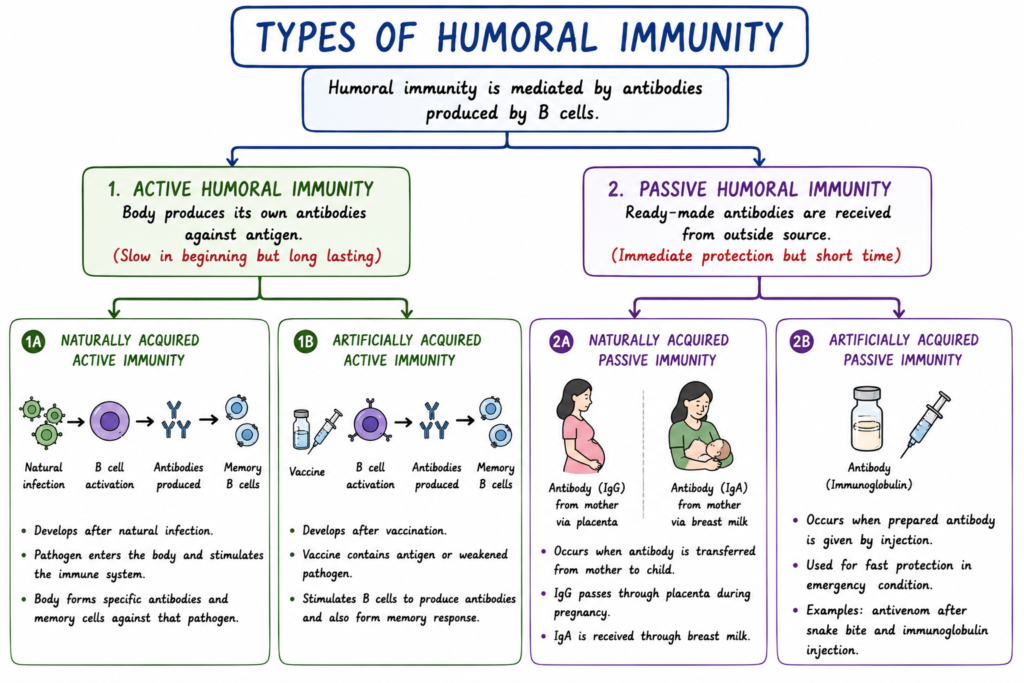
- Active humoral immunity-In this type, body produce its own antibodies against antigen. B cells are activated and they form plasma cells and memory B cells. So this immunity is slow in beginning but long lasting.
- Naturally acquired active immunity-It develops after natural infection. When pathogen enter into body, it stimulates the immune system. Then body forms specific antibodies and memory cells against that pathogen.
- Artificially acquired active immunity-It develops after vaccination. Vaccine contains antigen or weakened pathogen. It stimulates B cells to produce antibodies and also form memory response.
- Passive humoral immunity-In this type, ready-made antibodies are received from outside source. Body does not produce its own antibody here. So protection is immediate but remains for short time.
- Naturally acquired passive immunity-It occurs when antibody is transferred from mother to child. IgG passes through placenta during pregnancy. IgA is received through breast milk.
- Artificially acquired passive immunity-It occurs when prepared antibody is given by injection. It is used for fast protection in emergency condition. Example, antivenom after snake bite and immunoglobulin injection.
Phases of Humoral Immune Response
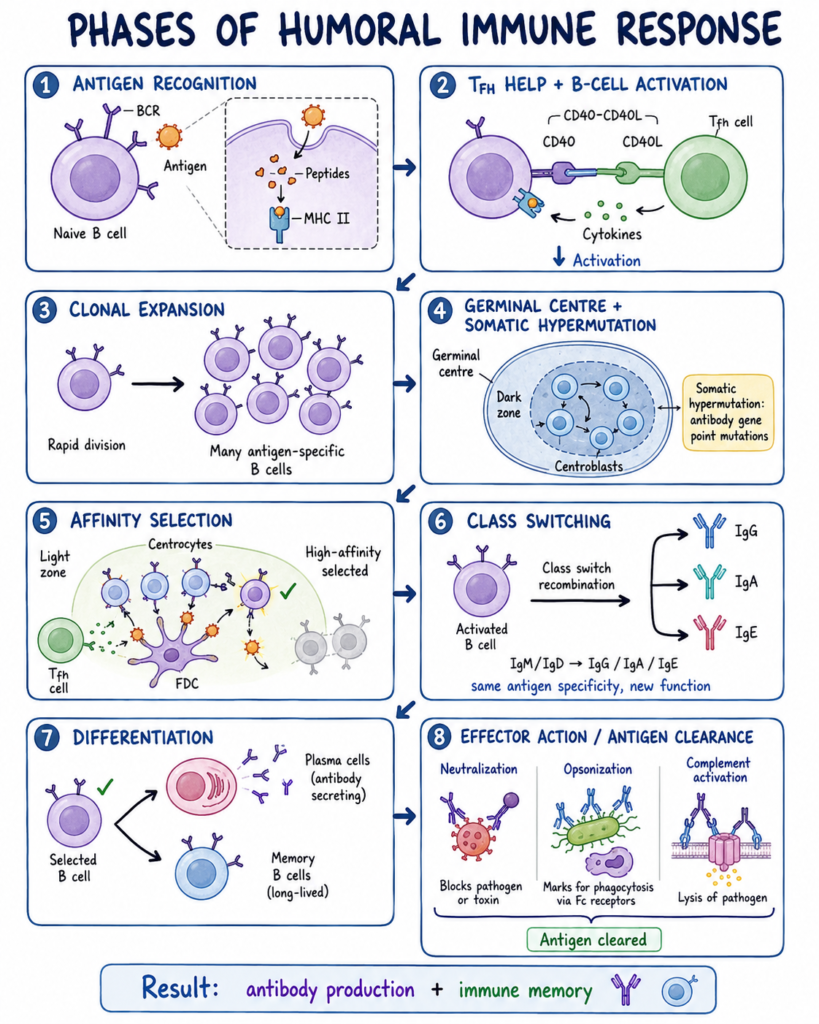
The following are the important phases of humoral immune response–
Step 1- Antigen recognition
In this step, naive B cells recognize the specific foreign antigen. The antigen bind with B-cell receptor (BCR) present on the surface of B cell. This is the first cognitive phase of humoral immune response.
After binding, the antigen is taken inside the B cell. Then it is broken into small peptide fragments. These fragments are presented on the surface of B cell with MHC class II molecule.
Step 2- Helper T cell interaction and activation
The antigen presenting B cell then moves near the T-cell zone. Here it interacts with CD4+ T follicular helper cell (Tfh cell). The T cell recognize the same antigen fragment present with MHC class II.
The Tfh cell gives activation signal to B cell. The important signal is CD40-CD40L binding. It also releases cytokines. These signals are necessary for complete activation of B cell.
Step 3- Clonal expansion
After activation, the selected B cells divide rapidly. This division forms many identical B cell clones. This is called clonal expansion.
In this phase the number of antigen specific B cells become very high. So the immune response become stronger against that antigen.
Step 4- Germinal centre formation and somatic hypermutation
The dividing B cells form germinal centre inside lymphoid follicle. In the dark zone of germinal centre, the B cells divide very fast. These dividing cells are called centroblasts.
During this division, changes occur in antibody gene. This is called somatic hypermutation. It causes small point mutation in antibody gene. Due to this, antigen binding power of antibody may increase or decrease.
Step 5- Affinity selection
After mutation, the B cells move into light zone of germinal centre. Here they are called centrocytes. They test their new B-cell receptor for binding with antigen.
The antigen is shown by follicular dendritic cells (FDCs). The B cells compete for antigen and also for survival signals from Tfh cells. Only those B cells which bind antigen with high affinity are selected. This process is called affinity maturation.
Step 6- Isotype or class switching
During germinal centre reaction, the activated B cells undergo class switch recombination. In this process, the antibody class is changed. The B cell changes from default IgM or IgD to other classes.
The changed antibody may be IgG, IgA or IgE. The antigen binding part remain same, but the function of antibody become different. So antibody can act in different body sites and different immune condition.
Step 7- Differentiation
The positively selected B cells leave the germinal centre. Then they differentiate into two main types of cells. These are plasma cells and memory B cells.
Plasma cells produce large amount of antibody and release it into body fluids. Memory B cells remain in the body for long time. They give fast and strong response when same antigen enter again.
Step 8- Effector action or antigen clearance
In this final step, the secreted antibodies circulate in blood, lymph and extracellular fluid. They bind with the specific pathogen or toxin.
The antibodies remove antigen by different process. They neutralize pathogen and toxin. They coat the pathogen for opsonization. They also activate the complement system which helps in lysis and clearance of the pathogen.
Step by Step Mechanism of Active Humoral Immunity
The following are the steps of active humoral immunity–
- Antigen encounter-Active humoral immunity starts when body come in contact with foreign antigen. It may enter naturally during infection or artificially by vaccination. This antigen start the immune response.
- Recognition by B cell-The naive B cells recognize the specific antigen by B-cell receptor (BCR). The BCR is present on the surface of B cell. It bind only with its suitable antigen.
- BCR signalling-After antigen binding, many BCRs come close together. This starts signalling inside the B cell. Protein tyrosine kinases like Src-family kinases and Syk take part in this signalling.
- Co-receptor stimulation-If the pathogen is coated with complement protein C3d, the signal become more strong. C3d bind with CD21 of B-cell co-receptor complex. This complex has CD19, CD21 and CD81. It lowers the activation threshold of B cell many times.
- Antigen internalization-The B cell takes the bound antigen inside the cell. Then the antigen is broken into small peptide fragments. This step makes B cell as antigen presenting cell.
- Antigen presentation-The peptide fragments are attached with MHC class II molecule. Then these antigen fragments are shown on the surface of B cell. This is needed for help from T cell.
- Helper T cell interaction-A specific CD4+ helper T cell recognize the antigen with MHC class II on B cell. The B cell and T cell come in direct contact. This contact is important for full activation.
- Activation signal delivery-The helper T cell gives second activation signal to B cell. It occurs by cell to cell contact and by cytokines. After this, the B cell becomes fully activated.
- Clonal selection and expansion-The activated B cell is selected and it divides rapidly. This forms many same type B cells. This process is called clonal expansion.
- Differentiation-The expanded B cells now change into two main types of cells.
- Plasma cells-They secrete large amount of antibodies into blood and body fluids.
- Memory B cells-They remain in the body for long time and give future protection.
- Antibody secretion-The first antibody produced is mainly IgM. Later other antibody classes may be produced. The antibodies circulate in body fluids and search for the same antigen.
- Effector action-The secreted antibodies remove the antigen by different ways. They cause neutralization, agglutination, precipitation, opsonization and complement activation. So the pathogen or toxin is cleared from body.
- Memory formation-Some memory B cells remain after the first response. If the same antigen enter again, these cells respond very fast. The secondary response is stronger and mainly produces high affinity IgG antibody.
Step by Step Mechanism of Passive Humoral Immunity
The following are the steps of passive humoral immunity–
- Acquisition of pre-formed antibodies-Passive humoral immunity starts when the body receive ready-made antibodies from outside source. Here the host immune system does not produce its own antibody. So B cells are not activated for antibody formation.
- Natural transfer-In natural passive immunity, antibody comes from mother to child. IgG antibody passes through placenta during pregnancy. IgA antibody is received through breast milk after birth.
- Artificial transfer-In artificial passive immunity, antibody is given by medical method. Example, antivenom injection after snake bite. Intravenous immunoglobulin (IVIG) is also given in some immunodeficient patients.
- Immediate circulation-The transferred antibodies enter into blood and extracellular body fluids. They start protection immediately. There is no lag phase because antibody is already present.
- No B cell activation-In this immunity, naive B cells do not need antigen recognition and clonal expansion. Plasma cells and memory B cells are not formed. So the body cannot make more of same antibody.
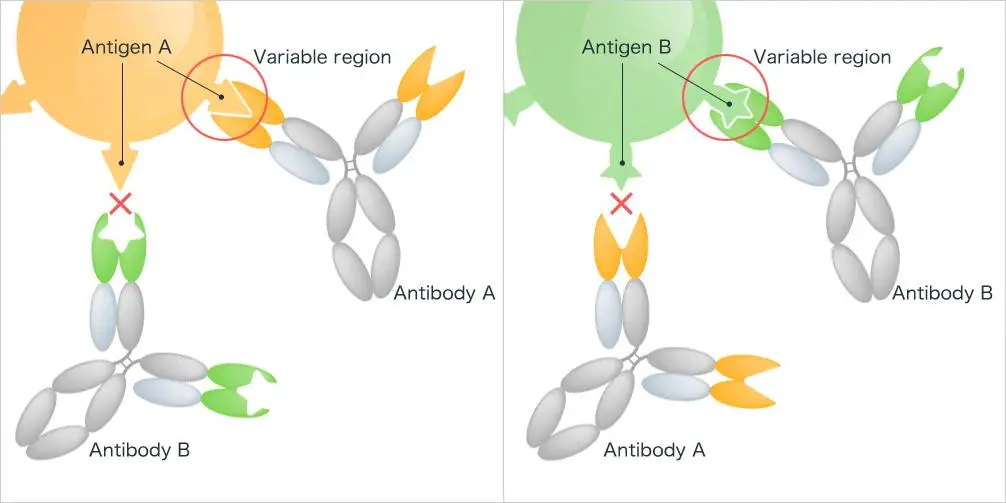
- Direct antigen binding-The transferred antibody bind with specific foreign antigen by its variable region. The antigen may be free virus, bacteria or toxin. This binding occur directly in blood or tissue fluid.
- Effector action-After binding with antigen, the Fc region of antibody helps in removal of the target. Different protective actions occur.
- Neutralization-Antibody covers the binding site of virus or toxin. So they cannot attach with host cell. Entry and toxic action is prevented.
- Opsonization-Antibody coats the pathogen surface. It act as marker. Macrophages and neutrophils bind with antibody and engulf the pathogen.
- Complement activation-Antibody can activate complement system. Complement proteins form membrane attack complex (MAC). This makes pores in microbial membrane and causes lysis.
- ADCC-Antibody coated target cell is recognized by Natural Killer (NK) cells. NK cells release perforin and granzymes. Then target cell is killed.
- Antigen clearance-By these mechanisms the antigen is removed from body fluid. Toxin is neutralized, pathogen is phagocytosed or lysed. So protection is fast.
- Degradation of antibody-The transferred antibodies remain only for few weeks to months. After that they are naturally degraded and removed from body. As no memory cell is formed, new antibody is not produced.
- Waning of immunity-When the ready-made antibody level becomes low, the protection also decreases. So passive humoral immunity is immediate but temporary. It does not give long lasting immunological memory.
Antigens and Their Role in Humoral Immunity
- Antigens are foreign substances which can produce immune response in the body. They may be proteins, polysaccharides, toxins or other foreign molecules. They are recognized by B cells and antibodies.
- Complete antigens can stimulate immune response and also react with the formed antibody. They are both immunogenic and reactive. Proteins and polysaccharides are common complete antigens.
- Haptens are incomplete antigens. They can react with antibody but cannot produce immune response alone. They become immunogenic when they attached with a carrier molecule.
- Antigens start humoral immunity by binding with B-cell receptor (BCR) present on the surface of B cells. The BCR is membrane bound immunoglobulin. After binding, the B cell become activated.
- After activation, B cells divide many times. This forms many similar B cell clones. This process is called clonal expansion. These cells later form plasma cells and memory B cells.
- The bound antigen is taken inside the B cell. Then it is degraded into small peptide fragments. These fragments are presented on B cell surface with MHC class II molecule.
- The antigen with MHC class II is recognized by CD4+ helper T cells. Then helper T cells give activation signal and cytokines. This is needed for full activation of B cell and antibody production.
- Some antigens need help of helper T cells for complete B cell activation. These are mostly proteins, glycoproteins or peptide carrier conjugates. They produce strong memory and class switching, so IgG, IgA or IgE may be formed.
- Some antigens can activate B cells without T cell help. Bacterial lipopolysaccharide (LPS) is an example. In high amount, it acts as mitogen and causes non-specific division of many B cells.
- Some antigens have highly repeated structure. Bacterial capsular polysaccharide is an example. They activate B cells by cross linking many B-cell receptors at same time. But memory formation and class switching is less.
- In germinal centre, intact antigens are kept on follicular dendritic cells (FDCs). The changed B cells bind with these antigens and test their receptor. Only high affinity B cells survive.
- This selection helps in affinity maturation. Due to this, antibodies become more specific for the antigen. The binding strength of antibody also become better.
- Antigens are the final target of secreted antibodies. Antibodies bind with antigen and neutralize viruses or toxins. They also cause agglutination, precipitation and opsonization.
- When antigen is coated by antibody, phagocytes can easily recognize and remove it. In some case, complement system is activated. Then the antigen bearing pathogen is lysed and cleared from body fluid.
T-Dependent Humoral Immune Response and T-Independent Humoral Immune Response
T-Dependent Humoral Immune Response
- T-dependent humoral immune response is the immune response in which B cells need help from CD4+ helper T cells. The B cell cannot be fully activated alone. It require direct contact and signals from helper T cell.
- This type of response is mainly produced against protein antigens. It may be soluble proteins, glycoproteins and peptide-carrier conjugates. These antigens are processed and presented by B cells.
- In this response, the B cell first bind with the specific antigen by B-cell receptor (BCR). Then antigen is taken inside the B cell. It is degraded into small peptide fragments.
- The peptide fragments are presented on the surface of B cell with MHC class II molecule. Then helper T cell recognize this antigen-MHC complex. This is important step for B cell activation.
- The helper T cell gives co-stimulatory signal to the B cell. The main signal is CD40-CD40L binding. The helper T cell also releases cytokines, which helps in division and differentiation of B cell.
- After receiving signals, B cells undergo clonal expansion. They divide many times and produce many same antigen specific B cells. These cells later form plasma cells and memory B cells.
- This response produces strong immunological memory. Memory B cells remain in the body for long time. Long-lived plasma cells also move to bone marrow and secrete antibody for long period.
- In this response, antibody class switching is more. The antibody changes from default IgM to IgG, IgA or IgE. It also produce high affinity antibodies after affinity maturation.
T-Independent Humoral Immune Response
- T-independent humoral immune response is the immune response in which B cells are activated without help of helper T cells. The antigen directly stimulates B cells. So T cell interaction is not needed.
- This response is mainly produced against non-protein polymeric antigens. These antigens include bacterial lipopolysaccharides and capsular polysaccharides. They have repeated structure or direct stimulatory property.
- T-independent antigens are mainly divided into two types. These are TI-1 antigens and TI-2 antigens. Both can activate B cells without T cell help but their mechanism is not same.
- TI-1 antigens have direct B cell stimulating property. Bacterial lipopolysaccharide (LPS) is an example. At high concentration, it acts as mitogen and cause non-specific polyclonal activation of B cells.
- TI-1 antigens can bind with B-cell receptor and also innate receptors like Toll-like receptors (TLRs). So many B cells may be activated together. It is not always fully antigen specific at high dose.
- TI-2 antigens are highly repetitive structural molecules. Bacterial capsule polysaccharide is an example. They activate B cells by cross-linking many B-cell receptors at same time.
- In TI-2 response, about 10 to 20 nearby BCRs may be cross-linked together. This gives strong signal to the B cell. But this response need mature B cell subsets like marginal zone B cells.
- TI-2 response is weak in infants and children below 2 years. Because their mature B cell subsets are not properly developed. So response to capsular polysaccharide antigen become poor.
- T-independent response has limited memory formation. It also shows very less antibody class switching. It mainly produces low affinity IgM antibody.
- In some cases, little switching to IgG subclasses may occur. But it is not strong like T-dependent response. So the protection is short and less specific compared with T-dependent humoral immune response.
Mechanisms of Antibody-Mediated Protection
The following are the important mechanisms of antibody-mediated protection–
- Neutralization – In this process antibodies bind with surface proteins of virus, bacteria or toxin. These surface proteins are used for attachment with host cell. After antibody binding, the attachment site is blocked. So pathogen cannot enter into host cell and infection is prevented.
- Opsonization – In opsonization, antibodies coat the surface of pathogen. The antibody act as tag or marker. The Fc region of antibody bind with Fc receptors present on macrophages and neutrophils. Then these cells engulf and digest the pathogen.
- Complement activation – When IgG or IgM bind with antigen, the Fc region can attach with C1q protein. This starts the complement cascade. At the end, membrane attack complex (MAC) is formed. It makes pores in microbial membrane and causes lysis of the cell.
- Complement-dependent cytotoxicity (CDC) – This is killing of target cell by complement system. Antibody first bind on the target cell surface. Then complement proteins are activated. The MAC damage the cell membrane and the target cell is destroyed.
- C3b mediated phagocytosis – During complement activation, C3b is deposited on the pathogen surface. C3b acts as opsonin. It helps phagocytic cells to recognize the pathogen fast. So phagocytosis become easier and clearance is increased.
- Inflammation by complement fragments – Some complement fragments act as anaphylatoxins. They produce local inflammation. More immune cells come to the infected site. This helps in removal of pathogen from that area.
- Antibody-dependent cellular cytotoxicity (ADCC) – In this process antibody bind with infected cell or abnormal cell. Natural Killer (NK) cells bind with the Fc region of antibody by CD16 receptor. Then NK cells release perforin and granzymes. These substances kill the target cell by apoptosis.
- Agglutination – Antibodies have more than one antigen binding site. So they can join many pathogens together. This forms large clumps. This process is called agglutination. It reduces free pathogen number and makes them easy for phagocytes.
- Precipitation – In precipitation, antibodies bind with soluble antigens. The soluble antigens become cross-linked. Then they form insoluble antigen-antibody complex. These complexes are removed from body fluid by phagocytic cells.
Regulation of Humoral Immune Responses
The following are the important regulation of humoral immune response–
- Inhibitory receptors (ITIMs) – B cell activation is controlled by some inhibitory receptors present on cell surface. These receptors contain immunoreceptor tyrosine-based inhibitory motifs (ITIMs). Important examples are FcγRIIB-1, CD22 and PIR-B. When enough IgG antibody is formed, the antibody bind with antigen and cross-link BCR with FcγRIIB-1. Then inhibitory phosphatase like SHIP is recruited. So further B cell signalling and antibody production is stopped.
- Antibody-mediated feedback – The secreted antibodies can cover the antigen present on follicular dendritic cells (FDCs). This is called masking of antigen. Due to this, normal B cells cannot easily bind with antigen. Only those B cell clones which have high affinity receptor can bind antigen and survive.
- T follicular regulatory cells (Tfr cells) – Tfr cells are regulatory cells present in germinal centre. They suppress and control the humoral response. They regulate germinal centre size, class switching and affinity maturation. They act by reducing B cell metabolism, using CTLA-4 to block co-stimulatory signals and by secreting suppressive molecules like IL-10, TGF-β and granzyme B.
- Regulatory T cells (Tregs) – Tregs suppress extra immune activity. They maintain self tolerance and prevent autoimmunity. In bone marrow, they help to maintain immune privileged condition. This helps in survival of long-lived plasma cells and also controls other blood forming cells.
- Plasma cell negative feedback – Plasma cells do not only secrete antibody. They also regulate immune response. They secrete anti-inflammatory cytokines like IL-10 and IL-35. These cytokines reduce tissue damage during chronic inflammation. When high level of antigen-antibody complex cross-link FcγRIIB receptors on plasma cells, the plasma cells may undergo apoptosis. So the plasma cell number is controlled.
- Co-receptor threshold control – The activation level of B cell is controlled by B-cell co-receptor complex. This complex has CD19, CD21 and CD81. When CD21 bind with complement tagged C3d on pathogen, the activation threshold of B cell become very low. It may reduce by 1,000 to 10,000 times. So B cell respond strongly to real pathogen and not to harmless antigen.
- Anatomical and chemokine regulation – Movement of B cells and T cells is controlled by stromal cell network and chemokine gradients. Important chemokines are CXCL12, CXCL13 and EBI2. These signals place B cells in proper area like dark zone and light zone of germinal centre. So B cells get survival and proliferation signals only at required place and time.
Functions of Humoral Immune Responses
The following are the important functions of humoral immune response–
- Neutralization – Antibodies bind with surface proteins of virus, bacteria or toxin. These surface proteins are needed for attachment with host cell. After antibody binding, the pathogen cannot attach and cannot enter into cell. So infection and toxic effect is prevented.
- Opsonization – In this function, antibodies coat the surface of pathogen. The antibody act as marker or tag. Then macrophages and neutrophils recognize the pathogen easily. After that they engulf and destroy the pathogen.
- Complement activation – When antibody bind with pathogen, it can activate the complement system. Complement proteins form pore in the microbial membrane. This causes lysis of the microbial cell. It also increase inflammation and help in phagocytosis.
- Antibody-dependent cellular cytotoxicity (ADCC) – In ADCC, antibodies bind with infected cell or malignant cell. Then Natural Killer (NK) cells bind with the Fc region of antibody. The NK cells release cytotoxic substances. These substances kill the target cell.
- Agglutination – Antibodies have more than one antigen binding site. So they can join many pathogens together. This forms large clumps. The number of free infectious particles become less and phagocytes can remove them easily.
- Precipitation – Antibodies bind with soluble antigens like toxins. They cross-link these antigens and form insoluble antigen-antibody complex. This complex comes out from body fluid as precipitate. Then it is cleared by phagocytic cells.
- Antigen clearance – Humoral immunity helps in removal of antigens from blood, lymph and tissue fluid. Antibody bound antigen is easily taken by immune cells. So extracellular pathogen and toxin are removed from body.
- Formation of immune memory – Humoral immune response forms memory B cells. These cells remain in the body for long time. When same antigen enter again, they give faster and stronger response.
- Immunomodulation – Humoral response also control other immune reactions. Immune complexes can affect maturation of immune cells. Plasma cells may secrete anti-inflammatory cytokines like IL-10 and IL-35. This helps to reduce excess inflammation and tissue damage.
Disorders Associated with Humoral Immunity
The following are the important disorders associated with humoral immunity–
Primary Humoral Immunodeficiencies
- Selective IgA deficiency (SIgAD) – It is the most common primary immunodeficiency. In this disorder IgA level is very low or absent, but IgG and IgM remain normal. Many patients may be normal, but some show recurrent respiratory infection, gastrointestinal infection, allergy and autoimmune disorder.
- Common variable immunodeficiency (CVID) – It is a heterogeneous antibody deficiency disorder. In this condition IgG and IgA are decreased, and sometimes IgM is also low. Vaccine response is poor. It causes recurrent bacterial infection, autoimmunity, granulomatous disease and sometimes lymphoma.
- X-linked agammaglobulinemia (XLA or Bruton’s disease) – It is caused by defect in Bruton’s tyrosine kinase (BTK) gene. Due to this, B cell maturation is stopped. It mainly affects males. Mature B cells are almost absent and all immunoglobulin classes are very low. So invasive bacterial infections occur repeatedly.
- Autosomal recessive agammaglobulinemia (ARA) – It is similar to XLA in clinical features. In this disorder B cells and antibodies are absent. But it is caused by autosomal gene mutation, such as mu heavy chain defect. So it can occur in both male and female.
- Hyper-IgM syndrome (HIGM) – It is a class switch recombination defect. In this disorder IgM level is normal or high, but IgG, IgA and IgE are very low or absent. The patient becomes susceptible to severe sinopulmonary infection and opportunistic infection.
- IgG subclass deficiency – In this disorder one or more IgG subclasses are low or functionally poor. IgG2 deficiency is more common. It decreases defence against encapsulated bacteria. It may also lead to repeated chest infection and bronchiectasis.
- Specific polysaccharide antibody deficiency (SPAD) – In this condition total immunoglobulin level may be normal. But the body cannot produce proper antibody against polysaccharide antigens, like bacterial capsule. So infection with encapsulated bacteria become common.
- Selective IgM deficiency – It is a rare disorder in which only IgM level is low. Other immunoglobulins may be normal. It increases bacterial respiratory infection. It may also be associated with allergy and autoimmune disease.
- Selective IgE deficiency – It is a very rare immunoglobulin defect. In this condition IgE level is undetectable or very low. It may be associated with chronic bronchitis, recurrent respiratory infection and autoimmune complications.
- Transient hypogammaglobulinemia of infancy – It is a temporary delay in immunoglobulin production in infants. Antibody level remains low for some time. So infection risk is increased. Usually it improves when the child becomes older.
Combined Immunodeficiencies with Humoral Involvement
- Wiskott-Aldrich syndrome (WAS) – It is an X-linked disorder. It is characterized by small platelet or microthrombocytopenia, eczema and recurrent infection. Immunoglobulin level is abnormal, commonly IgM is low and IgA and IgE are increased.
- WHIM syndrome – It is a very rare disorder caused by CXCR4 mutation. The full form is warts, hypogammaglobulinemia, infections and myelokathexis. In this condition neutrophils are retained in bone marrow and antibody deficiency also occur.
- X-linked lymphoproliferative syndrome (XLP) – It is a disorder of abnormal immune response to Epstein-Barr virus (EBV). It causes dysgammaglobulinemia, severe infectious mononucleosis and B cell lymphoma. Humoral immunity becomes disturbed.
Secondary Humoral Immunodeficiencies
- Malignancies – Some cancers of blood and immune system can suppress antibody production. Important examples are chronic lymphocytic leukemia (CLL), malignant lymphoma and multiple myeloma. In multiple myeloma, normal functional immunoglobulin production become depressed.
- Good syndrome – It is an acquired disorder associated with thymoma. In this disease hypogammaglobulinemia occurs and circulating B cells are absent or very low. So recurrent infection may occur.
- Drug-induced hypogammaglobulinemia – Some drugs decrease B cells or suppress antibody production. Examples are rituximab, corticosteroids, sulfasalazine, gold, penicillamine, phenytoin and carbamazepine. Due to this, immunoglobulin level become low.
- Protein-losing conditions – In these disorders antibodies are lost from the body. It may occur through kidney in nephrotic syndrome, from damaged skin in severe burns or through intestine in protein-losing enteropathy. So serum immunoglobulin level decrease.
- Infections – Some chronic or severe viral infections can disturb B cell function and antibody production. Important examples are HIV, Epstein-Barr virus, hepatitis C and congenital rubella. These infections may cause secondary immunoglobulin deficiency.
Clinical Significance of Humoral Immunity
The following are the important clinical significance of humoral immunity–
- Vaccine development and efficacy – Most of the vaccines are prepared to stimulate humoral immunity. It helps in formation of neutralizing antibodies, memory B cells and long-lived plasma cells. These give protection for long time. Conjugate vaccines are important example, where bacterial polysaccharide is joined with carrier protein. It helps infants to respond against those antigens which normally give poor response.
- Monoclonal antibody therapy – The functions of natural antibodies are used in treatment by making monoclonal antibodies. These antibodies can block receptor binding, neutralize antigen and mark abnormal cells for destruction. They are used in cancers, autoimmune diseases and some viral infections. They may also cause opsonization and ADCC.
- Diagnosis of immunodeficiency – Humoral immunity is clinically tested by measuring serum IgG, IgA and IgM level. Sometimes IgG subclasses and circulating B cell number are also checked. This helps in diagnosis of CVID, X-linked agammaglobulinemia (XLA) and other antibody deficiency disorders.
- Vaccine antibody titre testing – Antibody response after vaccination is used to know the function of humoral immunity. If antibody titre is proper, then humoral response is functional. If antibody titre is poor, then antibody production may be defective.
- Immunoglobulin replacement therapy – In some patients antibody production is very low. In XLA, CVID and hyper-IgM syndrome, ready-made immunoglobulin is given. It may be given as IVIG or SCIG. This gives passive immunity and protects from recurrent infection.
- Transfusion medicine – Humoral immunity is important in blood transfusion safety. In selective IgA deficiency, some patients form anti-IgA antibodies. If normal blood product containing IgA is given, severe anaphylactic reaction may occur. So IgA-deficient or washed blood product is used.
- Biomarker of disease condition – Some antibodies and circulating plasma cells act as blood biomarkers. They are used to see immune activation during infection. They also help to monitor autoimmune disease like systemic lupus erythematosus. In multiple myeloma, plasma cell and antibody profile help to assess tumour burden.
- Role in hypersensitivity – Abnormal humoral response can cause hypersensitivity. Excess or wrong production of IgE antibody causes type I allergic reaction and anaphylaxis. It may occur in allergy, asthma and other immediate reactions.
- Role in autoimmunity – Sometimes humoral immunity forms antibodies against self tissues. These are called autoantibodies. IgG or IgM autoantibodies may cause type II and type III autoimmune diseases. Examples include lupus and rheumatoid arthritis.
- Antibody-dependent enhancement (ADE) – In some infections, antibodies do not neutralize the virus properly. These non-neutralizing or sub-neutralizing antibodies help the virus to enter host cells. This is called antibody-dependent enhancement (ADE). It may worsen disease in secondary Dengue virus infection and some RSV condition.
- Control of infection – Humoral immunity is very important against extracellular bacteria, viruses and toxins. Antibody neutralizes toxin and prevents pathogen entry into host cell. It also helps phagocytes and complement system to remove the antigen from body fluid.
Humoral Immunity Examples
The following are the important examples of humoral immunity–
- Natural active immunity – It is formed after natural infection. In this condition, body produces its own antibodies and memory B cells. So when same pathogen enter again, the response become fast.
- Artificial active immunity – It is produced after vaccination. Vaccine stimulate B cells to form antibodies and memory cells. Example, conjugate vaccine against Streptococcus pneumoniae and Neisseria meningitidis.
- Natural passive immunity – It is obtained from mother to child. IgG antibody passes through placenta to the foetus. IgA antibody is also given through breast milk. This immunity is temporary.
- Artificial passive immunity – In this type, ready-made antibody is given from outside source. It gives immediate protection. Examples are antivenom injection and intravenous immunoglobulin (IVIG) therapy in immunodeficient patients.
- Viral neutralization – In this example, antibodies bind with viral surface proteins. Such as antibody against SARS-CoV-2 virus. It blocks attachment of virus with host cell and prevents entry.
- Bacterial toxin neutralization – Antibodies bind with bacterial toxins and make them inactive. So toxin cannot bind with body cell. This protects the tissue from toxic effect.
- Monoclonal antibody therapy – It is clinical use of prepared antibody. These antibodies block specific molecule in disease. Example, infliximab neutralize TNF-α in inflammatory and autoimmune diseases.
- Antibody-dependent cellular cytotoxicity (ADCC) – In this reaction, antibody bind with infected cell or malignant cell. Then Natural Killer (NK) cells attach with antibody by Fc receptor. NK cells release perforin and granzymes and destroy the target cell.
- Allergic reaction – It is also related with abnormal humoral response. IgE antibody bind with mast cells. After allergen exposure, mast cell degranulation occur. This causes allergy or anaphylactic shock.
- Blood transfusion reaction – It is harmful example of humoral immunity. In mismatched blood transfusion, IgG or IgM antibodies attack donor red blood cells. This causes cytotoxic reaction and destruction of cells.
- Autoimmune tissue damage – Sometimes antibodies are formed against self tissues. In systemic lupus erythematosus (SLE), immune complexes may deposit in kidney. This can cause glomerulonephritis.
- Opsonization of bacteria – Antibodies coat the bacterial surface. Then macrophages and neutrophils easily recognize and engulf them. This is important against extracellular bacteria.
References
- Ameratunga, R., Brewerton, M., Slade, C., Jordan, A., Gillis, D., Steele, R., Koopmans, W., & Woon, S.-T. (2014). Comparison of Diagnostic Criteria for Common Variable Immunodeficiency Disorder. Frontiers in Immunology, 5, 415.
- Armando Hasudungan. (n.d.). Selective IgA Deficiency.
- ARUP Consult. (2023). Common Variable Immunodeficiency | Choose the Right Test. ARUP Laboratories.
- Australian Government Department of Health and Aged Care. (2026). Inborn errors of immunity, including primary immunodeficiency. In The Australian Immunisation Handbook.
- Beisel, W. R. (1999). Overview of the Immune System and Other Host Defense Mechanisms. In Military Strategies for Sustainment of Nutrition and Immune Function in the Field. National Academies Press (US).
- Bharathkar, S. K., Parker, B. W., Malyutin, A. G., Haloi, N., Huey-Tubman, K. E., Tajkhorshid, E., & Stadtmueller, B. M. (2020). The structures of secretory and dimeric immunoglobulin A. eLife, 9, e56098.
- Biointron. (2024). Antibody Effector Functions: CDC, ADCC & Neutralization.
- Biointron. (2024). Core Functions of Antibodies.
- bioRxiv. (n.d.). The Structures of Secretory and Dimeric Immunoglobulin A.
- Boster Bio. (2025). Mechanisms of Antibody Action: Neutralization, Opsonization, and More.
- Chamarthi, V. S., & Chamarthi, S. (2025). X-Linked Immunodeficiency. In StatPearls. StatPearls Publishing.
- Creative BioMart. (n.d.). Thymus-Independent B Cell Activation.
- Creative Diagnostics. (n.d.). What is a Conjugate Vaccine?
- Cui, C., Feng, X., Min, Q., Lu, C., Wen, Z., Meng, X., Zhang, R., Dong, L., & Wang, J.-Y. (2026). Cooperative control of IgA synthesis and secretion by MZB1 and the J chain. Frontiers in Immunology, 17, 1744147.
- Janeway, C. A. Jr., Travers, P., Walport, M., et al. (2001). Antigen receptor structure and signaling pathways. In Immunobiology: The Immune System in Health and Disease (5th ed.). Garland Science.
- Janeway, C. A. Jr., Travers, P., Walport, M., et al. (2001). Summary to Chapter 10. In Immunobiology: The Immune System in Health and Disease (5th ed.). Garland Science.
- Janeway, C. A. Jr., Travers, P., Walport, M., et al. (2001). The recognition and effector mechanisms of adaptive immunity. In Immunobiology: The Immune System in Health and Disease (5th ed.). Garland Science.
- KEGG. (n.d.). KEGG PATHWAY: ko04662.
- Killeen, R. B., & Joseph, N. I. (2023). Selective IgA Deficiency. In StatPearls. StatPearls Publishing.
- Lackey, A. E., & Ahmad, F. (2023). X-Linked Agammaglobulinemia. In StatPearls. StatPearls Publishing.
- Lanlokun, M., Borden, A., Nieves, D., Walter, J. E., & Albright, D. (2021). X-Linked Agammaglobulinemia Presenting as Neutropenia: Case Report and an Overview of Literature. Frontiers in Pediatrics, 9, 633692.
- Lesinski, G. B., & Westerink, M. A. (2001). Novel vaccine strategies to T-independent antigens. Journal of Microbiological Methods, 47(2), 135-149.
- Mathew, S. K., Killeen, R. B., & Anjum, F. (2025). Transfusion Selective IgA Deficiency. In StatPearls. StatPearls Publishing.
- Mesin, L., Ersching, J., & Victora, G. D. (2016). GERMINAL CENTER B CELL DYNAMICS. Immunity, 45(3), 471-482.
- Miao, R., Lim, V. Y., Kothapalli, N., Ma, Y., Fossati, J., Zehentmeier, S., Sun, R., & Pereira, J. P. (2020). Hematopoietic Stem Cell Niches and Signals Controlling Immune Cell Development and Maintenance of Immunological Memory. Frontiers in Immunology, 11, 600127.
- Mond, J. J., Lees, A., & Snapper, C. M. (1995). T Cell-Independent Antigens Type 2. Annual Review of Immunology, 13, 655-692.
- Pearson. (n.d.). Chapter 21: The Immune System – Innate and Adaptive Body Defenses.
- PNAS. (n.d.). Permissive selection followed by affinity-based proliferation of GC light zone B cells dictates cell fate and ensures clonal breadth.
- PNAS. (n.d.). Short Vi-polysaccharide abrogates T-independent immune response and hyporesponsiveness elicited by long Vi-CRM197 conjugate vaccine.
- Publication: Structural and Molecular Mechanisms of B Cell Co-Receptor Function. (n.d.).
- PubMed Central. (n.d.). Class Switch Recombination Occurs Infrequently in Germinal Centers. National Institutes of Health.
- PubMed Central. (n.d.). Conjugate vaccines. National Institutes of Health.
- PubMed Central. (n.d.). Cryo-EM Structure of the B Cell Co-receptor CD19 Bound to the Tetraspanin CD81. National Institutes of Health.
- PubMed Central. (n.d.). Deciphering the Human Germinal Center: A Review of Models to… National Institutes of Health.
- PubMed Central. (n.d.). Dynamics of B cells in germinal centres. National Institutes of Health.
- PubMed Central. (n.d.). Functions of Antibodies. National Institutes of Health.
- PubMed Central. (n.d.). Germinal Center Organization and Cellular Dynamics. National Institutes of Health.
- PubMed Central. (n.d.). T lymphocyte dependence of the antibody response to ‘T lymphocyte…’. National Institutes of Health.
- Salzer, U., Warnatz, K., & Peter, H. H. (2012). Common variable immunodeficiency – an update. Arthritis Research & Therapy, 14(5), 223.
- Slamanig, S. A., & Nolte, M. A. (2021). The Bone Marrow as Sanctuary for Plasma Cells and Memory T-Cells: Implications for Adaptive Immunity and Vaccinology. Cells, 10(6), 1508.
- Slideshare. (n.d.). Humoral immune response.
- Stebegg, M., Kumar, S. D., Silva-Cayetano, A., Fonseca, V. R., Linterman, M. A., & Graca, L. (2018). Regulation of the Germinal Center Response. Frontiers in Immunology, 9, 2469.
- Suárez-Cuartín, G., Lores, C., Gomez-Olivas, J. D., Oscullo, G., & Martínez-García, M. Á. (2026). Primary Humoral Immunodeficiencies and Bronchiectasis in Adults. Journal of Clinical Medicine, 15(1), 179.
- Susa, K. J., Seegar, T. C., Blacklow, S. C., & Kruse, A. C. (2020). A dynamic interaction between CD19 and the tetraspanin CD81 controls B cell co-receptor trafficking. eLife, 9, e52337.
- Thanawastien, A., Cartee, R. T., Griffin, T. J. IV, Killeen, K. P., & Mekalanos, J. J. (2015). Conjugate-like immunogens produced as protein capsular matrix vaccines. Proceedings of the National Academy of Sciences, 112(10), E1143-E1151.
- The Molecular Architecture, Cellular Evolution, and Pathophysiological Spectrum of Humoral Immunity. (n.d.).
- Tonouchi, K., Yeh, C.-H., Cain, D. W., Moseman, E. A., Haynes, B. F., Wagh, K., Wiehe, K., Kurosaki, T., & Kelsoe, G. (2025). On the carrying capacity of the bone marrow survival niche in mice. Frontiers in Immunology, 16, 1706810. [PMC]
- Tonouchi, K., Yeh, C.-H., Cain, D. W., Moseman, E. A., Haynes, B. F., Wagh, K., Wiehe, K., Kurosaki, T., & Kelsoe, G. (2025). On the carrying capacity of the bone marrow survival niche in mice. Frontiers in Immunology, 16, 1706810. [Semantic Scholar]
- UMass Chan Medical School. (n.d.). Germinal Centers.
- van Erp, E. A., Luytjes, W., Ferwerda, G., & van Kasteren, P. B. (2019). Fc-Mediated Antibody Effector Functions During Respiratory Syncytial Virus Infection and Disease. Frontiers in Immunology, 10, 548.
- Wang, P., Su, N., Yan, X., Xu, F., & Zhang, Y. (2025). Circulating plasma cells: from basic mechanisms to clinical applications. Frontiers in Immunology, 16, 1674088.
- Wei, H., & Wang, J.-Y. (2021). Role of Polymeric Immunoglobulin Receptor in IgA and IgM Transcytosis. International Journal of Molecular Sciences, 22(5), 2284.
- Wikipedia contributors. (2026). Common variable immunodeficiency. In Wikipedia, The Free Encyclopedia.
- Wikipedia contributors. (2026). Germinal center. In Wikipedia, The Free Encyclopedia.
- Wikipedia contributors. (2025). J chain. In Wikipedia, The Free Encyclopedia.
- Yoshino, Y., & Kosugi, N. (2025). Selective IgA Deficiency Complicated with Pernicious Anemia Diagnosed After Febrile Non-Hemolytic Transfusion Reaction. American Journal of Case Reports, 26, e947678.