

Kingdom Protista is described as a group of eukaryotic organisms which is neither plant nor animal nor fungus. It is the group that consists of organisms having a true nucleus and other membrane-bound organelles, and it is considered as the most diverse group among the eukaryotes. It is the historical classification used to place all such eukaryotes that do not fit properly into the three major kingdoms, and because of this the group is paraphyletic in nature. It is the process in which unicellular forms are mainly included, but some multicellular forms like slime moulds and brown algae is also kept here. These are commonly found in aquatic environment or in moist places as the major source of water helps their survival.
Protists can be autotrophic, heterotrophic or mixotrophic. Autotrophic protists are generally referred to as algae performing photosynthesis, and heterotrophic protists such as protozoa obtains food by ingestion. Some protists is capable of switching their mode of nutrition depending on conditions, and this is referred to as mixotrophy. It is also seen that many protists become parasitic and cause diseases in plants and animals.
Some of the important examples are algae, flagellates, amoebae, slime moulds and fungus-like protists. Algae are photosynthetic forms, flagellates move with flagella, and amoebae move with pseudopodia. Slime moulds show aggregation and form reproductive structures.
Definition of Protista
Protista: A diverse group of eukaryotic microorganisms, not belonging to animals, plants, or fungi
| Protists | The scientific name of protists |
|---|---|
| Amoeba | Amoeba proteus |
| Paramecium | Paramecium pentaurelia |
| Stentor | Stentor coeruleus |
| Euglena | Euglena gracilis |
| Volvox | Colonial volvox |
| Slime mold | Physarum polycephalum |
How do they Look? – Protista Under Microscope
History of Kingdom Protista
The history of Kingdom Protista is the process in which early workers tried to place all microscopic life into suitable groups, and this gradually changed as better microscopes and more information became available. In the early period the organisms now called protists were described as infusion animals or infusoria, and these terms included many small forms like protists, bacteria, and even tiny invertebrates. It is in the mid-18th century that Müller first placed some of these forms into the binomial system. The term Protozoa was introduced by Goldfuss (1820) for early animal-like organisms, and later von Siebold (1845) restricted Protozoa only to unicellular animals such as Infusoria and Rhizopoda. During the middle of the 19th century these forms were separated into Protozoa, Protophyta, Phytozoa and bacteria, and Owen (1860) even attempted to describe Protozoa as a separate kingdom although he included sponges by mistake.
It is the later half of the 19th century when the concept of a distinct kingdom for these organisms was proposed. John Hogg (1860) suggested the name Protoctista for all primary organic beings. Ernst Haeckel in 1866 used the term Protistenreich or Kingdom Protista, and he described a separate kingdom for forms that were neither animals nor plants. At first he included both unicellular organisms and bacteria, but later he restricted it mainly to unicellular forms or simple colonies not capable of forming tissues. Haeckel also used Protozoa and Protophyta as subgroups in this kingdom and separated Protista from true animals because protists did not show the blastula stage and also because sexual reproduction was mostly absent.
In the early 20th century, the idea of several kingdoms started becoming more accepted. Copeland (1938) again used the term Protoctista and separated bacteria as Monera, thus placing nucleated organisms in Protoctista and removing the earlier problem of mixing prokaryotes with eukaryotes. Later Whittaker (1969) proposed the five-kingdom system in which Monera, Protista, Fungi, Plantae and Animalia were the major kingdoms. It is described that Protista contained unicellular or unicellular-colonial eukaryotes that did not form true tissues. Margulis later kept Protoctista for some larger multicellular algae and slime moulds while reserving protists for microscopic forms.
Modern classification does not treat Protista as a natural kingdom because molecular studies and electron microscopy showed that it is a paraphyletic group. It is now understood that the last eukaryotic common ancestor lies among protist lineages and animals, plants and fungi emerged from within this group. It is the process through which organisms once classified as protists are now placed in different eukaryotic supergroups like Archaeplastida, SAR group, Amoebozoa and Excavata. Today the term protist is used informally for all such eukaryotic organisms that are not animals, plants or fungi.
Habitats of Protists
- Protists are found mostly in places where liquid water is present. It is the major requirement for their survival.
- Aquatic habitats are the common habitats for most protists. These include freshwater ponds, lakes, streams and puddles where forms like Amoeba and Paramecium is present in large number.
- Marine water is another major habitat where diatoms, dinoflagellates, haptophytes and other planktonic protists is found. These are important parts of the marine phytoplankton community.
- Some protists occur in brackish water where the salinity is intermediate between fresh and marine water.
- A number of protists live on the ocean floor or attached with sand particles. Foraminiferans is one such group which is mostly marine.
- Terrestrial moist habitats are also important. Protists occur in damp soil where water is trapped between soil particles. This creates heterogeneous conditions and supports rich protist diversity.
- Cercozoan amoeboflagellates is common soil predators feeding on other microbes.
- They also occur on wet surfaces of rocks, tree trunks and other moist places where algal protists can grow.
- Snow and cold regions provide habitats for diatoms and green algae which survive under extreme low temperature.
- Many protists live inside other organisms in symbiotic association. Some occur in the gut of termites and wood-eating cockroaches helping in cellulose digestion under anaerobic condition.
- A number of protists is parasitic. Amoebas causing dysentery live inside the intestine of human beings. Apicomplexans like Plasmodium occur inside human blood cells. Trypanosoma species occur in the body fluids of humans and animals.
- Parasitic protists also infect plants. Oomycetes like Phytophthora cause plant diseases and Phytomyxea infects plant and algal cells.
- Some protists are adapted to extreme environmental conditions. These include thermophilic, halophilic and acidophilic forms. Dunaliella salina and Halocafeteria seosinensis survive in very high salt concentration.
- Decomposing habitats like rotting logs, decaying plants and organic wastes also support slime moulds. Nearly 1000 species of slime moulds feed on bacteria and fungi in such habitats.
- Dead organic matter, organic debris and nutrient-rich wet surfaces are common places where saprophytic protists grow and function as decomposers.
Characteristics Features of Protists
- Protists are eukaryotic organisms and their cells have a nucleus and membrane-bound organelles.
- Most protists are unicellular but some multicellular and colonial forms also occur which do not have true tissues or organs.
- The size of protists vary greatly. Cells may be less than one micrometer and some forms like kelps can reach very large sizes.
- The cell covering is different in different groups. Some have only membrane, some have cell wall, some have pellicle made of protein strips, and some like diatoms have silica shells.
- Many protists have more than one nucleus. Ciliates have two nucleii, a micronucleus and a macronucleus.
- Protists show different types of movement. They may move by flagella, cilia or pseudopodia.
- Flagella are long whip-like structures which help in movement and occur in forms like Euglena and Trypanosoma.
- Cilia are short hair-like structures which beat in rows and push the cell in water as seen in Paramecium.
- Pseudopodia are temporary extensions of cytoplasm which help in creeping movement and in capturing food particles.
- Some protists show taxis. It is the movement toward or away from a stimulus like light where phototaxis is observed.
- Protists have different nutritional modes. Some are photoautotrophs having chloroplasts and perform photosynthesis.
- Heterotrophic protists feed on organic matter. Phagotrophic forms engulf food by phagocytosis into a food vacuole.
- Osmotrophic forms absorb dissolved organic substances directly from the medium. Saprobes feed on dead organisms.
- Some protists are mixotrophs which can shift between autotrophic and heterotrophic modes based on light or nutrient conditions.
- Protists commonly reproduce asexually. The important method is binary fission where the cell divides into two daughter cells.
- Multiple fission occurs in some forms where the cell divides into many daughter cells at the same time.
- Budding and fragmentation also occur in some algae where new individuals are produced from parts of the parent body.
- Sexual reproduction is also present. It involves gamete formation by meiosis and fusion of gametes to form zygote.
- Under unfavorable conditions many protists form cysts. These cysts are resistant and help in survival until conditions improve.
- Protists have simple to very complex life cycles. Parasitic protists may require two or more hosts for completion of their life cycle.
- Alternation of generations occurs in some protists where both haploid and diploid multicellular stages are present.
- Protists occur mainly in moist and aquatic habitats including freshwater, marine water and damp soil.
- Some protists are parasitic and live inside plants, animals or humans while others act as decomposers in dead organic matter.
Classification of Protista

There are different classification of Protista such as;
- Animal Like Protista
- Plant Like Protista
- Fungi Like Protista

A. Animal Like Protista
Protists that resemble animals are also known as protozoa, which means ‘first animal.’ They are believed to have developed from bacteria to become some of the earliest eukaryotes on Earth. It is believed that all other animal life evolved from these early eukaryotes.
The vast majority of protozoa are heterotrophs, meaning they obtain nutrients from their surroundings as opposed to creating carbohydrates through photosynthesis. Protozoan cells include mitochondria (for energy production) and digesting vacuoles (for the digestion of food).
Classification of protozoa
| Type of protozoa | Name of organism | Organ for motility |
|---|---|---|
| Amoeboid | Amoeba | Pseudopodium |
| Ciliate | Paramecium | Cilia |
| Flagellate | Giardia | Flagella |
| Sporozoan | Plasmodium | The adult form is immobile |
Protozoan Protists
Protozoa are eukaryotic, unicellular creatures belonging to the Kingdom Protista. They are normally microscopic and can be found in soil, freshwater, saltwater, and other organisms’ bodies.

Protozoan characteristics include
- Unicellular: Protozoa consist of a single cell.
- Eukaryotic: Its cells have a well-defined nucleus and other membrane-bound organelles.
- Heterotrophic: Protozoa receive their nutrition by devouring other creatures or organic substances.
- Motile: The majority of protozoa are capable of locomotion via cilia, flagella, or pseudopodia.
- Asexual and sexual reproduction: Protozoa reproduce asexually through binary fission, budding, and schizogony. They also reproduce sexually. Several species are also able to reproduce sexually.
- Diverse forms: Protozoa occur in several shapes and sizes, including ameboid, ciliated, and flagellated varieties.
- Ecological importance: Protozoa play vital roles in numerous ecosystems, as they are important predators and prey in food webs, and some species also contribute to the decomposition of organic materials.
- Disease-causing organisms: Certain protozoa, such as malaria, amoebic dysentery, and giardiasis, are disease-causing organisms that can infect people and other animals.
Major Groups of Protozoa
Four primary protozoan groups can be distinguished:
- Amoeboid protozoans – Amoeboid protozoa are typically found in either fresh or salt water. They feature pseudopodia (fake feet) that let them to shift shape to seize and swallow prey. E.g. Amoeba. Entamoeba histolytica and E. gingivalis are other members of this group that cause numerous digestive and dental disorders or infections when ingested in contaminated water.
- Flagellated protozoans — As implied by their name, members of this group possess flagella. They can be both free-living and parasitic. E.g. Euglena.
- Ciliated protozoans — These organisms have cilia all over their bodies, which aid in motility and nourishment. They are consistently aquatic. E.g. Paramecium.
- Sporozoans – Sporozoans are so-called because a spore-like stage exists in their life cycle. For example, Plasmodium, the parasite that causes malaria.
Examples of Animal-like Protists
- There are four major categories of protozoa, which are categorised according to their habitats and modes of locomotion. They include: Rhizopoda \sCiliates \sFlagellates, Sporozoa
- Rhizopoda are distinguished by their pseudopodia (often known as “fake feet”). They are finger-like protrusions of the cytoplasm that extend from the cell and allow it to move. Rhizopodia use their pseudopodia to trap bacteria and tiny protozoa, which they ingest and digest utilising digestive vacuoles.
- Amoebas comprise the majority of Rhizopoda species. They inhabit freshwater and marine environments and reproduce asexually through binary fission. Some amoeba are parasites, such as entamoeba, which causes amoebic dysentery.
- Ciliates move themselves through the water using microscopic hair-like appendages known as cilia. Ciliates also utilise their cilia to transport algae and bacteria into a groove in their cell membrane that resembles a mouth. In exchange, ciliates serve as a source of nutrition for larger protozoans (such as amoeba).
- Flagellates utilise whip- or tail-like flagella to propel themselves through their aquatic surroundings. In addition to using their flagella to catch food particles, many flagellates may also absorb nutrients from their surroundings. A small number of flagellates (phytoflagellates) can create their own sustenance through photosynthesis. Some flagellates, such as Trypanosoma and Giardia, are parasites that can cause sleeping sickness and giardiasis.
- Sporozoans are a type of parasite that derives all of their nutrition from their hosts. These protozoa don’t have pseudopodia, cilia, or flagella. Instead, they employ a specialised structure known as an apical complex to insert themselves into a host cell.
B. Fungi-like Protists
- They have traits of both animals and fungi, and are consequently collectively referred to as fungus-animals. The members exhibit the following qualities:
- They inhabit damp terrestrial areas and can be observed travelling among rotting branches and leaves.
- They reproduce sexually as well as asexually.
- They exhibit a saprophytic diet.
- Plasmodium forms under favourable conditions. On the basis of Plasmodium occurrence, these are of two types:
- Acellular/Plasmodial slime moulds, E.g., Fuligo septica, Physarum, etc.
- Cellular slime moulds, including Dictyostelium, Polysphondylium, and others.
Examples of Fungi-like Protists
Slime Moulds
Myxomycetes, sometimes referred to as slime moulds, are a category of fungus-like creatures belonging to the Kingdom Protista. They are neither moulds or fungus, despite their name, but rather a separate sort of life with their own properties.

- Unicellular or multicellular: Slime moulds can exist as single cells or produce multicellular formations.
- Heterotrophic: They gain nourishment by consuming other organisms or organic debris.
- Amoeboid or plasmodial: Slime moulds can exist as solitary amoeba-like cells or as a plasmodium, a big, single, multinucleated cell.
- Reproduction: Depending on the species, slime moulds can reproduce either sexually or asexually.
- Habitat: Slime moulds inhabit a variety of habitats, such as dirt, decomposing plants, and forest floors
- Ecological significance: Slime moulds perform crucial roles in nutrient cycling and decomposition, aiding in the breakdown of dead organic waste and the return of nutrients to the soil.
- Research: In scientific research, slime moulds serve as model organisms because they exhibit complex activity and may be studied to better comprehend biological systems.
Water molds

- Water moulds, also known as Oomycetes, are a category of fungi-like organisms that flourish in moist or water-rich environments. They are commonly found in soil and plant tissues, as well as bodies of water such as ponds, lakes, and streams.
- Water moulds are minuscule and have a similar filamentous form to fungi, but their cellular structure and biochemical processes are distinct. They acquire nutrients through digesting organic waste or by infecting plants, animals, and even other fungus.
- Certain water moulds are pathogenic and can cause major diseases in plants and animals, such as the potato blight that caused the Irish potato famine in the middle of the nineteenth century. Others are saprophytic, which means they feed on dead or decaying organic matter, and they play a crucial part in the nutrient cycling of aquatic habitats.
- Certain types of water moulds can cause disease outbreaks in fish farms and substantial economic losses. In general, water moulds are a diverse, ecologically significant collection of organisms with a vast array of biological functions.
C. Plant-like Protists
Algae are a synonym for plant-like protists. They are plant-like because they have chloroplasts and chlorophyll and produce their own sustenance through photosynthesis. Algae also possess a cellulose-based cell wall. Yet, in contrast to actual plants, algae lack leaves, stems, and roots.
Being photosynthetic creatures, algae play a crucial role in aquatic ecosystems as producers. They are also essential oxygen generators, accounting for an estimated fifty percent of all oxygen generation on Earth. Some algae (diatoms) are unicellular, but others (seaweed) are multicellular.
These are organisms with plant-like features and photosynthetic capabilities. Dinoflagellates, Chrysophytes, and Euglenoids are its three subtypes.
Classification of Algae
| Classification | Chloroplast type |
|---|---|
| Red algae | Red or brown color chlorophyll similar to cyanobacteria; chloroplast having two membranes |
| Green Algae | Green color chlorophyll similar to cyanobacteria; chloroplast having two membranes |
| Euglenids | Green color chlorophyll’ chloroplast having three membrane |
| Dinoflagellates | Red or brown color chlorophyll similar to cyanobacteria; chloroplast having three membranes |
1. Dinoflagellates
- Dinoflagellates are a group of unicellular, marine and freshwater protists. They are distinguished by their two flagella, which they employ for locomotion, and their cell structure, which consists of cellulose plates.
- Dinoflagellates are essential primary producers in marine ecosystems, as they perform photosynthesis and serve as a key food supply for several other creatures, including zooplankton, fish, and whales. Yet, certain species of dinoflagellates can also create toxins that can cause harmful algal blooms (HABs), which can have devastating ecological and economic effects.
- HABs can trigger fish kills, contaminate seafood with chemicals that are dangerous to people and other animals, and deplete oxygen levels in the ocean, leading to the demise of other marine species. In humans who consume contaminated seafood, dinoflagellate toxins can potentially cause neurological and gastrointestinal symptoms.
- Dinoflagellates are of scientific interest due to their complex genome structure, which comprises both nuclear and extranuclear DNA, in addition to its ecological and economic consequences. Certain species are capable of emitting light flashes when disturbed, a phenomenon known as bioluminescence. Some organisms have also been employed in bioluminescence research.
- The approximately one thousand species of photosynthetic protists belong to the division Pyrrophyta and the class Dinophyceae.
- These are autotrophic, or photosynthetic organisms.
- They are typically marine, motile, biflagellate forms.
- They contain pigments of green, yellow, brown, red, or blue.
- These are the essential phytoplankton components.
- Even in interphase, their macronuclei contain condensed chromosomes, termed mesokaryon.
- Certain dinoflagellates emit and emit light in the dark. This refers to the bioluminescence phenomena.
- Moreover, they discharge chemicals that cause the sea to appear crimson and harm marine species. This crimson tide is also created by the pigmentation of dinoflagellates, and this phenomena is observed during the organism’s rapid growth.
- Reproduction occurs both asexually and sexually.
- Examples: Gonyaulax, Noctiluca, etc.

2. Chrysophytes
- They are known as the gems of the plant kingdom.
- They are unicellular, free-floating forms of fresh or salt water.
- The cell walls of the majority of them are composed of silica and pectin.
- Reproduction occurs both sexually and asexually.
- The buildup of a substantial amount of Diatom cell wall deposits is known as diatomaceous earth (which can be used as fuel after mining).
- The cell wall of diatoms consists of two thin, overlapping shells that fit together like a soapbox.
- Example: Diatoms, Desmids, golden algae, etc.
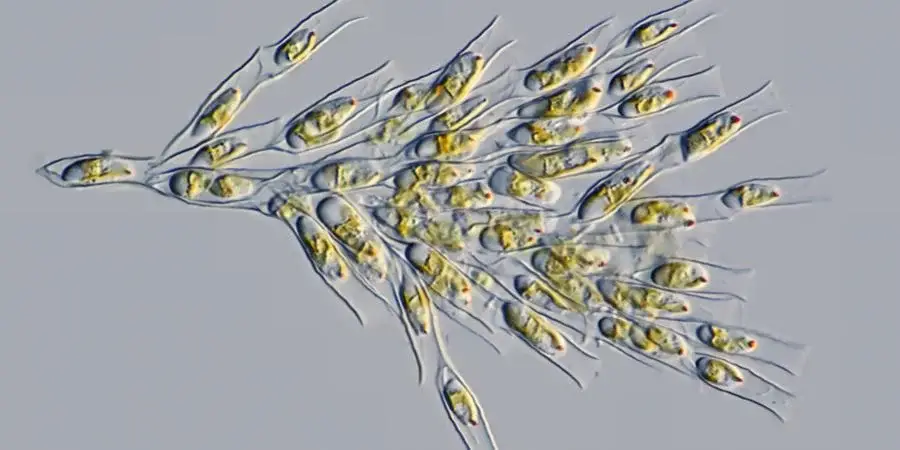
3. Euglenoids
- They are unicellular and exhibit both plant and animal traits.
- They are green and nutritionally autotrophic (plant character).
- They are unicellular flagellates (animals) found predominantly in stagnant fresh water.
- They possess both Long Whiplash and Short Tinsel flagella.
- Instead of a cell wall, they possess a coating of protein-rich pellicle that makes their body flexible.
- The meal is kept in pyrenoids, which are proteinaceous granules.
- Reproduction occurs exclusively asexually.
- In the dark, photosynthetic euglenoids function like heterotrophs; this form of nourishment is referred to as mixotrophic.
- Euglena is the most important member of this category and is regarded as the link between animals and plants.

Types of protist based on nutrition and motility
1. Autotrophs
Autotrophs are those protists which can synthesise their own food, and it is the process where light energy is trapped by pigments present in their cells. These pigments help in converting light energy into chemical energy. It is mostly seen that these protists are non-motile, and the major source of their nutrition is photosynthesis.
Green algae possess chlorophyll which gives the characteristic green colour. Brown algae contain fucoxanthin, and it is responsible for their brown appearance. Red algae possess phycoerythrin pigment which imparts red colour. These pigments are important as they capture different wavelengths of light.
Autotrophic protists contribute a major share of global photosynthesis. It is estimated that a large portion of Earth’s oxygen production is carried out by these organisms. These are considered as primary producers in aquatic ecosystems.
2. Heterotrophs
Heterotrophic protists cannot prepare their own food. These organisms depend on external organic matter for obtaining nutrition. It is seen that many of them are motile. They use different structures like cilia, flagella, or pseudopodia for movement.
Cilia and flagella are hair-like projections used for locomotion. Pseudopodia are temporary extensions of the cytoplasm. It is used in both movement and capturing food particles. Feeding on bacteria and small protists is common among them.
These protists act as consumers in aquatic ecosystems. They help in nutrient recycling as the organic matter is ingested and digested. Some of the heterotrophic protists act as predators also, regulating the population of smaller microorganisms.
3. Mixotrophs
Mixotrophs show both autotrophic and heterotrophic modes of nutrition. It is the process where organisms can switch their nutritional method depending upon light availability or prey availability. Some of the mixotrophs possess their own chloroplasts for photosynthesis, while others obtain chloroplasts by engulfing algal cells (kleptoplasty).
Categories based on nutritional dominance
Some of the main features are–
- Heterotrophy dominated – Here phagotrophy is the main nutrition, and phototrophy occurs only when prey becomes limited.
- Phototrophy dominated – Phototrophy is the main mode, but phagotrophy occurs during low light conditions.
- Phototrophy with limited light phagotrophy – Growth mainly occurs through phototrophy. Under reduced light, phagotrophy starts.
- Phagotrophy with limited light phototrophy – Phagotrophy is major but under prolonged darkness the organism depends on phototrophy when possible.
Another classification
- Type 1 – These are ideal mixotrophs and depend equally on prey and sunlight.
- Type 2 – Phototrophy is dominant but phagotrophy occurs occasionally.
- Type 3 – These change between heterotrophic and phototrophic activity depending on surrounding conditions.
Based on chloroplast origin
- Constitutive mixotrophs – These are phagotrophic organisms that also possess natural photosynthetic ability.
- Non-constitutive mixotrophs – These organisms depend on feeding to acquire chloroplasts and then perform photosynthesis.
Mixotrophs show high adaptability. This process occurs when environmental conditions fluctuate, and they adjust their nutritional strategies. These protists are important as they maintain ecological balance and take part in nutrient cycling in aquatic habitats.
Reproduction of Protista
A. Asexual reproduction in protists
Asexual reproduction is the process where new individuals are produced from a single parent cell, and it is the method in which no gamete formation takes place. The daughter cells formed have the same genetic composition as the parent cell. These are clones, and this type of reproduction helps in rapid multiplication when the conditions are favourable.
Types
- Binary Fission– It is the process where the parent cell divides into two equal daughter cells. The nucleus divides first and then the cytoplasm. It is simple and common in many protists. Amoeba, Euglena and Paramecium show binary fission.
- Multiple Fission– In this method the parent cell forms many daughter cells at the same time. The nucleus divides repeatedly and then the cytoplasm separates around each nucleus. It is observed in Amoeba and Plasmodium. It is the process used when rapid increase in number is required.
- Plasmotomy– Plasmotomy occurs in multinucleate protists. In this step only the cytoplasm divides and forms two or more multinucleate offsprings. The nuclei do not divide during the process. Opalina shows plasmotomy.
- Spore Formation– Some protists form asexual spores. These spores are resistant structures formed during unfavourable conditions. When conditions become favourable the spores germinate and give rise to new individuals. Slime moulds show spore formation.
- Budding– It is the process where a small outgrowth appears from the parent cell. This outgrowth grows gradually and becomes separated from the parent forming a new organism. Arcella reproduces by budding.
Asexual reproduction is helpful for quick colonisation of suitable habitats. These are efficient processes but the genetic variation is limited as the offsprings is identical to the parent. Many protists shift between asexual and sexual reproduction depending on environmental conditions.
amoeba dividing (prob. Cochliopodium)
B. Sexual Reproduction in protists
Sexual reproduction in protists is the process in which two haploid nuclei take part in fusion to form a diploid condition. It is characterized by two essential steps. These are meiosis and fertilization. It is the process that helps in maintaining chromosome number and also increases genetic recombination in the species.
It is based on the alternation between haploid (n) and diploid (2n) phases. Meiosis reduces the chromosome number, and fertilization restores it. These processes is important because it maintains constant chromosome number in offspring and produces genetic variations.
Steps
1. Meiosis
It is the reduction division in which diploid (2n) nucleus is converted into haploid (n) nuclei. Chromosome number is half in this step. This process occurs when the protist prepares for the formation of gametes. It is essential because it prevents doubling of chromosome number in every generation.
2. Fertilization
It is the fusion of two haploid gametes. A diploid zygote is formed during this step. This is referred to as syngamy in many protists. Fertilization restores 2n condition and also brings together genetic materials from both parents.
Types
Sexual reproduction in protists mainly occurs by two methods. These are syngamy and conjugation.
1. Syngamy
It is the complete fusion of two haploid gametes to form a diploid zygote. Some of the main features are– gamete fusion, diploid zygote formation, and presence of different types of gametes.
Syngamy is of different forms:
a. Isogamy
It is the fusion of two similar gametes. Both gametes are identical in size and morphology. Example– Monocystis.
The reaction is simple as both gametes behave similarly during fusion.
b. Anisogamy
It is the fusion of two dissimilar gametes. The gametes differ in size or appearance. Example– Ceratium.
It is the process where one gamete is larger and the other is smaller.
c. Oogamy
This is a special form of anisogamy. Gametes differ greatly in size and motility. The female gamete (egg) is large and non-motile. The male gamete (sperm) is small and motile. Oogamy is seen in Plasmodium.
This process occurs when motile sperm reaches the non-motile egg.
2. Conjugation
It is the process where two organisms come close and exchange haploid pronuclei. A temporary cytoplasmic bridge is formed in this step. The exchange of nuclei brings variation. After exchange, each organism contains a zygote nucleus. This nucleus divides and forms new daughter individuals by binary fission. Example– Paramecium.
It is the method which helps in rejuvenation and genetic exchange without gamete formation.
Sexual reproduction in protists increases genetic diversity. New gene combinations are formed, and this helps the species to survive changing environmental conditions. It is the major source of variation which improves adaptability and stability of the population.
Examples
- Monocystis – Isogamy
- Ceratium – Anisogamy
- Plasmodium – Oogamy
- Paramecium – Conjugation
Life cycle of Protist
The life cycle of protists varies greatly due to their diverse nature. Protists exhibit a wide range of reproductive strategies, leading to both simple and complex life cycles. Some of the key aspects of protist life cycles are as follows:
- Reproductive Modes: Protists can reproduce through various methods, including binary fission, asexual reproduction, and sexual reproduction. Some protists undergo periodic binary fission, where a single cell divides into two daughter cells with identical genetic composition. Others may alternate between asexual and sexual phases in their life cycle, contributing to genetic diversity and adaptability.
- Dormancy and Hibernation: Certain algal protists, especially those found in harsh environmental conditions, undergo dormancy or hibernation periods similar to mammals. When food is scarce or temperatures are low, these protists enter a state of dormancy to conserve their energy and resources until favorable conditions return.
- Parasitic Life Cycle: Some protists have a parasitic life cycle, requiring multiple hosts to complete their life cycle. In these cases, the protist may spend part of its life cycle in a carrier organism that transports it to the next host. This complex life cycle helps the parasitic protists find suitable environments for growth and reproduction while maintaining their survival.
Life cycle of slime molds
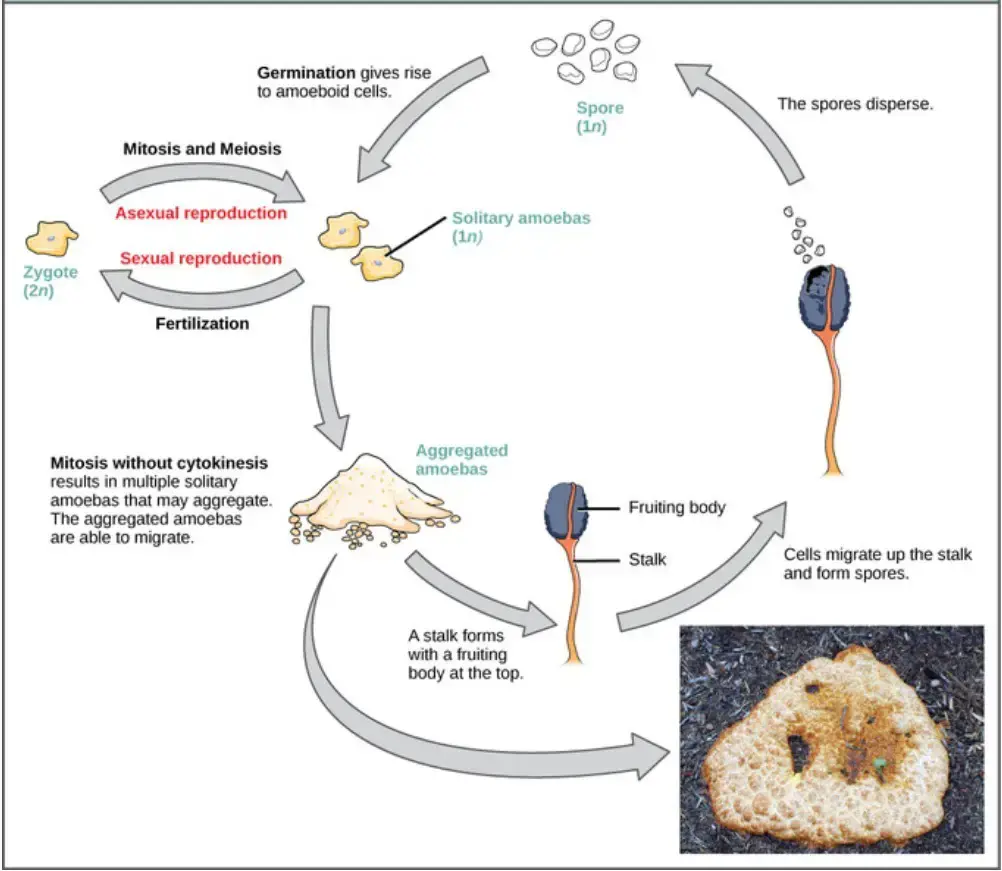
Slime molds, a group of peculiar organisms, exhibit two main types of life cycles: the plasmodial type and the cellular type.
A. Plasmodial Type: During the feeding stage of the plasmodial type of slime molds, large multinucleated cells move along surfaces. This mobile, amoeba-like mass is called the plasmodium. The plasmodium feeds by lifting and engulfing food particles or bacteria as it glides along surfaces. As the plasmodium matures, it takes on a net-like appearance and has the capacity to produce fruiting bodies, known as sporangia, over a stalk during times of stress.
Within these sporangia, haploid spores are produced through the process of meiosis. These spores are eventually released into the surrounding air or water and can disperse to reach favorable environments. Once in these suitable conditions, the spores germinate to produce new progeny. The resulting progeny may consist of amoeboid or flagellate haploid cells, which then combine with each other through sexual reproduction to form a diploid zygotic slime mold.

B. Cellular Type: In the cellular type of slime molds, the behavior of the organisms resembles that of independent amoeboid cells when there is an abundance of nutrients available. However, as the food source becomes depleted, cellular slime molds aggregate and form a single unit called a slug. This slug is a collective structure consisting of several cells. Within the slug, some cells differentiate to form stalks, which can grow up to 2-3 cm in length.
At the top of these stalks, asexual fruiting bodies bearing haploid spores are formed. These spores are then released into the environment, and under optimal moist conditions, they germinate to give rise to new slime mold individuals. An example of cellular slime molds is Dictyostelium, commonly found in the damp soil of forests.
The life cycles of slime molds demonstrate fascinating adaptations to different environmental conditions, enabling these organisms to thrive and reproduce effectively in diverse habitats. These unique life cycles contribute to the ecological significance of slime molds and highlight their intriguing place in the natural world.
Ecological Importance of Protists
- Primary Producers–
- Photosynthetic protists are the main producers in aquatic regions, and it is the process where a large amount of oxygen is released during photosynthesis.
- Phytoplankton (including diatoms) form the base of most aquatic food webs. These are responsible for providing organic matter to zooplankton and other higher organisms.
- The major source of carbon fixation in oceans is done by marine protists, and large blooms of diatoms can reduce nearby atmospheric CO₂.
- Consumers and Nutrient Cycling–
- Herbivorous protists consume algal cells and transfer energy to invertebrates and fishes.
- In this step, ciliates and amoebae act as the main grazers of bacteria and small eukaryotes.
- Soil protists feed on bacteria and fungi, and nitrogen in the form of NH₃ is released which becomes available to plants.
- Some protists are mixotrophic and can perform photosynthesis as well as phagotrophy in the photic zone.
- Decomposers–
- Fungus-like protists act as saprobes and absorb nutrients from dead organic matter
- This is referred to as the process of decomposition where complex organic substances are changed into simpler inorganic forms.
- Slime molds and oomycetes are common decomposers in soil and damp habitats.
- Symbiotic Roles–
- Some of the important protists form mutualistic association, such as zooxanthellae found in coral tissues providing energy to corals.
- Certain anaerobic protists live in the gut of termites and help in breaking cellulose.
- Parasitic and Pathogenic Roles–
- Several protists act as parasites and cause diseases in plants, animals, and humans.
- Among the important human pathogens are Plasmodium (malaria), Trypanosoma (sleeping sickness), and Giardia.
- The oomycete Phytophthora infestans causes late blight in potato, and other related species cause forest dieback.
- Biomass Contribution–
- Protists contribute around 4 gigatons of the global biomass, and this is almost two times more than animals.
Economic Importance of Protists
Human Disease and Economic Loss
– Pathogenic protists cause some of the most severe human diseases and it is the main negative economic impact.
– Plasmodium species is responsible for malaria and it affects human health and productivity on a large scale.
– Trypanosoma causes sleeping sickness and Trypanosoma cruzi causes Chagas disease which may lead to heart problems.
– Giardia is the causative agent of giardiasis, affecting human health and sanitation.
Agricultural and Forestry Damage
– Several protists parasitize crops and these are causing huge economic losses.
– Phytophthora infestans causes potato late blight and it was responsible for the historical Irish famine.
– In grape plants, Plasmopara viticola results in downy mildew which affects wine production.
– Oomycetes also cause forest dieback and damage commercially important trees.
Food and Fishery Contribution
– Photosynthetic protists form the base of aquatic food chains and supply food to zooplankton, fishes and other organisms.
– Zooxanthellae live in coral tissues and this association is important for coral reef formation.
– These are providing organic matter in oceans and support fishery industries.
Industrial and Commercial Uses
– Diatoms produce silica shells and after death these shells form diatomaceous earth used in filtration and polishing.
– Algal products like agar and carrageenan are used as food additives and laboratory materials.
– Some green algae are used in biotechnology for research and commercial purposes.
Global Environmental Services
– Protists fix a large amount of carbon and help in maintaining the global carbon cycle.
– It is the process where photosynthetic protists release about one-quarter of the atmospheric oxygen.
– Coccolithophores have calcified plates which contribute to sedimentary rock formation and regulate calcium and carbon movement in nature.
Kingdom protista examples
- Warnowiaceae
– These are non-photosynthetic dinoflagellates having a highly developed eyespot.
– It contains a hyalosome (lens), retinoid and a pigment cup.
– It is the process where the eyespot guides the organism although they remain phagotrophic. - Ciliates (Paramecium)
– Paramecium is a common ciliate showing locomotion by cilia.
– Under stress conditions, the cell stops, then moves backward and later changes direction.
– This reaction helps in avoiding adverse conditions. - Endosymbiotic Association (Paramecium bursaria)
– Paramecium bursaria has an endosymbiotic relationship with Chlorella algae.
– The algae provide nutrients by photosynthesis and the ciliate gives protection. - Diatoms
– These are unicellular photosynthetic protists having siliceous cell walls.
– Diatoms act as carbon pumps and supply carbon to deeper ocean regions. - Myrionecta rubrum
– It is a photosynthetic marine ciliate.
– This organism causes red tides and contains captured chloroplasts which function for a long duration inside the cell. - Giant Kelps (Brown Algae)
– These are multicellular protists which grow to great heights.
– They have holdfasts, stipes and blade-like structures similar to land plants. - Apicomplexa (Plasmodium)
– Members are parasitic protists having an apical complex for entering host cells.
– They also contain an apicoplast similar to chloroplasts of green algae. - Phytophthora infestans
– It is a pathogenic protist causing late blight of potato.
– This disease was responsible for the Irish famine. - Plasmopara viticola
– This is a parasitic protist that causes downy mildew of grapes.
– It had severe effects on grape and wine industries. - Foraminiferans
– These protists have calcium carbonate tests which look like small shells.
– They occur in marine regions and take part in marine sediment formation.
FAQ
What are protists?
Protists are a diverse group of eukaryotic organisms that are not plants, animals, or fungi. They are typically single-celled or colonial, and can be found in a wide variety of aquatic and terrestrial environments.
What is the role of protists in ecosystems?
Protists play important roles in ecosystems as primary producers, consumers, and decomposers. Some protists perform photosynthesis and are a major source of food for other organisms, while others feed on bacteria, other protists, or dead organic matter.
Are all protists unicellular?
No, not all protists are unicellular. While many protists are single-celled, some form colonies or are multicellular, such as seaweeds.
Can protists cause disease in humans?
Yes, some protists can cause diseases in humans. Examples include Plasmodium, which causes malaria, and Giardia, which causes gastrointestinal infections.
How do protists reproduce?
Protists can reproduce asexually by cell division or fragmentation, or sexually through the fusion of gametes.
What is the importance of protists in research?
Protists are important model organisms for research in a variety of fields, including genetics, evolution, and ecology. They are also used in biotechnology and drug discovery.
What is a red tide and how is it related to protists?
A red tide is a phenomenon where the water turns red or brown due to a high concentration of certain types of algae, including dinoflagellates. These algae can produce toxins that can be harmful to marine life and humans.
What is a symbiotic relationship between protists and other organisms?
Protists can form symbiotic relationships with other organisms, such as mutualistic relationships with corals, where they provide the coral with nutrients, or parasitic relationships with insects, where they live inside the insect and obtain nutrients.
How do protists move?
Protists have a variety of mechanisms for movement, including cilia, flagella, and pseudopodia, which are temporary extensions of the cell membrane.
Are protists a monophyletic group?
No, protists are not a monophyletic group, meaning they do not all share a common ancestor. Rather, protists are a diverse group that includes organisms that are more closely related to plants, animals, and fungi than they are to other protists.
why has the kingdom protista been abandoned?
The kingdom Protista has been abandoned by many taxonomists and scientists because it is a paraphyletic group, meaning it does not include all descendants of a common ancestor. Originally, the kingdom Protista was used to group together a variety of eukaryotic organisms that did not fit into the other traditional kingdoms of animals, plants, and fungi.
However, advances in molecular biology and phylogenetics have shown that protists are actually a diverse group that includes organisms that are more closely related to animals, plants, and fungi than they are to each other. As a result, the kingdom Protista has become less useful as a scientific classification, and many taxonomists now classify protists into various separate groups, such as Chromista, Alveolata, and Rhizaria.
Additionally, the use of the term “protist” has become less common in scientific literature, as it is a vague and imprecise term that can refer to a wide range of eukaryotic organisms. Instead, scientists now use more specific terms to describe different groups of protists based on their molecular, morphological, and ecological characteristics.
Which of the following characteristics apply to ALL species in Kingdom Protista?
Not all characteristics apply to all species in the Kingdom Protista, as this group includes a wide diversity of organisms. However, here are some general characteristics that are commonly found in many protists:
Eukaryotic cells with a nucleus and other membrane-bound organelles.
Lack of specialized tissue organization (with some exceptions).
Single-celled or simple multicellular body plans.
Asexual and/or sexual reproduction.
Use of various modes of locomotion, such as cilia, flagella, and pseudopodia.
Heterotrophic, autotrophic, or mixotrophic modes of nutrition.
Presence of pigments for photosynthesis in some species.
Adaptations to survive in diverse environments, such as extreme temperatures, high salinity, or low oxygen.
Ability to form symbiotic relationships with other organisms, such as coral reefs or lichens.
It is important to note that not all protists exhibit these characteristics, and the kingdom Protista is a diverse and complex group of organisms. Therefore, it is difficult to make generalizations that apply to all species within this kingdom.
Which phylum is not part of the kingdom protista?
The phylum Chordata is not part of the kingdom Protista. Chordata is a phylum of animals that includes vertebrates such as fish, birds, mammals, and reptiles, as well as some invertebrate species like lancelets and tunicates. The kingdom Protista, on the other hand, includes a diverse group of eukaryotic organisms that are not plants, animals, or fungi, and often exhibit a mix of characteristics from these groups.
Which group in kingdom protista is responsible for the annual florida red tide?
The group responsible for the annual Florida red tide is the dinoflagellates. Dinoflagellates are a type of single-celled protist that are important primary producers in marine ecosystems. However, under certain environmental conditions such as warm water temperatures and nutrient pollution, some dinoflagellate species can undergo explosive growth and form large algal blooms, also known as “red tides”. These red tides can release toxins that harm fish and other marine life, and can even cause respiratory problems in humans who inhale the toxic aerosols. The Florida red tide is a well-known example of a harmful algal bloom caused by dinoflagellates in the Gulf of Mexico.
Which of the following characteristics apply to at least some organisms from kingdom protista?
All of the following characteristics apply to at least some organisms from the Kingdom Protista:
Ability to move using cilia, flagella, or pseudopodia.
Presence of pigments for photosynthesis in some species.
Ability to form symbiotic relationships with other organisms, such as coral reefs or lichens.
Heterotrophic, autotrophic, or mixotrophic modes of nutrition.
Presence of a nucleus and other membrane-bound organelles in cells.
Unicellular or multicellular body plans.
Asexual and/or sexual reproduction.
Adaptations to survive in diverse environments, such as extreme temperatures, high salinity, or low oxygen.
Unique cell wall compositions, such as silica in diatoms or cellulose in some groups.
Role in important ecological processes such as nutrient cycling, primary production, and symbiosis.
It is important to note that the Kingdom Protista is a diverse and complex group of eukaryotic organisms, and not all characteristics apply to all members of this group. The range of diversity in this kingdom is vast and includes organisms that are similar to plants, animals, and fungi, as well as organisms that are completely unique.
which characteristic is not shared by land plants and at least some species in kingdom protista?
One characteristic that is not shared by land plants and at least some species in Kingdom Protista is the presence of specialized tissues for conducting water and nutrients. Land plants have evolved specialized tissues, such as xylem and phloem, for the transport of water, minerals, and sugars throughout their bodies. In contrast, most protists lack specialized tissues for transport and rely on diffusion to exchange materials with their environment. However, some multicellular protists, such as brown algae, have evolved structures that resemble plant-like tissues for the transport of water and nutrients. Nonetheless, the level of specialization and complexity in these structures is generally not as advanced as in land plants.
Which member of kingdom protista is the closest relative to the land plants?
Recent studies suggest that the charophytes, a group of green algae in the Kingdom Protista, are the closest living relatives to land plants. Charophytes share many morphological and molecular characteristics with land plants, such as similar cell wall compositions, the presence of specialized structures for reproduction, and the ability to produce certain biochemical compounds. These similarities suggest that charophytes and land plants share a common ancestor and may have evolved from a single lineage of freshwater green algae. The close relationship between charophytes and land plants has important implications for our understanding of the evolution of complex multicellular life on Earth.
Which of these statements is true of the kingdom protista?A) All are unicellularB) All are hetertrophicC) All are autotrophicD) All are eukaryotic
The statement that is true of the Kingdom Protista is D) All are eukaryotic. All members of the Kingdom Protista are eukaryotic, meaning that they have cells with a nucleus and other membrane-bound organelles. However, not all protists are unicellular, as some can form colonies or have multicellular structures. Additionally, not all protists are strictly heterotrophic or autotrophic, as some can exhibit mixotrophic behavior or rely on symbiotic relationships for nutrition.
The largest species in kingdom protista belongs to what supergroup?
The largest species in Kingdom Protista belongs to the Supergroup Rhizaria. This species is known as the xenophyophore and is a type of single-celled organism that can grow to be over 20 centimeters in size. Xenophyophores are found in deep-sea environments and are known for their intricate and elaborate shells, which are made up of sand grains and other particles. Rhizaria is one of the four supergroups within the Kingdom Protista, along with Alveolata, Stramenopiles, and Excavata. Members of the Rhizaria supergroup are characterized by the presence of thin, hair-like projections called pseudopodia, which they use for feeding, locomotion, and other functions. Other notable members of the Rhizaria supergroup include foraminifera and radiolarians.
Why is kingdom protista called the junk drawer?
The Kingdom Protista is sometimes referred to as the “junk drawer” of the biological classification system because it is a very diverse group of organisms that do not fit neatly into any of the other traditional kingdoms. Unlike plants, animals, and fungi, which have distinctive morphological and physiological characteristics, protists exhibit a wide range of forms, behaviors, and lifestyles. Some protists are unicellular, while others are multicellular; some are autotrophic, while others are heterotrophic; and some have cell walls, while others do not. Furthermore, advances in molecular genetics have revealed that many protists are more closely related to other eukaryotic groups than to one another, making their classification even more complex. All of these factors contribute to the Kingdom Protista’s reputation as a “junk drawer” of sorts, where diverse and disparate organisms are placed when they do not fit easily into other categories. However, despite their diversity, protists play important ecological roles and have had a significant impact on the evolution of life on Earth.
Which organism from kingdom protista is most closely related to animals?
Recent studies have shown that the Kingdom Protista is a highly diverse group of organisms that do not form a natural or monophyletic group. Therefore, it is difficult to identify a single organism from Kingdom Protista that is most closely related to animals. However, some researchers have proposed that the choanoflagellates, a group of single-celled organisms with a distinctive collar-like structure around their flagellum, may be the closest living relatives to animals. Choanoflagellates share many morphological and molecular similarities with sponges, which are considered the most basal group of animals. These similarities suggest that choanoflagellates and animals share a common ancestor and may have evolved from a single lineage of protists. However, this is still an area of active research and debate among biologists, and further studies are needed to confirm these relationships.
Where do you find kingdom protista?
Members of Kingdom Protista can be found in a wide variety of environments, including freshwater and marine habitats, soil, and even inside other organisms as symbionts or parasites. Some protists are capable of living in extreme environments, such as hot springs, deep-sea hydrothermal vents, or polar ice caps. Because of their diverse metabolic capabilities, protists play important roles in nutrient cycling and energy transfer within ecosystems. Many species of protists are also economically important, either as sources of food (such as seaweed or algae), as disease-causing agents (such as Plasmodium, the causative agent of malaria), or as model organisms for research (such as Paramecium or Chlamydomonas). Protists are also important indicators of environmental health, as some species are highly sensitive to changes in water quality or other environmental stressors.
Why are green algae placed in the protista while plants are given their own kingdom?
Green algae are a diverse group of photosynthetic organisms that exhibit a wide range of morphological and physiological diversity. Some species of green algae are unicellular, while others are multicellular and can form complex structures similar to those found in land plants. Despite these similarities, green algae are classified as part of Kingdom Protista, while plants are given their own kingdom (Kingdom Plantae).
The primary reason for this difference in classification is that green algae lack some of the distinctive morphological and physiological adaptations that are characteristic of land plants, such as roots, stems, and leaves, as well as specialized structures for water and nutrient uptake. In addition, the reproductive structures of green algae are often more simple than those of land plants.
Another factor that has influenced the classification of green algae is their genetic and evolutionary relationships with other groups of organisms. Recent molecular studies have shown that some groups of green algae are more closely related to other protist groups, such as diatoms or brown algae, than to land plants. Therefore, green algae are typically placed in Kingdom Protista, which encompasses a diverse array of eukaryotic organisms that do not fit neatly into other kingdoms, while plants are classified in their own distinct kingdom based on their unique adaptations and evolutionary history.
- Biology Discussion. (n.d.). Amoeba, Euglena and Paramoecium | Phylum Protozoa.
- Brunelli, B. (n.d.). Protists. In Protists – Introduction to Living Systems. CalState-Pressbooks Network.
- Centers for Disease Control and Prevention. (2024, December 13). DPDx – Laboratory Identification of Parasites of Public Health Concern: Malaria.
- CK-12 Foundation. (2021, March 6). 8.1: Protist Kingdom. Biology LibreTexts.
- CK-12 Foundation. (n.d.). 8.3: Protist Characteristics. Biology LibreTexts.
- CK-12 Foundation. (n.d.). Flexi answers – Is protista autotrophic or heterotrophic?
- Fiveable Inc. (2025). Ecology of Protists | General Biology I Class Notes.
- OpenStax. (2022, July 31). 7.3: Cell Structure and Motility. Biology LibreTexts.
- OpenStax. (n.d.). Classification of Protists: Biology II. Lumen Learning.
- Pearson. (2025). Eukaryotic Supergroups: Exploring Protist Diversity.
- Schilde, C., & Schaap, P. (2013). The Amoebozoa. The Amoebozoa (pp. 1–15). Springer Science+Business Media New York.
- StudySmarter Editorial Team. (2023, August 22). How do Protists Reproduce: Asexually, Various Ways. StudySmarter.
- The protists. (n.d.). In The protists (Chapter 35, Part 5: Evolution and biodiversity).
- Wikipedia. (n.d.). Diatomaceous earth.
- Wikipedia. (n.d.). Protist.
- Zekar, L., & Sharman, T. (2023). Plasmodium falciparum Malaria. In StatPearls [Internet]. StatPearls Publishing.