

The factors affecting bacterial growth are mainly the environmental conditions around the cell and the availability of nutrients required for metabolism and cell multiplication. Each bacterial species has its own minimum, optimum and maximum range for different conditions. So, one set of conditions is not suitable for all bacteria.
Physical requirements include temperature, pH, oxygen and water availability, while nutritional requirements supply the nutrients needed for cellular components and energy. Changes in these factors can increase or slow down the growth rate, or prevent bacterial growth completely.
What Is Bacterial Growth?
Bacterial growth refers mainly to an increase in the number of bacterial cells in a population through cell division, most commonly by binary fission. One cell divides into two daughter cells, these cells divide again and the bacterial population increases. The rate of this growth depends on suitable environmental conditions and availability of required nutrients.
Bacterial growth does not simply mean an increase in the size of a single bacterial cell. A cell may become larger and remain metabolically active before cell division, without any increase in population number.
In microbiology, growth is generally followed as the increase in cell number produced by repeated divisions.
Each bacterial species has particular environmental and nutritional requirements for its growth. When conditions are suitable and required nutrients are available, cell division can proceed rapidly.
Growth becomes slower when conditions move away from the optimum, while unsuitable conditions may stop growth. The growth rate can therefore change with nutrient availability, temperature, pH, oxygen and other environmental conditions.
Major Factors Affecting Bacterial Growth
The requirements for bacterial growth can be broadly divided into physical or environmental requirements and nutritional requirements. These requirements are not the same for all bacteria. Different bacterial species can grow under different environmental conditions, and their nutrient needs also vary.
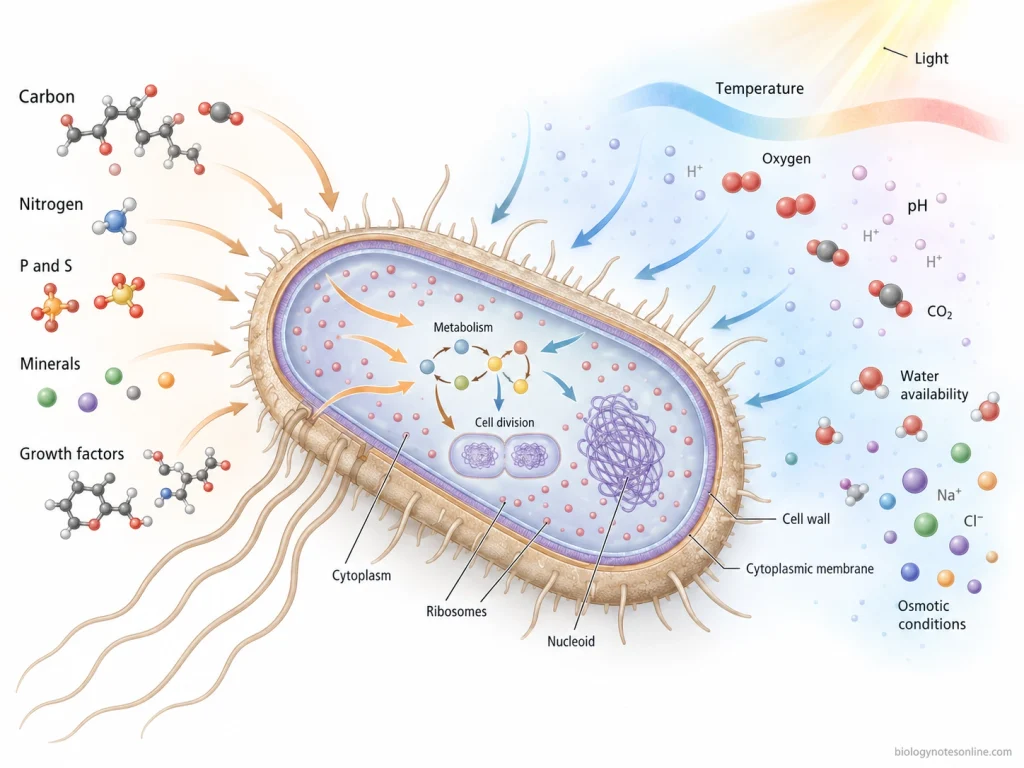
Physical and environmental requirements
Some of the important physical and environmental factors affecting bacterial growth are as follows-
- Temperature- Bacteria grow within a particular range of temperature. Each bacterial species has its minimum, optimum and maximum growth temperature. The rate of growth is usually highest around the optimum temperature.
- pH- The pH of the surrounding medium affects bacterial enzymes, membrane activity and other cellular processes. Some bacteria grow under acidic conditions, while others prefer neutral or alkaline conditions.
- Oxygen- The requirement for oxygen differs among bacteria. Some bacteria require oxygen (O₂) for their growth, some can grow either in its presence or absence. Obligate anaerobes grow in the absence of oxygen.
- Water availability and osmotic conditions- Water is required for bacterial growth and different cellular reactions. When salts or other solutes are present in high concentration, the amount of available water decreases and osmotic stress can develop in the bacterial cell.
- Pressure and light- These environmental factors are important for the growth of certain groups of bacteria, particularly those growing in specific habitats. They are not equally required by all bacterial species.
Nutritional requirements
Bacterial cells also require nutrients for their growth, energy production and formation of new cellular materials. The amount and types of nutrients needed are different among bacteria.
- Carbon- Carbon is one of the major requirements for the synthesis of cellular organic compounds. Bacteria may obtain their carbon from organic compounds or from carbon dioxide (CO₂), depending on their mode of nutrition.
- Nitrogen- It is required for the formation of amino acids, proteins, nucleic acids and other nitrogen-containing compounds of the bacterial cell.
- Phosphorus and sulfur- Phosphorus is present in nucleic acids, phospholipids and other cellular compounds. Sulfur is required for sulfur-containing amino acids and several other cellular substances.
- Minerals and trace elements- Different mineral elements are required in small quantities. Many of them take part in enzyme activity and other cellular functions.
- Growth factors- Some bacteria cannot synthesize certain essential organic compounds in sufficient amount. Such bacteria obtain these compounds from their growth medium. Vitamins, particular amino acids and other organic substances can act as growth factors.
1. Temperature
Temperature is one of the important physical factors that determines the growth of bacteria. It affects the cellular enzymes, metabolic reactions and the cytoplasmic membrane of the bacterial cell.
- At low temperature, the enzyme activity becomes slow. Diffusion and transport of substances are also reduced and the cell membrane becomes more rigid.
- With rise in temperature, the rate of enzyme reactions and metabolism increases up to an optimum temperature. The bacterial cells divide rapidly under this suitable temperature.
- Temperature above the optimum is harmful to the cell. Proteins and enzymes begin to lose their normal structure and the membrane becomes too fluid. At still higher temperature, normal cellular activities cannot continue.
- The temperature required for growth is different in different bacteria. Based on their temperature requirement, microorganisms are grouped as psychrophiles, mesophiles, thermophiles and hyperthermophiles.
Bacteria grow only within a particular range of temperature. Three important temperatures of this range are as follows-
- Minimum growth temperature- It is the lowest temperature at which the bacterial cells can grow and divide. Below this temperature, cellular reactions become very slow and bacterial multiplication does not occur. The cells, however, may remain alive.
- Optimum growth temperature- It is the temperature at which maximum rate of bacterial growth takes place. Enzyme reactions, transport of nutrients and cellular metabolism occur most effectively around this temperature.
- Maximum growth temperature- It is the highest temperature that permits bacterial growth. Above the maximum temperature, growth stops because proteins and other cellular components are damaged. The fall in growth above the optimum is usually more rapid.
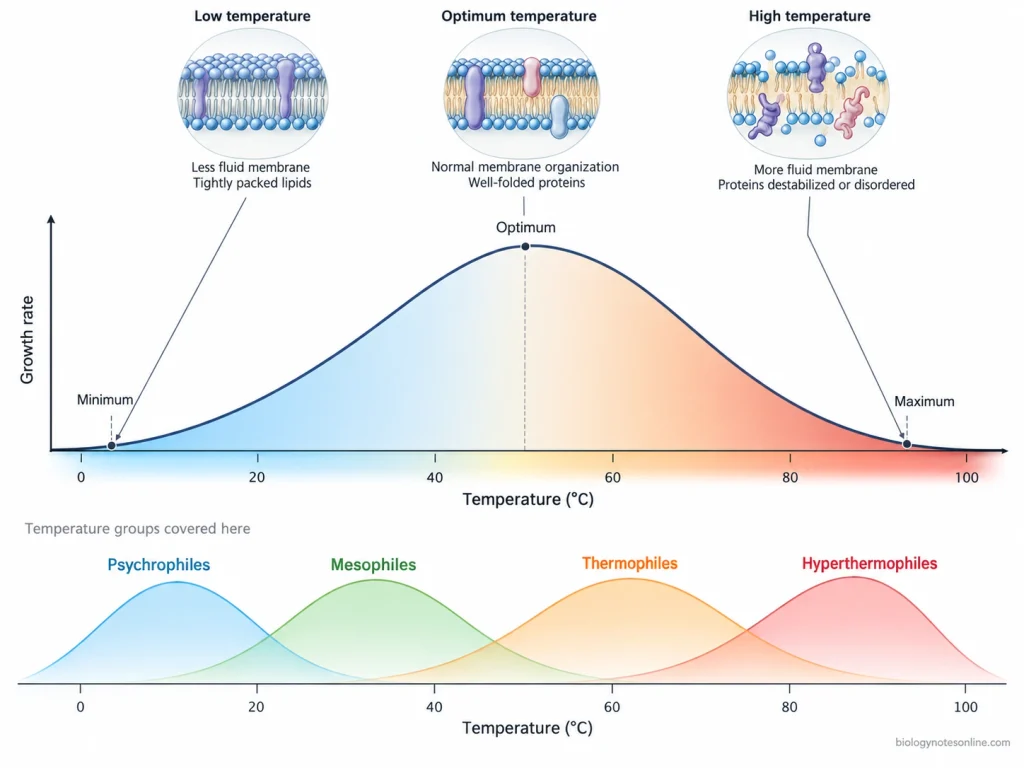
Psychrophiles
- Psychrophiles are cold-loving microorganisms that are adapted to grow at very low temperatures.
- They can grow around 0°C or even below it, with an optimum temperature usually near or below 15°C. Many psychrophiles do not grow above about 20°C.
- At such low temperature the membrane tends to become rigid. These microorganisms maintain sufficient membrane fluidity by having more unsaturated lipids in their membrane.
- Their enzymes remain flexible and functional at low temperature.
- Psychrophiles are commonly found in permanently cold environments such as polar regions and deep ocean water.
Mesophiles
- Mesophiles are microorganisms which grow best at moderate temperature.
- Their optimum growth temperature generally lies between about 20°C and 45°C.
- Many bacteria associated with the human body are mesophiles because body temperature (about 37°C) falls within their suitable growth range.
- Most of the common human bacterial pathogens and many members of the normal microbiota belong to this group.
Thermophiles and hyperthermophiles
Thermophiles are heat-loving microorganisms. Their optimum growth temperature is usually above 45-50°C, and many of them grow best between approximately 50°C and 80°C.
- The proteins of thermophilic organisms are more resistant to heat denaturation.
- Their membranes are also adapted to remain functional at high temperature.
- Thermophiles are found in hot springs, geothermal soils and other naturally heated environments.
Hyperthermophiles grow at still higher temperatures. Their optimum growth temperature is generally 80°C or above. Some prokaryotes can even grow at temperatures above 100°C.
2. pH
pH is an important environmental factor which affects the growth of bacteria. It affects enzyme activity, proteins and the transport of different substances across the cell membrane. The pH required for growth is not the same for all bacteria.
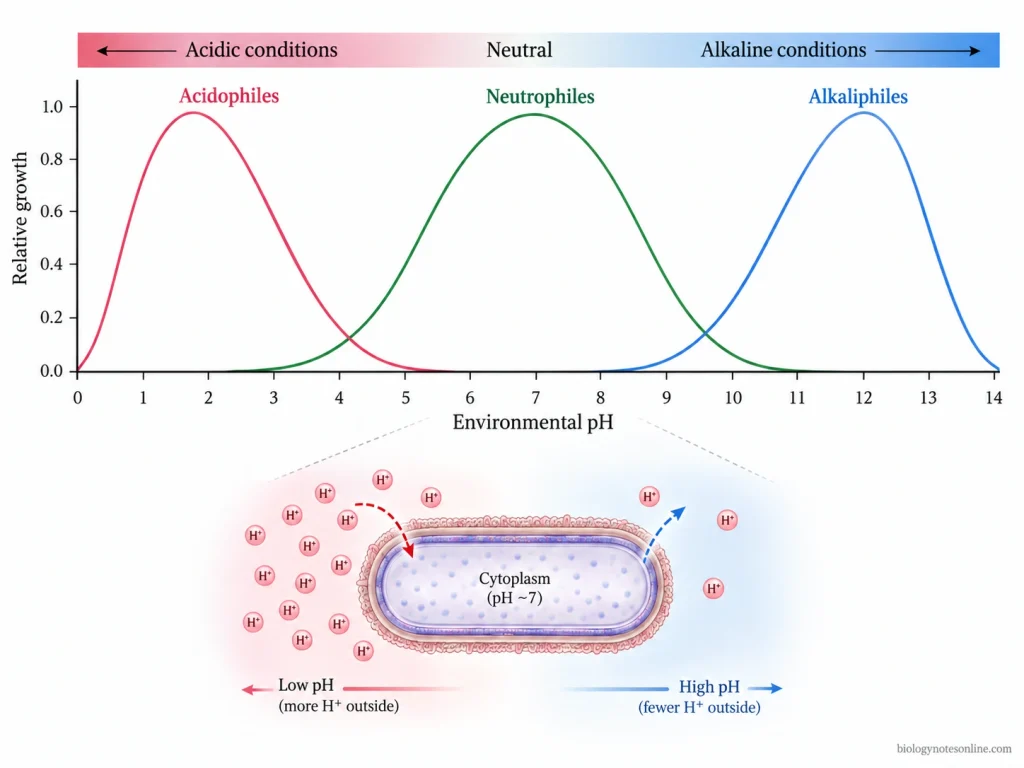
- Most of the bacterial enzymes work within a particular range of pH. Very low or high pH can change the charge and structure of proteins, affecting their normal activity.
- The cytoplasmic membrane is also affected by external pH. Movement of H⁺ and other ions across this membrane is associated with nutrient transport, proton-motive force and other cellular activities.
- Bacteria maintain their internal pH within a narrower range, even when the pH outside the cell is different. Transport proteins, buffering systems and cellular metabolism are involved in this process.
- When pH moves away from the suitable range, bacterial growth becomes slow. Extreme acidic or alkaline conditions may stop the growth.
Bacterial growth takes place within a particular pH range. This range can be expressed by minimum, optimum and maximum pH.
Minimum growth pH- It is the lowest pH at which a bacterium can grow. Below this value, bacterial multiplication does not occur under the given conditions.
Optimum growth pH- It is the pH at which maximum rate of growth takes place. Cellular enzymes and other metabolic activities function most favorably around this pH.
Maximum growth pH- It is the highest pH at which bacterial growth can occur. Above this value, growth becomes very little or stops.
Based on the optimum pH for growth, microorganisms are commonly grouped into acidophiles, neutrophiles and alkaliphiles.
Acidophiles
- Acidophiles are microorganisms which grow best under acidic conditions.
- Their optimum growth occurs below about pH 5.5. Some strongly acidophilic organisms grow best near pH 3 or even lower.
- In such acidic surroundings, a large difference may exist between external and internal pH. The cells prevent excess H⁺ from entering and maintain their cytoplasm at a comparatively higher pH.
- Their membrane and transport systems are also adapted for functioning under low-pH conditions.
Neutrophiles
Neutrophiles are microorganisms which grow best at or near neutral pH. Most bacteria belong to this group.
- The optimum pH is generally close to pH 7, usually within about one or two pH units of neutrality.
- Many common bacteria associated with humans are neutrophiles. It includes Escherichia coli, staphylococci and Salmonella.
- Strongly acidic or alkaline conditions are not suitable for normal growth of most neutrophilic bacteria.
Alkaliphiles
- Alkaliphiles are microorganisms that grow best under alkaline conditions. Many of these microorganisms have an optimum pH around 8 to 10.5.
- At high pH, the concentration of H⁺ in the surrounding environment is very low. The cells have special mechanisms for uptake and retention of protons required for cellular activities.
- Na⁺/H⁺ antiporters and other ion-transport systems are commonly involved in maintaining internal pH.
- Changes in the cell surface, membrane systems and production of metabolic acids also occur in bacteria adapted to alkaline environments.
3. Oxygen Requirements
Oxygen is an important factor for bacterial growth and energy production, but all bacteria do not have the same oxygen requirement. Some bacteria require molecular oxygen (O₂), some can grow either with or without it, while in others oxygen is toxic.
- In aerobic respiration, oxygen acts as the final electron acceptor of the respiratory chain.
- When oxygen is absent, some bacteria obtain energy by anaerobic respiration or fermentation. In anaerobic respiration other compounds are used as final electron acceptors.
- Oxygen may also form toxic products inside the bacterial cell. These are referred to as reactive oxygen species (ROS), which include superoxide and hydrogen peroxide.
- Enzymes such as superoxide dismutase, catalase and peroxidase are involved in removal of these toxic oxygen products. Their presence and activity varies among different groups of bacteria.
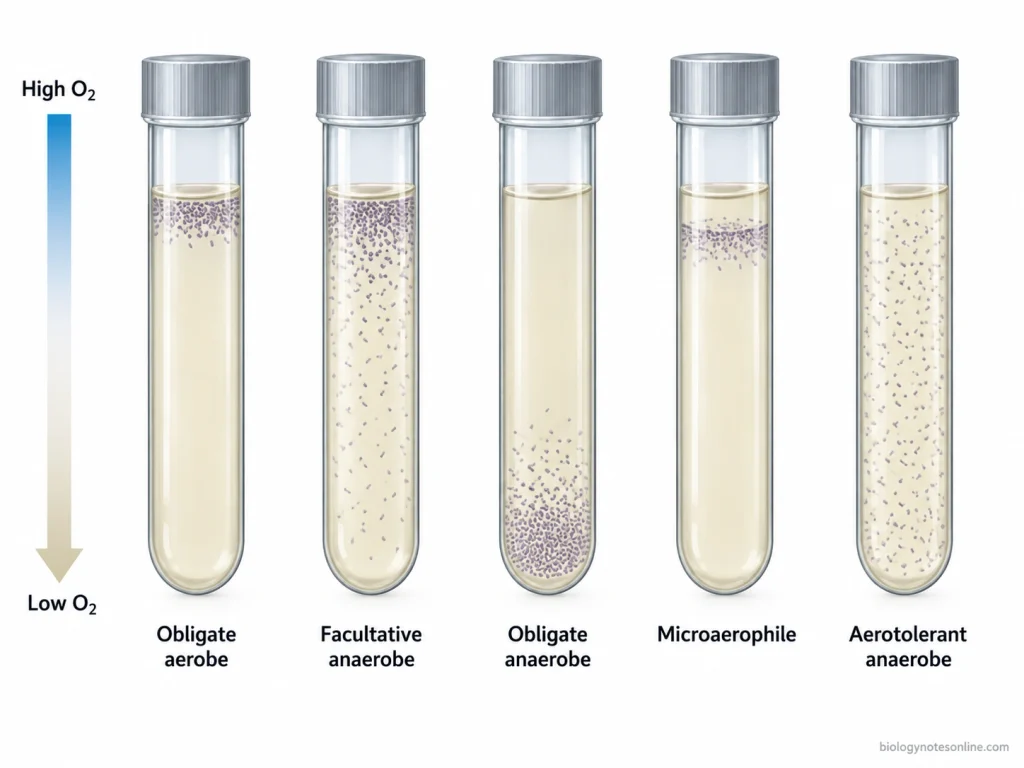
Based on requirement and tolerance of oxygen, bacteria are of following types-
Obligate aerobes
Obligate aerobes are bacteria which require oxygen for growth.
- O₂ is used as the terminal electron acceptor during aerobic respiration.
- They cannot grow in the absence of oxygen.
- These bacteria generally possess enzymes that protect the cell from toxic oxygen products.
- Example- Mycobacterium tuberculosis.
Facultative anaerobes
These bacteria can grow in both presence and absence of oxygen and are referred to as facultative anaerobes.
- When oxygen is present, aerobic respiration is carried out and growth is usually better.
- In its absence, the bacteria can shift to fermentation or anaerobic respiration depending on the organism and available electron acceptor.
- Oxygen is therefore not an absolute requirement for their growth.
- Examples include Escherichia coli and Staphylococcus aureus.
Obligate anaerobes
Obligate anaerobes grow in the absence of oxygen. Oxygen is harmful to these bacteria and may cause severe inhibition or cell death.
- Energy is produced by fermentation or anaerobic respiration.
- O₂ is not used as terminal electron acceptor.
- Many oxygen-sensitive anaerobes have little or no activity of enzymes required for removal of reactive oxygen products.
- Clostridium perfringens and other Clostridium species are examples.
Microaerophiles
Microaerophiles require oxygen for growth, but require it in lower concentration than atmospheric oxygen.
- They commonly grow at about 1-10% O₂. Atmospheric air contains about 21% oxygen.
- Normal atmospheric concentration of oxygen is not suitable for their maximum growth.
- Complete absence of oxygen also does not support their normal growth.
- Example- Campylobacter jejuni.
Aerotolerant anaerobes
- Aerotolerant anaerobes do not use oxygen for energy metabolism, but they can tolerate oxygen when it is present.
- Their energy production is generally based on fermentation.
- Oxygen is not used as terminal electron acceptor.
- Protective mechanisms against reactive oxygen products allow these bacteria to grow even in presence of oxygen.
- Lactobacilli and many streptococci are examples.
4. Water Availability
Water availability is an important requirement for bacterial growth. Water is required for cellular reactions, movement of nutrients and different metabolic activities of the bacterial cell.
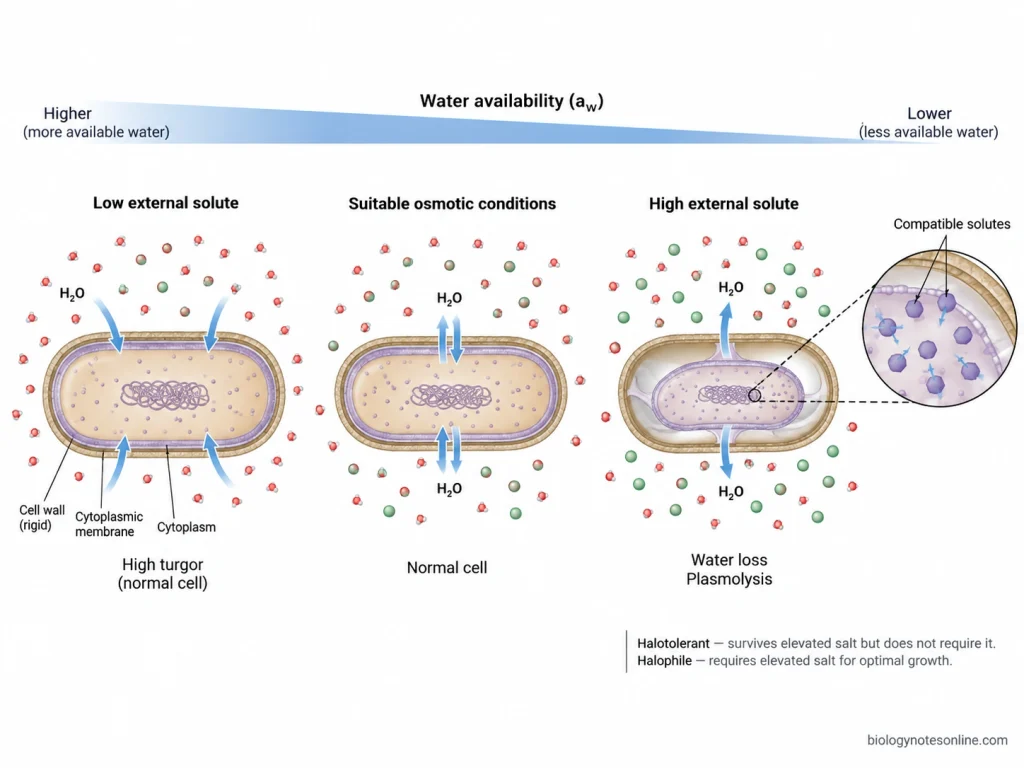
- The total amount of water present in a substance is not the actual amount of water available to bacteria. Some water may remain bound with solutes or other materials and is not freely available for use by the cell.
- Water activity (aᵥ)- It indicates the amount of water available for microbial growth. Pure water has a water activity of 1.0.
- Salts, sugars and other dissolved substances lower the water activity. Drying also decreases the available water.
- When high concentration of solutes is present outside the bacterial cell, water moves out from the cell by osmosis. The cell loses water and its normal activities are affected.
- Low water availability decreases metabolism and bacterial growth. If the available water becomes too low, growth stops.
- The minimum water activity required for growth is different among bacteria.
- Some bacteria can tolerate high salt or other low-water conditions. These bacteria may accumulate compatible solutes inside the cell, which helps in retaining water and maintaining cellular functions.
5. Osmotic Pressure
Osmotic pressure is produced due to difference in the concentration of dissolved substances across the bacterial cell membrane. Water moves across the membrane by osmosis, from the region having more available water toward the region having less available water. Changes in salt, sugar or other solute concentration around the bacterial cell can therefore affect its water content and growth.
- Hypotonic condition- When the concentration of solutes outside the bacterial cell is lower than inside, water enters into the cell. Turgor pressure is developed. In most bacteria, the rigid cell wall prevents excessive swelling and bursting of the cell.
- Hypertonic condition- In a medium having high solute concentration, water moves out from the bacterial cell. The cytoplasm loses water and shrinks away from the cell wall. This condition is referred to as plasmolysis.
- Loss of cellular water also lowers the turgor pressure. Transport of nutrients, enzyme activities and other metabolic processes become affected. Growth becomes slow or may stop when the osmotic stress is too high.
Effects of high solute concentrations
- High concentration of salts or sugars outside the bacterial cell decreases the amount of water available to the cell.
- Water then moves from the cytoplasm to the surrounding medium. The effect becomes greater as the external osmotic pressure increases.
- Bacteria exposed to such conditions may accumulate K⁺ and different organic compounds inside their cells in order to balance the external osmotic pressure.
- These organic compounds are commonly called compatible solutes or osmolytes. Glycine betaine, ectoine, proline and trehalose are some of the compounds used by different bacteria.
- Compatible solutes can accumulate in high concentration without greatly disturbing cellular activities. They help in retaining cellular water and maintaining turgor pressure.
Osmotolerant bacteria
Osmotolerant bacteria are able to grow under high osmotic pressure, but such high solute concentration is not necessary for their growth.
- These bacteria can tolerate environments containing large amounts of salt, sugar or other dissolved substances.
- Osmotic adjustment is commonly achieved by uptake or synthesis of compatible solutes.
- Bacteria which tolerate high concentrations of salt without requiring it are also referred to as halotolerant bacteria.
- Staphylococcus aureus and some species of Halomonas can tolerate relatively high salt conditions.
Halophilic bacteria
Halophilic bacteria are salt-loving bacteria which require an increased concentration of salt for their growth. They are different from halotolerant bacteria, where high salt can be tolerated but is not required.
- Different halophilic bacteria require different concentrations of salt.
- Their cells are adapted to the high osmotic pressure produced by saline environments.
- Many halophilic bacteria accumulate compatible solutes such as ectoine or glycine betaine. The concentration of these compounds may increase with increasing external salt concentration.
- Some highly salt-adapted microorganisms use another mechanism where large amounts of inorganic ions are accumulated within the cell to balance the external salt concentration.
6. Growth Factors
Growth factors are organic compounds which are required for bacterial growth, but the bacterial cell is not able to synthesize them or cannot synthesize them in sufficient amount. Such compounds have to be obtained from the growth medium. In microbiology, “growth factors” refer to these essential organic substances, not all the factors affecting bacterial growth.
Some of the important growth factors are as follows-
- Amino acids- Amino acids are required for protein synthesis. Some bacteria can prepare all the amino acids required by the cell, while others require one or more amino acids already present in the medium.
- Vitamins- These are required only in small amount. Many vitamins form a part of coenzymes or act as their precursors and take part in different metabolic reactions. If a particular vitamin cannot be synthesized by the bacterium, it must be supplied from outside.
- Purines and pyrimidines- These are required for formation of nucleotides and nucleic acids. Adenine and guanine are purines, whereas cytosine, thymine and uracil are pyrimidines. Some bacteria require one or more of these compounds in preformed condition.
- Variation in growth-factor requirements- The requirement is not same in all bacteria. Some bacteria can synthesize almost all the organic compounds needed for their growth from simple nutrients. Others lack particular biosynthetic pathways, so these compounds must be supplied in the medium.Bacteria requiring several preformed growth factors and complex nutrients are commonly referred to as fastidious bacteria.
7. Nutritional Requirements
Bacteria require different chemical substances for their growth, formation of cellular materials and production of energy. These substances are obtained from the surrounding environment and are referred to as nutrients. The type of nutrient required and their sources vary among different bacteria.
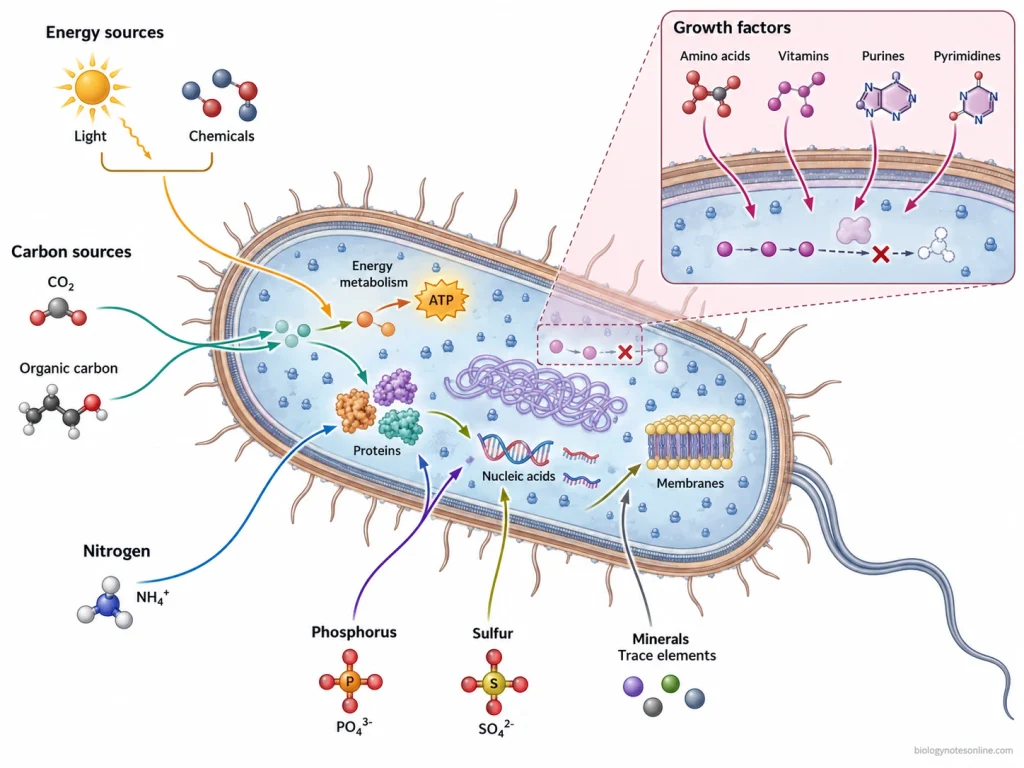
Some of the important nutritional requirements are as follows-
- Energy sources- Energy is required for different cellular activities such as metabolism, synthesis of cell materials and reproduction. Bacteria obtain this energy either from light or chemical compounds.Bacteria which use light as the source of energy are called phototrophs. Chemotrophs obtain energy by oxidation of chemical substances. These chemical substances may be organic or inorganic.
- Carbon sources- Carbon forms the major part of different organic compounds present in bacterial cell. It includes carbohydrates, proteins, lipids and nucleic acids.Autotrophic bacteria use carbon dioxide (CO₂) as their principal source of carbon. In heterotrophic bacteria, the carbon is obtained from preformed organic compounds. Sugars, organic acids and several other organic substances can be used as carbon sources by different bacteria.
- Nitrogen sources- Nitrogen is required for synthesis of amino acids, proteins, purines, pyrimidines and nucleic acids. It can be utilized by bacteria in different forms.Ammonium (NH₄⁺) is directly used by many bacteria. Nitrate can also act as a nitrogen source, but it is reduced to ammonium before its utilization. Some bacterial species use organic nitrogen compounds, including amino acids.Certain bacteria can also utilize atmospheric nitrogen (N₂). In nitrogen fixation, the atmospheric N₂ is reduced to ammonia.
- Sulfur- Sulfur is mainly required for the formation of sulfur-containing amino acids, such as cysteine and methionine. It also occurs in some vitamins and other cellular compounds.Sulfate (SO₄²⁻) is a common source of sulfur for many bacteria. Reduced sulfur compounds are used by others.
- Phosphorus- Phosphorus is an important component of nucleic acids, phospholipids, ATP and several other cellular substances. It is commonly taken up by the bacterial cells in the form of inorganic phosphate.
- Minerals- Different mineral elements are also required by bacteria. Some of the important ones are potassium (K), magnesium (Mg), calcium (Ca) and iron (Fe).Potassium is required for the activity of several enzymes. Magnesium takes part in enzyme function and stabilization of ribosomes and other cellular structures. Iron is present in different proteins and enzymes involved in electron-transfer reactions.
- Trace elements- These are required only in very small amounts. Manganese (Mn), zinc (Zn), cobalt (Co), molybdenum (Mo), nickel (Ni) and copper (Cu) are some common trace elements required by bacterial cells. Most of these elements act as components or cofactors of enzymes.
8. Carbon Dioxide
Carbon dioxide (CO₂) takes part in bacterial metabolism, but an increased supply of CO₂ is not required by all bacteria. Many bacteria obtain sufficient CO₂ from the atmosphere or from their own cellular metabolism. Some bacteria, however, grow better when additional carbon dioxide is supplied.
- Role of carbon dioxide in bacterial cultivation- CO₂ and bicarbonate (HCO₃⁻) are used in different carboxylation reactions of bacterial cells. These reactions are involved in formation of metabolic intermediates and cellular materials.For many bacteria, the small amount of CO₂ normally available is sufficient. In bacteria having a higher CO₂ requirement, the culture is incubated in a CO₂-enriched atmosphere. A concentration around 5-10% CO₂ is commonly used for cultivation of many capnophilic bacteria.
- Capnophilic bacteria- Bacteria which require increased CO₂ concentration, or show better growth under increased CO₂, are referred to as capnophilic bacteria.The CO₂ requirement is not same in all capnophiles. Some bacteria only show improved growth with additional CO₂, while others have a stronger dependence on it.Neisseria gonorrhoeae is a common example. Some species of Haemophilus and Campylobacter also grow well under CO₂-enriched conditions.
9. Light and Radiation
Light can affect bacterial growth, but the effect is not same in all bacteria. It depends on wavelength, intensity of light, exposure time and the type of bacterium. Ordinary illumination should not be confused with damaging radiation such as ultraviolet (UV) radiation.
- Effects of visible light- Light acts as an energy source in phototrophic bacteria. Some bacteria contain photosynthetic pigments or other light-harvesting systems, and the absorbed light energy is used for cellular activities.Visible light is not required for growth of most non-phototrophic bacteria. However, strong exposure to some visible wavelengths, particularly blue-violet light, can excite bacterial pigments such as porphyrins and flavins. Reactive oxygen species (ROS) may then be formed and cellular components are damaged. The response differs with bacterial species and the amount of light received.
- Effects of ultraviolet radiation- UV radiation is more damaging to bacterial cells than ordinary visible light. The effect increases with the wavelength used and amount of radiation received.DNA is one of the major targets. Absorption of UV can produce pyrimidine dimers and other DNA photoproducts, which interfere with normal DNA replication and cell division. Sufficient UV exposure therefore lowers bacterial growth or causes cell death.Shorter wavelength UV-C has a strong germicidal action and is commonly used for microbial inactivation.
Factors Affecting Bacterial Growth at a Glance
The major factors affecting bacterial growth are summarized below-
| Factor | Effect on bacterial growth | Important points |
|---|---|---|
| Temperature | Controls enzyme activity, metabolism and membrane function. | Bacteria may be psychrophiles, mesophiles, thermophiles or hyperthermophiles according to their temperature requirement. |
| pH | Affects enzymes, proteins, membrane transport and metabolism. | Based on optimum pH, microorganisms are grouped as acidophiles, neutrophiles and alkaliphiles. |
| Oxygen | Oxygen requirement differs greatly among bacteria and affects the type of energy metabolism used. | Obligate aerobes, facultative anaerobes, obligate anaerobes, microaerophiles and aerotolerant anaerobes are the major groups. |
| Water availability | Water is required for metabolic reactions and transport of dissolved substances. | Growth depends on available water, not simply the total water present. Water availability is expressed as water activity (aᵥ). |
| Osmotic pressure | High solute concentration draws water out from bacterial cells and can reduce growth. | Osmotolerant bacteria tolerate high osmotic pressure, whereas halophiles require increased salt concentration for growth. |
| Energy source | Energy is required for metabolism, synthesis of cellular materials and reproduction. | Phototrophs use light, while chemotrophs obtain energy from chemical substances. |
| Carbon source | Carbon is required for carbohydrates, proteins, lipids, nucleic acids and other cellular materials. | Autotrophs mainly use CO₂, whereas heterotrophs obtain carbon from organic compounds. |
| Nitrogen | Required for amino acids, proteins and nucleic acids. | Ammonium, nitrate, organic nitrogen and, in nitrogen-fixing bacteria, atmospheric N₂ can serve as sources. |
| Sulfur and phosphorus | Sulfur is required for sulfur-containing amino acids and some cellular compounds. Phosphorus occurs in ATP, nucleic acids and phospholipids. | Sulfate and inorganic phosphate are common sources. |
| Minerals and trace elements | Required for enzyme activity and different cellular functions. | K, Mg, Ca and Fe are important minerals. Mn, Zn, Co, Mo, Ni and Cu are commonly required in small amounts. |
| Growth factors | Organic substances required by bacteria that cannot synthesize them adequately. | Common growth factors include amino acids, vitamins, purines and pyrimidines. |
| Carbon dioxide | Most bacteria do not require additional CO₂, but some grow better at increased CO₂ concentration. | Bacteria requiring or growing better with increased CO₂ are referred to as capnophilic bacteria. |
| Light and radiation | Effect depends on wavelength, intensity, exposure and bacterial type. | Visible light may support phototrophic growth. UV radiation damages DNA and can inhibit or kill bacterial cells. |
References
- ASHRAE. (2024). Germicidal ultraviolet lamp systems. In 2024 ASHRAE handbook—HVAC systems and equipment (Chap. 17). https://handbook.ashrae.org/Handbooks/S24/SI/S24_Ch17/S24_Ch17_si.aspx
- Bonnet, M., Lagier, J. C., Raoult, D., & Khelaifia, S. (2020). Bacterial culture through selective and non-selective conditions: The evolution of culture media in clinical microbiology. New Microbes and New Infections, 34, 100622. https://doi.org/10.1016/j.nmni.2019.100622
- Bremer, E., & Krämer, R. (2019). Responses of microorganisms to osmotic stress. Annual Review of Microbiology, 73, 313–334. https://doi.org/10.1146/annurev-micro-020518-115504
- D’Amico, S., Collins, T., Marx, J.-C., Feller, G., & Gerday, C. (2006). Psychrophilic microorganisms: Challenges for life. EMBO Reports, 7(4), 385–389. https://doi.org/10.1038/sj.embor.7400662
- Hollinger, A., & Tobin, E. H. (2026). Anaerobic infections. In StatPearls. StatPearls Publishing. https://www.ncbi.nlm.nih.gov/books/NBK482349/
- Krulwich, T. A., Sachs, G., & Padan, E. (2011). Molecular aspects of bacterial pH sensing and homeostasis. Nature Reviews Microbiology, 9(5), 330–343. https://doi.org/10.1038/nrmicro2549
- Matin, A. (1999). pH homeostasis in acidophiles. In D. J. Chadwick & G. Cardew (Eds.), Bacterial responses to pH (Novartis Foundation Symposium 221, pp. 152–166). Wiley. https://doi.org/10.1002/9780470515631.ch10
- Mendz, G. L. (2001). Nucleotide metabolism. In H. L. T. Mobley, G. L. Mendz, & S. L. Hazell (Eds.), Helicobacter pylori: Physiology and genetics (Chap. 13). ASM Press. https://www.ncbi.nlm.nih.gov/books/NBK2414/
- Nelson, K. L., Boehm, A. B., Davies-Colley, R. J., Dodd, M. C., Kohn, T., Linden, K. G., Liu, Y., Maraccini, P. A., McNeill, K., Mitch, W. A., Nguyen, T. H., Parker, K. M., Rodriguez, R. A., Sassoubre, L. M., Silverman, A. I., Wigginton, K. R., & Zepp, R. G. (2018). Sunlight-mediated inactivation of health-relevant microorganisms in water: A review of mechanisms and modeling approaches. Environmental Science: Processes & Impacts, 20(8), 1089–1122. https://doi.org/10.1039/C8EM00047F
- Padan, E., Bibi, E., Ito, M., & Krulwich, T. A. (2005). Alkaline pH homeostasis in bacteria: New insights. Biochimica et Biophysica Acta (BBA)—Biomembranes, 1717(2), 67–88. https://doi.org/10.1016/j.bbamem.2005.09.010
- Parker, N., Schneegurt, M., Tu, A.-H. T., Lister, P., & Forster, B. M. (2016). Microbiology. OpenStax. https://openstax.org/books/microbiology/pages/1-introduction
- Pinhassi, J., DeLong, E. F., Béjà, O., González, J. M., & Pedrós-Alió, C. (2016). Marine bacterial and archaeal ion-pumping rhodopsins: Genetic diversity, physiology, and ecology. Microbiology and Molecular Biology Reviews, 80(4), 929–954. https://doi.org/10.1128/MMBR.00003-16
- Roberts, M. F. (2005). Organic compatible solutes of halotolerant and halophilic microorganisms. Saline Systems, 1, Article 5. https://doi.org/10.1186/1746-1448-1-5
- Siliakus, M. F., van der Oost, J., & Kengen, S. W. M. (2017). Adaptations of archaeal and bacterial membranes to variations in temperature, pH and pressure. Extremophiles, 21(4), 651–670. https://doi.org/10.1007/s00792-017-0939-x
- Slonczewski, J. L., Fujisawa, M., Dopson, M., & Krulwich, T. A. (2009). Cytoplasmic pH measurement and homeostasis in bacteria and archaea. Advances in Microbial Physiology, 55, 1–79. https://doi.org/10.1016/S0065-2911(09)05501-5