

The Cori cycle is a metabolic cycle in which carbon from glucose moves from skeletal muscle as lactate to the liver and comes back again as glucose. It is also called the lactic acid cycle or glucose–lactate cycle.
In skeletal muscle, glucose is broken down by glycolysis and pyruvate formed is converted into lactate by lactate dehydrogenase (LDH). The lactate is released into blood and transported to the liver. In liver, lactate is converted back into pyruvate.
Pyruvate is then used for the formation of glucose by gluconeogenesis. The glucose formed is released into the bloodstream and can again reach the skeletal muscle, where it is used for glycolysis. The carbon in this cycle moves between lactate-producing tissues and the liver.
Tissues and Metabolites Involved in the Cori Cycle
The following are the important tissues and metabolites involved in the Cori cycle-
Tissues involved
- Skeletal muscle- The major source of lactate during rapid glycolysis is the skeletal muscle, especially during intense muscular activity. Glucose or the glucose obtained from muscle glycogen is broken down and pyruvate is formed. During this process, pyruvate is converted to lactate by lactate dehydrogenase (LDH). The formed lactate then enters blood. It is carried to the liver.
- Liver- It is the major tissue involved in conversion of lactate back to glucose. Lactate coming from the blood is changed into pyruvate. This pyruvate now enters gluconeogenesis where glucose is formed. The glucose is released into blood and can again reach skeletal muscle.
- Erythrocytes (Red blood cells)– These cells do not contain mitochondria. Hence, they depend on glycolysis for the production of ATP. Pyruvate formed in erythrocytes is converted into lactate and released into plasma. This lactate can reach the liver where it is used for formation of glucose.
- Kidney- Kidney is not the principal organ involved in the classical muscle-liver Cori cycle. The renal cortex, however, can utilize the circulating lactate during gluconeogenesis. Glucose is formed and released into circulation.
- Blood- It acts as the transport medium of the Cori cycle. Lactate formed from the lactate-producing tissues is transported mainly to liver, whereas glucose formed in the liver is transported back through blood. Muscle and other glucose-utilizing cells can use this glucose.
Metabolites involved
- Glucose- It is the major six-carbon metabolite supplied from liver to the peripheral tissues. In skeletal muscle, glucose is used during glycolysis for energy production. It is broken down to pyruvate and under rapid glycolytic condition, lactate is formed.
- Pyruvate- Pyruvate is a three-carbon intermediate of the cycle. In muscle, conversion of pyruvate to lactate takes place. The opposite occurs in liver. Here lactate is converted back into pyruvate which is then used during gluconeogenesis for glucose formation.
- Lactate- It is the main three-carbon compound transported between the tissues during the Cori cycle. Skeletal muscle and erythrocytes form lactate and release it into blood. The liver takes up this lactate. During this process, the carbon of lactate is used for regeneration of glucose.
- NAD⁺ and NADH- These are involved in the reversible conversion of pyruvate and lactate. Conversion of pyruvate into lactate in muscle regenerates NAD⁺, which is required for continuation of glycolysis. During the reverse reaction in which lactate forms pyruvate, NADH is produced.
- ATP and GTP- During glycolytic conversion of one glucose into two lactate, a net amount of 2 ATP is produced in muscle. On the other hand, formation of one glucose from two lactate in liver requires 4 ATP and 2 GTP.
Where Does the Cori Cycle Occur?
The Cori cycle mainly takes place between skeletal muscle and liver. Blood is involved in the transport of lactate and glucose. The sites are as follows-
- Skeletal muscle- During intense muscular activity, glycolysis takes place rapidly in the muscle cells. Glucose is broken down to form pyruvate. The pyruvate is converted to lactate by lactate dehydrogenase (LDH), which then passes into blood.
- Blood- Lactate formed in skeletal muscle is released into the blood. It is carried to liver. Glucose formed from liver is also transported through blood and reaches the muscle.
- Liver- The lactate from blood is taken up by liver cells. Here, lactate is converted back to pyruvate. Gluconeogenesis takes place and glucose is formed from pyruvate. The formed glucose is released into circulation.
- Erythrocytes (Red blood cells)- These cells lack mitochondria and depend on glycolysis for ATP formation. Pyruvate is converted into lactate. The lactate is released into plasma, which can also reach liver and take part in glucose formation.
- Kidney- Renal cortex is also a site where gluconeogenesis takes place. Circulating lactate can be used for formation of glucose in this tissue. Kidney is not the major site of the classical muscle-liver Cori cycle.
Steps of Cori Cycle
The Cori cycle involves the conversion of glucose to lactate in skeletal muscle and lactate back to glucose in liver. The lactate and glucose are transported through blood between these two tissues. The steps are as follows-
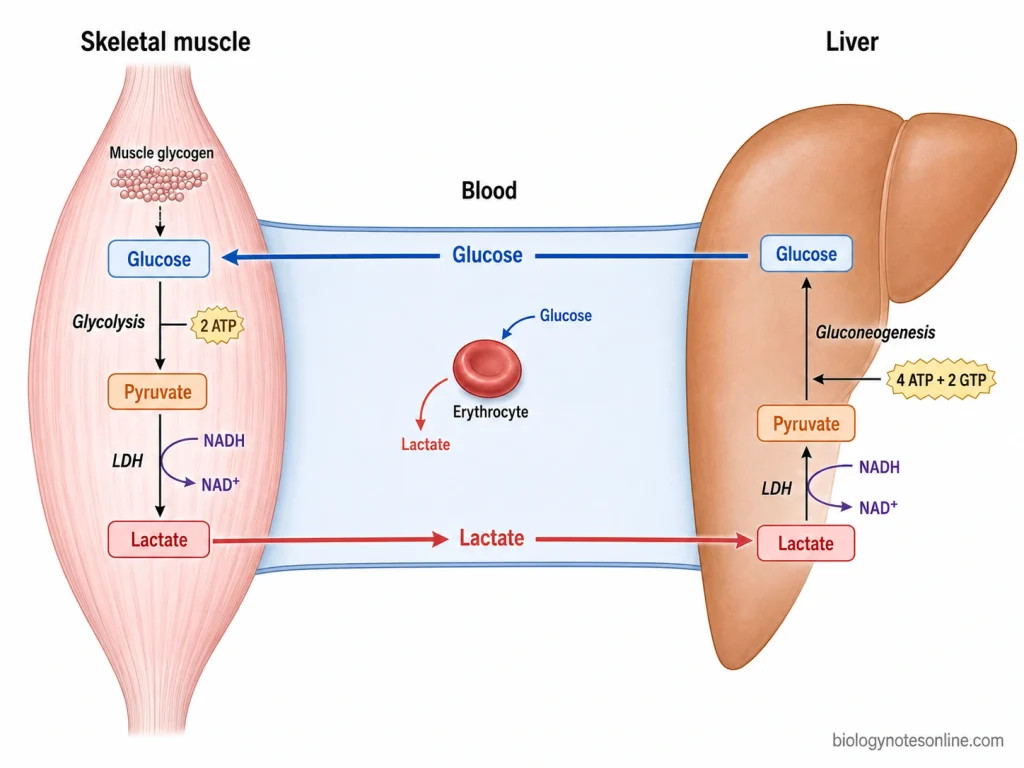
Step 1- Breakdown of glucose in skeletal muscle
During muscular activity, glucose is broken down by glycolysis in the cytoplasm of muscle cells. Glucose may also be obtained from the glycogen stored in muscle. One glucose molecule forms two molecules of pyruvate and a net of 2 ATP is formed.
Step 2- Formation of lactate
The pyruvate formed during glycolysis is converted to lactate. In this step, NADH is oxidized and NAD⁺ is regenerated, which is required for the continuation of glycolysis.
The reaction is as follows-
Pyruvate + NADH + H⁺ → Lactate + NAD⁺
Enzyme involved- Lactate dehydrogenase (LDH).
Step 3- Transport of lactate
Lactate formed in the muscle does not remain there and it is released into the blood. The blood carries this lactate from skeletal muscle to the liver.
Step 4- Conversion of lactate into pyruvate in liver
After reaching the liver, lactate is taken up by the liver cells. Lactate is now converted back into pyruvate by lactate dehydrogenase. This is the reverse of the reaction taking place in muscle.
Step 5- Formation of glucose
The pyruvate formed enters into gluconeogenesis. During this process, two molecules of pyruvate are used to form one molecule of glucose. Formation of glucose requires 4 ATP and 2 GTP.
Step 6- Release of glucose into blood
The glucose formed in liver is released into the bloodstream. It is then transported through blood to skeletal muscle and other glucose-utilizing cells.
Step 7- Glucose again enters muscle glycolysis
Glucose reaching the skeletal muscle can again enter glycolysis. Pyruvate and then lactate are formed during rapid glycolytic metabolism, and lactate is again transported to liver. The cycle continues in this manner.
Key Enzymes and Reactions to Know
The Cori cycle involves glycolysis in skeletal muscle and gluconeogenesis in liver. Some of the important enzymes and reactions are mentioned below-
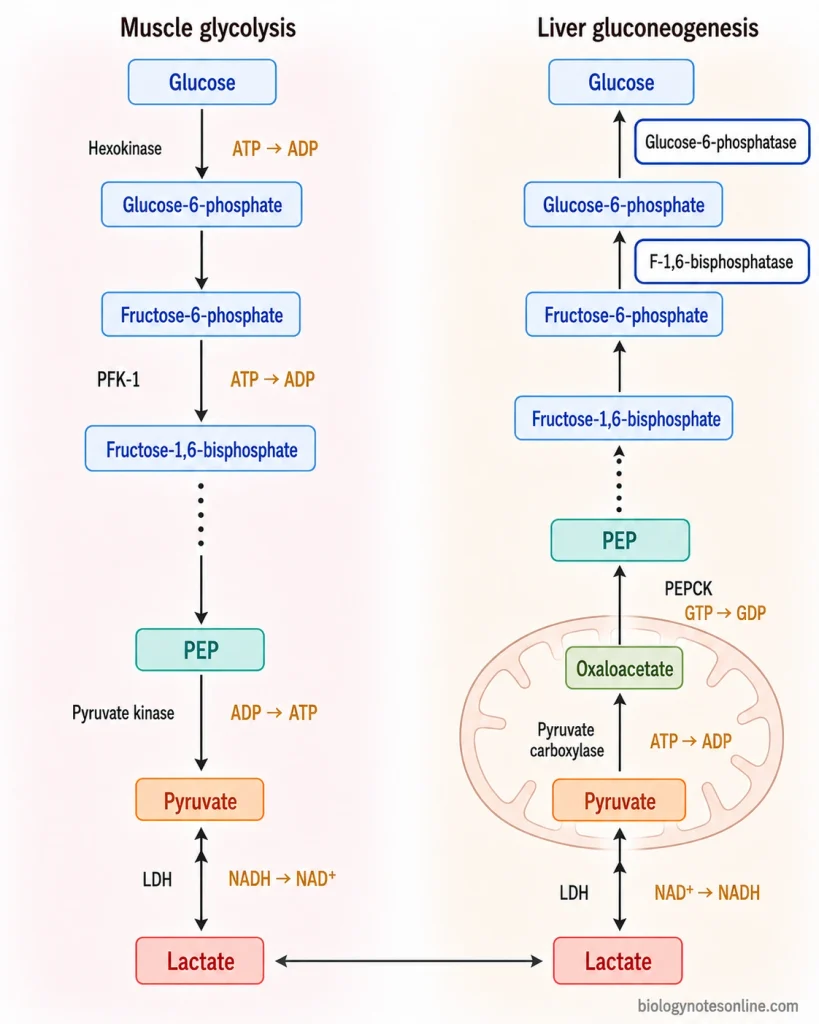
| Enzyme | Reaction | Site / importance |
|---|---|---|
| Hexokinase | Glucose + ATP → Glucose-6-phosphate + ADP | Muscle glycolysis. Glucose is phosphorylated. Here, ATP is utilised. |
| Phosphofructokinase-1 (PFK-1) | Fructose-6-phosphate + ATP → Fructose-1,6-bisphosphate + ADP | It is an important irreversible reaction of glycolysis. Another ATP is used in this step. |
| Pyruvate kinase | Phosphoenolpyruvate + ADP → Pyruvate + ATP | The last reaction of glycolysis. Pyruvate is formed and ATP is also produced. |
| Lactate dehydrogenase (LDH) | Pyruvate + NADH + H⁺ ⇌ Lactate + NAD⁺ | In muscle, pyruvate is converted to lactate, NAD⁺ is regenerated. In liver, lactate is converted back into pyruvate by the same enzyme. |
| Pyruvate carboxylase | Pyruvate + HCO₃⁻ + ATP → Oxaloacetate + ADP + Pi | The pyruvate formed from lactate is carboxylated to form oxaloacetate (OAA). This reaction takes place in mitochondria and ATP is utilised. |
| Phosphoenolpyruvate carboxykinase (PEPCK) | Oxaloacetate + GTP → Phosphoenolpyruvate + GDP + CO₂ | Oxaloacetate is converted to phosphoenolpyruvate (PEP). GTP is used during this process. |
| Fructose-1,6-bisphosphatase | Fructose-1,6-bisphosphate + H₂O → Fructose-6-phosphate + Pi | It is a gluconeogenic enzyme. This reaction bypasses the PFK-1 reaction of glycolysis. |
| Glucose-6-phosphatase | Glucose-6-phosphate + H₂O → Glucose + Pi | The final reaction of gluconeogenesis. Free glucose is formed, which can be released from liver into blood. |
Energy Cost of the Cori Cycle
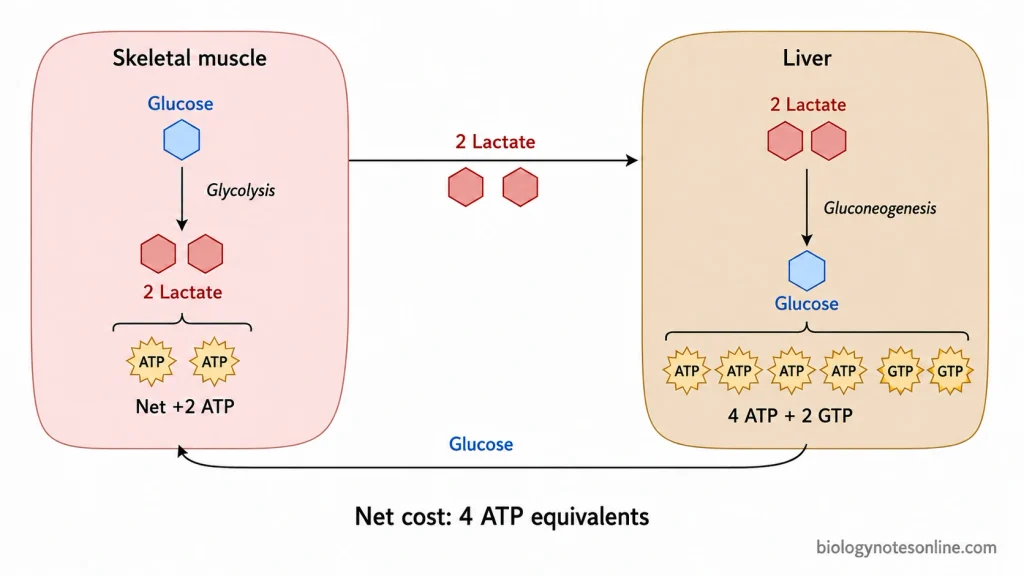
The Cori cycle requires expenditure of energy for the formation of glucose again from lactate. ATP is formed in the muscle, whereas a greater amount is utilized in liver.
Energy production in muscle
During glycolysis, one molecule of glucose is converted into two molecules of lactate. A net amount of 2 ATP molecules are formed during this process.
Energy obtained- 2 ATP
Energy used in liver
Two molecules of lactate reach the liver and are converted to glucose by gluconeogenesis. The formation of one glucose molecule requires 4 ATP and 2 GTP. These together represent 6 high-energy phosphate bonds.
Energy required- 4 ATP + 2 GTP = 6 ATP equivalents
Energy balance of Cori cycle
The energy balance can be written as-
ATP produced in muscle = 2 ATP
ATP equivalents used in liver = 6
Net energy cost = 6 − 2 = 4 ATP equivalents
Therefore, for every one molecule of glucose passing through the complete Cori cycle, there is a net expenditure of 4 ATP equivalents.
Regulation of Cori Cycle Flux
The rate of Cori cycle depends on formation of lactate in muscle and its conversion back to glucose in liver. There is no single regulatory enzyme for the complete cycle. The following are the major factors controlling Cori cycle flux-
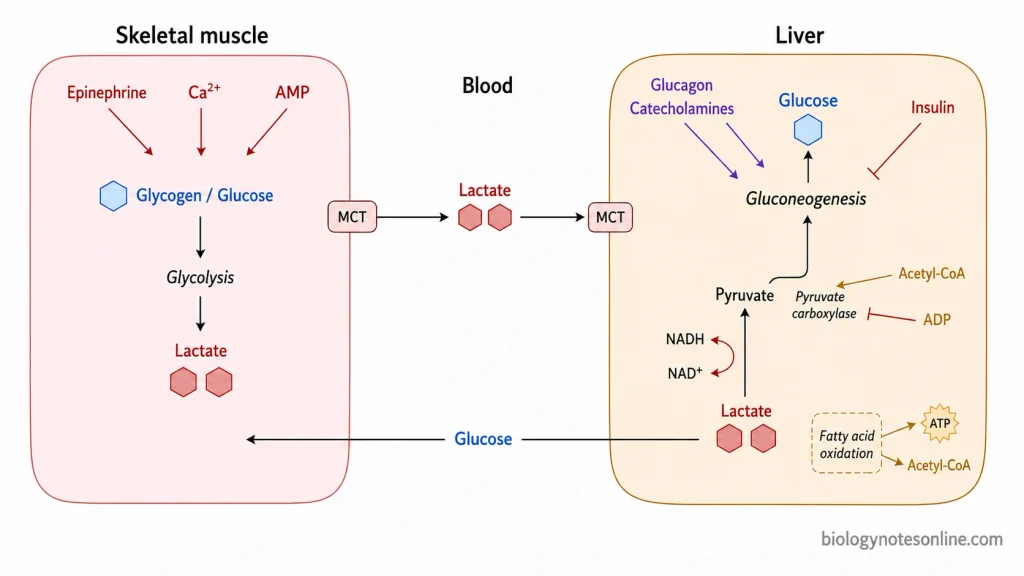
- Rate of muscle glycolysis- During muscular activity, breakdown of glycogen and glycolysis is increased according to energy requirement of the muscle. More pyruvate is formed, which results in increased formation of lactate. Epinephrine increases muscle glycogenolysis. Ca²⁺ and AMP are also involved during contraction.
- Availability of lactate- The major substrate supplied from muscle for glucose formation is lactate. Increased production of lactate provides more substrate for gluconeogenesis in liver. Lactate is moved from skeletal muscle with the help of monocarboxylate transporters (MCTs), and its movement largely depends on lactate gradient.
- Glucagon- It is one of the important hormones involved in hepatic gluconeogenesis. Glucagon activates the cAMP-protein kinase A (PKA) pathway in liver. During increased glucagon level, formation of glucose from the gluconeogenic substrates is increased.
- Catecholamines- Epinephrine increases breakdown of glycogen in skeletal muscle and more lactate can be supplied from muscle. Hepatic gluconeogenesis is also stimulated by catecholamines. Both the muscle and liver reactions are affected during increased catecholamine activity.
- Insulin- It decreases hepatic gluconeogenesis. At high insulin level, glucose production in liver is decreased. Lower insulin allows greater gluconeogenic activity and the availability of gluconeogenic substrates from peripheral tissues is also affected.
- Energy state of liver- Formation of glucose from lactate is an energy-requiring process. Pyruvate carboxylase is activated by acetyl-CoA, whereas high ADP lowers the reaction. During this process, fatty acid oxidation in liver provides acetyl-CoA and energy for gluconeogenesis.
- NADH/NAD⁺ balance- Conversion of lactate to pyruvate is dependent on lactate dehydrogenase (LDH) and the cytosolic redox state. An increased NADH/NAD⁺ ratio can restrict oxidation of lactate into pyruvate. Gluconeogenesis from lactate is also lowered.
Modern View of Lactate Metabolism
The earlier concept considered lactate mainly as an end product of anaerobic metabolism. It is now known that lactate has several metabolic functions. Some of the important points are-
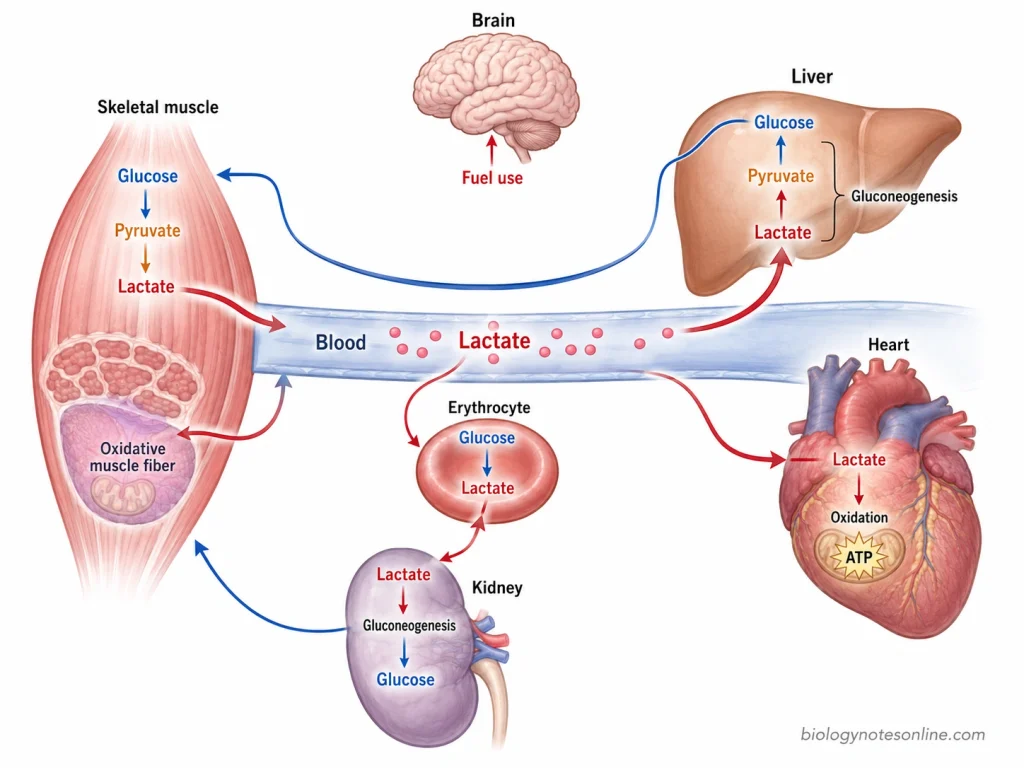
- Lactate is not only a waste product- Lactate is continuously formed and utilized even under aerobic conditions. Its formation does not always indicate lack of oxygen.
- Lactate shuttle- Lactate formed in one cell or tissue can be transported and used by another tissue. This is referred to as the lactate shuttle.
- Lactate as a fuel- Oxidative skeletal muscle and heart can take up lactate and use it for energy production. Brain can also utilize circulating lactate.
- Muscle also consumes lactate- Skeletal muscle is not only a site for lactate formation. During exercise, lactate production and utilization can occur at the same time.
- Gluconeogenic precursor- Lactate is an important substrate for formation of glucose. It is transported to gluconeogenic tissues and used during gluconeogenesis.
- Lactate as a signaling molecule- Lactate also takes part in cellular signaling and regulation of metabolism. It can produce effects between cells and different tissues.
- Lactate and fatigue- Accumulation of lactate itself is no longer considered as the direct cause of muscle fatigue. The relationship between lactate, acidity and fatigue is more complex.
Physiological Significance of the Cori Cycle
Some of the important physiological significance of the Cori cycle are-
- Continues muscle glycolysis- During intense muscular activity, conversion of pyruvate to lactate regenerates NAD⁺. Glycolysis can continue and ATP is formed even when oxidative metabolism is limited.
- Utilization of lactate- Lactate formed in the active muscle is carried to liver and used for glucose formation. The lactate carbon is recycled by this process.
- Supply of glucose- Glucose formed in liver is released into blood. It becomes available again to exercising muscle and other glucose-dependent cells.
- Helps in blood glucose maintenance- Gluconeogenesis from lactate contributes to blood glucose during postabsorptive condition and physical exercise.
- Shifts metabolic load to liver- Muscle obtains ATP rapidly from glycolysis, while the energy-requiring formation of glucose is carried out in liver. In this way part of the metabolic load of active muscle is shifted to liver.
- Important for erythrocytes- Erythrocytes lack mitochondria and continuously form lactate from glucose. This lactate enters blood and can be used by liver for formation of glucose.
Common Misconceptions About the Cori Cycle
1. Is lactate only a waste product?
No. Lactate is not only a waste product of glycolysis. It can be used as a metabolic fuel and also as a substrate for glucose formation.
2. Is lactate formed only in the absence of oxygen?
No. Lactate formation also takes place under aerobic conditions. Its formation can increase when the rate of glycolysis becomes high.
3. Does lactate directly cause muscle fatigue?
No. Lactate accumulation was earlier considered as the cause of muscle fatigue. Lactate itself is not the direct cause of fatigue during exercise.
4. Is all the lactate transported to the liver?
No. Only a part of lactate is transported for gluconeogenesis. Lactate can also be used directly by oxidative tissues for energy production.
5. Is liver the only organ that converts lactate into glucose?
No. Liver is the major organ involved in the classical Cori cycle. Kidney can also take up lactate and form glucose by renal gluconeogenesis.
6. Does the Cori cycle produce a net amount of ATP?
No. Muscle glycolysis gives 2 ATP, whereas formation of glucose in liver requires 4 ATP and 2 GTP. The complete cycle has a net energy cost of 4 ATP equivalents.
7. Are the Cori cycle and lactate shuttle the same?
No. Cori cycle is mainly concerned with lactate-glucose recycling between muscle and gluconeogenic tissues. The lactate shuttle is a wider process involving movement and utilization of lactate between different cells, tissues and organs.
Cori Cycle Quick Summary Table
| Feature | Cori Cycle |
|---|---|
| Main tissues | Skeletal muscle and liver |
| Main transported metabolite | Lactate from muscle to liver |
| Compound returned to muscle | Glucose |
| Process in muscle | Glucose is converted into lactate by glycolysis |
| Process in liver | Lactate is converted back into glucose by gluconeogenesis |
| Major enzyme for lactate formation | Lactate dehydrogenase (LDH) |
| Transport between tissues | Through blood circulation |
| ATP formed in muscle | 2 ATP per glucose |
| Energy used in liver | 4 ATP + 2 GTP |
| Net energy cost | 4 ATP equivalents |
| Major function | Recycling of lactate and regeneration of glucose |
| Important condition | Increased during intense muscular activity |
| Other lactate source | Erythrocytes also continuously form lactate |
How to Remember Cori Cycle?
The Cori cycle can be remembered by keeping two tissues and two compounds in mind. These are muscle, liver, lactate and glucose.
Muscle → Lactate
In muscle, glucose is converted to lactate.
Remember- Muscle makes Lactate.
Lactate → Liver
The formed lactate enters blood and reaches the liver.
Liver → Glucose
In liver, lactate is changed to pyruvate and glucose is formed by gluconeogenesis.
Remember- Liver makes Glucose.
Glucose → Muscle
The glucose is again supplied to muscle through blood.
The complete cycle can be remembered as-
Muscle → Lactate → Liver → Glucose → Muscle
Or simply-
Muscle gives Lactate, Liver gives Glucose.
Discovery and Naming of the Cori Cycle
The study of carbohydrate metabolism in muscle and liver was carried out by Carl Ferdinand Cori and Gerty Theresa Cori during the 1920s. The following are some of the important events-
- Carl and Gerty Cori studied the relationship between muscle lactate and formation of glycogen in liver. Their studies were mainly associated with carbohydrate metabolism in muscle and liver.
- In 1929, they proposed a “cycle of carbohydrates” between muscle and liver. Lactic acid formed from muscle carbohydrate was transported to liver and used for formation of liver glycogen.
- The cycle involved glucose and lactic acid connecting muscle glycogen with liver glycogen. More studies followed which further explained this process.
- This carbohydrate cycle was later named the Cori cycle, after Carl and Gerty Cori.
- During their later studies on glycogen metabolism, glucose-1-phosphate was isolated in 1936 during glycogen breakdown. It is also called the Cori ester.
- Carl and Gerty Cori were awarded half of the 1947 Nobel Prize in Physiology or Medicine for their discovery of the course of catalytic conversion of glycogen. The other half was awarded to Bernardo Alberto Houssay for his studies on the role of anterior pituitary hormone in sugar metabolism.
Cori Cycle vs Glucose-Alanine Cycle
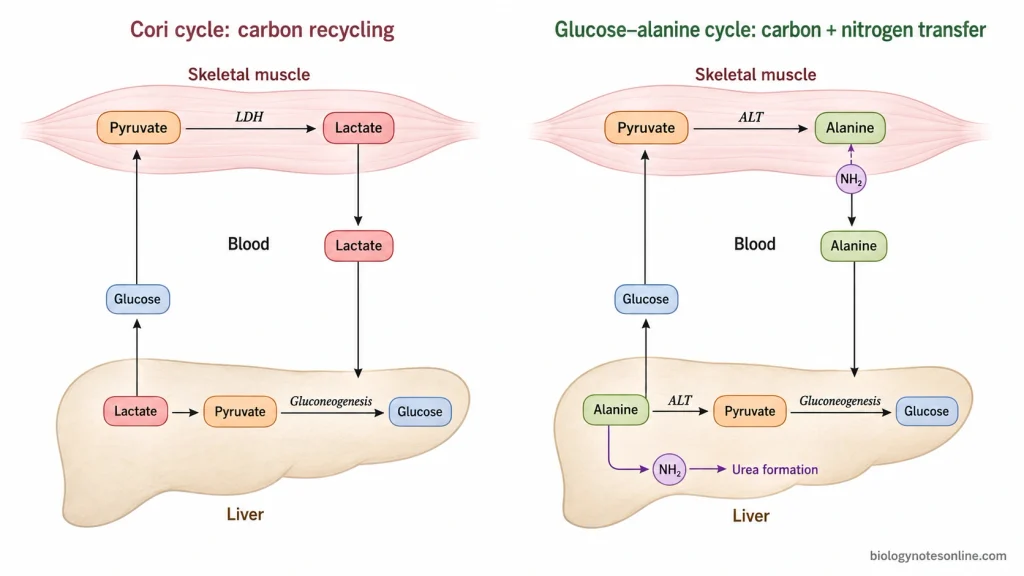
Both the Cori cycle and glucose-alanine cycle take place mainly between skeletal muscle and liver. In both cycles, glucose is formed again in liver. The major differences are as follows-
| Basis | Cori Cycle | Glucose-Alanine Cycle |
|---|---|---|
| Other name | It is referred to as the Cori cycle. | It is also called the Cahill cycle or alanine cycle. |
| Compound transported from muscle | Lactate is transported from muscle to liver. | Alanine is transported from muscle to liver. |
| Formation in muscle | Pyruvate is reduced to lactate. Enzyme involved- lactate dehydrogenase (LDH). | Amino group from glutamate is transferred to pyruvate and alanine is formed. Enzyme involved- alanine aminotransferase (ALT). |
| Transport through blood | Lactate reaches the liver through blood. | Alanine is released from muscle and carried to liver. |
| Reaction in liver | Lactate is converted back to pyruvate. Pyruvate is then used during gluconeogenesis. | Alanine is converted to pyruvate by transamination. The formed pyruvate enters gluconeogenesis. |
| Nitrogen transport | It does not transport amino nitrogen from muscle. | Alanine carries amino nitrogen from muscle to liver. |
| Fate of nitrogen | No urea formation is directly involved with transport of lactate. | The nitrogen reaching liver can enter reactions leading to urea formation. |
| Main function | It is used for recycling of muscle lactate and regeneration of glucose in liver. | It is used for glucose regeneration as well as transfer of excess nitrogen from muscle. |
| Conditions | It becomes important during increased lactate formation, such as strenuous muscular activity. | It is particularly associated with fasting and muscle amino acid breakdown. |
| Compound returned to muscle | Glucose formed in liver is returned through circulation. | Glucose is also formed in liver and supplied back through blood. |
References
- Adeva-Andany, M. M., Pérez-Felpete, N., Fernández-Fernández, C., Donapetry-García, C., & Pazos-García, C. (2016). Liver glucose metabolism in humans. Bioscience Reports, 36(6), e00416. https://doi.org/10.1042/BSR20160385
- Alberts, B., Johnson, A., Lewis, J., Raff, M., Roberts, K., & Walter, P. (2002). Molecular biology of the cell (4th ed.). Garland Science. https://www.ncbi.nlm.nih.gov/books/NBK26882/
- Baddam, S., & Tubben, R. E. (2025). Lactic acidosis. In StatPearls. StatPearls Publishing. https://www.ncbi.nlm.nih.gov/books/NBK470202/
- Bolder, U., Ebener, C., Hauner, H., Jauch, K. W., Kreymann, G., Ockenga, J., Traeger, K., & Working Group for Developing the Guidelines for Parenteral Nutrition of the German Association for Nutritional Medicine. (2009). Carbohydrates—Guidelines on parenteral nutrition, chapter 5. GMS German Medical Science, 7, Doc23. https://doi.org/10.3205/000082
- Brewer, M. K., & Gentry, M. S. (2019). Brain glycogen structure and its associated proteins: Past, present and future. In M. DiNuzzo & A. Schousboe (Eds.), Brain glycogen metabolism (Advances in Neurobiology, Vol. 23, pp. 17–81). Springer. https://doi.org/10.1007/978-3-030-27480-1_2
- Brooks, G. A. (2001). Lactate doesn’t necessarily cause fatigue: Why are we surprised? The Journal of Physiology, 536(1), 1. https://doi.org/10.1111/j.1469-7793.2001.t01-1-00001.x
- Brooks, G. A. (2009). Cell-cell and intracellular lactate shuttles. The Journal of Physiology, 587(23), 5591–5600. https://doi.org/10.1113/jphysiol.2009.178350
- Brooks, G. A. (2020). Lactate as a fulcrum of metabolism. Redox Biology, 35, 101454. https://doi.org/10.1016/j.redox.2020.101454
- Brooks, G. A. (2021). The “anaerobic threshold” concept is not valid in physiology and medicine. Medicine & Science in Sports & Exercise, 53(5), 1093–1096. https://doi.org/10.1249/MSS.0000000000002549
- Cano, N. (2002). Bench-to-bedside review: Glucose production from the kidney. Critical Care, 6(4), 317–321. https://doi.org/10.1186/cc1517
- Chandel, N. S. (2021). Carbohydrate metabolism. Cold Spring Harbor Perspectives in Biology, 13(1), a040568. https://doi.org/10.1101/cshperspect.a040568
- Chourpiliadis, C., & Mohiuddin, S. S. (2023). Biochemistry, gluconeogenesis. In StatPearls. StatPearls Publishing. https://www.ncbi.nlm.nih.gov/books/NBK544346/
- Chung, S. T., Chacko, S. K., Sunehag, A. L., & Haymond, M. W. (2015). Measurements of gluconeogenesis and glycogenolysis: A methodological review. Diabetes, 64(12), 3996–4010. https://doi.org/10.2337/db15-0640
- Cura, A. J., & Carruthers, A. (2012). The role of monosaccharide transport proteins in carbohydrate assimilation, distribution, metabolism, and homeostasis. Comprehensive Physiology, 2(2), 863–914. https://doi.org/10.1002/cphy.c110024
- de Herder, W. W. (2014). Heroes in endocrinology: Nobel Prizes. Endocrine Connections, 3(3), R94–R104. https://doi.org/10.1530/EC-14-0070
- Gladden, L. B. (2004). Lactate metabolism: A new paradigm for the third millennium. The Journal of Physiology, 558(1), 5–30. https://doi.org/10.1113/jphysiol.2003.058701
- Gray, L. R., Tompkins, S. C., & Taylor, E. B. (2014). Regulation of pyruvate metabolism and human disease. Cellular and Molecular Life Sciences, 71(14), 2577–2604. https://doi.org/10.1007/s00018-013-1539-2
- Hatting, M., Tavares, C. D. J., Sharabi, K., Rines, A. K., & Puigserver, P. (2018). Insulin regulation of gluconeogenesis. Annals of the New York Academy of Sciences, 1411(1), 21–35. https://doi.org/10.1111/nyas.13435
- Herman, M. A., & Kahn, B. B. (2006). Glucose transport and sensing in the maintenance of glucose homeostasis and metabolic harmony. The Journal of Clinical Investigation, 116(7), 1767–1775. https://doi.org/10.1172/JCI29027
- Judge, A., & Dodd, M. S. (2020). Metabolism. Essays in Biochemistry, 64(4), 607–647. https://doi.org/10.1042/EBC20190041
- Juel, C., & Halestrap, A. P. (1999). Lactate transport in skeletal muscle—Role and regulation of the monocarboxylate transporter. The Journal of Physiology, 517(3), 633–642. https://doi.org/10.1111/j.1469-7793.1999.0633s.x
- Kocianova, E., Piatrikova, V., & Golias, T. (2022). Revisiting the Warburg effect with focus on lactate. Cancers, 14(24), 6028. https://doi.org/10.3390/cancers14246028
- kullberm. (n.d.). Biochemistry. University of Washington Pressbooks. https://uw.pressbooks.pub/fmrbiochemistry/
- Lee, T.-Y. (2021). Lactate: A multifunctional signaling molecule. Yeungnam University Journal of Medicine, 38(3), 183–193. https://doi.org/10.12701/yujm.2020.00892
- Levy, B., Hernandez, G., & Merdji, H. (2026). Lactate in cardiogenic shock: Pathophysiology, prognostic value, and clinical interpretation. Annals of Intensive Care, 16, 100061. https://doi.org/10.1016/j.aicoj.2026.100061
- Li, X., Yang, Y., Zhang, B., Lin, X., Fu, X., An, Y., Zou, Y., Wang, J.-X., Wang, Z., & Yu, T. (2022). Lactate metabolism in human health and disease. Signal Transduction and Targeted Therapy, 7(1), 305. https://doi.org/10.1038/s41392-022-01151-3
- Martino, M. R., Habibi, M., Ferguson, D., Brookheart, R. T., Thyfault, J. P., Meyer, G. A., Lantier, L., Hughey, C. C., & Finck, B. N. (2024). Disruption of hepatic mitochondrial pyruvate and amino acid metabolism impairs gluconeogenesis and endurance exercise capacity in mice. American Journal of Physiology-Endocrinology and Metabolism, 326(4), E515–E527. https://doi.org/10.1152/ajpendo.00258.2023
- Melkonian, E. A., & Schury, M. P. (2023). Biochemistry, anaerobic glycolysis. In StatPearls. StatPearls Publishing. https://www.ncbi.nlm.nih.gov/books/NBK546695/
- Melkonian, E. A., Asuka, E., & Schury, M. P. (2023). Physiology, gluconeogenesis. In StatPearls. StatPearls Publishing. https://www.ncbi.nlm.nih.gov/books/NBK541119/
- Minton, J., & Sidebotham, D. A. (2017). Hyperlactatemia and cardiac surgery. The Journal of Extra-Corporeal Technology, 49(1), 7–15. https://pmc.ncbi.nlm.nih.gov/articles/PMC5347225/
- Mul, J. D., Stanford, K. I., Hirshman, M. F., & Goodyear, L. J. (2015). Exercise and regulation of carbohydrate metabolism. In C. Bouchard (Ed.), Molecular and cellular regulation of adaptation to exercise (Progress in Molecular Biology and Translational Science, Vol. 135, pp. 17–37). Elsevier. https://doi.org/10.1016/bs.pmbts.2015.07.020
- Naifeh, N., Dimri, M., & Varacallo, M. A. (2023). Biochemistry, aerobic glycolysis. In StatPearls. StatPearls Publishing. https://www.ncbi.nlm.nih.gov/books/NBK470170/
- Nuyttens, L., Vandewalle, J., & Libert, C. (2024). Sepsis-induced changes in pyruvate metabolism: Insights and potential therapeutic approaches. EMBO Molecular Medicine, 16(11), 2678–2698. https://doi.org/10.1038/s44321-024-00155-6
- Petersen, M. C., Vatner, D. F., & Shulman, G. I. (2017). Regulation of hepatic glucose metabolism in health and disease. Nature Reviews Endocrinology, 13(10), 572–587. https://doi.org/10.1038/nrendo.2017.80
- Sarabhai, T., & Roden, M. (2019). Hungry for your alanine: When liver depends on muscle proteolysis. The Journal of Clinical Investigation, 129(11), 4563–4566. https://doi.org/10.1172/JCI131931
- Sharma, A., Oonthonpan, L., Sheldon, R. D., Rauckhorst, A. J., Zhu, Z., Tompkins, S. C., Cho, K., Grzesik, W. J., Gray, L. R., Scerbo, D. A., Pewa, A. D., Cushing, E. M., Dyle, M. C., Cox, J. E., Adams, C., Davies, B. S., Shields, R. K., Norris, A. W., Patti, G., … Taylor, E. B. (2019). Impaired skeletal muscle mitochondrial pyruvate uptake rewires glucose metabolism to drive whole-body leanness. eLife, 8, e45873. https://doi.org/10.7554/eLife.45873
- Zhang, X., Yang, S., Chen, J., & Su, Z. (2019). Unraveling the regulation of hepatic gluconeogenesis. Frontiers in Endocrinology, 9, 802. https://doi.org/10.3389/fendo.2018.00802