Phase contrast microscope is an optical microscope that is used to observe transparent and unstained living cells. It converts small phase changes of light into visible contrast. These phase changes are produced when light passes through the different parts of the specimen.
It was developed by Frits Zernike in 1930s. This microscope is very useful because living cells absorb very little light and they appear almost colourless under ordinary brightfield microscope. So, phase contrast microscope makes the internal parts of cell visible without staining.
This microscope is based on the difference in refractive index and thickness of different cellular components. When light passes through the specimen, some light passes directly and some light is deviated or scattered by the specimen. These two types of light rays are then brought together again to form the final image.
The phase contrast microscope has special optical parts like annular diaphragm and phase plate. The annular diaphragm is present in the condenser and it produces a hollow cone of light. The phase plate is present in the objective lens and it changes the phase and intensity of the direct light.
When the direct light and deviated light recombine, interference takes place. Due to this interference, the invisible phase differences are converted into differences in brightness. As a result, the cell structures appear dark or bright against a grey background.
It is mainly used for the study of living cells, microorganisms, protozoa, tissue culture cells and different sub-cellular structures. It avoids the use of chemical stains and fixatives. So, the natural condition of living cells can be studied more clearly.
Principle of Phase Contrast Microscope
Phase contrast microscope is based on converting the invisible phase differences of light into visible differences in brightness. The transparent and unstained specimen does not absorb much light. So, it cannot produce good contrast in ordinary microscope.
When light passes through the transparent biological specimen, the specimen acts as a phase object. Different parts of cell have different thickness and refractive index. Due to this, some light waves are slowed down and phase shift is produced.
The direct light passes around the specimen without much change. The diffracted or scattered light passes through the specimen and becomes retarded by about one-quarter wavelength. These small phase differences cannot be detected by eye because eye can detect only change in intensity and colour.
In phase contrast microscope, an annular diaphragm is present in the condenser and phase plate is present in the objective lens. The annular diaphragm gives a hollow cone of light. The phase plate changes the phase of direct background light and also reduces its brightness.
When the direct light and scattered light recombine at the image plane, interference takes place. This interference may be constructive or destructive. As a result, the invisible phase differences are changed into amplitude differences.
Thus, the transparent parts of the specimen appear as dark or bright structures against the background. This makes living cells and unstained microorganisms clearly visible without staining.
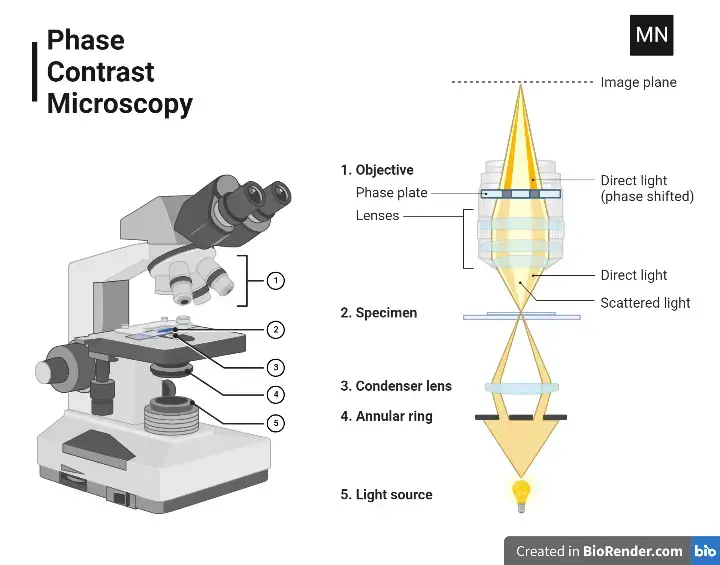
Light Path of Phase Contrast Microscope
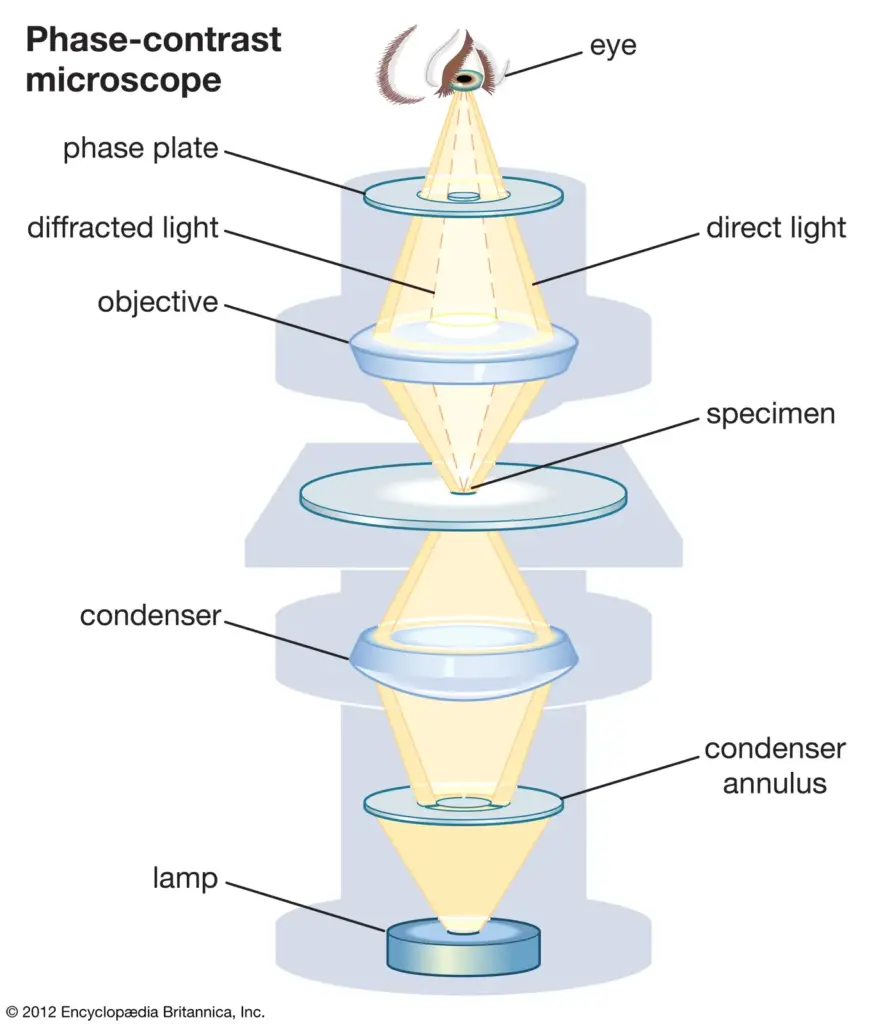
- Light source produces light, generally from tungsten-halogen lamp.
- The light passes through the collector lens.
- Collector lens collects the light and sends it towards the condenser.
- The light passes through the condenser annulus.
- Condenser annulus has an opaque disc with a transparent ring.
- It changes the light into a hollow cone of light.
- Condenser focuses this hollow cone of light on the specimen.
- The light passes through the transparent specimen.
- In the specimen, the light is divided into two parts.
- Undeviated light passes directly through or around the specimen without much change.
- Diffracted light interacts with the cellular structures and becomes scattered.
- The diffracted light is retarded in phase, generally by about one-quarter wavelength.
- Objective lens collects both undeviated light and diffracted light.
- These lights pass towards the rear focal plane of objective lens.
- Phase plate is present at the rear focal plane of the objective lens.
- The undeviated light passes through the phase ring of phase plate.
- The phase ring reduces the intensity of undeviated light and shifts its phase.
- The diffracted light mostly passes outside the phase ring and remains almost unaffected.
- Both lights recombine at the image plane.
- Due to phase difference, constructive or destructive interference occurs.
- This interference changes invisible phase differences into visible brightness differences.
- Thus, a clear high contrast image is formed.
- The transparent cell parts appear dark or bright against the background.
Types of Phase Contrast Microscope
Different types of phase contrast microscope are mentioned below-
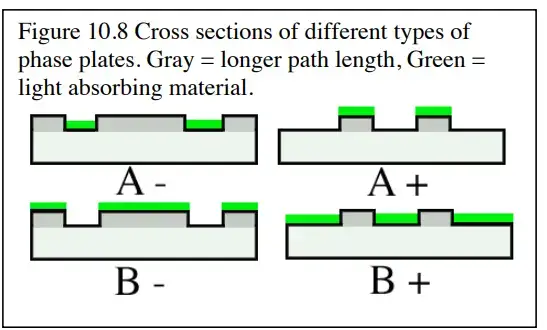
- Positive Phase Contrast– This is the most common type of phase contrast microscope. In this type, the specimen parts having higher refractive index appear dark against a light background.
- Dark Low (DL)– This type produces a dark image outline on a light grey background. It gives strongest contrast for those specimens which have major difference in refractive index.
- Dark Low Low (DLL)– This gives lower contrast than Dark Low. But it has higher light transmission. It is often used as a universal objective for different illumination methods.
- Apodized Dark Low (ADL)– This type uses secondary neutral density rings. It helps to reduce the unwanted halo effect which is seen around large particles or cells.
- Dark Medium (DM)– This produces a dark outline on a medium grey background. It gives high contrast for specimens having very small phase shift or refractive difference, such as fine fibres and cilia.
- Negative Phase Contrast– This is also known as bright contrast. In this type, the structures having higher refractive index appear bright against a darker background.
- Bright Medium (BM)– This is a type of negative phase contrast. It produces a bright image outline on a medium grey background. It is used for observation of blood cells, minute globules and bacterial flagella.
- Upright Phase Contrast Microscope– This microscope is designed for observing specimens mounted on standard glass slides. It is used like ordinary upright microscope but with phase contrast optics.
- Inverted Phase Contrast Microscope– This microscope has long working distance optics. It is used to observe living cells directly in culture dishes, flasks or other thick vessels.
- Research Grade Phase Contrast Microscope– This is a high resolution phase contrast microscope. It is used for advanced laboratory research and detailed cellular analysis.
Parts of Phase Contrast Microscope
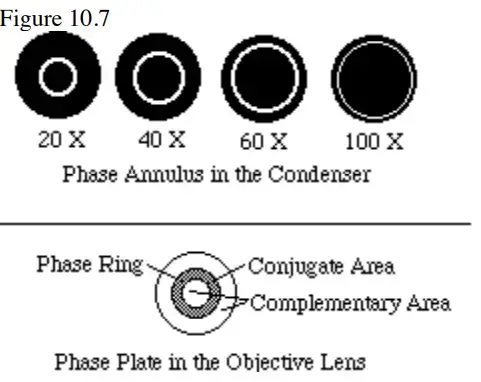
The following are the parts of phase contrast microscope-
- Light source- It provides the initial illumination for the microscope. Tungsten-halogen lamp or LED is commonly used as the light source.
- Collector lens- It directs and focuses the light from the illumination source towards the condenser.
- Condenser annulus- It is also called annular diaphragm. It is an opaque disc with a transparent ring shaped groove present in the condenser. It changes the incoming light into a hollow cone before it reaches the specimen.
- Condenser- It focuses the hollow cone of light produced by the condenser annulus directly on the specimen.
- Objective lens- It collects both the direct background light and the light scattered or diffracted by the specimen.
- Phase plate- It is also called phase ring. It is a special transparent glass or plastic disc permanently present at the rear focal plane of the objective lens. It has phase shifting coating and neutral density filter which changes the phase and reduces the brightness of direct light.
- Centering telescope- It is also called Bertrand lens. It is an auxiliary optical tool or built in lens used to view the rear focal plane of the objective. It helps to align and center the condenser annulus with the phase plate.
- Image plane- It is the final plane where the direct and diffracted light waves recombine. Interference takes place here and a visible high contrast image is formed.
Operating Procedure of Phase Contrast Microscopy
The following are the operating procedure of phase contrast microscopy-
- Set up Kohler illumination- The specimen is placed on the stage and the microscope is focused. The optical system is aligned for brightfield Kohler illumination. It gives uniform light over the field of view.
- Select objective and annulus- The lowest power phase contrast objective such as 10X is brought into the optical path. The condenser turret is turned to the matching phase annulus such as Ph1. The condenser aperture diaphragm is opened fully.
- Insert centering telescope- One eyepiece is removed and the phase contrast centering telescope is inserted. In some microscope, Bertrand lens is used for the same purpose.
- Focus the rings- The centering telescope or Bertrand lens is observed. The focus is adjusted until the bright ring from condenser annulus and the dark ring from objective phase plate are sharply seen.
- Align the rings- The centering screws or pins of the condenser are adjusted. The bright ring is moved until it is concentric and directly superimposed on the dark phase ring.
- Repeat for other magnification- The next phase contrast objective is selected and the corresponding condenser annulus is also selected. The same focusing and centering process is repeated for each magnification.
- Observe the specimen- After proper alignment, the centering telescope is removed and the normal eyepiece is placed again. If Bertrand lens is used, it is disengaged. The specimen is then observed under phase contrast microscopy.
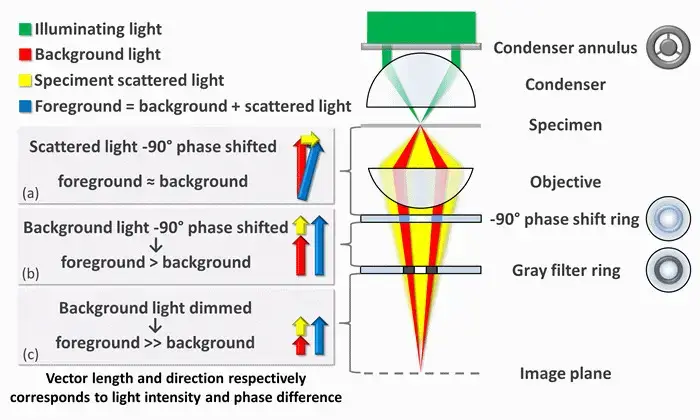
Types of Phase Contrast
Applications of Phase Contrast Microscope
The following are the applications of phase contrast microscope-
- Live cell imaging- It is used for observing living cells in culture. It helps to study cell morphology, growth, behaviour and proliferation without using toxic stains or fixatives.
- Intracellular studies- It is used to examine sub-cellular particles and internal organelles. Nuclei, mitochondria, chromosomes, spindles and vacuoles can be observed.
- Cellular dynamics- It is used to study real-time biological process like mitosis, cell migration, chemotaxis and angiogenesis.
- Microbiology- It is used to visualize microorganisms like bacteria, fungi and protozoa in their natural condition. It is useful for microbial analysis and studying antibiotic resistance.
- Clinical diagnostics- It is used in rapid medical diagnosis. It helps in urinalysis for identifying cellular casts and crystals, hematology for observing blood cells and parasites and semen analysis for sperm motility and concentration.
- Tissue examination- It is used for viewing thin and transparent biological tissue slices.
- Semiconductor industry- It is used to inspect and verify lithographic patterns which are transferred to transparent resist layers on silicon wafers.
- Chemical analysis- It is used to study latex dispersions, emulsions and other colloidal systems. It helps to observe transparent particles in liquid medium.
- Materials and forensics- It is used to examine transparent synthetic materials, polymers, fine fibres and glass fragments. The difference in refractive index helps to show structural boundaries.
- Quality control- It is used for inspection of different commercial products such as clays, fats, oils, paints, foods, drugs and textiles.
Advantages of Phase Contrast Microscope
The following are the advantages of phase contrast microscope-
- Observation of living cells- It is used to observe living, unstained and unfixed cells in their natural state. It prevents the destructive effect of chemical fixation.
- Enhanced contrast- It gives high contrast image of colourless and transparent specimens. These specimens are almost invisible under ordinary brightfield microscope.
- Real-time monitoring- It helps to observe dynamic biological processes when they are taking place. Cell division, cell migration and movement of intracellular organelles can be studied.
- Time and cost efficiency- It does not require long and expensive specimen preparation. Chemical dyes and stains are not needed.
- Compatibility with plastic culture vessels- It does not use polarized light. So optical disturbance due to birefringence is not produced. It is useful for observing living cells grown directly in standard plastic tissue culture dishes.
- Orientation independence- In this method, the specimen is illuminated evenly from all sides. So the image contrast does not depend on the rotational position of the specimen.
- Ease of integration- It is a simple and less expensive technique. Phase contrast optical components can be added to many standard upright or inverted brightfield microscope.
- Combination with other techniques- It can be used with other observation methods such as fluorescence microscopy. It helps to verify findings and shows those parts of specimen which do not fluoresce.
Disadvantages of Phase Contrast Microscope
The following are the limitations of phase contrast microscope-
- Halo artifacts- The image often shows bright or dark optical halo around the edges of structures. It is common in structures having high phase shift. This can hide fine boundaries and details.
- Shade-off effect- In large and flat specimens, the central area may show gradual loss of contrast. The central part may blend with the background intensity.
- Poor performance with thick specimens- It does not work properly with thick specimens. Phase shifts from parts above or below the focal plane may overlap and produces blurred and distorted image.
- Reduced resolution- The phase annuli restricts the working numerical aperture of the optical system. Due to this, the maximum resolution of image is reduced.
- Fixed depth of field- The illumination aperture is fixed by the size of condenser annulus. So the user cannot increase or decrease the depth of field properly.
- High illumination requirement- The phase plate reduces the brightness of direct background light. So, stronger light source is generally required than ordinary brightfield viewing.
- Meticulous alignment required- The condenser annulus and objective phase plate must be centered properly. Precise alignment is needed to produce high contrast image.
- Added equipment cost- Special phase contrast objectives and condensers are needed. These increase the cost of microscope and make it less available for basic teaching laboratories.
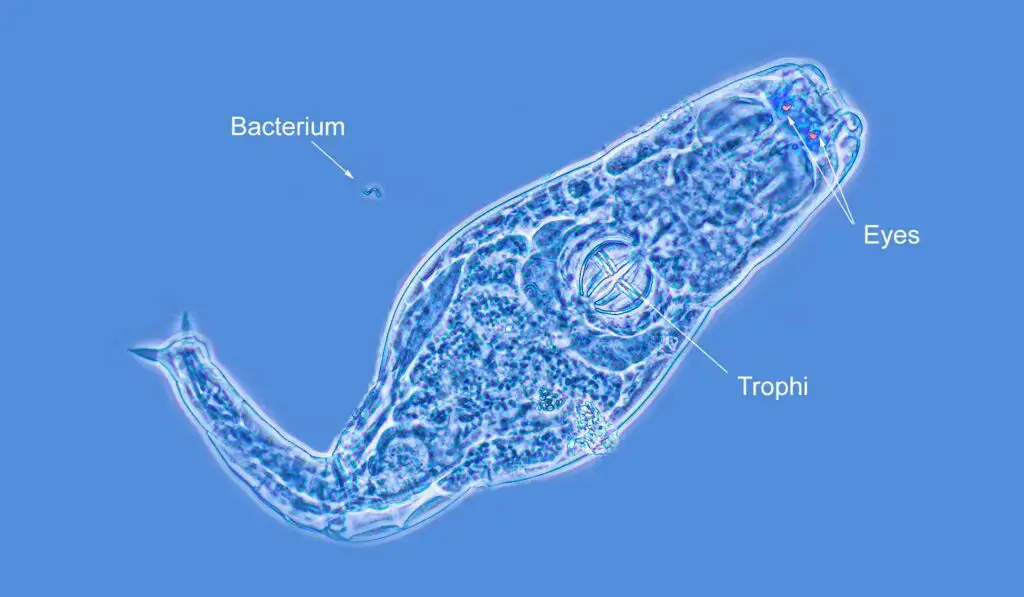
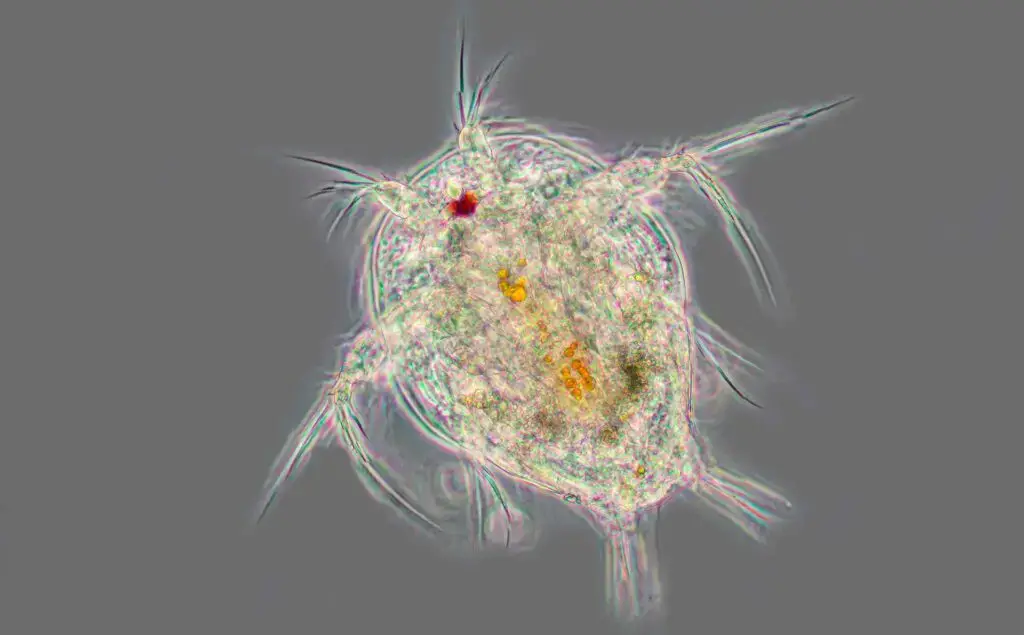
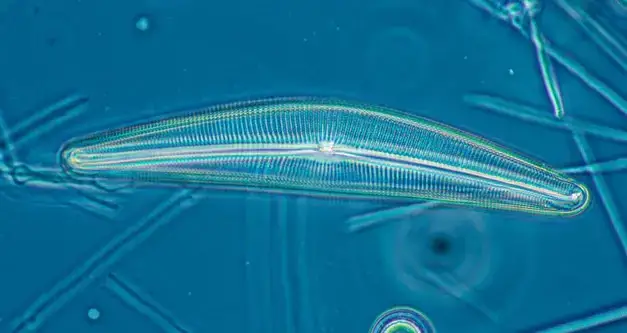
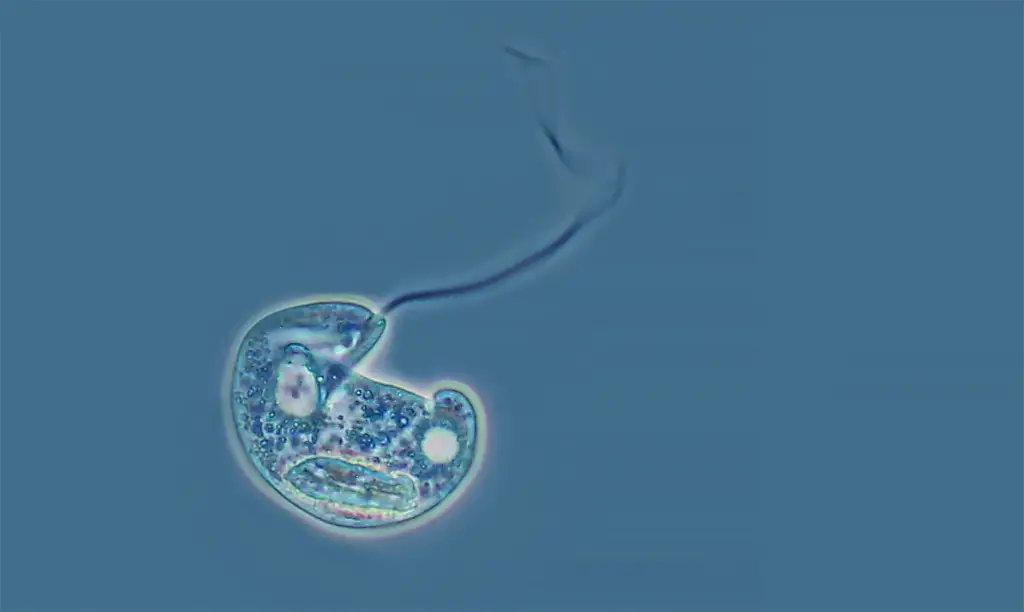
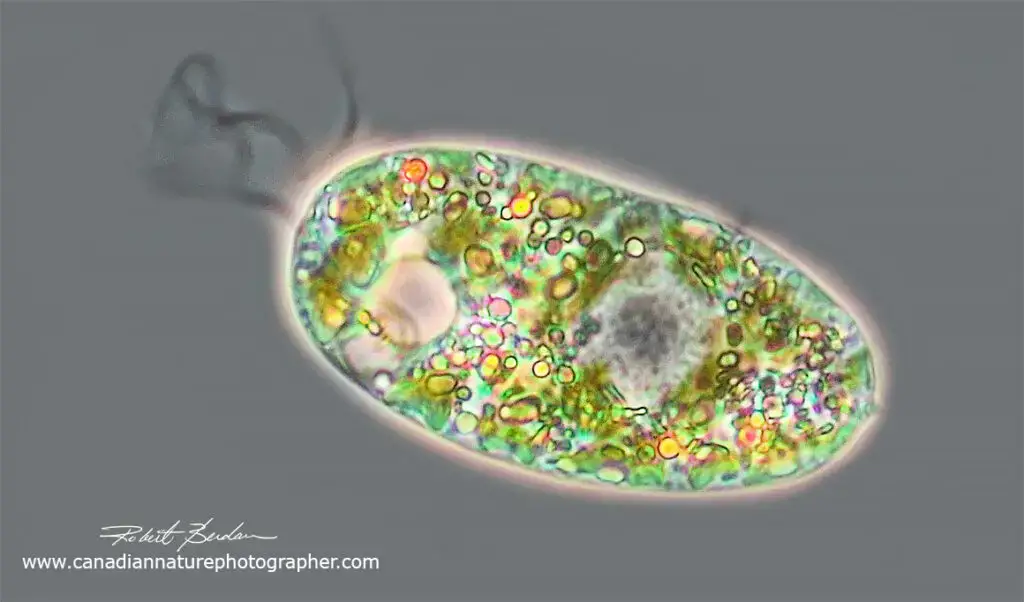
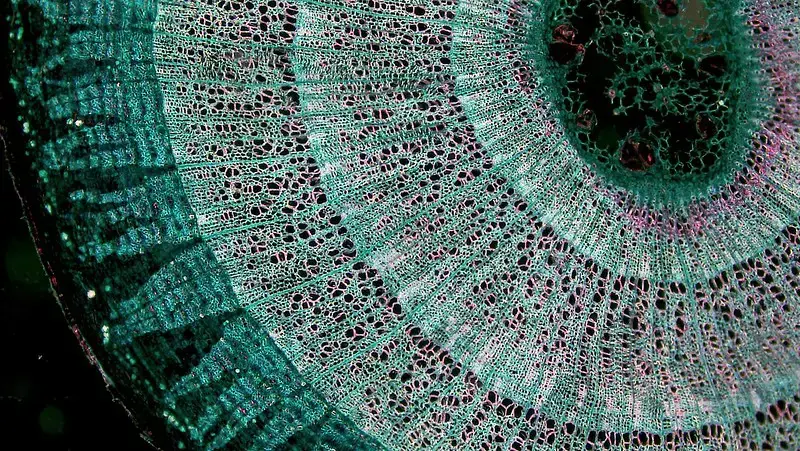
Phase contrast microscopy images
References
- Liu, Y., Chang, S., Murphy, G., Ajayi-Akinsulire, E., Ardren, I., Guy, I., Johnston, K., Lee, S., & Russell, L. (2025, September 10). 2.4: Darkfield, phase-contrast and DIC. Biology LibreTexts.
- Scientifica. (2019, January 7). A guide to phase contrast | Principles, applications… Scientifica.
- Telight. (2025, November 18). AI and quantitative phase imaging. Telight.
- Aguiar, I. (2025, March 6). AI-powered phase imaging: Turning chromatic aberration into an advantage – 2025. Wiley Analytical Science.
- Motic America. (2020, April 14). Basic microscopy concepts – phase contrast adjustment. Motic Microscopes.
- Murphy, D. B., Spring, K. R., & Davidson, M. W. (2025). Comparison of phase contrast & DIC microscopy. Nikon’s MicroscopyU.
- Evident Scientific. (2026). DIC vs phase contrast microscopy: Image quality & application guide. Evident Scientific.
- ioLight. (2026). Different types of light microscopy. ioLight.
- Microscopy Australia. (n.d.). Differential interference contrast imaging (DIC or Nomarski imaging) – LFM. MyScope.
- Gundlach, H. (2003). Frits Zernike and phase contrast microscopy: Celebrating 50 years of live cell analysis. Microscopy and Analysis (UK), 98, 5-8.
- Nobel Prize Outreach. (1953). Frits Zernike – Biographical. NobelPrize.org.
- Zernike, F. (1953, December 11). How I discovered phase contrast [Nobel Lecture]. Nobel Prize.
- Microscope Central. (n.d.). How to center for phase contrast. Microscope Central.
- Potts, C. (2025, April 17). How to align phase rings for perfect phase contrast imaging. Microscope Marketplace.
- AmScope Blogs. (2022, March 8). Introduction to phase contrast microscopes. AmScope.
- Davidson, M. W. (2025). Introduction to phase contrast microscopy. Nikon’s MicroscopyU.
- Mathematical imaging methods for mitosis analysis in live-cell phase contrast microscopy. (n.d.). PubMed Central (PMC).
- Nikon Instruments Inc. (2023, March). Method for selecting a phase-contrast objective for label-free visualization of spatio-temporal dynamics of cell division and organelles. Nikon Instruments.
- Davidson, M. W. (2025). Microscope objective specifications. Nikon’s MicroscopyU.
- Abramowitz, M., & Davidson, M. W. (2026). Microscope objective specs: Reading markings, correction & NA. Evident Scientific.
- KEYENCE America. (n.d.). Microscope observation modes. KEYENCE.
- Hulthén, E. (1953). Nobel Prize in physics 1953 – Presentation speech. NobelPrize.org.
- Beijing PDV Instrument Co., Ltd. (2020, April 15). Olympus microscope FAQ – Industry knowledge. Beijing PDV Instrument.
- Nikon’s MicroscopyU. (2025). Phase contrast microscope alignment. Nikon Instruments.
- Nikon’s MicroscopyU. (2025). Phase contrast microscope configuration. Nikon Instruments.
- Motic America. (2021, November 16). Phase contrast by Motic. Motic Microscopes.
- Kiderlen, S. (2025, September 5). Phase contrast microscopy | Principle and applications. ibidi.
- Aryal, S. (2022, May 27). Phase contrast microscopy- Definition, principle, parts, uses. Microbe Notes.
- Bajaj Finserv. (2026, March 5). Guide to phase contrast microscopy: Types, uses, advantages costs, and financing. Bajaj Finserv.
- Abramowitz, M., & Davidson, M. W. (2026). Phase contrast microscopy: Principles, Zernike method & applications. Evident Scientific.
- Ockenga, W., DeRose, J., & Greb, C. (2023, March 16). Phase contrast and microscopy. Leica Microsystems.
- Excedr. (2025, September 17). Phase vs. fluorescence microscopy: Use cases. Excedr.
- Wikipedia contributors. (2025, May 31). Phase-contrast microscopy. In Wikipedia, The Free Encyclopedia.
- Quantitative phase imaging advances regenerative medicine. (n.d.). Photonics Spectra.
- Quantitative Phase Imaging XII. (2026). SPIE.
- Davidson, M. W. (2015, November 13). Science, optics and you – Timeline – Frits Zernike. Molecular Expressions.
- The evolution of contrast: A comprehensive analysis of phase contrast microscopy in biological and industrial research. (n.d.).
- Nobel Prize Outreach. (1953). The Nobel Prize in physics 1953. NobelPrize.org.
- What is the Zernike phase-contrast method? Definition, microscopy & transparent cells SHORT READS. (n.d.).
- Magnus Opto. (2024, December 5). What is phase contrast microscopy and why does it matter? Magnus Blog.
- Microscope World. (2025, April 1). What is a phase contrast microscope used for? Microscope World Blog.
- David, C. (n.d.). Zernike X-ray phase contrast imaging. Paul Scherrer Institut.
- Holzner, C., Feser, M., Vogt, S., Hornberger, B., Baines, S. B., & Jacobsen, C. (2010, November 1). Zernike phase contrast in scanning microscopy with X-rays. Nature Physics, 6(11), 883–887.