Flagella Staining – Principle, Procedure, Result

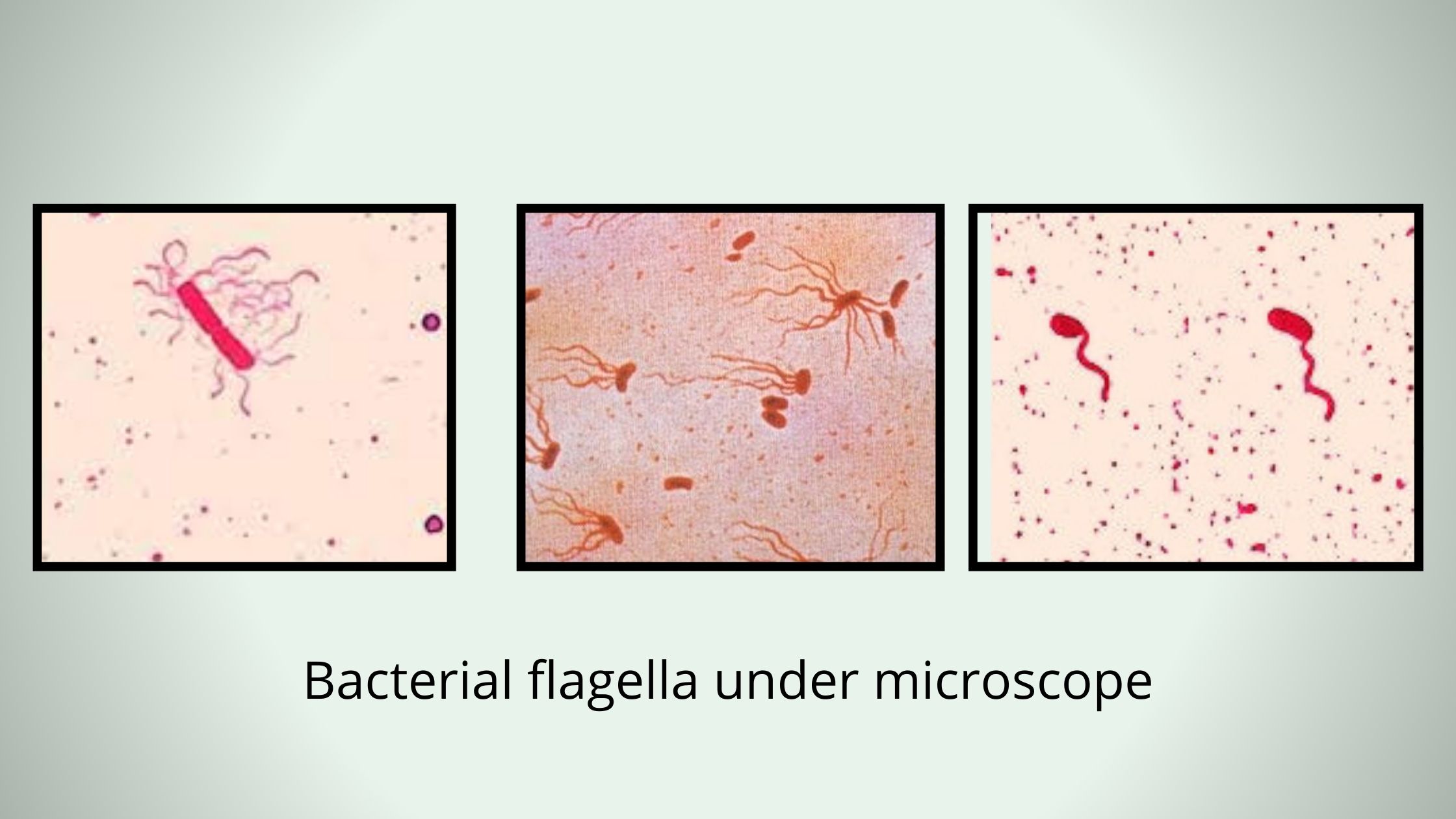
Flagella can not be seen under a bright-field microscope by using ordinary stains. A simple and useful method has been used for visualization of flagella is known as wet mount technique.

In microbiology, staining refers to the laboratory technique of applying dyes (stains) to microorganisms or tissue/cell samples so that they become more visible under the microscope.
Because most bacteria and cells are naturally transparent, they cannot be seen clearly in bright-field microscopy. Staining solves this problem by adding artificial color, which increases contrast, visibility, and differentiation.
Simple meaning
Staining means coloring microorganisms with a dye so that their shape, size, and structural details can be observed.
Flagella can not be seen under a bright-field microscope by using ordinary stains. A simple and useful method has been used for visualization of flagella is known as wet mount technique.
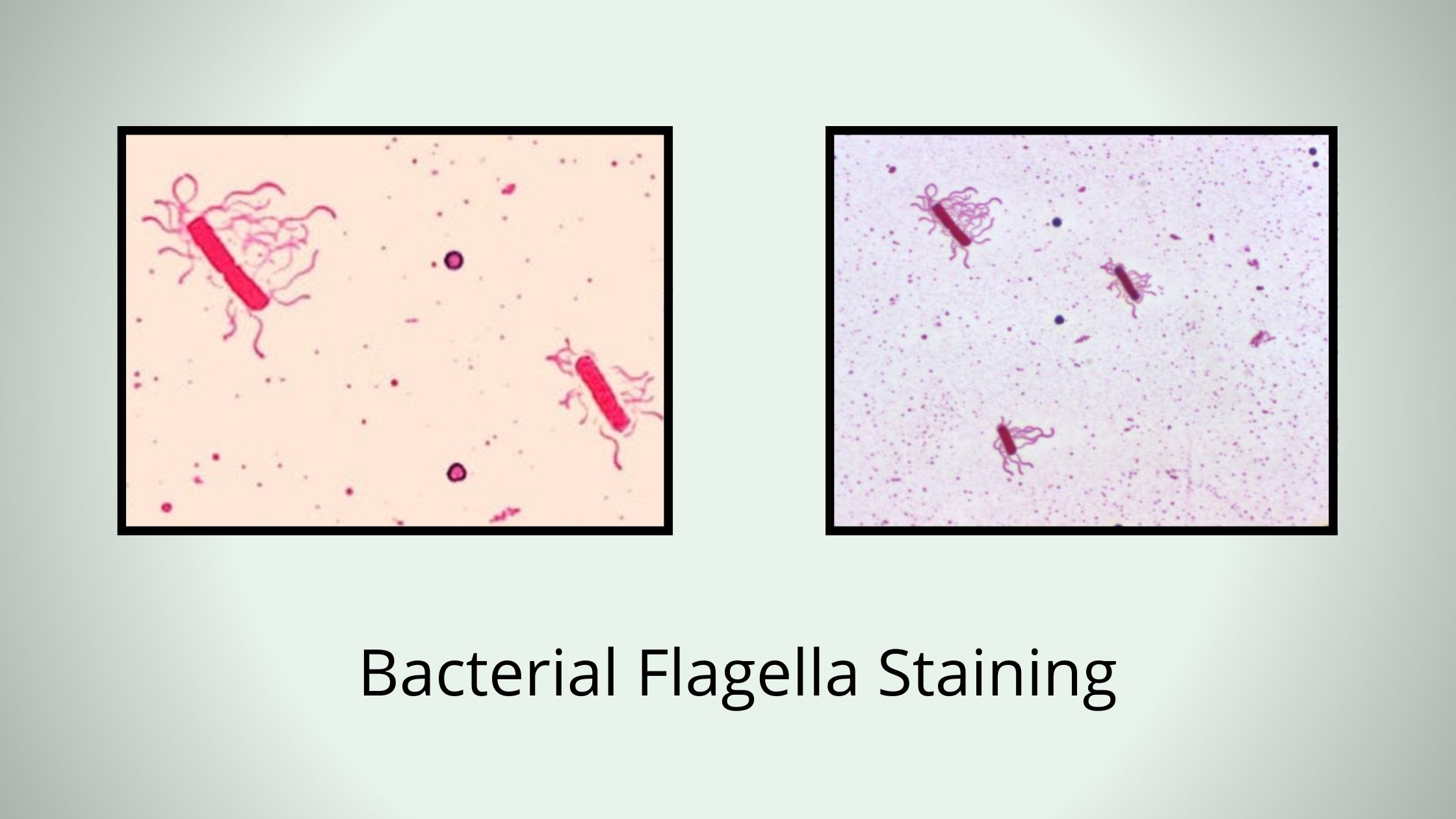
In 1930, Leifson introduced a simple flagella stain, using this stain he observed that mutations leading to nonflagellated from flagellated bacteria were common, as well as mutation leading to loss of motility without loss of the flagellum itself.

A bacterial smear is a thin layer of bacterial cell/culture which is placed on a clean, grease-free microscopic slide to observe a clear image under a microscope.