

Paul Ehrlich
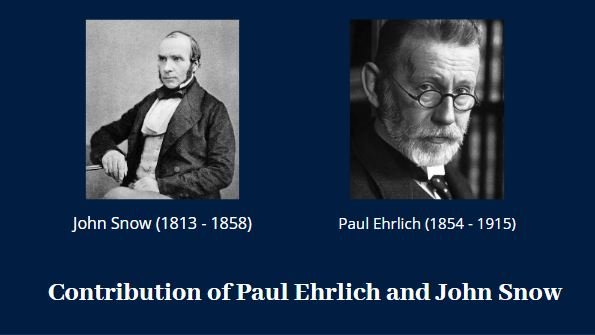
Paul Ehrlich (1854–1915) was a German physician, biochemist and scientist. He is regarded as one of the founders of modern hematology, immunology and chemotherapy. His work was mainly concerned with immunity, staining techniques and chemical treatment of diseases.
In 1908, he was awarded the Nobel Prize in Physiology or Medicine along with Élie Metchnikoff for his work on immunity. His investigations helped in understanding blood cells, antibodies and antimicrobial therapy.
Key Contributions of Paul Ehrlich
Some of the important contributions of Paul Ehrlich are–
- Founding of Modern Hematology
- He pioneered the use of synthetic aniline dyes to stain cells and tissues. By using these staining methods, mast cells were discovered and different types of white blood cells such as neutrophils, basophils and eosinophils were differentiated.
- These discoveries laid the foundation for diagnosis of blood diseases and study of blood cell morphology.
- Advancements in Microbiology
- He improved the staining method of Robert Koch for the tuberculosis bacillus by developing an acid-fast staining technique. This helped in better identification of bacteria.
- He also developed the diazo reaction for detection of bilirubin in urine, which is used in diagnosis of diseases like typhoid fever.
- Side-Chain Theory of Immunity
- He proposed the “side-chain theory” which is later known as receptor theory. According to this theory, cells have specific side chains that bind with toxins in a lock and key manner.
- When toxins bind to these side chains, excess side chains are produced and released into the bloodstream as antibodies. This theory explained the specificity of antigen–antibody reaction.
- Standardization of Therapeutic Serums
- Working with Emil von Behring, methods were developed to measure and standardize therapeutic serums especially diphtheria antitoxin.
- This standardization allowed safe and accurate dosage of vaccines and serums worldwide.
- Magic Bullet Concept
- He introduced the term “magic bullet” (Zauberkugel). It is the concept of a chemical substance that selectively targets and destroys disease-causing microbes without harming the host tissues.
- This idea became the basis for development of selective drug therapy.
- Birth of Chemotherapy and Salvarsan
- He and his assistant Sahachiro Hata tested hundreds of chemical compounds to treat infectious diseases. In 1909, Compound 606 (arsphenamine), marketed as Salvarsan, was discovered.
- It was the first effective treatment for syphilis and marked the beginning of modern chemotherapy.
Thus, Paul Ehrlich contributions was significant in the field of immunology, hematology and chemotherapy. His work established the scientific basis for antibody theory and targeted drug therapy.
John Snow
John Snow (1813–1858) was a British physician and anesthesiologist of the 19th century. He is regarded as the Father of Epidemiology because of his investigations on cholera outbreak and its mode of transmission.
At that time, the miasma theory was accepted, which stated that diseases are caused by bad air. John Snow opposed this concept and suggested that cholera is transmitted through contaminated water.
Key Contributions of John Snow
Some of the main contributions are–
- Discovery of Waterborne Transmission of Cholera
- During the 1854 cholera outbreak in Soho, London, an investigation was carried out by him to determine the cause of disease. It was proposed by him that cholera spreads through ingestion of polluted water.
- The deaths were associated with a public water pump on Broad Street. This observation helped in proving that cholera is a waterborne disease and not caused by bad air.
- Disease Mapping
- One of the earliest disease maps was prepared by him. The houses of cholera victims was plotted on a street map.
- The clustering of deaths around the Broad Street pump was clearly observed. This method is referred to as epidemiological mapping and is used in public health studies.
- Foundation of Modern Epidemiology
- A comparative study was conducted between two water supply companies in London. It was observed that households supplied by Southwark and Vauxhall company had higher mortality rate than those supplied by Lambeth company.
- Door to door data collection and statistical analysis was performed. This systematic study established the scientific basis of epidemiology.
- Public Health Reform
- Based on the evidence collected, the handle of the Broad Street pump was removed by local authorities. This action helped in controlling the outbreak.
- His findings influenced reforms in water supply and sewage disposal system. These reforms improved sanitation and reduced spread of infectious diseases.
- Contribution to Anesthesiology
- Apart from epidemiology, he contributed in the field of anesthesia. The safe administration of ether and chloroform was studied by him. Dosage tables were prepared for accurate use.
- He administered chloroform to Queen Victoria during childbirth. His work improved the safety and acceptance of anesthesia in medical practice.
- Thus, John Snow contribution was important in epidemiology, public health and anesthesiology. His work changed the understanding of disease transmission and prevention.
References
- Androutsos, G. (n.d.). Paul Ehrlich (1854-1915): Founder of chemotherapy and pioneer of haematology, immunology and oncology. JBUON.
- Ball, J. (2026, February 2). Public health reform in industrial Britain. Save My Exams.
- Bosch, F., & Rosich, L. (2008). The contributions of Paul Ehrlich to pharmacology: A tribute on the occasion of the centenary of his Nobel Prize. Pharmacology, 82(3), 171–179. https://doi.org/10.1159/000149583
- Brown, A. (2023). Paul Ehrlich. EBSCO Research Starters.
- Brown Computer Science. (n.d.). Lecture 1a: Two historic case studies [Lecture slides].
- Dawn of epidemiology. (n.d.).
- Encyclopedia.com. (2018). Paul Ehrlich.
- Forsdyke, D. R. (1995). The origins of the clonal selection theory of immunity: A case study for evaluation in science. FASEB Journal, 9, 164-166.
- Halliday, S. (2001). Death and miasma in Victorian London: An obstinate belief. BMJ, 323(7327), 1469–1471. https://doi.org/10.1136/bmj.323.7327.1469
- Jakiela, P. (n.d.). Difference-in-differences [Lecture slides]. Williams College ECON 379.
- Lamoreux, K. (2024, September 19). The legacy of John Snow. ArcGIS StoryMaps.
- Magic bullet (medicine). (2026, February 17). In Wikipedia.
- Melville, W., & Allingham, P. V. (2012). Snow and Dickens: The Victorian ‘inconvenient truth’. Cahiers victoriens et édouardiens, (Hors-série). https://doi.org/10.4000/cve.12314
- Moticka, E. J. (2016). The clonal selection theory of antibody formation. In A historical perspective on evidence-based immunology (pp. 47–54). Elsevier. https://doi.org/10.1016/B978-0-12-398381-7.00006-X
- Newcastle University. (n.d.). Germ theory | Health and the people.
- NobelPrize.org. (1967). Paul Ehrlich – Biographical.
- Paul Ehrlich. (2026, March 3). In Wikipedia.
- Rowińska, P. (2025, October 16). How mapping London helped stop a cholera outbreak. Science Friday.
- Ruths, M. B. (2009). The lesson of John Snow and the Broad Street pump. Virtual Mentor, 11(6), 470–472. https://doi.org/10.1001/virtualmentor.2009.11.6.mhst1-0906
- Science History Institute. (n.d.). Paul Ehrlich.
- Side-chain theory. (2023, July 16). In Wikipedia.
- StudyGuides.com. (n.d.). Ehrlich, Paul (Medicine) – Study guide.
- Substantiating the impact of John Snow’s contributions using data… (n.d.).
- Taylor & Francis. (n.d.). Side-chain theory – Knowledge and references.
- The John Snow Society. (2013). The legacy of John Snow: Epidemiology yesterday, today & tomorrow [Conference program].
- The paradigmatic shift in microbiology: The systematic legacies of John Snow and Paul Ehrlich. (n.d.).
- Titford, M. (2010). Paul Ehrlich: Histological staining, immunology, chemotherapy. Laboratory Medicine, 41(8), 497–498. https://doi.org/10.1309/LMHJS86N5ICBIBWM
- Tulchinsky, T. H. (2018). John Snow, cholera, the Broad Street pump; waterborne diseases then and now. In Case studies in public health (pp. 77–99). Elsevier. https://doi.org/10.1016/B978-0-12-804571-8.00017-2
- Turton School. (n.d.). The development of germ theory: A revolution in surgery, improvements in public health.
- UK Health Security Agency. (n.d.). How is planning rooted in public health? FutureLearn.
- Ungvarsky, J. (2024). John Snow. EBSCO Research Starters.
- Valent, P., Groner, B., Schumacher, U., Superti-Furga, G., Busslinger, M., Kralovics, R., Zielinski, C., Penninger, J. M., Kerjaschki, D., Stingl, G., Smolen, J. S., Valenta, R., Lassmann, H., Kovar, H., Jäger, U., Kornek, G., Müller, M., & Sörgel, F. (2016). Paul Ehrlich (1854-1915) and his contributions to the foundation and birth of translational medicine. Journal of Innate Immunity, 8(2), 111–120. https://doi.org/10.1159/000443526