We've just released a new feature: Text Annotation & Highlight - Add notes and highlights to articles! Login required.

Endo Agar – Composition, Principle, Preparation, Results, Uses

Endo Agar - Composition, Principle, Preparation, Results, Uses
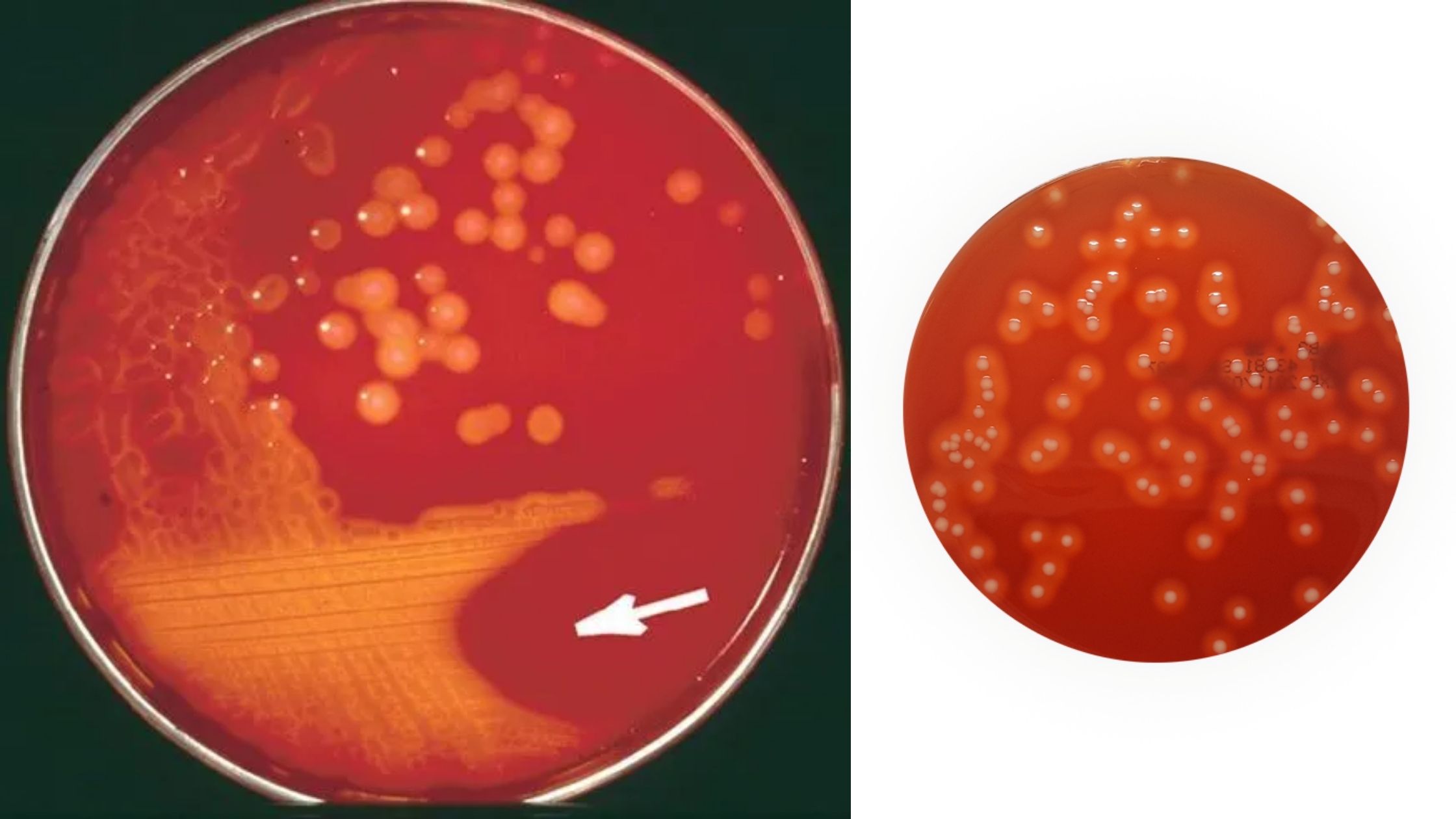
Endo created Endo Agar to distinguish gram-negative bacteria based on lactose fermentation and inhibit gram-positive bacteria. The latter were not inhibited by bile salts, as was traditional. Endo was able to inhibit gram-positive bacteria using sodium sulfite, basic fuchsin.

Bismuth Sulphite Agar (BSA) – Composition, Principle, Preparation, Results, Uses

Bismuth Sulphite Agar (BSA) - Composition, Principle, Preparation, Results, Uses

Salmonellae are the most complex taxonomically diverse group of bacteria in Enterobacteriaceae. Salmonella infections in humans are usually caused by the consumption of food, milk, and water contaminated with animal or human excreta. S. Typhi is only found in humans.

Egg Yolk Agar – Composition, Principle, Preparation, Results, Uses

Egg Yolk Agar Composition, Principle, Preparation, Results, Uses

Egg Yolk Agar modified is based upon the original Egg Yolk Agar formula developed by McClung & Toabe to isolate and differentiate organisms based in Lecithinase, lipase production, and proteolytic activities.

Brilliant Green Agar – Composition, Principle, Preparation, Results, Uses

Brilliant Green Agar Composition, Principle, Preparation, Results, Uses

As a primary plating medium, Brilliant Green Agar medium should be used to isolate Salmonella species. Kristensen and colleagues first described it as a selective isolation medium to Salmonella species. Kristensen et al. first described it as a selective isolation medium for Salmonella species. Kauffmann modified the formula to make it a highly selective plating media for the isolation and identification from salmonellae in feces, other pathological material, food and dairy products. Brilliant Green Agar should always be used in conjunction with other selective plating media like Deoxycholate Citrate Agar and Hektoen Enteric Agar. Salmonella Typhi is treated with Bismuth Sulphite.

Hektoen Enteric Agar – Composition, Principle, Preparation, Results, Uses

Hektoen Enteric Agar - Composition, Principle, Preparation, Results, Uses

Hektoen Enteric Agar, a selective and differential medium, is used to distinguish Salmonella and Shigella species from other Enterobacteriaceae. Sylvia King, William I. Metzger introduced the medium in 1968. They developed HE Agar medium during their time at the Hektoen Institute, Chicago, in order to improve the recovery of Salmonella and Shigella from clinical specimens.

Yersinia Selective Agar – Composition, Principle, Preparation, Results, Uses

Yersinia Selective Agar - Composition, Principle, Preparation, Results, Uses

Schiemann first described Yersinia selective agar as an alternative to MacConkey agar and other media commonly used for isolating Yersinia Enterocolitica, a causative organism of gastroenteritis. Yersinia Enterocolitica, a major food- or waterborne enteric pathogen, has been reported to cause epizootic outbreaks in animals such as diarrhea, lymphadenopathy and pneumonia. Yersinia Selective Agar, a selective and differentiated medium that supports the growth of Y. Enterocolitica and other Yersinia spp.

CLED Agar – Composition, Principle, Preparation, Results, Uses

CLED Agar - Composition, Principle, Preparation, Results, Uses

Cystine-Lactose-Electrolyte-Deficient (CLED) medium, first described by Sandys and later modified by Mackey and Sandys, is generally used for diagnostic routine urinary bacteriology as a non-selective medium capable of supporting the growth of most urinary pathogens. CLED Agar, a differential medium for the isolation and counting of bacteria from urine, is used. It supports the growth all potential urinary pathogens. The medium also provides distinct colony morphology. It is suitable for the growth of all urinary pathogens, contaminants, and provides good colonial differentiation. However, it does not allow for the spread of Proteus species because of its low electrolytes.

TCBS Agar – Composition, Principle, Preparation, Results, Uses

TCBS Agar - Composition, Principle, Preparation, Results, Uses

Thiosulfate-citrate-bile salts-sucrose (TCBS) Agar, is a type of selective agar that is used in microbiology laboratories to isolate Vibrio species. TCBS Agar can be used to cultivate Vibrio cholerae from clinical specimens or other materials. Kobayashi et. al. developed TCBS Agar, which modified the Nakanishi selective medium. This medium was originally intended to isolate V. cholerae from V. parahaemolyticus. However, Vibrios can grow healthy colonies with many different colonial morphologies.

Anaerobic Blood Agar – Composition, Principle, Preparation, Results, Uses

Anaerobic Blood Agar - Composition, Principle, Preparation, Results, Uses

Anaerobic blood agar is a solid media that can be used in qualitative methods for the isolation and cultivation anaerobic organisms. V.R. Dowell and T.M. Hawkins, Centers for Disease Control and Prevention Atlanta, Georgia. Anaerobic blood agar supports the growth of anaerobes with typical pigmentation, both fastidious and slow-growing, and other anaerobes that are of clinical significance.

Czapek’s Agar (CZA) – Composition, Principle, Preparation, Results, Uses

Czapek’s Agar (CZA) - Composition, Principle, Preparation, Results, Uses

Czapek medium (also known as Czapek’s agar or Czapek Dox medium) is a medium used to grow fungi and other organisms. This medium is suitable for qualitative cultivation of soil bacteria and saprophytic fungi. Czapek originally created the medium in 1902 to cultivate saprophytic mushrooms. Czapek-Dox Agar, a modified formula of the Czapek (1902-1903) and Dox (1910) formulas, is prepared according to Thom & Church. Medium contains sucrose as the only source of carbon, and nitrate is the only inorganic nitrogen source.

Ad Blocker Detected
We've detected that you're using an ad blocker. Some content may not display properly.
Why are you seeing this? Ad blockers can prevent certain content and features from loading correctly on our website.

To continue with the best experience: